State of DRM
(graphics driver subsystem, not the other thing)
Daniel Vetter, Intel OTC
Kernel Recipes 2016, Paris
tl;dr;
world domination progressing according to plan
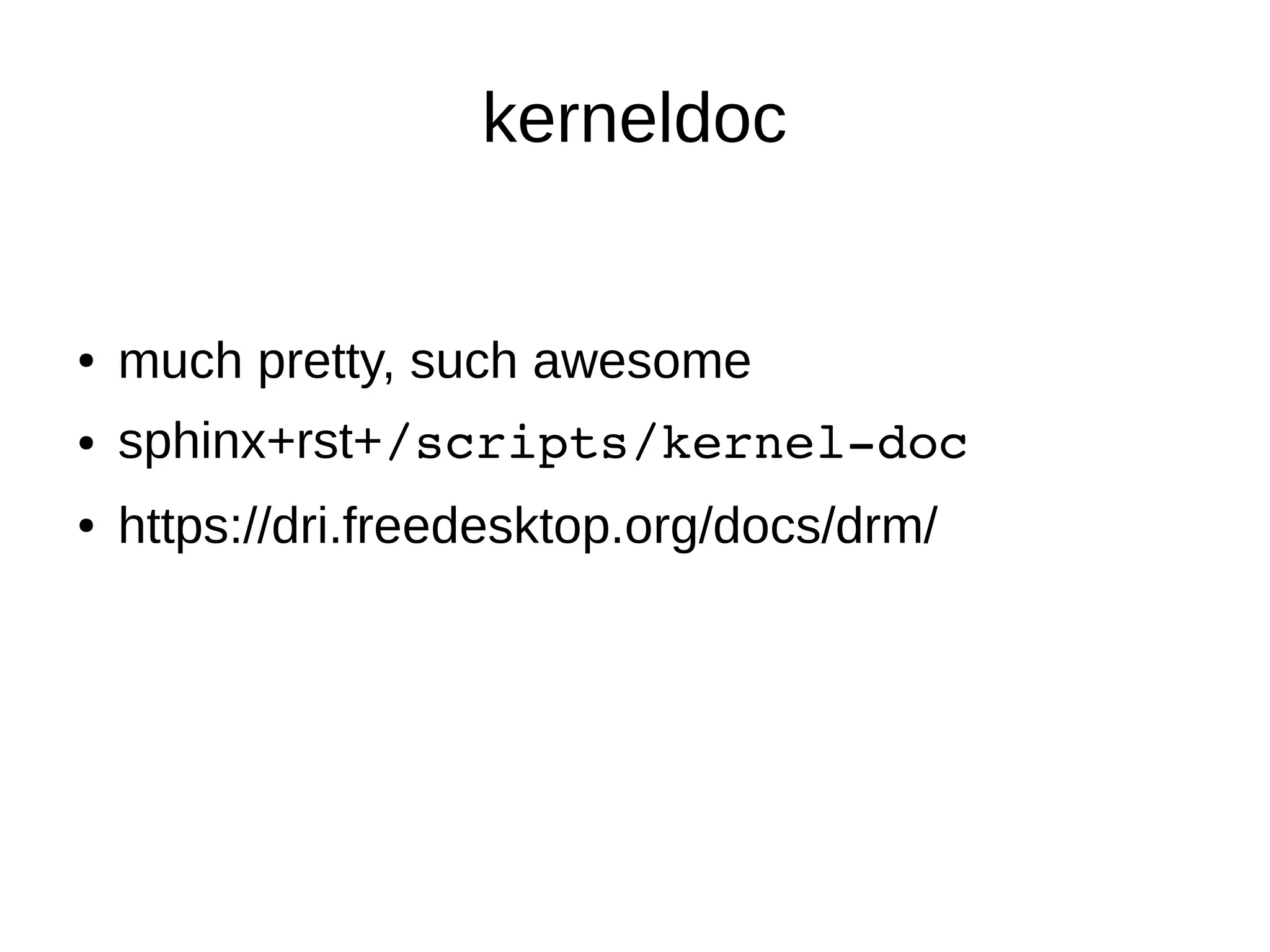
kerneldoc
● much pretty, such awesome
● sphinx+rst+/scripts/kernel­doc
● https://dri.freedesktop.org/docs/drm/
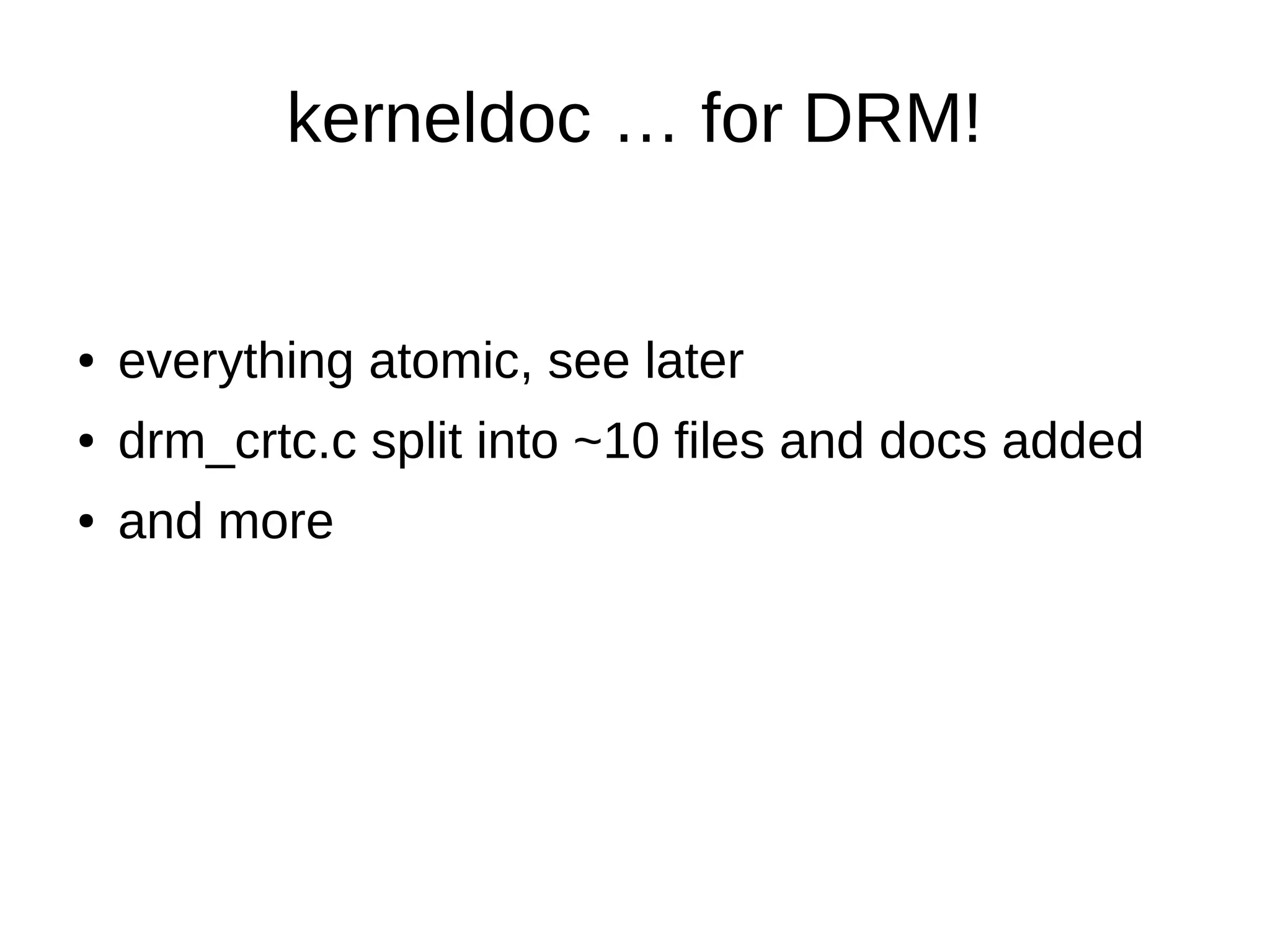
kerneldoc … for DRM!
● everything atomic, see later
● drm_crtc.c split into ~10 files and docs added
● and more
dungeons&dragons
● DRI1 legacy drivers still exist
● 10+ years of bad UAPI and creative root holes
● now fully hidden behind drm_legacy_*
● … and core de-midlayered
IGT gpu tests
● port Intel tests to be generic
● starting to get used on many drivers
● plus CI systems!
● https://dri.freedesktop.org/docs/drm/gpu/drm-
uapi.html#validating-changes-with-igt
userspace requirements
● require open source for any UAPI
● https://dri.freedesktop.org/docs/drm/gpu/drm-
uapi.html#open-source-userspace-
requirements
atomic display driver
● check/commit semantics
● flicker-free commit
● because hw
● because direct scanout saves power
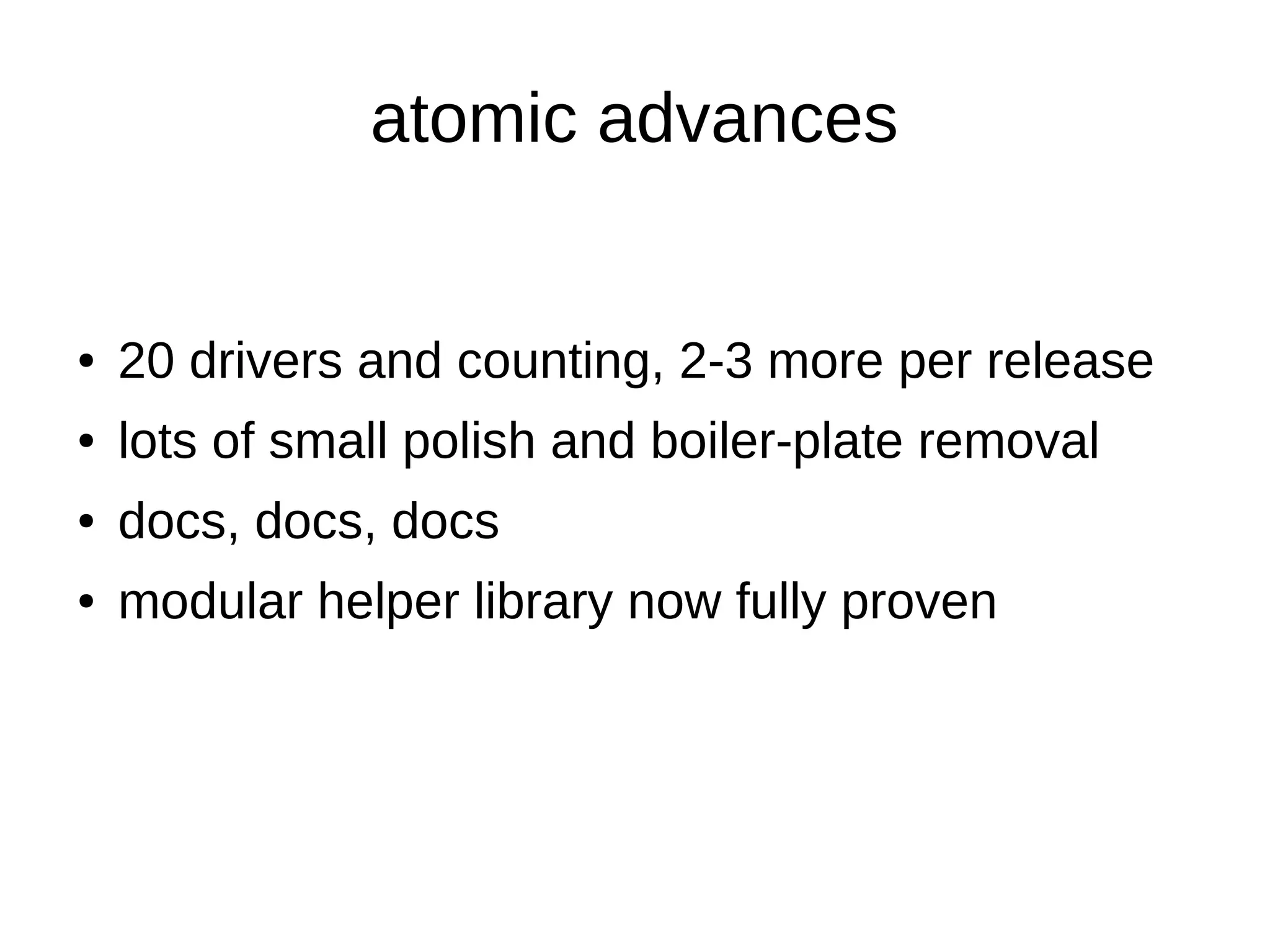
atomic advances
● 20 drivers and counting, 2-3 more per release
● lots of small polish and boiler-plate removal
● docs, docs, docs
● modular helper library now fully proven
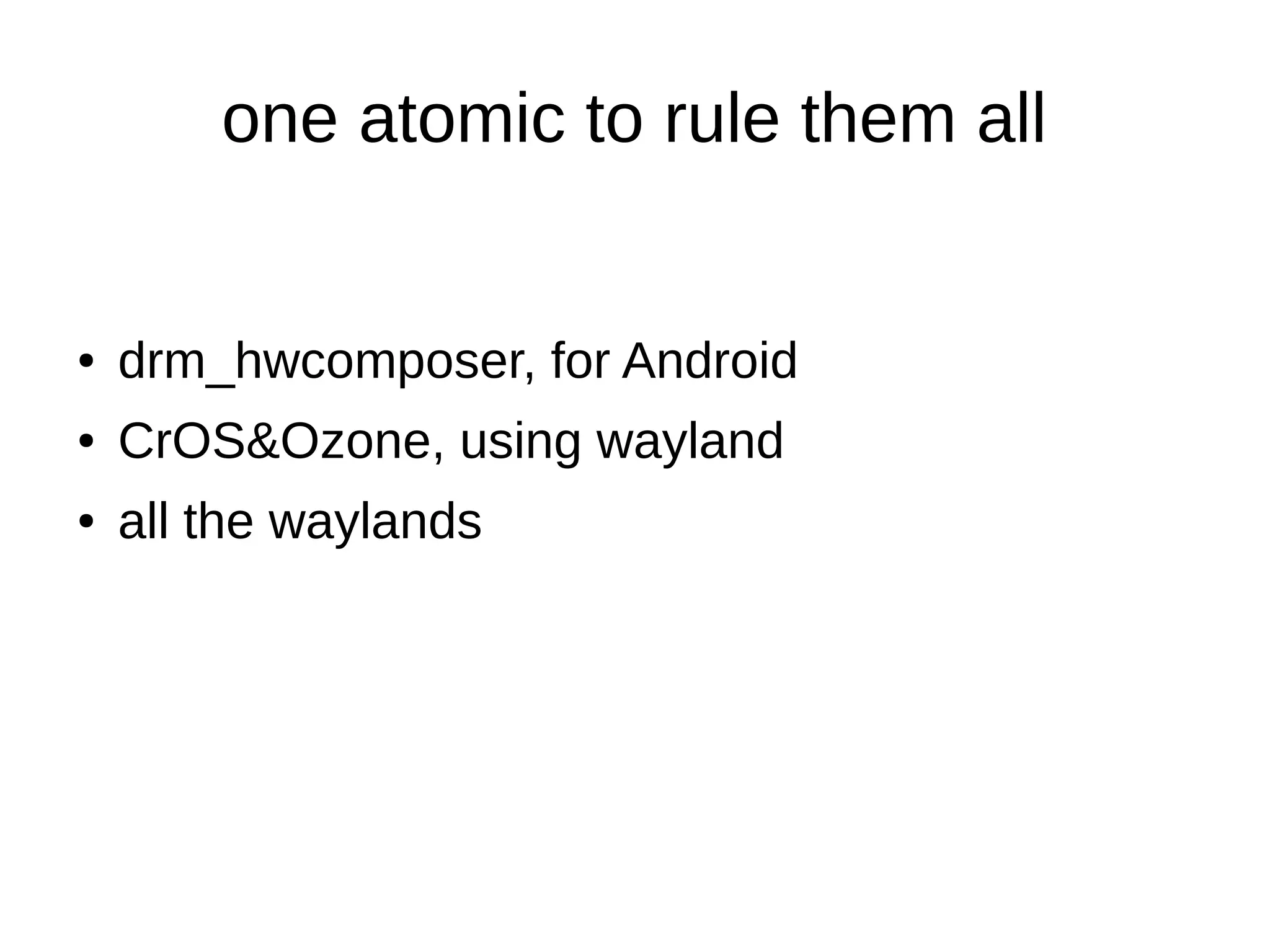
one atomic to rule them all
● drm_hwcomposer, for Android
● CrOS&Ozone, using wayland
● all the waylands
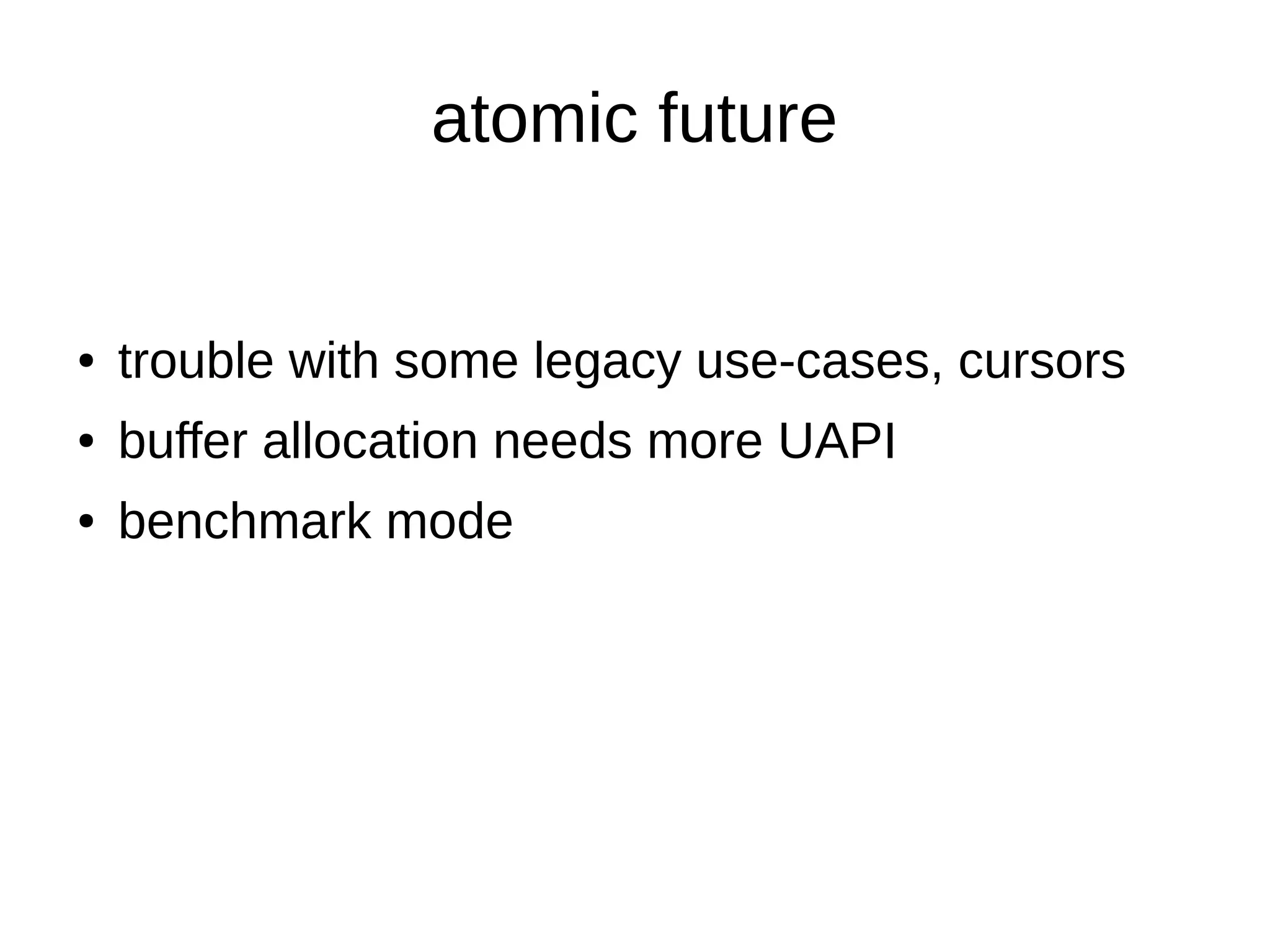
atomic future
● trouble with some legacy use-cases, cursors
● buffer allocation needs more UAPI
● benchmark mode
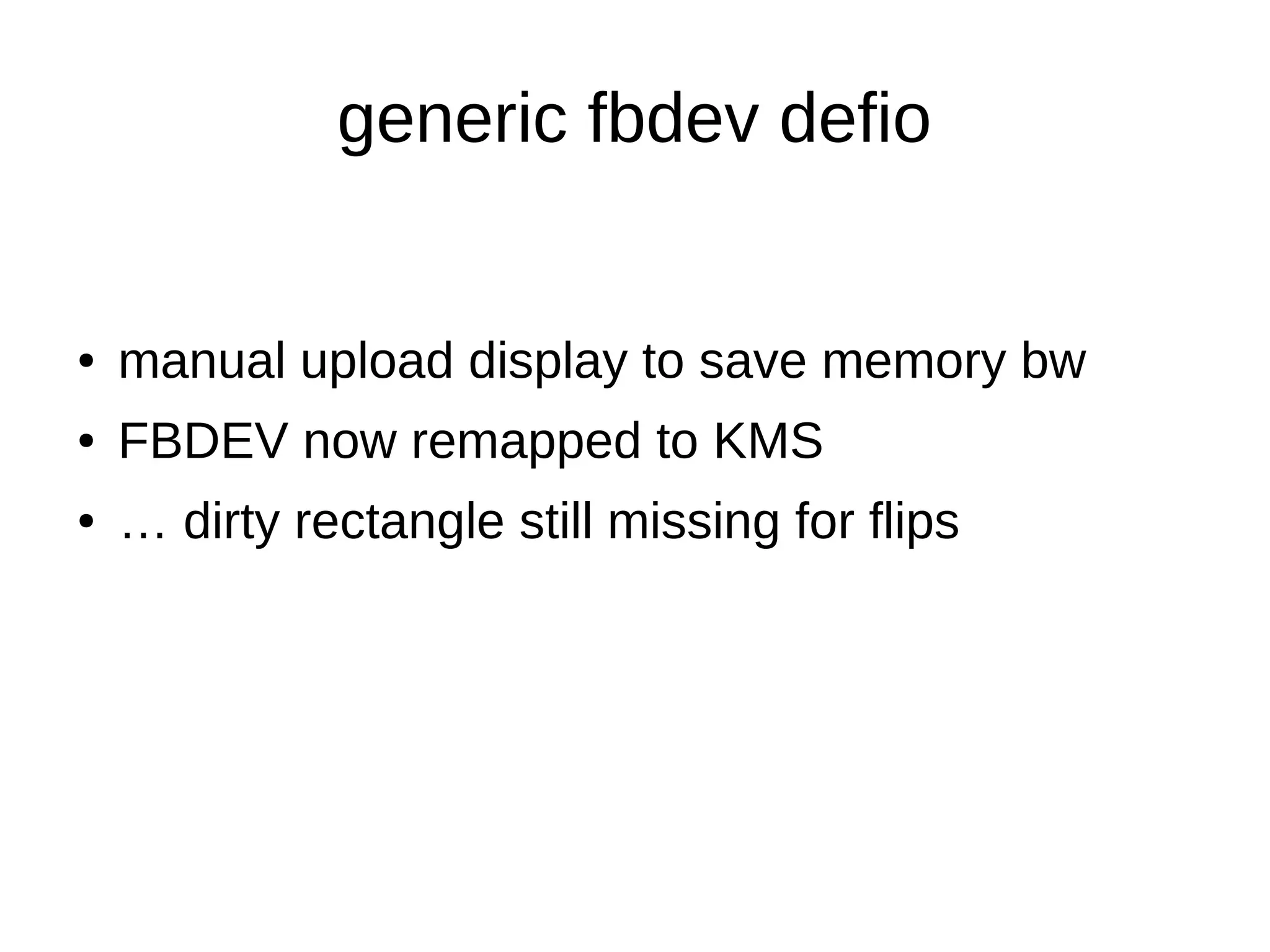
generic fbdev defio
● manual upload display to save memory bw
● FBDEV now remapped to KMS
● … dirty rectangle still missing for flips
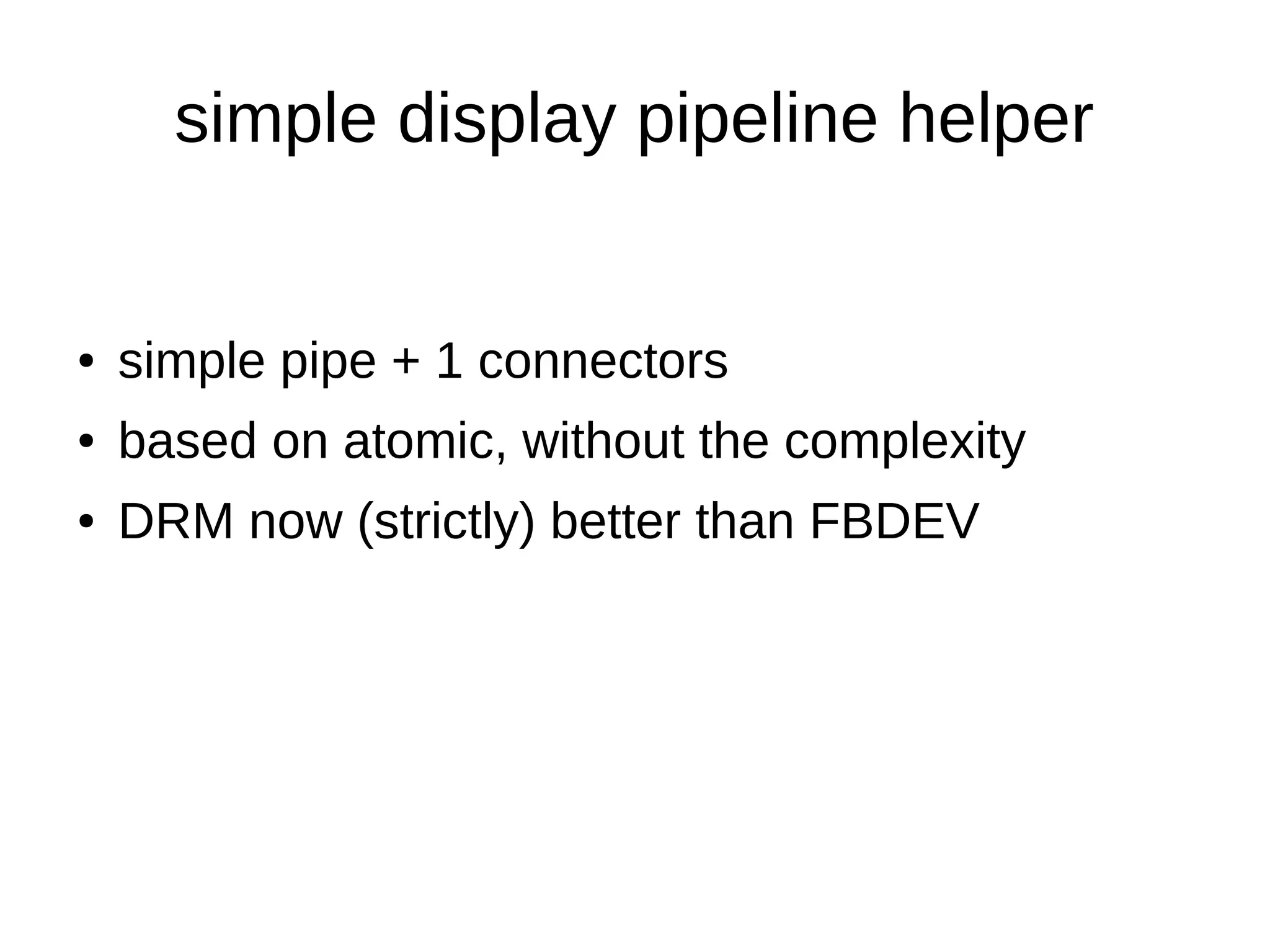
simple display pipeline helper
● simple pipe + 1 connectors
● based on atomic, without the complexity
● DRM now (strictly) better than FBDEV
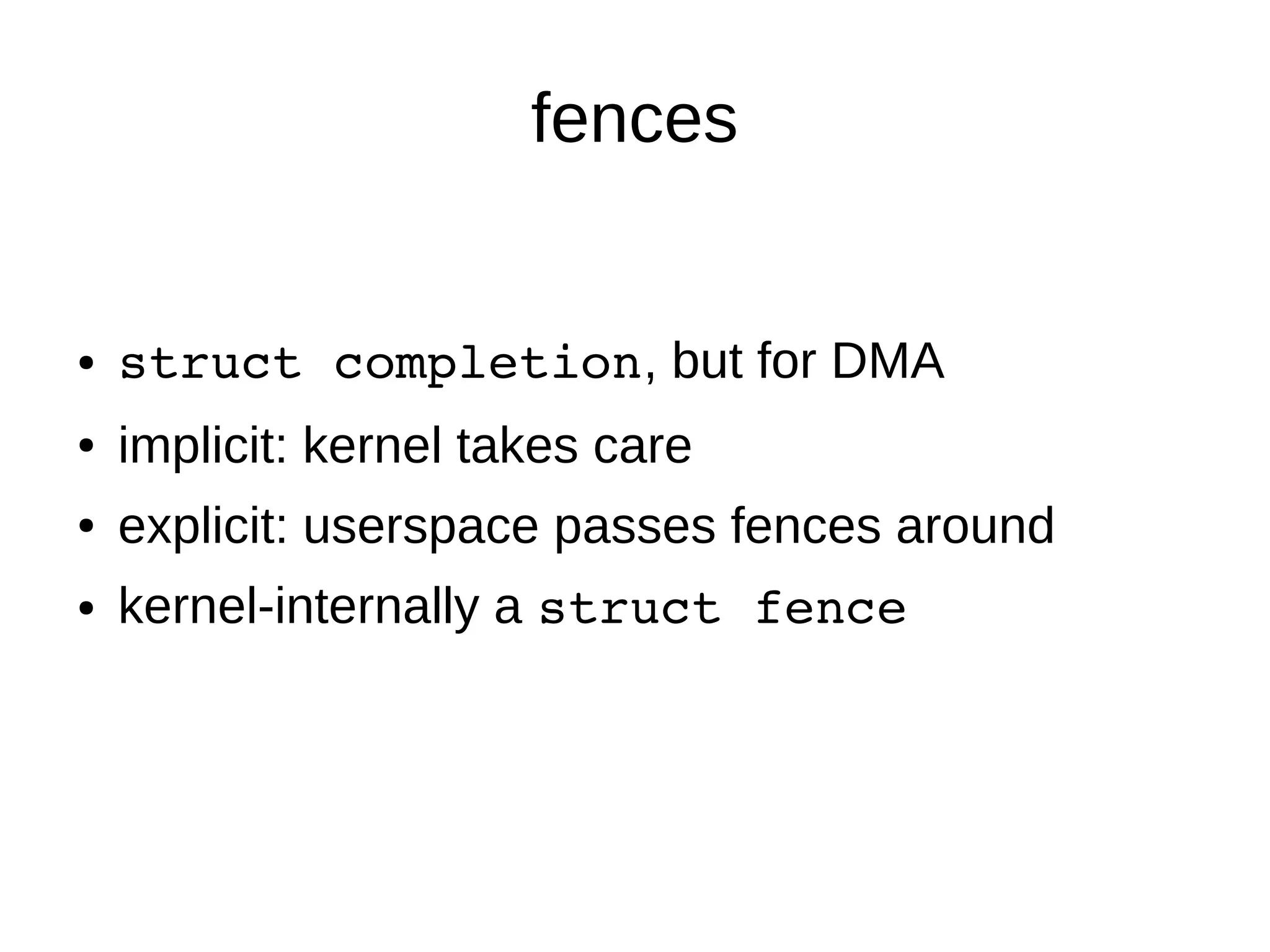
fences
● struct completion, but for DMA
● implicit: kernel takes care
● explicit: userspace passes fences around
● kernel-internally a struct fence
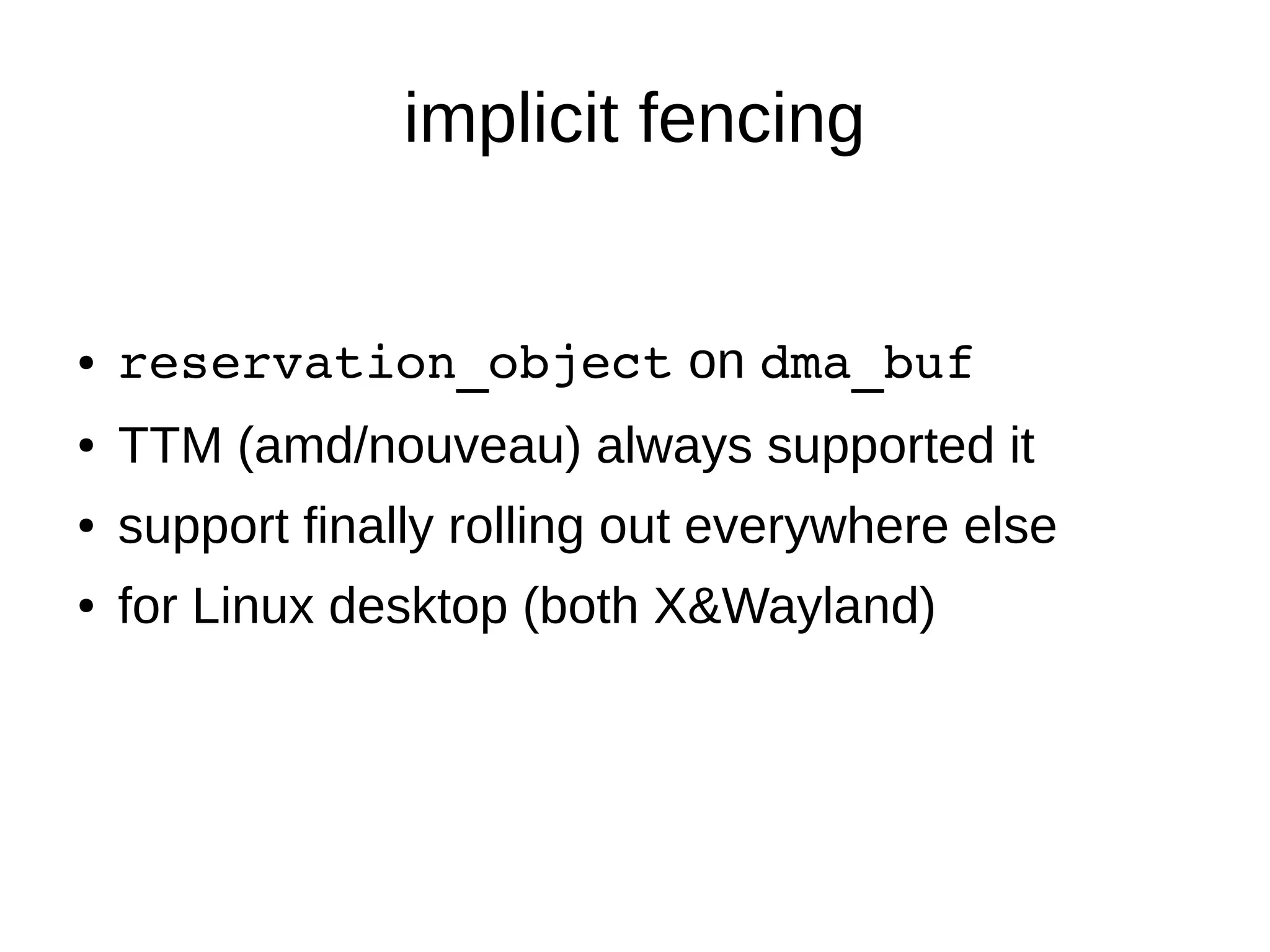
implicit fencing
● reservation_object on dma_buf
● TTM (amd/nouveau) always supported it
● support finally rolling out everywhere else
● for Linux desktop (both X&Wayland)
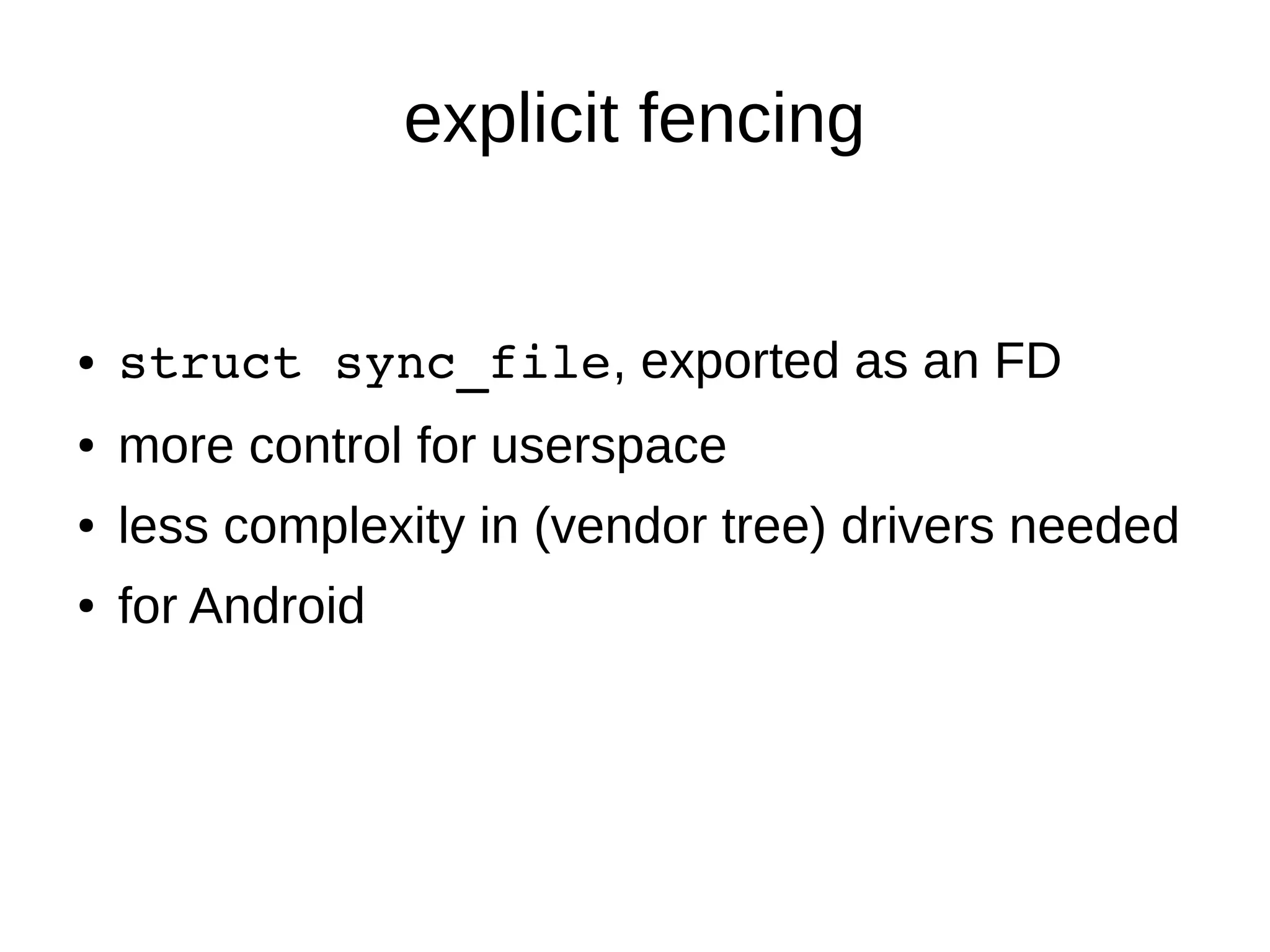
explicit fencing
● struct sync_file, exported as an FD
● more control for userspace
● less complexity in (vendor tree) drivers needed
● for Android
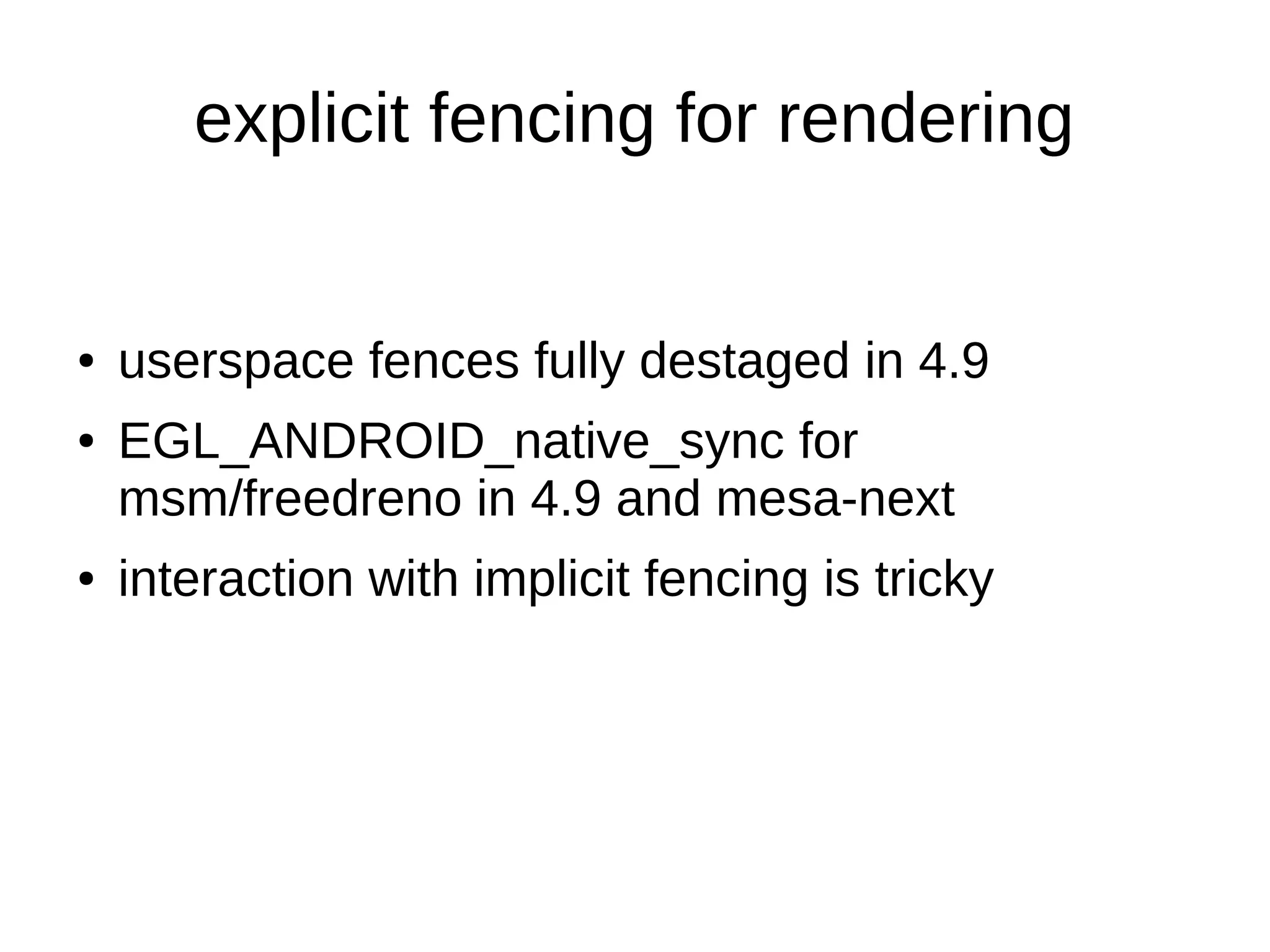
explicit fencing for rendering
● userspace fences fully destaged in 4.9
● EGL_ANDROID_native_sync for
msm/freedreno in 4.9 and mesa-next
● interaction with implicit fencing is tricky
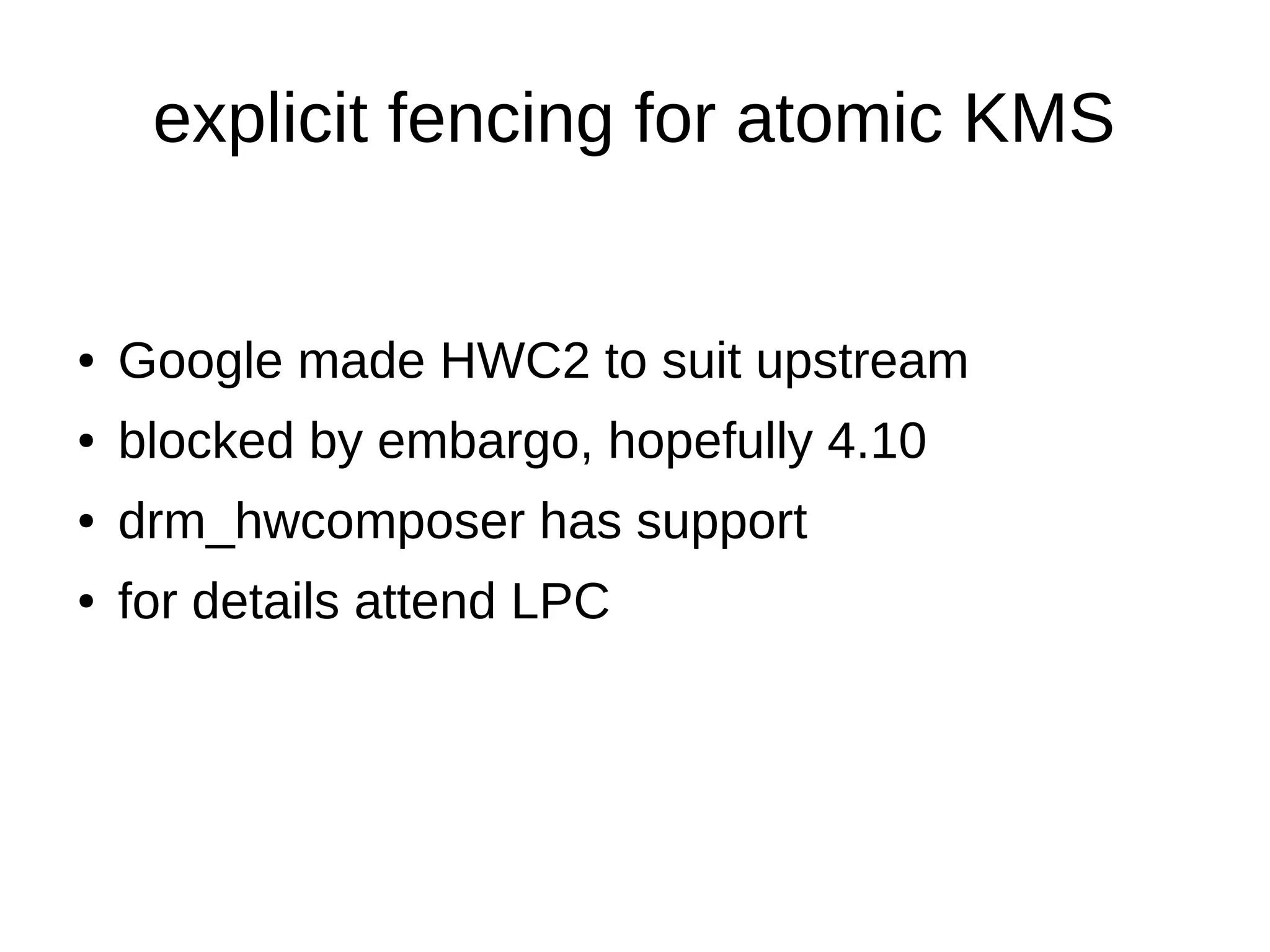
explicit fencing for atomic KMS
● Google made HWC2 to suit upstream
● blocked by embargo, hopefully 4.10
● drm_hwcomposer has support
● for details attend LPC
rsn Android on upstream*
* without a joke** of a graphics stack
** I'm biased ;-)
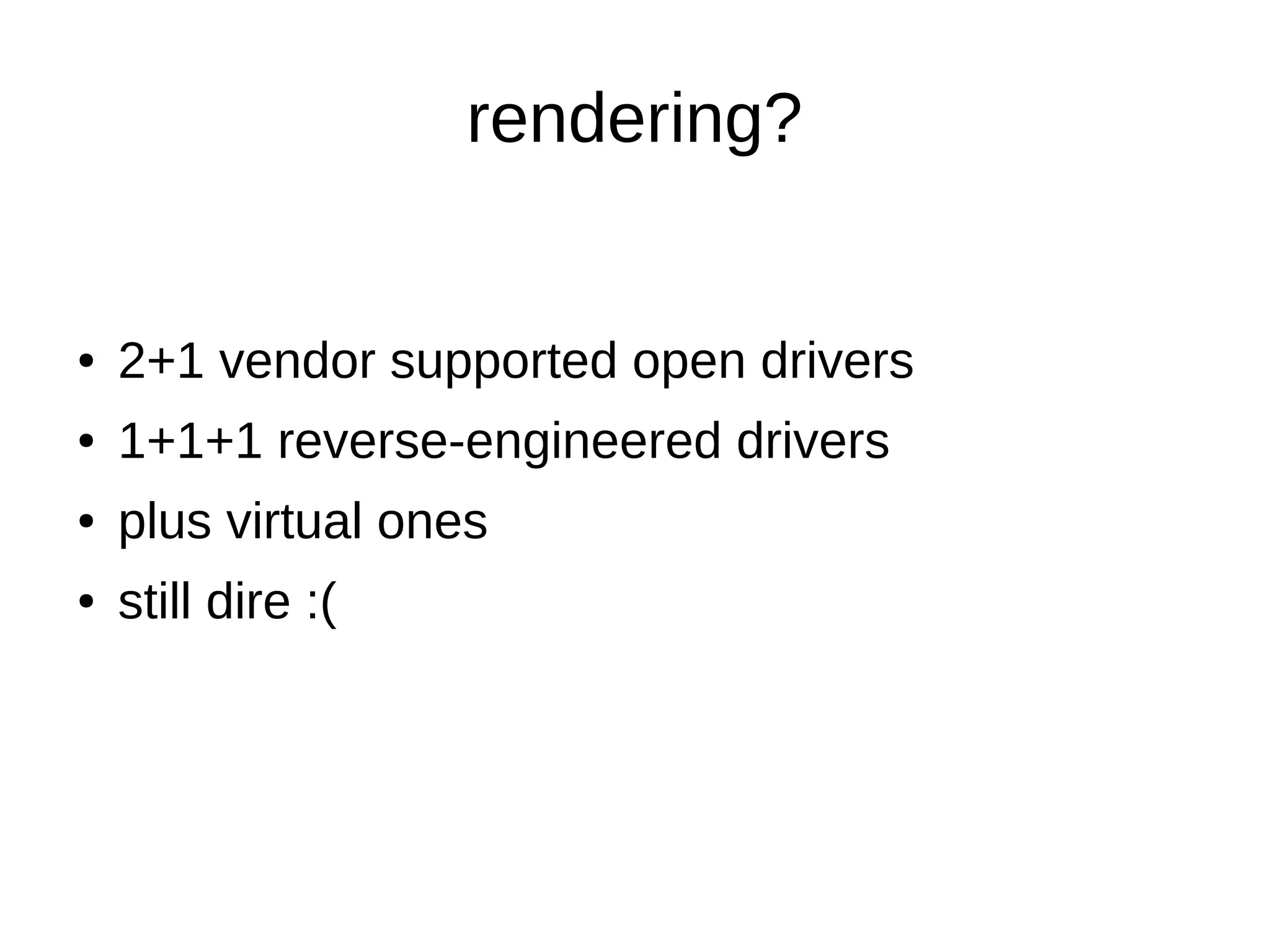
rendering?
● 2+1 vendor supported open drivers
● 1+1+1 reverse-engineered drivers
● plus virtual ones
● still dire :(
summary
● atomic rules them all
● docs, tests and lots of cleanup
● closed all major gaps for writing display drivers
● cross-driver fence for everyone
● even rendering shows some (slow) progress

Kernel Recipes 2016 - Upstream Kernel Graphics is (Finally) Winning

  • 1.
    State of DRM (graphicsdriver subsystem, not the other thing) Daniel Vetter, Intel OTC Kernel Recipes 2016, Paris
  • 2.
  • 3.
    kerneldoc ● much pretty,such awesome ● sphinx+rst+/scripts/kernel­doc ● https://dri.freedesktop.org/docs/drm/
  • 4.
    kerneldoc … forDRM! ● everything atomic, see later ● drm_crtc.c split into ~10 files and docs added ● and more
  • 5.
    dungeons&dragons ● DRI1 legacydrivers still exist ● 10+ years of bad UAPI and creative root holes ● now fully hidden behind drm_legacy_* ● … and core de-midlayered
  • 6.
    IGT gpu tests ●port Intel tests to be generic ● starting to get used on many drivers ● plus CI systems! ● https://dri.freedesktop.org/docs/drm/gpu/drm- uapi.html#validating-changes-with-igt
  • 7.
    userspace requirements ● requireopen source for any UAPI ● https://dri.freedesktop.org/docs/drm/gpu/drm- uapi.html#open-source-userspace- requirements
  • 8.
    atomic display driver ●check/commit semantics ● flicker-free commit ● because hw ● because direct scanout saves power
  • 9.
    atomic advances ● 20drivers and counting, 2-3 more per release ● lots of small polish and boiler-plate removal ● docs, docs, docs ● modular helper library now fully proven
  • 10.
    one atomic torule them all ● drm_hwcomposer, for Android ● CrOS&Ozone, using wayland ● all the waylands
  • 11.
    atomic future ● troublewith some legacy use-cases, cursors ● buffer allocation needs more UAPI ● benchmark mode
  • 12.
    generic fbdev defio ●manual upload display to save memory bw ● FBDEV now remapped to KMS ● … dirty rectangle still missing for flips
  • 13.
    simple display pipelinehelper ● simple pipe + 1 connectors ● based on atomic, without the complexity ● DRM now (strictly) better than FBDEV
  • 14.
    fences ● struct completion, butfor DMA ● implicit: kernel takes care ● explicit: userspace passes fences around ● kernel-internally a struct fence
  • 15.
    implicit fencing ● reservation_objecton dma_buf ● TTM (amd/nouveau) always supported it ● support finally rolling out everywhere else ● for Linux desktop (both X&Wayland)
  • 16.
    explicit fencing ● struct sync_file,exported as an FD ● more control for userspace ● less complexity in (vendor tree) drivers needed ● for Android
  • 17.
    explicit fencing forrendering ● userspace fences fully destaged in 4.9 ● EGL_ANDROID_native_sync for msm/freedreno in 4.9 and mesa-next ● interaction with implicit fencing is tricky
  • 18.
    explicit fencing foratomic KMS ● Google made HWC2 to suit upstream ● blocked by embargo, hopefully 4.10 ● drm_hwcomposer has support ● for details attend LPC
  • 19.
    rsn Android onupstream* * without a joke** of a graphics stack ** I'm biased ;-)
  • 20.
    rendering? ● 2+1 vendorsupported open drivers ● 1+1+1 reverse-engineered drivers ● plus virtual ones ● still dire :(
  • 21.
    summary ● atomic rulesthem all ● docs, tests and lots of cleanup ● closed all major gaps for writing display drivers ● cross-driver fence for everyone ● even rendering shows some (slow) progress