Uncertainty and Complexity
in Nitrogen Management
Adam Reimer
Michigan State University/National Wildlife Federation
SWCS Annual Meeting
July 30, 2019
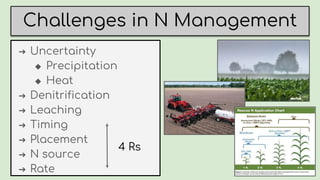
Challenges in N Management
➔ Uncertainty
◆ Precipitation
◆ Heat
➔ Denitrification
➔ Leaching
➔ Timing
➔ Placement
➔ N source
➔ Rate
4 Rs
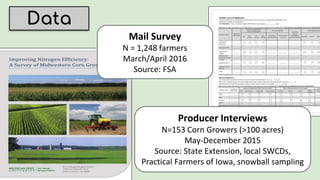
Data
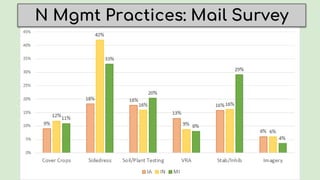
Mail Survey
N = 1,248 farmers
March/April 2016
Source: FSA
Producer Interviews
N=153 Corn Growers (>100 acres)
May-December 2015
Source: State Extension, local SWCDs,
Practical Farmers of Iowa, snowball sampling
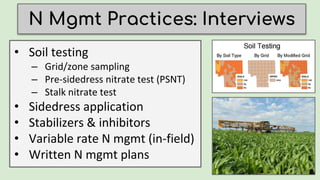
N Mgmt Practices: Interviews
• Soil testing
– Grid/zone sampling
– Pre-sidedress nitrate test (PSNT)
– Stalk nitrate test
• Sidedress application
• Stabilizers & inhibitors
• Variable rate N mgmt (in-field)
• Written N mgmt plans
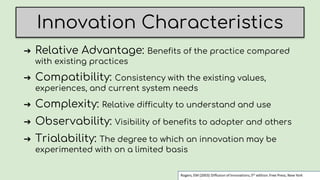
Innovation Characteristics
➔ Relative Advantage: Benefits of the practice compared
with existing practices
➔ Compatibility: Consistency with the existing values,
experiences, and current system needs
➔ Complexity: Relative difficulty to understand and use
➔ Observability: Visibility of benefits to adopter and others
➔ Trialability: The degree to which an innovation may be
experimented with on a limited basis
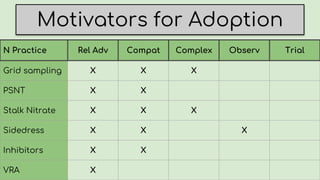
Motivators for Adoption
N Practice Rel Adv Compat Complex Observ Trial
Grid sampling X X X
PSNT X X
Stalk Nitrate X X X
Sidedress X X X
Inhibitors X X
VRA X
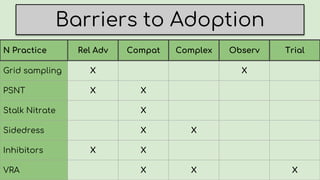
Barriers to Adoption
N Practice Rel Adv Compat Complex Observ Trial
Grid sampling X X
PSNT X X
Stalk Nitrate X
Sidedress X X
Inhibitors X X
VRA X X X
Soil Testing
Rel Adv
➔ Low for N grid sampling (timing
mismatch)
➔ Low capacity to interpret,
incorporate data
Compatibility
➔ High for PSNT/Stalk test when
used with sidedress, manure
➔ Grid/zone
sampling
➔ PSNT
➔ Stalk nitrate
testing
“[PSNT] is basically another piece of
data that we use to come up with a
number as far as what we think the
cornfield needs that year.” – MI farmer
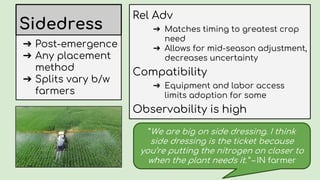
Sidedress
Rel Adv
➔ Matches timing to greatest crop
need
➔ Allows for mid-season adjustment,
decreases uncertainty
Compatibility
➔ Equipment and labor access
limits adoption for some
Observability is high
➔ Post-emergence
➔ Any placement
method
➔ Splits vary b/w
farmers
“We are big on side dressing. I think
side dressing is the ticket because
you’re putting the nitrogen on closer to
when the plant needs it.” – IN farmer
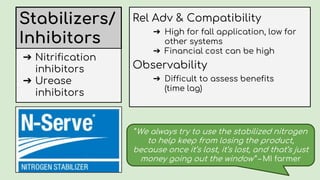
Stabilizers/
Inhibitors
Rel Adv & Compatibility
➔ High for fall application, low for
other systems
➔ Financial cost can be high
Observability
➔ Difficult to assess benefits
(time lag)
➔ Nitrification
inhibitors
➔ Urease
inhibitors
“We always try to use the stabilized nitrogen
to help keep from losing the product,
because once it’s lost, it’s lost, and that’s just
money going out the window” – MI farmer
VRA
Rel Adv
➔ High recognized benefits
➔ High costs for equipment/software
Complexity
➔ High technical complexity
➔ Management intensive
Compatibility
➔ High for sidedress, imagery
➔ In-field variable
N application
➔ Based on soil
type and/or
grids
“I’m trying to get to that point with the applicator we own now; it’s capable of
doing VRA. So I’ve written prescription maps over the weekend and I tried to
download them to the controller on the planter Saturday and it didn’t work
and last night I was looking through my program and figured out how to
export shapefiles properly, and I got up the next morning, about midnight last
night, and put them into the cab and I thought today I would see about trying
it” – IN farmer
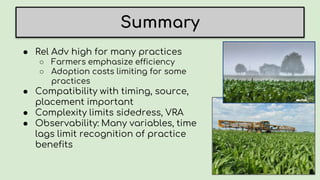
Summary
● Rel Adv high for many practices
○ Farmers emphasize efficiency
○ Adoption costs limiting for some
practices
● Compatibility with timing, source,
placement important
● Complexity limits sidedress, VRA
● Observability: Many variables, time
lags limit recognition of practice
benefits
Acknowledgements
Collaborators
Diana Stuart, N. AZ University
Phil Robertson, MSU
Bruno Basso, MSU
Sandy Marquart-Pyatt, MSU
Jinhua Zhao, MSU
Matthew Houser, MSU/Indiana
University
Riva Denny, MSU
NSF Dynamics of Coupled Natural
and Human Systems (Award 1313677)
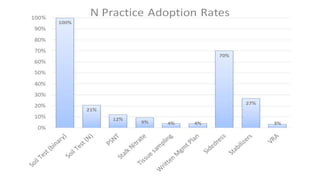
N Mgmt Practices: Mail Survey

July 30-130-Adam Reimer

  • 1.
    Uncertainty and Complexity inNitrogen Management Adam Reimer Michigan State University/National Wildlife Federation SWCS Annual Meeting July 30, 2019
  • 2.
    Challenges in NManagement ➔ Uncertainty ◆ Precipitation ◆ Heat ➔ Denitrification ➔ Leaching ➔ Timing ➔ Placement ➔ N source ➔ Rate 4 Rs
  • 3.
    Data Mail Survey N =1,248 farmers March/April 2016 Source: FSA Producer Interviews N=153 Corn Growers (>100 acres) May-December 2015 Source: State Extension, local SWCDs, Practical Farmers of Iowa, snowball sampling
  • 4.
    N Mgmt Practices:Interviews • Soil testing – Grid/zone sampling – Pre-sidedress nitrate test (PSNT) – Stalk nitrate test • Sidedress application • Stabilizers & inhibitors • Variable rate N mgmt (in-field) • Written N mgmt plans
  • 5.
    Innovation Characteristics ➔ RelativeAdvantage: Benefits of the practice compared with existing practices ➔ Compatibility: Consistency with the existing values, experiences, and current system needs ➔ Complexity: Relative difficulty to understand and use ➔ Observability: Visibility of benefits to adopter and others ➔ Trialability: The degree to which an innovation may be experimented with on a limited basis
  • 7.
    Motivators for Adoption NPractice Rel Adv Compat Complex Observ Trial Grid sampling X X X PSNT X X Stalk Nitrate X X X Sidedress X X X Inhibitors X X VRA X
  • 8.
    Barriers to Adoption NPractice Rel Adv Compat Complex Observ Trial Grid sampling X X PSNT X X Stalk Nitrate X Sidedress X X Inhibitors X X VRA X X X
  • 9.
    Soil Testing Rel Adv ➔Low for N grid sampling (timing mismatch) ➔ Low capacity to interpret, incorporate data Compatibility ➔ High for PSNT/Stalk test when used with sidedress, manure ➔ Grid/zone sampling ➔ PSNT ➔ Stalk nitrate testing “[PSNT] is basically another piece of data that we use to come up with a number as far as what we think the cornfield needs that year.” – MI farmer
  • 10.
    Sidedress Rel Adv ➔ Matchestiming to greatest crop need ➔ Allows for mid-season adjustment, decreases uncertainty Compatibility ➔ Equipment and labor access limits adoption for some Observability is high ➔ Post-emergence ➔ Any placement method ➔ Splits vary b/w farmers “We are big on side dressing. I think side dressing is the ticket because you’re putting the nitrogen on closer to when the plant needs it.” – IN farmer
  • 11.
    Stabilizers/ Inhibitors Rel Adv &Compatibility ➔ High for fall application, low for other systems ➔ Financial cost can be high Observability ➔ Difficult to assess benefits (time lag) ➔ Nitrification inhibitors ➔ Urease inhibitors “We always try to use the stabilized nitrogen to help keep from losing the product, because once it’s lost, it’s lost, and that’s just money going out the window” – MI farmer
  • 12.
    VRA Rel Adv ➔ Highrecognized benefits ➔ High costs for equipment/software Complexity ➔ High technical complexity ➔ Management intensive Compatibility ➔ High for sidedress, imagery ➔ In-field variable N application ➔ Based on soil type and/or grids “I’m trying to get to that point with the applicator we own now; it’s capable of doing VRA. So I’ve written prescription maps over the weekend and I tried to download them to the controller on the planter Saturday and it didn’t work and last night I was looking through my program and figured out how to export shapefiles properly, and I got up the next morning, about midnight last night, and put them into the cab and I thought today I would see about trying it” – IN farmer
  • 13.
    Summary ● Rel Advhigh for many practices ○ Farmers emphasize efficiency ○ Adoption costs limiting for some practices ● Compatibility with timing, source, placement important ● Complexity limits sidedress, VRA ● Observability: Many variables, time lags limit recognition of practice benefits
  • 14.
    Acknowledgements Collaborators Diana Stuart, N.AZ University Phil Robertson, MSU Bruno Basso, MSU Sandy Marquart-Pyatt, MSU Jinhua Zhao, MSU Matthew Houser, MSU/Indiana University Riva Denny, MSU NSF Dynamics of Coupled Natural and Human Systems (Award 1313677)
  • 15.
    N Mgmt Practices:Mail Survey