Global Significance of Substrates for Nitrate Removal in
Denitrifying Bioreactors Revealed by Meta-analysis
Yuchuan
Fan
(Postdoc)
Aug, 31 2022
Department of Soil, Water, and Ecosystem Sciences,
University of Florida
D O C U M E N T T I T L E |
S E C T I O N T I T L
Outline
Covered in this section:
Section Item | Section Item | Section
Item Section Item | Section
Item
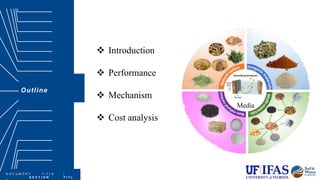
Media
Soil
Soil
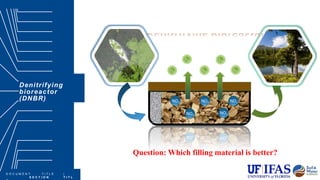
Denitrifying bioreactor
NO3
-
Sand layer
Nitrate
-laden
N2
 Introduction
 Performance
 Mechanism
 Cost analysis
NO3
N2
N2
N2 N2
N2
NO3
NO3
NO3
NO3
D O C U M E N T T I T L E |
S E C T I O N T I T L
Denitrifying
bioreactor
(DNBR)
Question: Which filling material is better?
D O C U M E N T T I T L E |
S E C T I O N T I T L
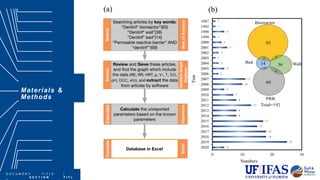
Materials &
Methods
Covered in this section:
Section Item | Section Item | Section
Item Section Item | Section
Item
D O C U M E N T T I T L E |
S E C T I O N T I T L
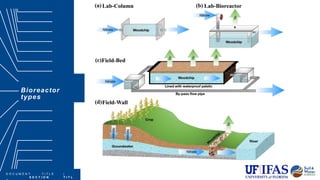
Bioreactor
types
Covered in this section:
Section Item | Section Item | Section
Item Section Item | Section
Item
D O C U M E N T T I T L E |
S E C T I O N T I T L
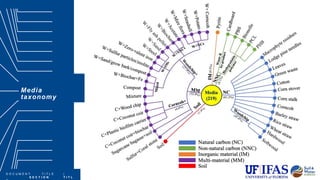
Media
taxonomy
Covered in this section:
Section Item | Section Item | Section
Item Section Item | Section
Item
D O C U M E N T T I T L E |
S E C T I O N T I T L
Indicators
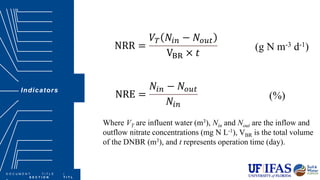
Where VT are influent water (m3), Nin and Nout are the inflow and
outflow nitrate concentrations (mg N L-1), VBR is the total volume
of the DNBR (m3), and t represents operation time (day).
NRR =
𝑉𝑇 𝑁𝑖𝑛 − 𝑁𝑜𝑢𝑡
VBR × 𝑡
NRE =
𝑁𝑖𝑛 − 𝑁𝑜𝑢𝑡
𝑁𝑖𝑛
(g N m-3 d-1)
(%)
D O C U M E N T T I T L E |
S E C T I O N T I T L
Performance
Covered in this section:
Section Item | Section Item | Section
Item Section Item | Section
Item
D O C U M E N T T I T L E |
S E C T I O N T I T L
Performance
Covered in this section:
Section Item | Section Item | Section
Item Section Item | Section
Item
D O C U M E N T T I T L E |
S E C T I O N T I T L
Performance
Covered in this section:
Section Item | Section Item | Section
Item Section Item | Section
Item
D O C U M E N T T I T L E |
S E C T I O N T I T L
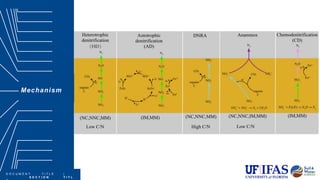
Mechanism
Covered in this section:
Section Item | Section Item | Section
Item Section Item | Section
Item
D O C U M E N T T I T L E |
S E C T I O N T I T L
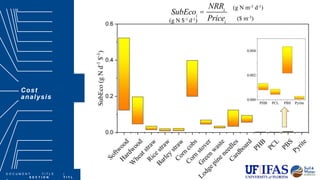
Cost
analysis
SubEcoi
=
NRRi
Pricei
(g N m-3 d-1)
($ m-3)
(g N $-1 d-1)
D O C U M E N T T I T L E |
S E C T I O N T I T L
Conclusions
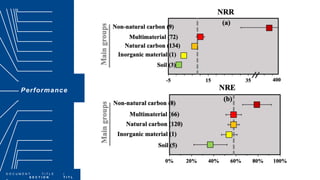
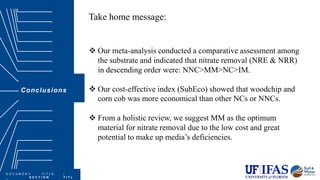
 Our meta-analysis conducted a comparative assessment among
the substrate and indicated that nitrate removal (NRE & NRR)
in descending order were: NNC>MM>NC>IM.
 Our cost-effective index (SubEco) showed that woodchip and
corn cob was more economical than other NCs or NNCs.
 From a holistic review, we suggest MM as the optimum
material for nitrate removal due to the low cost and great
potential to make up media’s deficiencies.
Take home message:
D O C U M E N T T I T L E |
S E C T I O N T I T L
Questions
y.fan@ufl.edu
https://denitrifying-bioreactor.webnode.page

August 31 - 0239 - Yuchuan Fan

  • 1.
    Global Significance ofSubstrates for Nitrate Removal in Denitrifying Bioreactors Revealed by Meta-analysis Yuchuan Fan (Postdoc) Aug, 31 2022 Department of Soil, Water, and Ecosystem Sciences, University of Florida
  • 2.
    D O CU M E N T T I T L E | S E C T I O N T I T L Outline Covered in this section: Section Item | Section Item | Section Item Section Item | Section Item Media Soil Soil Denitrifying bioreactor NO3 - Sand layer Nitrate -laden N2  Introduction  Performance  Mechanism  Cost analysis
  • 3.
    NO3 N2 N2 N2 N2 N2 NO3 NO3 NO3 NO3 D OC U M E N T T I T L E | S E C T I O N T I T L Denitrifying bioreactor (DNBR) Question: Which filling material is better?
  • 4.
    D O CU M E N T T I T L E | S E C T I O N T I T L Materials & Methods Covered in this section: Section Item | Section Item | Section Item Section Item | Section Item
  • 6.
    D O CU M E N T T I T L E | S E C T I O N T I T L Bioreactor types Covered in this section: Section Item | Section Item | Section Item Section Item | Section Item
  • 7.
    D O CU M E N T T I T L E | S E C T I O N T I T L Media taxonomy Covered in this section: Section Item | Section Item | Section Item Section Item | Section Item
  • 8.
    D O CU M E N T T I T L E | S E C T I O N T I T L Indicators Where VT are influent water (m3), Nin and Nout are the inflow and outflow nitrate concentrations (mg N L-1), VBR is the total volume of the DNBR (m3), and t represents operation time (day). NRR = 𝑉𝑇 𝑁𝑖𝑛 − 𝑁𝑜𝑢𝑡 VBR × 𝑡 NRE = 𝑁𝑖𝑛 − 𝑁𝑜𝑢𝑡 𝑁𝑖𝑛 (g N m-3 d-1) (%)
  • 9.
    D O CU M E N T T I T L E | S E C T I O N T I T L Performance Covered in this section: Section Item | Section Item | Section Item Section Item | Section Item
  • 10.
    D O CU M E N T T I T L E | S E C T I O N T I T L Performance Covered in this section: Section Item | Section Item | Section Item Section Item | Section Item
  • 11.
    D O CU M E N T T I T L E | S E C T I O N T I T L Performance Covered in this section: Section Item | Section Item | Section Item Section Item | Section Item
  • 12.
    D O CU M E N T T I T L E | S E C T I O N T I T L Mechanism Covered in this section: Section Item | Section Item | Section Item Section Item | Section Item
  • 13.
    D O CU M E N T T I T L E | S E C T I O N T I T L Cost analysis SubEcoi = NRRi Pricei (g N m-3 d-1) ($ m-3) (g N $-1 d-1)
  • 14.
    D O CU M E N T T I T L E | S E C T I O N T I T L Conclusions  Our meta-analysis conducted a comparative assessment among the substrate and indicated that nitrate removal (NRE & NRR) in descending order were: NNC>MM>NC>IM.  Our cost-effective index (SubEco) showed that woodchip and corn cob was more economical than other NCs or NNCs.  From a holistic review, we suggest MM as the optimum material for nitrate removal due to the low cost and great potential to make up media’s deficiencies. Take home message:
  • 15.
    D O CU M E N T T I T L E | S E C T I O N T I T L Questions y.fan@ufl.edu https://denitrifying-bioreactor.webnode.page