



Jubilant Food works
Capstone Project
Group detail:-
SAMAR SAHA (37459)
NITIN KUMAR PODDAR (37450)
BHOJARAJ PATEL (37439)
ALOK SINGH (37436)
History of Jubilant Food Works Ltd.
 Jubilant FoodWorks Limited (the Company) is a Jubilant Bhartia Group
Company.
 The Company was incorporated in 1995 and initiated operations in
1996.
The Company got listed on the Indian stock exchange in February 2010.
Mr. Shyam S. Bhartia, Mr. Hari S. Bhartia and Jubilant Enpro Private Ltd.
are the Promoters of the Company.
The Company & its subsidiary operates Domino’s Pizza brand with the
exclusive rights for India, Nepal, Bangladesh and Sri Lanka.
Introduction
The Company is India’s largest and fastest growing food service
company, with a network of 844 Domino’s Pizza restaurants (as of
February 05, 2015).
The Company launched Dunkin’ Donuts in India in April 2012 in Delhi.
The Company has 50 Dunkin’ Donuts restaurants in India (as of February
05, 2015).
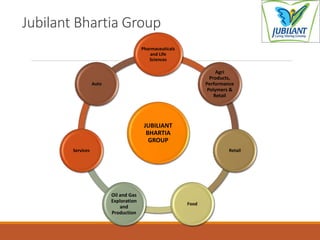
JUBILIANT
BHARTIA
GROUP
Pharmaceuticals
and Life
Sciences
Agri
Products,
Performance
Polymers &
Retail
Retail
Food
Oil and Gas
Exploration
and
Production
Services
Auto
Jubilant Bhartia Group
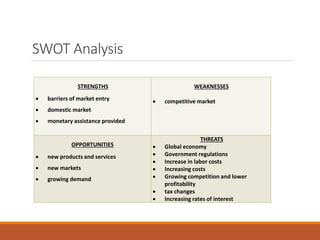
SWOT Analysis
STRENGTHS
 barriers of market entry
 domestic market
 monetary assistance provided
WEAKNESSES
 competitive market
OPPORTUNITIES
 new products and services
 new markets
 growing demand
THREATS
 Global economy
 Government regulations
 Increase in labor costs
 Increasing costs
 Growing competition and lower
profitability
 tax changes
 Increasing rates of interest
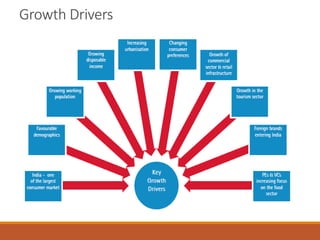
Growth Drivers
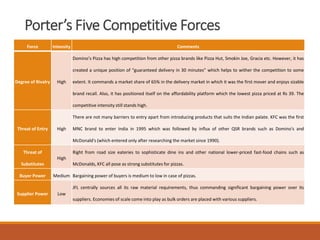
Porter’s Five Competitive Forces
Force Intensity Comments
Degree of Rivalry High
Domino’s Pizza has high competition from other pizza brands like Pizza Hut, Smokin Joe, Gracia etc. However, it has
created a unique position of “guaranteed delivery in 30 minutes” which helps to wither the competition to some
extent. It commands a market share of 65% in the delivery market in which it was the first mover and enjoys sizable
brand recall. Also, it has positioned itself on the affordability platform which the lowest pizza priced at Rs 39. The
competitive intensity still stands high.
Threat of Entry High
There are not many barriers to entry apart from introducing products that suits the Indian palate. KFC was the first
MNC brand to enter India in 1995 which was followed by influx of other QSR brands such as Domino's and
McDonald's (which entered only after researching the market since 1990).
Threat of
Substitutes
High
Right from road size eateries to sophisticate dine ins and other national lower-priced fast-food chains such as
McDonalds, KFC all pose as strong substitutes for pizzas.
Buyer Power Medium Bargaining power of buyers is medium to low in case of pizzas.
Supplier Power Low
JFL centrally sources all its raw material requirements, thus commanding significant bargaining power over its
suppliers. Economies of scale come into play as bulk orders are placed with various suppliers.
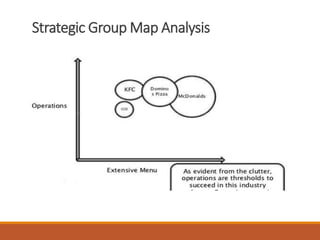
Strategic Group Map Analysis
Management Team
Chairmen
Mr. Shyam S. Bhartia
Mr. Hari S. Bhartia
Board of Directors
Mr. Ajay Kaul Mrs. Rami Nirula Mr. Vijay Marwaha
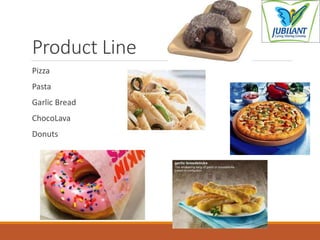
Product Line
Pizza
Pasta
Garlic Bread
ChocoLava
Donuts
Major Players in Fast Food
Domino’s Pizza
Pizza Hut
Smokin Joe’s
Garcias Pizza
KFC
Subway
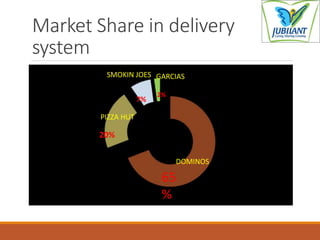
Market Share in delivery
system
DOMINOS
PIZZA HUT
SMOKIN JOES GARCIAS
65
%
20%
7%
2%
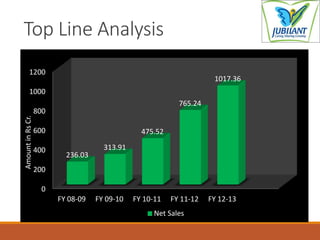
Top Line Analysis
0
200
400
600
800
1000
1200
FY 08-09 FY 09-10 FY 10-11 FY 11-12 FY 12-13
236.03
313.91
475.52
765.24
1017.36
Net Sales
AmountinRsCr.
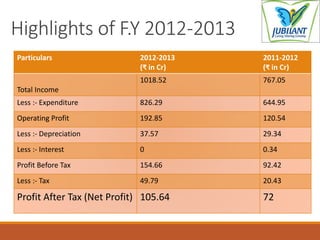
Highlights of F.Y 2012-2013
Particulars 2012-2013
(₹ in Cr)
2011-2012
(₹ in Cr)
Total Income
1018.52 767.05
Less :- Expenditure 826.29 644.95
Operating Profit 192.85 120.54
Less :- Depreciation 37.57 29.34
Less :- Interest 0 0.34
Profit Before Tax 154.66 92.42
Less :- Tax 49.79 20.43
Profit After Tax (Net Profit) 105.64 72
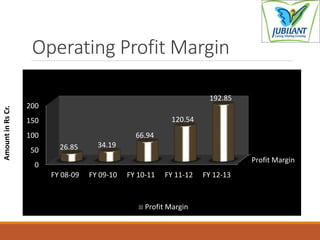
Operating Profit Margin
Profit Margin
0
50
100
150
200
FY 08-09 FY 09-10 FY 10-11 FY 11-12 FY 12-13
26.85 34.19
66.94
120.54
192.85
Profit Margin
AmountinRsCr.
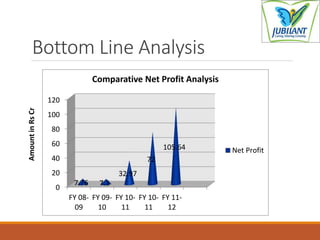
Bottom Line Analysis
0
20
40
60
80
100
120
FY 08-
09
FY 09-
10
FY 10-
11
FY 10-
11
FY 11-
12
7.76 7.3
32.97
72
105.64
Comparative Net Profit Analysis
Net Profit
AmountinRsCr
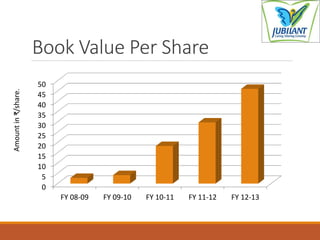
Book Value Per Share
0
5
10
15
20
25
30
35
40
45
50
FY 08-09 FY 09-10 FY 10-11 FY 11-12 FY 12-13
Amountin₹/share.
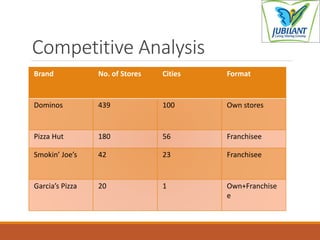
Competitive Analysis
Brand No. of Stores Cities Format
Dominos 439 100 Own stores
Pizza Hut 180 56 Franchisee
Smokin’ Joe’s 42 23 Franchisee
Garcia’s Pizza 20 1 Own+Franchise
e
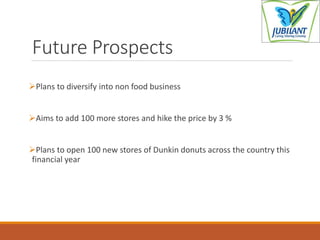
Future Prospects
Plans to diversify into non food business
Aims to add 100 more stores and hike the price by 3 %
Plans to open 100 new stores of Dunkin donuts across the country this
financial year
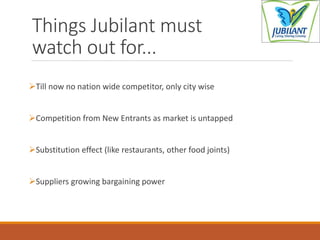
Things Jubilant must
watch out for...
Till now no nation wide competitor, only city wise
Competition from New Entrants as market is untapped
Substitution effect (like restaurants, other food joints)
Suppliers growing bargaining power
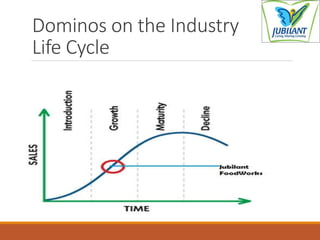
Dominos on the Industry
Life Cycle
Conclusion
Business Model
◦ Relatively inelasticity of Demand Advantage.
Future growth depends on how well retailers are able to innovate,
provide value for money, and keep up and surpass competitors.
The fast-food industry is becoming more global and it seems that will
continue
The growth of the fast-food industry is expected to generally stay the
same over the next few year.
THANK
YOU !

Jubilant food works capstone project

  • 1.
  • 2.
    Group detail:- SAMAR SAHA(37459) NITIN KUMAR PODDAR (37450) BHOJARAJ PATEL (37439) ALOK SINGH (37436)
  • 3.
    History of JubilantFood Works Ltd.  Jubilant FoodWorks Limited (the Company) is a Jubilant Bhartia Group Company.  The Company was incorporated in 1995 and initiated operations in 1996. The Company got listed on the Indian stock exchange in February 2010. Mr. Shyam S. Bhartia, Mr. Hari S. Bhartia and Jubilant Enpro Private Ltd. are the Promoters of the Company. The Company & its subsidiary operates Domino’s Pizza brand with the exclusive rights for India, Nepal, Bangladesh and Sri Lanka.
  • 4.
    Introduction The Company isIndia’s largest and fastest growing food service company, with a network of 844 Domino’s Pizza restaurants (as of February 05, 2015). The Company launched Dunkin’ Donuts in India in April 2012 in Delhi. The Company has 50 Dunkin’ Donuts restaurants in India (as of February 05, 2015).
  • 5.
  • 6.
    SWOT Analysis STRENGTHS  barriersof market entry  domestic market  monetary assistance provided WEAKNESSES  competitive market OPPORTUNITIES  new products and services  new markets  growing demand THREATS  Global economy  Government regulations  Increase in labor costs  Increasing costs  Growing competition and lower profitability  tax changes  Increasing rates of interest
  • 7.
  • 8.
    Porter’s Five CompetitiveForces Force Intensity Comments Degree of Rivalry High Domino’s Pizza has high competition from other pizza brands like Pizza Hut, Smokin Joe, Gracia etc. However, it has created a unique position of “guaranteed delivery in 30 minutes” which helps to wither the competition to some extent. It commands a market share of 65% in the delivery market in which it was the first mover and enjoys sizable brand recall. Also, it has positioned itself on the affordability platform which the lowest pizza priced at Rs 39. The competitive intensity still stands high. Threat of Entry High There are not many barriers to entry apart from introducing products that suits the Indian palate. KFC was the first MNC brand to enter India in 1995 which was followed by influx of other QSR brands such as Domino's and McDonald's (which entered only after researching the market since 1990). Threat of Substitutes High Right from road size eateries to sophisticate dine ins and other national lower-priced fast-food chains such as McDonalds, KFC all pose as strong substitutes for pizzas. Buyer Power Medium Bargaining power of buyers is medium to low in case of pizzas. Supplier Power Low JFL centrally sources all its raw material requirements, thus commanding significant bargaining power over its suppliers. Economies of scale come into play as bulk orders are placed with various suppliers.
  • 9.
  • 10.
    Management Team Chairmen Mr. ShyamS. Bhartia Mr. Hari S. Bhartia Board of Directors Mr. Ajay Kaul Mrs. Rami Nirula Mr. Vijay Marwaha
  • 11.
  • 12.
    Major Players inFast Food Domino’s Pizza Pizza Hut Smokin Joe’s Garcias Pizza KFC Subway
  • 13.
    Market Share indelivery system DOMINOS PIZZA HUT SMOKIN JOES GARCIAS 65 % 20% 7% 2%
  • 15.
    Top Line Analysis 0 200 400 600 800 1000 1200 FY08-09 FY 09-10 FY 10-11 FY 11-12 FY 12-13 236.03 313.91 475.52 765.24 1017.36 Net Sales AmountinRsCr.
  • 16.
    Highlights of F.Y2012-2013 Particulars 2012-2013 (₹ in Cr) 2011-2012 (₹ in Cr) Total Income 1018.52 767.05 Less :- Expenditure 826.29 644.95 Operating Profit 192.85 120.54 Less :- Depreciation 37.57 29.34 Less :- Interest 0 0.34 Profit Before Tax 154.66 92.42 Less :- Tax 49.79 20.43 Profit After Tax (Net Profit) 105.64 72
  • 17.
    Operating Profit Margin ProfitMargin 0 50 100 150 200 FY 08-09 FY 09-10 FY 10-11 FY 11-12 FY 12-13 26.85 34.19 66.94 120.54 192.85 Profit Margin AmountinRsCr.
  • 18.
    Bottom Line Analysis 0 20 40 60 80 100 120 FY08- 09 FY 09- 10 FY 10- 11 FY 10- 11 FY 11- 12 7.76 7.3 32.97 72 105.64 Comparative Net Profit Analysis Net Profit AmountinRsCr
  • 19.
    Book Value PerShare 0 5 10 15 20 25 30 35 40 45 50 FY 08-09 FY 09-10 FY 10-11 FY 11-12 FY 12-13 Amountin₹/share.
  • 20.
    Competitive Analysis Brand No.of Stores Cities Format Dominos 439 100 Own stores Pizza Hut 180 56 Franchisee Smokin’ Joe’s 42 23 Franchisee Garcia’s Pizza 20 1 Own+Franchise e
  • 21.
    Future Prospects Plans todiversify into non food business Aims to add 100 more stores and hike the price by 3 % Plans to open 100 new stores of Dunkin donuts across the country this financial year
  • 22.
    Things Jubilant must watchout for... Till now no nation wide competitor, only city wise Competition from New Entrants as market is untapped Substitution effect (like restaurants, other food joints) Suppliers growing bargaining power
  • 23.
    Dominos on theIndustry Life Cycle
  • 24.
    Conclusion Business Model ◦ Relativelyinelasticity of Demand Advantage. Future growth depends on how well retailers are able to innovate, provide value for money, and keep up and surpass competitors. The fast-food industry is becoming more global and it seems that will continue The growth of the fast-food industry is expected to generally stay the same over the next few year.
  • 25.