Nestlé Case Study
    Lauren and Florian
Mission


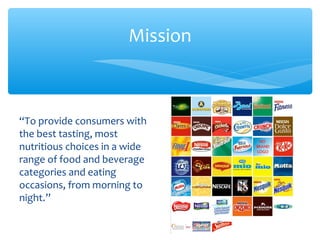
“To provide consumers with
the best tasting, most
nutritious choices in a wide
range of food and beverage
categories and eating
occasions, from morning to
night.”
Nestlé Overview


∗ Nestlé S.A. is a Swiss company, established in 1905
∗ The company started with condensed milk and infant
  formula
∗ Now Nestlé sells baby food, bottled water, cereal,
  chocolate and other confections, frozen food, dairy,
  drinks, food service, health and sports nutrition, pet
  care, and weight management products
Brief Summary of Case


∗ Nestlé was in a good position, but needed to grow
  internally

∗ The company was able to increase its competitive
  advantage by continuing to innovate or renovate
  products, acquire firms that fit its brand, and divest
  itself of lines that were not contributing to earnings
Core Competencies
       as Illustrated in the Case


∗ Global market share and brand recognition
∗ Innovation and market predictions
∗ Ability to acquire new firms and divest itself of
  unprofitable lines in order to strengthen branding and
  earnings
∗ Successful programs to increase efficiency
SWOT Analysis Based on Case Facts


∗ Strengths: Diversified global food company, scale and market
  reach, knowledge of global markets, greatly improved operating
  efficiency, R&D and innovation
∗ Weaknesses: In the past the firm’s revenue was 70% in markets
  with limited potential for growth, weak profitability due to some
  of its acquisitions, some low-margin products
∗ Opportunities: Goal of 4% new organic internal growth, improved
  efficiency, health food industry, maintain momentum
∗ Threats: Fierce competition, food-producing rivals had improved
  operating efficiency, possible brand overextension
Developments Since 2007


∗ Current CEO is Paul Bulcke
∗ The company continued to acquire and divest itself of
  product lines and brands
∗ Global economic downturn
∗ Invests in countries where raw materials are produced
∗ Increased emphasis on environmental awareness and free
  trade and sustainable farming techniques in developing
  countries
Nestlé’s Current Position


∗ Strong sales, operating cash flow, and returns to
  shareholders
∗ Continued momentum, but with volatile currency values
  and raw material prices
∗ Consumer confidence shaky, but balanced by emerging
  markets
∗ 2011 goal of 5-6% organic growth and EBIT margin
  improvement
∗ Focus on functional foods with higher margin, which
  means increased spending in R&D
Competitive Advantages
             and Growth Drivers


Nestlé’s growth drivers are:

∗Nutrition, health, and wellness
∗Emerging markets
∗Out-of-home consumption
∗Premiumization


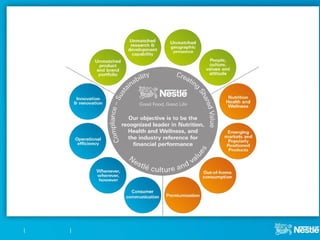
Competitive Advantages
Financial Information


∗   The Group achieved organic growth of 6.2% in 2010
∗   Sales Group 2010: CHF109.7 bn (88.8€ bn)
∗   EBIT 2010: CHF 16.2 bn (13.1 € bn)
∗   Net profit 2010: CHF 34.2 bn (27,7 € bn)
∗   Dividend in 2010 was CHF 1.85 (1.49 €) per share to
    shareholders (an increase of 15.6% compared to 2009)
Recommendations
                    General


∗ Continued focus on sales in emerging markets such Asia,
  Africa, and Latin America
∗ Perhaps raw materials can be sourced from some of these
  emerging markets, provided there is stability
∗ Follow through with constant streamlining of operating
  processes to increase efficiency
∗ Increased advertising: due to Nestlé's strong position it can
  afford to advertise when their competitors might not be
  able to, at the same level
Recommendations
               Specific


∗ Continue to strengthen presence in frozen and
  convenience food industry, as well as the area
  between health food and pharmaceuticals
∗ Strengthen the connection to Nestlé’s commitment
  to ‘green’ movement and sustainable farming to
  brands
∗ Tighten up brand cohesion; may be necessary to
  continue to divest product lines that are not a good
  fit for the company
Conclusion


∗ Through smart strategic management decisions
  Nestle succeeded and became a multinational

∗ Today, Nestle is still the largest food and nutrition
  company in the world in terms of sales               (#42
  Fortunes in 2010)
Sources


∗   Course text’s Nestle case
∗   www.nestle.com
∗   Nestle 2010 Annual Report
∗   http://www.economist.com/node/14744982
∗   www.hoovers.com

Nestlé Case Study

  • 1.
    Nestlé Case Study Lauren and Florian
  • 2.
    Mission “To provide consumerswith the best tasting, most nutritious choices in a wide range of food and beverage categories and eating occasions, from morning to night.”
  • 3.
    Nestlé Overview ∗ NestléS.A. is a Swiss company, established in 1905 ∗ The company started with condensed milk and infant formula ∗ Now Nestlé sells baby food, bottled water, cereal, chocolate and other confections, frozen food, dairy, drinks, food service, health and sports nutrition, pet care, and weight management products
  • 4.
    Brief Summary ofCase ∗ Nestlé was in a good position, but needed to grow internally ∗ The company was able to increase its competitive advantage by continuing to innovate or renovate products, acquire firms that fit its brand, and divest itself of lines that were not contributing to earnings
  • 5.
    Core Competencies as Illustrated in the Case ∗ Global market share and brand recognition ∗ Innovation and market predictions ∗ Ability to acquire new firms and divest itself of unprofitable lines in order to strengthen branding and earnings ∗ Successful programs to increase efficiency
  • 6.
    SWOT Analysis Basedon Case Facts ∗ Strengths: Diversified global food company, scale and market reach, knowledge of global markets, greatly improved operating efficiency, R&D and innovation ∗ Weaknesses: In the past the firm’s revenue was 70% in markets with limited potential for growth, weak profitability due to some of its acquisitions, some low-margin products ∗ Opportunities: Goal of 4% new organic internal growth, improved efficiency, health food industry, maintain momentum ∗ Threats: Fierce competition, food-producing rivals had improved operating efficiency, possible brand overextension
  • 7.
    Developments Since 2007 ∗Current CEO is Paul Bulcke ∗ The company continued to acquire and divest itself of product lines and brands ∗ Global economic downturn ∗ Invests in countries where raw materials are produced ∗ Increased emphasis on environmental awareness and free trade and sustainable farming techniques in developing countries
  • 8.
    Nestlé’s Current Position ∗Strong sales, operating cash flow, and returns to shareholders ∗ Continued momentum, but with volatile currency values and raw material prices ∗ Consumer confidence shaky, but balanced by emerging markets ∗ 2011 goal of 5-6% organic growth and EBIT margin improvement ∗ Focus on functional foods with higher margin, which means increased spending in R&D
  • 9.
    Competitive Advantages and Growth Drivers Nestlé’s growth drivers are: ∗Nutrition, health, and wellness ∗Emerging markets ∗Out-of-home consumption ∗Premiumization Competitive Advantages
  • 11.
    Financial Information ∗ The Group achieved organic growth of 6.2% in 2010 ∗ Sales Group 2010: CHF109.7 bn (88.8€ bn) ∗ EBIT 2010: CHF 16.2 bn (13.1 € bn) ∗ Net profit 2010: CHF 34.2 bn (27,7 € bn) ∗ Dividend in 2010 was CHF 1.85 (1.49 €) per share to shareholders (an increase of 15.6% compared to 2009)
  • 12.
    Recommendations General ∗ Continued focus on sales in emerging markets such Asia, Africa, and Latin America ∗ Perhaps raw materials can be sourced from some of these emerging markets, provided there is stability ∗ Follow through with constant streamlining of operating processes to increase efficiency ∗ Increased advertising: due to Nestlé's strong position it can afford to advertise when their competitors might not be able to, at the same level
  • 13.
    Recommendations Specific ∗ Continue to strengthen presence in frozen and convenience food industry, as well as the area between health food and pharmaceuticals ∗ Strengthen the connection to Nestlé’s commitment to ‘green’ movement and sustainable farming to brands ∗ Tighten up brand cohesion; may be necessary to continue to divest product lines that are not a good fit for the company
  • 14.
    Conclusion ∗ Through smartstrategic management decisions Nestle succeeded and became a multinational ∗ Today, Nestle is still the largest food and nutrition company in the world in terms of sales (#42 Fortunes in 2010)
  • 15.
    Sources ∗ Course text’s Nestle case ∗ www.nestle.com ∗ Nestle 2010 Annual Report ∗ http://www.economist.com/node/14744982 ∗ www.hoovers.com