Journal
club
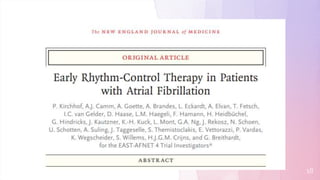
EAST-AFNET trial
Early Rhythm-Control Therapy in Patients with
Atrial Fibrillation
1
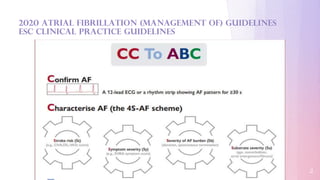
2020 Atrial Fibrillation (Management of) Guidelines
ESC Clinical Practice Guidelines
2
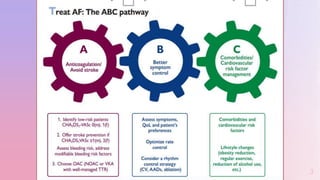
3
4
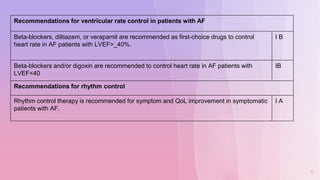
Recommendations for ventricular rate control in patients with AF
Beta-blockers, diltiazem, or verapamil are recommended as first-choice drugs to control
heart rate in AF patients with LVEF>_40%.
I B
Beta-blockers and/or digoxin are recommended to control heart rate in AF patients with
LVEF<40
IB
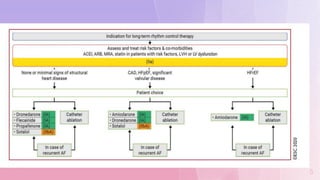
Recommendations for rhythm control
Rhythm control therapy is recommended for symptom and QoL improvement in symptomatic
patients with AF.
I A
5
Rate vs rhythm strategy control in
Af
 AFFIRM trial
 ATHENA trial
 AF-CHF trial
6
7
AFFIRM trial
 first and largest study to compare rate-control and rhythm-control
strategies for the treatment of AF.
 4,060 patients with non-valvular AF and a high risk of stroke or death
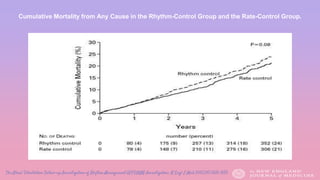
 AFFIRM demonstrated no survival advantage between rhythm-
control and rate-control (using ß-blocker, calcium channel blocker
and/or digoxin) strategies. (mortality at five years, 23.8 percent and
21.3 percent, respectively; hazard ratio, 1.15 [95 percent confidence
interval, 0.99 to 1.34]; P=0.08).)
 All patients were anticoagulated on warfarin initially, but patients in the
rhythm control arm who maintained normal sinus rhythm for at least
4 consecutive weeks could stop.
8
The Atrial Fibrillation Follow-up Investigation of Rhythm Management (AFFIRM) Investigators. N Engl J Med 2002;347:1825-1833.
Cumulative Mortality from Any Cause in the Rhythm-Control Group and the Rate-Control Group.
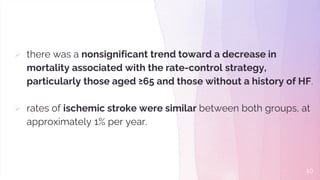
 there was a nonsignificant trend toward a decrease in
mortality associated with the rate-control strategy,
particularly those aged ≥65 and those without a history of HF.
 rates of ischemic stroke were similar between both groups, at
approximately 1% per year.
10
A Trial With Dronedarone to
Prevent Hospitalization or
Death in Patients With Atrial
Fibrillation (ATHENA) trial
11
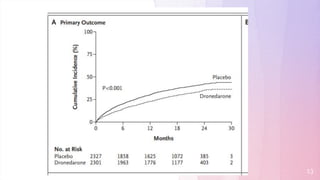
 a multicenter trial to evaluate the use of dronedarone in 4628 patients with atrial fibrillation who
had additional risk factors for death
 Dronedarone reduced the incidence of hospitalization due to cardiovascular events or death in
patients with atrial fibrillation
 The primary outcome (first hospitalization due to cardiovascular events or death) occurred in 734
patients (31.9%) in the dronedarone group and in 917 patients (39.4%) in the placebo group, with a
hazard ratio for dronedarone of 0.76 (95% confidence interval [CI], 0.69 to 0.84; P<0.001).
 The dronedarone group had higher rates of bradycardia, QT-interval prolongation, nausea, diarrhea,
rash, and an increased serum creatinine level than the placebo group. Rates of thyroid- and
pulmonary-related adverse events were not significantly different between the two groups.
12
13
The Atrial Fibrillation and
Congestive Heart Failure (AF-
CHF) trial-2008
 multicenter, randomized trial comparing the maintenance of sinus rhythm
(rhythm control) with control of the ventricular rate (rate control) in patients
with a left ventricular ejection fraction of 35% or less, symptoms of
congestive heart failure, and a history of atrial fibrillation.
 1376 patients
 a routine strategy of rhythm control does not reduce the rate of death from
cardiovascular causes, as compared with a rate-control strategy
(Cardiovascular mortality 27% vs. 25% (unadjusted HR 1.06; 95% CI 0.86-1.3;
P=0.59)
14
 There was also a series of smaller studies performed, including the
 Pharmacological Intervention in Atrial Fibrillation (PIAF)-2000
 Strategies of Treatment of Atrial Fibrillation (STAF)-2003
 How to Treat Chronic Atrial Fibrillation (HOT CAFÉ)-2004
 Virtually all studies have shown that primary rate control is non
inferior to rhythm control.
 PIAF which enrolled patients with a short history of AF (< 1 year)-
improvement of exercise capacity in the rhythm control arm when
compared to a rate control therapy.
15
Thus, current guidelines for the treatment of AF and
medical practice base the decision for “rhythm control”
or “rate control” treatment on individual factors that
are often influenced by non-systematic impressions of
the treating physician.
16
Study Rationale
Why has rhythm control therapy of AF not been effective
in the prevention of deaths and stroke?
 tested interventions, mainly ion channel blocking drugs,
may have proarrhythmic effects
 rhythm control interventions used in the published trials
were only moderately effective (e.g. sinus rhythm rates
at the end of followup in the AFFIRM trial were 30% in the
“rate control” group and 60% in the rhythm control group 17
18
Study Objectives
 To test whether an early, comprehensive, rhythm control
therapy can prevent adverse cardiovascular outcomes in
patients with atrial fibrillation (AF) compared to usual care
19
Trial Design and Oversight
 international, investigator-initiated, parallel-
group, randomized, open, blinded outcome-
assessment trial
 planned and conducted by the Atrial Fibrillation
Network (AFNET) and the European Heart
Rhythm Association.
20
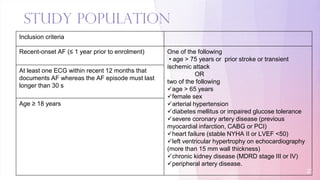
Study Population
21
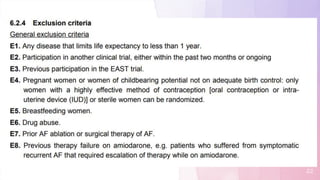
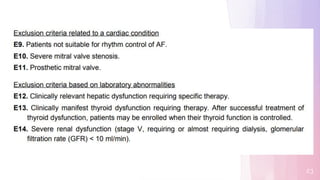
Inclusion criteria
Recent-onset AF (≤ 1 year prior to enrolment) One of the following
• age > 75 years or prior stroke or transient
ischemic attack
OR
two of the following
age > 65 years
female sex
arterial hypertension
diabetes mellitus or impaired glucose tolerance
severe coronary artery disease (previous
myocardial infarction, CABG or PCI)
heart failure (stable NYHA II or LVEF <50)
left ventricular hypertrophy on echocardiography
(more than 15 mm wall thickness)
chronic kidney disease (MDRD stage III or IV)
peripheral artery disease.
At least one ECG within recent 12 months that
documents AF whereas the AF episode must last
longer than 30 s
Age ≥ 18 years
22
23
STATISTICAL CONSIDERATIONS
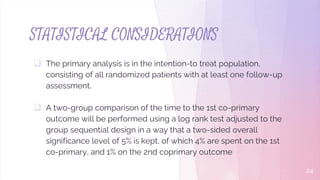
 The primary analysis is in the intention-to treat population,
consisting of all randomized patients with at least one follow-up
assessment.
 A two-group comparison of the time to the 1st co-primary
outcome will be performed using a log rank test adjusted to the
group sequential design in a way that a two-sided overall
significance level of 5% is kept, of which 4% are spent on the 1st
co-primary, and 1% on the 2nd coprimary outcome
24
METHODOLOGY
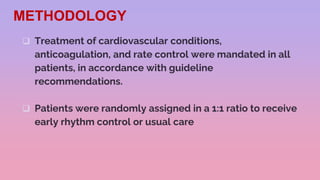
 Treatment of cardiovascular conditions,
anticoagulation, and rate control were mandated in all
patients, in accordance with guideline
recommendations.
 Patients were randomly assigned in a 1:1 ratio to receive
early rhythm control or usual care
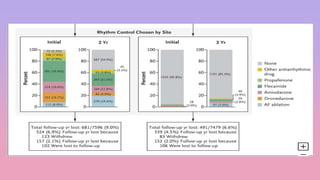
 Early rhythm control required antiarrhythmic drugs or atrial fibrillation ablation, as
well as cardioversion of persistent atrial fibrillation, to be initiated early after
randomization
 Patients who were randomly assigned to early rhythm-control therapy were asked
to transmit a patient-operated single-lead electrocardiogram (ECG) (Vitaphone)
twice per week and when symptomatic.
 All abnormal ECG recordings were forwarded to the study site.
 Documentation of recurrent atrial fibrillation triggered an in-person visit from the
site team to escalate rhythm-control therapy as clinically indicated.
OUTCOMES AND ADVERSE
EVENTS
 The first primary outcome was a composite of
 Death from cardiovascular causes
 stroke (either ischemic and hemorrhagic)
 Hospitalization with worsening of heart failure
 Acute coronary syndrome
 The second primary outcome was the number of
nights spent in the hospital per year.
Secondary outcomes reported here include
 each component of the first primary outcome (analyzed in a time-
to-event analysis)
 Rhythm
 left ventricular function
 quality of life, assessed with
 European Quality of Life–5 Dimensions [EQ-5D]
 visual analogue scale
 12-Item Short-Form General Health Survey [SF-12])
 atrial fibrillation–related symptoms (assessed as the European Heart
Rhythm Association [EHRA] score)
 cognitive function (based on the Montreal Cognitive Assessment
[MoCA]) at 2 years
The primary safety outcome was a
 composite of death from any cause
 Stroke/TIA
 prespecified serious adverse events-
 arrythmias(TDP,VT,VF,bradycardia
 Other complications of rhythm-control therapy.
RESULTS
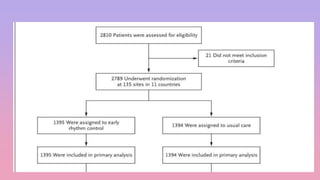
 A total of 2789 patients underwent randomization across 135 sites in 11 European countries
between July 28, 2011, and December 30, 2016.
 1395 assigned to early rhythm control and 1394 assigned to usual care
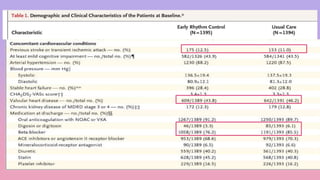
 Most patients received guideline-recommended anticoagulation and therapy for
cardiovascular conditions.
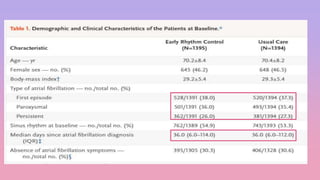
 Patients were enrolled a median of 36 days (interquartile range, 6 to 112) after the first
diagnosis of atrial fibrillation
 Demographic and clinical characteristics were generally well balanced between the groups,
although the use of digitalis glycosides and beta-blockers was slightly more common
(probably because of the group assignment), and statin use slightly less common, among
the patients assigned to usual care
PRIMARY OUTCOMES
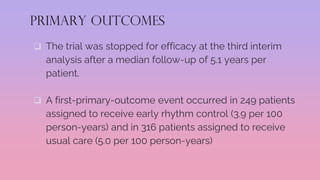
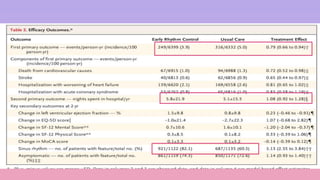
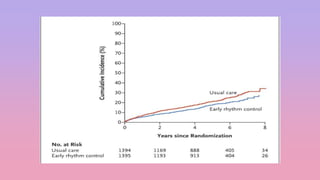
 The trial was stopped for efficacy at the third interim
analysis after a median follow-up of 5.1 years per
patient.
 A first-primary-outcome event occurred in 249 patients
assigned to receive early rhythm control (3.9 per 100
person-years) and in 316 patients assigned to receive
usual care (5.0 per 100 person-years)
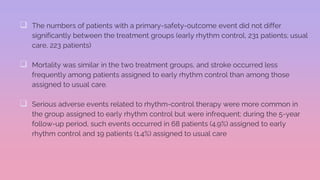
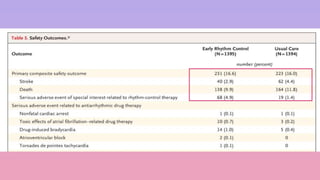
 The numbers of patients with a primary-safety-outcome event did not differ
significantly between the treatment groups (early rhythm control, 231 patients; usual
care, 223 patients)
 Mortality was similar in the two treatment groups, and stroke occurred less
frequently among patients assigned to early rhythm control than among those
assigned to usual care.
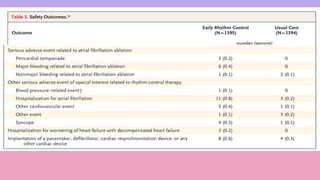
 Serious adverse events related to rhythm-control therapy were more common in
the group assigned to early rhythm control but were infrequent; during the 5-year
follow-up period, such events occurred in 68 patients (4.9%) assigned to early
rhythm control and 19 patients (1.4%) assigned to usual care
Discussion
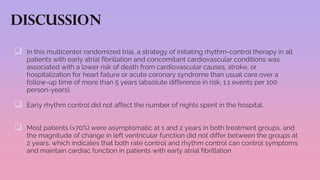
 In this multicenter randomized trial, a strategy of initiating rhythm-control therapy in all
patients with early atrial fibrillation and concomitant cardiovascular conditions was
associated with a lower risk of death from cardiovascular causes, stroke, or
hospitalization for heart failure or acute coronary syndrome than usual care over a
follow-up time of more than 5 years (absolute difference in risk, 1.1 events per 100
person-years).
 Early rhythm control did not affect the number of nights spent in the hospital.
 Most patients (>70%) were asymptomatic at 1 and 2 years in both treatment groups, and
the magnitude of change in left ventricular function did not differ between the groups at
2 years, which indicates that both rate control and rhythm control can control symptoms
and maintain cardiac function in patients with early atrial fibrillation
Difference from
previous trials
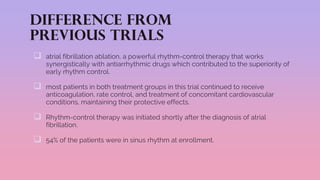
 atrial fibrillation ablation, a powerful rhythm-control therapy that works
synergistically with antiarrhythmic drugs which contributed to the superiority of
early rhythm control.
 most patients in both treatment groups in this trial continued to receive
anticoagulation, rate control, and treatment of concomitant cardiovascular
conditions, maintaining their protective effects.
 Rhythm-control therapy was initiated shortly after the diagnosis of atrial
fibrillation.
 54% of the patients were in sinus rhythm at enrollment.
Limitations
 open trial design
 only patients with early atrial fibrillation, were enrolled,
thus the results may not be generalizable.
43
Take home message
 As per this trial,it is prudent to prefer early rhythm
control therapy in atrial fibrillation.
 New strategies, eg RF ablation are superior to
AAD and helpful in maintaining sinus rhythm and
alleviating symptoms related to AF.
44

Journal club af

  • 1.
    Journal club EAST-AFNET trial Early Rhythm-ControlTherapy in Patients with Atrial Fibrillation 1
  • 2.
    2020 Atrial Fibrillation(Management of) Guidelines ESC Clinical Practice Guidelines 2
  • 3.
  • 4.
    4 Recommendations for ventricularrate control in patients with AF Beta-blockers, diltiazem, or verapamil are recommended as first-choice drugs to control heart rate in AF patients with LVEF>_40%. I B Beta-blockers and/or digoxin are recommended to control heart rate in AF patients with LVEF<40 IB Recommendations for rhythm control Rhythm control therapy is recommended for symptom and QoL improvement in symptomatic patients with AF. I A
  • 5.
  • 6.
    Rate vs rhythmstrategy control in Af  AFFIRM trial  ATHENA trial  AF-CHF trial 6
  • 7.
  • 8.
     first andlargest study to compare rate-control and rhythm-control strategies for the treatment of AF.  4,060 patients with non-valvular AF and a high risk of stroke or death  AFFIRM demonstrated no survival advantage between rhythm- control and rate-control (using ß-blocker, calcium channel blocker and/or digoxin) strategies. (mortality at five years, 23.8 percent and 21.3 percent, respectively; hazard ratio, 1.15 [95 percent confidence interval, 0.99 to 1.34]; P=0.08).)  All patients were anticoagulated on warfarin initially, but patients in the rhythm control arm who maintained normal sinus rhythm for at least 4 consecutive weeks could stop. 8
  • 9.
    The Atrial FibrillationFollow-up Investigation of Rhythm Management (AFFIRM) Investigators. N Engl J Med 2002;347:1825-1833. Cumulative Mortality from Any Cause in the Rhythm-Control Group and the Rate-Control Group.
  • 10.
     there wasa nonsignificant trend toward a decrease in mortality associated with the rate-control strategy, particularly those aged ≥65 and those without a history of HF.  rates of ischemic stroke were similar between both groups, at approximately 1% per year. 10
  • 11.
    A Trial WithDronedarone to Prevent Hospitalization or Death in Patients With Atrial Fibrillation (ATHENA) trial 11
  • 12.
     a multicentertrial to evaluate the use of dronedarone in 4628 patients with atrial fibrillation who had additional risk factors for death  Dronedarone reduced the incidence of hospitalization due to cardiovascular events or death in patients with atrial fibrillation  The primary outcome (first hospitalization due to cardiovascular events or death) occurred in 734 patients (31.9%) in the dronedarone group and in 917 patients (39.4%) in the placebo group, with a hazard ratio for dronedarone of 0.76 (95% confidence interval [CI], 0.69 to 0.84; P<0.001).  The dronedarone group had higher rates of bradycardia, QT-interval prolongation, nausea, diarrhea, rash, and an increased serum creatinine level than the placebo group. Rates of thyroid- and pulmonary-related adverse events were not significantly different between the two groups. 12
  • 13.
  • 14.
    The Atrial Fibrillationand Congestive Heart Failure (AF- CHF) trial-2008  multicenter, randomized trial comparing the maintenance of sinus rhythm (rhythm control) with control of the ventricular rate (rate control) in patients with a left ventricular ejection fraction of 35% or less, symptoms of congestive heart failure, and a history of atrial fibrillation.  1376 patients  a routine strategy of rhythm control does not reduce the rate of death from cardiovascular causes, as compared with a rate-control strategy (Cardiovascular mortality 27% vs. 25% (unadjusted HR 1.06; 95% CI 0.86-1.3; P=0.59) 14
  • 15.
     There wasalso a series of smaller studies performed, including the  Pharmacological Intervention in Atrial Fibrillation (PIAF)-2000  Strategies of Treatment of Atrial Fibrillation (STAF)-2003  How to Treat Chronic Atrial Fibrillation (HOT CAFÉ)-2004  Virtually all studies have shown that primary rate control is non inferior to rhythm control.  PIAF which enrolled patients with a short history of AF (< 1 year)- improvement of exercise capacity in the rhythm control arm when compared to a rate control therapy. 15
  • 16.
    Thus, current guidelinesfor the treatment of AF and medical practice base the decision for “rhythm control” or “rate control” treatment on individual factors that are often influenced by non-systematic impressions of the treating physician. 16
  • 17.
    Study Rationale Why hasrhythm control therapy of AF not been effective in the prevention of deaths and stroke?  tested interventions, mainly ion channel blocking drugs, may have proarrhythmic effects  rhythm control interventions used in the published trials were only moderately effective (e.g. sinus rhythm rates at the end of followup in the AFFIRM trial were 30% in the “rate control” group and 60% in the rhythm control group 17
  • 18.
  • 19.
    Study Objectives  Totest whether an early, comprehensive, rhythm control therapy can prevent adverse cardiovascular outcomes in patients with atrial fibrillation (AF) compared to usual care 19
  • 20.
    Trial Design andOversight  international, investigator-initiated, parallel- group, randomized, open, blinded outcome- assessment trial  planned and conducted by the Atrial Fibrillation Network (AFNET) and the European Heart Rhythm Association. 20
  • 21.
    Study Population 21 Inclusion criteria Recent-onsetAF (≤ 1 year prior to enrolment) One of the following • age > 75 years or prior stroke or transient ischemic attack OR two of the following age > 65 years female sex arterial hypertension diabetes mellitus or impaired glucose tolerance severe coronary artery disease (previous myocardial infarction, CABG or PCI) heart failure (stable NYHA II or LVEF <50) left ventricular hypertrophy on echocardiography (more than 15 mm wall thickness) chronic kidney disease (MDRD stage III or IV) peripheral artery disease. At least one ECG within recent 12 months that documents AF whereas the AF episode must last longer than 30 s Age ≥ 18 years
  • 22.
  • 23.
  • 24.
    STATISTICAL CONSIDERATIONS  Theprimary analysis is in the intention-to treat population, consisting of all randomized patients with at least one follow-up assessment.  A two-group comparison of the time to the 1st co-primary outcome will be performed using a log rank test adjusted to the group sequential design in a way that a two-sided overall significance level of 5% is kept, of which 4% are spent on the 1st co-primary, and 1% on the 2nd coprimary outcome 24
  • 25.
    METHODOLOGY  Treatment ofcardiovascular conditions, anticoagulation, and rate control were mandated in all patients, in accordance with guideline recommendations.  Patients were randomly assigned in a 1:1 ratio to receive early rhythm control or usual care
  • 26.
     Early rhythmcontrol required antiarrhythmic drugs or atrial fibrillation ablation, as well as cardioversion of persistent atrial fibrillation, to be initiated early after randomization  Patients who were randomly assigned to early rhythm-control therapy were asked to transmit a patient-operated single-lead electrocardiogram (ECG) (Vitaphone) twice per week and when symptomatic.  All abnormal ECG recordings were forwarded to the study site.  Documentation of recurrent atrial fibrillation triggered an in-person visit from the site team to escalate rhythm-control therapy as clinically indicated.
  • 27.
    OUTCOMES AND ADVERSE EVENTS The first primary outcome was a composite of  Death from cardiovascular causes  stroke (either ischemic and hemorrhagic)  Hospitalization with worsening of heart failure  Acute coronary syndrome  The second primary outcome was the number of nights spent in the hospital per year.
  • 28.
    Secondary outcomes reportedhere include  each component of the first primary outcome (analyzed in a time- to-event analysis)  Rhythm  left ventricular function  quality of life, assessed with  European Quality of Life–5 Dimensions [EQ-5D]  visual analogue scale  12-Item Short-Form General Health Survey [SF-12])  atrial fibrillation–related symptoms (assessed as the European Heart Rhythm Association [EHRA] score)  cognitive function (based on the Montreal Cognitive Assessment [MoCA]) at 2 years
  • 29.
    The primary safetyoutcome was a  composite of death from any cause  Stroke/TIA  prespecified serious adverse events-  arrythmias(TDP,VT,VF,bradycardia  Other complications of rhythm-control therapy.
  • 30.
    RESULTS  A totalof 2789 patients underwent randomization across 135 sites in 11 European countries between July 28, 2011, and December 30, 2016.  1395 assigned to early rhythm control and 1394 assigned to usual care  Most patients received guideline-recommended anticoagulation and therapy for cardiovascular conditions.  Patients were enrolled a median of 36 days (interquartile range, 6 to 112) after the first diagnosis of atrial fibrillation  Demographic and clinical characteristics were generally well balanced between the groups, although the use of digitalis glycosides and beta-blockers was slightly more common (probably because of the group assignment), and statin use slightly less common, among the patients assigned to usual care
  • 35.
    PRIMARY OUTCOMES  Thetrial was stopped for efficacy at the third interim analysis after a median follow-up of 5.1 years per patient.  A first-primary-outcome event occurred in 249 patients assigned to receive early rhythm control (3.9 per 100 person-years) and in 316 patients assigned to receive usual care (5.0 per 100 person-years)
  • 38.
     The numbersof patients with a primary-safety-outcome event did not differ significantly between the treatment groups (early rhythm control, 231 patients; usual care, 223 patients)  Mortality was similar in the two treatment groups, and stroke occurred less frequently among patients assigned to early rhythm control than among those assigned to usual care.  Serious adverse events related to rhythm-control therapy were more common in the group assigned to early rhythm control but were infrequent; during the 5-year follow-up period, such events occurred in 68 patients (4.9%) assigned to early rhythm control and 19 patients (1.4%) assigned to usual care
  • 41.
    Discussion  In thismulticenter randomized trial, a strategy of initiating rhythm-control therapy in all patients with early atrial fibrillation and concomitant cardiovascular conditions was associated with a lower risk of death from cardiovascular causes, stroke, or hospitalization for heart failure or acute coronary syndrome than usual care over a follow-up time of more than 5 years (absolute difference in risk, 1.1 events per 100 person-years).  Early rhythm control did not affect the number of nights spent in the hospital.  Most patients (>70%) were asymptomatic at 1 and 2 years in both treatment groups, and the magnitude of change in left ventricular function did not differ between the groups at 2 years, which indicates that both rate control and rhythm control can control symptoms and maintain cardiac function in patients with early atrial fibrillation
  • 42.
    Difference from previous trials atrial fibrillation ablation, a powerful rhythm-control therapy that works synergistically with antiarrhythmic drugs which contributed to the superiority of early rhythm control.  most patients in both treatment groups in this trial continued to receive anticoagulation, rate control, and treatment of concomitant cardiovascular conditions, maintaining their protective effects.  Rhythm-control therapy was initiated shortly after the diagnosis of atrial fibrillation.  54% of the patients were in sinus rhythm at enrollment.
  • 43.
    Limitations  open trialdesign  only patients with early atrial fibrillation, were enrolled, thus the results may not be generalizable. 43
  • 44.
    Take home message As per this trial,it is prudent to prefer early rhythm control therapy in atrial fibrillation.  New strategies, eg RF ablation are superior to AAD and helpful in maintaining sinus rhythm and alleviating symptoms related to AF. 44