AF TRIALS
2002 Atrial Fibrillation Follow-up Investigation of Rhythm Management (AFFIRM)
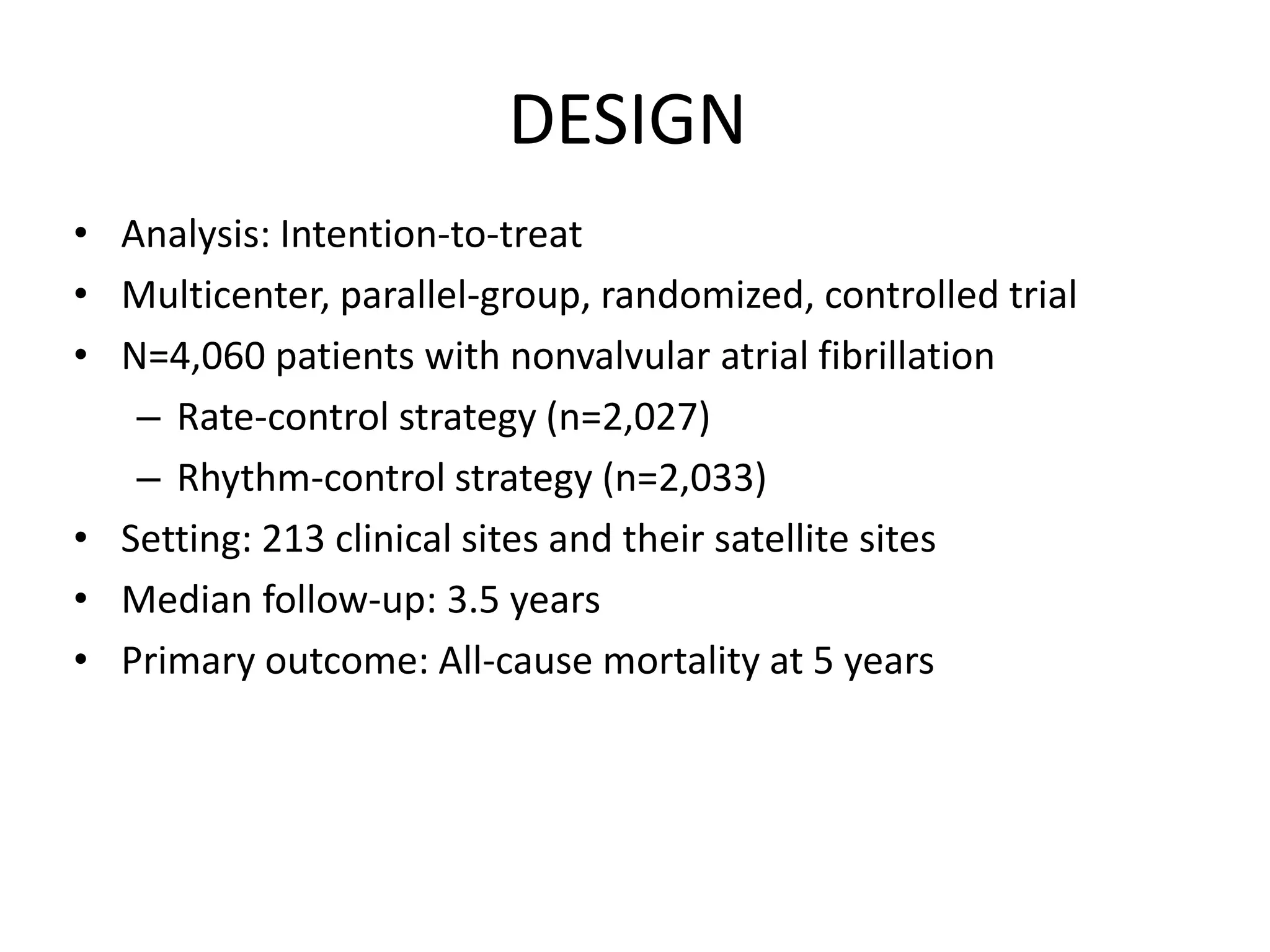
DESIGN
• Analysis: Intention-to-treat
• Multicenter, parallel-group, randomized, controlled trial
• N=4,060 patients with nonvalvular atrial fibrillation
– Rate-control strategy (n=2,027)
– Rhythm-control strategy (n=2,033)
• Setting: 213 clinical sites and their satellite sites
• Median follow-up: 3.5 years
• Primary outcome: All-cause mortality at 5 years
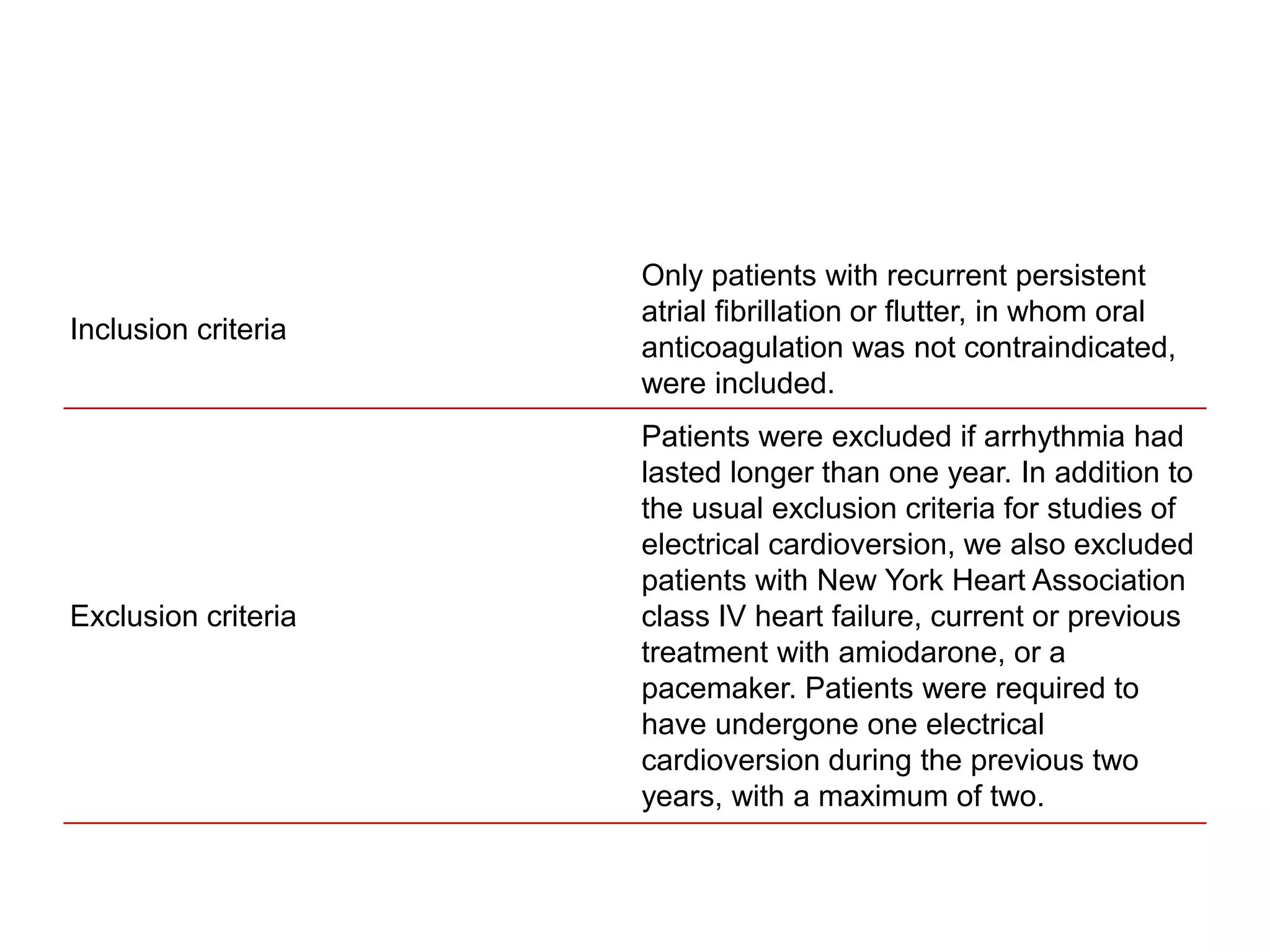
Inclusion criteria
Only patients with recurrent persistent
atrial fibrillation or flutter, in whom oral
anticoagulation was not contraindicated,
were included.
Exclusion criteria
Patients were excluded if arrhythmia had
lasted longer than one year. In addition to
the usual exclusion criteria for studies of
electrical cardioversion, we also excluded
patients with New York Heart Association
class IV heart failure, current or previous
treatment with amiodarone, or a
pacemaker. Patients were required to
have undergone one electrical
cardioversion during the previous two
years, with a maximum of two.
Interventions
• Rate-Control Strategy
– HR goal <80 with rest, <110 with activity
– Drugs to achieve control:
• Beta-blockers, CCB (eg verapamil and diltiazem), OR
digoxin
– Anticoagulation with warfarin (goal INR 2-3)
• Rhythm-Control Strategy
– Anti-arrhythmic agent chosen by treating physician, and
may include cardioversion
– Drugs to achieve rhythm control:
• Class Ia (quinidine, procainamide, disopyramide), 1c (eg
flecainide), III (eg Amiodarone, Sotalol)
– Warfarin for anticoagulation, but can be stopped if sinus
rhythm maintained for 4 weeks
• If patients fail either rate/rhythm control, non-pharamcologic
therapy can be considered (eg ablation, maze procedure, and
pacing techniques)
Wyse DG, N Engl J Med. 2002;347(23):1825
• The results of AFFIRM, and other rate versus rhythm
trials suggest that there is no advantage of rhythm
control over rate control for the treatment of atrial
fibrillation with respect to major cardiovascular
outcomes
• However, randomized controlled trials often do not
fully represent real life situations
• Registry data may be of value to complement
information derived from randomized controlled trials
• The RecordAF Registry was established to trace the
influence of the physician’s choice of a rate versus
rhythm control strategy for consecutive patients with
first onset or recent recurrent atrial fibrillation
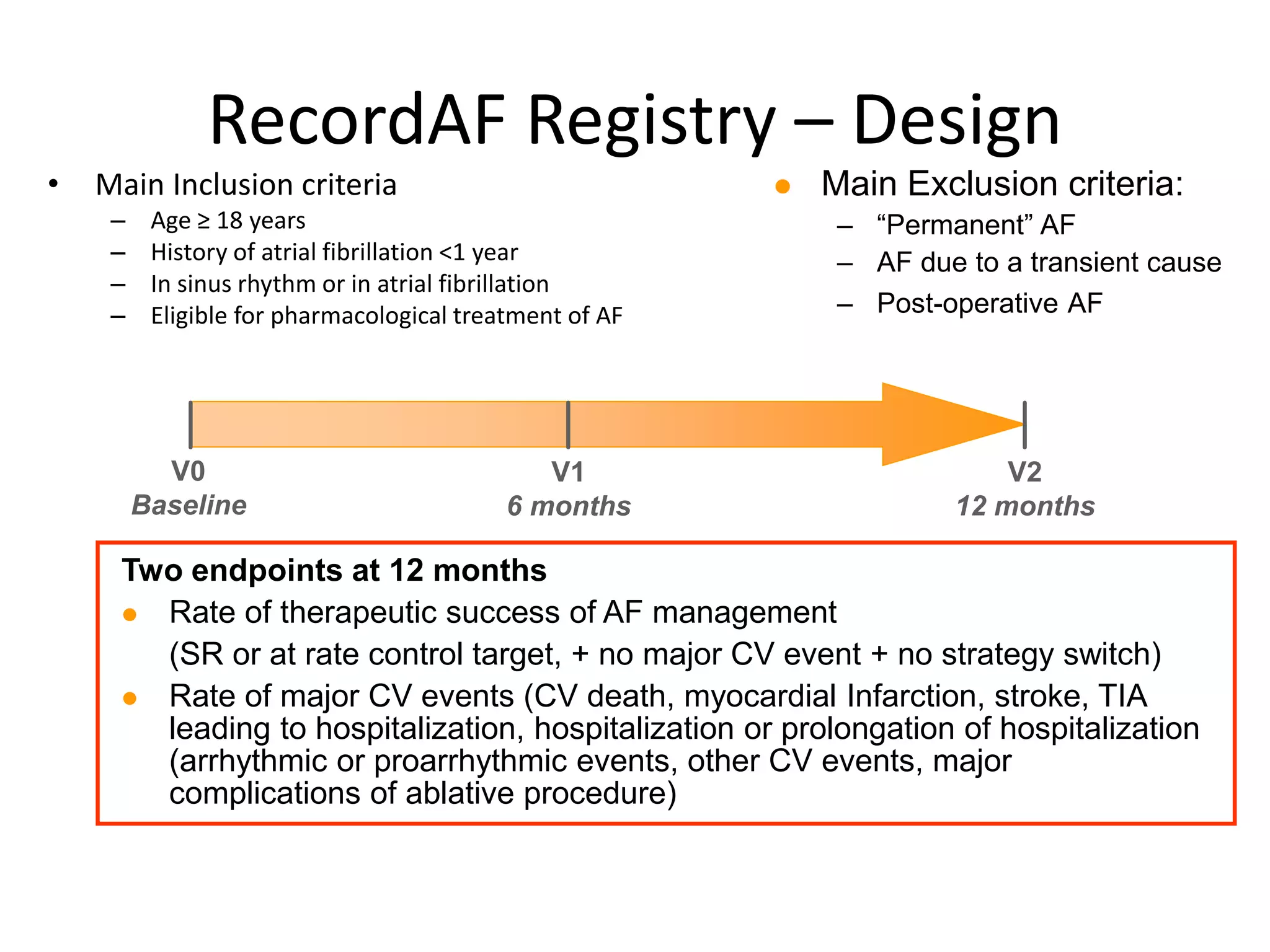
RecordAF Registry – Design
• Main Inclusion criteria
– Age ≥ 18 years
– History of atrial fibrillation <1 year
– In sinus rhythm or in atrial fibrillation
– Eligible for pharmacological treatment of AF
V0
Baseline
V1
6 months
V2
12 months
Two endpoints at 12 months
 Rate of therapeutic success of AF management
(SR or at rate control target, + no major CV event + no strategy switch)
 Rate of major CV events (CV death, myocardial Infarction, stroke, TIA
leading to hospitalization, hospitalization or prolongation of hospitalization
(arrhythmic or proarrhythmic events, other CV events, major
complications of ablative procedure)
 Main Exclusion criteria:
– “Permanent” AF
– AF due to a transient cause
– Post-operative AF
RecordAF Registry - Conclusions
• In a cardiology setting rhythm control was preferred (55%)
• AF progressed more rapidly to a permanent status at
1 year with rate control (54%) than with rhythm control (13%)
• Therapeutic success was achieved more frequently in patients treated by
rhythm control (60% vs. 47%), driven by 81% in SR in the rhythm control
group and 74% at HR target of ≤ 80 bpm at
1 year in the rate control group
• The high occurrence of CV clinical events was dependent on co-
morbidity rather than the choice of strategy
• In real life, the better success of AF management with rhythm control did
not translate into better outcomes
• These results confirm and complement results from previous controlled
randomized trials
RACE II
RAte Control Efficacy in Permanent Atrial
Fibrillation
A Randomized Comparison of Lenient Rate Control
versus Strict Rate Control Concerning Morbidity and
Mortality
 Rates of complications and death were similar
in patients treated with rate-control and rhythm-
control therapy
 Since then, rate control has become front-line
therapy in the management of AF
The optimal level of heart-rate control during
AF is unknown
AFFIRM, RACE
Wyse et al. New Engl J Med 2002
Van Gelder et al. New Engl J Med 2002
ACC/AHA/ESC 2006 Guidelines
 Strict rate control
 At rest: 60 - 80
 During moderate exercise: 90-115
Fuster et al. Guidelines J Am Coll Cardiol 2006
Hypothesis
Lenient rate control is not inferior to
strict rate control in patients with
permanent AF in terms of
cardiovascular morbidity and mortality
RACE II trial
 Prospective, randomized, open trial with blinded
endpoint evaluation
 Multicenter, noninferiority trial conducted in The
Netherlands
 2-3 years follow-up
Inclusion criteria
 Permanent AF ≤ 12 months
 Resting heart rate > 80 bpm
 On oral anticoagulation
 Age ≤ 80 years
Exclusion criteria
 Paroxysmal or transient AF
 Known contra-indications for either strict or
lenient rate control (e.g. previous adverse effects
on rate control drugs)
 Unstable heart failure
 Cardiac surgery < 3 months
 Stroke
 Current or foreseen PM/ ICD/ CRT
 Inability to walk or bike
Permanent AF > 80 bpm
lenient strict
HR < 110 bpm
(12 lead ECG)
HR < 80 bpm (12 lead ECG)
and
HR < 110 bpm (at 25% duration of
maximal exercise time)
After achieving rate control target:
Holter for safety
 Patients were treated with negative dromotropic
drugs (i.e. beta-blockers, non-dihydropyridine
calcium-channel blockers and digoxin, alone or in
combination).
 Dosages of drugs were increased or drugs
combined until the heart rate target or targets
were achieved.
Treatment
Primary outcome
 Cardiovascular mortality
 Hospitalization for heart failure
 Stroke, systemic emboli, major bleeding
 Syncope, sustained VT, cardiac arrest
 Life-threatening adverse effects of RC drugs
 Pacemaker implantation for bradycardia
 ICD implantation for ventricular arrhythmias
Baseline characteristics
Lenient control Strict control
n= 311 n=303
CHADS2 score 1.4±1.0 1.4±1.2
0-1 57% 64%
2 30% 22%
3-6 13% 14%
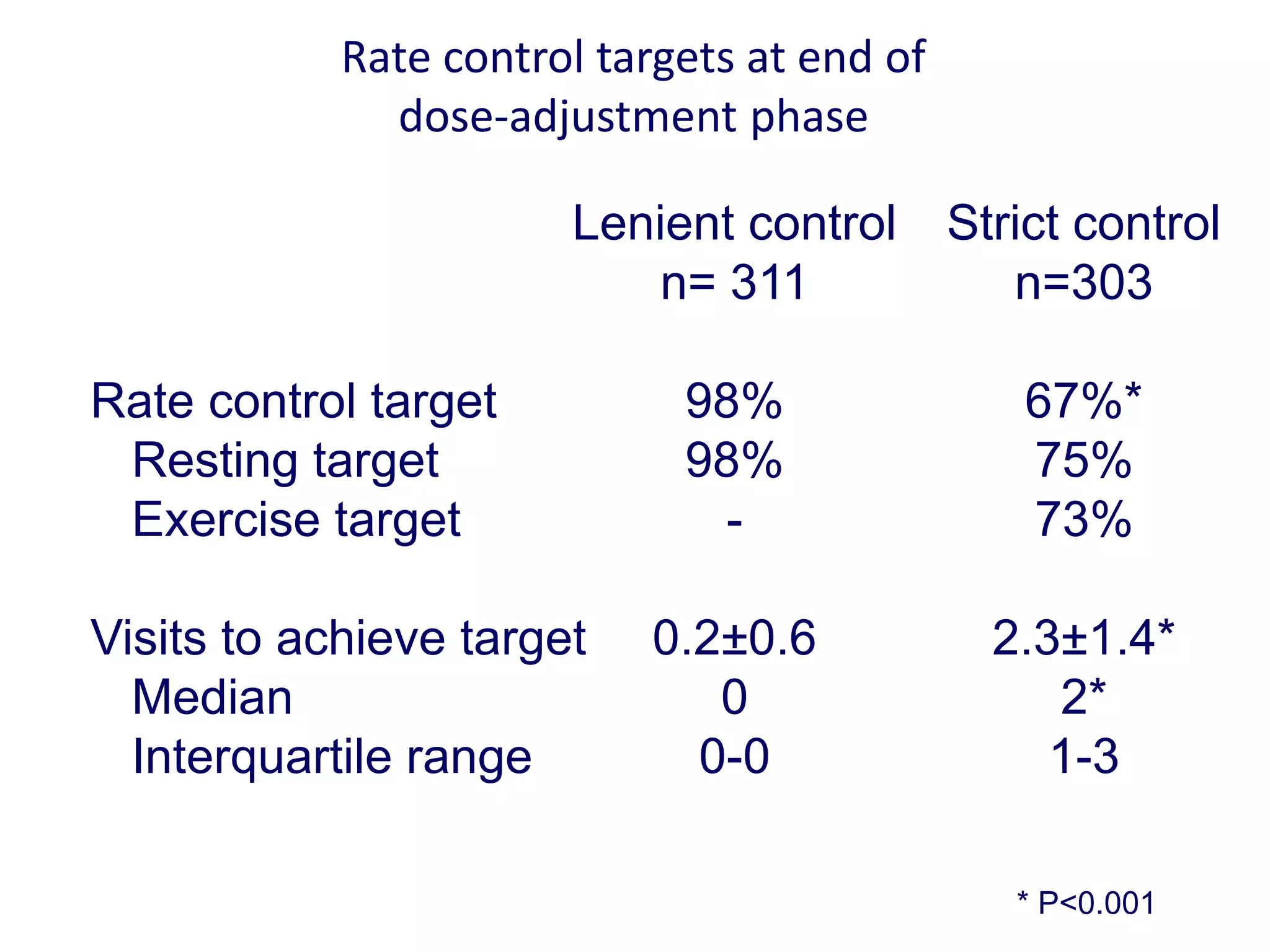
Rate control targets at end of
dose-adjustment phase
Lenient control Strict control
n= 311 n=303
Rate control target 98% 67%*
Resting target 98% 75%
Exercise target - 73%
Visits to achieve target 0.2±0.6 2.3±1.4*
Median 0 2*
Interquartile range 0-0 1-3
* P<0.001
Lenient control Strict control
n= 311 n=303
None 10% 1%*
Beta-blocker alone 42% 20%*
Calcium blocker alone 6% 5%
Digoxin alone 7% 2%*
Beta-blocker + calciumblocker 4% 13%*
Beta-blocker + digoxin 19% 37%*
Calciumblocker + digoxin 6% 10%
Beta + calciumblocker + digoxin 1% 9%*
Rate control medication at end of
dose-adjustment phase
* P<0.01
30% 69%*
0 3 12 24 36
50
60
70
80
90
100
110
*
*
*
*
Heart rate during study
*
* P<0.001
* *
*
No. At Risk
Lenient 311 311 302 291 237
Strict 303 303 284 277 240
Lenient
Strict
months
Heartrate(beatsperminute)
0
5
10
15
20
0 6 12 18 24 30 36
No. At Risk
Strict 303 282 273 262 246 212 131
Lenient 311 298 290 285 255 218 138
Lenient
Strict
CumulativeIncidence(%)
14.9%
12.9%
months
Cumulative incidence primary outcome
Lenient control Strict control
3-y incidence 12.9% 14.9%
Risk difference -2.0%
90%-CI (-7.6%, 3.5%)
Upper limit 10%
Inferiority hypothesis was rejected (p<0.001)
Primary outcome
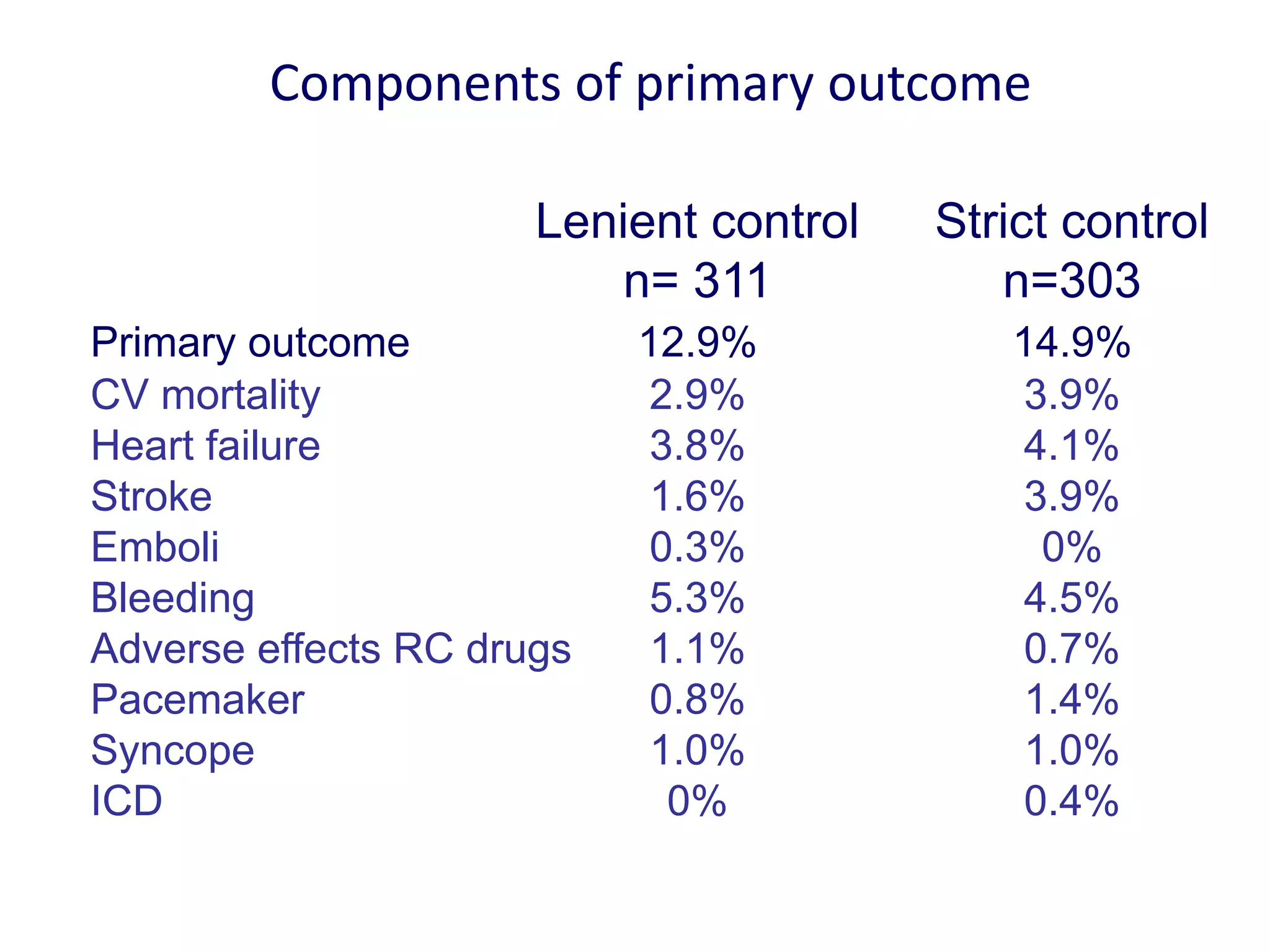
Components of primary outcome
Lenient control Strict control
n= 311 n=303
Primary outcome 12.9% 14.9%
CV mortality 2.9% 3.9%
Heart failure 3.8% 4.1%
Stroke 1.6% 3.9%
Emboli 0.3% 0%
Bleeding 5.3% 4.5%
Adverse effects RC drugs 1.1% 0.7%
Pacemaker 0.8% 1.4%
Syncope 1.0% 1.0%
ICD 0% 0.4%
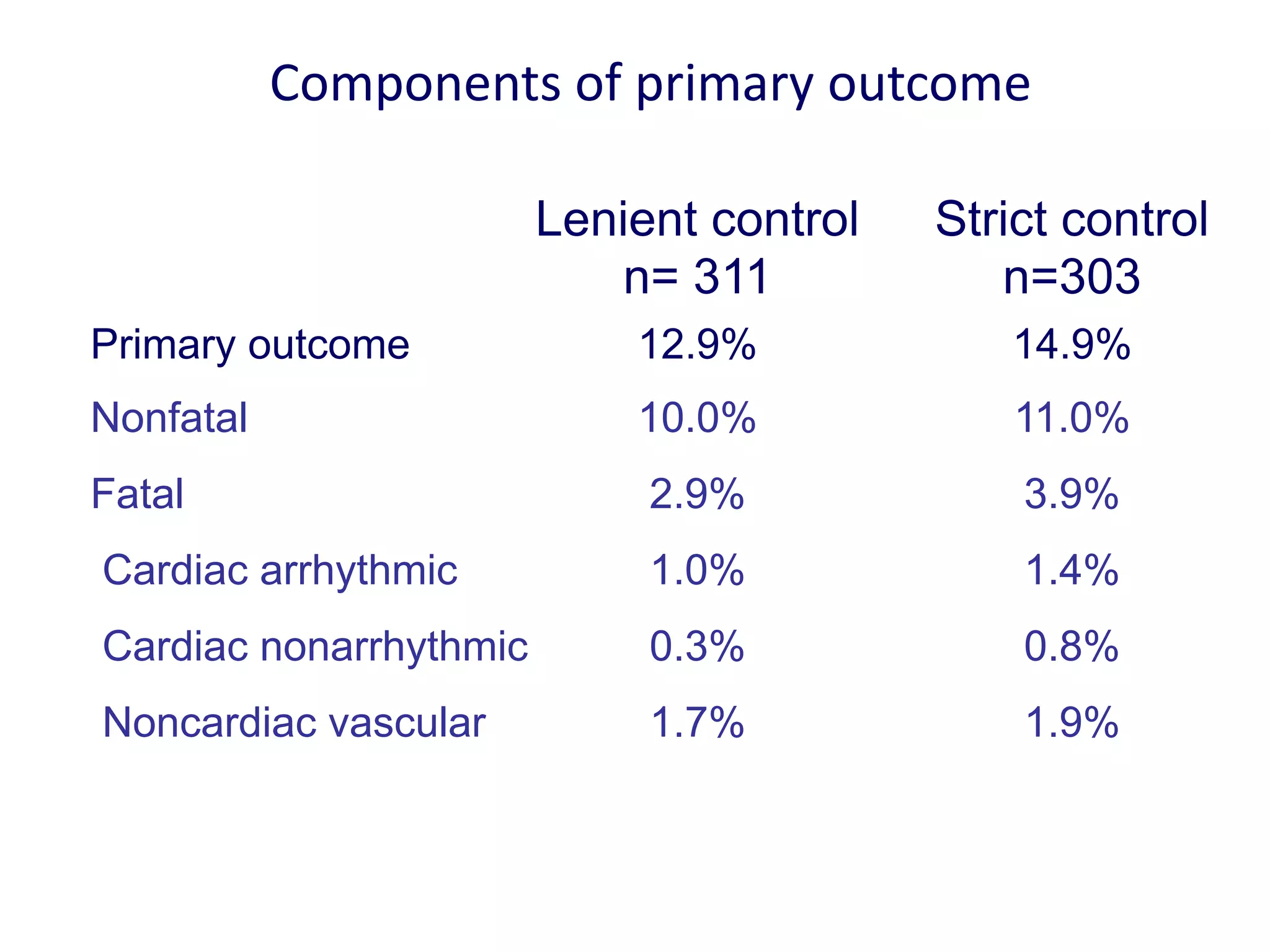
Components of primary outcome
Lenient control Strict control
n= 311 n=303
Primary outcome 12.9% 14.9%
Nonfatal 10.0% 11.0%
Fatal 2.9% 3.9%
Cardiac arrhythmic 1.0% 1.4%
Cardiac nonarrhythmic 0.3% 0.8%
Noncardiac vascular 1.7% 1.9%
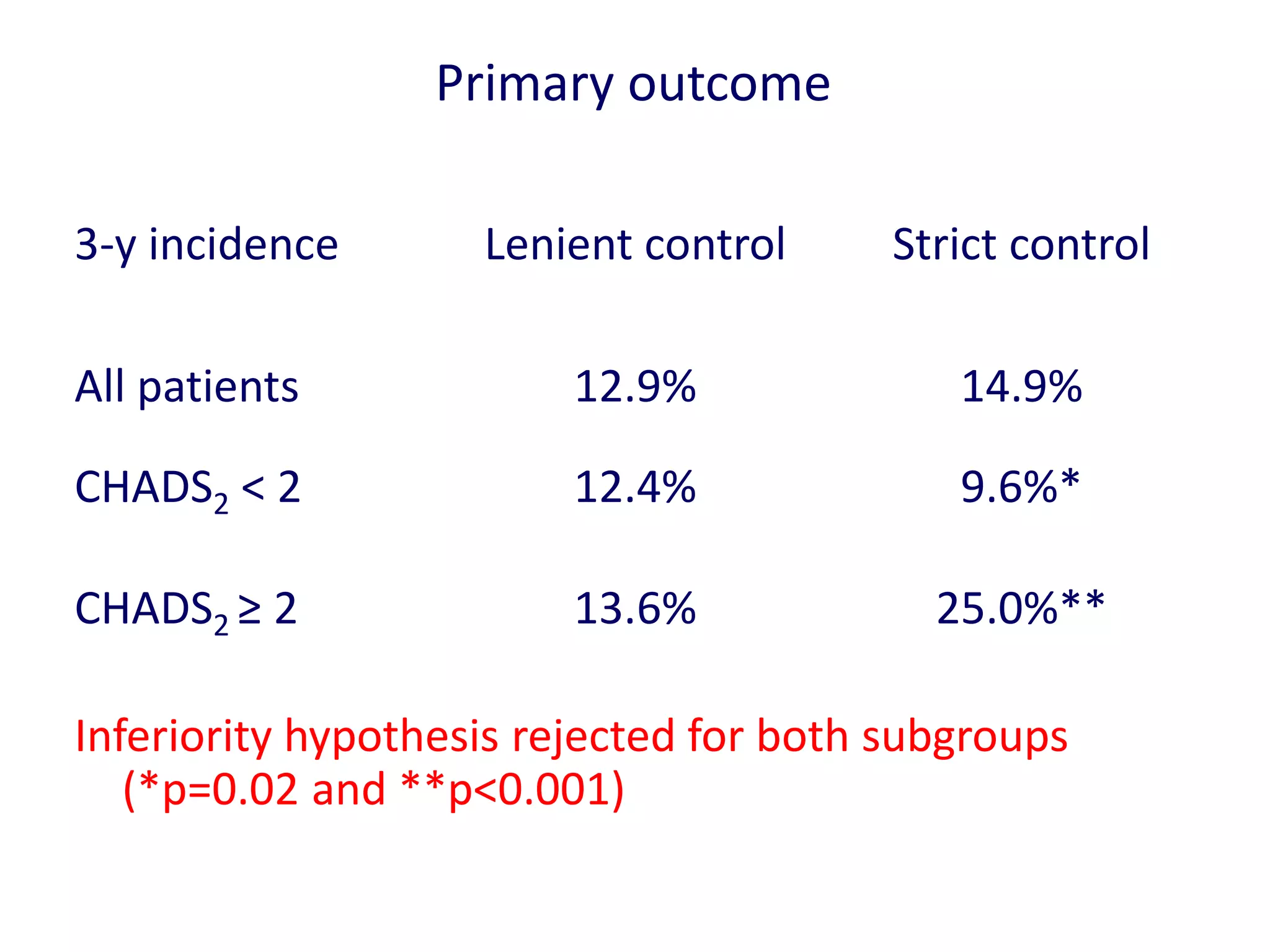
3-y incidence Lenient control Strict control
All patients 12.9% 14.9%
CHADS2 < 2 12.4% 9.6%*
CHADS2 ≥ 2 13.6% 25.0%**
Inferiority hypothesis rejected for both subgroups
(*p=0.02 and **p<0.001)
Primary outcome
 The RACE II study shows that lenient rate control
is not inferior to strict rate control
 Lenient rate control is more convenient since
fewer outpatient visits, fewer examinations, lower
doses and less often combination of drugs are
needed
Conclusions
 Lenient rate control may be adopted as first
choice rate control strategy in patients with
permanent atrial fibrillation
 This applies for high and low risk patients
Clinical implications
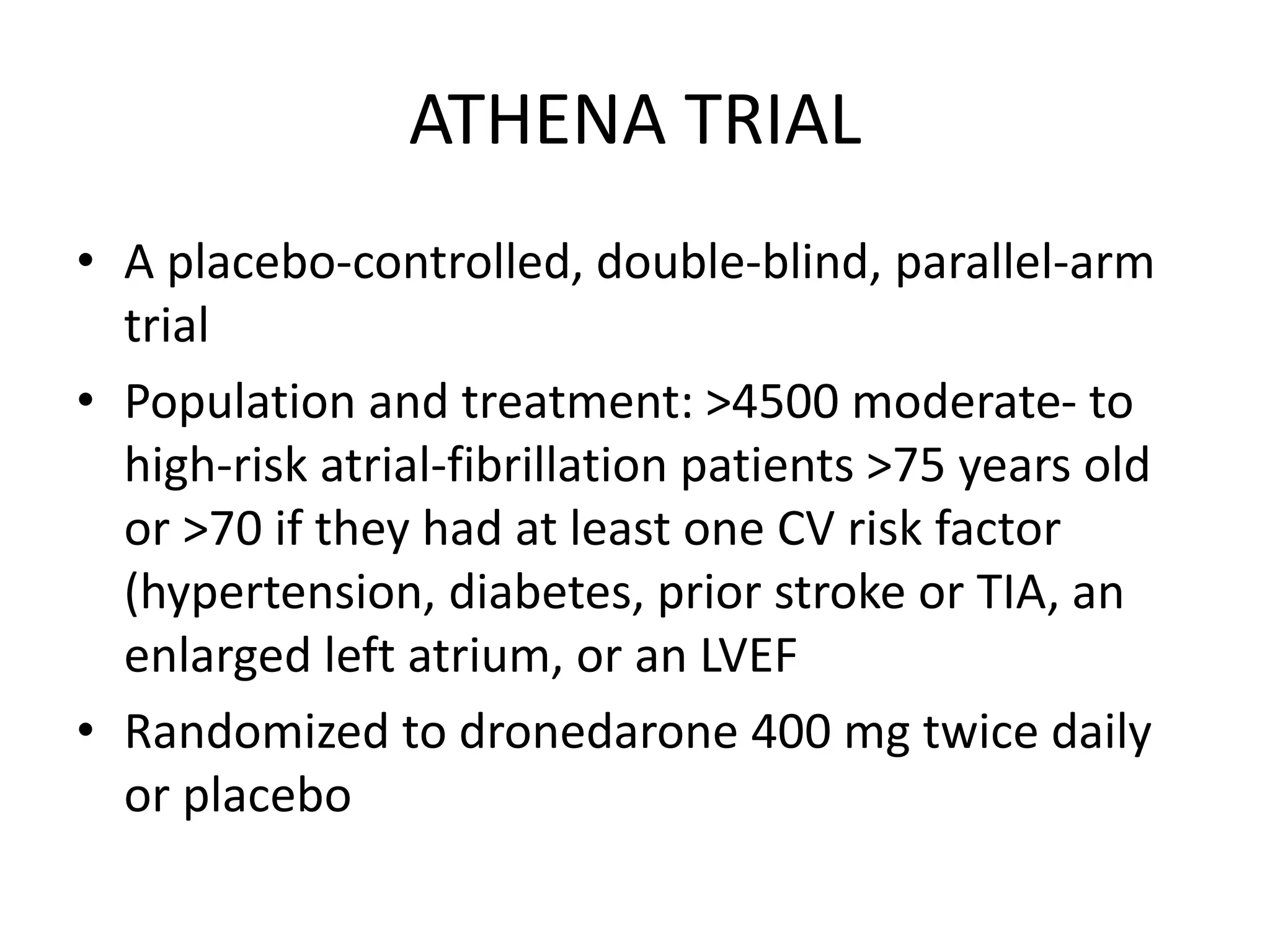
ATHENA TRIAL
• A placebo-controlled, double-blind, parallel-arm
trial
• Population and treatment: >4500 moderate- to
high-risk atrial-fibrillation patients >75 years old
or >70 if they had at least one CV risk factor
(hypertension, diabetes, prior stroke or TIA, an
enlarged left atrium, or an LVEF
• Randomized to dronedarone 400 mg twice daily
or placebo
• End points:
• Primary outcome: Prevention of CV
hospitalization or death from any cause
• Secondary outcomes: All-cause mortality, CV
mortality, CV hospitalization, death from
cardiac arrhythmia, and cardiac
nonarrhythmic death
Inclusion Criteria
• age of at least 70 years;
• arterial hypertension (with ongoing therapy involving at least two
antihypertensive drugs of different classes);
• diabetes mellitus;
• previous stroke, transient ischemic attack, or systemic embolism;
• left atrial diameter greater than or equal to 50 mm, as measured on
M-mode echocardiography; and left ventricular ejection fraction
less than or equal to 40%.
• For each patient, a 12-lead electrocardiogram (ECG) showing atrial
fibrillation or flutter and obtained within 6 months before
randomization had to be available.
• A second 12-lead ECG within the same period had to show sinus
rhythm.
EXCLUSION CRITERIA
• permanent atrial fibrillation;
• an unstable hemodynamic condition (i.e., decompensated heart
failure within the previous 4 weeks); New York Heart Association
(NYHA) class IV congestive heart failure; planned major surgery;
• acute myocarditis;
• bradycardia with a heart rate of less than 50 beats per minute or a
PR interval of more than 0.28 second; or previous clinically
significant sinus-node disease, if the patient was not currently being
treated with a pacemaker.
• a calculated glomerular filtration rate at baseline of less than 10 ml
per minute;
• a potassium level of less than 3.5 mmol per liter, if not currently
being corrected; and a
• requirement for concomitant medication that was prohibited (i.e.,
other class I or III antiarrhythmic drugs).
Dronedarone in High-Risk Permanent
Atrial Fibrillation
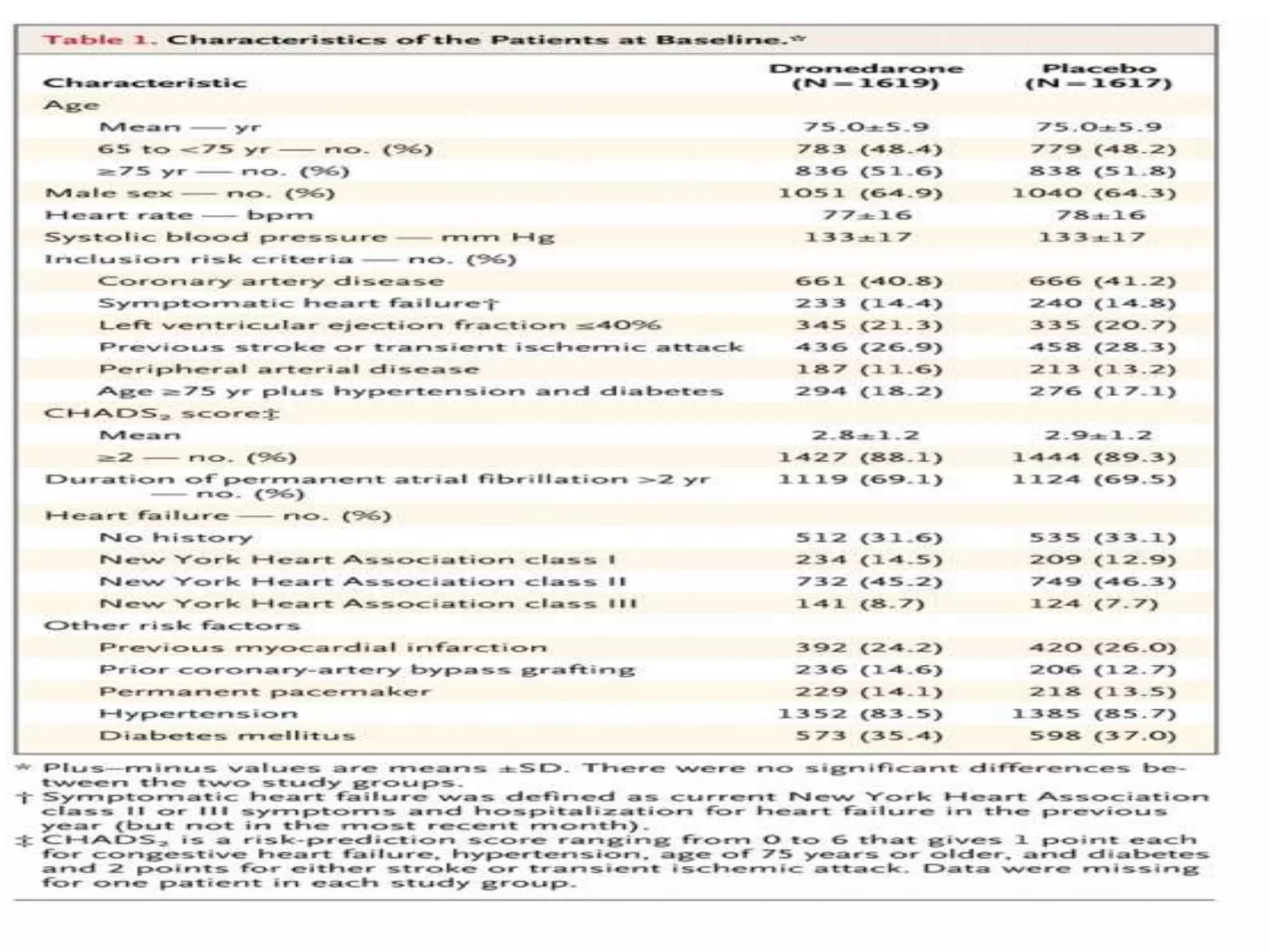
• PALLAS (Permanent Atrial Fibrillation Outcome
Study Using Dronedarone on Top of Standard
Therapy) was designed to test whether
dronedarone would reduce rates of major
vascular events or unplanned hospitalization
for cardiovascular causes in patients with
permanent atrial fibrillation who were at high
risk for vascular events
INCLUSION CRITERIA
• Permanent atrial fibrillation or flutter, as documented on
electrocardiography performed both within 14 days before
randomization and 6 or more months beforehand, who had no
evidence of intervening sinus rhythm and for whom there was no
plan to restore sinus rhythm
Aged >65 years with at least one of:
Coronary artery disease
Previous stroke or transient ischemic attack
Symptomatic heart failure, which was defined as current New York
Heart Association class II or III symptoms and admission to the
hospital for heart failure in the previous year (but not in the most
recent month)
Left ventricular ejection fraction of 40% or less
Peripheral arterial disease
OR the combination of an age of 75 years or older, hypertension,
and diabetes
EXCLUSION CRITERIA
• Paroxysmal or persistent atrial fibrillation
• Use of an implantable cardioverter–defibrillator
• Sustained daytime bradycardia of less than 50
beats per minute
• QT interval corrected for heart rate of more than
500 msec (or >530 msec for patients with a paced
ventricular rhythm).
FIRST CO PRIMARY OUTCOME
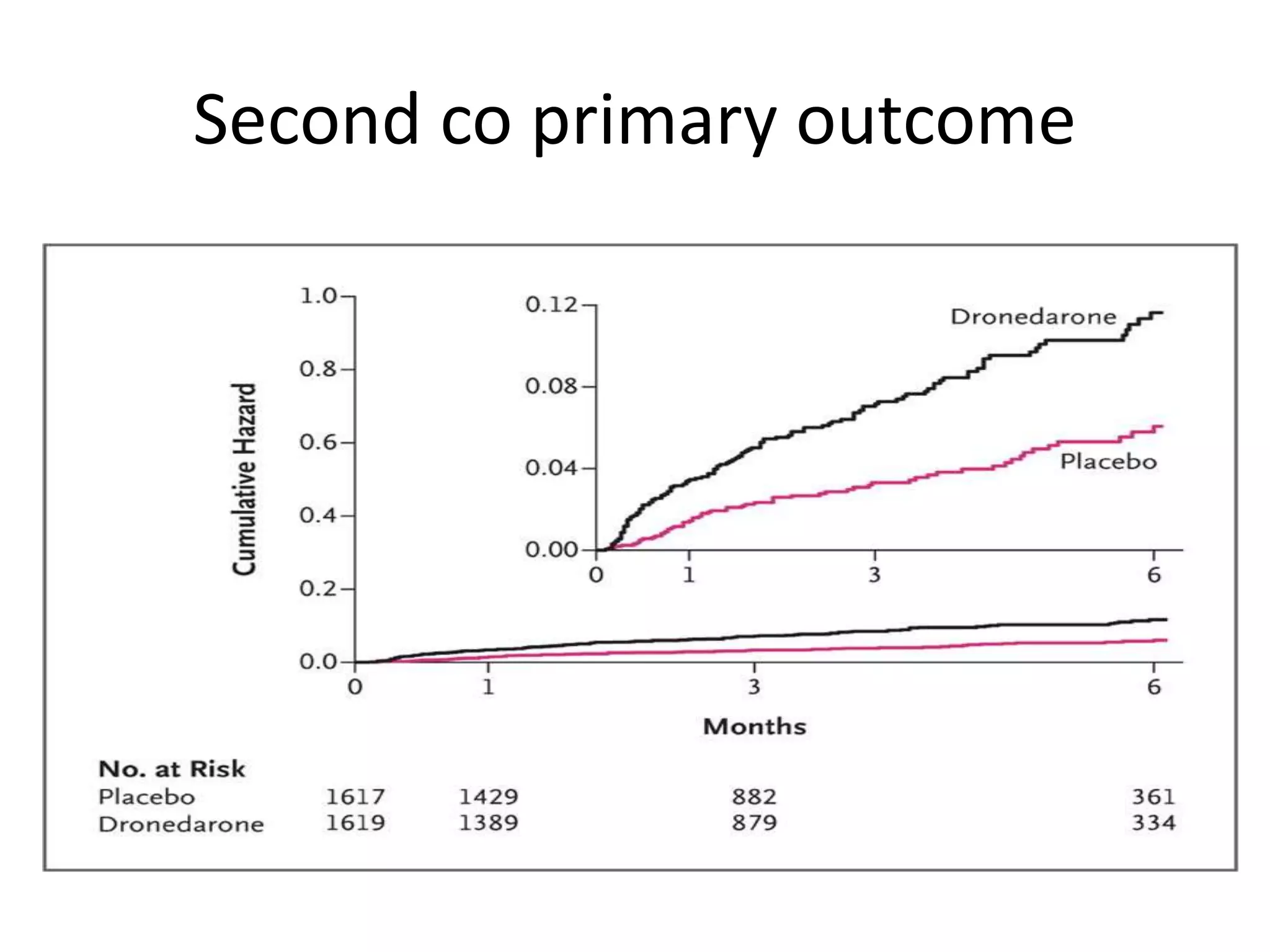
Second co primary outcome
• Dronedarone increased rates of heart failure,
stroke, and death from cardiovascular causes
in patients with permanent atrial fibrillation
who were at risk for major vascular events.
Our data show that this drug should not be
used in such patients
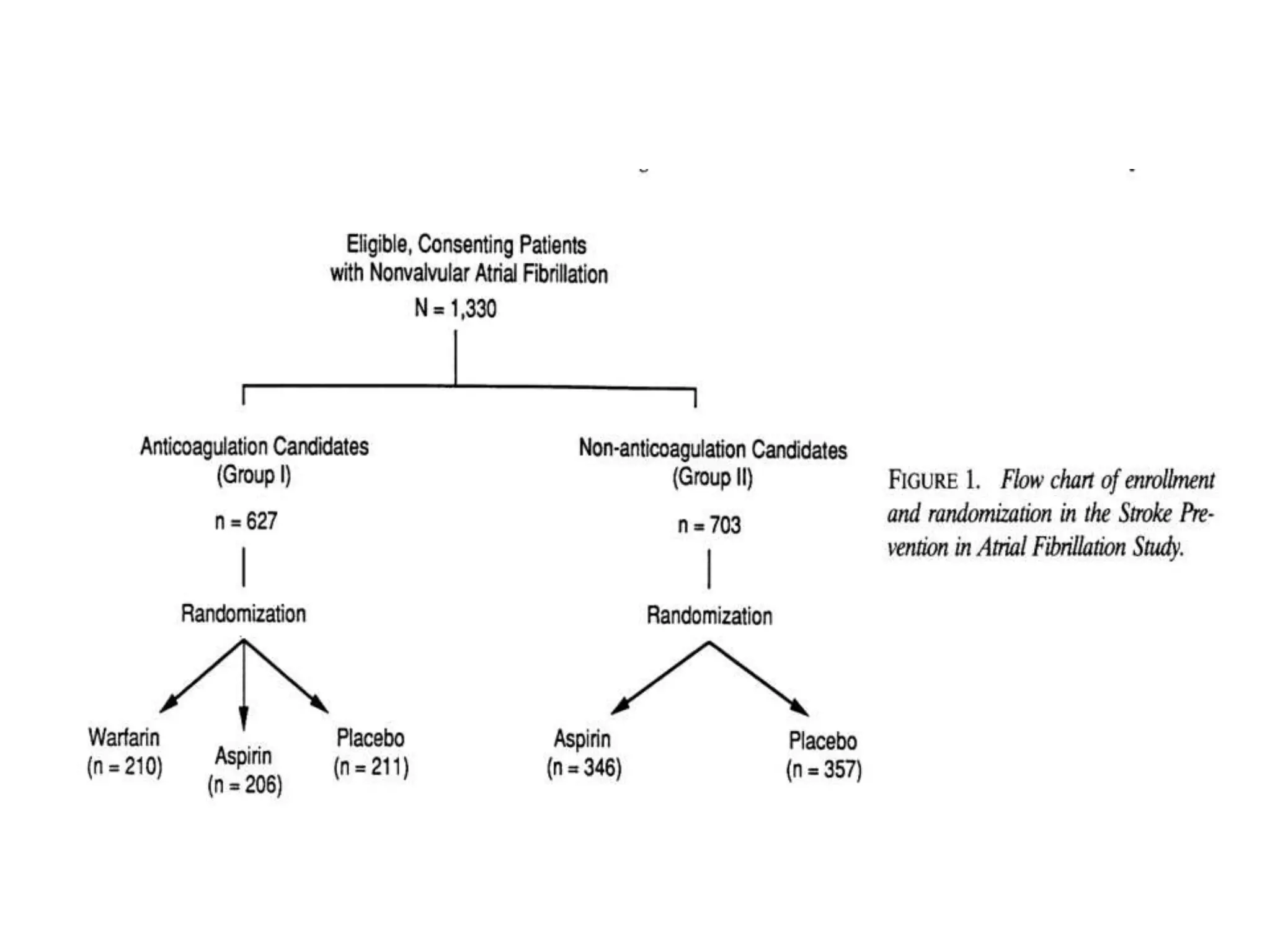
Stroke Prevention in Atrial Fibrillation
Study
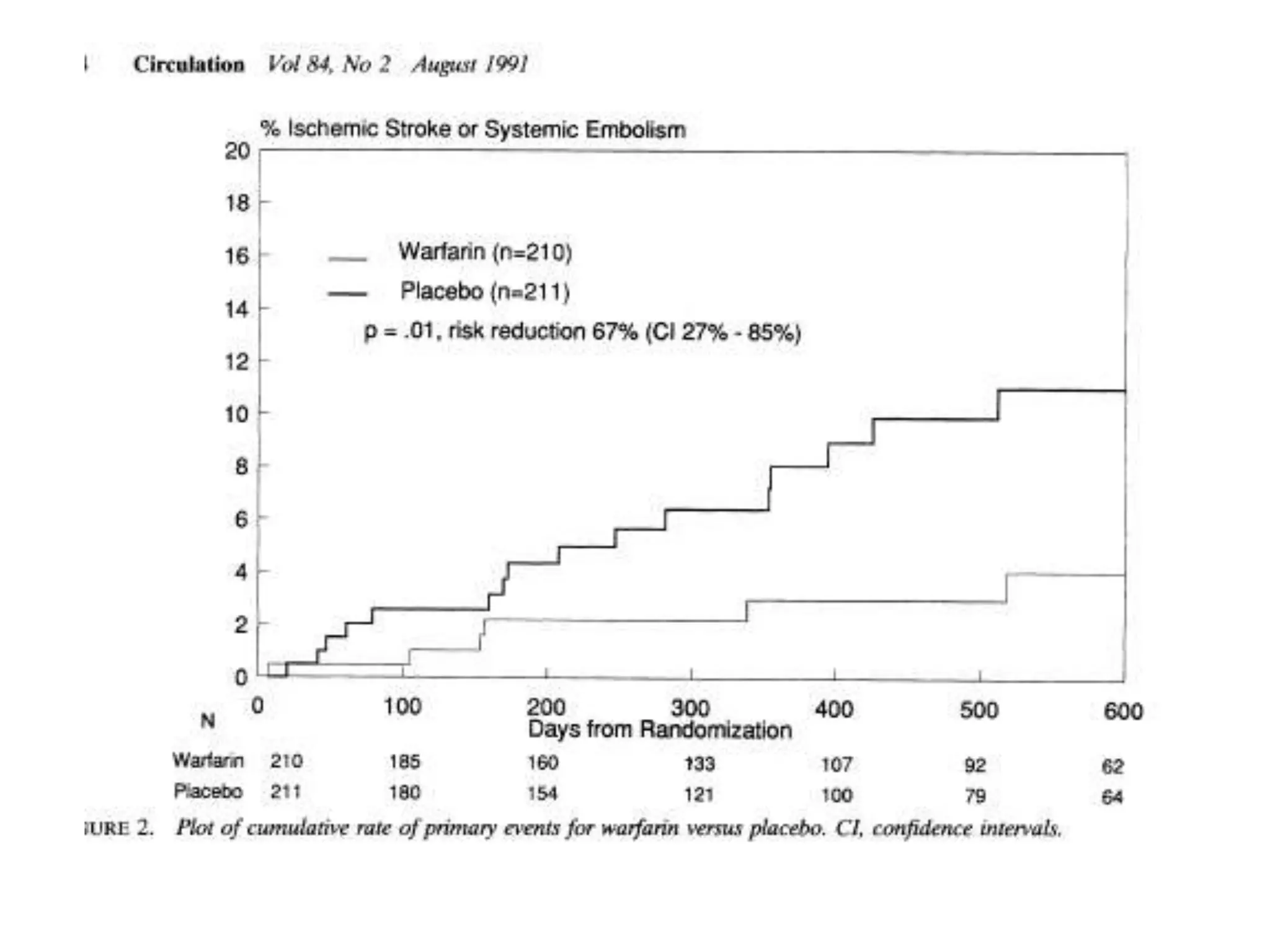
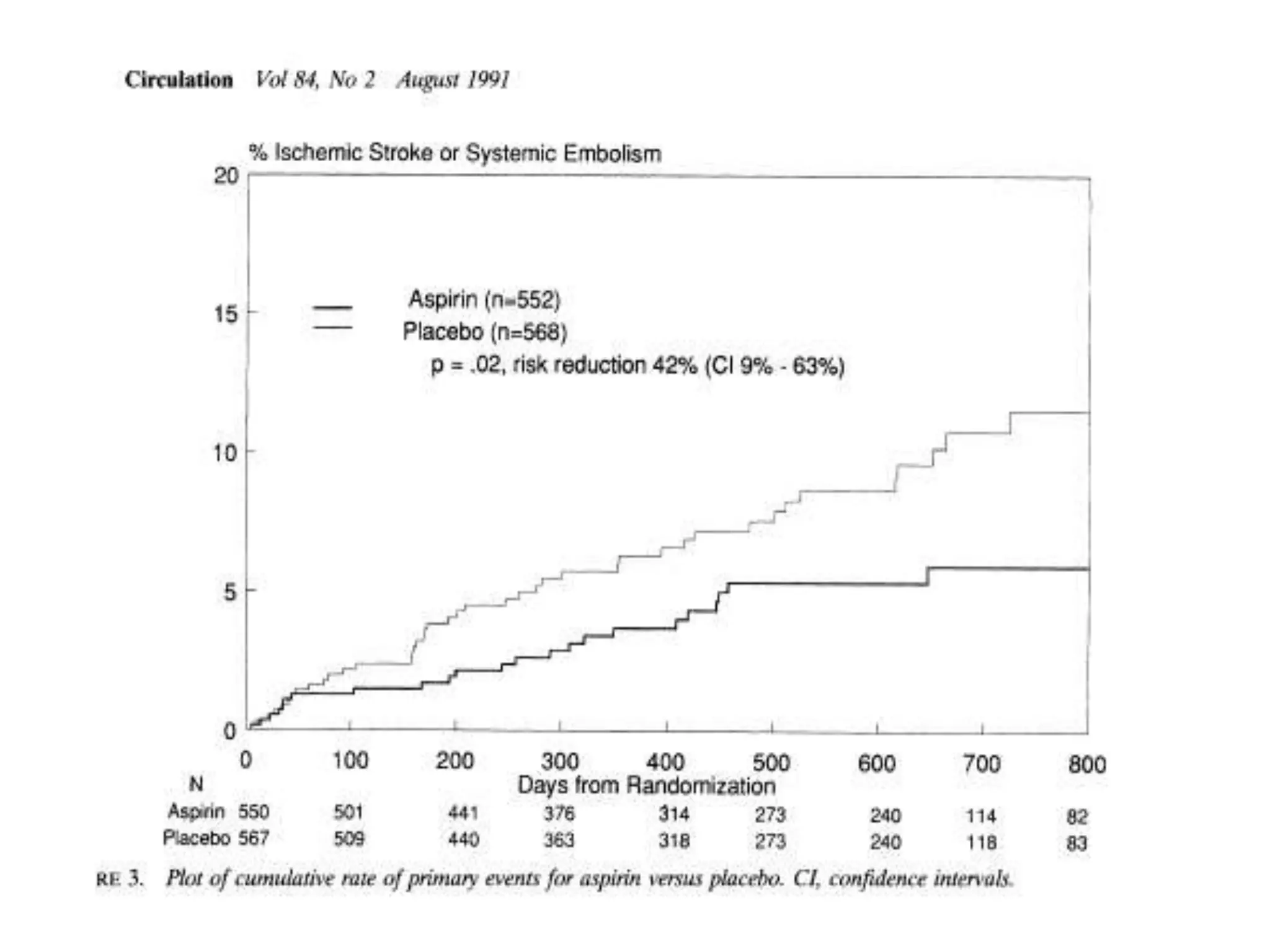
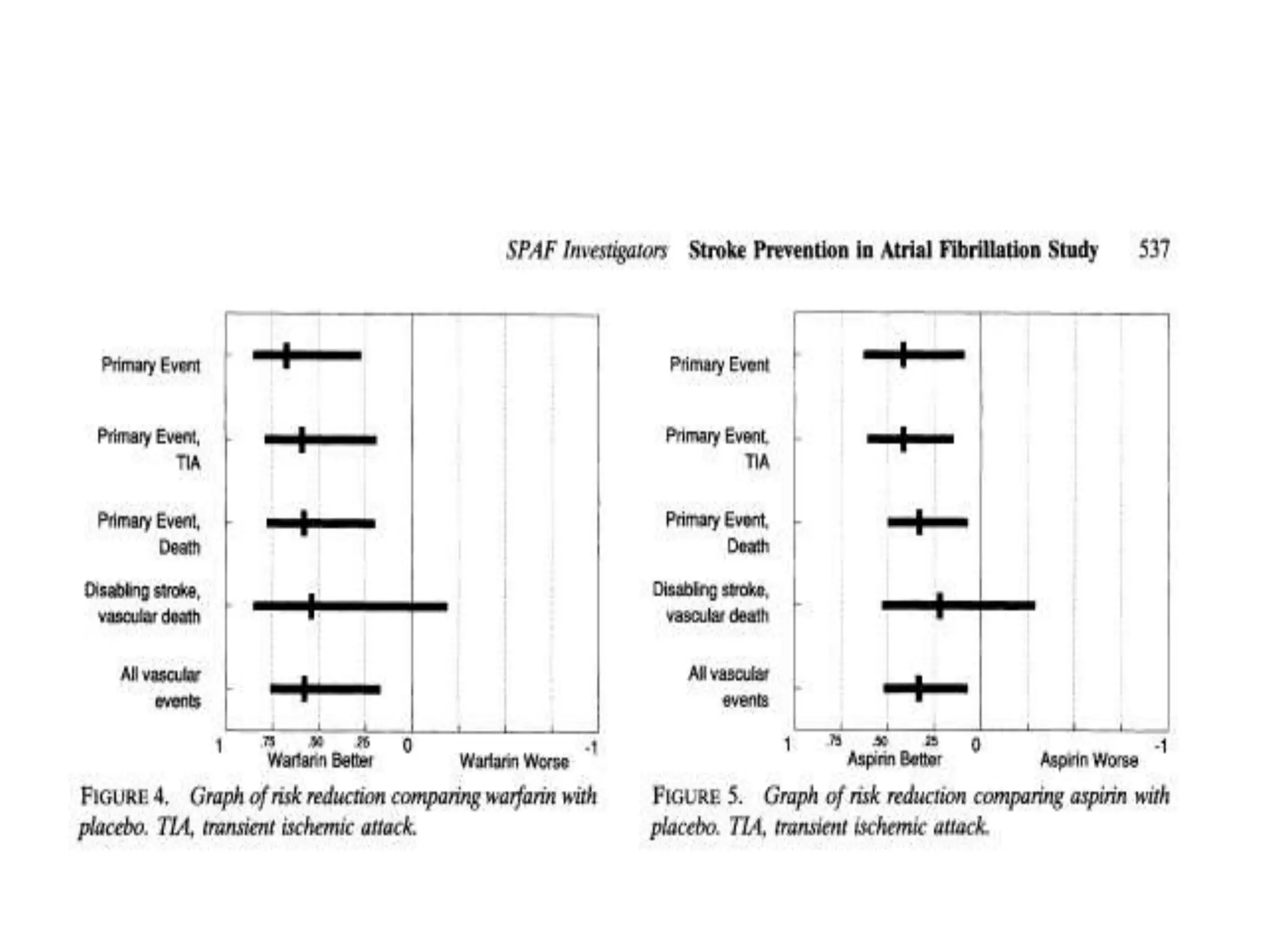
• multicenter, randomized trial, compared 325
mg/day aspirin (double-blind) or warfarin with
placebo for prevention of ischemic stroke and
systemic embolism (primary events), and
included 1,330 inpatients and outpatients
with constant or intermittent atrial fibrillation
INCLUSION CRITERIA
• Constant or intermittent atrial fibrillation
-ECG documentation in the preceeding 12 months
Inpatients or outpatients from public, private and veteran
healthcare
EXCLUSION CRITERIA
• Prosthetic heart valves
MI or angioplasty within previous 3 months
CABG in last year
MS MR DCM
Chronic renal failure
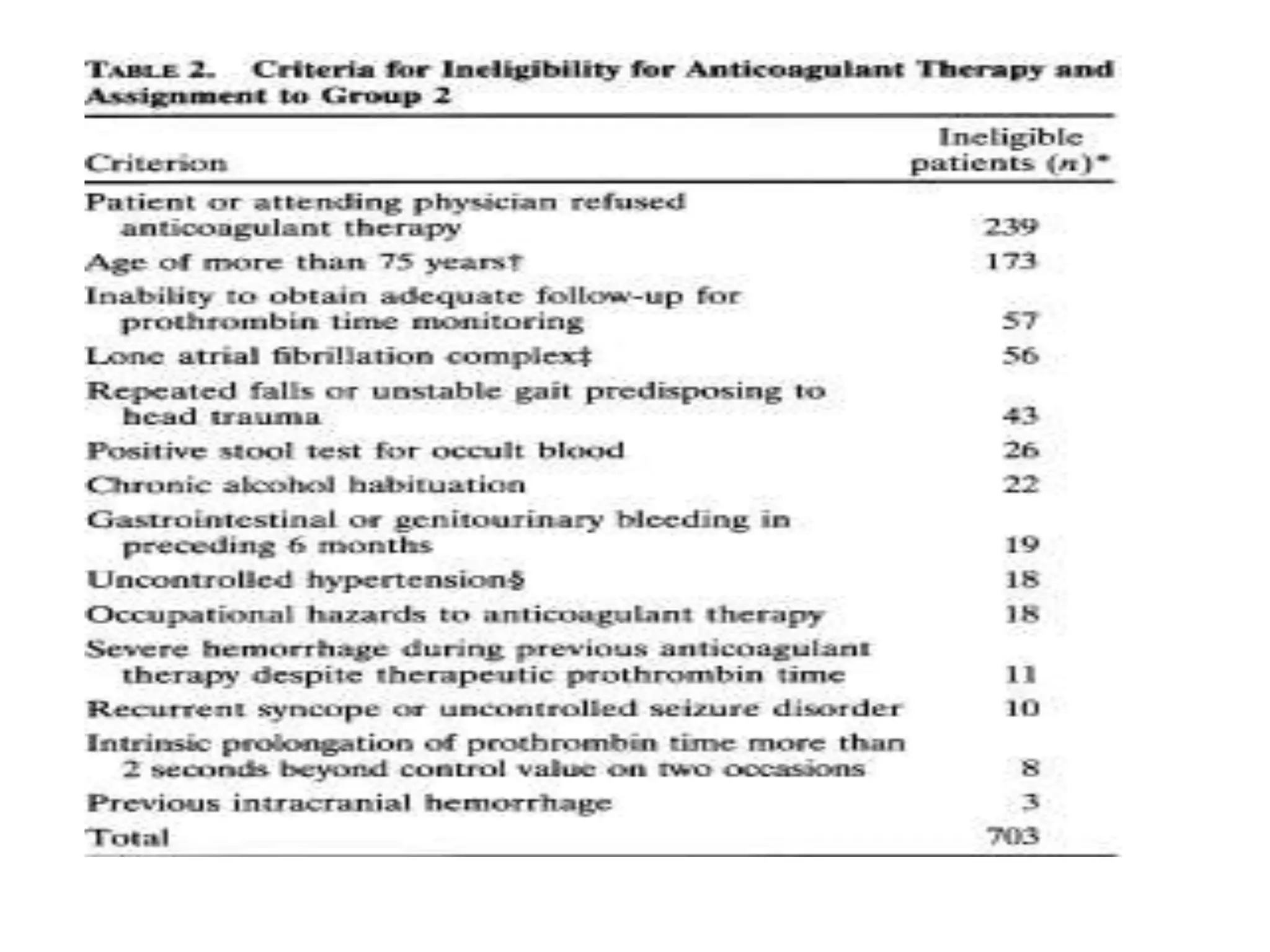
N.B. Patients were judged ineligable for group 1
(warf/aspirin/placebo) and hence put in group 2 (aspirin/placebo)
if:
-Age > 75
-Lone AF complex (abandoned)
-Uncontrolled hypertension
-Intrinsic PT prolongation > 2s beyond on 2+ occasions
-Previous intracranial haemorrhage
Thrombocytopoenia
Alcohol abuse
NSAIDs
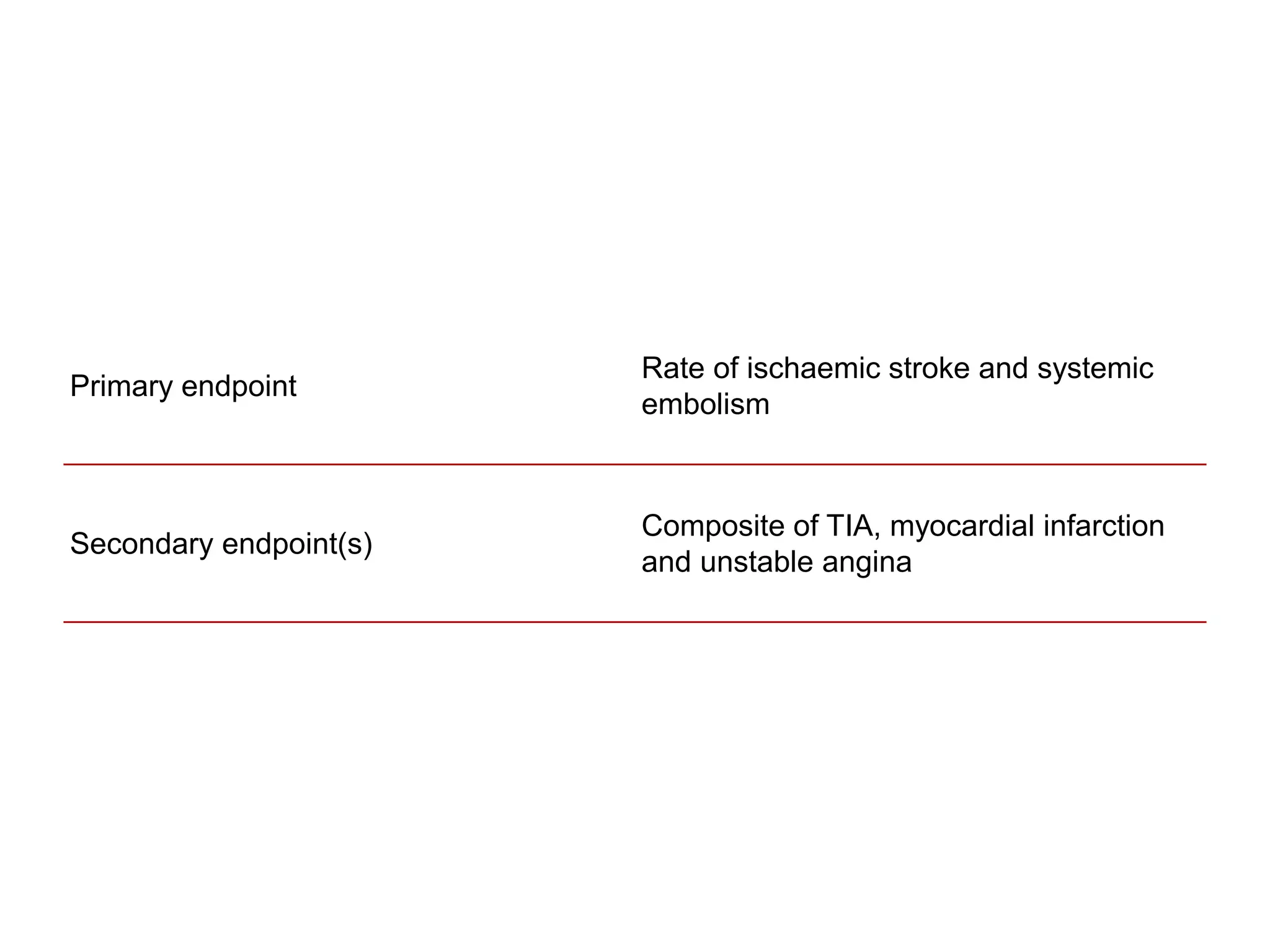
Primary endpoint
Rate of ischaemic stroke and systemic
embolism
Secondary endpoint(s)
Composite of TIA, myocardial infarction
and unstable angina
SPAF 2
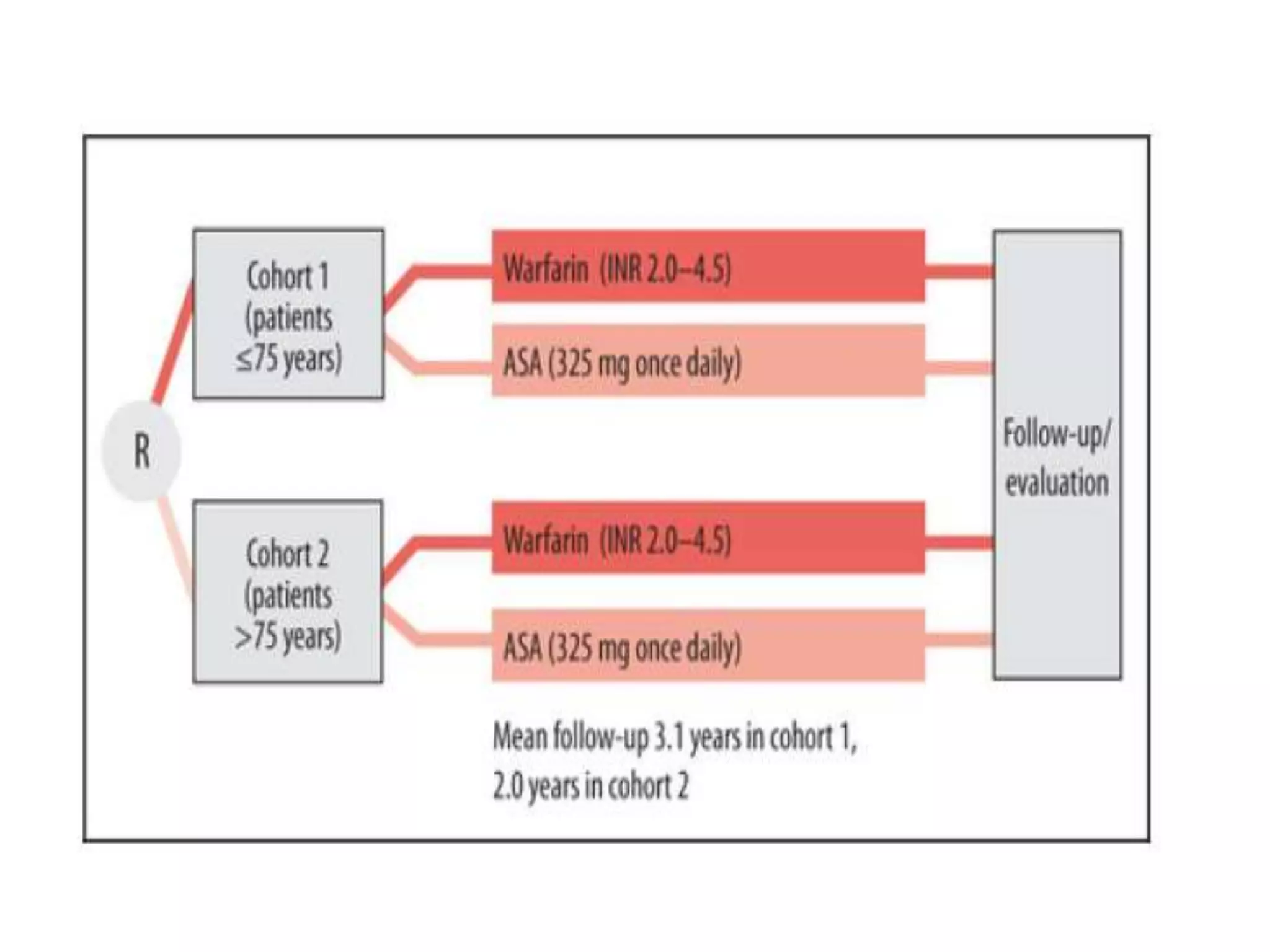
• Prevention of stroke and systemic embolism in
patients with AF
• Objective
• To compare the efficacy and safety of warfarin
with ASA in the prevention of stroke and systemic
embolism in two age cohorts
• Trial design
– Two parallel randomized controlled trials
– Active treatment: warfarin (INR 2.0–4.5)
– Control treatment: ASA (325 mg once daily)
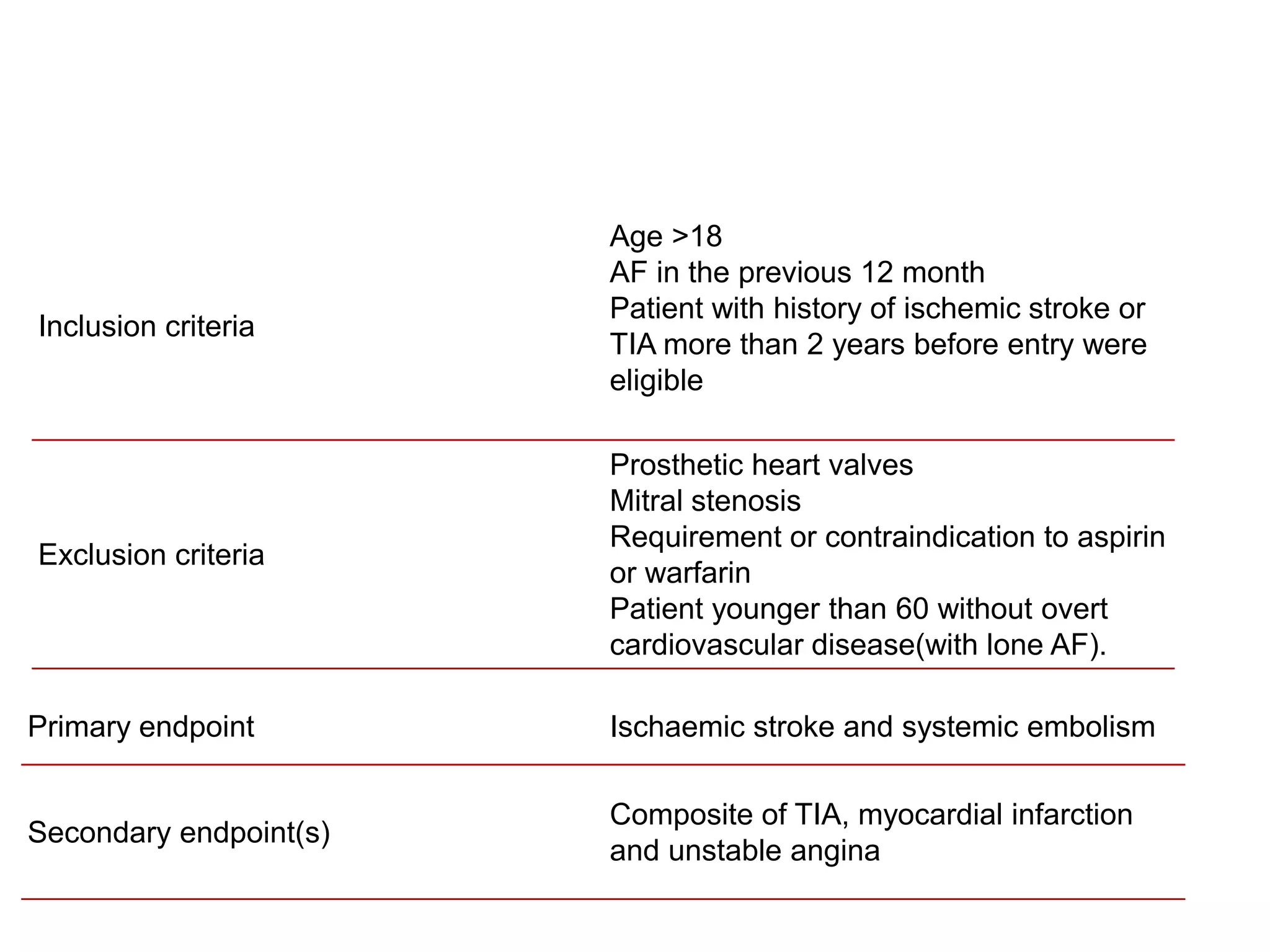
Inclusion criteria
Age >18
AF in the previous 12 month
Patient with history of ischemic stroke or
TIA more than 2 years before entry were
eligible
Exclusion criteria
Prosthetic heart valves
Mitral stenosis
Requirement or contraindication to aspirin
or warfarin
Patient younger than 60 without overt
cardiovascular disease(with lone AF).
Primary endpoint Ischaemic stroke and systemic embolism
Secondary endpoint(s)
Composite of TIA, myocardial infarction
and unstable angina
• Efficacy: Warfarin may be more effective than
ASA in reducing ischemic stroke and systemic
embolism in youngerand older patients with AF.
In older patients, the rate of stroke was
substantial, irrespective of which agent was given
• Safety: The risk of major bleeding and intracranial
bleeding among anticoagulated patients ≤75
years was lower than in the older cohort
(p=0.008, and p=0.05, respectively)
Stroke Prevention
in Atrial Fibrillation III study (1996)
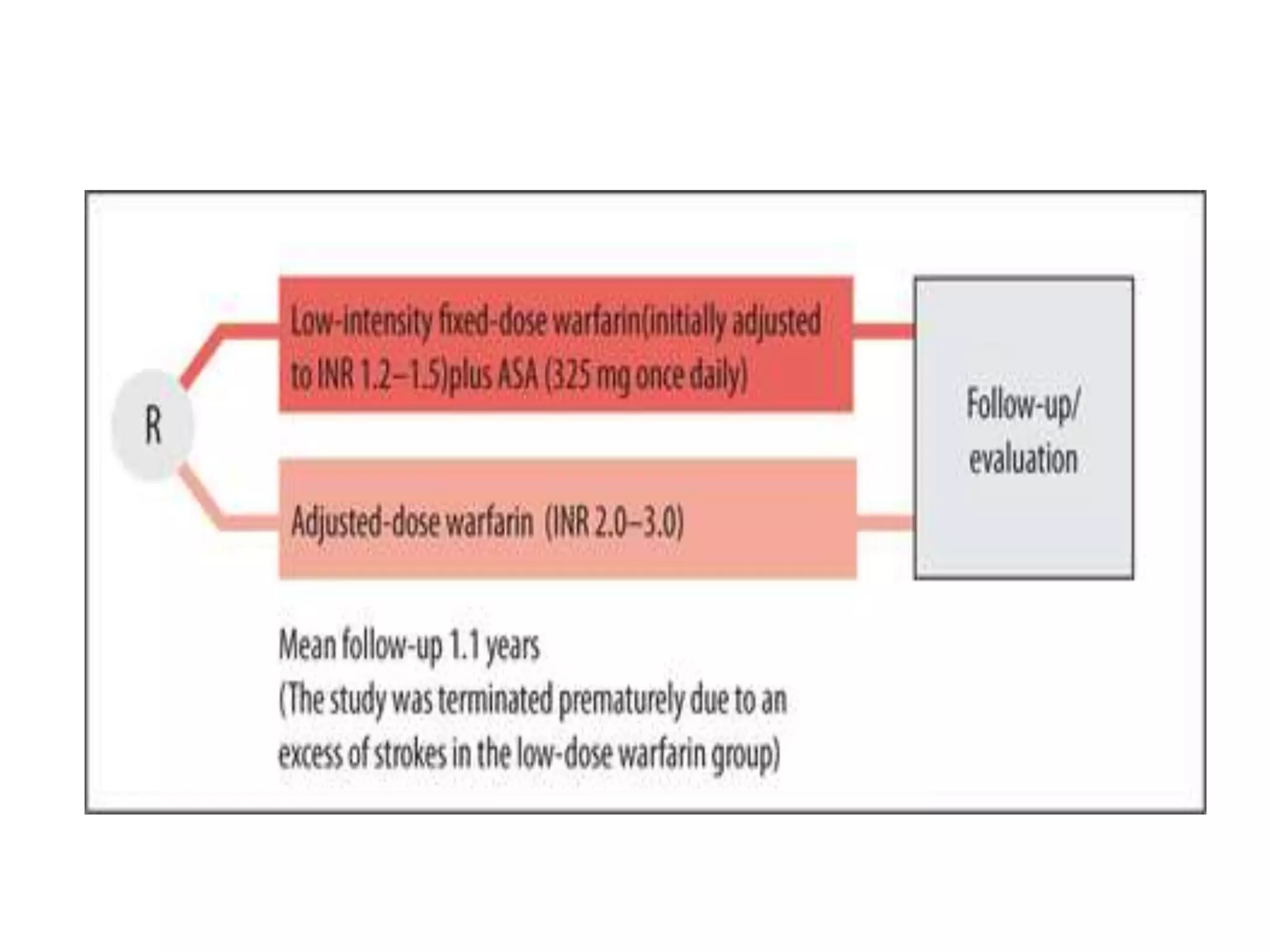
• To compare the efficacy and safety of a low-
intensity fixed-dose warfarin/ASA combination
with adjusted-dose warfarin in the prevention
of stroke and systemic embolism
INCLUSION CRITERIA
• Aged > 18
• AF documented in the 6 month preceding the
study
One or more high risk features
-Impared left ventricular function
• -Previous thromboembolism(systemic stroke
,TIA,systemic embolism) more than 30 days prior
to entry
-Systolic blood pressure of more than 160 mmHg
at study enrolment
-Women >75 y.
EXCLUSION CRITERIA
• Prosthetic heart valves
Mitral stenosis
Prior requirement for anticoagulation
Contra-indications to aspirin or warfarin
Regular use of NSAIDs
Patients who had taken part in previous SPAF
studies or similar clinical trials.
Primary endpoint
Ischemic stroke and systemic embolism
as measured during monthly telephone
interview, clinic follow-up every 3 months,
and yearly standard symptom
questionnaire
Secondary endpoint(s)
Transient ischemic attack, intracranial
hemorrhage, disabling or fatal stroke.
SUMMARY
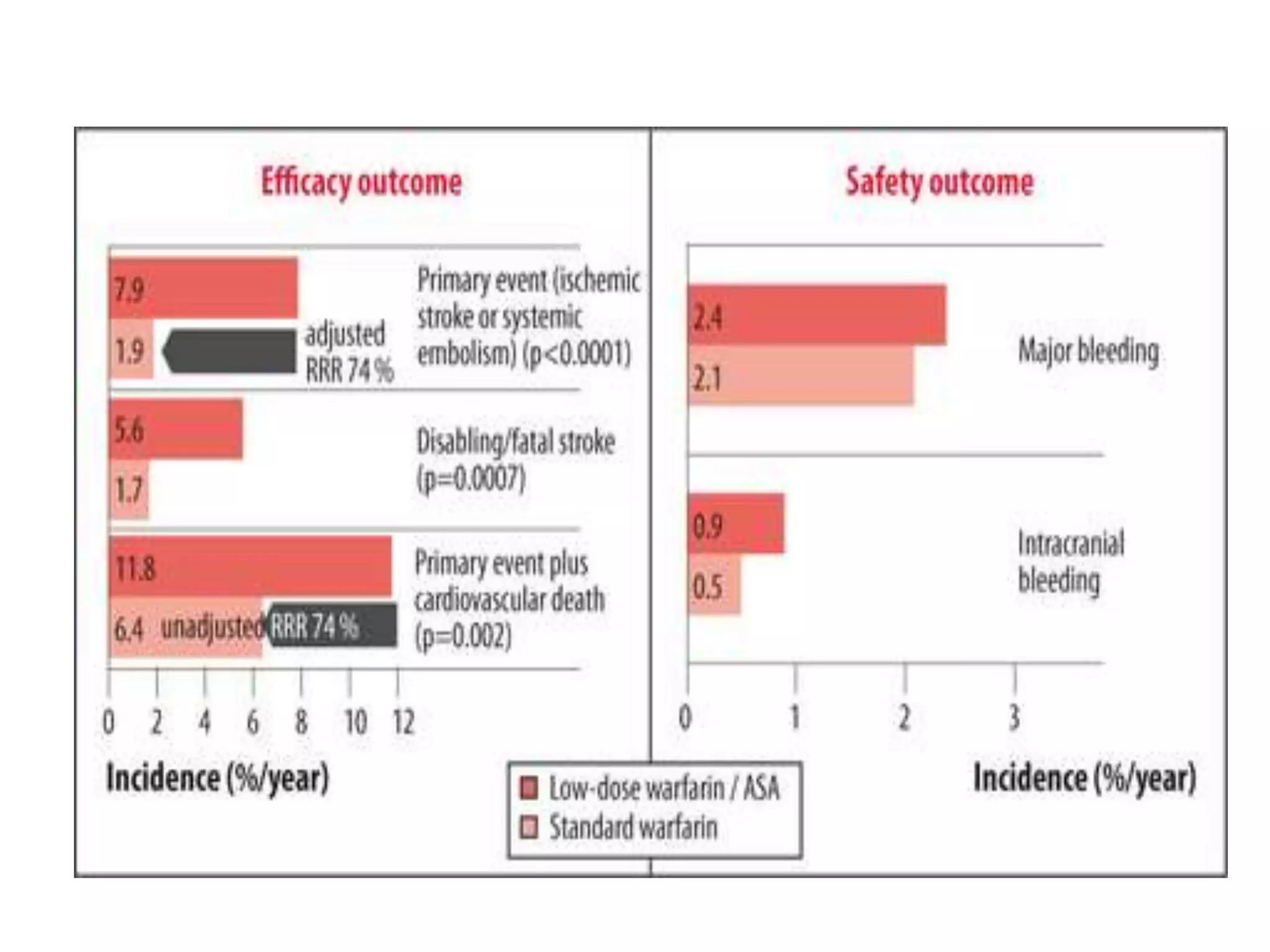
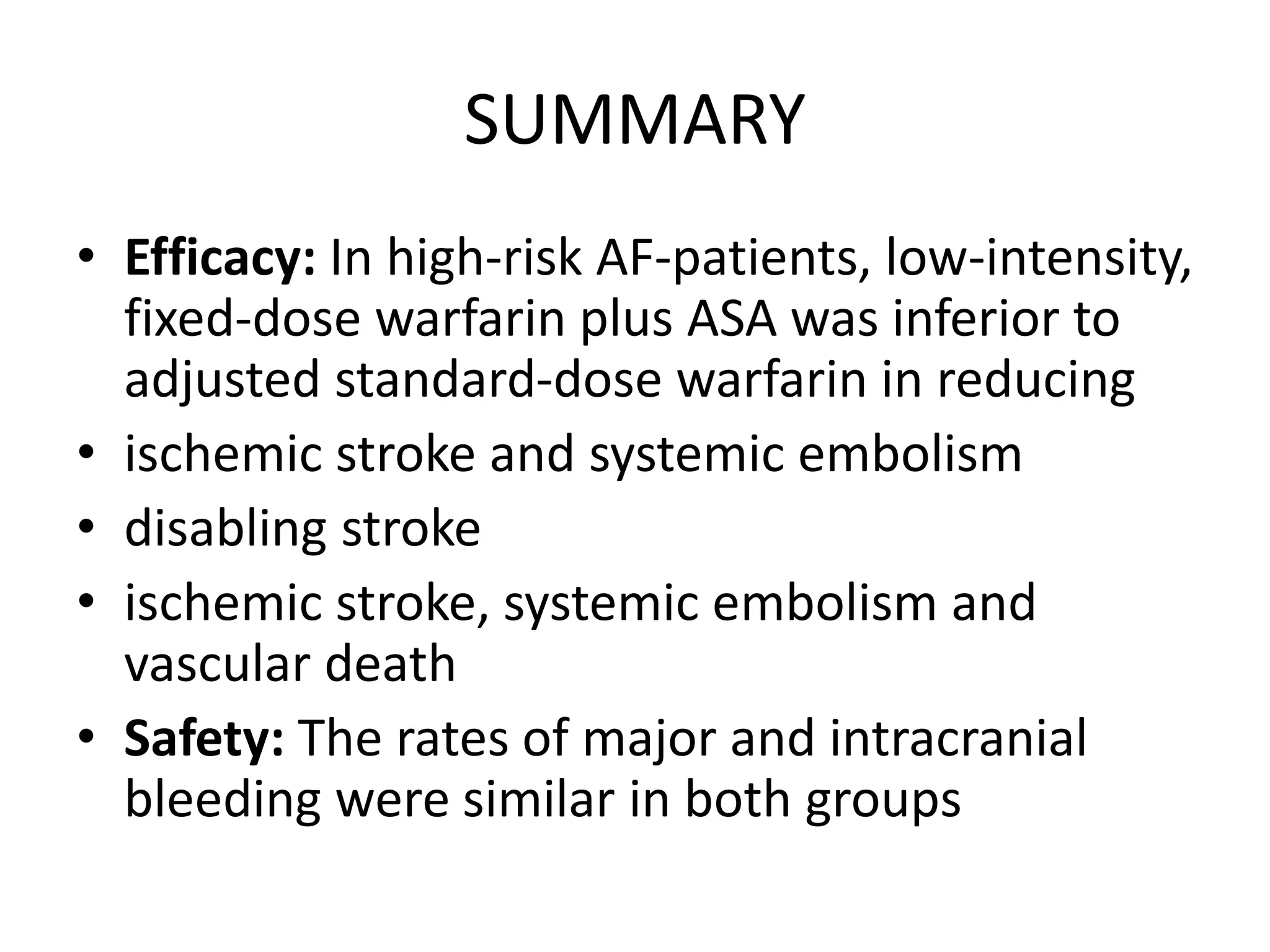
• Efficacy: In high-risk AF-patients, low-intensity,
fixed-dose warfarin plus ASA was inferior to
adjusted standard-dose warfarin in reducing
• ischemic stroke and systemic embolism
• disabling stroke
• ischemic stroke, systemic embolism and
vascular death
• Safety: The rates of major and intracranial
bleeding were similar in both groups
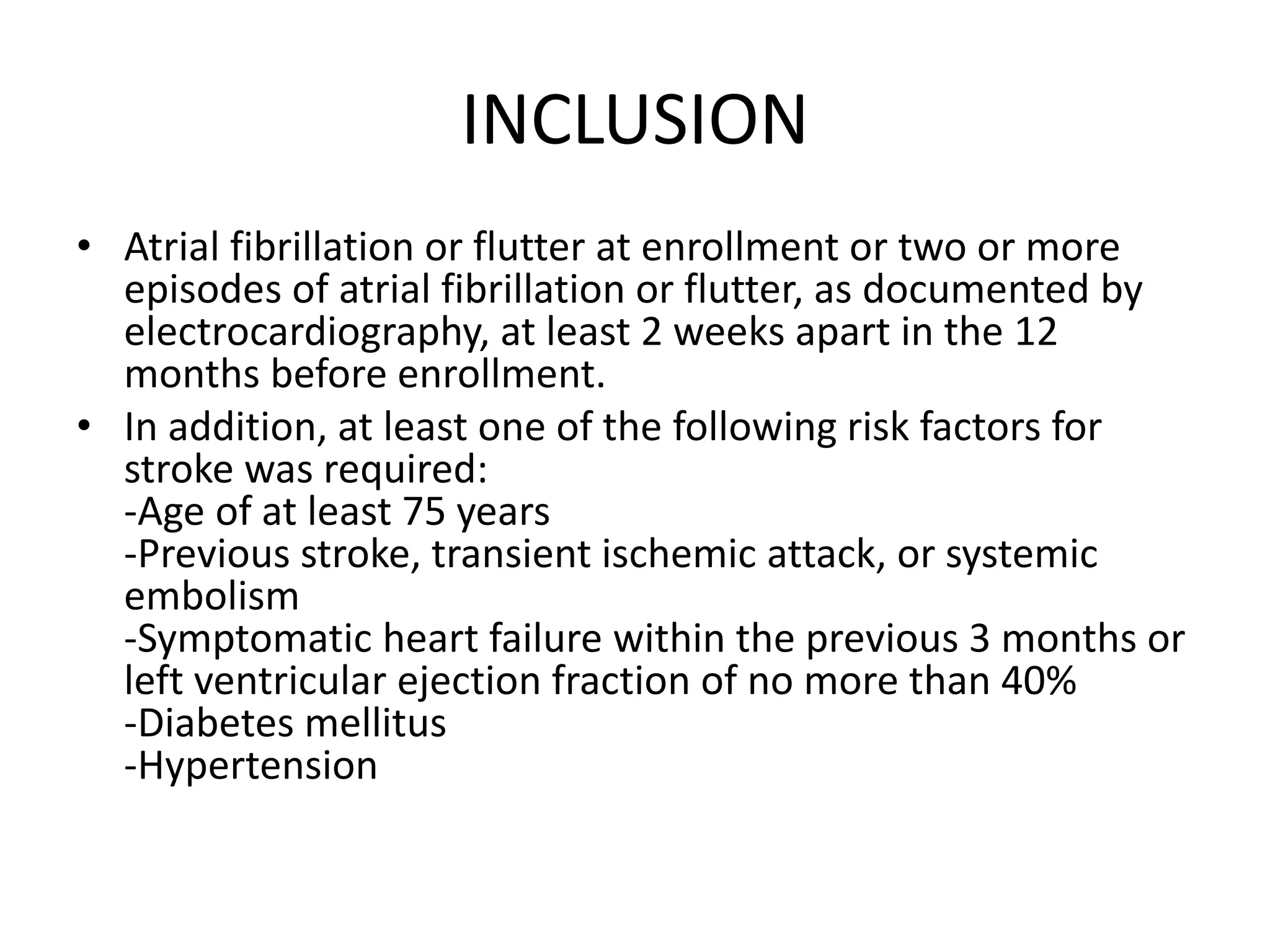
INCLUSION
• Atrial fibrillation or flutter at enrollment or two or more
episodes of atrial fibrillation or flutter, as documented by
electrocardiography, at least 2 weeks apart in the 12
months before enrollment.
• In addition, at least one of the following risk factors for
stroke was required:
-Age of at least 75 years
-Previous stroke, transient ischemic attack, or systemic
embolism
-Symptomatic heart failure within the previous 3 months or
left ventricular ejection fraction of no more than 40%
-Diabetes mellitus
-Hypertension
EXCLUSION
• Atrial fibrillation due to a reversible cause
Moderate or severe mitral stenosis
Conditions other than atrial fibrillation that
required anticoagulation (e.g., a prosthetic heart
valve)
• Stroke within the previous 7 days
• Need for aspirin at a dose of >165 mg a day or for
both aspirin and clopidogrel
• Severe renal insufficiency (serum creatinine level
of >2.5 mg per deciliter
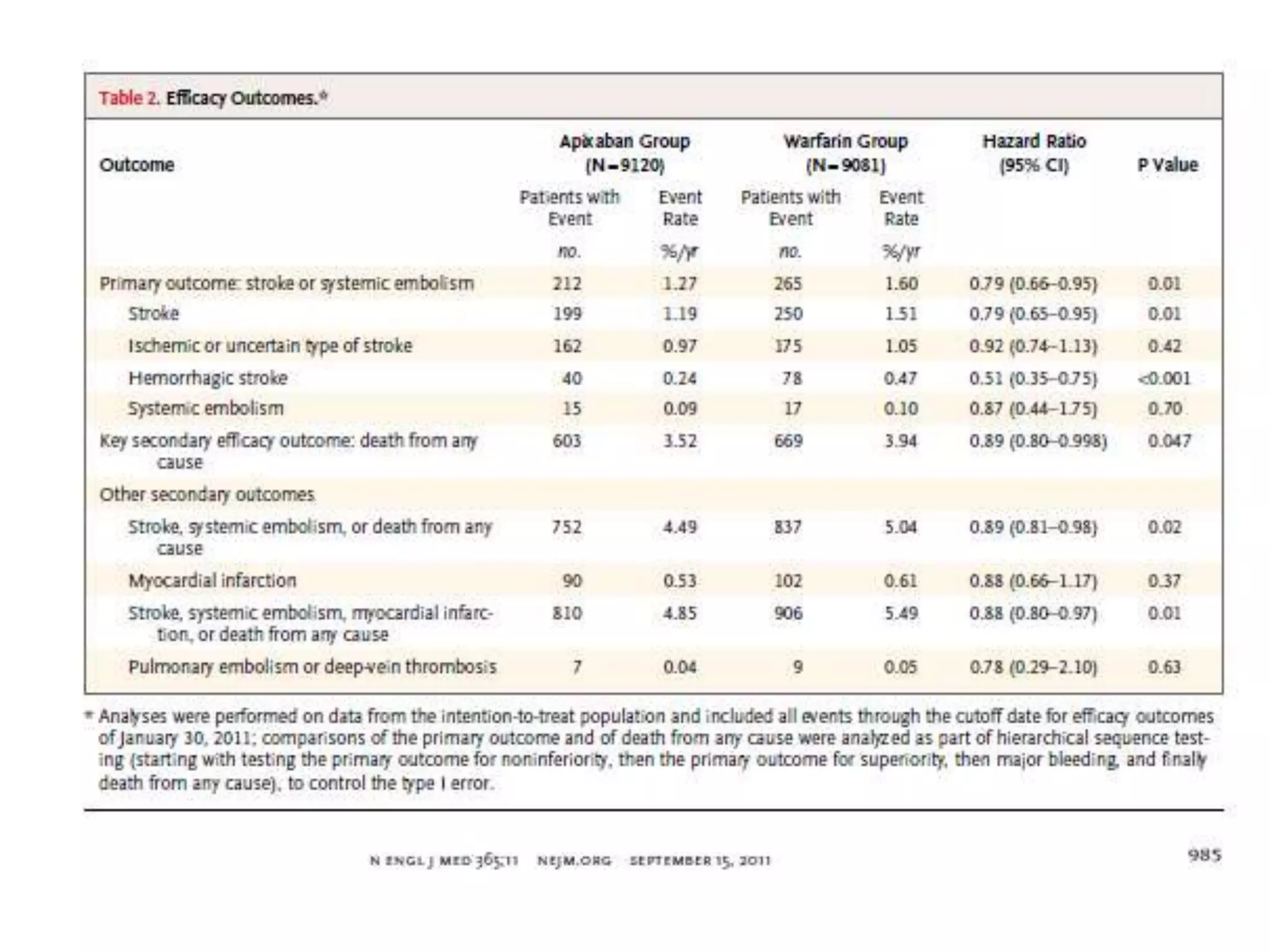
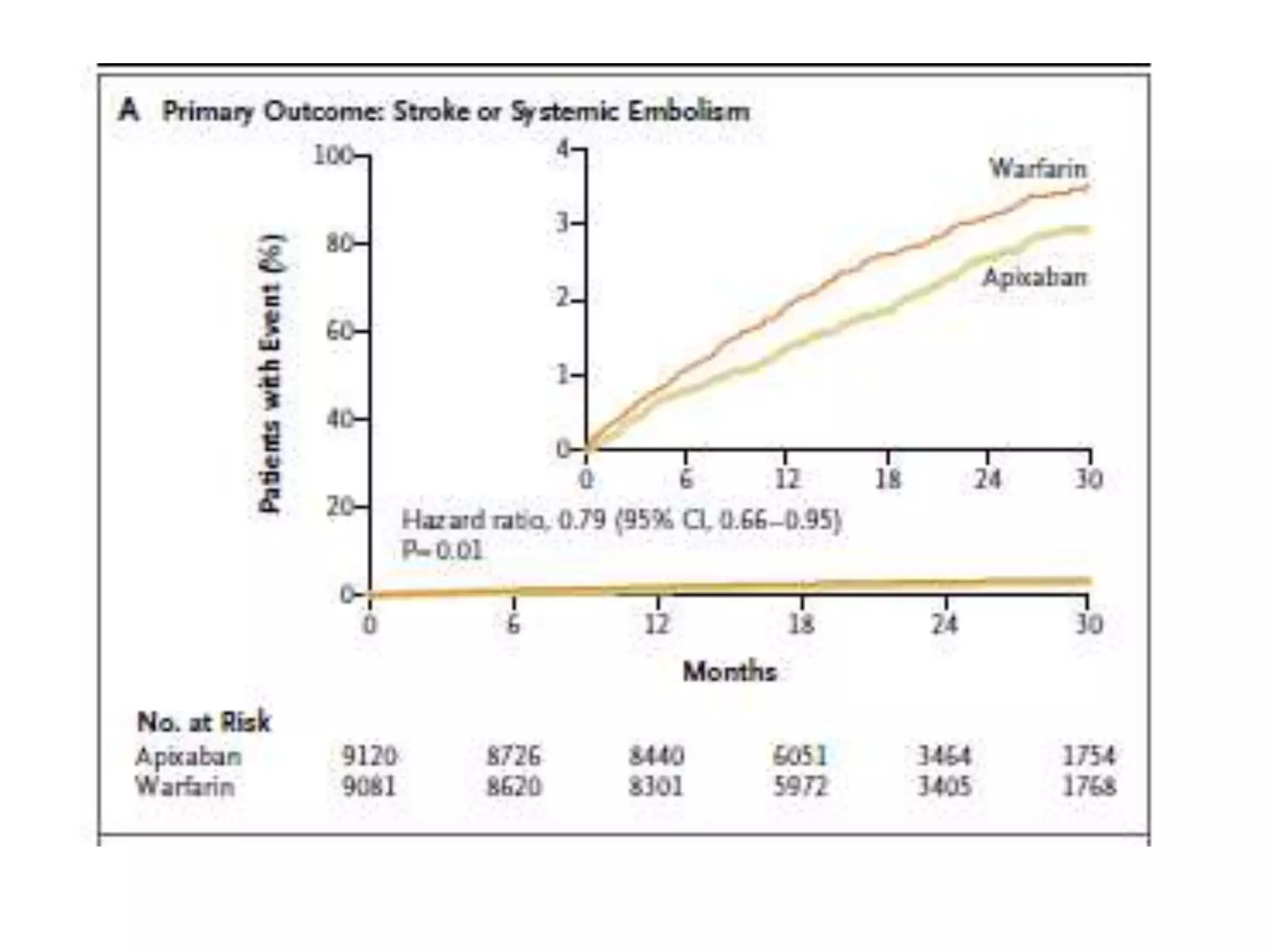
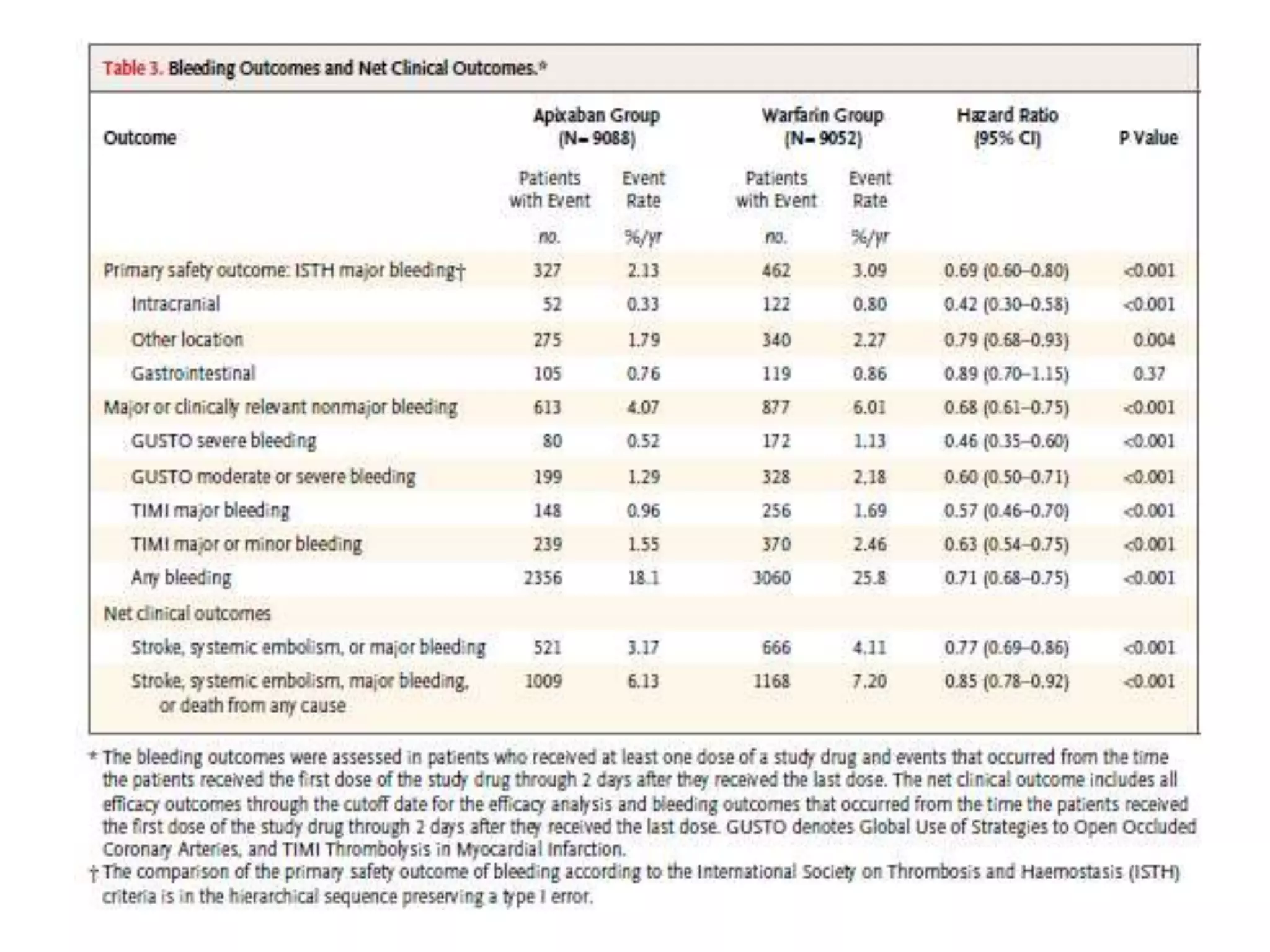
• In patients with atrial fibrillation, apixaban
was superior to warfarin in preventing stroke
or systemic embolism, caused less bleeding,
and resulted in lower mortality
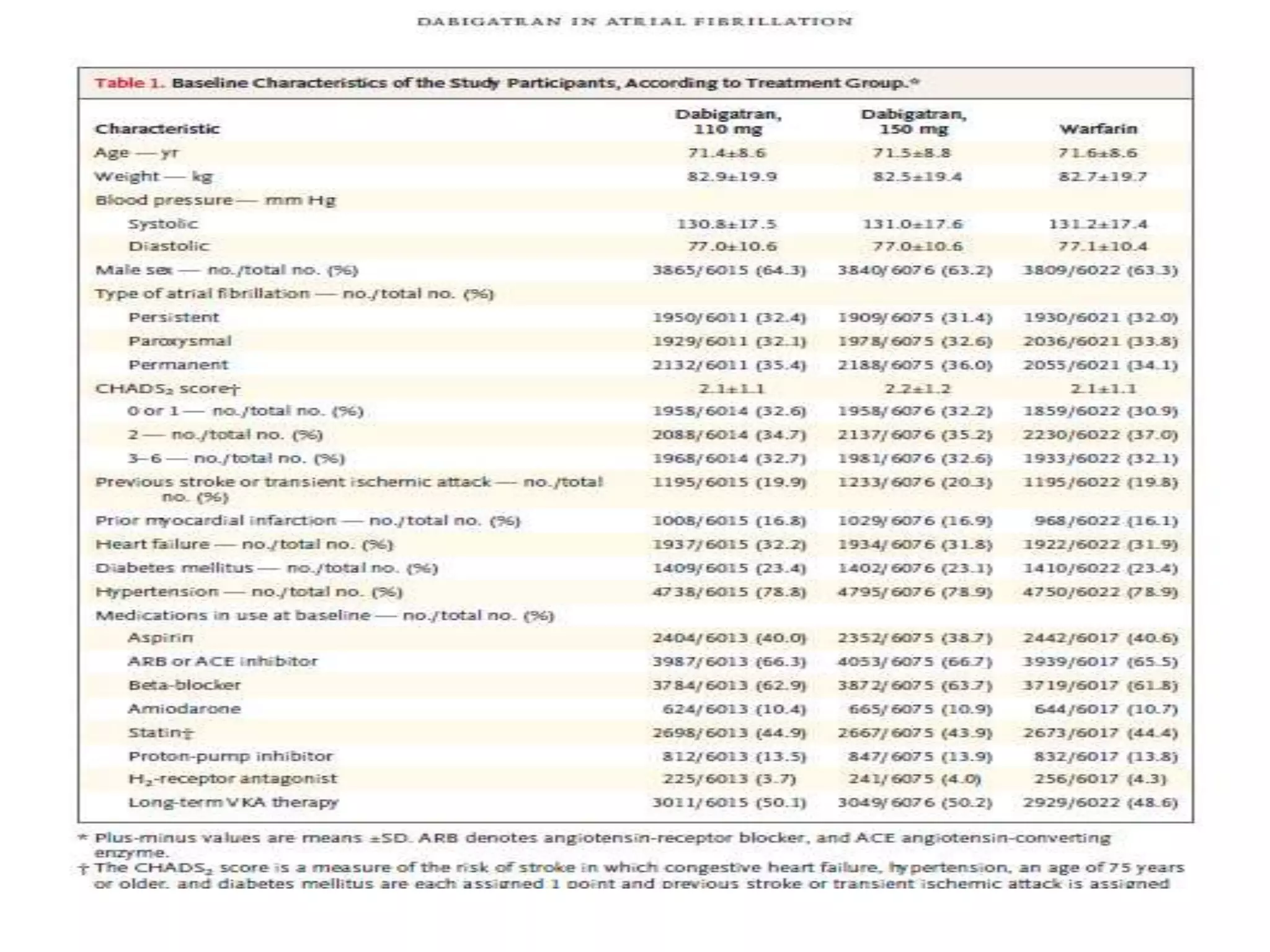
• In this noninferiority trial, we randomly assigned
18,113 patients who had atrial fibrillation and a
risk of stroke to receive, in a blinded fashion,
fixed doses of
• dabigatran— 110 mg or 150 mg twice daily or, in
an unblinded fashion, adjusted-dose warfarin.
• The median duration of the follow-up period was
2.0 years.
• The primary outcome was stroke or systemic
embolism
Inclusion criteria
AF
Age >75 years or 65-74 years with T2DM,
HTN, or CAD
One of:
-Previous stroke or TIA
-LVEF <40%
-NYHA class II-IV within 6 months
Exclusion criteria
Severe valvular disease
Stroke within 14 days
Severe stroke within 6 months of
screening
Condition conveying an increased risk of
hemorrhage
Creatinine clearance <30 ml/min
Active liver disease
Pregnancy
• In patients with atrial fibrillation, dabigatran
given at a dose of 110 mg was associated with
rates of stroke and systemic embolism that were
similar to those associated with warfarin, as well
as lower rates of major hemorrhage.
• Dabigatran administered at a dose of 150 mg, as
compared with warfarin, was associated with
lower rates of stroke and systemic embolism but
similar rates of major hemorrhage
• In a double-blind trial, we randomly assigned
14,264 patients with nonvalvular atrial fibrillation
who were at increased risk for stroke to receive
either rivaroxaban (at a daily dose of 20 mg) or
dose-adjusted warfarin.
• The per-protocol, as-treated primary analysis was
designed to determine whether rivaroxaban was
noninferior to warfarin for the primary end point
of stroke or systemic embolism.
INCLUSION CRITERIA
• Men or women aged >18 years with non-valvular atrial fibrillation
- Atrial fibrillation must be documented by ECG evidence 30 days before
randomization.
• newly diagnosed atrial fibrillation are eligible provided that:
atrial fibrillation is non-valvular
ECG evidence on 2 occasions 24 hours apart demonstrating atrial
fibrillation
- History of prior ischemic stroke, TIA or non-CNS systemic embolism
believed to be cardioembolic in origin
• or has 2 or more of the following risk factors:
Heart failure and/or left ventricular ejection fraction <35%
Hypertension (defined as use of antihypertensive medications within
6 months before the screening visit or persistent systolic blood pressure
above 140 mmHg or diastolic blood pressure above 90 mmHg)
Age > 75 years
Diabetes mellitus
EXCLUSION CRITERIA
• Hemodynamically significant mitral valve
stenosis
- Prosthetic heart valve
- Planned cardioversion
- Transient atrial fibrillation caused by a reversible
disorder
- presence of atrial myxoma or left ventricular
thrombus
- Active endocarditis
Hemorrhage Risk-Related Criteria
• Rivoraxaban 20 mg daily
• Warfarin with dose adjusted with INR [2-3]
Adverse Events and Liver Enzyme Data
Values are N (%)
Based on Safety Population
Rivaroxaban
(N=7111)
Warfarin
(N=7125)
Any Adverse Event
Any Serious Adverse Event
AE leading to study drug discontinuation
82.4
37.3
15.7
82.2
38.2
15.2
Epistaxis
Peripheral edema
Dizziness
Nasopharyngitis
Cardiac failure
Bronchitis
Dyspnea
Diarrhea
10.1
6.1
6.1
5.9
5.6
5.6
5.3
5.3
8.6
6.2
6.3
6.4
5.9
5.9
5.5
5.6
ALT Elevation
>3 x ULN
>5 x ULN
>3 x ULN and T Bili > 2 x ULN
2.9
1.0
0.4
2.9
1.0
0.5
• In patients with atrial fibrillation, rivaroxaban
was noninferior to warfarin for the prevention
of stroke or systemic embolism, There was no
significant between-group difference in the
risk of major bleeding, although intracranial
and fatal bleeding occurred less frequently in
the rivaroxaban group

Af trials

  • 1.
  • 2.
    2002 Atrial FibrillationFollow-up Investigation of Rhythm Management (AFFIRM)
  • 3.
    DESIGN • Analysis: Intention-to-treat •Multicenter, parallel-group, randomized, controlled trial • N=4,060 patients with nonvalvular atrial fibrillation – Rate-control strategy (n=2,027) – Rhythm-control strategy (n=2,033) • Setting: 213 clinical sites and their satellite sites • Median follow-up: 3.5 years • Primary outcome: All-cause mortality at 5 years
  • 4.
    Inclusion criteria Only patientswith recurrent persistent atrial fibrillation or flutter, in whom oral anticoagulation was not contraindicated, were included. Exclusion criteria Patients were excluded if arrhythmia had lasted longer than one year. In addition to the usual exclusion criteria for studies of electrical cardioversion, we also excluded patients with New York Heart Association class IV heart failure, current or previous treatment with amiodarone, or a pacemaker. Patients were required to have undergone one electrical cardioversion during the previous two years, with a maximum of two.
  • 5.
    Interventions • Rate-Control Strategy –HR goal <80 with rest, <110 with activity – Drugs to achieve control: • Beta-blockers, CCB (eg verapamil and diltiazem), OR digoxin – Anticoagulation with warfarin (goal INR 2-3)
  • 6.
    • Rhythm-Control Strategy –Anti-arrhythmic agent chosen by treating physician, and may include cardioversion – Drugs to achieve rhythm control: • Class Ia (quinidine, procainamide, disopyramide), 1c (eg flecainide), III (eg Amiodarone, Sotalol) – Warfarin for anticoagulation, but can be stopped if sinus rhythm maintained for 4 weeks • If patients fail either rate/rhythm control, non-pharamcologic therapy can be considered (eg ablation, maze procedure, and pacing techniques)
  • 8.
    Wyse DG, NEngl J Med. 2002;347(23):1825
  • 9.
    • The resultsof AFFIRM, and other rate versus rhythm trials suggest that there is no advantage of rhythm control over rate control for the treatment of atrial fibrillation with respect to major cardiovascular outcomes • However, randomized controlled trials often do not fully represent real life situations • Registry data may be of value to complement information derived from randomized controlled trials • The RecordAF Registry was established to trace the influence of the physician’s choice of a rate versus rhythm control strategy for consecutive patients with first onset or recent recurrent atrial fibrillation
  • 10.
    RecordAF Registry –Design • Main Inclusion criteria – Age ≥ 18 years – History of atrial fibrillation <1 year – In sinus rhythm or in atrial fibrillation – Eligible for pharmacological treatment of AF V0 Baseline V1 6 months V2 12 months Two endpoints at 12 months  Rate of therapeutic success of AF management (SR or at rate control target, + no major CV event + no strategy switch)  Rate of major CV events (CV death, myocardial Infarction, stroke, TIA leading to hospitalization, hospitalization or prolongation of hospitalization (arrhythmic or proarrhythmic events, other CV events, major complications of ablative procedure)  Main Exclusion criteria: – “Permanent” AF – AF due to a transient cause – Post-operative AF
  • 11.
    RecordAF Registry -Conclusions • In a cardiology setting rhythm control was preferred (55%) • AF progressed more rapidly to a permanent status at 1 year with rate control (54%) than with rhythm control (13%) • Therapeutic success was achieved more frequently in patients treated by rhythm control (60% vs. 47%), driven by 81% in SR in the rhythm control group and 74% at HR target of ≤ 80 bpm at 1 year in the rate control group • The high occurrence of CV clinical events was dependent on co- morbidity rather than the choice of strategy • In real life, the better success of AF management with rhythm control did not translate into better outcomes • These results confirm and complement results from previous controlled randomized trials
  • 12.
    RACE II RAte ControlEfficacy in Permanent Atrial Fibrillation A Randomized Comparison of Lenient Rate Control versus Strict Rate Control Concerning Morbidity and Mortality
  • 13.
     Rates ofcomplications and death were similar in patients treated with rate-control and rhythm- control therapy  Since then, rate control has become front-line therapy in the management of AF The optimal level of heart-rate control during AF is unknown AFFIRM, RACE Wyse et al. New Engl J Med 2002 Van Gelder et al. New Engl J Med 2002
  • 14.
    ACC/AHA/ESC 2006 Guidelines Strict rate control  At rest: 60 - 80  During moderate exercise: 90-115 Fuster et al. Guidelines J Am Coll Cardiol 2006
  • 15.
    Hypothesis Lenient rate controlis not inferior to strict rate control in patients with permanent AF in terms of cardiovascular morbidity and mortality
  • 16.
    RACE II trial Prospective, randomized, open trial with blinded endpoint evaluation  Multicenter, noninferiority trial conducted in The Netherlands  2-3 years follow-up
  • 17.
    Inclusion criteria  PermanentAF ≤ 12 months  Resting heart rate > 80 bpm  On oral anticoagulation  Age ≤ 80 years
  • 18.
    Exclusion criteria  Paroxysmalor transient AF  Known contra-indications for either strict or lenient rate control (e.g. previous adverse effects on rate control drugs)  Unstable heart failure  Cardiac surgery < 3 months  Stroke  Current or foreseen PM/ ICD/ CRT  Inability to walk or bike
  • 19.
    Permanent AF >80 bpm lenient strict HR < 110 bpm (12 lead ECG) HR < 80 bpm (12 lead ECG) and HR < 110 bpm (at 25% duration of maximal exercise time) After achieving rate control target: Holter for safety
  • 20.
     Patients weretreated with negative dromotropic drugs (i.e. beta-blockers, non-dihydropyridine calcium-channel blockers and digoxin, alone or in combination).  Dosages of drugs were increased or drugs combined until the heart rate target or targets were achieved. Treatment
  • 21.
    Primary outcome  Cardiovascularmortality  Hospitalization for heart failure  Stroke, systemic emboli, major bleeding  Syncope, sustained VT, cardiac arrest  Life-threatening adverse effects of RC drugs  Pacemaker implantation for bradycardia  ICD implantation for ventricular arrhythmias
  • 22.
    Baseline characteristics Lenient controlStrict control n= 311 n=303 CHADS2 score 1.4±1.0 1.4±1.2 0-1 57% 64% 2 30% 22% 3-6 13% 14%
  • 23.
    Rate control targetsat end of dose-adjustment phase Lenient control Strict control n= 311 n=303 Rate control target 98% 67%* Resting target 98% 75% Exercise target - 73% Visits to achieve target 0.2±0.6 2.3±1.4* Median 0 2* Interquartile range 0-0 1-3 * P<0.001
  • 24.
    Lenient control Strictcontrol n= 311 n=303 None 10% 1%* Beta-blocker alone 42% 20%* Calcium blocker alone 6% 5% Digoxin alone 7% 2%* Beta-blocker + calciumblocker 4% 13%* Beta-blocker + digoxin 19% 37%* Calciumblocker + digoxin 6% 10% Beta + calciumblocker + digoxin 1% 9%* Rate control medication at end of dose-adjustment phase * P<0.01 30% 69%*
  • 25.
    0 3 1224 36 50 60 70 80 90 100 110 * * * * Heart rate during study * * P<0.001 * * * No. At Risk Lenient 311 311 302 291 237 Strict 303 303 284 277 240 Lenient Strict months Heartrate(beatsperminute)
  • 26.
    0 5 10 15 20 0 6 1218 24 30 36 No. At Risk Strict 303 282 273 262 246 212 131 Lenient 311 298 290 285 255 218 138 Lenient Strict CumulativeIncidence(%) 14.9% 12.9% months Cumulative incidence primary outcome
  • 27.
    Lenient control Strictcontrol 3-y incidence 12.9% 14.9% Risk difference -2.0% 90%-CI (-7.6%, 3.5%) Upper limit 10% Inferiority hypothesis was rejected (p<0.001) Primary outcome
  • 28.
    Components of primaryoutcome Lenient control Strict control n= 311 n=303 Primary outcome 12.9% 14.9% CV mortality 2.9% 3.9% Heart failure 3.8% 4.1% Stroke 1.6% 3.9% Emboli 0.3% 0% Bleeding 5.3% 4.5% Adverse effects RC drugs 1.1% 0.7% Pacemaker 0.8% 1.4% Syncope 1.0% 1.0% ICD 0% 0.4%
  • 29.
    Components of primaryoutcome Lenient control Strict control n= 311 n=303 Primary outcome 12.9% 14.9% Nonfatal 10.0% 11.0% Fatal 2.9% 3.9% Cardiac arrhythmic 1.0% 1.4% Cardiac nonarrhythmic 0.3% 0.8% Noncardiac vascular 1.7% 1.9%
  • 30.
    3-y incidence Lenientcontrol Strict control All patients 12.9% 14.9% CHADS2 < 2 12.4% 9.6%* CHADS2 ≥ 2 13.6% 25.0%** Inferiority hypothesis rejected for both subgroups (*p=0.02 and **p<0.001) Primary outcome
  • 31.
     The RACEII study shows that lenient rate control is not inferior to strict rate control  Lenient rate control is more convenient since fewer outpatient visits, fewer examinations, lower doses and less often combination of drugs are needed Conclusions
  • 32.
     Lenient ratecontrol may be adopted as first choice rate control strategy in patients with permanent atrial fibrillation  This applies for high and low risk patients Clinical implications
  • 33.
    ATHENA TRIAL • Aplacebo-controlled, double-blind, parallel-arm trial • Population and treatment: >4500 moderate- to high-risk atrial-fibrillation patients >75 years old or >70 if they had at least one CV risk factor (hypertension, diabetes, prior stroke or TIA, an enlarged left atrium, or an LVEF • Randomized to dronedarone 400 mg twice daily or placebo
  • 34.
    • End points: •Primary outcome: Prevention of CV hospitalization or death from any cause • Secondary outcomes: All-cause mortality, CV mortality, CV hospitalization, death from cardiac arrhythmia, and cardiac nonarrhythmic death
  • 35.
    Inclusion Criteria • ageof at least 70 years; • arterial hypertension (with ongoing therapy involving at least two antihypertensive drugs of different classes); • diabetes mellitus; • previous stroke, transient ischemic attack, or systemic embolism; • left atrial diameter greater than or equal to 50 mm, as measured on M-mode echocardiography; and left ventricular ejection fraction less than or equal to 40%. • For each patient, a 12-lead electrocardiogram (ECG) showing atrial fibrillation or flutter and obtained within 6 months before randomization had to be available. • A second 12-lead ECG within the same period had to show sinus rhythm.
  • 36.
    EXCLUSION CRITERIA • permanentatrial fibrillation; • an unstable hemodynamic condition (i.e., decompensated heart failure within the previous 4 weeks); New York Heart Association (NYHA) class IV congestive heart failure; planned major surgery; • acute myocarditis; • bradycardia with a heart rate of less than 50 beats per minute or a PR interval of more than 0.28 second; or previous clinically significant sinus-node disease, if the patient was not currently being treated with a pacemaker. • a calculated glomerular filtration rate at baseline of less than 10 ml per minute; • a potassium level of less than 3.5 mmol per liter, if not currently being corrected; and a • requirement for concomitant medication that was prohibited (i.e., other class I or III antiarrhythmic drugs).
  • 43.
    Dronedarone in High-RiskPermanent Atrial Fibrillation • PALLAS (Permanent Atrial Fibrillation Outcome Study Using Dronedarone on Top of Standard Therapy) was designed to test whether dronedarone would reduce rates of major vascular events or unplanned hospitalization for cardiovascular causes in patients with permanent atrial fibrillation who were at high risk for vascular events
  • 44.
    INCLUSION CRITERIA • Permanentatrial fibrillation or flutter, as documented on electrocardiography performed both within 14 days before randomization and 6 or more months beforehand, who had no evidence of intervening sinus rhythm and for whom there was no plan to restore sinus rhythm Aged >65 years with at least one of: Coronary artery disease Previous stroke or transient ischemic attack Symptomatic heart failure, which was defined as current New York Heart Association class II or III symptoms and admission to the hospital for heart failure in the previous year (but not in the most recent month) Left ventricular ejection fraction of 40% or less Peripheral arterial disease OR the combination of an age of 75 years or older, hypertension, and diabetes
  • 45.
    EXCLUSION CRITERIA • Paroxysmalor persistent atrial fibrillation • Use of an implantable cardioverter–defibrillator • Sustained daytime bradycardia of less than 50 beats per minute • QT interval corrected for heart rate of more than 500 msec (or >530 msec for patients with a paced ventricular rhythm).
  • 49.
  • 50.
  • 51.
    • Dronedarone increasedrates of heart failure, stroke, and death from cardiovascular causes in patients with permanent atrial fibrillation who were at risk for major vascular events. Our data show that this drug should not be used in such patients
  • 52.
    Stroke Prevention inAtrial Fibrillation Study • multicenter, randomized trial, compared 325 mg/day aspirin (double-blind) or warfarin with placebo for prevention of ischemic stroke and systemic embolism (primary events), and included 1,330 inpatients and outpatients with constant or intermittent atrial fibrillation
  • 53.
    INCLUSION CRITERIA • Constantor intermittent atrial fibrillation -ECG documentation in the preceeding 12 months Inpatients or outpatients from public, private and veteran healthcare
  • 54.
    EXCLUSION CRITERIA • Prostheticheart valves MI or angioplasty within previous 3 months CABG in last year MS MR DCM Chronic renal failure N.B. Patients were judged ineligable for group 1 (warf/aspirin/placebo) and hence put in group 2 (aspirin/placebo) if: -Age > 75 -Lone AF complex (abandoned) -Uncontrolled hypertension -Intrinsic PT prolongation > 2s beyond on 2+ occasions -Previous intracranial haemorrhage Thrombocytopoenia Alcohol abuse NSAIDs
  • 57.
    Primary endpoint Rate ofischaemic stroke and systemic embolism Secondary endpoint(s) Composite of TIA, myocardial infarction and unstable angina
  • 61.
    SPAF 2 • Preventionof stroke and systemic embolism in patients with AF • Objective • To compare the efficacy and safety of warfarin with ASA in the prevention of stroke and systemic embolism in two age cohorts • Trial design – Two parallel randomized controlled trials – Active treatment: warfarin (INR 2.0–4.5) – Control treatment: ASA (325 mg once daily)
  • 62.
    Inclusion criteria Age >18 AFin the previous 12 month Patient with history of ischemic stroke or TIA more than 2 years before entry were eligible Exclusion criteria Prosthetic heart valves Mitral stenosis Requirement or contraindication to aspirin or warfarin Patient younger than 60 without overt cardiovascular disease(with lone AF). Primary endpoint Ischaemic stroke and systemic embolism Secondary endpoint(s) Composite of TIA, myocardial infarction and unstable angina
  • 66.
    • Efficacy: Warfarinmay be more effective than ASA in reducing ischemic stroke and systemic embolism in youngerand older patients with AF. In older patients, the rate of stroke was substantial, irrespective of which agent was given • Safety: The risk of major bleeding and intracranial bleeding among anticoagulated patients ≤75 years was lower than in the older cohort (p=0.008, and p=0.05, respectively)
  • 67.
    Stroke Prevention in AtrialFibrillation III study (1996) • To compare the efficacy and safety of a low- intensity fixed-dose warfarin/ASA combination with adjusted-dose warfarin in the prevention of stroke and systemic embolism
  • 68.
    INCLUSION CRITERIA • Aged> 18 • AF documented in the 6 month preceding the study One or more high risk features -Impared left ventricular function • -Previous thromboembolism(systemic stroke ,TIA,systemic embolism) more than 30 days prior to entry -Systolic blood pressure of more than 160 mmHg at study enrolment -Women >75 y.
  • 69.
    EXCLUSION CRITERIA • Prostheticheart valves Mitral stenosis Prior requirement for anticoagulation Contra-indications to aspirin or warfarin Regular use of NSAIDs Patients who had taken part in previous SPAF studies or similar clinical trials.
  • 70.
    Primary endpoint Ischemic strokeand systemic embolism as measured during monthly telephone interview, clinic follow-up every 3 months, and yearly standard symptom questionnaire Secondary endpoint(s) Transient ischemic attack, intracranial hemorrhage, disabling or fatal stroke.
  • 73.
    SUMMARY • Efficacy: Inhigh-risk AF-patients, low-intensity, fixed-dose warfarin plus ASA was inferior to adjusted standard-dose warfarin in reducing • ischemic stroke and systemic embolism • disabling stroke • ischemic stroke, systemic embolism and vascular death • Safety: The rates of major and intracranial bleeding were similar in both groups
  • 75.
    INCLUSION • Atrial fibrillationor flutter at enrollment or two or more episodes of atrial fibrillation or flutter, as documented by electrocardiography, at least 2 weeks apart in the 12 months before enrollment. • In addition, at least one of the following risk factors for stroke was required: -Age of at least 75 years -Previous stroke, transient ischemic attack, or systemic embolism -Symptomatic heart failure within the previous 3 months or left ventricular ejection fraction of no more than 40% -Diabetes mellitus -Hypertension
  • 76.
    EXCLUSION • Atrial fibrillationdue to a reversible cause Moderate or severe mitral stenosis Conditions other than atrial fibrillation that required anticoagulation (e.g., a prosthetic heart valve) • Stroke within the previous 7 days • Need for aspirin at a dose of >165 mg a day or for both aspirin and clopidogrel • Severe renal insufficiency (serum creatinine level of >2.5 mg per deciliter
  • 82.
    • In patientswith atrial fibrillation, apixaban was superior to warfarin in preventing stroke or systemic embolism, caused less bleeding, and resulted in lower mortality
  • 84.
    • In thisnoninferiority trial, we randomly assigned 18,113 patients who had atrial fibrillation and a risk of stroke to receive, in a blinded fashion, fixed doses of • dabigatran— 110 mg or 150 mg twice daily or, in an unblinded fashion, adjusted-dose warfarin. • The median duration of the follow-up period was 2.0 years. • The primary outcome was stroke or systemic embolism
  • 85.
    Inclusion criteria AF Age >75years or 65-74 years with T2DM, HTN, or CAD One of: -Previous stroke or TIA -LVEF <40% -NYHA class II-IV within 6 months Exclusion criteria Severe valvular disease Stroke within 14 days Severe stroke within 6 months of screening Condition conveying an increased risk of hemorrhage Creatinine clearance <30 ml/min Active liver disease Pregnancy
  • 89.
    • In patientswith atrial fibrillation, dabigatran given at a dose of 110 mg was associated with rates of stroke and systemic embolism that were similar to those associated with warfarin, as well as lower rates of major hemorrhage. • Dabigatran administered at a dose of 150 mg, as compared with warfarin, was associated with lower rates of stroke and systemic embolism but similar rates of major hemorrhage
  • 91.
    • In adouble-blind trial, we randomly assigned 14,264 patients with nonvalvular atrial fibrillation who were at increased risk for stroke to receive either rivaroxaban (at a daily dose of 20 mg) or dose-adjusted warfarin. • The per-protocol, as-treated primary analysis was designed to determine whether rivaroxaban was noninferior to warfarin for the primary end point of stroke or systemic embolism.
  • 92.
    INCLUSION CRITERIA • Menor women aged >18 years with non-valvular atrial fibrillation - Atrial fibrillation must be documented by ECG evidence 30 days before randomization. • newly diagnosed atrial fibrillation are eligible provided that: atrial fibrillation is non-valvular ECG evidence on 2 occasions 24 hours apart demonstrating atrial fibrillation - History of prior ischemic stroke, TIA or non-CNS systemic embolism believed to be cardioembolic in origin • or has 2 or more of the following risk factors: Heart failure and/or left ventricular ejection fraction <35% Hypertension (defined as use of antihypertensive medications within 6 months before the screening visit or persistent systolic blood pressure above 140 mmHg or diastolic blood pressure above 90 mmHg) Age > 75 years Diabetes mellitus
  • 93.
    EXCLUSION CRITERIA • Hemodynamicallysignificant mitral valve stenosis - Prosthetic heart valve - Planned cardioversion - Transient atrial fibrillation caused by a reversible disorder - presence of atrial myxoma or left ventricular thrombus - Active endocarditis Hemorrhage Risk-Related Criteria
  • 94.
    • Rivoraxaban 20mg daily • Warfarin with dose adjusted with INR [2-3]
  • 101.
    Adverse Events andLiver Enzyme Data Values are N (%) Based on Safety Population Rivaroxaban (N=7111) Warfarin (N=7125) Any Adverse Event Any Serious Adverse Event AE leading to study drug discontinuation 82.4 37.3 15.7 82.2 38.2 15.2 Epistaxis Peripheral edema Dizziness Nasopharyngitis Cardiac failure Bronchitis Dyspnea Diarrhea 10.1 6.1 6.1 5.9 5.6 5.6 5.3 5.3 8.6 6.2 6.3 6.4 5.9 5.9 5.5 5.6 ALT Elevation >3 x ULN >5 x ULN >3 x ULN and T Bili > 2 x ULN 2.9 1.0 0.4 2.9 1.0 0.5
  • 102.
    • In patientswith atrial fibrillation, rivaroxaban was noninferior to warfarin for the prevention of stroke or systemic embolism, There was no significant between-group difference in the risk of major bleeding, although intracranial and fatal bleeding occurred less frequently in the rivaroxaban group