A natural unavoidable feature of human life
Contents
What is frustration?
Where does frustration come from?
How does frustration affects behaviour?
How to manage frustration?
What is frustration?
While achieving any goal it gives
satisfaction, not achieving creates
otherwise feelings producing a
sense of deprivation in the person.
This deprivation in a person may
result in “Frustration”
It is a resultant feel, caused by a
sense of privation, deprivation, or
conflict in relation to the goal-
directed activities.
Where Does it Come From ?
ctivity Time!
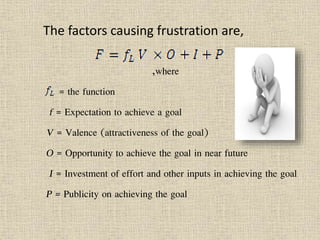
The factors causing frustration are,
,where
= the function
f = Expectation to achieve a goal
V = Valence (attractiveness of the goal)
O = Opportunity to achieve the goal in near future
I = Investment of effort and other inputs in achieving the goal
P = Publicity on achieving the goal
Four behavior that is affected by
Frustration
Aggression
Regression
Flight
Exploration
AggressionCommon reaction to
frustration. It may take
forms as follows
General - kicking,
knocking etc
Target - towards boss or
superior
Self-directed- blaming
oneself
Displaced- Anger is
directed on dependents
like relatives or
subordinates
Regression
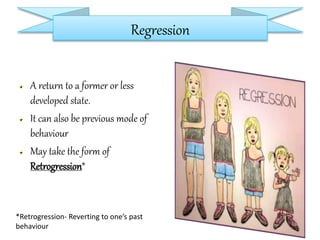
A return to a former or less
developed state.
It can also be previous mode of
behaviour
May take the form of
Retrogression*
*Retrogression- Reverting to one’s past
behaviour
Flight
Escapism
It takes several
forms like APATHY
when one neglects
frustration
WITHDRAWAL,
FANTASY and
RATIONALISATION
(like a baby catches
shadow)
Exploration
Solving the problems
Explores with alternate
strategies
It can be done in
several forms like
finding alternatives, self
action, action by others
and joint action
4
1 2 3
5 6
Aggression
Aggression
Regression Flight
Exploration Exploration
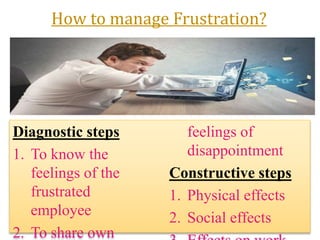
How to manage Frustration?
Diagnostic steps
1. To know the
feelings of the
frustrated
employee
2. To share own
feelings of
disappointment
Constructive steps
1. Physical effects
2. Social effects
Presented by
Arina
Disha
Lekha
Priyanka
Senorita
Shravanthi
Vaishnavi

Job frustration

  • 1.
    A natural unavoidablefeature of human life
  • 2.
    Contents What is frustration? Wheredoes frustration come from? How does frustration affects behaviour? How to manage frustration?
  • 3.
    What is frustration? Whileachieving any goal it gives satisfaction, not achieving creates otherwise feelings producing a sense of deprivation in the person. This deprivation in a person may result in “Frustration” It is a resultant feel, caused by a sense of privation, deprivation, or conflict in relation to the goal- directed activities.
  • 4.
    Where Does itCome From ?
  • 5.
  • 6.
    The factors causingfrustration are, ,where = the function f = Expectation to achieve a goal V = Valence (attractiveness of the goal) O = Opportunity to achieve the goal in near future I = Investment of effort and other inputs in achieving the goal P = Publicity on achieving the goal
  • 9.
    Four behavior thatis affected by Frustration Aggression Regression Flight Exploration
  • 10.
    AggressionCommon reaction to frustration.It may take forms as follows General - kicking, knocking etc Target - towards boss or superior Self-directed- blaming oneself Displaced- Anger is directed on dependents like relatives or subordinates
  • 11.
    Regression A return toa former or less developed state. It can also be previous mode of behaviour May take the form of Retrogression* *Retrogression- Reverting to one’s past behaviour
  • 12.
    Flight Escapism It takes several formslike APATHY when one neglects frustration WITHDRAWAL, FANTASY and RATIONALISATION (like a baby catches shadow)
  • 13.
    Exploration Solving the problems Exploreswith alternate strategies It can be done in several forms like finding alternatives, self action, action by others and joint action
  • 15.
    4 1 2 3 56 Aggression Aggression Regression Flight Exploration Exploration
  • 16.
    How to manageFrustration? Diagnostic steps 1. To know the feelings of the frustrated employee 2. To share own feelings of disappointment Constructive steps 1. Physical effects 2. Social effects
  • 18.