TERMINAL ILLNESS
Vaishnavi
Diya
Chandhok
Tejasa
Pooja
What is Terminal Illness?
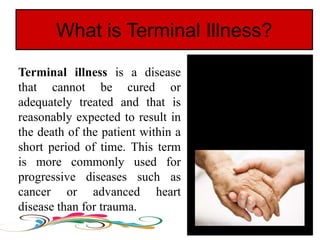
Terminal illness is a disease
that cannot be cured or
adequately treated and that is
reasonably expected to result in
the death of the patient within a
short period of time. This term
is more commonly used for
progressive diseases such as
cancer or advanced heart
disease than for trauma.
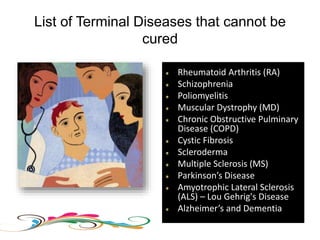
List of Terminal Diseases that cannot be
cured
Rheumatoid Arthritis (RA)
Schizophrenia
Poliomyelitis
Muscular Dystrophy (MD)
Chronic Obstructive Pulminary
Disease (COPD)
Cystic Fibrosis
Scleroderma
Multiple Sclerosis (MS)
Parkinson’s Disease
Amyotrophic Lateral Sclerosis
(ALS) – Lou Gehrig's Disease
Alzheimer’s and Dementia
Ways to Cope up with Grief
Grieving in your own way
Telling others
Looking after yourself
Books that might help
Supporting someone who’s grieving
Getting support
Video showcasing Grieving stage
Stage 1: Denial and Isolation
Advantage of this positive energy by educating them
on the specifics of the condition
Alleviate the pain and suffering
Grief counsellors also recognize that this is the time
when patients distance themselves from their families
and friends
Letting the patient know that their friends and
families will always support them
Allows these patients to get angry, because this is an
important stage to go through
Patient’s family is well-informed
Stage 2:Anger
Stage 3: Bargaining
Bargaining occurs in two ways when it comes to grief
-Bargaining with the past and
-With the future
Never affirm nor reject these bargains
Counsellors encourage them to speak up, and just
listen to what they are saying
Stage 4: Depression
Ensure that the patients are well groomed
Their environment remains positive
Listen to them when they want to talk
Stage 5: Acceptance
Grief counselling will be best in the form of
accompanying
Present all the time whenever they wish
Supports them
Grief with Patient’s Family
Stage 1- Crises
Stage 2- Unity
Stage 3- Upheaval
Stage 4- Resolution
Stage 5- Renewal
Video – Grief Stages that Patient’s
family go through
Way to cope up with the
situation
Share your story
Look after yourself
Write down your worries
Be positive
Go visit a counsellor if you feel depressed
See other benefits
Try to go for nature walks
Spend more time with family
Find someone to talk to who is suffering from similar problems
Terminal Illness

Terminal Illness

  • 1.
  • 2.
    What is TerminalIllness? Terminal illness is a disease that cannot be cured or adequately treated and that is reasonably expected to result in the death of the patient within a short period of time. This term is more commonly used for progressive diseases such as cancer or advanced heart disease than for trauma.
  • 3.
    List of TerminalDiseases that cannot be cured Rheumatoid Arthritis (RA) Schizophrenia Poliomyelitis Muscular Dystrophy (MD) Chronic Obstructive Pulminary Disease (COPD) Cystic Fibrosis Scleroderma Multiple Sclerosis (MS) Parkinson’s Disease Amyotrophic Lateral Sclerosis (ALS) – Lou Gehrig's Disease Alzheimer’s and Dementia
  • 4.
    Ways to Copeup with Grief Grieving in your own way Telling others Looking after yourself Books that might help Supporting someone who’s grieving Getting support
  • 5.
  • 7.
    Stage 1: Denialand Isolation Advantage of this positive energy by educating them on the specifics of the condition Alleviate the pain and suffering Grief counsellors also recognize that this is the time when patients distance themselves from their families and friends
  • 8.
    Letting the patientknow that their friends and families will always support them Allows these patients to get angry, because this is an important stage to go through Patient’s family is well-informed Stage 2:Anger
  • 9.
    Stage 3: Bargaining Bargainingoccurs in two ways when it comes to grief -Bargaining with the past and -With the future Never affirm nor reject these bargains Counsellors encourage them to speak up, and just listen to what they are saying
  • 10.
    Stage 4: Depression Ensurethat the patients are well groomed Their environment remains positive Listen to them when they want to talk
  • 11.
    Stage 5: Acceptance Griefcounselling will be best in the form of accompanying Present all the time whenever they wish Supports them
  • 12.
    Grief with Patient’sFamily Stage 1- Crises Stage 2- Unity Stage 3- Upheaval Stage 4- Resolution Stage 5- Renewal
  • 13.
    Video – GriefStages that Patient’s family go through
  • 14.
    Way to copeup with the situation Share your story Look after yourself Write down your worries Be positive Go visit a counsellor if you feel depressed See other benefits Try to go for nature walks Spend more time with family Find someone to talk to who is suffering from similar problems