Terminology Used in Job Analysis
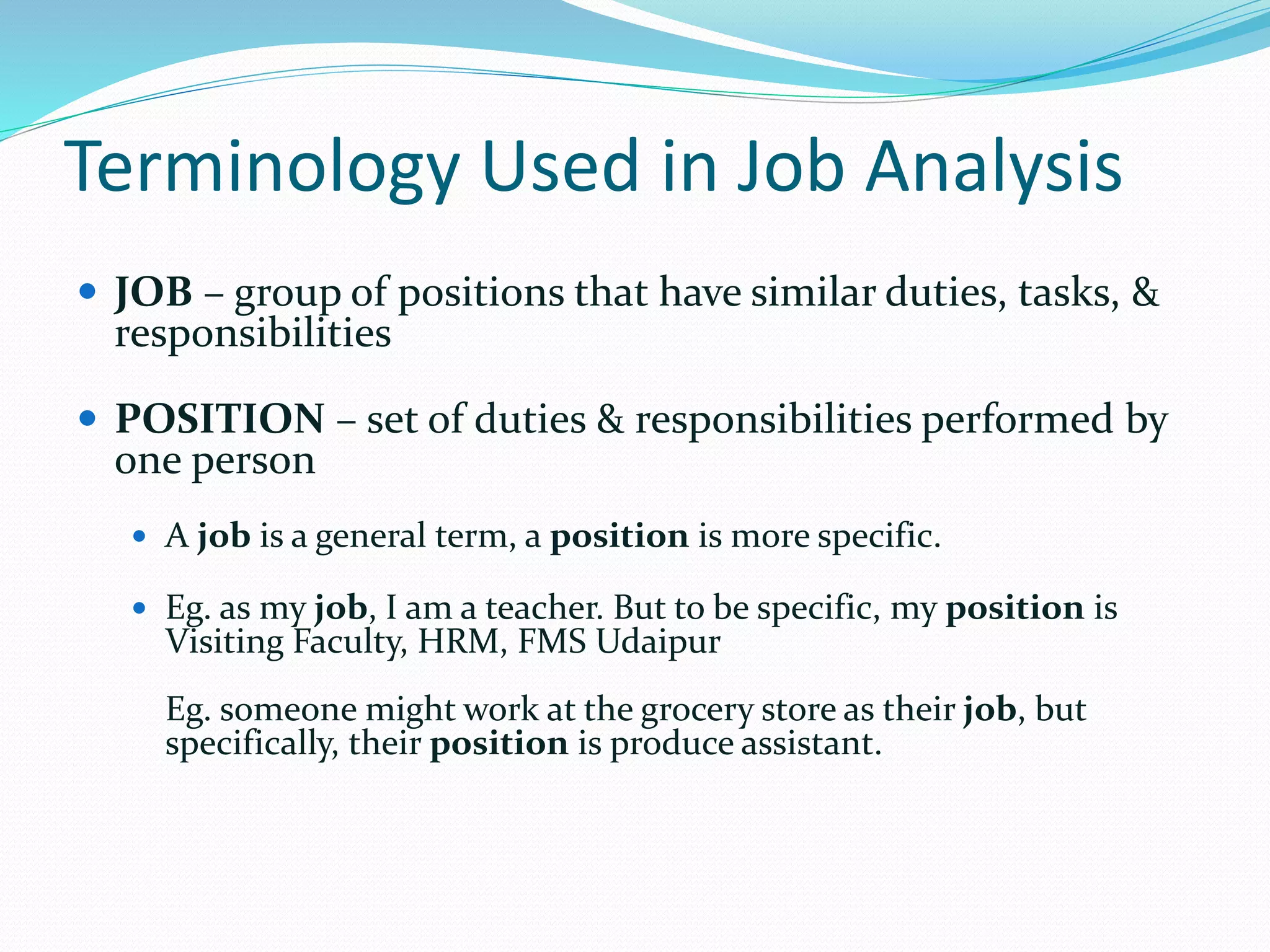
 JOB – group of positions that have similar duties, tasks, &
responsibilities
 POSITION – set of duties & responsibilities performed by
one person
 A job is a general term, a position is more specific.
 Eg. as my job, I am a teacher. But to be specific, my position is
Visiting Faculty, HRM, FMS Udaipur
Eg. someone might work at the grocery store as their job, but
specifically, their position is produce assistant.
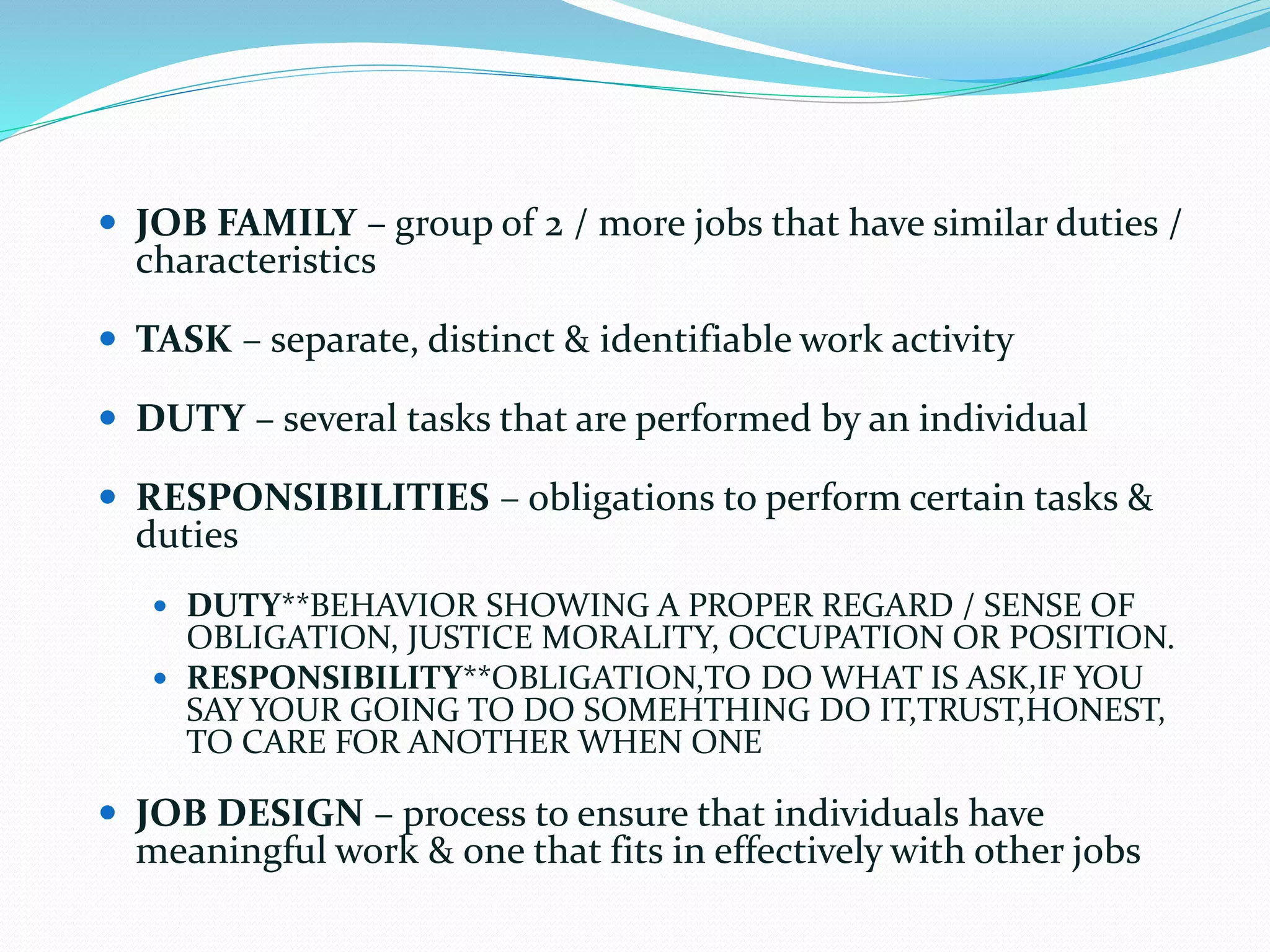
 JOB FAMILY – group of 2 / more jobs that have similar duties /
characteristics
 TASK – separate, distinct & identifiable work activity
 DUTY – several tasks that are performed by an individual
 RESPONSIBILITIES – obligations to perform certain tasks &
duties
 DUTY**BEHAVIOR SHOWING A PROPER REGARD / SENSE OF
OBLIGATION, JUSTICE MORALITY, OCCUPATION OR POSITION.
 RESPONSIBILITY**OBLIGATION,TO DO WHAT IS ASK,IF YOU
SAY YOUR GOING TO DO SOMEHTHING DO IT,TRUST,HONEST,
TO CARE FOR ANOTHER WHEN ONE
 JOB DESIGN – process to ensure that individuals have
meaningful work & one that fits in effectively with other jobs
Job Analysis
Job Description
Job title
Location
Job Summary
Duties
Reporting
Authority
Machines and tools
Materials used
Supervision/Subordinate
Working conditions
Hazards
Job Specification
Statement of individual
Qualification necessary to
do job
Education
Experience
Training
Initiative
Physical abilities
Psychological abilities
Communication skills
Responsibilities
Sensory demands
“Job Analysis is the process of collecting data
and information about a job and result of job
analysis is job description and job
specification”
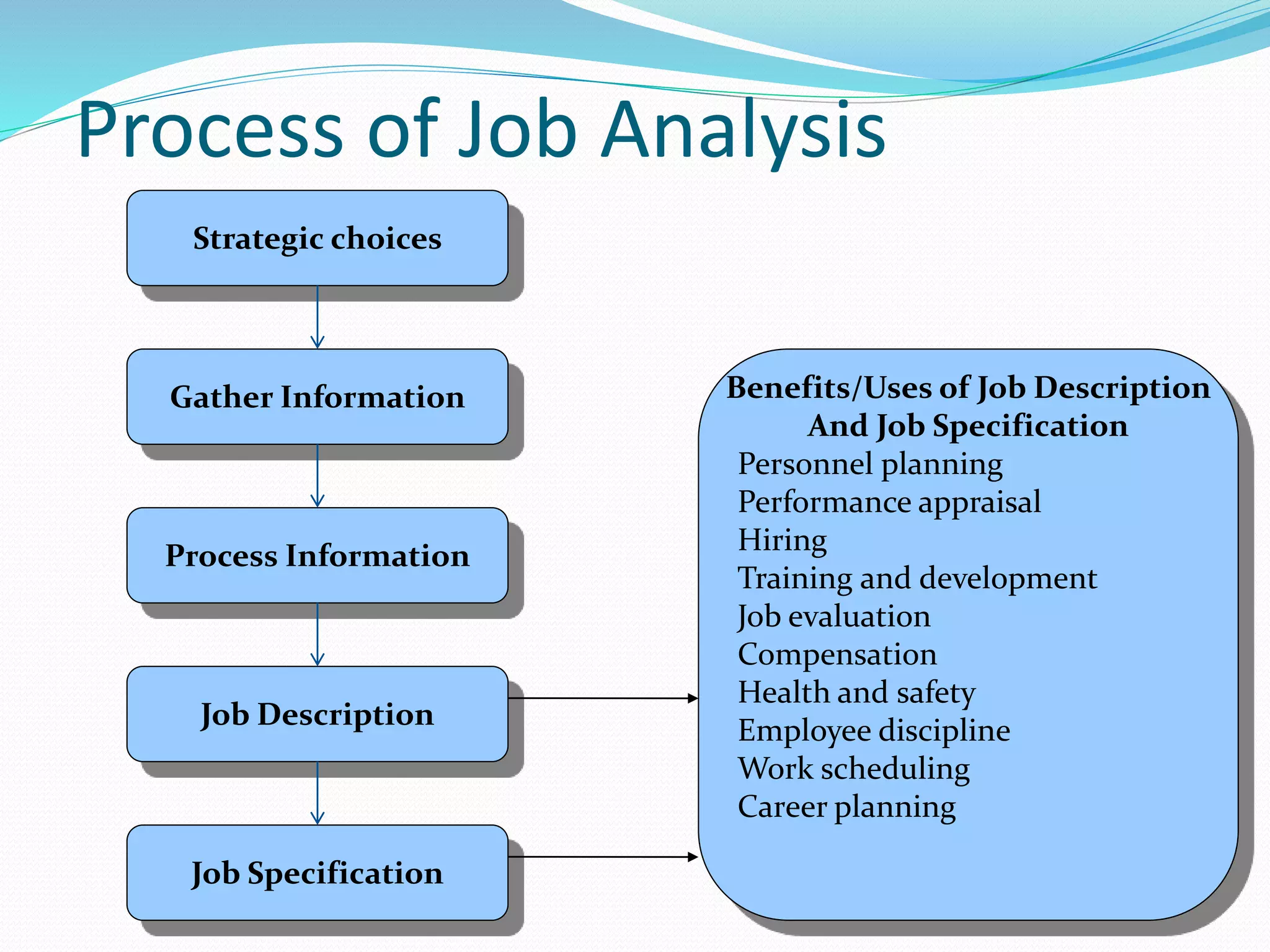
Process of Job Analysis
Strategic choices
Gather Information
Process Information
Job Description
Job Specification
Benefits/Uses of Job Description
And Job Specification
Personnel planning
Performance appraisal
Hiring
Training and development
Job evaluation
Compensation
Health and safety
Employee discipline
Work scheduling
Career planning
Strategic Choices
Strategic Choices: The decision organization is required to make in job analysis
i) The level of employee involvement
– Too much involvement result into bias information
– Too little affect quality of information
ii) The level of detail of job analysis
– If job analysis is base for all HR decisions then detailed
– If objective is to identify general duties and clarify rules and
responsibilities of job holder then less detailed
iii) Past, present or future oriented job analysis
– Traditional job analysis tend to focus on how job was carried out in past
and being done at present
– If technological changes or sudden shifts in environment expect to
change the job then future oriented approach is best
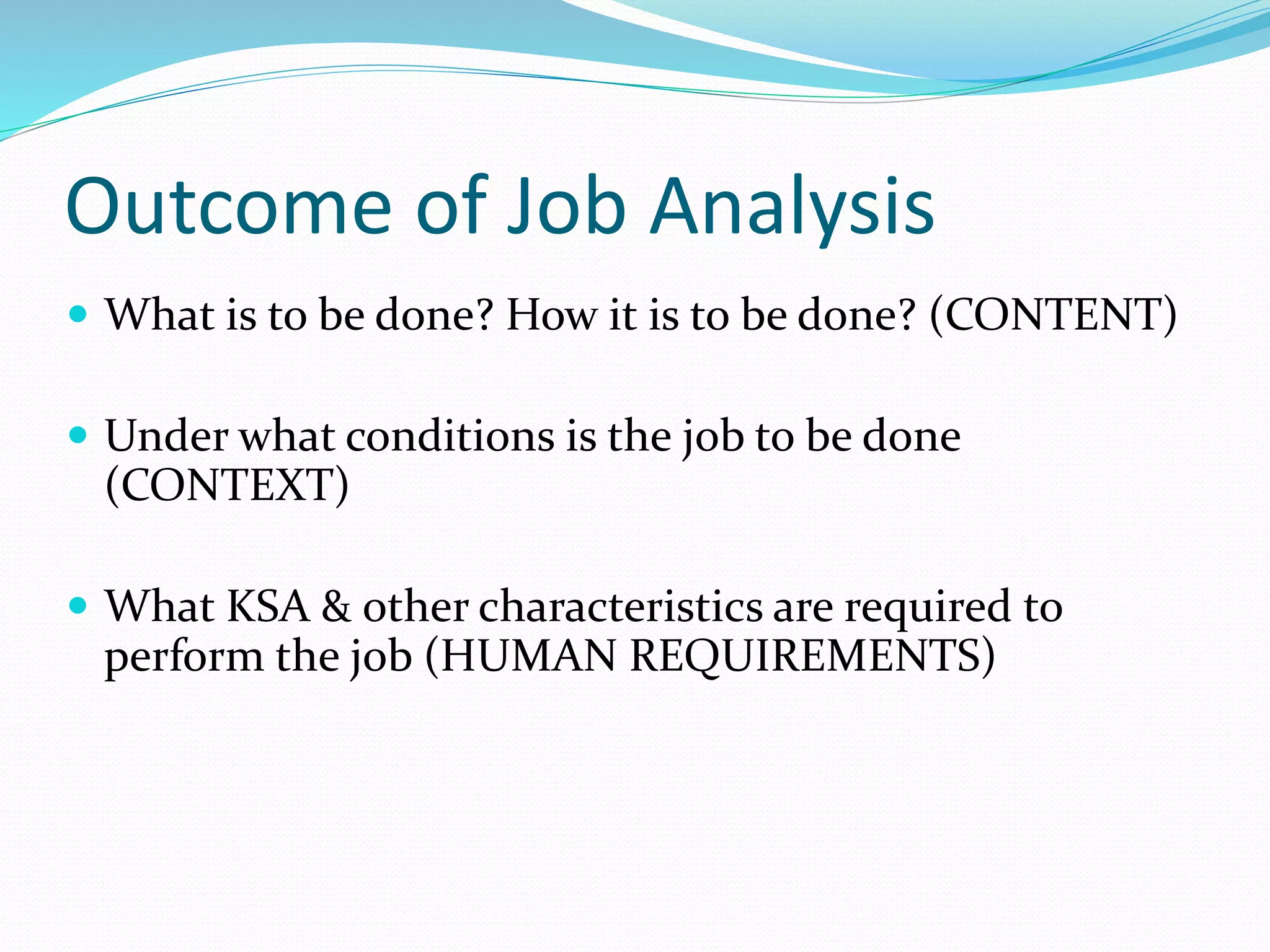
Outcome of Job Analysis
 What is to be done? How it is to be done? (CONTENT)
 Under what conditions is the job to be done
(CONTEXT)
 What KSA & other characteristics are required to
perform the job (HUMAN REQUIREMENTS)
 JOB CONTENT
 Duties & responsibilities
 Job demands
 Machines, tools, & equipment
 Performance standards
 JOB CONTEXT
 Physical, organizational & social context
 Work conditions, & work schedule
 HUMAN REQUIREMENTS
 KSA,
 Education, Experience & personal attributes (personality, interests,
etc.)
METHODS
 Direct observation
 Interview of existing post
holder
 Interview of immediate
supervisor
 Questionnaires
 Previous studies
 Work diaries
Methods of Job Analysis:
Observation
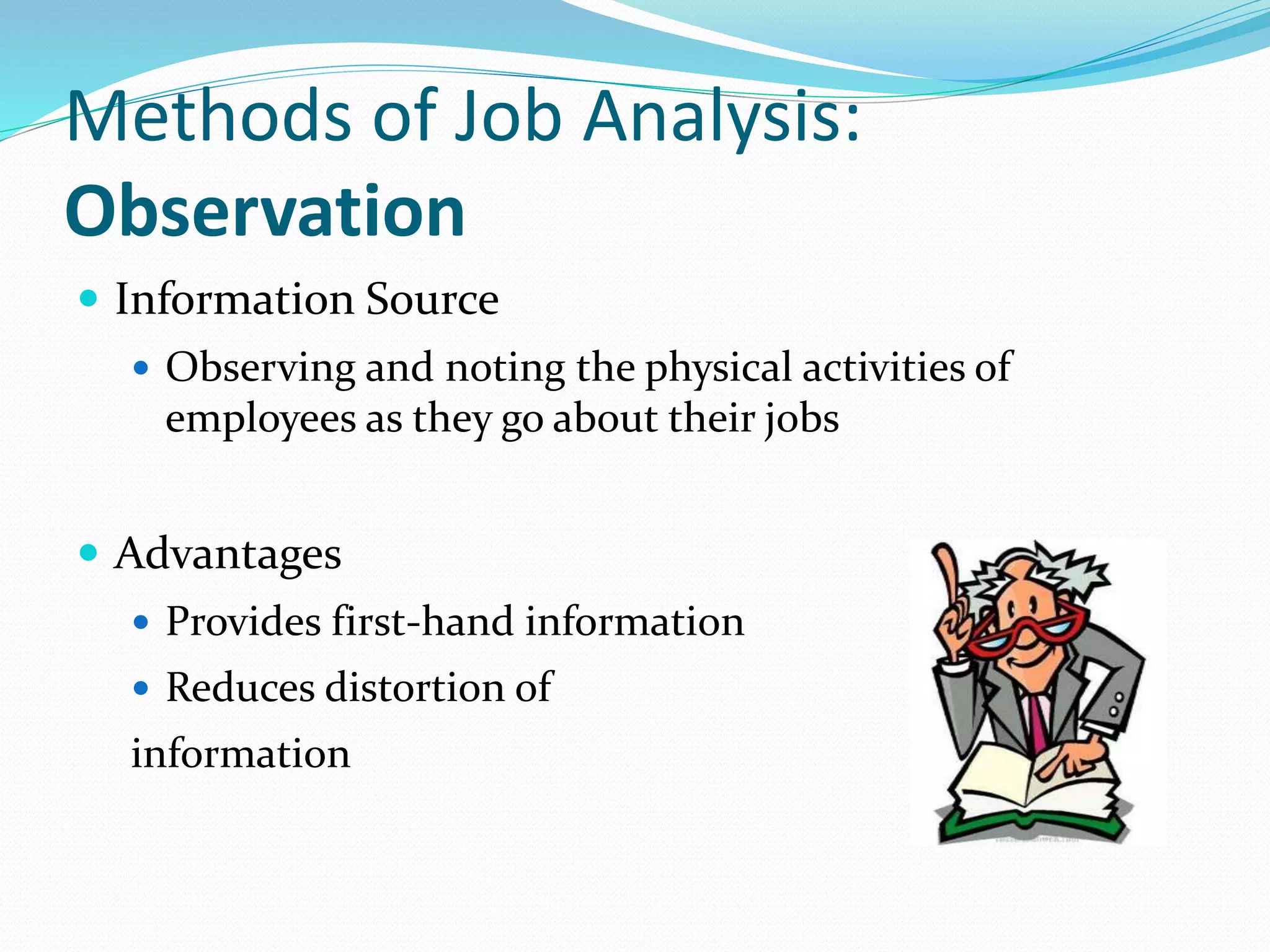
 Information Source
 Observing and noting the physical activities of
employees as they go about their jobs
 Advantages
 Provides first-hand information
 Reduces distortion of
information
Observation:
 Disadvantages:
 Time consuming
 Difficulty in capturing entire job cycle
 Of little use if job involves a high level of mental activity
 Observer’s Difference of mental disposition.
 Analyst’s caliber should match employee’s caliber
Methods of Job Analysis:
The Interview
 Information Sources
 Individual employees (existing job holder)
 Immediate boss (Supervisors )
with knowledge of the job.
The Interviews:
 Advantages
 Quick, direct way to find overlooked
information required.
 Disadvantages
 Exaggeration or depreciation of importance of job
 In case of supervisor, he may not be interested in the
JD of the subordinates.
 Attitude may not be supportive.
 Difference in perception, attitude and aptitude of the
interviewee.
 Lack of communication.
 Analyst’s caliber should match employee’s caliber.
Methods of Job Analysis:
Questionnaires
 Information Source:
Have employees fill out questionnaires to describe
their job-related duties and responsibilities.
Questionnaires
 Advantages
 Quick and efficient way to gather information from large
numbers of employees
 Quick and economical to use
 Disadvantages
 Becomes less useful where the employees lack verbal
skills.
Methods of Job Analysis:
Previous studies
 Information source:
Past record of any employee.
The analyst keeps the past record of the employees
and keeps the previous experiences and issues
related to the job analysis process of the
organization.
Previous studies
 Advantages
Easy to use this method.
Helps to find out that whether it is beneficial or not
 Disadvantages
Wrong assessment of previous post
Methods of Job Analysis:
Work Diaries
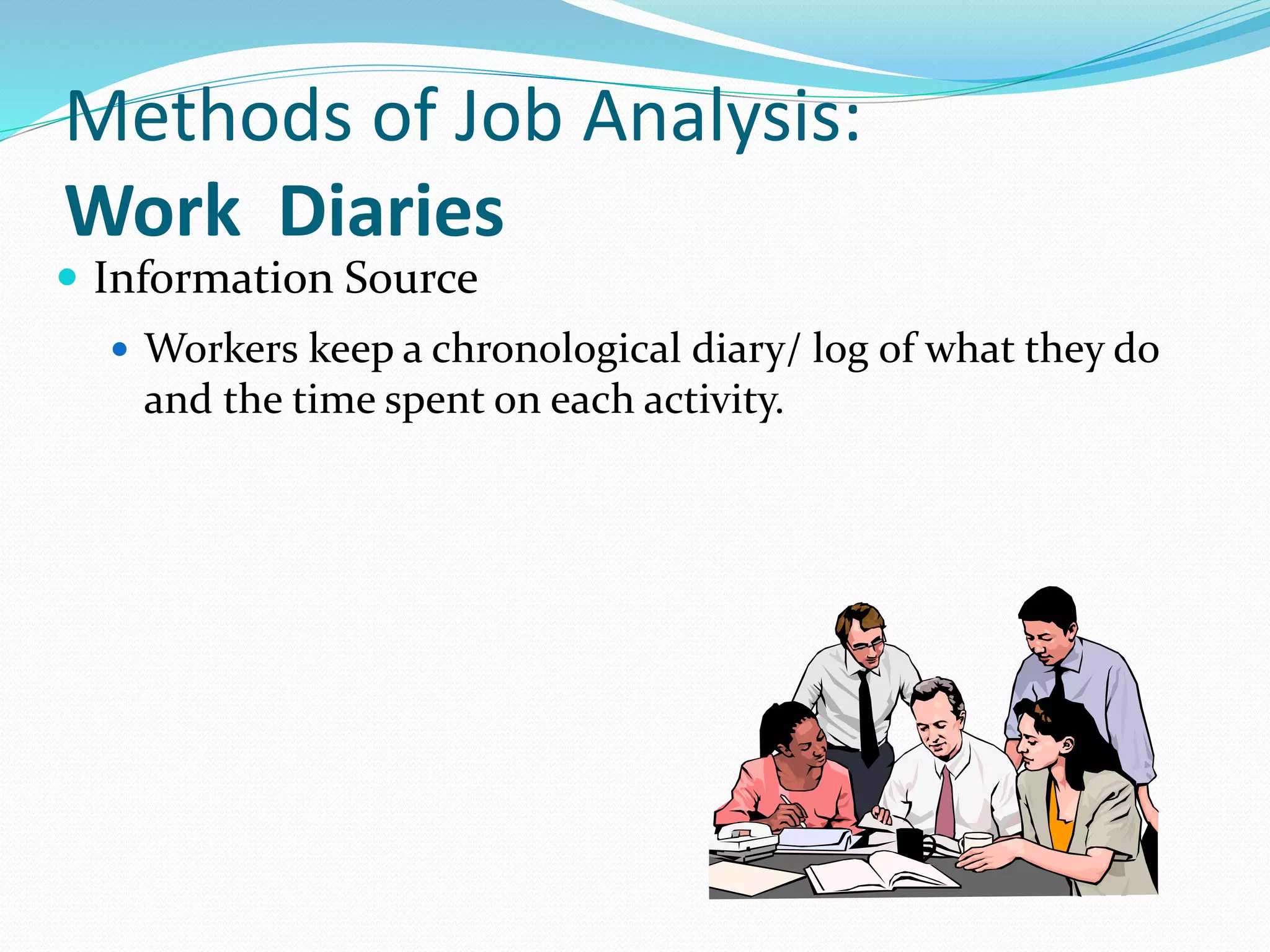
 Information Source
 Workers keep a chronological diary/ log of what they do
and the time spent on each activity.
Work Diaries
 Advantages
 Produces a more complete picture of the job
 Employee participation
 Maintained on daily basis.
 Disadvantages
 Distortion of information
 Depends upon employees to accurately recall their
activities
Methods of Job Analysis:
Manager trying the job
 This method is used to check the new post.
 In this method the manager start a new job to check
that whether this job is beneficial or not.
 It’s a risky step to take because it may cause many
fundamental problems.
Advantages and disadvantages
 Advantages:
Very fruitful if the manager is an experienced analyst
and strategic risk taker.
 Disadvantages:
Very expensive
Risky
Time consuming

Job analysis

  • 2.
    Terminology Used inJob Analysis  JOB – group of positions that have similar duties, tasks, & responsibilities  POSITION – set of duties & responsibilities performed by one person  A job is a general term, a position is more specific.  Eg. as my job, I am a teacher. But to be specific, my position is Visiting Faculty, HRM, FMS Udaipur Eg. someone might work at the grocery store as their job, but specifically, their position is produce assistant.
  • 3.
     JOB FAMILY– group of 2 / more jobs that have similar duties / characteristics  TASK – separate, distinct & identifiable work activity  DUTY – several tasks that are performed by an individual  RESPONSIBILITIES – obligations to perform certain tasks & duties  DUTY**BEHAVIOR SHOWING A PROPER REGARD / SENSE OF OBLIGATION, JUSTICE MORALITY, OCCUPATION OR POSITION.  RESPONSIBILITY**OBLIGATION,TO DO WHAT IS ASK,IF YOU SAY YOUR GOING TO DO SOMEHTHING DO IT,TRUST,HONEST, TO CARE FOR ANOTHER WHEN ONE  JOB DESIGN – process to ensure that individuals have meaningful work & one that fits in effectively with other jobs
  • 4.
    Job Analysis Job Description Jobtitle Location Job Summary Duties Reporting Authority Machines and tools Materials used Supervision/Subordinate Working conditions Hazards Job Specification Statement of individual Qualification necessary to do job Education Experience Training Initiative Physical abilities Psychological abilities Communication skills Responsibilities Sensory demands
  • 5.
    “Job Analysis isthe process of collecting data and information about a job and result of job analysis is job description and job specification”
  • 6.
    Process of JobAnalysis Strategic choices Gather Information Process Information Job Description Job Specification Benefits/Uses of Job Description And Job Specification Personnel planning Performance appraisal Hiring Training and development Job evaluation Compensation Health and safety Employee discipline Work scheduling Career planning
  • 7.
    Strategic Choices Strategic Choices:The decision organization is required to make in job analysis i) The level of employee involvement – Too much involvement result into bias information – Too little affect quality of information ii) The level of detail of job analysis – If job analysis is base for all HR decisions then detailed – If objective is to identify general duties and clarify rules and responsibilities of job holder then less detailed iii) Past, present or future oriented job analysis – Traditional job analysis tend to focus on how job was carried out in past and being done at present – If technological changes or sudden shifts in environment expect to change the job then future oriented approach is best
  • 8.
    Outcome of JobAnalysis  What is to be done? How it is to be done? (CONTENT)  Under what conditions is the job to be done (CONTEXT)  What KSA & other characteristics are required to perform the job (HUMAN REQUIREMENTS)
  • 9.
     JOB CONTENT Duties & responsibilities  Job demands  Machines, tools, & equipment  Performance standards  JOB CONTEXT  Physical, organizational & social context  Work conditions, & work schedule  HUMAN REQUIREMENTS  KSA,  Education, Experience & personal attributes (personality, interests, etc.)
  • 10.
    METHODS  Direct observation Interview of existing post holder  Interview of immediate supervisor  Questionnaires  Previous studies  Work diaries
  • 11.
    Methods of JobAnalysis: Observation  Information Source  Observing and noting the physical activities of employees as they go about their jobs  Advantages  Provides first-hand information  Reduces distortion of information
  • 12.
    Observation:  Disadvantages:  Timeconsuming  Difficulty in capturing entire job cycle  Of little use if job involves a high level of mental activity  Observer’s Difference of mental disposition.  Analyst’s caliber should match employee’s caliber
  • 13.
    Methods of JobAnalysis: The Interview  Information Sources  Individual employees (existing job holder)  Immediate boss (Supervisors ) with knowledge of the job.
  • 14.
    The Interviews:  Advantages Quick, direct way to find overlooked information required.  Disadvantages  Exaggeration or depreciation of importance of job  In case of supervisor, he may not be interested in the JD of the subordinates.  Attitude may not be supportive.  Difference in perception, attitude and aptitude of the interviewee.  Lack of communication.  Analyst’s caliber should match employee’s caliber.
  • 15.
    Methods of JobAnalysis: Questionnaires  Information Source: Have employees fill out questionnaires to describe their job-related duties and responsibilities.
  • 16.
    Questionnaires  Advantages  Quickand efficient way to gather information from large numbers of employees  Quick and economical to use  Disadvantages  Becomes less useful where the employees lack verbal skills.
  • 17.
    Methods of JobAnalysis: Previous studies  Information source: Past record of any employee. The analyst keeps the past record of the employees and keeps the previous experiences and issues related to the job analysis process of the organization.
  • 18.
    Previous studies  Advantages Easyto use this method. Helps to find out that whether it is beneficial or not  Disadvantages Wrong assessment of previous post
  • 19.
    Methods of JobAnalysis: Work Diaries  Information Source  Workers keep a chronological diary/ log of what they do and the time spent on each activity.
  • 20.
    Work Diaries  Advantages Produces a more complete picture of the job  Employee participation  Maintained on daily basis.  Disadvantages  Distortion of information  Depends upon employees to accurately recall their activities
  • 21.
    Methods of JobAnalysis: Manager trying the job  This method is used to check the new post.  In this method the manager start a new job to check that whether this job is beneficial or not.  It’s a risky step to take because it may cause many fundamental problems.
  • 22.
    Advantages and disadvantages Advantages: Very fruitful if the manager is an experienced analyst and strategic risk taker.  Disadvantages: Very expensive Risky Time consuming