
 A systematic approach to collect information about a job
such as tasks, responsibilities and the skills required to
perform those tasks
 An important part of Human Resources (HR) planning
 Work simplification: A job may be analyzed to simplify the process
and methods involved in it. This will mean redesigning the job.
Work simplification helps to improve productivity of personnel.
 Establishment of standards of performance: In order to hire the
personnel on a scientific basis, it is very necessary to determine in
advance a standard of performance with which applicant can be
compared.
 Support to other personnel activities: Job analysis provides
support to other personnel activities such as recruitment ,selection,
training, development, performance appraisal, job evaluation
 Job analysis assists HR in determining:
› Necessity of the job
› Equipment needed
› Skills required
› Supervision
› Working conditions
› Management/employee interaction
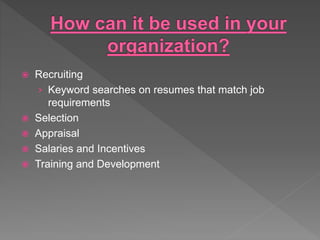
 Recruiting
› Keyword searches on resumes that match job
requirements
 Selection
 Appraisal
 Salaries and Incentives
 Training and Development
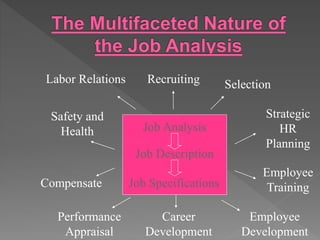
Job Analysis
Job Description
Job Specifications
Recruiting Selection
Strategic
HR
Planning
Employee
Training
Employee
Development
Career
Development
Performance
Appraisal
Compensate
Safety and
Health
Labor Relations
 Job analysis can also:
› Help the company remain profitable and competitive
› Help the company keep up with technology
› Prevent employees from being overworked
› Help the company stay
in compliance with
government regulations
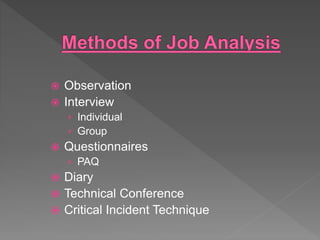
 Observation
 Interview
› Individual
› Group
 Questionnaires
› PAQ
 Diary
 Technical Conference
 Critical Incident Technique
 Observation Method
› Analyst observes incumbent
ď‚– Directly
ď‚– Videotape
› Useful when job is fairly routine
› Workers may not perform to expectations
 Interview Method
› Individual
ď‚– Several workers are interviewed individually
ď‚– The answers are consolidated into a single job
analysis
› Group
ď‚– Employees are interviewed simultaneously
ď‚– Group conflict may cause this method to be ineffective
 Questionnaires
› Employees answer questions about the job’s tasks and
responsibilities
› Each question is answered using a scale that rates the
importance of each task
 Diary Method
› Employees record information into diaries of their
daily tasks
ď‚– Record the time it takes to complete tasks
› Must be over a period of several weeks or months
 Technical Conference Method
› Uses experts to gather information about job
characteristics
 Critical Incident Technique (CIT)
› Takes past incidents of good and bad behavior
› Organizes incidents into categories that match the job
they are related to
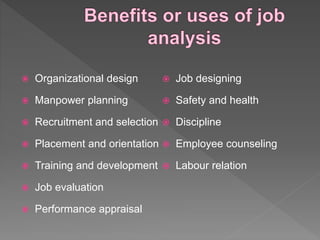
 Organizational design
 Manpower planning
 Recruitment and selection
 Placement and orientation
 Training and development
 Job evaluation
 Performance appraisal
 Job designing
 Safety and health
 Discipline
 Employee counseling
 Labour relation
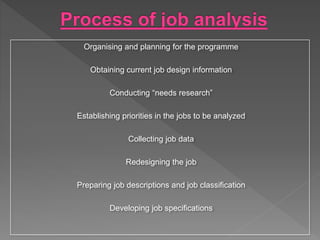
Organising and planning for the programme
Obtaining current job design information
Conducting “needs research”
Establishing priorities in the jobs to be analyzed
Collecting job data
Redesigning the job
Preparing job descriptions and job classification
Developing job specifications
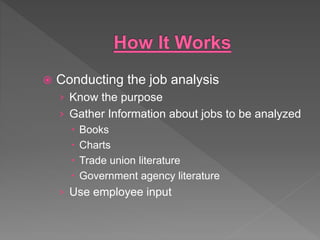
 Conducting the job analysis
› Know the purpose
› Gather Information about jobs to be analyzed
ď‚– Books
ď‚– Charts
ď‚– Trade union literature
ď‚– Government agency literature
› Use employee input
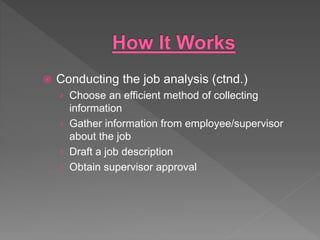
 Conducting the job analysis (ctnd.)
› Choose an efficient method of collecting
information
› Gather information from employee/supervisor
about the job
› Draft a job description
› Obtain supervisor approval
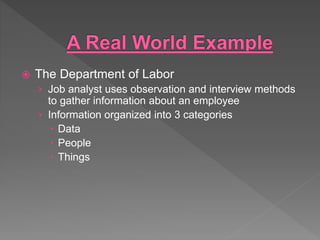
 The Department of Labor
› Job analyst uses observation and interview methods
to gather information about an employee
› Information organized into 3 categories
ď‚– Data
ď‚– People
ď‚– Things
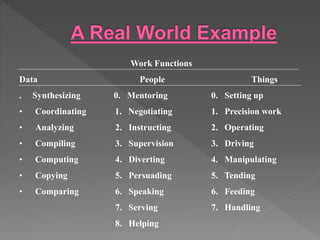
Work Functions
Data People Things
. Synthesizing 0. Mentoring 0. Setting up
• Coordinating 1. Negotiating 1. Precision work
• Analyzing 2. Instructing 2. Operating
• Compiling 3. Supervision 3. Driving
• Computing 4. Diverting 4. Manipulating
• Copying 5. Persuading 5. Tending
• Comparing 6. Speaking 6. Feeding
7. Serving 7. Handling
8. Helping
 Job titles are listed in the Dictionary of
Occupational Titles
 Each job is given a code
› Ex. A recruiter might be assigned the code 2, 6, 7 if
the job entails analyzing data (2), speaking to
people (6), and handling different things (7)
ď‚– See previous table
 Lack of support from top management
 Single method
 Lack of training or motivation
 Distortion of activities
 The main purpose of job analysis is thus to collect the
data and then to analyses the data relating to a job.
 A job can be analysed only after it has been designed
and someone is already performing it.
 The most important thing is job description and job
specification are two products of job analysis plays a
major role .
For more…. Mail to aglaiaconnect2018@gmail.com

Job analysis

  • 2.
     A systematicapproach to collect information about a job such as tasks, responsibilities and the skills required to perform those tasks  An important part of Human Resources (HR) planning
  • 3.
     Work simplification:A job may be analyzed to simplify the process and methods involved in it. This will mean redesigning the job. Work simplification helps to improve productivity of personnel.  Establishment of standards of performance: In order to hire the personnel on a scientific basis, it is very necessary to determine in advance a standard of performance with which applicant can be compared.  Support to other personnel activities: Job analysis provides support to other personnel activities such as recruitment ,selection, training, development, performance appraisal, job evaluation
  • 4.
     Job analysisassists HR in determining: › Necessity of the job › Equipment needed › Skills required › Supervision › Working conditions › Management/employee interaction
  • 5.
     Recruiting › Keywordsearches on resumes that match job requirements  Selection  Appraisal  Salaries and Incentives  Training and Development
  • 6.
    Job Analysis Job Description JobSpecifications Recruiting Selection Strategic HR Planning Employee Training Employee Development Career Development Performance Appraisal Compensate Safety and Health Labor Relations
  • 7.
     Job analysiscan also: › Help the company remain profitable and competitive › Help the company keep up with technology › Prevent employees from being overworked › Help the company stay in compliance with government regulations
  • 8.
     Observation  Interview ›Individual › Group  Questionnaires › PAQ  Diary  Technical Conference  Critical Incident Technique
  • 9.
     Observation Method ›Analyst observes incumbent  Directly  Videotape › Useful when job is fairly routine › Workers may not perform to expectations
  • 10.
     Interview Method ›Individual  Several workers are interviewed individually  The answers are consolidated into a single job analysis › Group  Employees are interviewed simultaneously  Group conflict may cause this method to be ineffective
  • 11.
     Questionnaires › Employeesanswer questions about the job’s tasks and responsibilities › Each question is answered using a scale that rates the importance of each task
  • 12.
     Diary Method ›Employees record information into diaries of their daily tasks  Record the time it takes to complete tasks › Must be over a period of several weeks or months
  • 13.
     Technical ConferenceMethod › Uses experts to gather information about job characteristics
  • 14.
     Critical IncidentTechnique (CIT) › Takes past incidents of good and bad behavior › Organizes incidents into categories that match the job they are related to
  • 15.
     Organizational design Manpower planning  Recruitment and selection  Placement and orientation  Training and development  Job evaluation  Performance appraisal  Job designing  Safety and health  Discipline  Employee counseling  Labour relation
  • 16.
    Organising and planningfor the programme Obtaining current job design information Conducting “needs research” Establishing priorities in the jobs to be analyzed Collecting job data Redesigning the job Preparing job descriptions and job classification Developing job specifications
  • 17.
     Conducting thejob analysis › Know the purpose › Gather Information about jobs to be analyzed  Books  Charts  Trade union literature  Government agency literature › Use employee input
  • 18.
     Conducting thejob analysis (ctnd.) › Choose an efficient method of collecting information › Gather information from employee/supervisor about the job › Draft a job description › Obtain supervisor approval
  • 19.
     The Departmentof Labor › Job analyst uses observation and interview methods to gather information about an employee › Information organized into 3 categories  Data  People  Things
  • 20.
    Work Functions Data PeopleThings . Synthesizing 0. Mentoring 0. Setting up • Coordinating 1. Negotiating 1. Precision work • Analyzing 2. Instructing 2. Operating • Compiling 3. Supervision 3. Driving • Computing 4. Diverting 4. Manipulating • Copying 5. Persuading 5. Tending • Comparing 6. Speaking 6. Feeding 7. Serving 7. Handling 8. Helping
  • 21.
     Job titlesare listed in the Dictionary of Occupational Titles  Each job is given a code › Ex. A recruiter might be assigned the code 2, 6, 7 if the job entails analyzing data (2), speaking to people (6), and handling different things (7)  See previous table
  • 22.
     Lack ofsupport from top management  Single method  Lack of training or motivation  Distortion of activities
  • 23.
     The mainpurpose of job analysis is thus to collect the data and then to analyses the data relating to a job.  A job can be analysed only after it has been designed and someone is already performing it.  The most important thing is job description and job specification are two products of job analysis plays a major role .
  • 24.
    For more…. Mailto aglaiaconnect2018@gmail.com