Program i-Think
   g

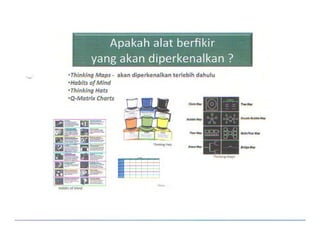
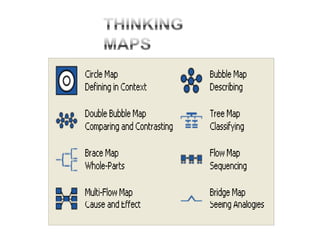
    Thinking Maps
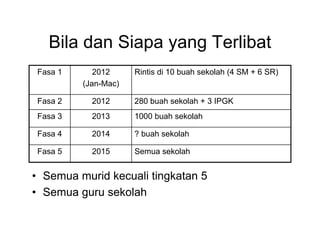
Bila dan Siapa yang Terlibat
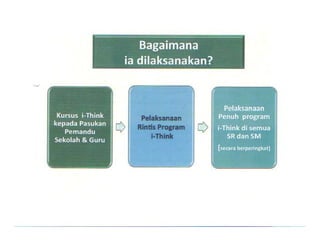
 Fasa 1      2012     Rintis di 10 buah sekolah (4 SM + 6 SR)
          (Jan-Mac)

 Fasa 2     2012      280 buah sekolah + 3 IPGK
 Fasa 3     2013      1000 buah sekolah

 Fasa 4     2014      ? buah sekolah

 Fasa 5     2015      Semua sekolah


• Semua murid kecuali tingkatan 5
• Semua guru sekolah
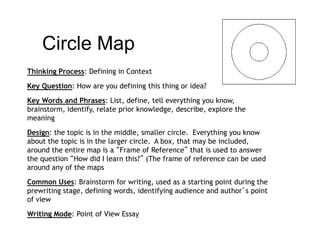
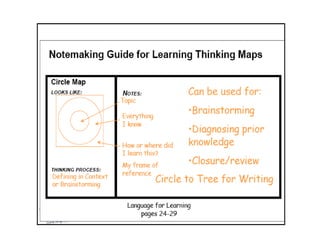
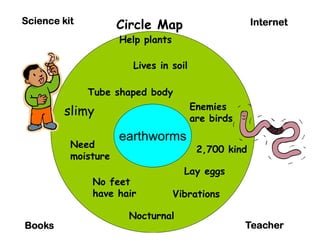
Circle Map
Thinking Process: Defining in Context

Key Question: How are you defining this thing or idea?

Key Words and Phrases: List, define, tell everything you know,
brainstorm, identify,
brainstorm identify relate prior knowledge describe explore the
                                 knowledge, describe,
meaning

Design: the topic is in the middle, smaller circle. Everything you know
about th t i i i th l
 b t the topic is in the larger circle. A b
                                 i l      box, th t may b i l d d
                                               that     be included,
around the entire map is a “Frame of Reference” that is used to answer
the question “How did I learn this?” (The frame of reference can be used
around any of the maps
          y            p

Common Uses: Brainstorm for writing, used as a starting point during the
prewriting stage, defining words, identifying audience and author’s point
of view
Writing Mode: Point of View Essay
Science kit          Circle Map                      Internet
                     Help plants

                       Lives in soil

              Tube shaped body
                                       Enemies
         slimy
          li                           are birds
                     earthworms
          Need                          2,700 kind
          moisture
                                     Lay eggs
              No feet
              have hair            Vibrations

                       Nocturnal
Books                                              Teacher
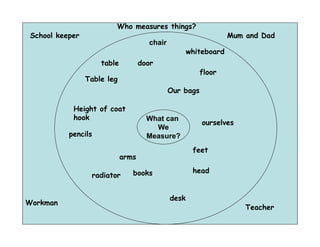
Who measures things?
School keeper                                                    Mum and Dad
                                     chair
                                                    whiteboard
                    table          door
                                                        floor
                Table l
                T bl leg
                                             Our bags

           Height of coat
           hook                      What can
                                                        ourselves
                                       We
          pencils                    Measure?
                                                     feet
                            arms

                               books
                               b k                   head
                 radiator


                                             desk
Workman
W km
                                                                     Teacher
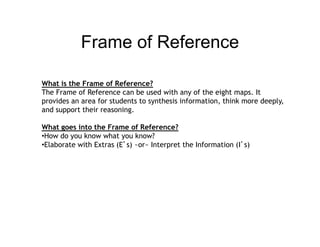
Frame of Reference

What is the Frame of Reference?
The Frame of Reference can be used with any of the eight maps. It
provides an area for students to synthesis information, think more deeply,
and support th i reasoning.
  d        t their       i

What goes into the Frame of Reference?
•How do you know what y know?
         y               you
•Elaborate with Extras (E’s) ~or~ Interpret the Information (I’s)
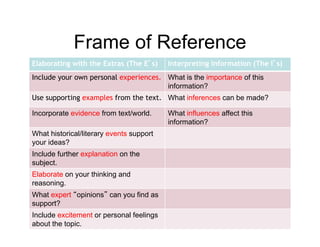
Frame of Reference
Elaborating with the Extras (The E’s)     Interpreting Information (The I’s)
Include your own personal experiences What is the importance of this
                          experiences.
                                       information?
Use supporting examples from the text. What inferences can be made?

Incorporate evidence from text/world.     What influences affect this
                                          information?
What historical/literary events support
your ideas?
Include further explanation on the
subject.
Elaborate on your thinking and
reasoning.
What expert “opinions” can you find as
support?
      t?
Include excitement or personal feelings
about the topic.
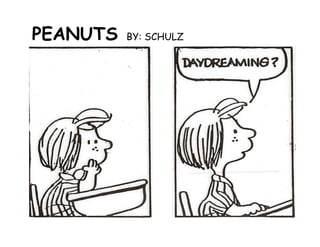
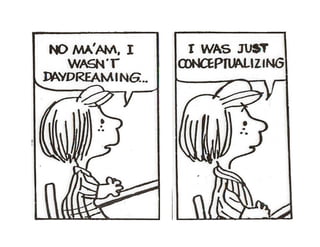
PEANUTS   BY: SCHULZ
Thinking schools
         schools…..


Setting the context

 The   21 st   Century
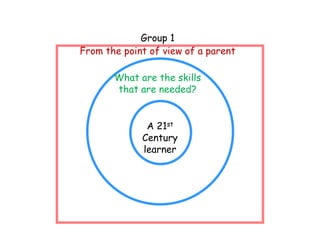
Group 1
From the point of view of a parent

       What are the skills
       that are needed?


              A 21st
             Century
             learner
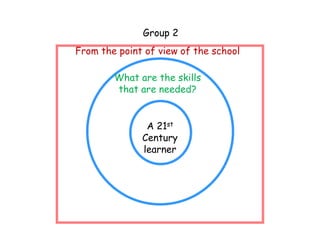
Group 2
From the point of view of the school

        What are the skills
        that are needed?


               A 21st
              Century
              learner
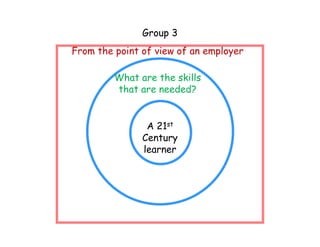
Group 3
From the point of view of an employer

         What are the skills
         that are needed?


                A 21st
               Century
               learner
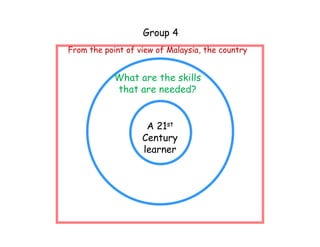
Group 4
From the point of view of Malaysia, the country


            What are the skills
            that are needed?


                    A 21st
                   Century
                   learner
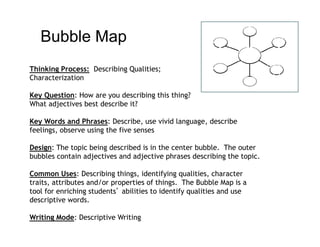
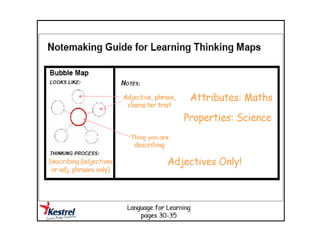
Bubble Map
Thinking Process: Describing Qualities;
Characterization

Key Question: How are you describing this thing?
What adjectives best describe it?

Key Words and Phrases: Describe, use vivid language, describe
feelings, observe using the five senses

Design: The topic being described is in the center bubble. The outer
bubbles contain adjectives and adjective phrases describing the topic.

Common Uses: Describing things, identifying qualities, character
traits, attributes and/or properties of things. The Bubble Map is a
tool for enriching students’ abilities to identify qualities and use
descriptive words.

Writing Mode: Descriptive Writing
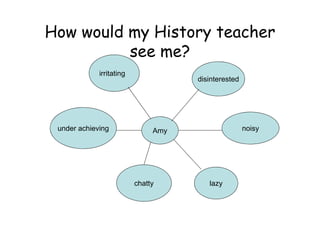
How would my History teacher
          see me?
                ?
             irritating
                      g
                                     disinterested
                                     di i t    t d


 under achieving               Amy                   noisy


                          chatty        lazy
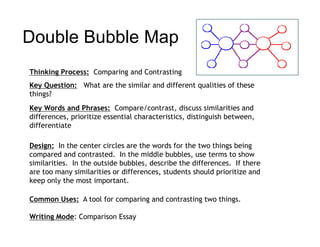
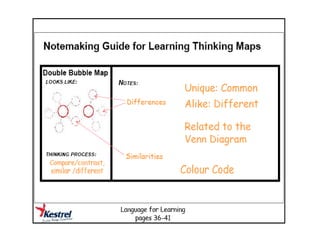
Double Bubble Map
                p
Thinking Process: Comparing and Contrasting
Key Question: What are the similar and different qualities of these
things?
Key Words and Phrases: Compare/contrast discuss similarities and
                           Compare/contrast,
differences, prioritize essential characteristics, distinguish between,
differentiate

Design: In the center circles are the words for the two things being
compared and contrasted. In the middle bubbles, use terms to show
similarities. In the outside bubbles, describe the differences. If there
are t many similarities or diff
    too         i il iti      differences, students should prioritize and
                                            t d t h ld i iti            d
keep only the most important.

Common Uses: A tool for comparing and contrasting two things.

Writing Mode: Comparison Essay
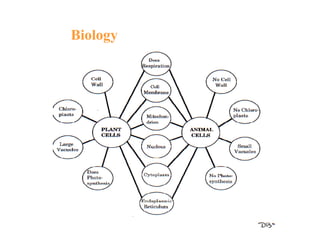
Biology
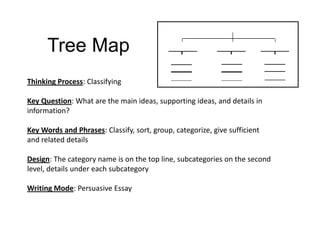
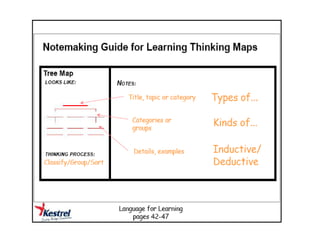
Tree Map
Thinking Process: Classifying

Key Question: What are the main ideas, supporting ideas, and details in 
information?
  f        ?

Key Words and Phrases: Classify, sort, group, categorize, give sufficient 
and related details
and related details

Design: The category name is on the top line, subcategories on the second 
level, details under each subcategory
level details under each subcategory

Writing Mode: Persuasive Essay
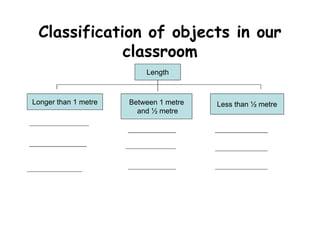
Classification of objects in our
             classroom
              l
                          Length


Longer than 1 metre   Between 1 metre   Less than ½ metre
                        and ½ metre
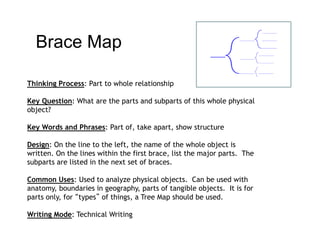
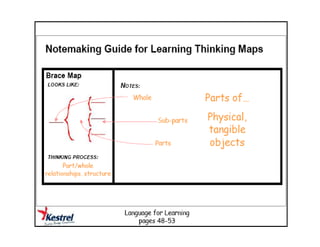
Brace Map

Thinking Process: Part to whole relationship

Key Question: What are the parts and subparts of this whole physical
object?
 bj t?

Key Words and Phrases: Part of, take apart, show structure

Design: On the line to the left, the name of the whole object is
written. On the lines within the first brace, list the major parts. The
subparts are listed in the next set of braces.

Common Uses: Used to analyze physical objects. Can be used with
anatomy, boundaries in geography, parts of tangible objects. It is for
parts only, for “types” of things, a Tree Map should be used.

Writing Mode: Technical Writing
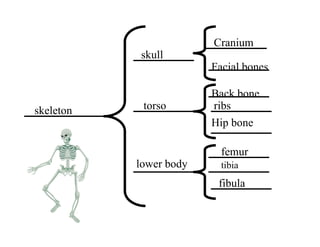
Cranium
           skull
                        Facial bones

                        Back bone
skeleton
 k l t      torso       ribs
                        Hip bone

                          femur
           lower body     tibia
                         fibula
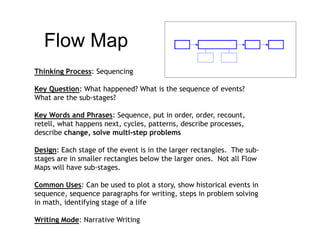
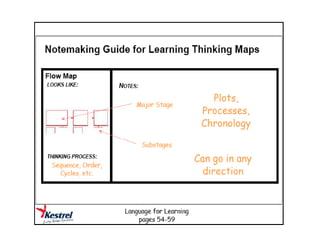
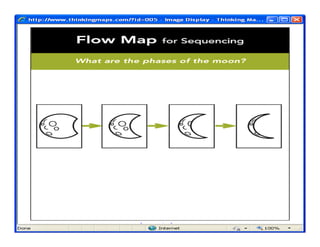
Flow Map
Thinking Process: Sequencing

Key Question: What happened? What is the sequence of events?
What are the sub-stages?

Key Words and Phrases: Sequence, put in order, order, recount,
retell, what happens next, cycles, patterns, describe processes,
describe change, solve multi-step problems

Design: Each stage of the event is in the larger rectangles. The sub-
stages are in smaller rectangles below the larger ones. Not all Flow
Maps will have sub-stages.
   p                   g

Common Uses: Can be used to plot a story, show historical events in
sequence, sequence paragraphs for writing, steps in problem solving
in math identifying stage of a life
   math,

Writing Mode: Narrative Writing
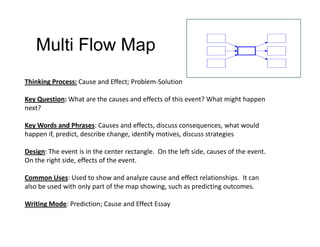
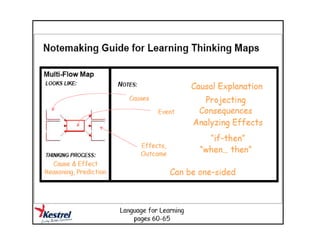
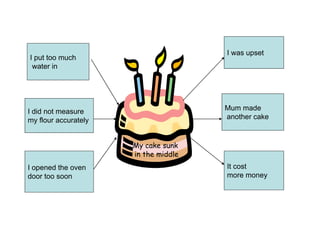
Multi Flow Map
Thinking Process: Cause and Effect; Problem‐Solution

Key Question: What are the causes and effects of this event? What might happen 
next?

Key Words and Phrases: Causes and effects, discuss consequences, what would 
happen if, predict, describe change, identify motives, discuss strategies

Design: The event is in the center rectangle.  On the left side, causes of the event.  
On the right side, effects of the event.

Common Uses: Used to show and analyze cause and effect relationships.  It can 
also be used with only part of the map showing, such as predicting outcomes. 

Writing Mode: Prediction; Cause and Effect Essay
  ii      d      d                d ff
I was upset
I put too much
 water in


I did not measure                     Mum made
my flour accurately                   another cake


                      My cake sunk
                      in the middle
I opened the oven
   p                                  It cost
door too soon                         more money
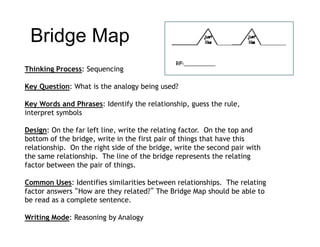
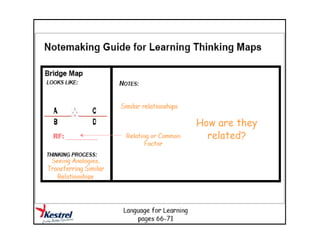
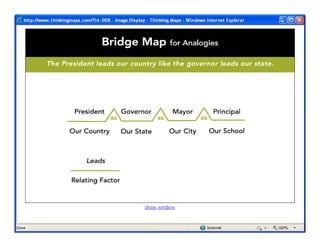
Bridge Map
     g    p
Thinking Process: Sequencing

Key Question: What is the analogy being used?

Key Words and Phrases: Identify the relationship, guess the rule,
interpret symbols

Design: On the far left line, write the relating factor. On the top and
bottom of the bridge, write in the first pair of things that have this
              bridge
relationship. On the right side of the bridge, write the second pair with
the same relationship. The line of the bridge represents the relating
factor between the pair of things.

Common Uses: Identifies similarities between relationships. The relating
factor answers “How are they related?” The Bridge Map should be able to
be read as a complete sentence.

Writing Mode: Reasoning by Analogy
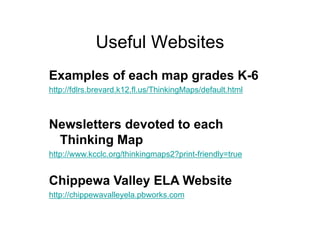
Useful Websites
Examples of each map grades K-6
http://fdlrs.brevard.k12.fl.us/ThinkingMaps/default.html


Newsletters devoted to each
 Thinking Map
http://www.kcclc.org/thinkingmaps2?print-friendly=true


Chippewa Valley ELA Website
http://chippewavalleyela.pbworks.com
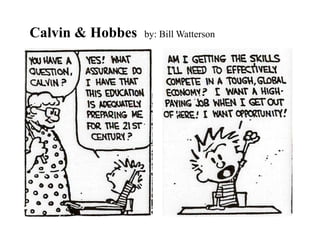
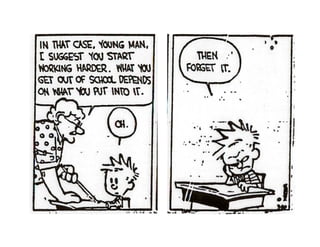
Calvin & Hobbes   by: Bill Watterson
Sekian,
Sekian terima kasih
              kasih.

Ithink

  • 1.
    Program i-Think g Thinking Maps
  • 8.
    Bila dan Siapayang Terlibat Fasa 1 2012 Rintis di 10 buah sekolah (4 SM + 6 SR) (Jan-Mac) Fasa 2 2012 280 buah sekolah + 3 IPGK Fasa 3 2013 1000 buah sekolah Fasa 4 2014 ? buah sekolah Fasa 5 2015 Semua sekolah • Semua murid kecuali tingkatan 5 • Semua guru sekolah
  • 10.
    Circle Map Thinking Process:Defining in Context Key Question: How are you defining this thing or idea? Key Words and Phrases: List, define, tell everything you know, brainstorm, identify, brainstorm identify relate prior knowledge describe explore the knowledge, describe, meaning Design: the topic is in the middle, smaller circle. Everything you know about th t i i i th l b t the topic is in the larger circle. A b i l box, th t may b i l d d that be included, around the entire map is a “Frame of Reference” that is used to answer the question “How did I learn this?” (The frame of reference can be used around any of the maps y p Common Uses: Brainstorm for writing, used as a starting point during the prewriting stage, defining words, identifying audience and author’s point of view Writing Mode: Point of View Essay
  • 12.
    Science kit Circle Map Internet Help plants Lives in soil Tube shaped body Enemies slimy li are birds earthworms Need 2,700 kind moisture Lay eggs No feet have hair Vibrations Nocturnal Books Teacher
  • 13.
    Who measures things? Schoolkeeper Mum and Dad chair whiteboard table door floor Table l T bl leg Our bags Height of coat hook What can ourselves We pencils Measure? feet arms books b k head radiator desk Workman W km Teacher
  • 14.
    Frame of Reference Whatis the Frame of Reference? The Frame of Reference can be used with any of the eight maps. It provides an area for students to synthesis information, think more deeply, and support th i reasoning. d t their i What goes into the Frame of Reference? •How do you know what y know? y you •Elaborate with Extras (E’s) ~or~ Interpret the Information (I’s)
  • 15.
    Frame of Reference Elaboratingwith the Extras (The E’s) Interpreting Information (The I’s) Include your own personal experiences What is the importance of this experiences. information? Use supporting examples from the text. What inferences can be made? Incorporate evidence from text/world. What influences affect this information? What historical/literary events support your ideas? Include further explanation on the subject. Elaborate on your thinking and reasoning. What expert “opinions” can you find as support? t? Include excitement or personal feelings about the topic.
  • 16.
    PEANUTS BY: SCHULZ
  • 18.
    Thinking schools schools….. Setting the context The 21 st Century
  • 19.
    Group 1 From thepoint of view of a parent What are the skills that are needed? A 21st Century learner
  • 20.
    Group 2 From thepoint of view of the school What are the skills that are needed? A 21st Century learner
  • 21.
    Group 3 From thepoint of view of an employer What are the skills that are needed? A 21st Century learner
  • 22.
    Group 4 From thepoint of view of Malaysia, the country What are the skills that are needed? A 21st Century learner
  • 23.
    Bubble Map Thinking Process:Describing Qualities; Characterization Key Question: How are you describing this thing? What adjectives best describe it? Key Words and Phrases: Describe, use vivid language, describe feelings, observe using the five senses Design: The topic being described is in the center bubble. The outer bubbles contain adjectives and adjective phrases describing the topic. Common Uses: Describing things, identifying qualities, character traits, attributes and/or properties of things. The Bubble Map is a tool for enriching students’ abilities to identify qualities and use descriptive words. Writing Mode: Descriptive Writing
  • 25.
    How would myHistory teacher see me? ? irritating g disinterested di i t t d under achieving Amy noisy chatty lazy
  • 26.
    Double Bubble Map p Thinking Process: Comparing and Contrasting Key Question: What are the similar and different qualities of these things? Key Words and Phrases: Compare/contrast discuss similarities and Compare/contrast, differences, prioritize essential characteristics, distinguish between, differentiate Design: In the center circles are the words for the two things being compared and contrasted. In the middle bubbles, use terms to show similarities. In the outside bubbles, describe the differences. If there are t many similarities or diff too i il iti differences, students should prioritize and t d t h ld i iti d keep only the most important. Common Uses: A tool for comparing and contrasting two things. Writing Mode: Comparison Essay
  • 28.
  • 29.
    Tree Map Thinking Process: Classifying Key Question: What are the main ideas, supporting ideas, and details in  information? f ? Key Words and Phrases: Classify, sort, group, categorize, give sufficient  and related details and related details Design: The category name is on the top line, subcategories on the second  level, details under each subcategory level details under each subcategory Writing Mode: Persuasive Essay
  • 31.
    Classification of objectsin our classroom l Length Longer than 1 metre Between 1 metre Less than ½ metre and ½ metre
  • 32.
    Brace Map Thinking Process:Part to whole relationship Key Question: What are the parts and subparts of this whole physical object? bj t? Key Words and Phrases: Part of, take apart, show structure Design: On the line to the left, the name of the whole object is written. On the lines within the first brace, list the major parts. The subparts are listed in the next set of braces. Common Uses: Used to analyze physical objects. Can be used with anatomy, boundaries in geography, parts of tangible objects. It is for parts only, for “types” of things, a Tree Map should be used. Writing Mode: Technical Writing
  • 34.
    Cranium skull Facial bones Back bone skeleton k l t torso ribs Hip bone femur lower body tibia fibula
  • 35.
    Flow Map Thinking Process:Sequencing Key Question: What happened? What is the sequence of events? What are the sub-stages? Key Words and Phrases: Sequence, put in order, order, recount, retell, what happens next, cycles, patterns, describe processes, describe change, solve multi-step problems Design: Each stage of the event is in the larger rectangles. The sub- stages are in smaller rectangles below the larger ones. Not all Flow Maps will have sub-stages. p g Common Uses: Can be used to plot a story, show historical events in sequence, sequence paragraphs for writing, steps in problem solving in math identifying stage of a life math, Writing Mode: Narrative Writing
  • 38.
    Multi Flow Map Thinking Process:Cause and Effect; Problem‐Solution Key Question: What are the causes and effects of this event? What might happen  next? Key Words and Phrases: Causes and effects, discuss consequences, what would  happen if, predict, describe change, identify motives, discuss strategies Design: The event is in the center rectangle.  On the left side, causes of the event.   On the right side, effects of the event. Common Uses: Used to show and analyze cause and effect relationships.  It can  also be used with only part of the map showing, such as predicting outcomes.  Writing Mode: Prediction; Cause and Effect Essay ii d d d ff
  • 40.
    I was upset Iput too much water in I did not measure Mum made my flour accurately another cake My cake sunk in the middle I opened the oven p It cost door too soon more money
  • 41.
    Bridge Map g p Thinking Process: Sequencing Key Question: What is the analogy being used? Key Words and Phrases: Identify the relationship, guess the rule, interpret symbols Design: On the far left line, write the relating factor. On the top and bottom of the bridge, write in the first pair of things that have this bridge relationship. On the right side of the bridge, write the second pair with the same relationship. The line of the bridge represents the relating factor between the pair of things. Common Uses: Identifies similarities between relationships. The relating factor answers “How are they related?” The Bridge Map should be able to be read as a complete sentence. Writing Mode: Reasoning by Analogy
  • 44.
    Useful Websites Examples ofeach map grades K-6 http://fdlrs.brevard.k12.fl.us/ThinkingMaps/default.html Newsletters devoted to each Thinking Map http://www.kcclc.org/thinkingmaps2?print-friendly=true Chippewa Valley ELA Website http://chippewavalleyela.pbworks.com
  • 45.
    Calvin & Hobbes by: Bill Watterson
  • 47.