Team 2                  Tecnologico de Monterrey   Field Project II
Juan Manuel Cardenas              A01307732
Maria Lucia Peraza                A00787386
Amilcar Alfredo Umaña             A01307731
Gabriel Gomez Silva               A00740464
Victor Gutiérrez                  A00665507
   Definition
   Purposes
   Benefits
   Governance Arrangements Matrix
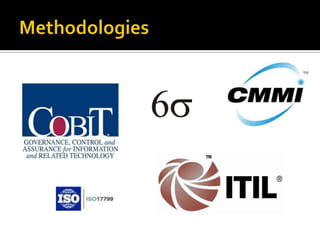
   Methodologies
   Implementation framework
   Roadmap
   Project Examples
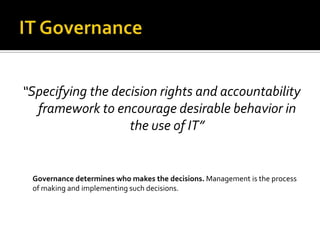
“Specifying the decision rights and accountability
  framework to encourage desirable behavior in
                   the use of IT”


 Governance determines who makes the decisions. Management is the process
 of making and implementing such decisions.
   Align IT to business strategy
   Enable the enterprise to maximize benefits
   Use IT resource responsibly
   Manage the IT-related risks appropriately
   Improvement in quality of IT services
   Major reduction of IT risks
   Reduction in cost of delivering IT services
   Enhanced delivery of IT services
   Fewer surprises and less frustration due to
    projects follow up
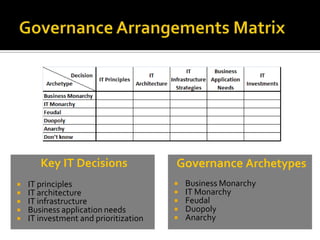
Key IT Decisions                Governance Archetypes
   IT principles                         Business Monarchy
   IT architecture                       IT Monarchy
   IT infrastructure                     Feudal
   Business application needs            Duopoly
   IT investment and prioritization      Anarchy
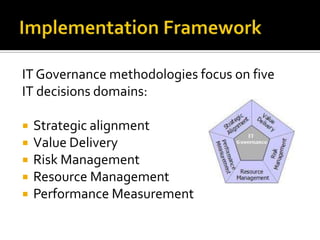
IT Governance methodologies focus on five
IT decisions domains:

   Strategic alignment
   Value Delivery
   Risk Management
   Resource Management
   Performance Measurement
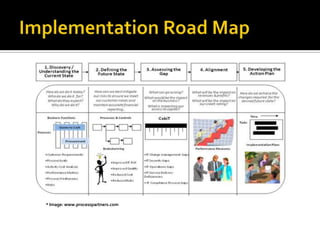
* Image: www.processpartners.com
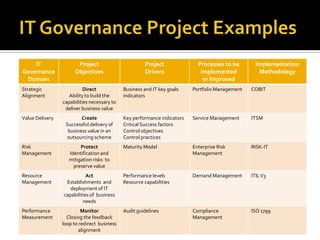
IT                 Project                        Project               Processes to be        Implementation
Governance            Objectives                      Drivers                implemented            Methodology
 Domain                                                                       or Improved
Strategic                  Direct            Business and IT key goals    Portfolio Management   COBIT
Alignment           Ability to build the     indicators
                 capabilities necessary to
                  deliver business value
Value Delivery           Create              Key performance indicators   Service Management     ITSM
                  Successful delivery of     Critical Success factors
                   business value in an      Control objectives
                  outsourcing scheme         Control practices
Risk                     Protect             Maturity Model               Enterprise Risk        RISK-IT
Management          Identification and                                    Management
                    mitigation risks to
                      preserve value
Resource                    Act              Performance levels           Demand Management      ITIL V3
Management        Establishments and         Resource capabilities
                    deployment of IT
                 capabilities of business
                          needs
Performance               Monitor            Audit guidelines             Compliance             ISO 1799
Measurement        Closing the feedback                                   Management
                 loop to redirect business
                         alignment
Weill, Peter & Ross, Jeanne (2004). IT Governance: How Top Performers Manage IT Decision Rights for
Superior Results. First Edition. Harvard Business Press.
W3J (2007). IT Governance Methods & frameworks. Retrieved September 25, 2012 from
http://www.w3j.com/1/index.html
IT Governance Institute (2011). Purpose. Retrieved September 25, 2012 from
http://www.itgi.org/template_ITGI9bfe.html?Section=Purpose&Template=/ContentManagement/HTMLDi
splay.cfm&ContentID=19659
The South African Institute of Chartered Accountants (2010). Benefits of IT Governance. Retrieved
September 25, 2012 from
http://www.saica.co.za/Members/GovernIT/BenefitsofITGovernance/tabid/2131/language/en-
ZA/Default.aspx
Weill (2004). Don’t Just Lead, Govern. Retrieved September 28, 2012 from
http://www.umsl.edu/~lacitym/topperform.pdf

IT Governance Presentation

  • 1.
    Team 2 Tecnologico de Monterrey Field Project II Juan Manuel Cardenas A01307732 Maria Lucia Peraza A00787386 Amilcar Alfredo Umaña A01307731 Gabriel Gomez Silva A00740464 Victor Gutiérrez A00665507
  • 2.
    Definition  Purposes  Benefits  Governance Arrangements Matrix  Methodologies  Implementation framework  Roadmap  Project Examples
  • 3.
    “Specifying the decisionrights and accountability framework to encourage desirable behavior in the use of IT” Governance determines who makes the decisions. Management is the process of making and implementing such decisions.
  • 4.
    Align IT to business strategy  Enable the enterprise to maximize benefits  Use IT resource responsibly  Manage the IT-related risks appropriately
  • 5.
    Improvement in quality of IT services  Major reduction of IT risks  Reduction in cost of delivering IT services  Enhanced delivery of IT services  Fewer surprises and less frustration due to projects follow up
  • 6.
    Key IT Decisions Governance Archetypes  IT principles  Business Monarchy  IT architecture  IT Monarchy  IT infrastructure  Feudal  Business application needs  Duopoly  IT investment and prioritization  Anarchy
  • 8.
    IT Governance methodologiesfocus on five IT decisions domains:  Strategic alignment  Value Delivery  Risk Management  Resource Management  Performance Measurement
  • 9.
  • 10.
    IT Project Project Processes to be Implementation Governance Objectives Drivers implemented Methodology Domain or Improved Strategic Direct Business and IT key goals Portfolio Management COBIT Alignment Ability to build the indicators capabilities necessary to deliver business value Value Delivery Create Key performance indicators Service Management ITSM Successful delivery of Critical Success factors business value in an Control objectives outsourcing scheme Control practices Risk Protect Maturity Model Enterprise Risk RISK-IT Management Identification and Management mitigation risks to preserve value Resource Act Performance levels Demand Management ITIL V3 Management Establishments and Resource capabilities deployment of IT capabilities of business needs Performance Monitor Audit guidelines Compliance ISO 1799 Measurement Closing the feedback Management loop to redirect business alignment
  • 11.
    Weill, Peter &Ross, Jeanne (2004). IT Governance: How Top Performers Manage IT Decision Rights for Superior Results. First Edition. Harvard Business Press. W3J (2007). IT Governance Methods & frameworks. Retrieved September 25, 2012 from http://www.w3j.com/1/index.html IT Governance Institute (2011). Purpose. Retrieved September 25, 2012 from http://www.itgi.org/template_ITGI9bfe.html?Section=Purpose&Template=/ContentManagement/HTMLDi splay.cfm&ContentID=19659 The South African Institute of Chartered Accountants (2010). Benefits of IT Governance. Retrieved September 25, 2012 from http://www.saica.co.za/Members/GovernIT/BenefitsofITGovernance/tabid/2131/language/en- ZA/Default.aspx Weill (2004). Don’t Just Lead, Govern. Retrieved September 28, 2012 from http://www.umsl.edu/~lacitym/topperform.pdf