1
Chapter One
Introduction to IT Auditing
2
Outline
๏ฎ IT Governance
๏ฎ The Systems Development Life Cycle (SDLC)
๏ฎ Types of Information Systems
๏ฎ The Role of the IT Auditor
3
IT Governance
โ€ฆthe process for controlling an organizationโ€™s
IT resources, including information and
communication systems, and technology.
โ€ฆusing IT to promote an organizationโ€™s
objectives and enable business processes and
to manage and control IT related risks.
4
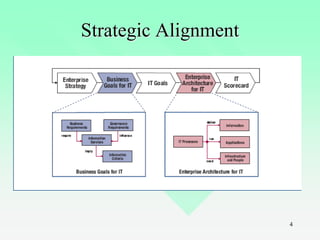
Strategic Alignment
5
Information Criteria
๏ฎ CIA Triangle
โ€“ Confidentialilty
โ€“ Integrity
โ€“ Availability
๏ฎ Cobit โ€œadd-onsโ€
โ€“ Effectiveness
โ€“ Efficiency
โ€“ Compliance
โ€“ Reliability
6
CobiTโ€™s IT Governance
Management Guideline
๏ฎIdentifies critical success factors,
key goal and performance indicators,
and an IT governance maturity
model.
๏ฎIT governance framework begins
with setting IT objectives and
measures and compares performance
against them
7
Systems development life cycle (SDLC)
๏ฎ Provides overall framework for managing
system development process
๏ฎ All projects use some variation of SDLC
โ€“ Phases are sequential but may include some
overlap
โ€“ May even include iterations of some or all of the
phases
8
Phases of the Systems
Development Lifecycle (SDLC)
๏ฎ Project planning: initiate, ensure feasibility,
plan schedule, obtain approval for project
๏ฎ Analysis: understand business needs and
processing requirements
๏ฎ Design: define solution system based on
requirements and analysis decisions
๏ฎ Implementation: construction, testing, user
training, and installation of new system
๏ฎ Support: keep system running and improve
9
Systems development life cycle (SDLC)
๏ฎ In COBIT, these phases (domains) are:
โ€“ Plan and Organize (PO)
โ€“ Acquire and Implement (AI)
โ€“ Deliver and Support (DS)
โ€“ Monitor and Evaluate (ME)
10
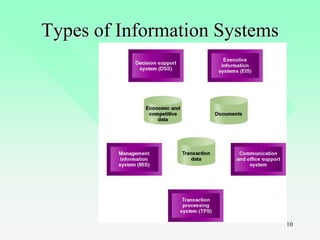
Types of Information Systems
11
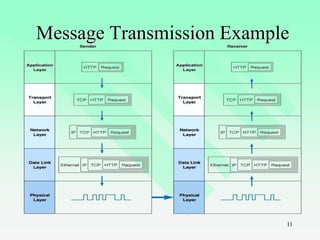
Message Transmission Example
12
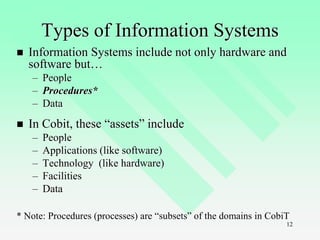
Types of Information Systems
๏ฎ Information Systems include not only hardware and
software butโ€ฆ
โ€“ People
โ€“ Procedures*
โ€“ Data
๏ฎ In Cobit, these โ€œassetsโ€ include
โ€“ People
โ€“ Applications (like software)
โ€“ Technology (like hardware)
โ€“ Facilities
โ€“ Data
* Note: Procedures (processes) are โ€œsubsetsโ€ of the domains in CobiT
13
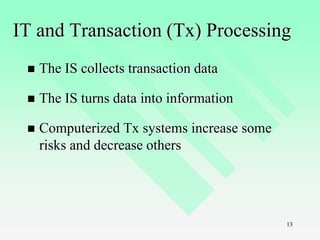
IT and Transaction (Tx) Processing
๏ฎ The IS collects transaction data
๏ฎ The IS turns data into information
๏ฎ Computerized Tx systems increase some
risks and decrease others
14
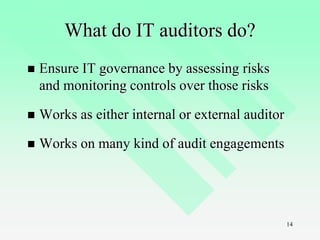
What do IT auditors do?
๏ฎ Ensure IT governance by assessing risks
and monitoring controls over those risks
๏ฎ Works as either internal or external auditor
๏ฎ Works on many kind of audit engagements
15
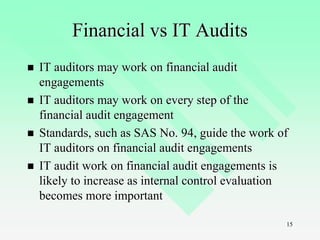
Financial vs IT Audits
๏ฎ IT auditors may work on financial audit
engagements
๏ฎ IT auditors may work on every step of the
financial audit engagement
๏ฎ Standards, such as SAS No. 94, guide the work of
IT auditors on financial audit engagements
๏ฎ IT audit work on financial audit engagements is
likely to increase as internal control evaluation
becomes more important
16
IT Audit Skills
๏ฎ College education โ€“ IS, computer science,
accounting
๏ฎ Certifications โ€“ CPA, CFE, CIA, CISA,
CISSP, and special technical certifications
๏ฎ Technical IT audit skills โ€“ specialized
technologies
๏ฎ General personal and business skills
17
Professional Groups and
Certifications โ€“ Alphabet Soup
๏ฎ ISACA โ€“ CISA/CISM
๏ฎ IIA โ€“ CIA
๏ฎ ACFE โ€“ CFE
๏ฎ AICPA โ€“ CPA and CITP
18
How to Structure an IT Audit
๏ฎ AICPA Standards and Guidelines โ€“ GAAS,
SAS, and SSAE
๏ฎ IFAC Guidelines โ€“ harmonized or common
international accounting standards and
guidelines
๏ฎ ISACA standards, guidelines, and
procedures โ€“ includes CobiT and audit
standards
19
An Overview of the Book
๏ฎ Section I โ€“ an introduction to IT audit, the legal
and ethical environment of the IT audit,
introduction to risks and controls
๏ฎ Section II โ€“ risks over specific processes and
technologies โ€“ deployment of IS, operation of IS,
network systems, and e-business systems
๏ฎ Section III โ€“ how to do an It audit โ€“ use of
CAATTs and a step-by-step IT audit
๏ฎ Appendices โ€“ ACL tutorial and IT audit glossary

Introduction to it auditing

  • 1.
  • 2.
    2 Outline ๏ฎ IT Governance ๏ฎThe Systems Development Life Cycle (SDLC) ๏ฎ Types of Information Systems ๏ฎ The Role of the IT Auditor
  • 3.
    3 IT Governance โ€ฆthe processfor controlling an organizationโ€™s IT resources, including information and communication systems, and technology. โ€ฆusing IT to promote an organizationโ€™s objectives and enable business processes and to manage and control IT related risks.
  • 4.
  • 5.
    5 Information Criteria ๏ฎ CIATriangle โ€“ Confidentialilty โ€“ Integrity โ€“ Availability ๏ฎ Cobit โ€œadd-onsโ€ โ€“ Effectiveness โ€“ Efficiency โ€“ Compliance โ€“ Reliability
  • 6.
    6 CobiTโ€™s IT Governance ManagementGuideline ๏ฎIdentifies critical success factors, key goal and performance indicators, and an IT governance maturity model. ๏ฎIT governance framework begins with setting IT objectives and measures and compares performance against them
  • 7.
    7 Systems development lifecycle (SDLC) ๏ฎ Provides overall framework for managing system development process ๏ฎ All projects use some variation of SDLC โ€“ Phases are sequential but may include some overlap โ€“ May even include iterations of some or all of the phases
  • 8.
    8 Phases of theSystems Development Lifecycle (SDLC) ๏ฎ Project planning: initiate, ensure feasibility, plan schedule, obtain approval for project ๏ฎ Analysis: understand business needs and processing requirements ๏ฎ Design: define solution system based on requirements and analysis decisions ๏ฎ Implementation: construction, testing, user training, and installation of new system ๏ฎ Support: keep system running and improve
  • 9.
    9 Systems development lifecycle (SDLC) ๏ฎ In COBIT, these phases (domains) are: โ€“ Plan and Organize (PO) โ€“ Acquire and Implement (AI) โ€“ Deliver and Support (DS) โ€“ Monitor and Evaluate (ME)
  • 10.
  • 11.
  • 12.
    12 Types of InformationSystems ๏ฎ Information Systems include not only hardware and software butโ€ฆ โ€“ People โ€“ Procedures* โ€“ Data ๏ฎ In Cobit, these โ€œassetsโ€ include โ€“ People โ€“ Applications (like software) โ€“ Technology (like hardware) โ€“ Facilities โ€“ Data * Note: Procedures (processes) are โ€œsubsetsโ€ of the domains in CobiT
  • 13.
    13 IT and Transaction(Tx) Processing ๏ฎ The IS collects transaction data ๏ฎ The IS turns data into information ๏ฎ Computerized Tx systems increase some risks and decrease others
  • 14.
    14 What do ITauditors do? ๏ฎ Ensure IT governance by assessing risks and monitoring controls over those risks ๏ฎ Works as either internal or external auditor ๏ฎ Works on many kind of audit engagements
  • 15.
    15 Financial vs ITAudits ๏ฎ IT auditors may work on financial audit engagements ๏ฎ IT auditors may work on every step of the financial audit engagement ๏ฎ Standards, such as SAS No. 94, guide the work of IT auditors on financial audit engagements ๏ฎ IT audit work on financial audit engagements is likely to increase as internal control evaluation becomes more important
  • 16.
    16 IT Audit Skills ๏ฎCollege education โ€“ IS, computer science, accounting ๏ฎ Certifications โ€“ CPA, CFE, CIA, CISA, CISSP, and special technical certifications ๏ฎ Technical IT audit skills โ€“ specialized technologies ๏ฎ General personal and business skills
  • 17.
    17 Professional Groups and Certificationsโ€“ Alphabet Soup ๏ฎ ISACA โ€“ CISA/CISM ๏ฎ IIA โ€“ CIA ๏ฎ ACFE โ€“ CFE ๏ฎ AICPA โ€“ CPA and CITP
  • 18.
    18 How to Structurean IT Audit ๏ฎ AICPA Standards and Guidelines โ€“ GAAS, SAS, and SSAE ๏ฎ IFAC Guidelines โ€“ harmonized or common international accounting standards and guidelines ๏ฎ ISACA standards, guidelines, and procedures โ€“ includes CobiT and audit standards
  • 19.
    19 An Overview ofthe Book ๏ฎ Section I โ€“ an introduction to IT audit, the legal and ethical environment of the IT audit, introduction to risks and controls ๏ฎ Section II โ€“ risks over specific processes and technologies โ€“ deployment of IS, operation of IS, network systems, and e-business systems ๏ฎ Section III โ€“ how to do an It audit โ€“ use of CAATTs and a step-by-step IT audit ๏ฎ Appendices โ€“ ACL tutorial and IT audit glossary