Download to read offline
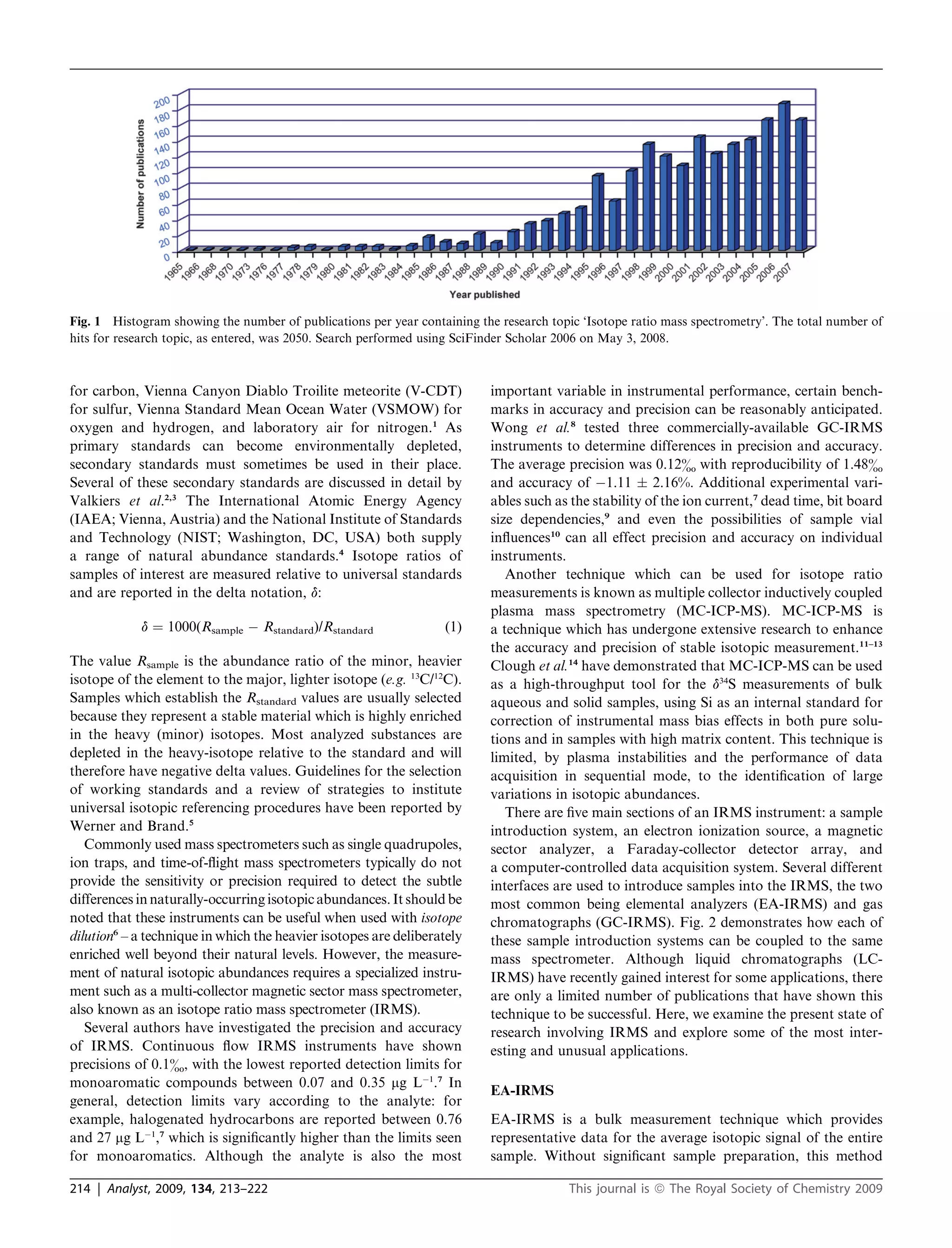
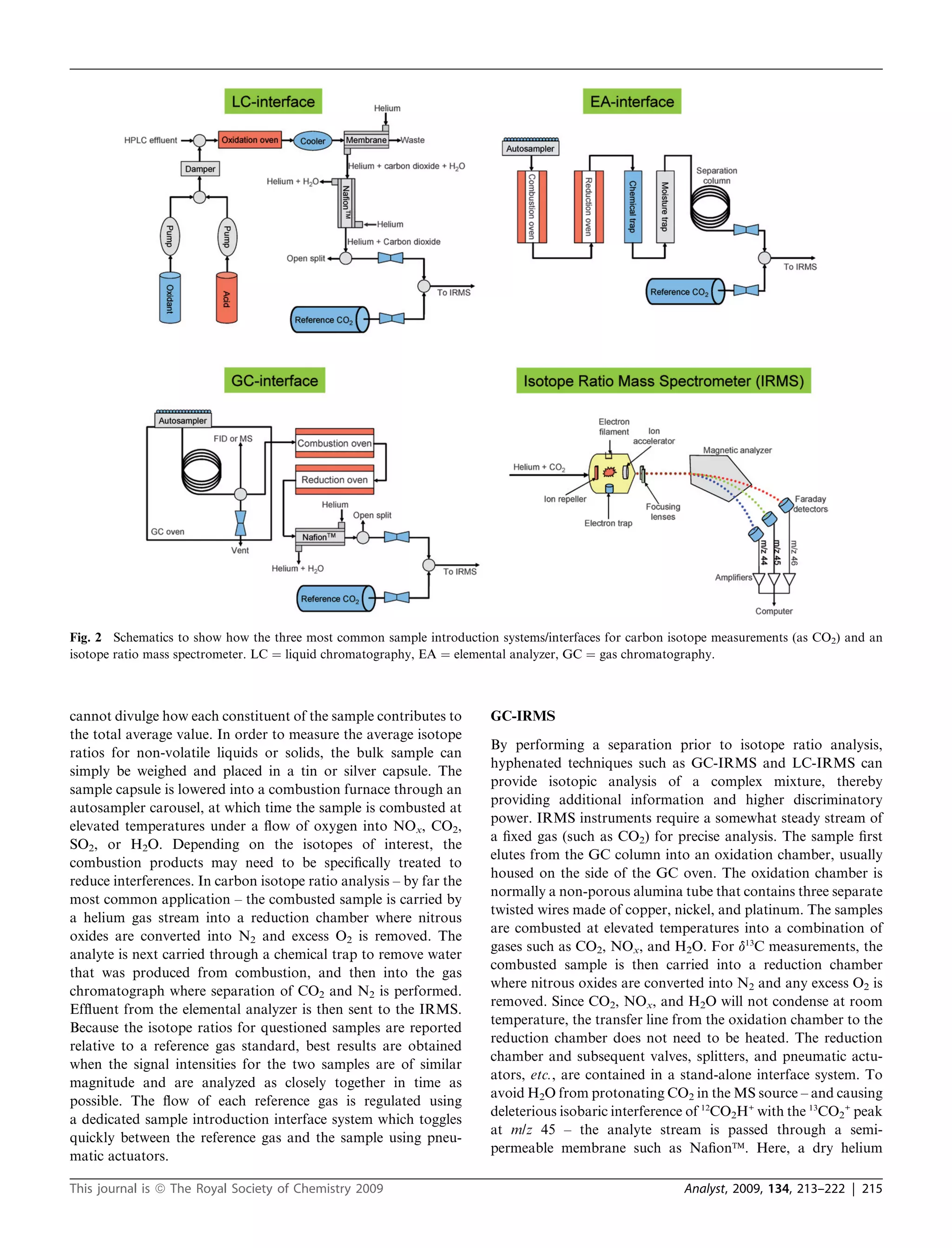




Isotope ratio mass spectrometry (IRMS) is a technique that determines the relative abundances of isotopes in a sample to find its geographic, chemical, and biological origins. Variations in isotope ratios of elements like carbon, hydrogen, oxygen, sulfur, and nitrogen occur through kinetic and thermodynamic processes and can differentiate between chemically identical samples. IRMS instruments precisely measure subtle differences in natural isotope abundances to provide information in many fields. Sample introduction is usually through elemental analyzers, gas chromatography, or liquid chromatography interfaced with an IRMS instrument.


