ISOLATION OF PERIPHERAL BLOOD
MONONUCLEAR CELL (PBMC)
Blood is a specialized bodily fluid that delivers necessary
substances to the body's cells — such as nutrients and oxygen
— and transports waste products away from those same cells.
BLOOD
CONSTITUENTS OF HUMAN BLOOD
1. Cells
2. Plasma
CELLS
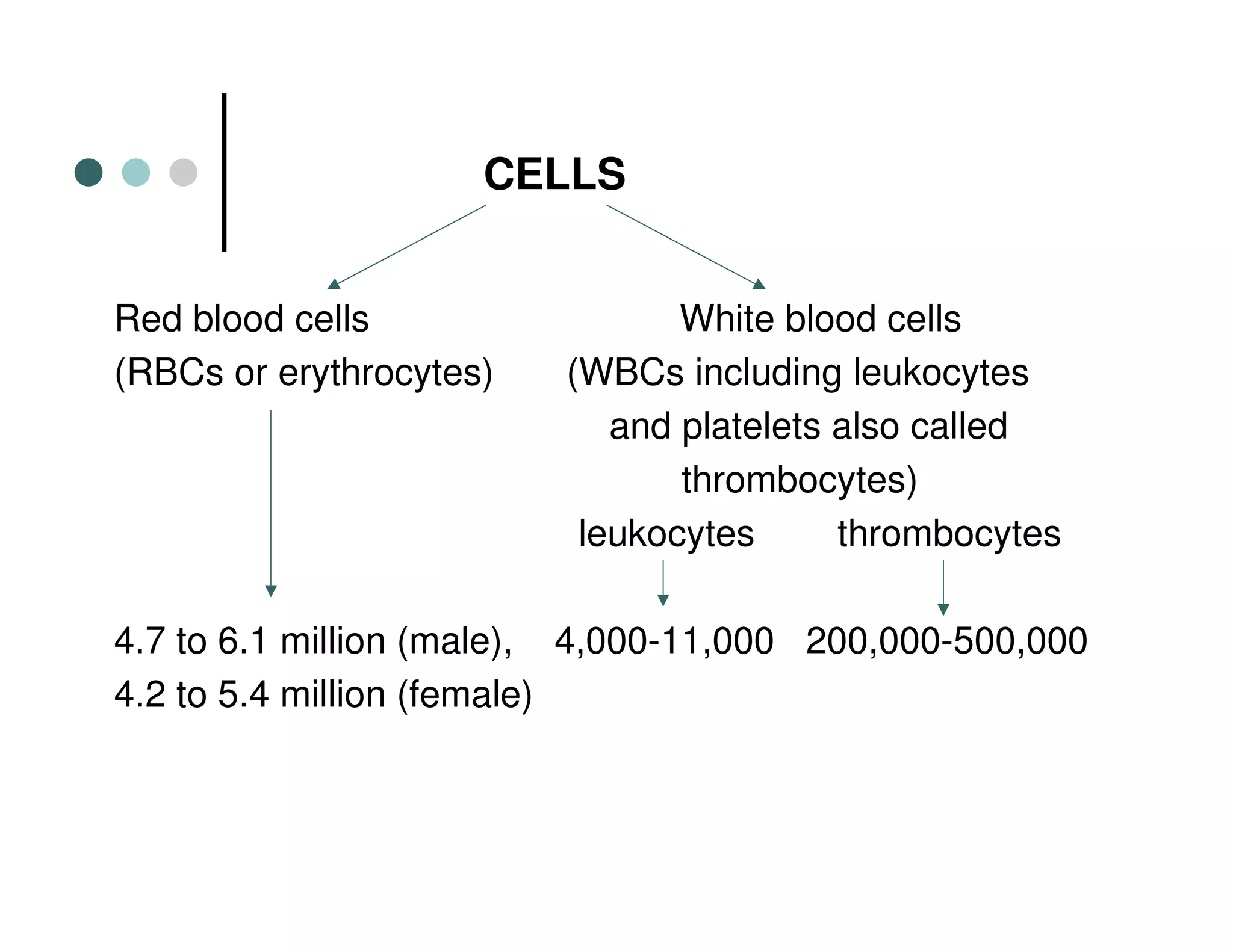
Red blood cells White blood cells
(RBCs or erythrocytes) (WBCs including leukocytes
and platelets also called
thrombocytes)
leukocytes thrombocytes
4.7 to 6.1 million (male), 4,000-11,000 200,000-500,000
4.2 to 5.4 million (female)
PLASMA
55% of whole blood is blood plasma --- fluid that is the
blood's liquid medium --- is straw-yellow in color
Plasma circulates dissolved nutrients, such as glucose,
amino acids, and fatty acids (dissolved in the blood or
bound to plasma proteins), and removes waste
products, such as, carbon dioxide, urea, and lactic acid
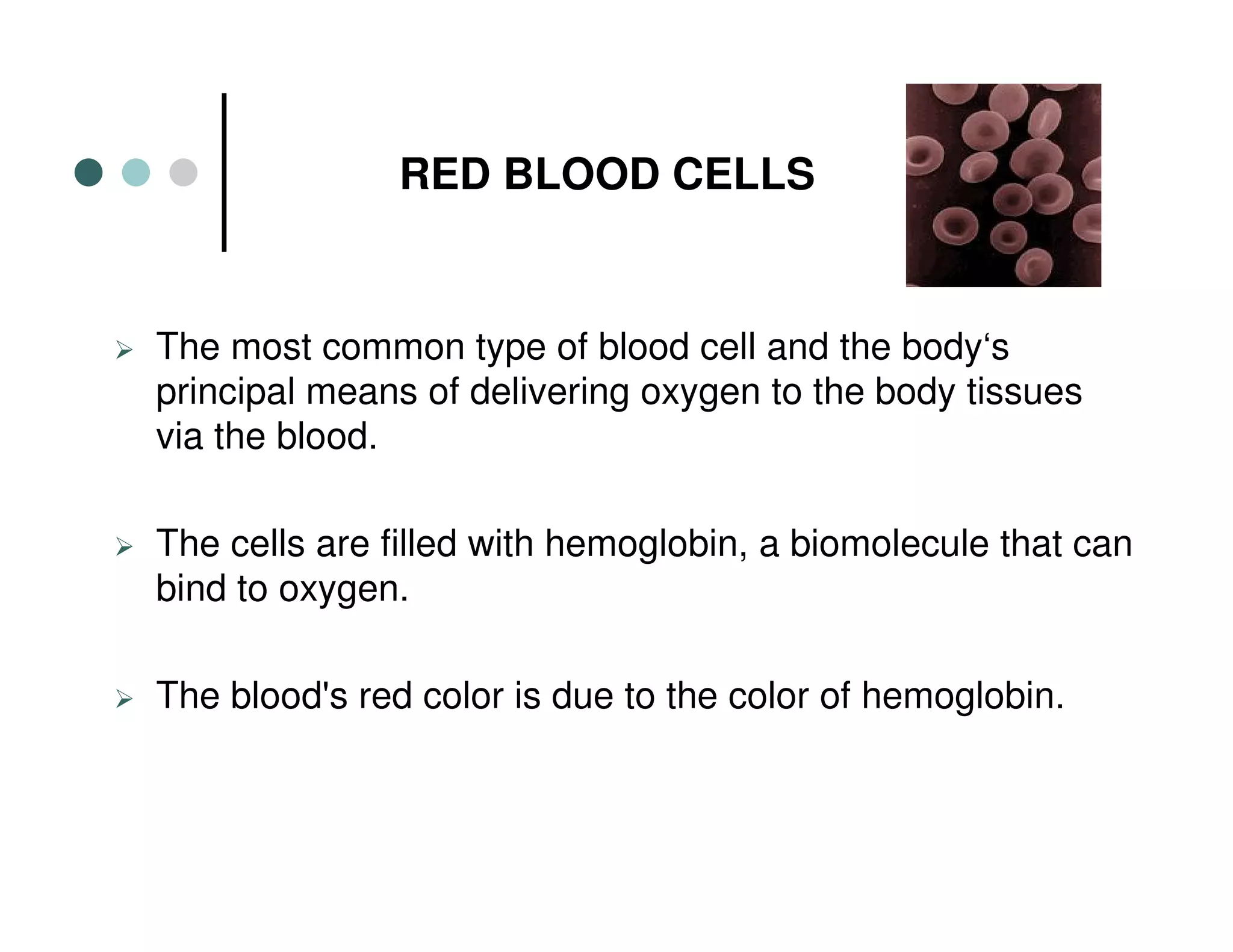
RED BLOOD CELLS
The most common type of blood cell and the body‘s
principal means of delivering oxygen to the body tissues
via the blood.
The cells are filled with hemoglobin, a biomolecule that can
bind to oxygen.
The blood's red color is due to the color of hemoglobin.
WHITE BLOOD CELLS
Cells of the immune system defending the body against
both infectious disease and foreign materials.
Five different and diverse types of leukocytes exist, but
they are all produced and derived from a multipotent cell
in the bone marrow known as a hematopoietic stem cell.
Leukocytes are found throughout the body, including the
blood and lymphatic system
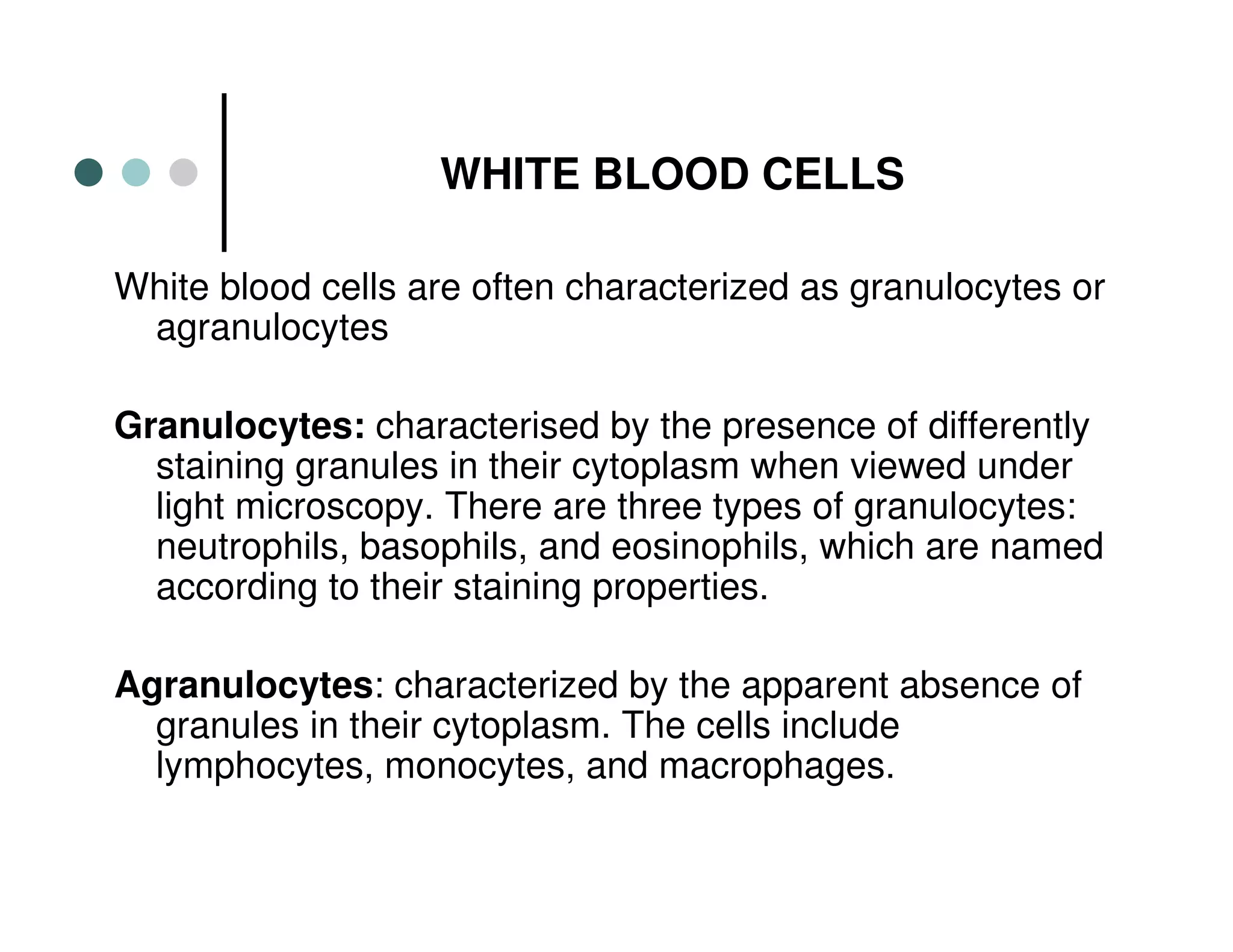
WHITE BLOOD CELLS
White blood cells are often characterized as granulocytes or
agranulocytes
Granulocytes: characterised by the presence of differently
staining granules in their cytoplasm when viewed under
light microscopy. There are three types of granulocytes:
neutrophils, basophils, and eosinophils, which are named
according to their staining properties.
Agranulocytes: characterized by the apparent absence of
granules in their cytoplasm. The cells include
lymphocytes, monocytes, and macrophages.
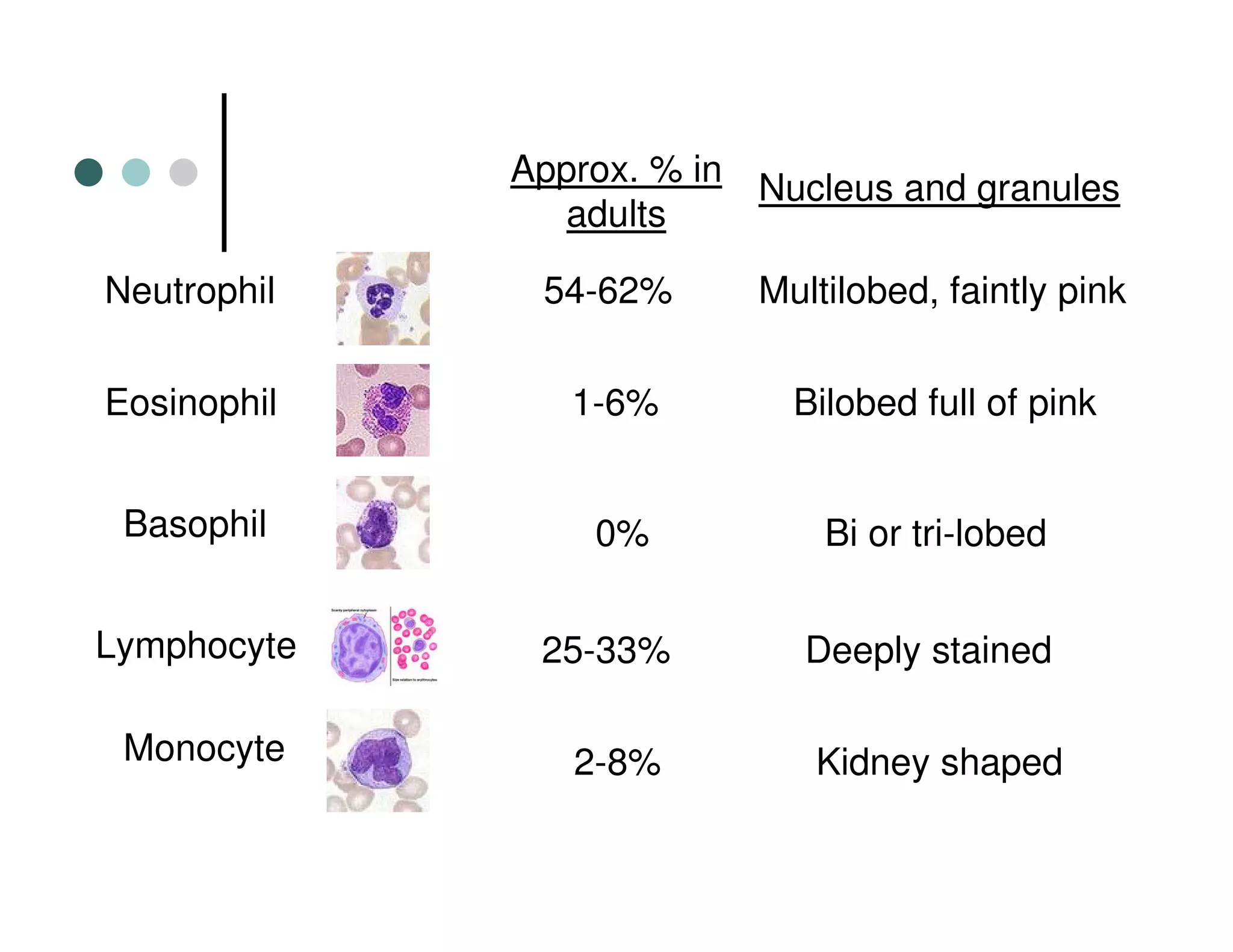
Neutrophil 54-62%
Approx. % in
adults
Multilobed, faintly pink
Nucleus and granules
Eosinophil 1-6% Bilobed full of pink
Basophil 0% Bi or tri-lobed
Lymphocyte 25-33% Deeply stained
Monocyte 2-8% Kidney shaped
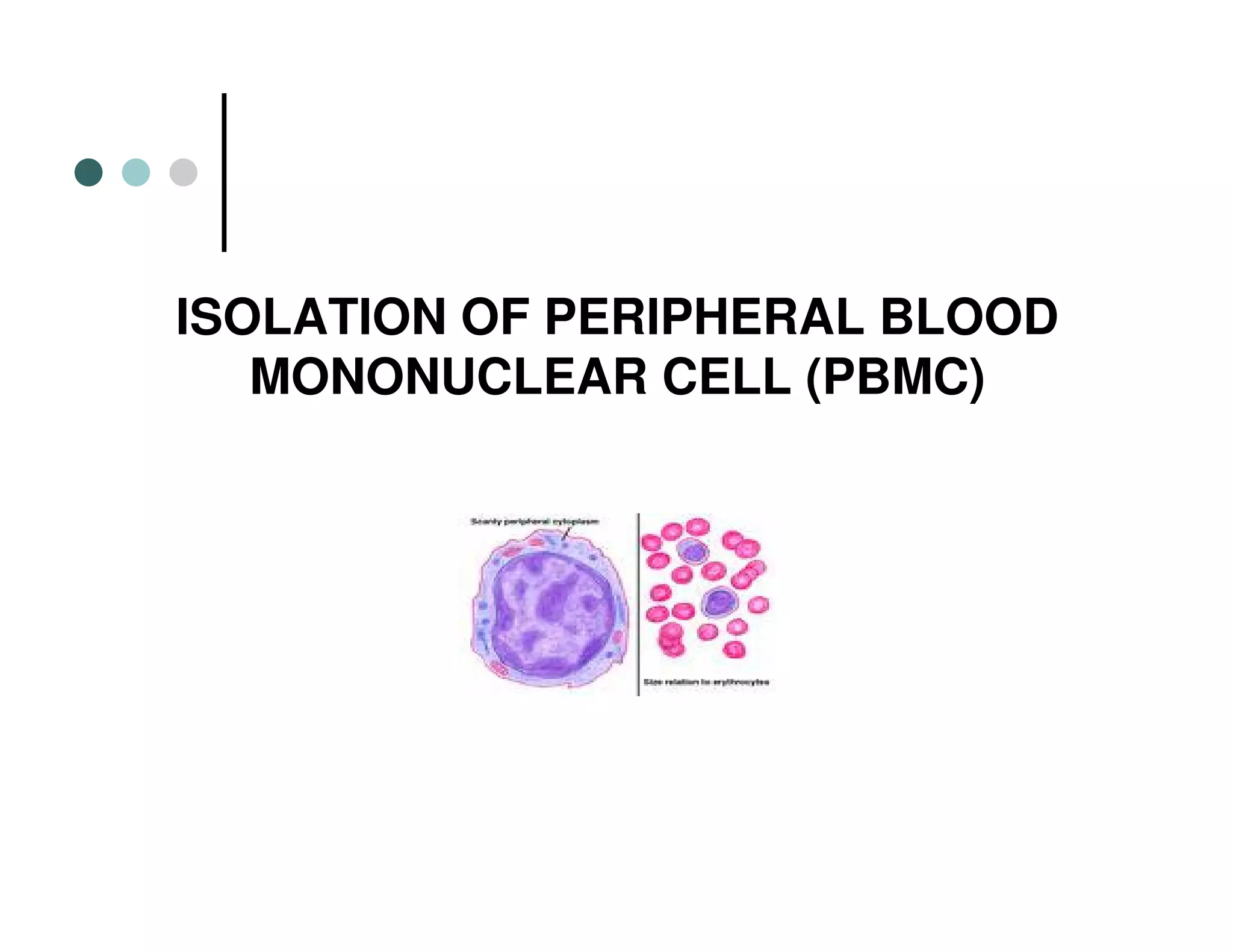
Peripheral Blood Mononuclear Cell
(PBMC)
Is a blood cell having a round nucleus, such as a
lymphocyte and monocyte.
These blood cells are a critical component in the immune
system to fight infection and adapt to intruders.
The lymphocyte population consists of T cells (CD4 and
CD8 positive ~75%), B cells and NK cells (~25%
combined).
PBMCs are widely used in research and clinical uses
every day. HIV research uses them because PBMCs
include CD4+ cells, the cells HIV infects.
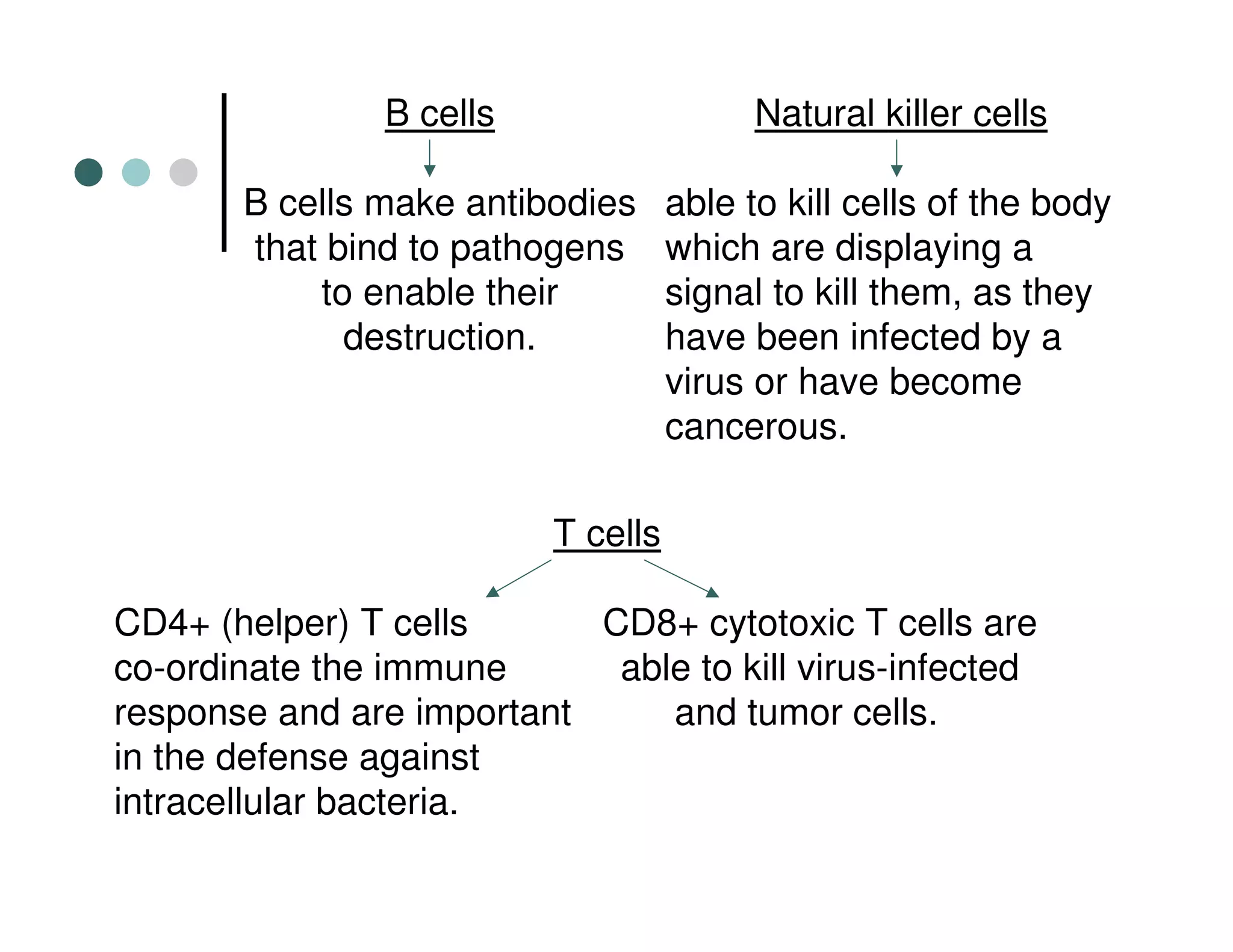
B cells
B cells make antibodies
that bind to pathogens
to enable their
destruction.
T cells
CD4+ (helper) T cells CD8+ cytotoxic T cells are
co-ordinate the immune able to kill virus-infected
response and are important and tumor cells.
in the defense against
intracellular bacteria.
•Natural killer cells
•able to kill cells of the body
which are displaying a
signal to kill them, as they
have been infected by a
virus or have become
cancerous.
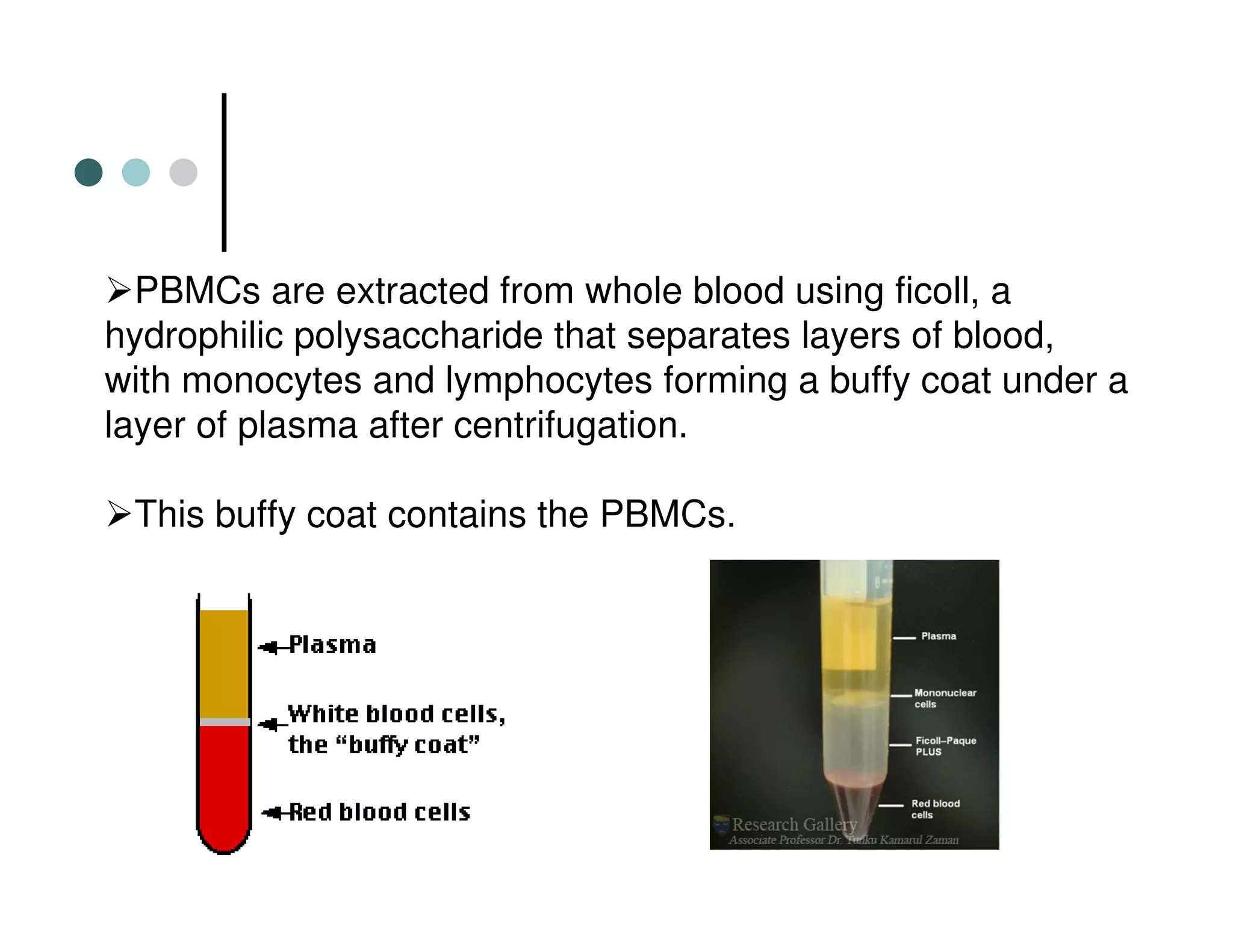
PBMCs are extracted from whole blood using ficoll, a
hydrophilic polysaccharide that separates layers of blood,
with monocytes and lymphocytes forming a buffy coat under a
layer of plasma after centrifugation.
This buffy coat contains the PBMCs.
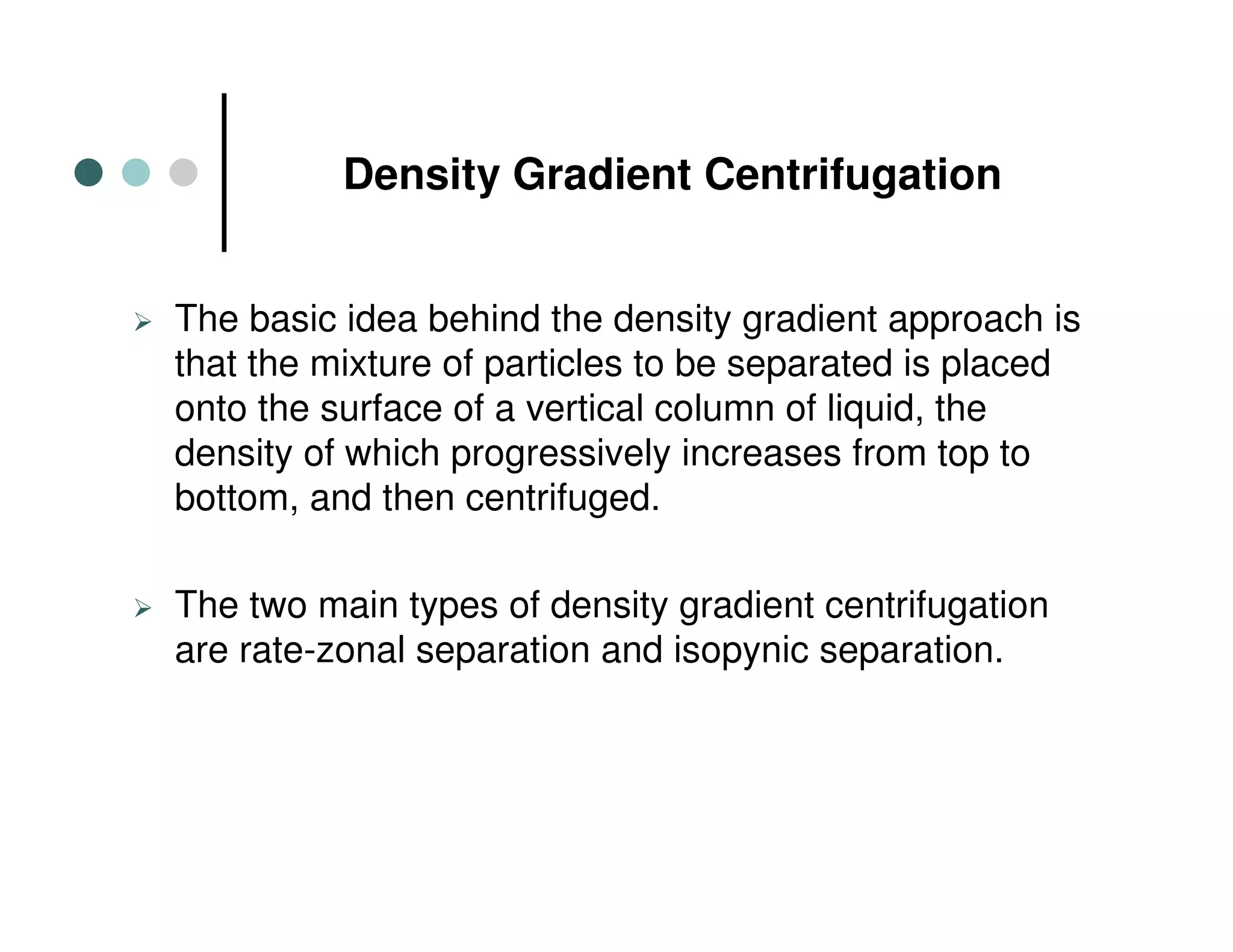
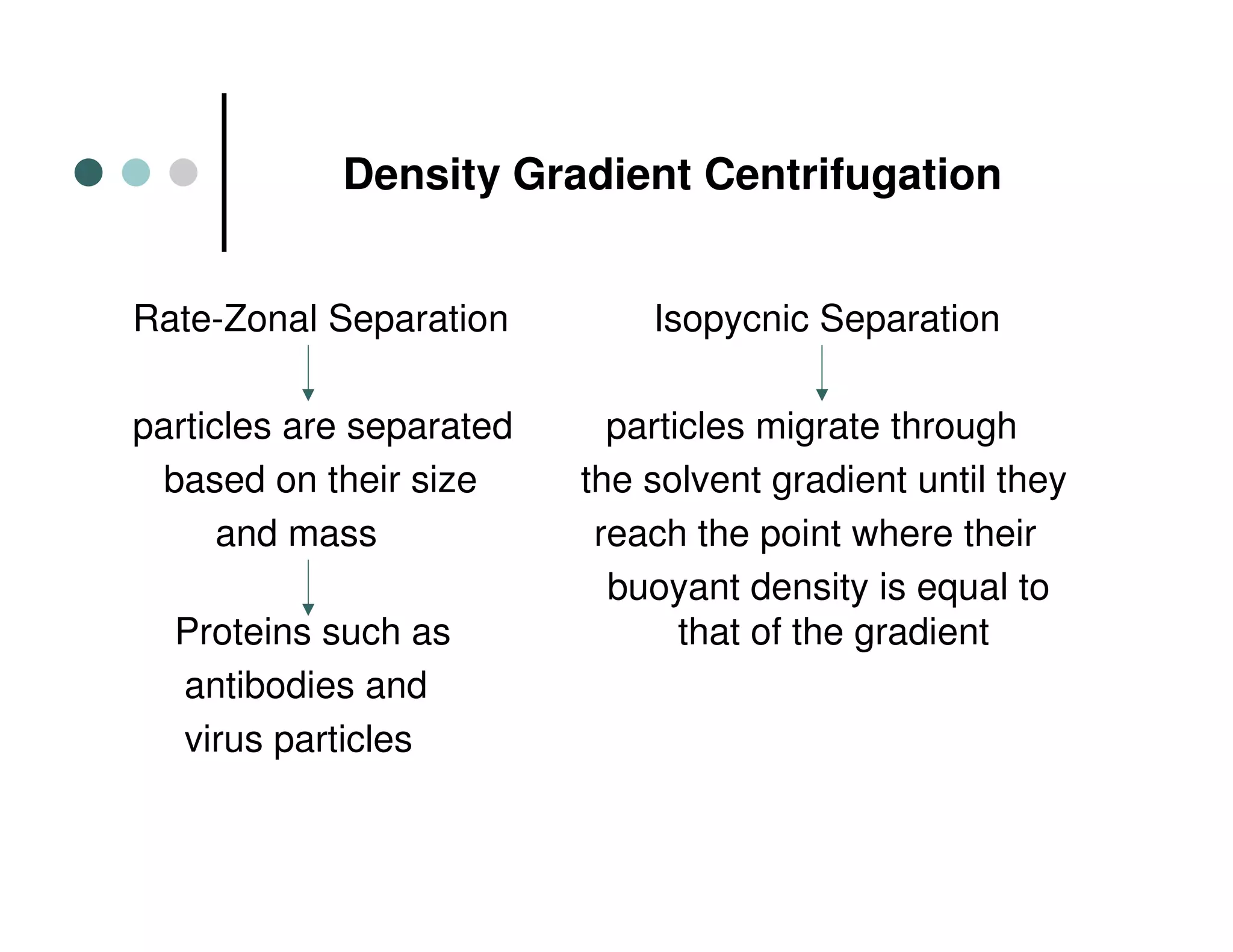
Density Gradient Centrifugation
The basic idea behind the density gradient approach is
that the mixture of particles to be separated is placed
onto the surface of a vertical column of liquid, the
density of which progressively increases from top to
bottom, and then centrifuged.
The two main types of density gradient centrifugation
are rate-zonal separation and isopynic separation.
Density Gradient Centrifugation
Rate-Zonal Separation Isopycnic Separation
particles are separated particles migrate through
based on their size the solvent gradient until they
and mass reach the point where their
buoyant density is equal to
Proteins such as that of the gradient
antibodies and
virus particles
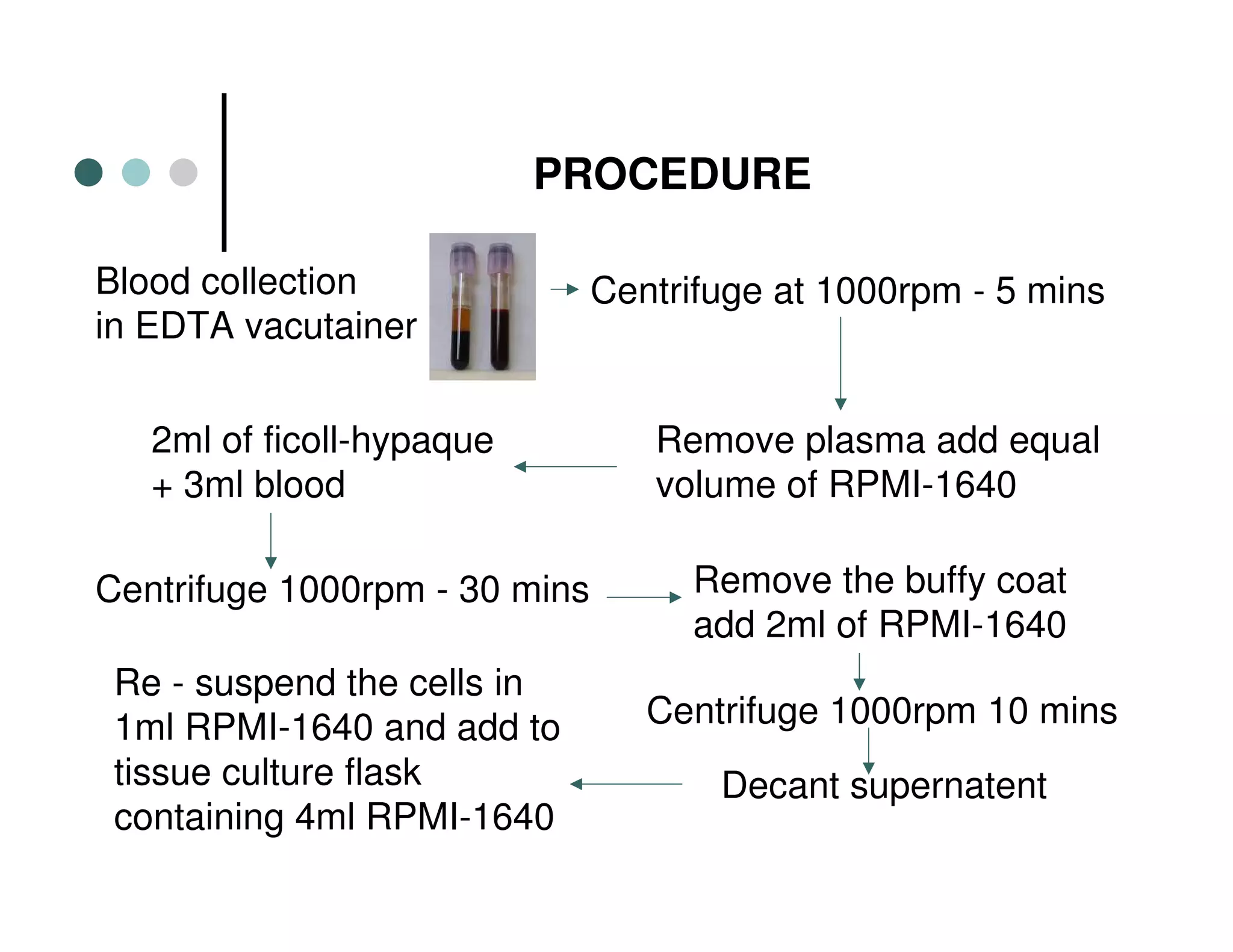
Blood collection
in EDTA vacutainer
PROCEDURE
Centrifuge at 1000rpm - 5 mins
Remove plasma add equal
volume of RPMI-1640
2ml of ficoll-hypaque
+ 3ml blood
Centrifuge 1000rpm - 30 mins Remove the buffy coat
add 2ml of RPMI-1640
Centrifuge 1000rpm 10 mins
Re - suspend the cells in
1ml RPMI-1640 and add to
tissue culture flask
containing 4ml RPMI-1640
Decant supernatent
THANK YOU
devanshi_gohil@yahoo.co.in

Isolation of pbmc

  • 1.
    ISOLATION OF PERIPHERALBLOOD MONONUCLEAR CELL (PBMC)
  • 2.
    Blood is aspecialized bodily fluid that delivers necessary substances to the body's cells — such as nutrients and oxygen — and transports waste products away from those same cells. BLOOD CONSTITUENTS OF HUMAN BLOOD 1. Cells 2. Plasma
  • 3.
    CELLS Red blood cellsWhite blood cells (RBCs or erythrocytes) (WBCs including leukocytes and platelets also called thrombocytes) leukocytes thrombocytes 4.7 to 6.1 million (male), 4,000-11,000 200,000-500,000 4.2 to 5.4 million (female)
  • 4.
    PLASMA 55% of wholeblood is blood plasma --- fluid that is the blood's liquid medium --- is straw-yellow in color Plasma circulates dissolved nutrients, such as glucose, amino acids, and fatty acids (dissolved in the blood or bound to plasma proteins), and removes waste products, such as, carbon dioxide, urea, and lactic acid
  • 5.
    RED BLOOD CELLS Themost common type of blood cell and the body‘s principal means of delivering oxygen to the body tissues via the blood. The cells are filled with hemoglobin, a biomolecule that can bind to oxygen. The blood's red color is due to the color of hemoglobin.
  • 6.
    WHITE BLOOD CELLS Cellsof the immune system defending the body against both infectious disease and foreign materials. Five different and diverse types of leukocytes exist, but they are all produced and derived from a multipotent cell in the bone marrow known as a hematopoietic stem cell. Leukocytes are found throughout the body, including the blood and lymphatic system
  • 7.
    WHITE BLOOD CELLS Whiteblood cells are often characterized as granulocytes or agranulocytes Granulocytes: characterised by the presence of differently staining granules in their cytoplasm when viewed under light microscopy. There are three types of granulocytes: neutrophils, basophils, and eosinophils, which are named according to their staining properties. Agranulocytes: characterized by the apparent absence of granules in their cytoplasm. The cells include lymphocytes, monocytes, and macrophages.
  • 8.
    Neutrophil 54-62% Approx. %in adults Multilobed, faintly pink Nucleus and granules Eosinophil 1-6% Bilobed full of pink Basophil 0% Bi or tri-lobed Lymphocyte 25-33% Deeply stained Monocyte 2-8% Kidney shaped
  • 9.
    Peripheral Blood MononuclearCell (PBMC) Is a blood cell having a round nucleus, such as a lymphocyte and monocyte. These blood cells are a critical component in the immune system to fight infection and adapt to intruders. The lymphocyte population consists of T cells (CD4 and CD8 positive ~75%), B cells and NK cells (~25% combined). PBMCs are widely used in research and clinical uses every day. HIV research uses them because PBMCs include CD4+ cells, the cells HIV infects.
  • 10.
    B cells B cellsmake antibodies that bind to pathogens to enable their destruction. T cells CD4+ (helper) T cells CD8+ cytotoxic T cells are co-ordinate the immune able to kill virus-infected response and are important and tumor cells. in the defense against intracellular bacteria. •Natural killer cells •able to kill cells of the body which are displaying a signal to kill them, as they have been infected by a virus or have become cancerous.
  • 11.
    PBMCs are extractedfrom whole blood using ficoll, a hydrophilic polysaccharide that separates layers of blood, with monocytes and lymphocytes forming a buffy coat under a layer of plasma after centrifugation. This buffy coat contains the PBMCs.
  • 12.
    Density Gradient Centrifugation Thebasic idea behind the density gradient approach is that the mixture of particles to be separated is placed onto the surface of a vertical column of liquid, the density of which progressively increases from top to bottom, and then centrifuged. The two main types of density gradient centrifugation are rate-zonal separation and isopynic separation.
  • 13.
    Density Gradient Centrifugation Rate-ZonalSeparation Isopycnic Separation particles are separated particles migrate through based on their size the solvent gradient until they and mass reach the point where their buoyant density is equal to Proteins such as that of the gradient antibodies and virus particles
  • 14.
    Blood collection in EDTAvacutainer PROCEDURE Centrifuge at 1000rpm - 5 mins Remove plasma add equal volume of RPMI-1640 2ml of ficoll-hypaque + 3ml blood Centrifuge 1000rpm - 30 mins Remove the buffy coat add 2ml of RPMI-1640 Centrifuge 1000rpm 10 mins Re - suspend the cells in 1ml RPMI-1640 and add to tissue culture flask containing 4ml RPMI-1640 Decant supernatent
  • 15.