Industry Studies 1 
Make, Take and Sell Challenge: 
Developing a communication 
plan for your product 
Topic Number: 7
Overview 
After making sure that you product gets produced 
through a global supply chain and then is distributed 
in market, it becomes important that consumers hear 
about it. In todays work shop we will develop a 
compelling communication strategy for your product 
to ensure that it appeals to your target audience. 
We will initially look at what it makes to develop a 
compelling communication and how you should 
structure a communication plan. 
Thereafter, we will take a look at a number of creative 
executions that have made a lasting impact on their 
target audience.
Learning outcomes for these workshops 
• To be able to create a strategy to a develop a 
compelling communication 
• Critically evaluate the different communication 
approaches 
• Understand and be able to go through the 
communication creation process 
• Be able to put together a communications brief 
together and create a mood film 
• Build a media plan to target your core customer 
audiences
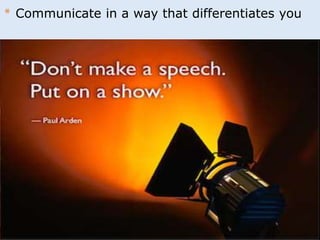
* Communicate in a way that differentiates you
* The power of great communications 
View video: https://www.youtube.com/watch?v=xBIVlM435Zg
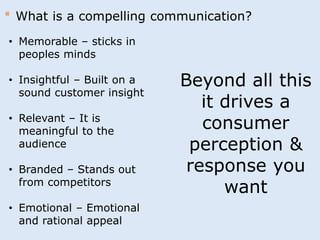
* What is a compelling communication? 
• Memorable – sticks in 
peoples minds 
• Insightful – Built on a 
sound customer insight 
• Relevant – It is 
meaningful to the 
audience 
• Branded – Stands out 
from competitors 
• Emotional – Emotional 
and rational appeal 
Beyond all this 
it drives a 
consumer 
perception & 
response you 
want
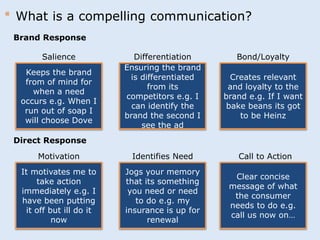
* What is a compelling communication? 
Brand Response 
Salience Differentiation Bond/Loyalty 
Keeps the brand 
from of mind for 
when a need 
occurs e.g. When I 
run out of soap I 
will choose Dove 
Direct Response 
Ensuring the brand 
is differentiated 
from its 
competitors e.g. I 
can identify the 
brand the second I 
see the ad 
Creates relevant 
and loyalty to the 
brand e.g. If I want 
bake beans its got 
to be Heinz 
Motivation Identifies Need Call to Action 
It motivates me to 
take action 
immediately e.g. I 
have been putting 
it off but ill do it 
now 
Jogs your memory 
that its something 
you need or need 
to do e.g. my 
insurance is up for 
renewal 
Clear concise 
message of what 
the consumer 
needs to do e.g. 
call us now on…
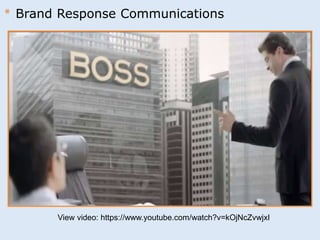
* Brand Response Communications 
View video: https://www.youtube.com/watch?v=kOjNcZvwjxI
* Direct Response Communications 
View video: https://www.youtube.com/watch?v=YHbNunk0xVY
* Task 1: Designing a communication brief 
In your groups take 15 
minutes to design a 
communication brief. 
To help you use the 
following slides as a 
structure for what you 
should include.
* Task 1: Designing a communication brief 
The brief acts as the CRITICAL 
LINK between the proposition and 
communication 
The QUALITY of the brief impacts 
the quality of creative output 
Gives clear CREATIVE and MEDIA 
direction and inspiration unlocking 
creative imagination and talent 
It also acts as a CONTRACT against 
which all work is judged
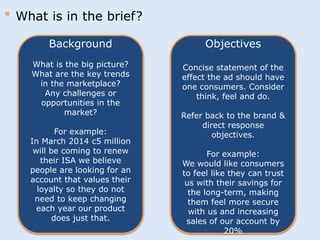
Background 
What is the big picture? 
What are the key trends 
in the marketplace? 
Any challenges or 
opportunities in the 
market? 
For example: 
In March 2014 c5 million 
will be coming to renew 
their ISA we believe 
people are looking for an 
account that values their 
loyalty so they do not 
need to keep changing 
each year our product 
does just that. 
Objectives 
Concise statement of the 
effect the ad should have 
one consumers. Consider 
think, feel and do. 
Refer back to the brand & 
direct response 
objectives. 
For example: 
We would like consumers 
to feel like they can trust 
us with their savings for 
the long-term, making 
them feel more secure 
with us and increasing 
sales of our account by 
20% 
* What is in the brief?
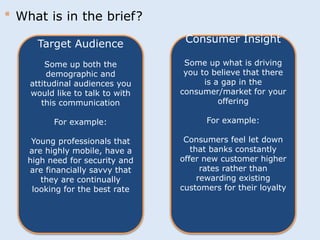
Target Audience 
Some up both the 
demographic and 
attitudinal audiences you 
would like to talk to with 
this communication 
For example: 
Young professionals that 
are highly mobile, have a 
high need for security and 
are financially savvy that 
they are continually 
looking for the best rate 
Consumer Insight 
Some up what is driving 
you to believe that there 
is a gap in the 
consumer/market for your 
offering 
For example: 
Consumers feel let down 
that banks constantly 
offer new customer higher 
rates rather than 
rewarding existing 
customers for their loyalty 
* What is in the brief?
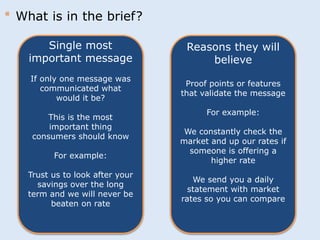
Single most 
important message 
If only one message was 
communicated what 
would it be? 
This is the most 
important thing 
consumers should know 
For example: 
Trust us to look after your 
savings over the long 
term and we will never be 
beaten on rate 
Reasons they will 
believe 
Proof points or features 
that validate the message 
For example: 
We constantly check the 
market and up our rates if 
someone is offering a 
higher rate 
We send you a daily 
statement with market 
rates so you can compare 
* What is in the brief?
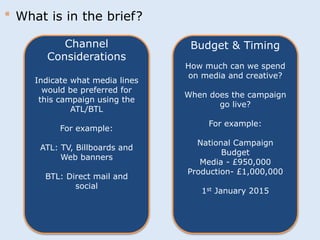
Budget & Timing 
How much can we spend 
on media and creative? 
When does the campaign 
go live? 
For example: 
National Campaign 
Budget 
Media - £950,000 
Production- £1,000,000 
1st January 2015 
* What is in the brief? 
Channel 
Considerations 
Indicate what media lines 
would be preferred for 
this campaign using the 
ATL/BTL 
For example: 
ATL: TV, Billboards and 
Web banners 
BTL: Direct mail and 
social
Task 1: Feedback to the group 
Each group 
has 5 
minutes to 
feedback
* Task 2: Analysing a communication strategy 
In your groups watch 
one of the adverts below 
and take 10 minutes to 
analyse the 
communications 
strategy behind it. 
To help you use the 
briefing slides.
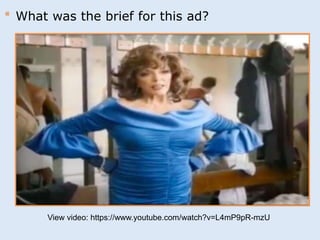
* What was the brief for this ad? 
View video: https://www.youtube.com/watch?v=L4mP9pR-mzU
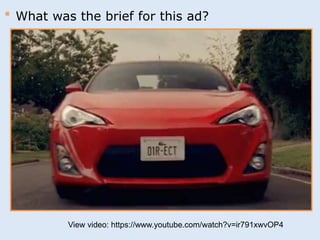
* What was the brief for this ad? 
View video: https://www.youtube.com/watch?v=ir791xwvOP4
* What was the brief for this ad? 
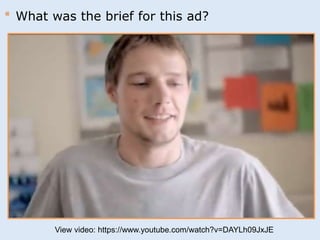
View video: https://www.youtube.com/watch?v=DAYLh09JxJE
Task 2: Your pricing strategy 
Each group 
has 5 
minutes to 
feedback
* Task 3: Developing your creative approach 
In your groups take 15 
minutes to consider your 
creative approach for 
your communication. 
Give consideration to the 
type of media channels 
that you would use as 
well.
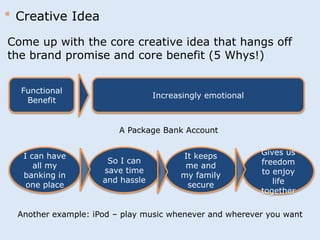
* Creative Idea 
Come up with the core creative idea that hangs off 
the brand promise and core benefit (5 Whys!) 
Functional 
Benefit 
Increasingly emotional 
I can have 
all my 
banking in 
one place 
So I can 
save time 
and hassle 
It keeps 
me and 
my family 
secure 
Gives us 
freedom 
to enjoy 
life 
together 
A Package Bank Account 
Another example: iPod – play music whenever and wherever you want
* Find a way to be novel 
Video: http://www.youtube.com/watch?v=x89xAXHd2l8
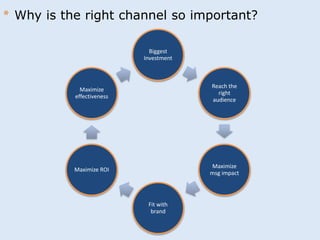
* Why is the right channel so important? 
Biggest 
Investment 
Reach the 
right 
audience 
Maximize 
msg impact 
Fit with 
brand 
Maximize 
effectiveness 
Maximize ROI
Task 3: Creative Idea 
Each group 
has 5 
minutes to 
feedback
End of Workshop 
Note: This recording is for your 
personal use only and not for further 
distribution or wider review. 
© Pearson College 2013

Is1 workshop 7 make, take & sell challenge student

  • 1.
    Industry Studies 1 Make, Take and Sell Challenge: Developing a communication plan for your product Topic Number: 7
  • 2.
    Overview After makingsure that you product gets produced through a global supply chain and then is distributed in market, it becomes important that consumers hear about it. In todays work shop we will develop a compelling communication strategy for your product to ensure that it appeals to your target audience. We will initially look at what it makes to develop a compelling communication and how you should structure a communication plan. Thereafter, we will take a look at a number of creative executions that have made a lasting impact on their target audience.
  • 3.
    Learning outcomes forthese workshops • To be able to create a strategy to a develop a compelling communication • Critically evaluate the different communication approaches • Understand and be able to go through the communication creation process • Be able to put together a communications brief together and create a mood film • Build a media plan to target your core customer audiences
  • 4.
    * Communicate ina way that differentiates you
  • 5.
    * The powerof great communications View video: https://www.youtube.com/watch?v=xBIVlM435Zg
  • 6.
    * What isa compelling communication? • Memorable – sticks in peoples minds • Insightful – Built on a sound customer insight • Relevant – It is meaningful to the audience • Branded – Stands out from competitors • Emotional – Emotional and rational appeal Beyond all this it drives a consumer perception & response you want
  • 7.
    * What isa compelling communication? Brand Response Salience Differentiation Bond/Loyalty Keeps the brand from of mind for when a need occurs e.g. When I run out of soap I will choose Dove Direct Response Ensuring the brand is differentiated from its competitors e.g. I can identify the brand the second I see the ad Creates relevant and loyalty to the brand e.g. If I want bake beans its got to be Heinz Motivation Identifies Need Call to Action It motivates me to take action immediately e.g. I have been putting it off but ill do it now Jogs your memory that its something you need or need to do e.g. my insurance is up for renewal Clear concise message of what the consumer needs to do e.g. call us now on…
  • 8.
    * Brand ResponseCommunications View video: https://www.youtube.com/watch?v=kOjNcZvwjxI
  • 9.
    * Direct ResponseCommunications View video: https://www.youtube.com/watch?v=YHbNunk0xVY
  • 10.
    * Task 1:Designing a communication brief In your groups take 15 minutes to design a communication brief. To help you use the following slides as a structure for what you should include.
  • 11.
    * Task 1:Designing a communication brief The brief acts as the CRITICAL LINK between the proposition and communication The QUALITY of the brief impacts the quality of creative output Gives clear CREATIVE and MEDIA direction and inspiration unlocking creative imagination and talent It also acts as a CONTRACT against which all work is judged
  • 12.
    Background What isthe big picture? What are the key trends in the marketplace? Any challenges or opportunities in the market? For example: In March 2014 c5 million will be coming to renew their ISA we believe people are looking for an account that values their loyalty so they do not need to keep changing each year our product does just that. Objectives Concise statement of the effect the ad should have one consumers. Consider think, feel and do. Refer back to the brand & direct response objectives. For example: We would like consumers to feel like they can trust us with their savings for the long-term, making them feel more secure with us and increasing sales of our account by 20% * What is in the brief?
  • 13.
    Target Audience Someup both the demographic and attitudinal audiences you would like to talk to with this communication For example: Young professionals that are highly mobile, have a high need for security and are financially savvy that they are continually looking for the best rate Consumer Insight Some up what is driving you to believe that there is a gap in the consumer/market for your offering For example: Consumers feel let down that banks constantly offer new customer higher rates rather than rewarding existing customers for their loyalty * What is in the brief?
  • 14.
    Single most importantmessage If only one message was communicated what would it be? This is the most important thing consumers should know For example: Trust us to look after your savings over the long term and we will never be beaten on rate Reasons they will believe Proof points or features that validate the message For example: We constantly check the market and up our rates if someone is offering a higher rate We send you a daily statement with market rates so you can compare * What is in the brief?
  • 15.
    Budget & Timing How much can we spend on media and creative? When does the campaign go live? For example: National Campaign Budget Media - £950,000 Production- £1,000,000 1st January 2015 * What is in the brief? Channel Considerations Indicate what media lines would be preferred for this campaign using the ATL/BTL For example: ATL: TV, Billboards and Web banners BTL: Direct mail and social
  • 16.
    Task 1: Feedbackto the group Each group has 5 minutes to feedback
  • 17.
    * Task 2:Analysing a communication strategy In your groups watch one of the adverts below and take 10 minutes to analyse the communications strategy behind it. To help you use the briefing slides.
  • 18.
    * What wasthe brief for this ad? View video: https://www.youtube.com/watch?v=L4mP9pR-mzU
  • 19.
    * What wasthe brief for this ad? View video: https://www.youtube.com/watch?v=ir791xwvOP4
  • 20.
    * What wasthe brief for this ad? View video: https://www.youtube.com/watch?v=DAYLh09JxJE
  • 21.
    Task 2: Yourpricing strategy Each group has 5 minutes to feedback
  • 22.
    * Task 3:Developing your creative approach In your groups take 15 minutes to consider your creative approach for your communication. Give consideration to the type of media channels that you would use as well.
  • 23.
    * Creative Idea Come up with the core creative idea that hangs off the brand promise and core benefit (5 Whys!) Functional Benefit Increasingly emotional I can have all my banking in one place So I can save time and hassle It keeps me and my family secure Gives us freedom to enjoy life together A Package Bank Account Another example: iPod – play music whenever and wherever you want
  • 24.
    * Find away to be novel Video: http://www.youtube.com/watch?v=x89xAXHd2l8
  • 25.
    * Why isthe right channel so important? Biggest Investment Reach the right audience Maximize msg impact Fit with brand Maximize effectiveness Maximize ROI
  • 26.
    Task 3: CreativeIdea Each group has 5 minutes to feedback
  • 27.
    End of Workshop Note: This recording is for your personal use only and not for further distribution or wider review. © Pearson College 2013