By: Ajay Dinakar Kandavalli
 Introduction
 History
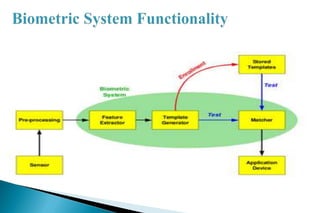
 Biometric functionality
 The Iris & Retina
 Iris identification
 How it works: Iris identification scanner
 Retinal scanning
 How it works: retinal scanner
 Scanners
 Advantages
 Challenges
 Applications
 Conclusion
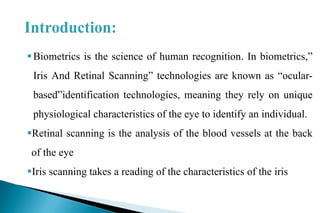
Biometrics is the science of human recognition. In biometrics,”
Iris And Retinal Scanning” technologies are known as “ocular-
based”identification technologies, meaning they rely on unique
physiological characteristics of the eye to identify an individual.
Retinal scanning is the analysis of the blood vessels at the back
of the eye
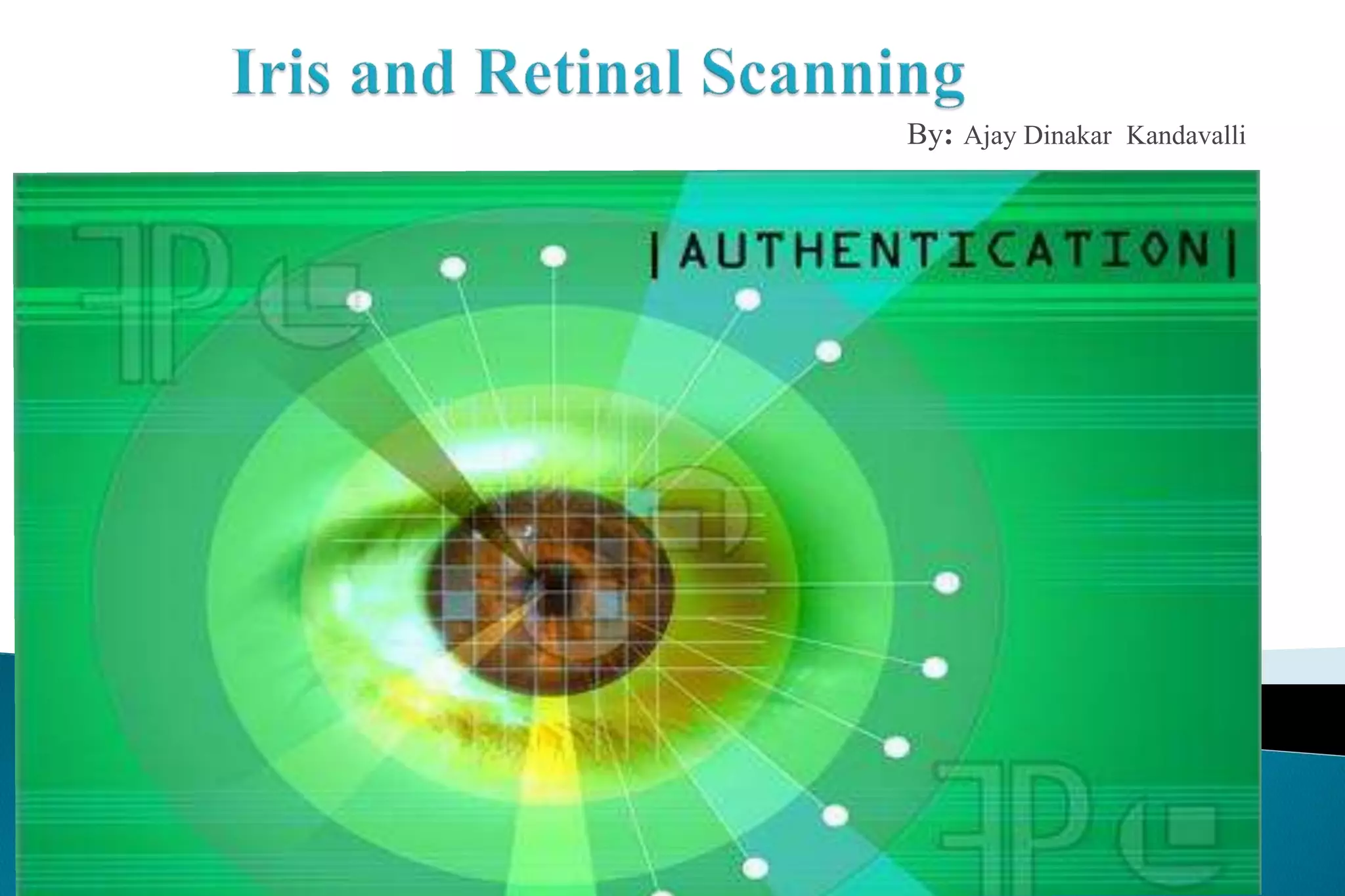
Iris scanning takes a reading of the characteristics of the iris
 The idea for retinal identification was first conceived by Dr.
Carleton Simon and Dr. Isadora Goldstein and was published in
the New York State Journal of Medicine in 1935.
 In 1994 when John Daugman developed the technology for iris
scanning that is became useful, and since then iris scanning has
begun to challenge the retinal scans .
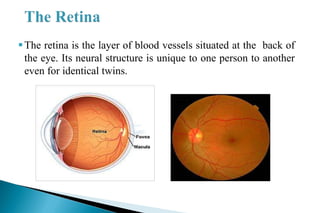
The retina is the layer of blood vessels situated at the back of
the eye. Its neural structure is unique to one person to another
even for identical twins.
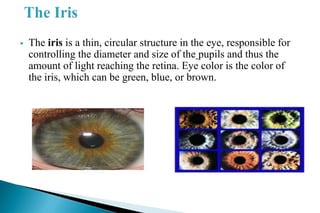
 The iris is a thin, circular structure in the eye, responsible for
controlling the diameter and size of the pupils and thus the
amount of light reaching the retina. Eye color is the color of
the iris, which can be green, blue, or brown.
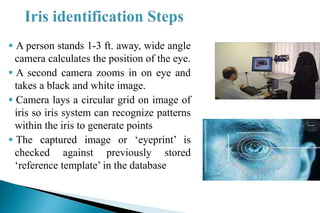
 A person stands 1-3 ft. away, wide angle
camera calculates the position of the eye.
 A second camera zooms in on eye and
takes a black and white image.
 Camera lays a circular grid on image of
iris so iris system can recognize patterns
within the iris to generate points
 The captured image or ‘eyeprint’ is
checked against previously stored
‘reference template’ in the database
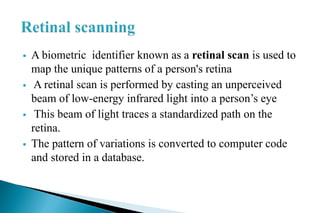
 A biometric identifier known as a retinal scan is used to
map the unique patterns of a person's retina
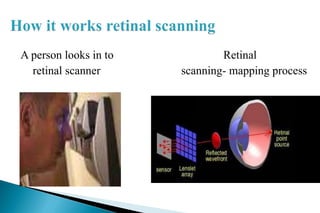
 A retinal scan is performed by casting an unperceived
beam of low-energy infrared light into a person’s eye
 This beam of light traces a standardized path on the
retina.
 The pattern of variations is converted to computer code
and stored in a database.
A person looks in to Retinal
retinal scanner scanning- mapping process
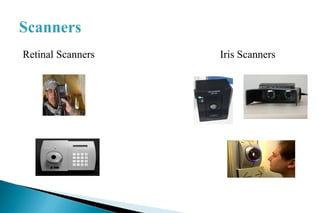
Retinal Scanners Iris Scanners
 More accurate than fingerprints
 Prevents identity theft or fraud
 Retinal scanners aren’t subjected to dirt/finger misplacement
like fingerprints
 Extremely low (almost 0%) false positive rates
 Low occurrence of false negatives
 Fooling the retinal scanner is very difficult
 Susceptible to disease damage (i.e. cataracts)
 Viewed as intrusive and not very user friendly
 High amount of both user and operator skill required
 Not enough funding from government and private sectors
 High end security applications
 Controlling access to areas or rooms in military installations/
government buildings
 Power plants
 Airports, research laboratories
 High risk places
 Bank facilities
 In future, it may be used for engineers and e-commerce
 No two irises are alike, not even identical twins
 The left eye and right eye are not the same on one person
 The iris has six times more distinct identifiable features than
fingerprints
 The probability of having two irises alike are one in ten to the
78th power (the population of the earth is approx. ten to the
tenth power)
 There is no known way to copy a retina
 A retina from a dead person would deteriorate too fast to be
useful so no extra precautions have been taken with retinal
scanning to make sure the person is alive
 Glasses or contact lenses do not interfere with the operation of
iris recognition
 Blind people with an iris can be identified with iris recognition
technology
 Iris & Retinal Scanning is a highly accurate and secure
biometric identification method.
 If the enhancements are made while maintaining compact,
efficient, and low-cost implementations, then Iris recognition &
Retinal Scanning both will be well positioned for widespread
deployment
 Retinal Scan http://ctl.ncsc.dni.us/biomet%20web/BMRetinal.html
 Iris and Retinal Identification
http://et.wcu.edu/aidc/BioWebPages/Biometrics_Eye.html
 Biometric Identification
http://www.lowrycomputer.com/technologies/biometric_id/retinal_sc
an/
 What is Iris Recognition Technology?
 http://www.wisegeek.com/what-is-iris-recognition-technology.htm
 Iris recognition basics http://www.iriscan.com/basics.php
 Retinal scan http://www.answers.com/topic/retinal-scan?cat=health
 Different Types of Biometrics Technology
http://www.hundure.com/news-03.htm
IRIS &RETINAL SCANNING PPT

IRIS &RETINAL SCANNING PPT

  • 1.
    By: Ajay DinakarKandavalli
  • 2.
     Introduction  History Biometric functionality  The Iris & Retina  Iris identification  How it works: Iris identification scanner  Retinal scanning  How it works: retinal scanner  Scanners  Advantages  Challenges  Applications  Conclusion
  • 3.
    Biometrics is thescience of human recognition. In biometrics,” Iris And Retinal Scanning” technologies are known as “ocular- based”identification technologies, meaning they rely on unique physiological characteristics of the eye to identify an individual. Retinal scanning is the analysis of the blood vessels at the back of the eye Iris scanning takes a reading of the characteristics of the iris
  • 4.
     The ideafor retinal identification was first conceived by Dr. Carleton Simon and Dr. Isadora Goldstein and was published in the New York State Journal of Medicine in 1935.  In 1994 when John Daugman developed the technology for iris scanning that is became useful, and since then iris scanning has begun to challenge the retinal scans .
  • 6.
    The retina isthe layer of blood vessels situated at the back of the eye. Its neural structure is unique to one person to another even for identical twins.
  • 7.
     The irisis a thin, circular structure in the eye, responsible for controlling the diameter and size of the pupils and thus the amount of light reaching the retina. Eye color is the color of the iris, which can be green, blue, or brown.
  • 8.
     A personstands 1-3 ft. away, wide angle camera calculates the position of the eye.  A second camera zooms in on eye and takes a black and white image.  Camera lays a circular grid on image of iris so iris system can recognize patterns within the iris to generate points  The captured image or ‘eyeprint’ is checked against previously stored ‘reference template’ in the database
  • 10.
     A biometricidentifier known as a retinal scan is used to map the unique patterns of a person's retina  A retinal scan is performed by casting an unperceived beam of low-energy infrared light into a person’s eye  This beam of light traces a standardized path on the retina.  The pattern of variations is converted to computer code and stored in a database.
  • 11.
    A person looksin to Retinal retinal scanner scanning- mapping process
  • 12.
  • 13.
     More accuratethan fingerprints  Prevents identity theft or fraud  Retinal scanners aren’t subjected to dirt/finger misplacement like fingerprints  Extremely low (almost 0%) false positive rates  Low occurrence of false negatives  Fooling the retinal scanner is very difficult
  • 14.
     Susceptible todisease damage (i.e. cataracts)  Viewed as intrusive and not very user friendly  High amount of both user and operator skill required  Not enough funding from government and private sectors
  • 15.
     High endsecurity applications  Controlling access to areas or rooms in military installations/ government buildings  Power plants  Airports, research laboratories  High risk places  Bank facilities  In future, it may be used for engineers and e-commerce
  • 16.
     No twoirises are alike, not even identical twins  The left eye and right eye are not the same on one person  The iris has six times more distinct identifiable features than fingerprints  The probability of having two irises alike are one in ten to the 78th power (the population of the earth is approx. ten to the tenth power)  There is no known way to copy a retina
  • 17.
     A retinafrom a dead person would deteriorate too fast to be useful so no extra precautions have been taken with retinal scanning to make sure the person is alive  Glasses or contact lenses do not interfere with the operation of iris recognition  Blind people with an iris can be identified with iris recognition technology
  • 18.
     Iris &Retinal Scanning is a highly accurate and secure biometric identification method.  If the enhancements are made while maintaining compact, efficient, and low-cost implementations, then Iris recognition & Retinal Scanning both will be well positioned for widespread deployment
  • 19.
     Retinal Scanhttp://ctl.ncsc.dni.us/biomet%20web/BMRetinal.html  Iris and Retinal Identification http://et.wcu.edu/aidc/BioWebPages/Biometrics_Eye.html  Biometric Identification http://www.lowrycomputer.com/technologies/biometric_id/retinal_sc an/  What is Iris Recognition Technology?  http://www.wisegeek.com/what-is-iris-recognition-technology.htm  Iris recognition basics http://www.iriscan.com/basics.php  Retinal scan http://www.answers.com/topic/retinal-scan?cat=health  Different Types of Biometrics Technology http://www.hundure.com/news-03.htm