1
PRESENTATION
ON
BIOMETRIC AUTHENTICATION
UNDER THE GUIDANCE OF
PROF: P.S,Atigre
DEPARTMENT COMPUTER SCIENCE & ENGINEERING
PRESENTED BY:
ROLL NO NAME
71 CHINTAWAR SANTOSH SANJAY
2
Introduction
What is Biometrics
History
Types
Characteristics
Biometrics Devices
Application
Advantages
Conclusion
3
• Biometrics are automated methods of recognizing a
person based on a physiological or behavioral
characteristic.
• Biometrics technologies measure a particular set of
a person's vital statistics in order to determine
identity.
Introduction
4
• The word "biometrics" is derived from the Greek
words 'bios' and 'metric';
• which means life and measurement respectively.
• This directly translates into "life measurement".
What is
biometric?
5
• The first real biometric system was created in 1870 by french
anthropologist Alphonse Bertillion and turned biometrics a
distinguished field of study.
The first classification method for fingerprints was developed in
1892 by Sir. Francis Galton. The
History
6
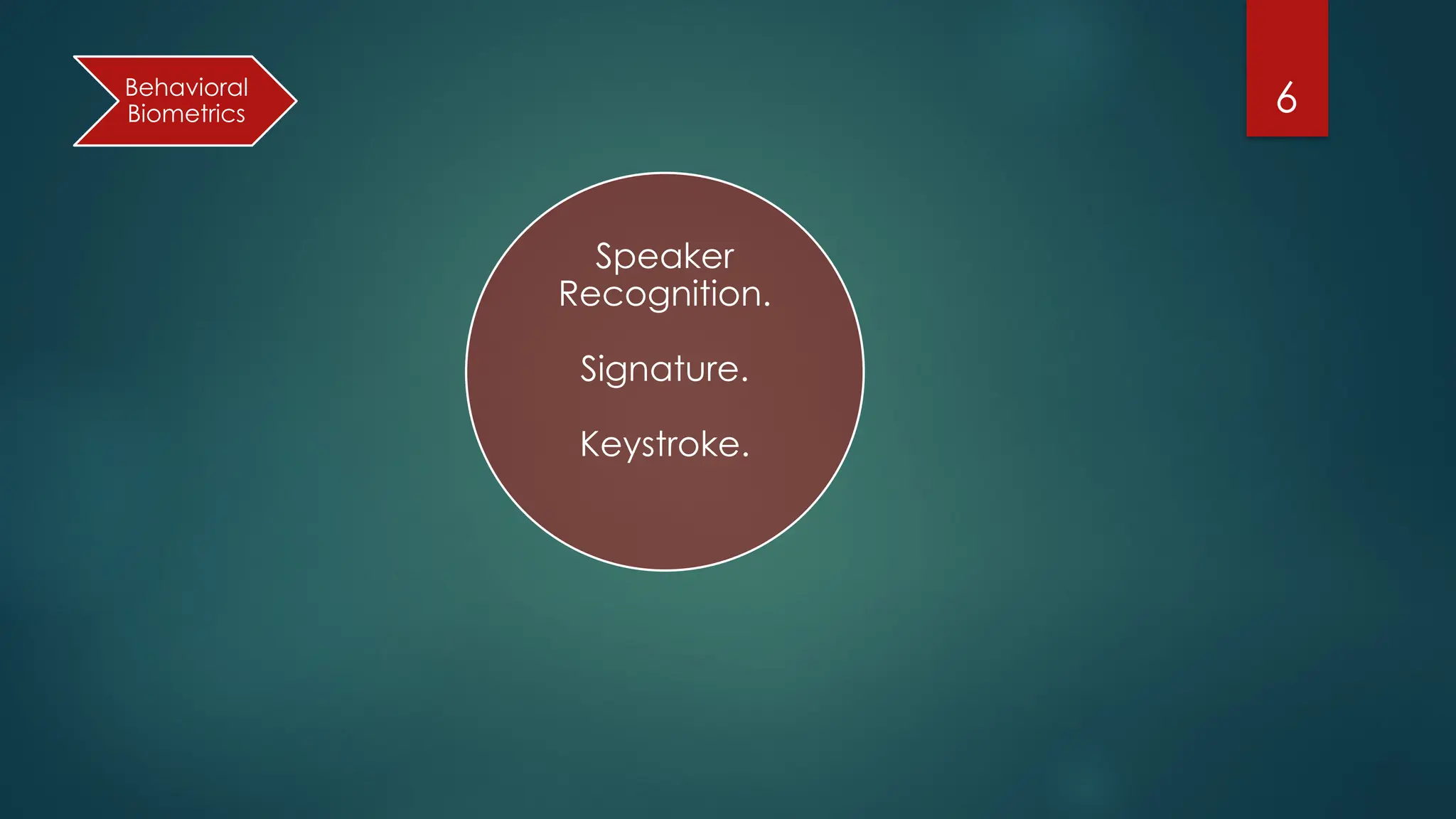
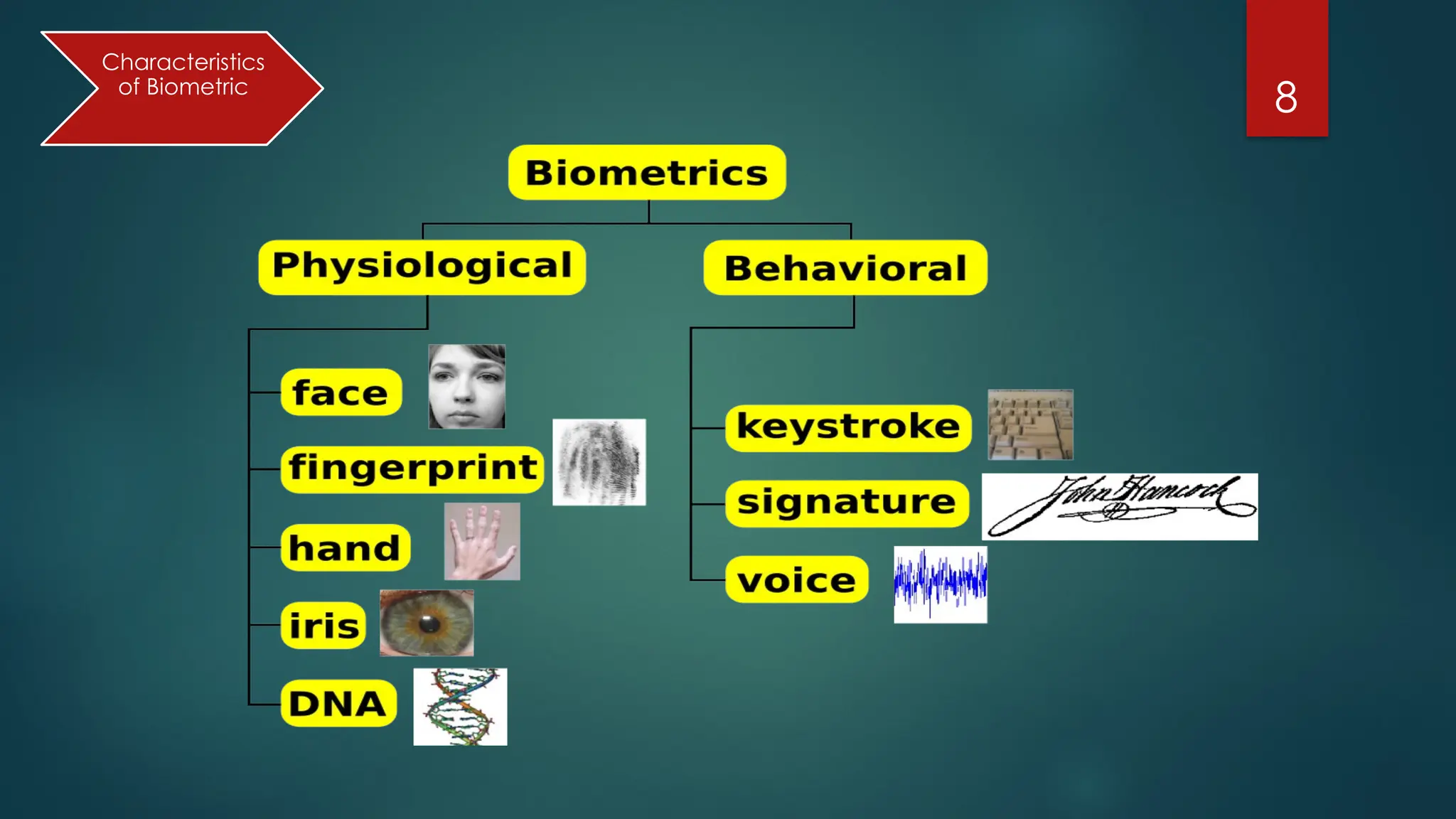
Speaker
Recognition.
Signature.
Keystroke.
Behavioral
Biometrics
7
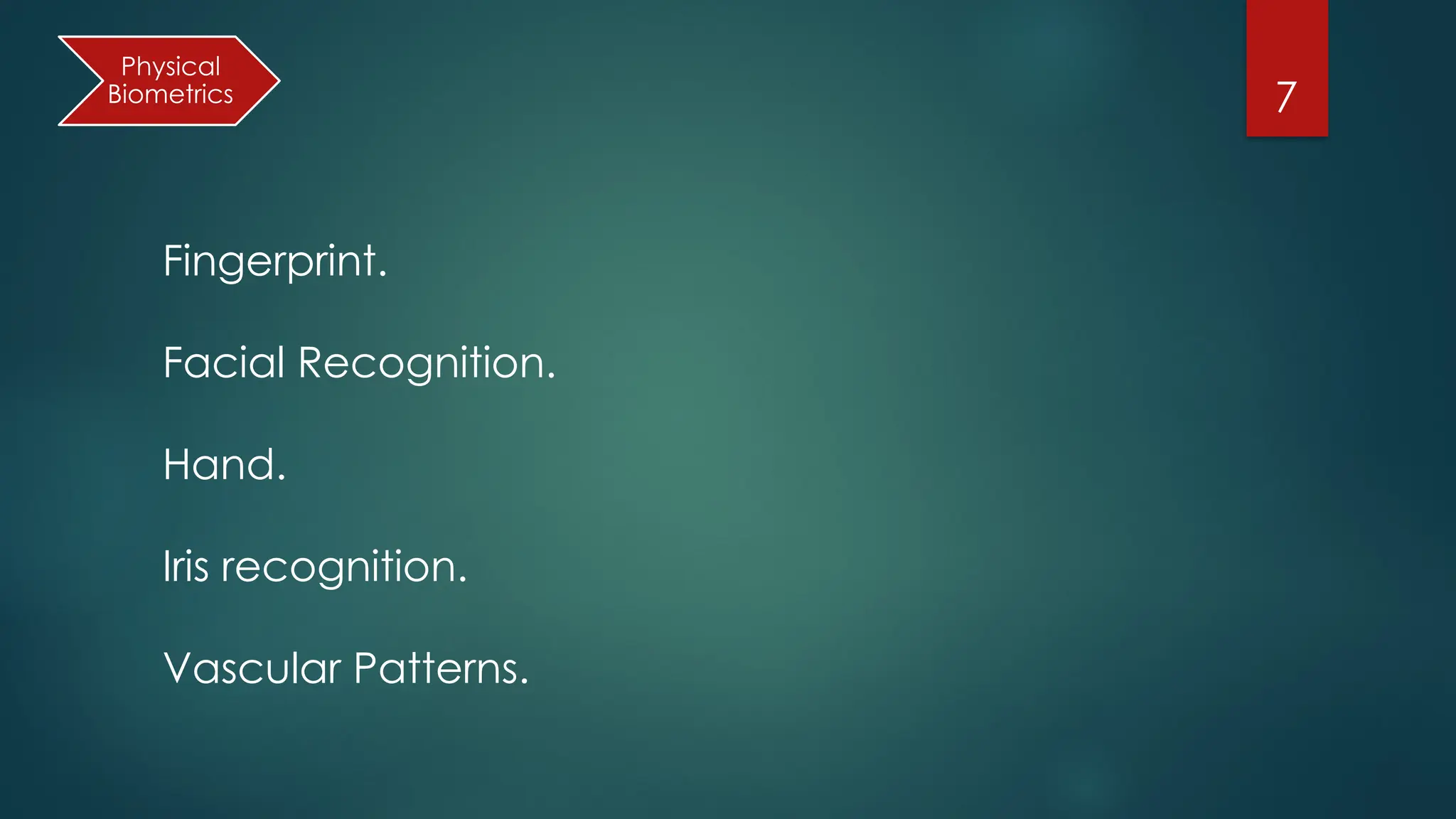
Fingerprint.
Facial Recognition.
Hand.
Iris recognition.
Vascular Patterns.
Physical
Biometrics
8
Characteristics
of Biometric
9
Iris Scanner
Fingerprint Scanner
Face Camera
Retinal Scanning
DNA Matching
Biometric
Devices
10
Iris
Scanner
11
Iris
Scanner
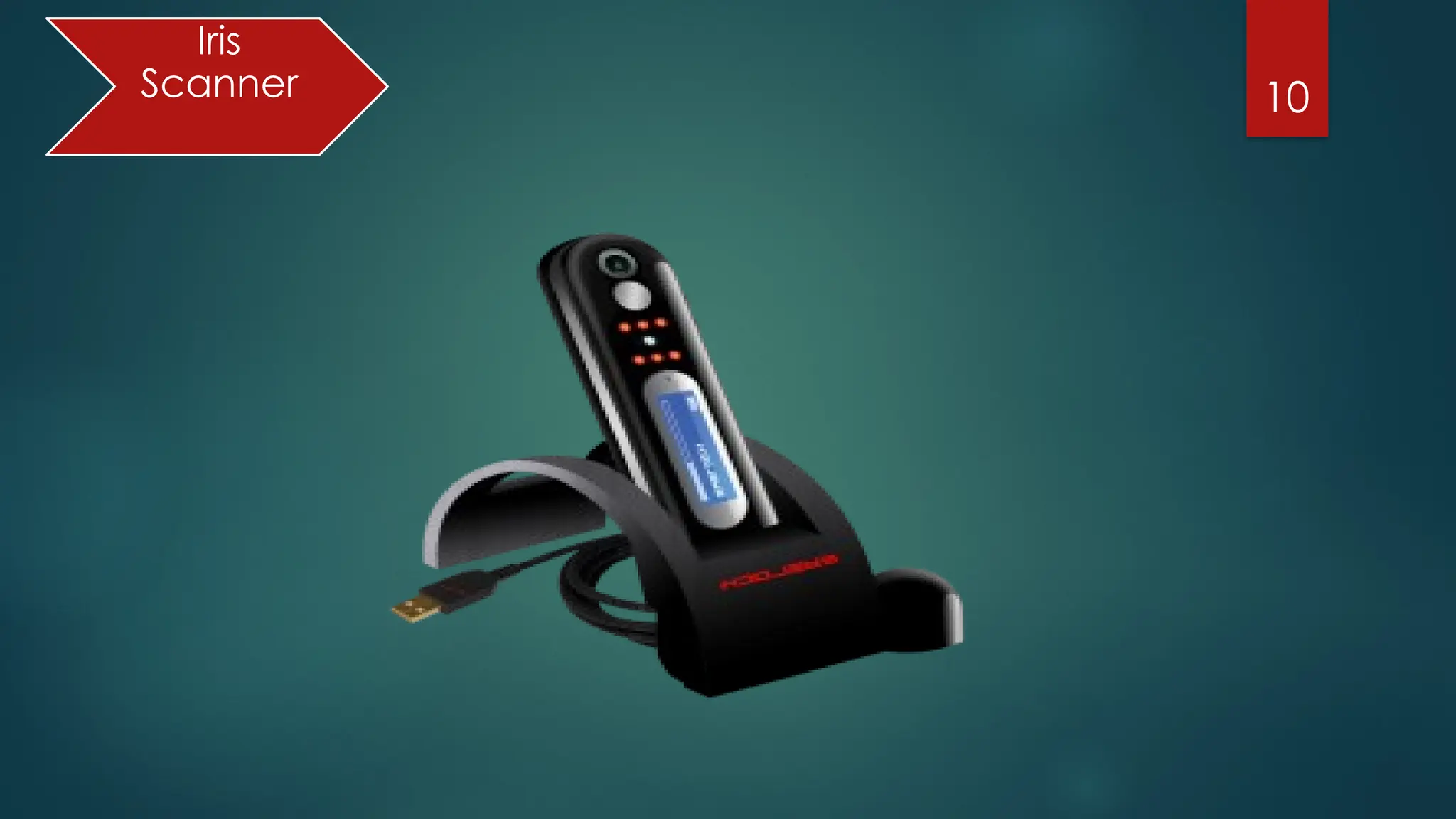
1.High Accuracy and Security: Iris authentication is highly accurate and secure due to the unique and
stable patterns of the iris, making identity verification reliable with a very low probability of matching between
different individuals.
2.Non-Invasive and User-Friendly: Capturing an iris scan is quick, non-contact, and user-friendly, utilizing a
camera to take a high-resolution image of the eye, making it convenient and hygienic for applications like
border control and personal device security.
3.Resistance to Spoofing: Iris recognition is resistant to spoofing since the iris's intricate details are difficult
to replicate, and advanced systems use liveness detection to ensure the iris is from a live person, enhancing
overall security.
12
Fingerprint
Scanner
13
Fingerprint
Scanner
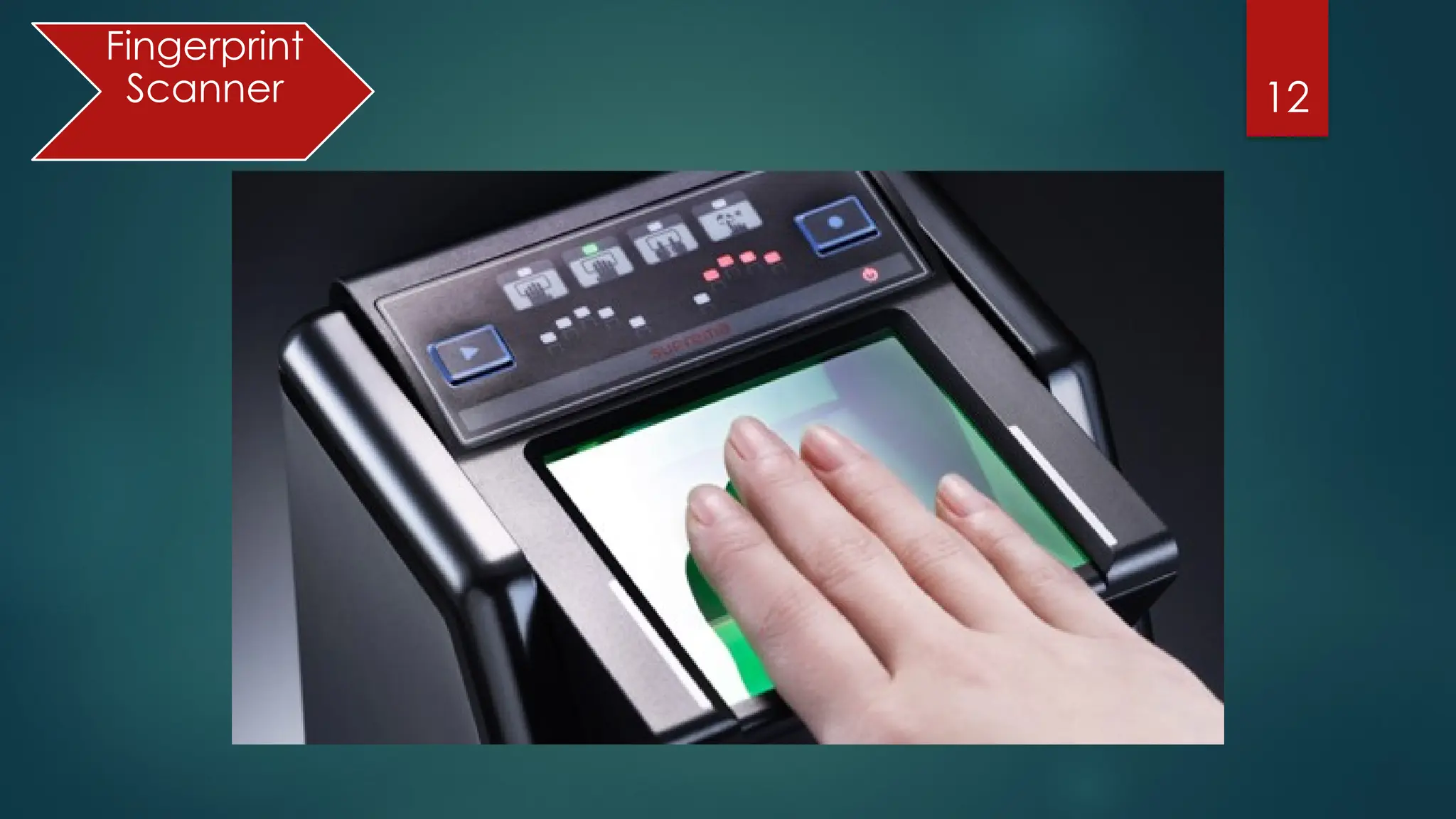
1. Security and Uniqueness:
- Unique fingerprints enhance security, making duplication difficult.
- Ensures only authorized access to secured areas and systems.
2. Convenience and Speed:
- Quick and easy identity verification in seconds.
- Eliminates the need for passwords or tokens, improving user experience.
3. Integration and Versatility:
- Easily integrates into various devices and systems.
- Widely used in sectors like banking, healthcare, and government for reliable identity
verification.
14
Face
Camera
15
Face
Camera
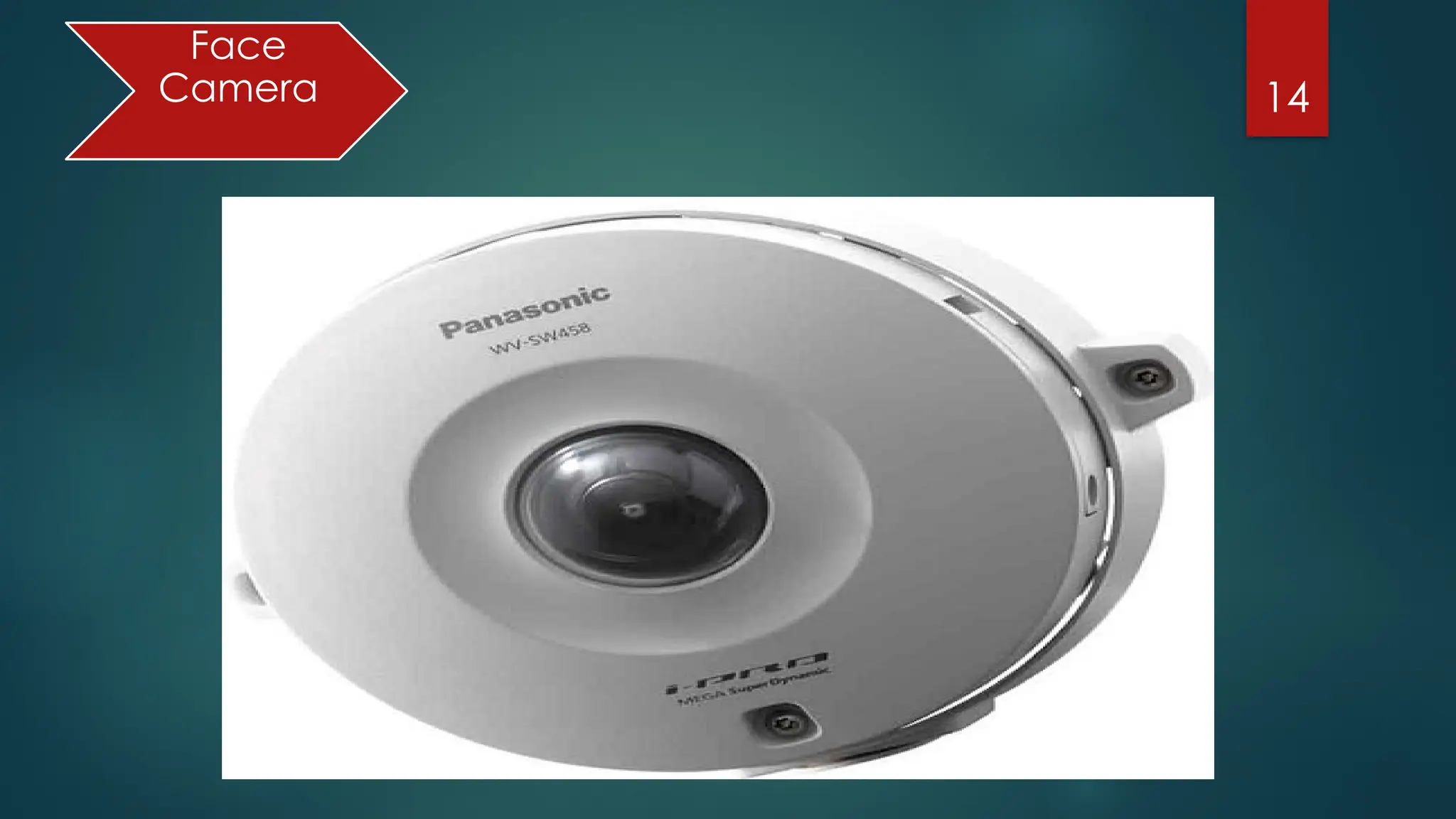
1. **Precision**: Face cameras for biometric authentication ensure accurate
mapping of facial features, thwarting unauthorized access attempts.
2. **Ease**: They offer hassle-free authentication, requiring users only to face the
camera briefly, eliminating the need for passwords or physical tokens.
3. **Security**: By combining facial features with other authentication factors, they
provide robust security, detecting and preventing spoofing attempts effectively.
16
Retinal
Scanning
17
Retinal
Scanning
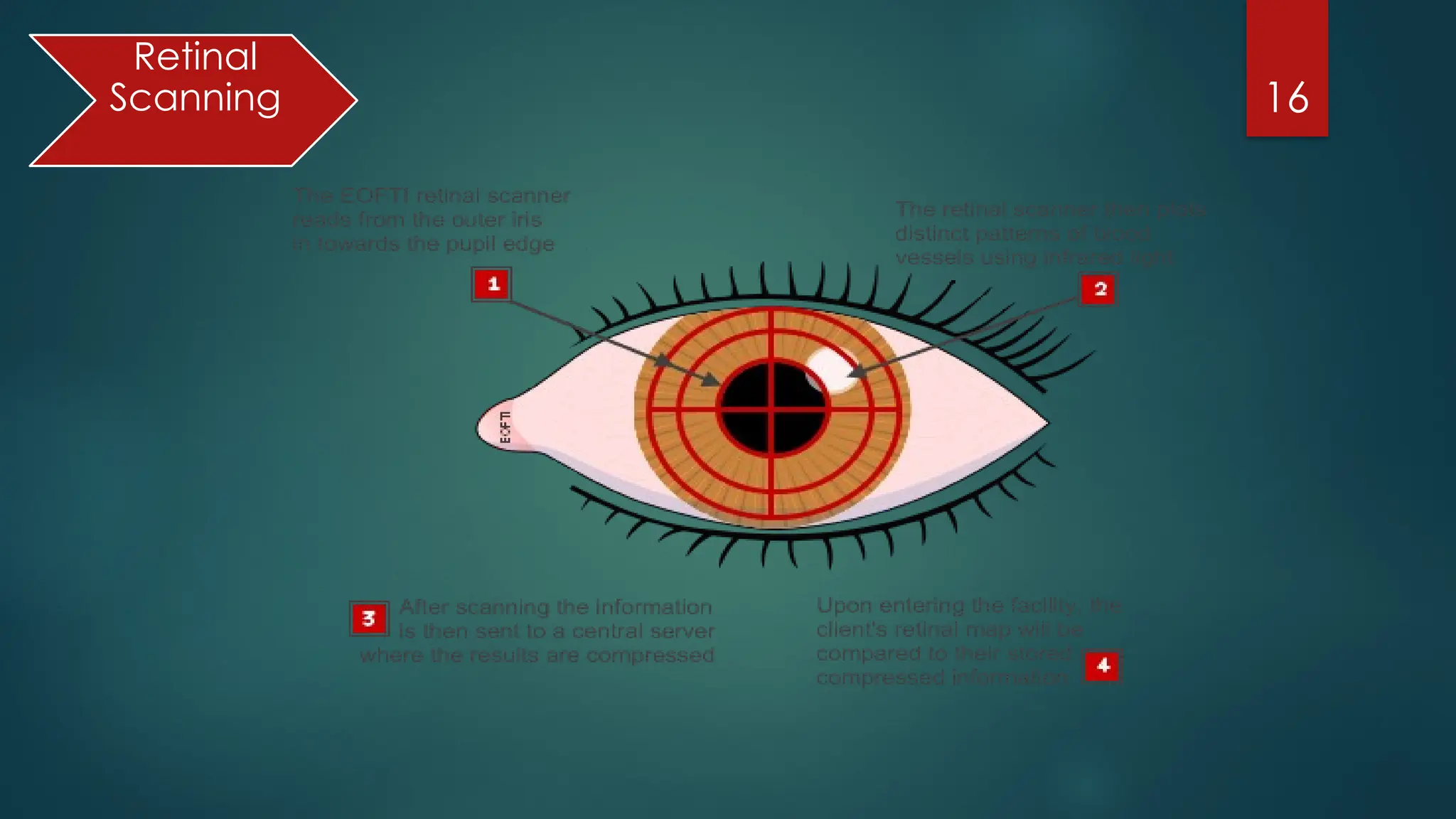
1. Ultra-accurate: Retina scanning boasts unparalleled accuracy
due to the unique blood vessel patterns in the retina.
2. Non-invasive: It's a hassle-free process—no touching required,
just a quick image capture of the eye's interior.
3. Tamper-proof: Retina patterns remain consistent throughout life,
making it exceptionally secure against forgery or manipulation.
18
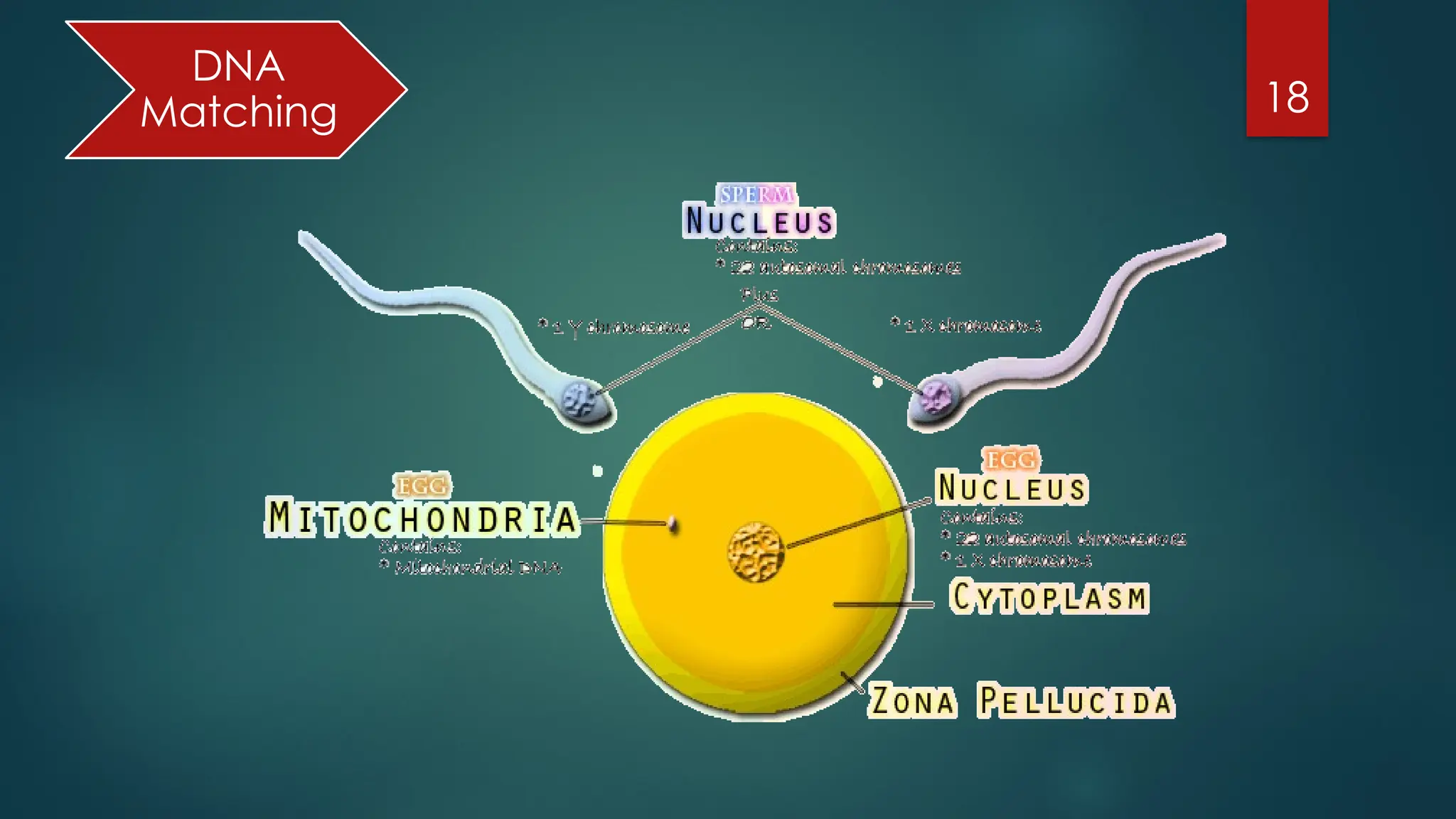
DNA
Matching
19
DNA
Matching
1. Unique Identifier: DNA is highly unique, ideal for biometric authentication.
2. High Accuracy: DNA matching techniques are precise, detecting even small
differences.
3. Forensic Use: Widely applied in forensics, DNA matching ensures reliable
identity verification.
20
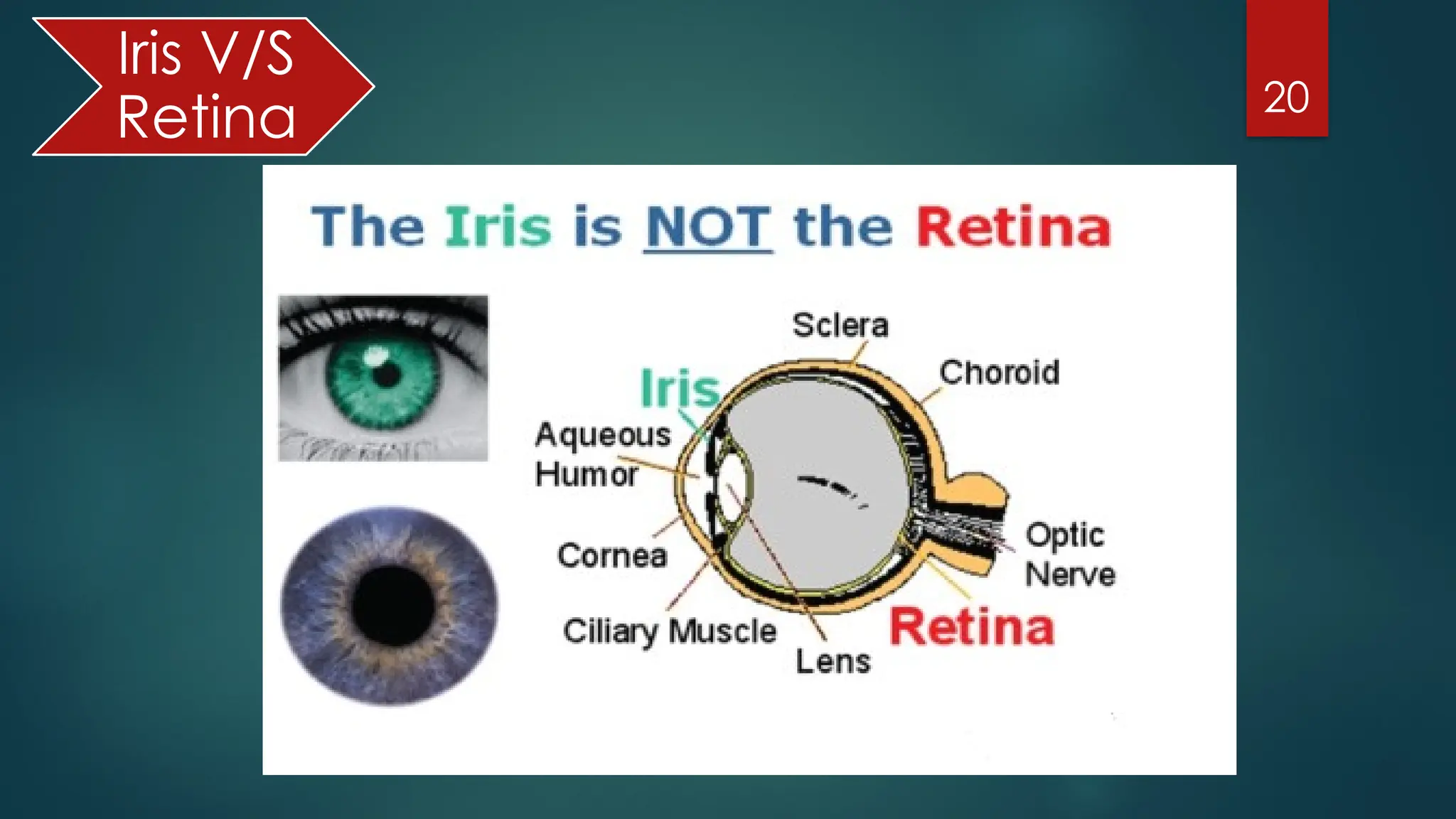
Iris V/S
Retina
21
• Biometric Time Clocks or Biometric time and attendance
systems, which are being increasingly used in various
organizations to control employee timekeeping.
• Biometric safes and biometric locks, provides security to the
homeowners.
• Biometric access control systems, providing strong security at
entrances.
Applications
22
• Increase security -Provide a convenient and low-cost
additional tier of security.
• Reduce password administration costs.
• Replace hard-to-remember passwords which may be shared
or observed.
• Unequivocally link an individual to a transaction or event.
Advantages
23
• Biometrics can only be limited by limiting one's imagination.
• Biometric technology is now being used in almost every
area.
• We have short listed a few highly popular applications of
biometrics technology.
Conclusion
24
Thanks

BIOMETRIC AUTHENTICATION PPT FINAL.pptx

  • 1.
    1 PRESENTATION ON BIOMETRIC AUTHENTICATION UNDER THEGUIDANCE OF PROF: P.S,Atigre DEPARTMENT COMPUTER SCIENCE & ENGINEERING PRESENTED BY: ROLL NO NAME 71 CHINTAWAR SANTOSH SANJAY
  • 2.
  • 3.
    3 • Biometrics areautomated methods of recognizing a person based on a physiological or behavioral characteristic. • Biometrics technologies measure a particular set of a person's vital statistics in order to determine identity. Introduction
  • 4.
    4 • The word"biometrics" is derived from the Greek words 'bios' and 'metric'; • which means life and measurement respectively. • This directly translates into "life measurement". What is biometric?
  • 5.
    5 • The firstreal biometric system was created in 1870 by french anthropologist Alphonse Bertillion and turned biometrics a distinguished field of study. The first classification method for fingerprints was developed in 1892 by Sir. Francis Galton. The History
  • 6.
  • 7.
  • 8.
  • 9.
    9 Iris Scanner Fingerprint Scanner FaceCamera Retinal Scanning DNA Matching Biometric Devices
  • 10.
  • 11.
    11 Iris Scanner 1.High Accuracy andSecurity: Iris authentication is highly accurate and secure due to the unique and stable patterns of the iris, making identity verification reliable with a very low probability of matching between different individuals. 2.Non-Invasive and User-Friendly: Capturing an iris scan is quick, non-contact, and user-friendly, utilizing a camera to take a high-resolution image of the eye, making it convenient and hygienic for applications like border control and personal device security. 3.Resistance to Spoofing: Iris recognition is resistant to spoofing since the iris's intricate details are difficult to replicate, and advanced systems use liveness detection to ensure the iris is from a live person, enhancing overall security.
  • 12.
  • 13.
    13 Fingerprint Scanner 1. Security andUniqueness: - Unique fingerprints enhance security, making duplication difficult. - Ensures only authorized access to secured areas and systems. 2. Convenience and Speed: - Quick and easy identity verification in seconds. - Eliminates the need for passwords or tokens, improving user experience. 3. Integration and Versatility: - Easily integrates into various devices and systems. - Widely used in sectors like banking, healthcare, and government for reliable identity verification.
  • 14.
  • 15.
    15 Face Camera 1. **Precision**: Facecameras for biometric authentication ensure accurate mapping of facial features, thwarting unauthorized access attempts. 2. **Ease**: They offer hassle-free authentication, requiring users only to face the camera briefly, eliminating the need for passwords or physical tokens. 3. **Security**: By combining facial features with other authentication factors, they provide robust security, detecting and preventing spoofing attempts effectively.
  • 16.
  • 17.
    17 Retinal Scanning 1. Ultra-accurate: Retinascanning boasts unparalleled accuracy due to the unique blood vessel patterns in the retina. 2. Non-invasive: It's a hassle-free process—no touching required, just a quick image capture of the eye's interior. 3. Tamper-proof: Retina patterns remain consistent throughout life, making it exceptionally secure against forgery or manipulation.
  • 18.
  • 19.
    19 DNA Matching 1. Unique Identifier:DNA is highly unique, ideal for biometric authentication. 2. High Accuracy: DNA matching techniques are precise, detecting even small differences. 3. Forensic Use: Widely applied in forensics, DNA matching ensures reliable identity verification.
  • 20.
  • 21.
    21 • Biometric TimeClocks or Biometric time and attendance systems, which are being increasingly used in various organizations to control employee timekeeping. • Biometric safes and biometric locks, provides security to the homeowners. • Biometric access control systems, providing strong security at entrances. Applications
  • 22.
    22 • Increase security-Provide a convenient and low-cost additional tier of security. • Reduce password administration costs. • Replace hard-to-remember passwords which may be shared or observed. • Unequivocally link an individual to a transaction or event. Advantages
  • 23.
    23 • Biometrics canonly be limited by limiting one's imagination. • Biometric technology is now being used in almost every area. • We have short listed a few highly popular applications of biometrics technology. Conclusion
  • 24.