Appendicitis
Definition
• Appendicitis is inflammation of the appendix, a narrow blind tube
that extends from the inferior part of the cecum.
• It is the most common reason for emergency abdominal surgery.
• A common cause of appendicitis is
obstruction of the lumen by a fecalith (accumulated feces).
Obstruction results in distention
venous engorgement
the accumulation of mucus and bacteria
which can lead to gangrene, perforation, and peritonitis
Pathophysiology
• The appendix becomes inflamed and edematous as a result of either
becoming kinked or occluded by a fecalith (ie, hardened mass of
stool), tumor, or foreign body.
• The inflammatory process increases intraluminal pressure, initiating a
progressively severe, generalized or upper abdominal pain that
becomes localized in the right lower quadrant of the abdomen within
a few hours.
• Eventually, the inflamed appendix fills with pus.
Clinical features
• Vague epigastric or periumbilical pain progresses to right lower quadrant pain
• Accompanied by a low-grade fever and nausea and sometimes by vomiting.
• Loss of appetite is common.
• Local tenderness is elicited at McBurney’s point when pressure is applied
• Rebound tenderness (ie, production or intensification of pain when pressure is
released) may be present.
• The extent of tenderness and muscle spasm and the existence of constipation or
diarrhea depend not so much on the severity of the appendiceal infection as on the
location of the appendix.
• If the appendix curls around behind the cecum, pain and tenderness may be felt in
the lumbar region.
• If its tip is in the pelvis, these signs may be elicited only on rectal examination.
• Pain on defecation suggests that the tip of the appendix is resting against the rectum;
pain on urination suggests that the tip is near the bladder or impinges on the ureter.
Continued..
• If the appendix has ruptured, the pain becomes more diffuse;
abdominal distention develops as a result of paralytic ileus, and the
patient’s condition worsens.
• Constipation can also occur with an acute process such as
appendicitis.
• Laxatives administered in this instance may produce perforation of
the inflamed appendix. In general, a laxative or cathartic should
never be given while the person has fever, nausea, or pain
Signs to elicit
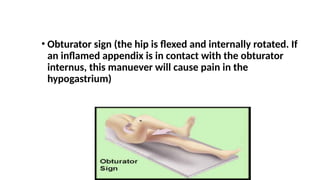
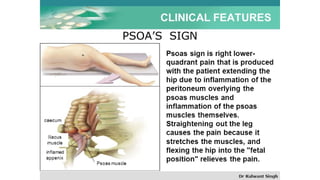
• Obturator sign (the hip is flexed and internally rotated. If
an inflamed appendix is in contact with the obturator
internus, this manuever will cause pain in the
hypogastrium)
Assessment and diagnosis
• Patient examination includes a complete history, physical
examination, and a differential WBC count.
• Most patients have a mildly to moderately high WBC count.
• Leukocyt count may exceed 10,000 cells/mm3, and the neutrophil
count may exceed 75%.
• Abdominal x-ray films, ultrasound studies, and CT scans may reveal a
right lower quadrant density or localized distention of the bowel
• A urinalysis is done to rule out genitourinary conditions that mimic
appendicitis.
complication
• The major complication of appendicitis is perforation of the appendix,
which can lead to peritonitis or an abscess. The incidence of
perforation is 10% to 32%. The incidence is higher in young children
and the elderly.
• Perforation generally occurs 24 hours after the onset of pain.
• Symptoms include a fever of 37.7°C (100°F) or higher, a toxic
appearance, and continued abdominal pain or tenderness
• If there is a delay in diagnosis and treatment, the appendix can rupture and the
resulting peritonitis can be fatal.
• The standard treatment of appendicitis is an immediate appendectomy (surgical
removal of appendix).
• It may be performed under a general or spinal anesthetic with a low abdominal
incision or by laparoscopy.
• If the inflammation is localized, surgery should be done as soon as the diagnosis is
made.
• Antibiotics and fluid resuscitation are started before surgery
• If the appendix has ruptured and there is evidence of peritonitis or an abscess, giving
parenteral fluids and antibiotic therapy for 6 to 8 hours before the appendectomy
helps prevent dehydration and sepsis

Appendicitis.pptx types clinical features

  • 1.
  • 2.
    Definition • Appendicitis isinflammation of the appendix, a narrow blind tube that extends from the inferior part of the cecum. • It is the most common reason for emergency abdominal surgery.
  • 3.
    • A commoncause of appendicitis is obstruction of the lumen by a fecalith (accumulated feces). Obstruction results in distention venous engorgement the accumulation of mucus and bacteria which can lead to gangrene, perforation, and peritonitis
  • 4.
    Pathophysiology • The appendixbecomes inflamed and edematous as a result of either becoming kinked or occluded by a fecalith (ie, hardened mass of stool), tumor, or foreign body. • The inflammatory process increases intraluminal pressure, initiating a progressively severe, generalized or upper abdominal pain that becomes localized in the right lower quadrant of the abdomen within a few hours. • Eventually, the inflamed appendix fills with pus.
  • 5.
    Clinical features • Vagueepigastric or periumbilical pain progresses to right lower quadrant pain • Accompanied by a low-grade fever and nausea and sometimes by vomiting. • Loss of appetite is common. • Local tenderness is elicited at McBurney’s point when pressure is applied • Rebound tenderness (ie, production or intensification of pain when pressure is released) may be present. • The extent of tenderness and muscle spasm and the existence of constipation or diarrhea depend not so much on the severity of the appendiceal infection as on the location of the appendix. • If the appendix curls around behind the cecum, pain and tenderness may be felt in the lumbar region. • If its tip is in the pelvis, these signs may be elicited only on rectal examination. • Pain on defecation suggests that the tip of the appendix is resting against the rectum; pain on urination suggests that the tip is near the bladder or impinges on the ureter.
  • 6.
    Continued.. • If theappendix has ruptured, the pain becomes more diffuse; abdominal distention develops as a result of paralytic ileus, and the patient’s condition worsens. • Constipation can also occur with an acute process such as appendicitis. • Laxatives administered in this instance may produce perforation of the inflamed appendix. In general, a laxative or cathartic should never be given while the person has fever, nausea, or pain
  • 8.
  • 9.
    • Obturator sign(the hip is flexed and internally rotated. If an inflamed appendix is in contact with the obturator internus, this manuever will cause pain in the hypogastrium)
  • 12.
    Assessment and diagnosis •Patient examination includes a complete history, physical examination, and a differential WBC count. • Most patients have a mildly to moderately high WBC count. • Leukocyt count may exceed 10,000 cells/mm3, and the neutrophil count may exceed 75%. • Abdominal x-ray films, ultrasound studies, and CT scans may reveal a right lower quadrant density or localized distention of the bowel • A urinalysis is done to rule out genitourinary conditions that mimic appendicitis.
  • 13.
    complication • The majorcomplication of appendicitis is perforation of the appendix, which can lead to peritonitis or an abscess. The incidence of perforation is 10% to 32%. The incidence is higher in young children and the elderly. • Perforation generally occurs 24 hours after the onset of pain. • Symptoms include a fever of 37.7°C (100°F) or higher, a toxic appearance, and continued abdominal pain or tenderness
  • 14.
    • If thereis a delay in diagnosis and treatment, the appendix can rupture and the resulting peritonitis can be fatal. • The standard treatment of appendicitis is an immediate appendectomy (surgical removal of appendix). • It may be performed under a general or spinal anesthetic with a low abdominal incision or by laparoscopy. • If the inflammation is localized, surgery should be done as soon as the diagnosis is made. • Antibiotics and fluid resuscitation are started before surgery • If the appendix has ruptured and there is evidence of peritonitis or an abscess, giving parenteral fluids and antibiotic therapy for 6 to 8 hours before the appendectomy helps prevent dehydration and sepsis