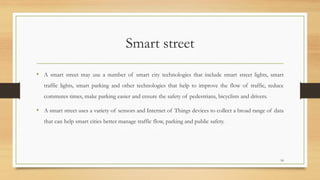
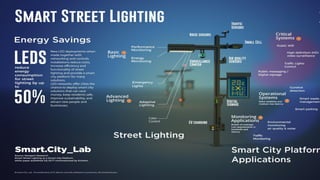
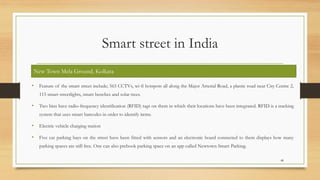
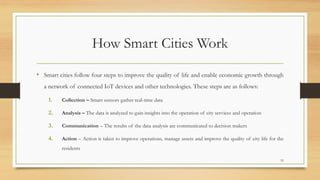
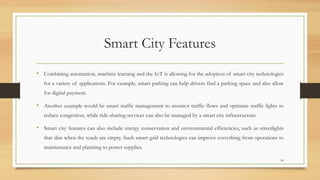
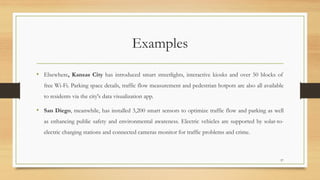
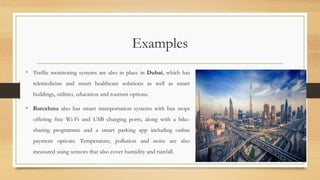
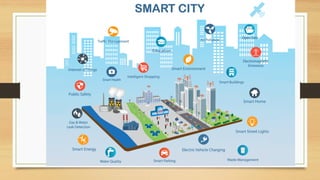
1. A smart street uses IoT sensors and connectivity to optimize traffic flow, parking, and public safety. It integrates elements like smart street lights, traffic lights, parking systems, and pedestrian and cyclist prioritization.
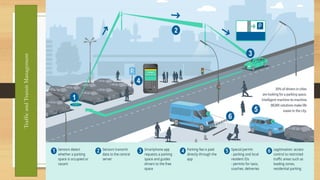
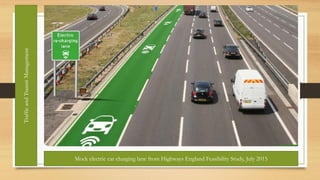
2. Key components of a smart street include a connectivity corridor, smart street information systems using sensors, and adaptive traffic and transit management systems using sensors and automated barriers.
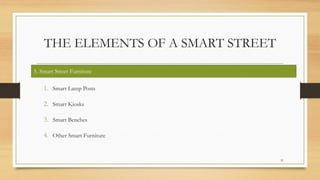
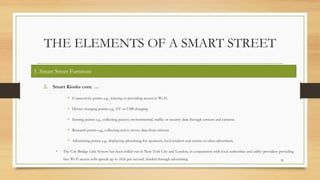
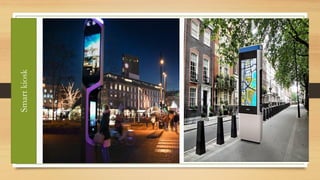
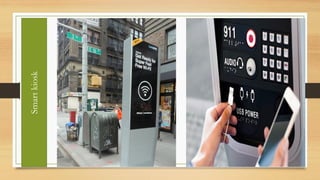
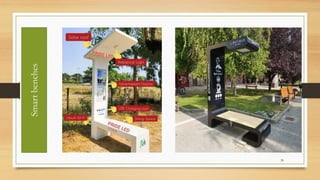
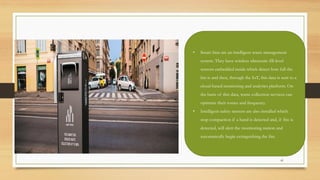
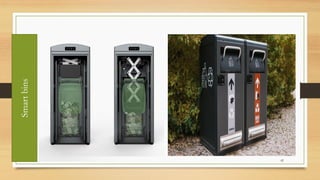
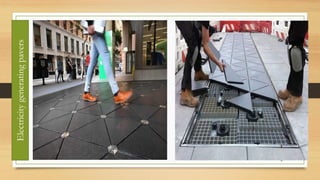
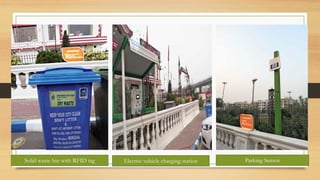
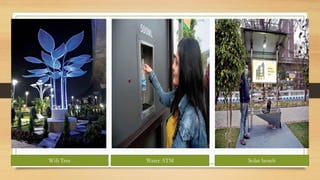
3. Smart street furniture plays an important role, and can include intelligent lamp posts, kiosks, benches, bins, and street cleaning robots, which also help provide connectivity, charging, and environmental monitoring.