IO Methods
By- Priyam Pandey
IO Methods
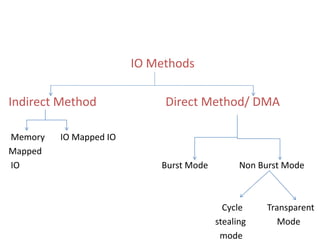
Indirect Method Direct Method/ DMA
Memory IO Mapped IO
Mapped
IO Burst Mode Non Burst Mode
Cycle Transparent
stealing Mode
mode
Indirect Methods
• The method that is used to transfer
information between internal storage and
external I/O devices under the supervision of
microprocessor is called as indirect methods.
• These methods have 2 modes –
1. Memory Mapped IO
2. IO Mapped IO
Memory mapped I/O
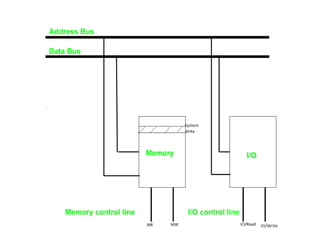
• Memory mapped I/O is a way to exchange data
and instructions between a CPU and peripheral
devices attached to it.
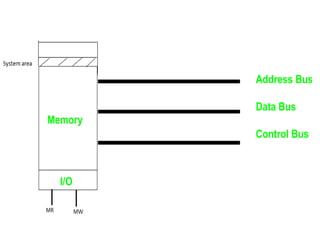
• Memory mapped IO is one where the processor
and the IO device share the same memory
location(memory),i.e., there is no separate space
for IO.
• Some space gets wasted and due to this addressing
capability becomes less.
• Port numbers are stored in memory area.
Memory mapped I/O
• Polled IO, as here the processor goes to each
device connected to it and check every port
which leads to unnecessary activity checking
in background.
• Its implementation is simple.
IO mapped IO
• IO mapped IO is one where the processor and
the IO device have different memory located
to each other.
• Interrupt driven, here interrupt occurs and
processor looks at each device to see which
device needs service and according to priority
it services them.
Direct Methods / DMA
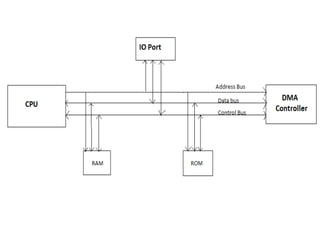
• Stands for "Direct Memory Access." DMA is a
method of transferring data from the
computer's RAM to another part of the
computer without the supervision of
microprocessor.
• The DMA transfers the data in following
modes:
1. Burst Mode
2. Non Burst Mode
Steps for DMA Transfer
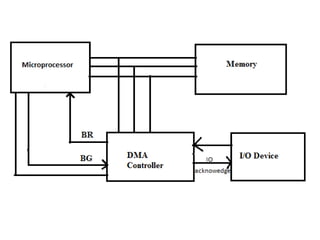
• When a transfer from I/O device to the memory
has to be made the device sends a signal to DMA
Controller through control bus.
• DMA controller sends a signal to processor
requesting for the bus called as Bus Request
Signal.
• After receiving the BR signal, processor grants the
bus to the controller by raising the bus grant
signal.
• After BG signal is received by the DMA controller,
it sends an IO acknowledge signal to the device
that generated the request.
• Data is transferred.
• After the data transfer DMA controller sends a
signal to processor. The signal tells the
processor that the device activity is over and it
should take the access of buses back.
• The DMA transfers the data in following modes:
1. Burst Mode - : In this mode DMA handover the
buses to CPU only after completion of whole
data transfer. Meanwhile, if the CPU requires
the bus it has to stay ideal and wait for data
transfer.
2. Non Burst Mode – There are 2 modes in non
burst mode –
a) Cycle Stealing Mode
b) Transparent / Memory Shared Mode
• Cycle Stealing Mode - In this mode, DMA gives
control of buses to CPU after transfer of every
byte. It continuously issues a request for bus
control, makes the transfer of one byte and
returns the bus. By this CPU doesn’t have to
wait for a long time if it needs a bus for higher
priority task.
• Transparent / Memory Shared Mode: Here,
DMA transfers data only when CPU is executing
the instruction which does not require the use
of buses. It is also the most efficient mode in
terms of overall system performance

IO methods

  • 1.
  • 2.
    IO Methods Indirect MethodDirect Method/ DMA Memory IO Mapped IO Mapped IO Burst Mode Non Burst Mode Cycle Transparent stealing Mode mode
  • 3.
    Indirect Methods • Themethod that is used to transfer information between internal storage and external I/O devices under the supervision of microprocessor is called as indirect methods. • These methods have 2 modes – 1. Memory Mapped IO 2. IO Mapped IO
  • 4.
    Memory mapped I/O •Memory mapped I/O is a way to exchange data and instructions between a CPU and peripheral devices attached to it. • Memory mapped IO is one where the processor and the IO device share the same memory location(memory),i.e., there is no separate space for IO. • Some space gets wasted and due to this addressing capability becomes less. • Port numbers are stored in memory area.
  • 5.
    Memory mapped I/O •Polled IO, as here the processor goes to each device connected to it and check every port which leads to unnecessary activity checking in background. • Its implementation is simple.
  • 7.
    IO mapped IO •IO mapped IO is one where the processor and the IO device have different memory located to each other. • Interrupt driven, here interrupt occurs and processor looks at each device to see which device needs service and according to priority it services them.
  • 9.
    Direct Methods /DMA • Stands for "Direct Memory Access." DMA is a method of transferring data from the computer's RAM to another part of the computer without the supervision of microprocessor. • The DMA transfers the data in following modes: 1. Burst Mode 2. Non Burst Mode
  • 11.
    Steps for DMATransfer • When a transfer from I/O device to the memory has to be made the device sends a signal to DMA Controller through control bus. • DMA controller sends a signal to processor requesting for the bus called as Bus Request Signal. • After receiving the BR signal, processor grants the bus to the controller by raising the bus grant signal. • After BG signal is received by the DMA controller, it sends an IO acknowledge signal to the device that generated the request.
  • 12.
    • Data istransferred. • After the data transfer DMA controller sends a signal to processor. The signal tells the processor that the device activity is over and it should take the access of buses back.
  • 14.
    • The DMAtransfers the data in following modes: 1. Burst Mode - : In this mode DMA handover the buses to CPU only after completion of whole data transfer. Meanwhile, if the CPU requires the bus it has to stay ideal and wait for data transfer. 2. Non Burst Mode – There are 2 modes in non burst mode – a) Cycle Stealing Mode b) Transparent / Memory Shared Mode
  • 15.
    • Cycle StealingMode - In this mode, DMA gives control of buses to CPU after transfer of every byte. It continuously issues a request for bus control, makes the transfer of one byte and returns the bus. By this CPU doesn’t have to wait for a long time if it needs a bus for higher priority task. • Transparent / Memory Shared Mode: Here, DMA transfers data only when CPU is executing the instruction which does not require the use of buses. It is also the most efficient mode in terms of overall system performance