Inventory Control & Management
INTRODUCTION

 Inventory-A physical resource that a firm holds in stock
 with the intent of selling it or transforming it into a more
 valuable state.

 Inventory System- A set of policies and controls that
 monitors levels of inventory and determines what levels
 should be maintained, when stock should be replenished,
 and how large orders should be placed.
Items carried in inventory can be


   Raw materials
   Purchased parts
   Components
   Subassemblies
   Work-in-process
   Finished goods
Reasons for keeping Inventories


 To stabilise production
 To take advantage of price discounts
 To meet the demand during the
  replenishment period
 To prevent loss of orders(sales)
 To keep pace with changing market
  conditions
Objectives and Benefits


Inventory control aims at keeping track of
  inventories. In other words, inventories of
  good quality and right quantities should be
  made available to different departments as
  and when they needed.
COSTS ASSOCIATED WITH INVENTORY

 Purchase (or Production) cost
 Capital cost
 Ordering cost
 Inventory carrying costs (holding
  costs)
 Shortage cost
Inventory Planning and Control

For maintaining the right balance between high
and low inventory to minimize cost
Inventory Control Decisions

Decisions:
       How much to order?
       When to order?
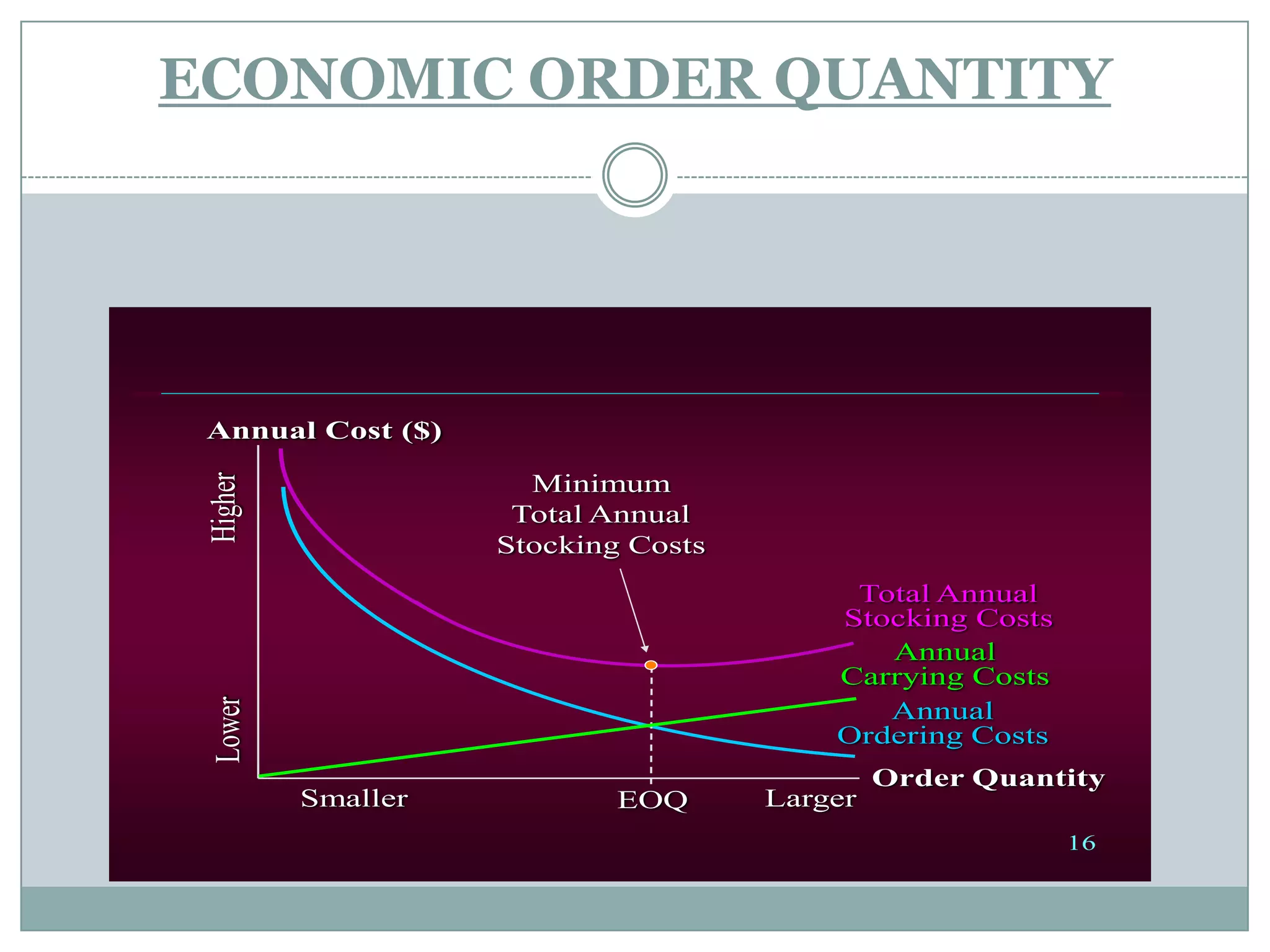
ECONOMIC ORDER QUANTITY


 Annual Cost ($)
 Higher


                      Minimum
                     Total Annual
                    Stocking Costs
                                          Total Annual
                                         Stocking Costs
                                            Annual
                                         Carrying Costs
 Lower


                                            Annual
                                         Ordering Costs
                                              Order Quantity
          Smaller           EOQ      Larger
                                                          16
TYPES OF INVENTORY MODELS


 Simple EOQ model
 EOQ model with stock outs
  allowed
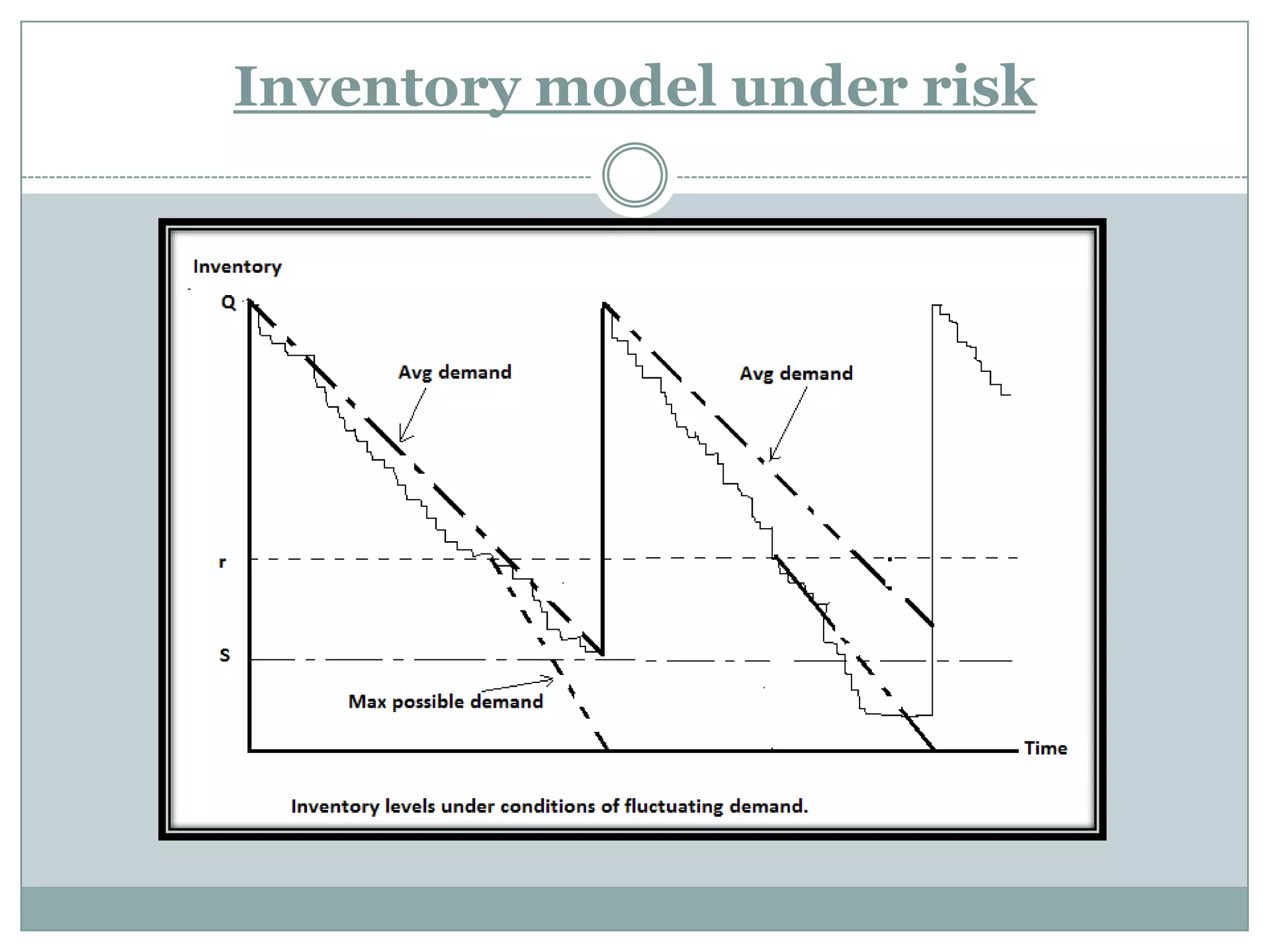
 Inventory model under risk
Simple EOQ model
EOQ model with stock outs allowed
Inventory model under risk
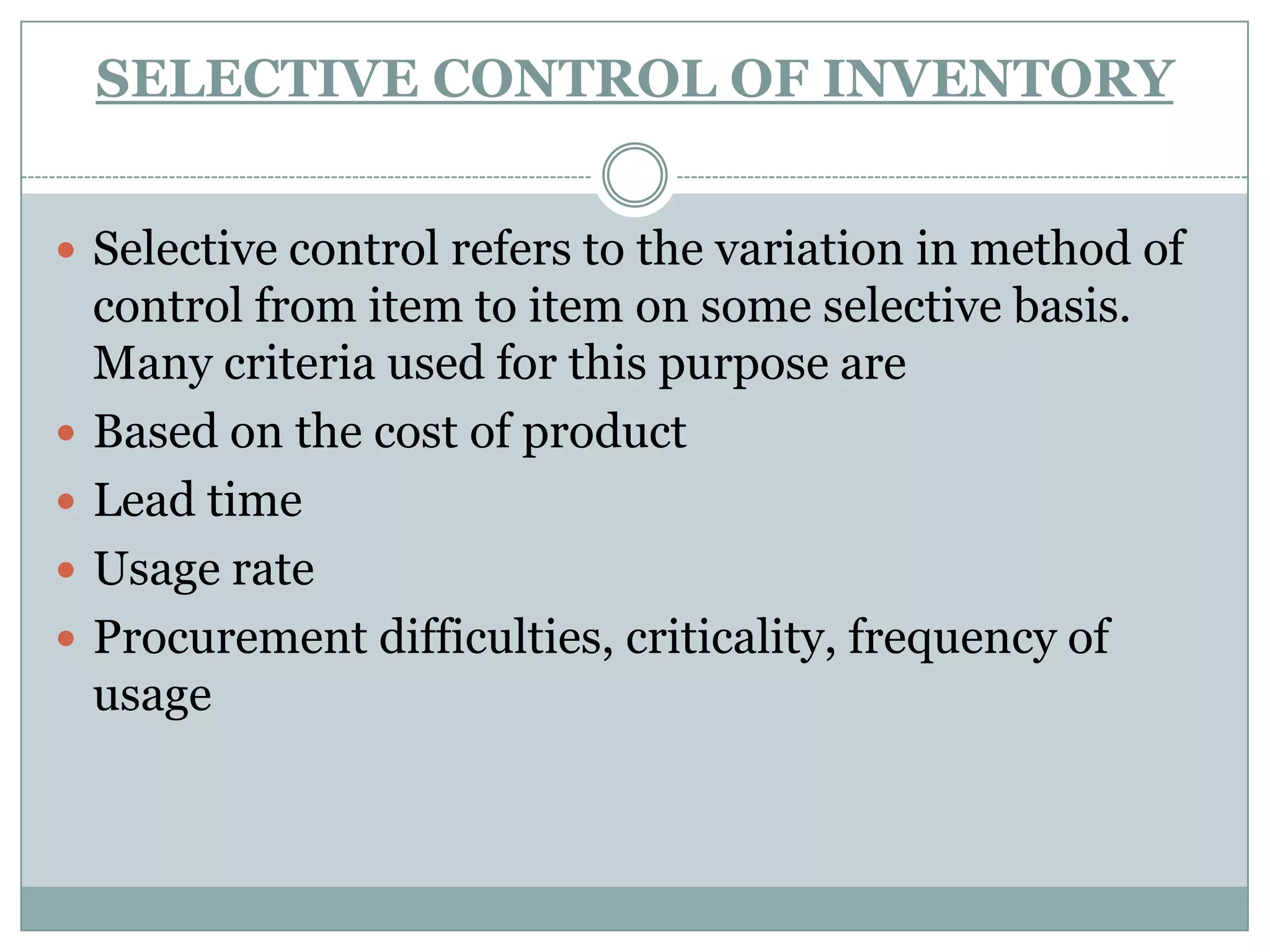
SELECTIVE CONTROL OF INVENTORY


 Selective control refers to the variation in method of
    control from item to item on some selective basis.
    Many criteria used for this purpose are
   Based on the cost of product
   Lead time
   Usage rate
   Procurement difficulties, criticality, frequency of
    usage
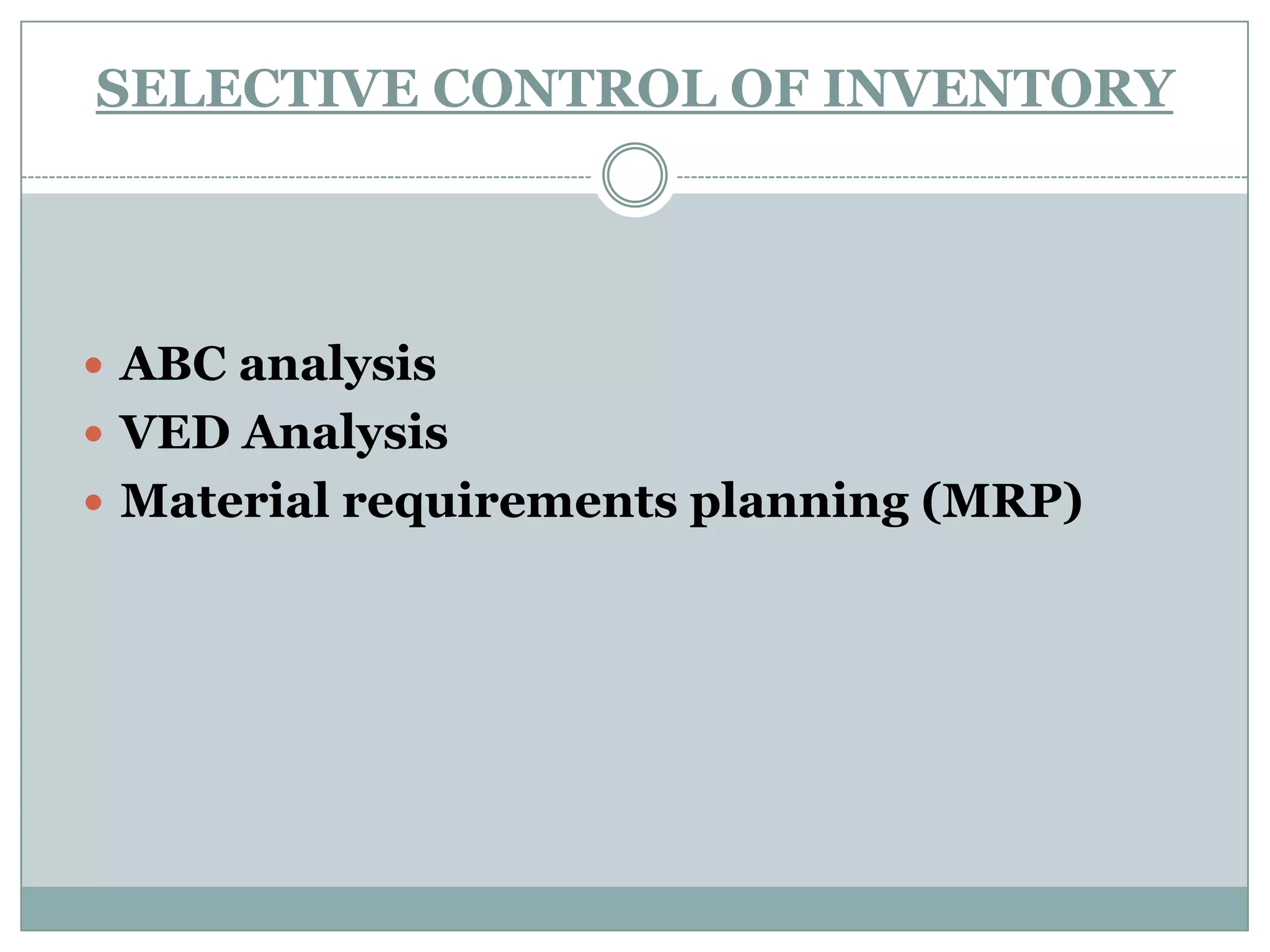
SELECTIVE CONTROL OF INVENTORY


 ABC analysis
 VED Analysis
 Material requirements planning (MRP)
CONCLUSIONS

 Careful   classification of your inventory, and
 continuing analysis of those classifications, can play
 a vital role in maintaining cost at the efficient levels
 you have established as your goals

 Inventory control is a constant requirement of doing
 business successfully.
Thank you

Inventory control & management

  • 1.
  • 2.
    INTRODUCTION  Inventory-A physicalresource that a firm holds in stock with the intent of selling it or transforming it into a more valuable state.  Inventory System- A set of policies and controls that monitors levels of inventory and determines what levels should be maintained, when stock should be replenished, and how large orders should be placed.
  • 3.
    Items carried ininventory can be  Raw materials  Purchased parts  Components  Subassemblies  Work-in-process  Finished goods
  • 4.
    Reasons for keepingInventories  To stabilise production  To take advantage of price discounts  To meet the demand during the replenishment period  To prevent loss of orders(sales)  To keep pace with changing market conditions
  • 5.
    Objectives and Benefits Inventorycontrol aims at keeping track of inventories. In other words, inventories of good quality and right quantities should be made available to different departments as and when they needed.
  • 6.
    COSTS ASSOCIATED WITHINVENTORY  Purchase (or Production) cost  Capital cost  Ordering cost  Inventory carrying costs (holding costs)  Shortage cost
  • 7.
    Inventory Planning andControl For maintaining the right balance between high and low inventory to minimize cost
  • 8.
    Inventory Control Decisions Decisions:  How much to order?  When to order?
  • 9.
    ECONOMIC ORDER QUANTITY Annual Cost ($) Higher Minimum Total Annual Stocking Costs Total Annual Stocking Costs Annual Carrying Costs Lower Annual Ordering Costs Order Quantity Smaller EOQ Larger 16
  • 10.
    TYPES OF INVENTORYMODELS  Simple EOQ model  EOQ model with stock outs allowed  Inventory model under risk
  • 11.
  • 12.
    EOQ model withstock outs allowed
  • 13.
  • 14.
    SELECTIVE CONTROL OFINVENTORY  Selective control refers to the variation in method of control from item to item on some selective basis. Many criteria used for this purpose are  Based on the cost of product  Lead time  Usage rate  Procurement difficulties, criticality, frequency of usage
  • 15.
    SELECTIVE CONTROL OFINVENTORY  ABC analysis  VED Analysis  Material requirements planning (MRP)
  • 16.
    CONCLUSIONS  Careful classification of your inventory, and continuing analysis of those classifications, can play a vital role in maintaining cost at the efficient levels you have established as your goals  Inventory control is a constant requirement of doing business successfully.
  • 17.