Operation Management Project on
“ABC” Analysis
Submitted to:
CMA Jai Bansal Sir
Astt. Lecturar (MGMT
DEPT.)
Submitted By:
Ashim Roy (K-13226)
Shalu Bharadwaj (K-13995)
Manoj Verma (K-14041)
Nitesh Agrawal (K-13364)
Sonam Sharma (K-13645)
Swati Sahu (K-14075)
INDEX
• What is Inventory?
• What is ABC Analysis?
• Categories ‘A’, ‘B’ & ‘C’.
• Philosophy Behind
• When & Why to use it?
• ABC Classification
• ABC Classification of Inventory Item
• Implementations
• Advantages
• Conclusion
The term INVENTORY is defined as
“the systematic control and regulation
of purchase, storage and usage of
materials in such a way so as to
maintain an even flow of production
and at the same time avoiding
excessive investment in inventories.”
(ABC = Always Better Control)
This is based on cost criteria.
 It helps to exercise selective control when
confronted with large number of items it
rationalizes the number of orders, number of
items & reduce the inventory.
The most Important Items of the
Company
Accounts for only 10 to 25 % of the total
Inventory Items
Accounts for 70 to 80 % of the Annual
consumption value of the
Company.(which is the Highest Value)
Have very Tight Inventory Control
Managed by Top level Management
Less Important Items than ‘A’ Items but
more Important than ‘C’ Items of the
Company
Accounts for 25 to 30 % of the total
Inventory Items
Accounts for 15 to 25 % of the Annual
consumption value of the Company
Have Intermediate Inventory Control
Managed by Middle level Management
Marginally Important Items of the
Company
Accounts for 45 to 50 % of the total
Inventory Items
Accounts for 5 to 10 % of the Annual
consumption value of the Company
Have Low Inventory Control
Managed by Middle & lower level
Management
 The ABC analysis can be also be useful in
several steps of the Sourcing Value Chain:!
Demand Identification, to gather the annual
spend of a site! Opportunity Assessment, to
identify leveraging opportunities.
 The ABC tool is used to identify the vital few
from the trivial many, according to defined
set of criteria.
 Different decisions may be taken from the
result of ABC analysis.
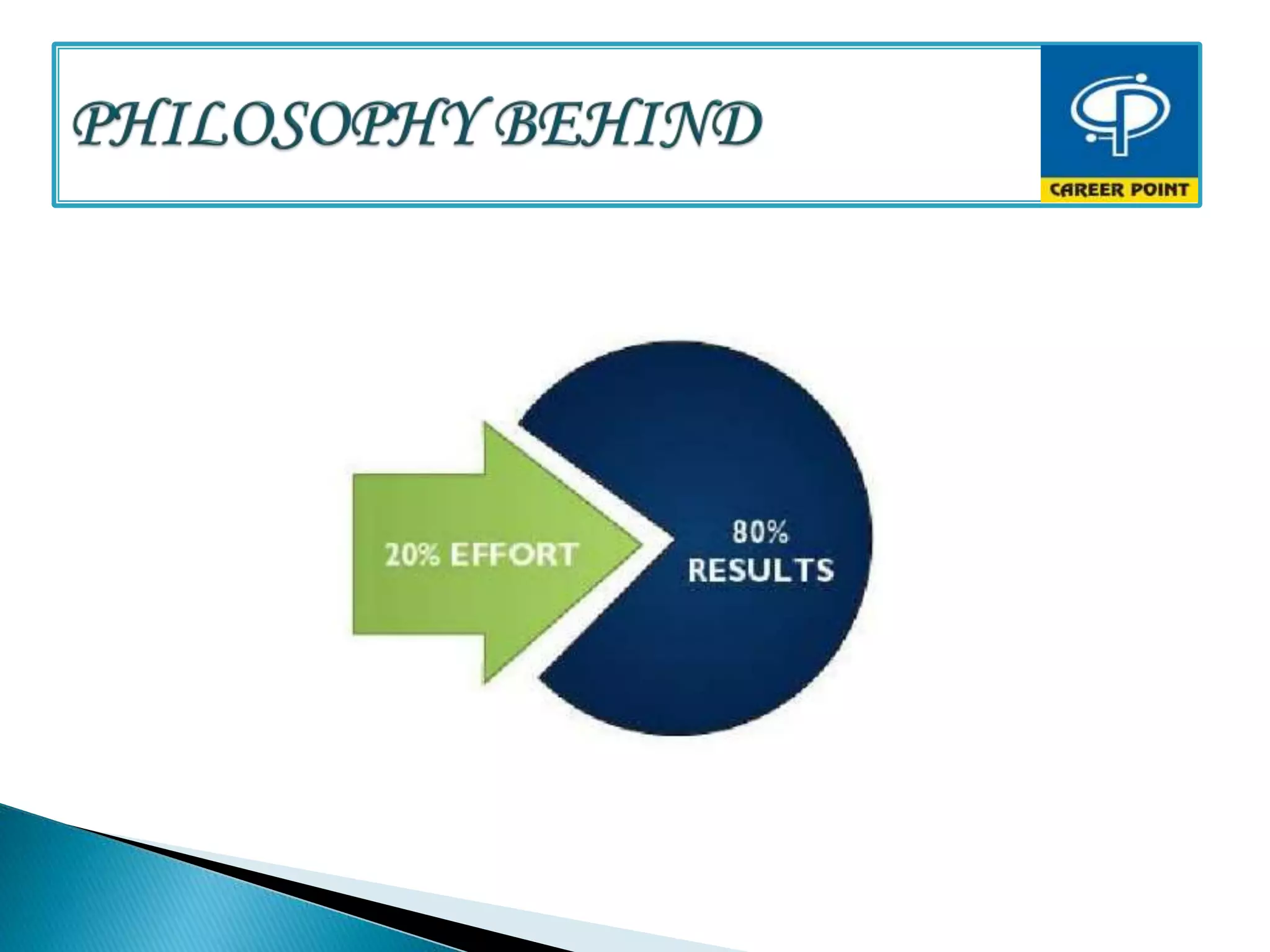
 A items : 70% of the annual consumption of
inventory is covered by only 10% of the items
in the inventory, deserve highest attention.
 B items : 20% of the items covering 20% of
the inventory investment (less stringent
control).
 C items : rest 70% of the inventory items (very
little control).
(a) Classify the items of inventories determining the expected
use in units and the price per unit for each item.
(b) Determine the total value for each item by multiplying the
expected units by its unit price.
i.e. (Annual demand) x (item cost per unit)
(c) Rank the items in accordance with the total value, giving
first rank to the items with highest total value and so on.
(d) Compute the ratio (percentages) of number of units of each
item to total units of all items and the ratio of total value of
each item to total value of all items.
(e) Combine items on the basis of their relative value to form
three categories A, B and C.
 Steps for implementation of ABC
analysis are :-
 CONTROL : Stocking a better mix of the right inventory
allows a company to control over-supply and under-
supply of important SKUs.
 COST : Once a company has determined which items fall
into each ABC category it can establish cost-reduction
initiatives at the SKU level.
 IMPROVED SERVICE : Improvement in customer service
levels and order fulfillment. ABC analysis provides a
company with information to stock the right-mix of
inventory.
 WAREHOUSING : ABC inventory extends to warehouse
management has well. Companies utilizing ABC analysis in
the warehouse give priority space to faster moving.
• Company have problems in procurement and handling of raw materials for
finished products.
• An analysis is made to the management of inventory in the company.
• It develops an approach if adopted by company that would result in a more
efficient utilization of financial resources for finished inventories.
• The study thus suggests some recommendations to improve certain things in
the company inventory policy.
• If these recommendations are considered, the company's inventory
management situation will rise a lot .
Thank You

Abc Analysis

  • 1.
    Operation Management Projecton “ABC” Analysis Submitted to: CMA Jai Bansal Sir Astt. Lecturar (MGMT DEPT.) Submitted By: Ashim Roy (K-13226) Shalu Bharadwaj (K-13995) Manoj Verma (K-14041) Nitesh Agrawal (K-13364) Sonam Sharma (K-13645) Swati Sahu (K-14075)
  • 2.
    INDEX • What isInventory? • What is ABC Analysis? • Categories ‘A’, ‘B’ & ‘C’. • Philosophy Behind • When & Why to use it? • ABC Classification • ABC Classification of Inventory Item • Implementations • Advantages • Conclusion
  • 3.
    The term INVENTORYis defined as “the systematic control and regulation of purchase, storage and usage of materials in such a way so as to maintain an even flow of production and at the same time avoiding excessive investment in inventories.”
  • 4.
    (ABC = AlwaysBetter Control) This is based on cost criteria.  It helps to exercise selective control when confronted with large number of items it rationalizes the number of orders, number of items & reduce the inventory.
  • 5.
    The most ImportantItems of the Company Accounts for only 10 to 25 % of the total Inventory Items Accounts for 70 to 80 % of the Annual consumption value of the Company.(which is the Highest Value) Have very Tight Inventory Control Managed by Top level Management
  • 6.
    Less Important Itemsthan ‘A’ Items but more Important than ‘C’ Items of the Company Accounts for 25 to 30 % of the total Inventory Items Accounts for 15 to 25 % of the Annual consumption value of the Company Have Intermediate Inventory Control Managed by Middle level Management
  • 7.
    Marginally Important Itemsof the Company Accounts for 45 to 50 % of the total Inventory Items Accounts for 5 to 10 % of the Annual consumption value of the Company Have Low Inventory Control Managed by Middle & lower level Management
  • 10.
     The ABCanalysis can be also be useful in several steps of the Sourcing Value Chain:! Demand Identification, to gather the annual spend of a site! Opportunity Assessment, to identify leveraging opportunities.  The ABC tool is used to identify the vital few from the trivial many, according to defined set of criteria.  Different decisions may be taken from the result of ABC analysis.
  • 12.
     A items: 70% of the annual consumption of inventory is covered by only 10% of the items in the inventory, deserve highest attention.  B items : 20% of the items covering 20% of the inventory investment (less stringent control).  C items : rest 70% of the inventory items (very little control).
  • 14.
    (a) Classify theitems of inventories determining the expected use in units and the price per unit for each item. (b) Determine the total value for each item by multiplying the expected units by its unit price. i.e. (Annual demand) x (item cost per unit) (c) Rank the items in accordance with the total value, giving first rank to the items with highest total value and so on. (d) Compute the ratio (percentages) of number of units of each item to total units of all items and the ratio of total value of each item to total value of all items. (e) Combine items on the basis of their relative value to form three categories A, B and C.  Steps for implementation of ABC analysis are :-
  • 15.
     CONTROL :Stocking a better mix of the right inventory allows a company to control over-supply and under- supply of important SKUs.  COST : Once a company has determined which items fall into each ABC category it can establish cost-reduction initiatives at the SKU level.  IMPROVED SERVICE : Improvement in customer service levels and order fulfillment. ABC analysis provides a company with information to stock the right-mix of inventory.  WAREHOUSING : ABC inventory extends to warehouse management has well. Companies utilizing ABC analysis in the warehouse give priority space to faster moving.
  • 16.
    • Company haveproblems in procurement and handling of raw materials for finished products. • An analysis is made to the management of inventory in the company. • It develops an approach if adopted by company that would result in a more efficient utilization of financial resources for finished inventories. • The study thus suggests some recommendations to improve certain things in the company inventory policy. • If these recommendations are considered, the company's inventory management situation will rise a lot .
  • 17.