Downloaded 137 times





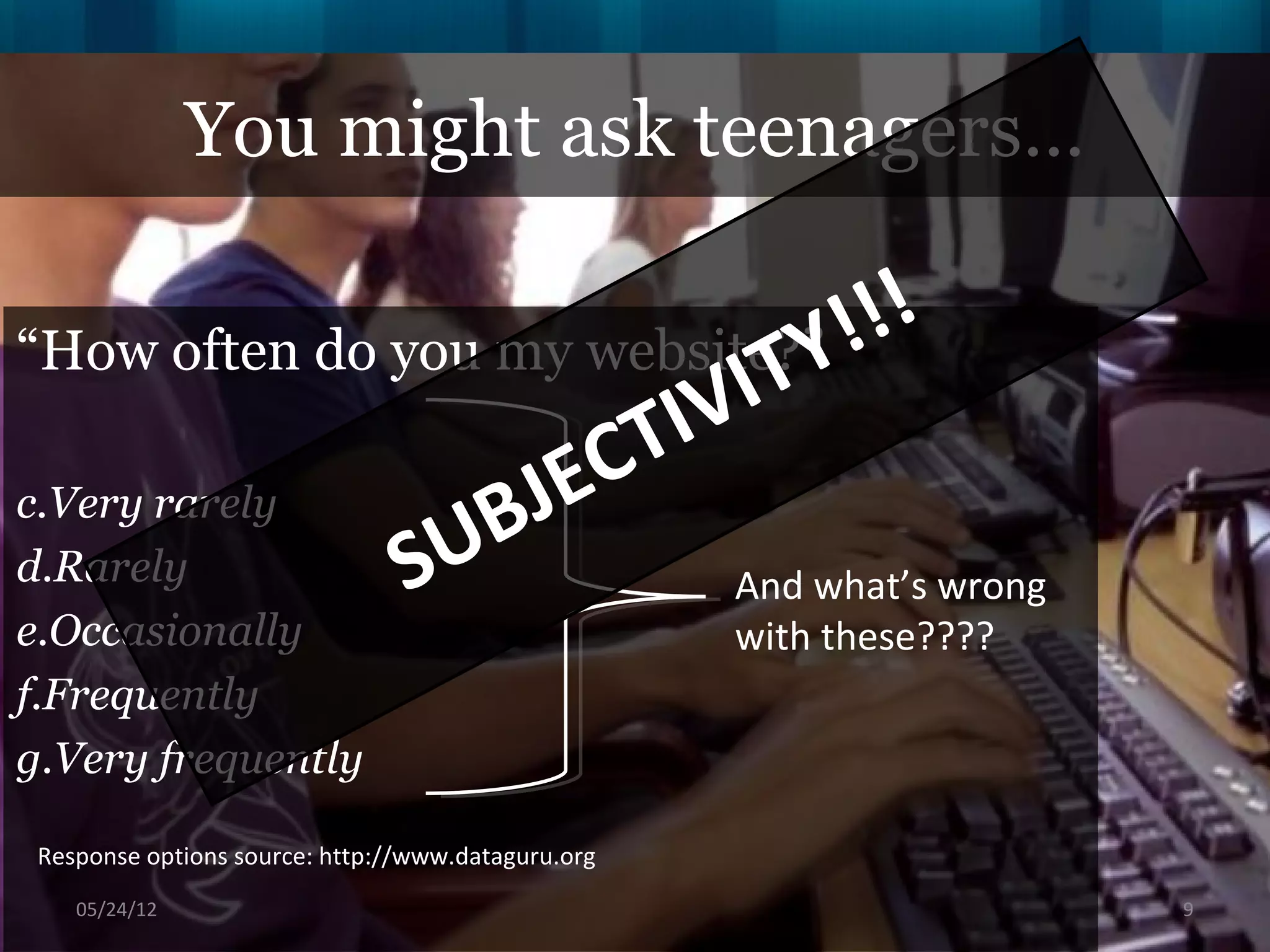
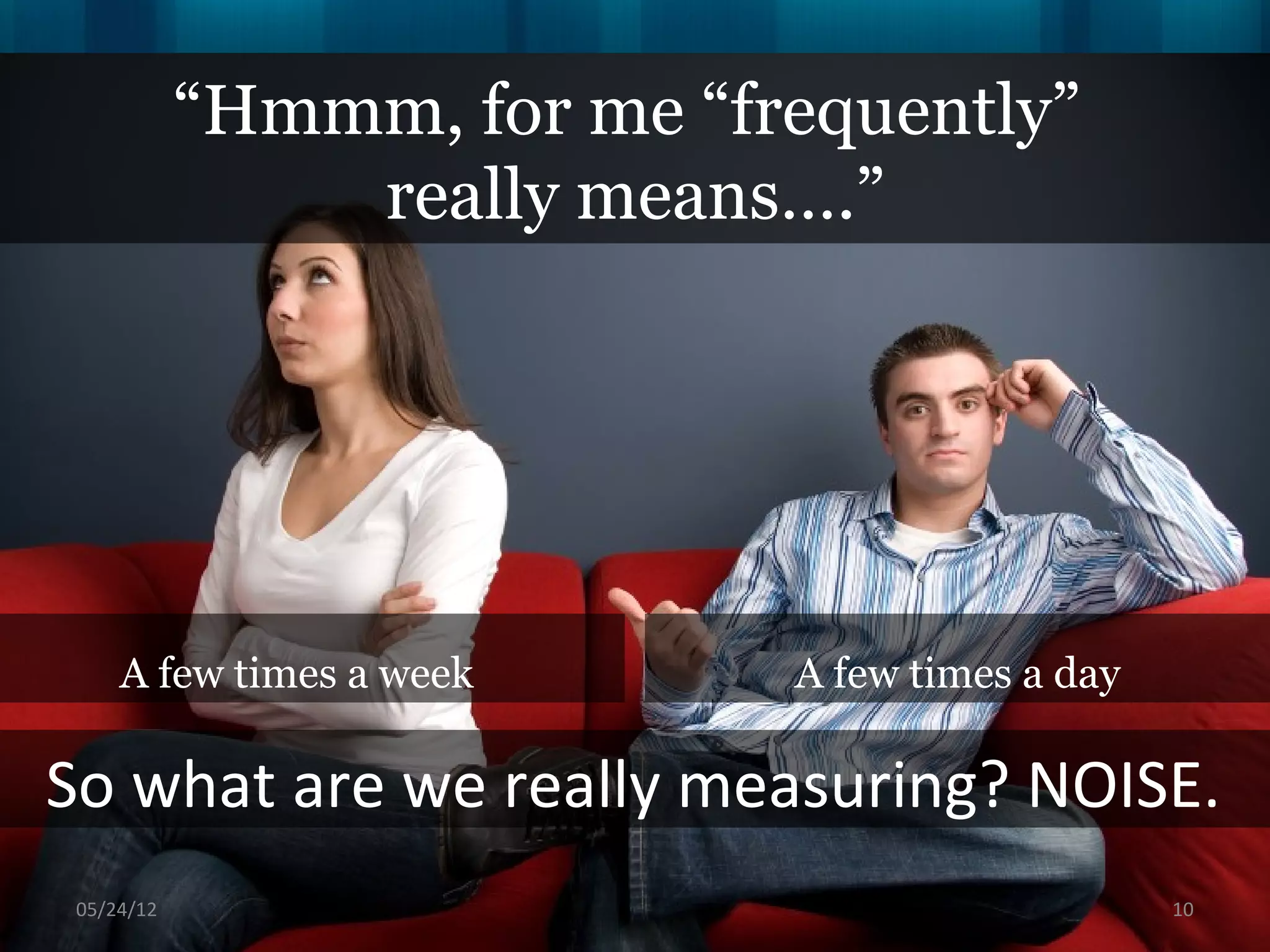
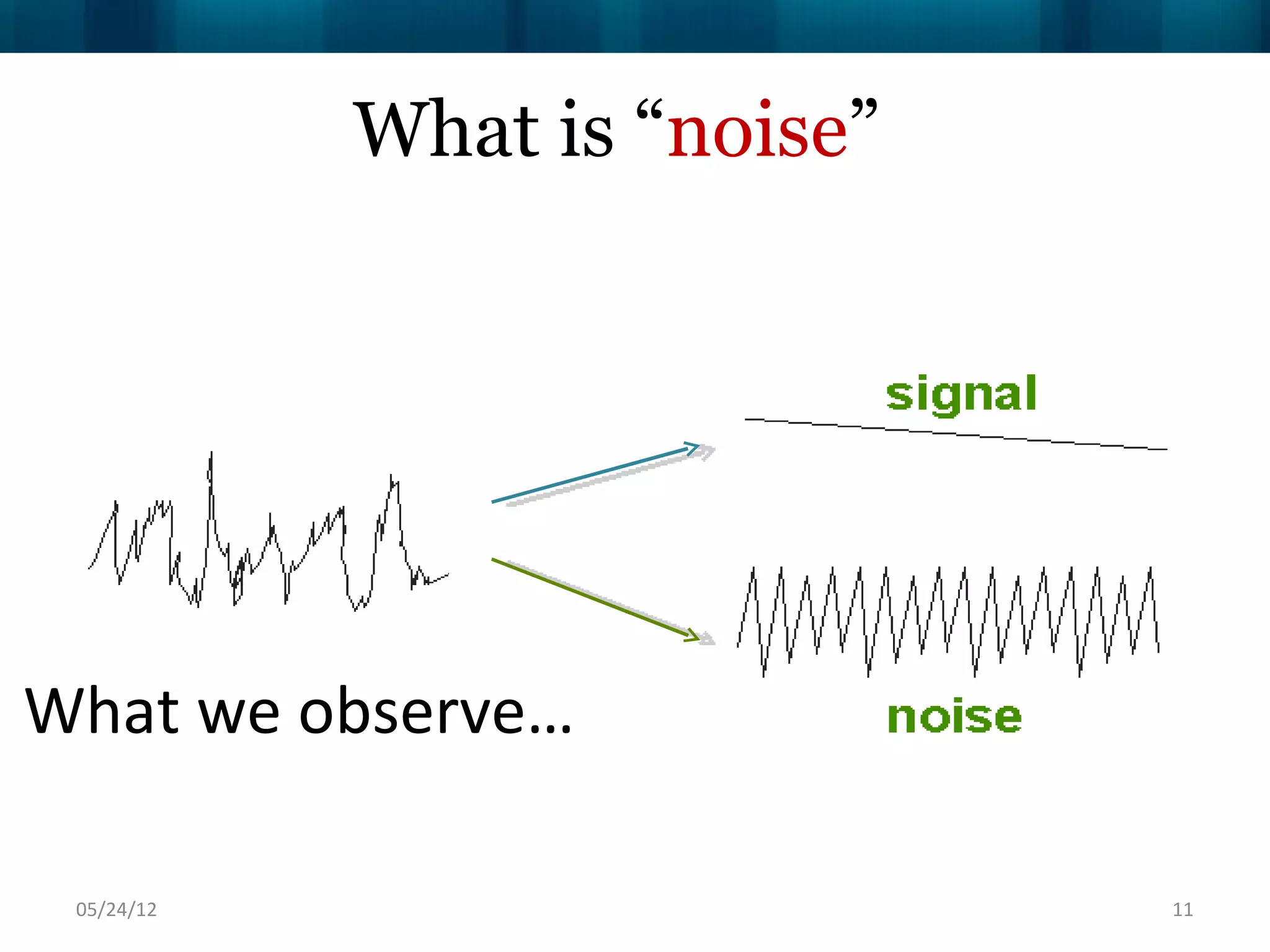
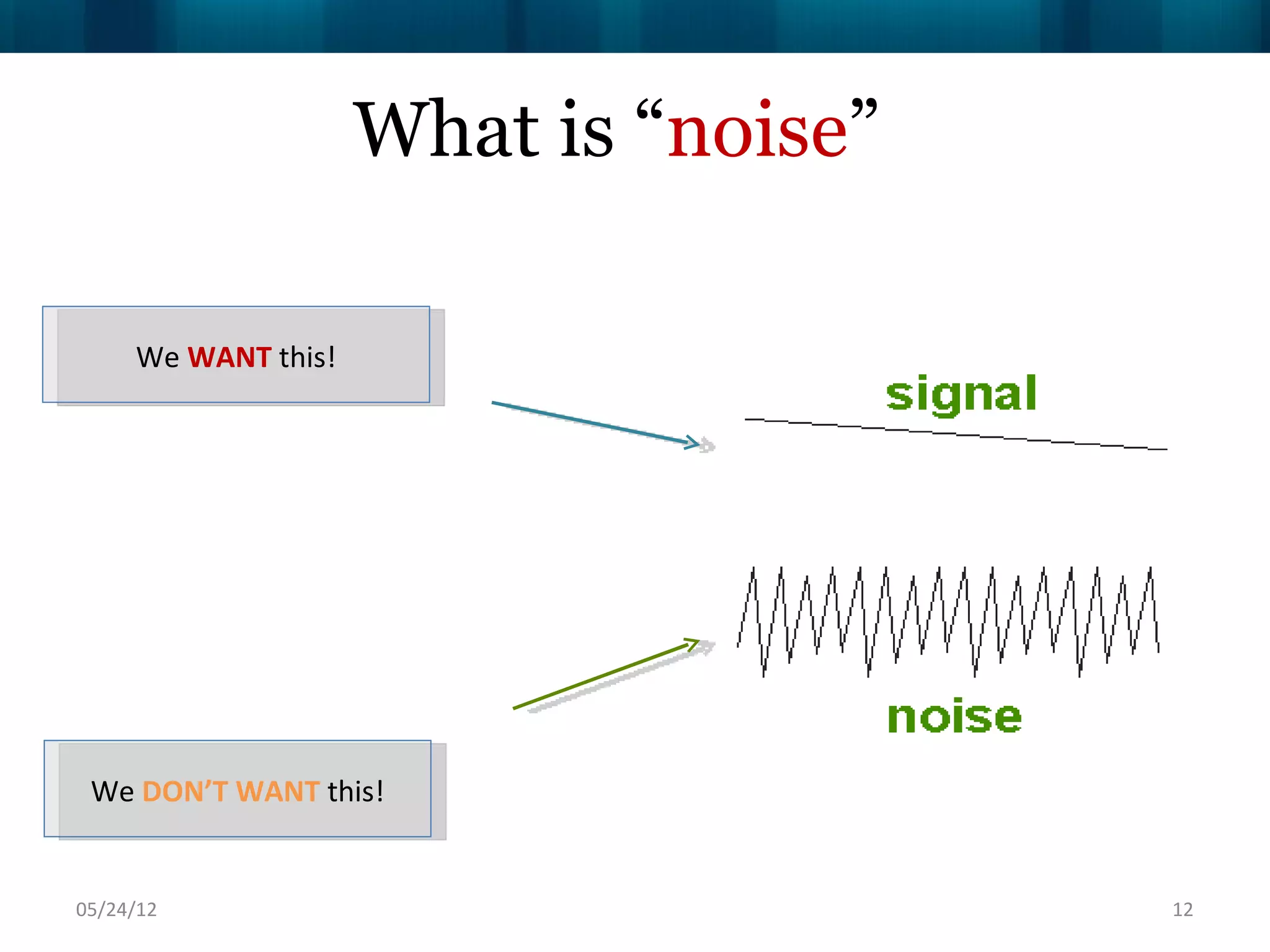

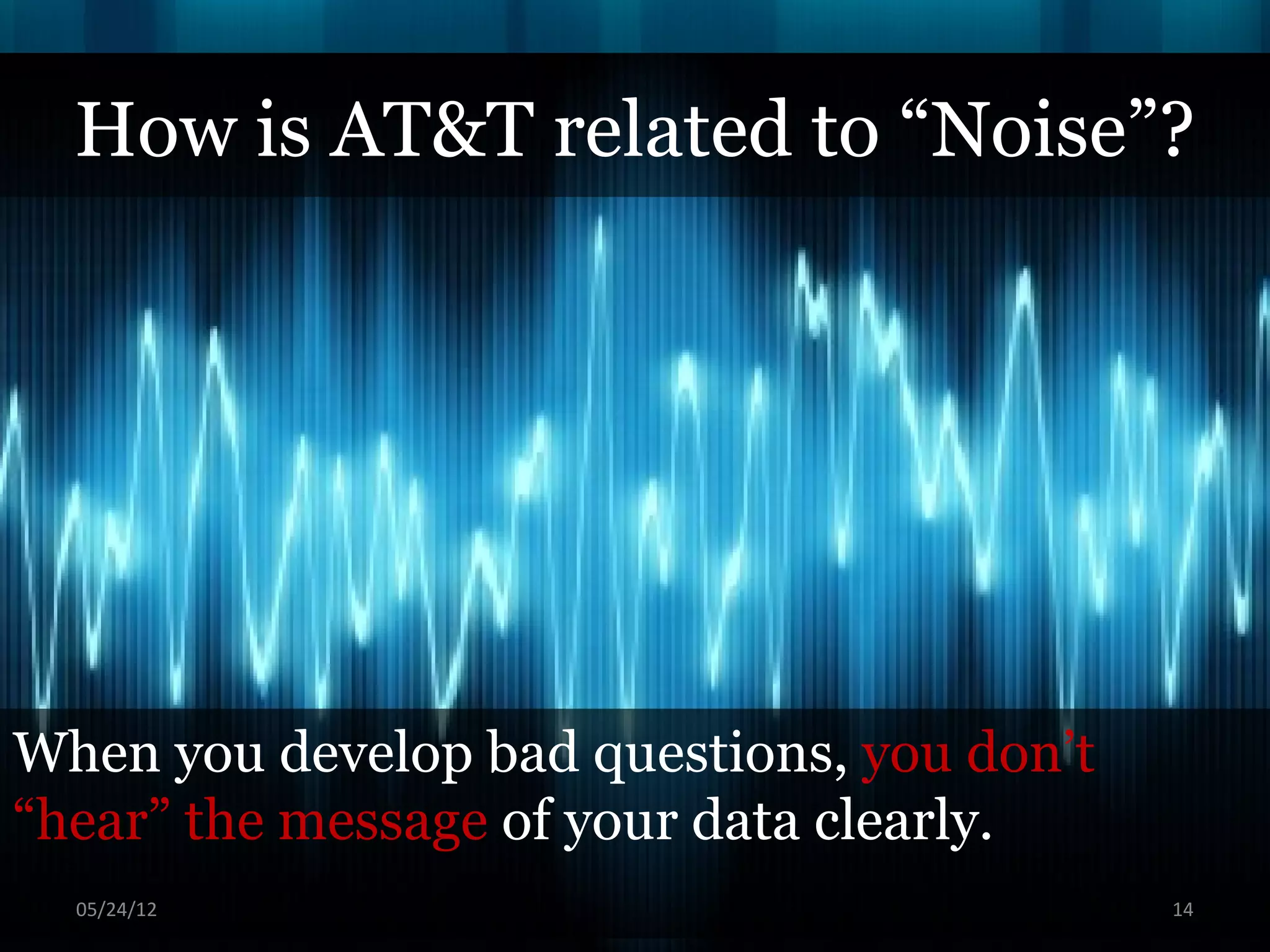
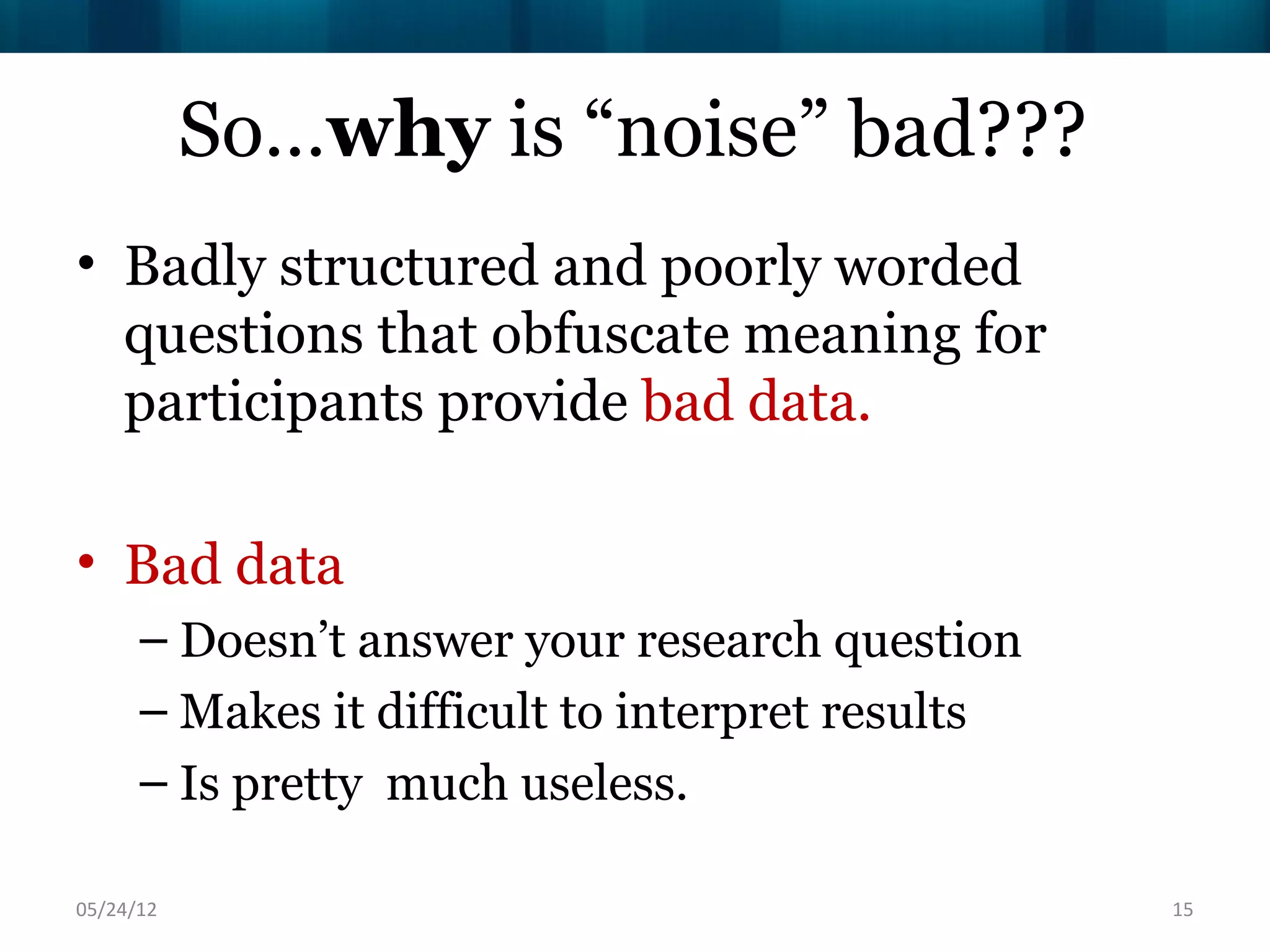
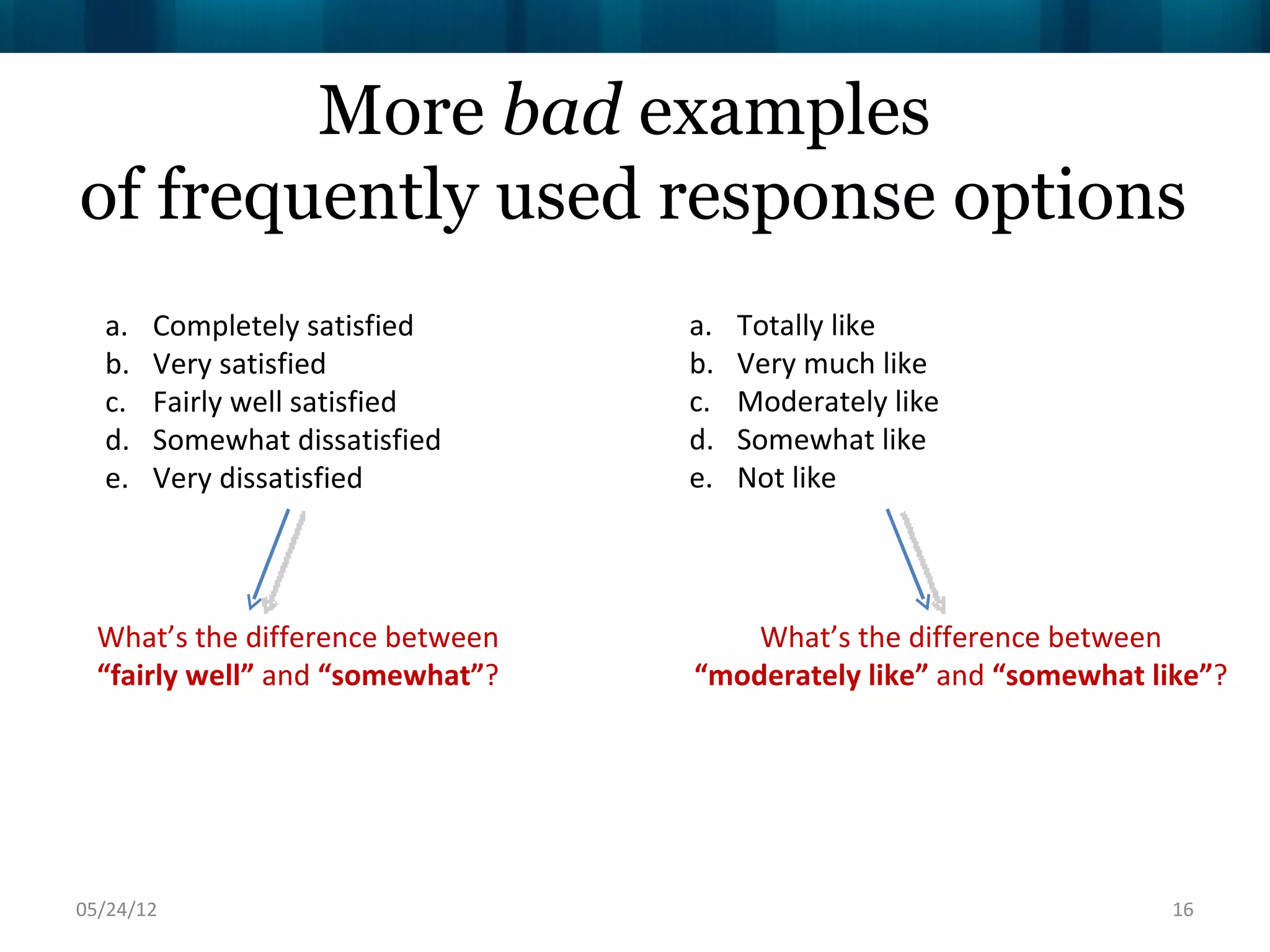
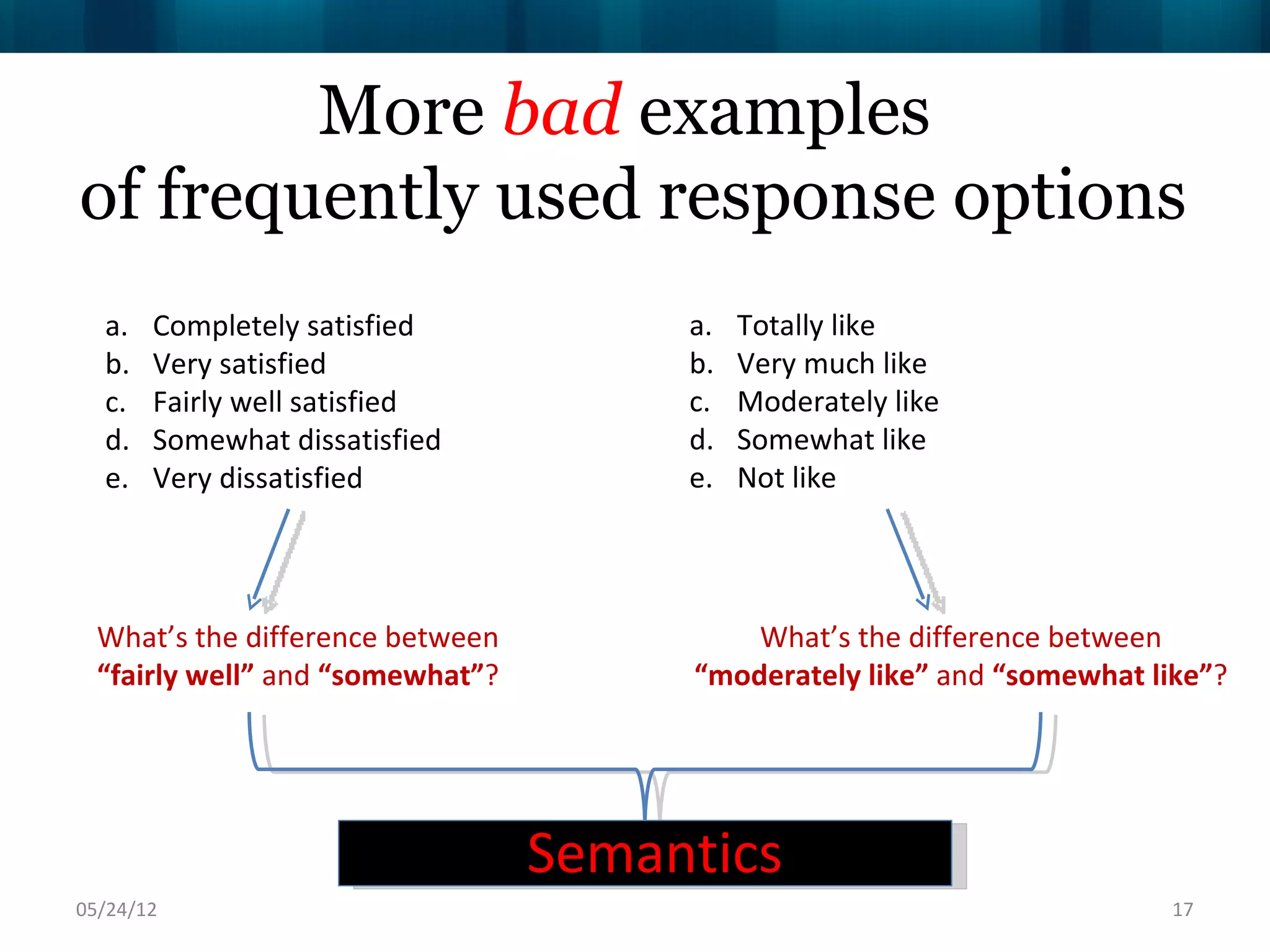
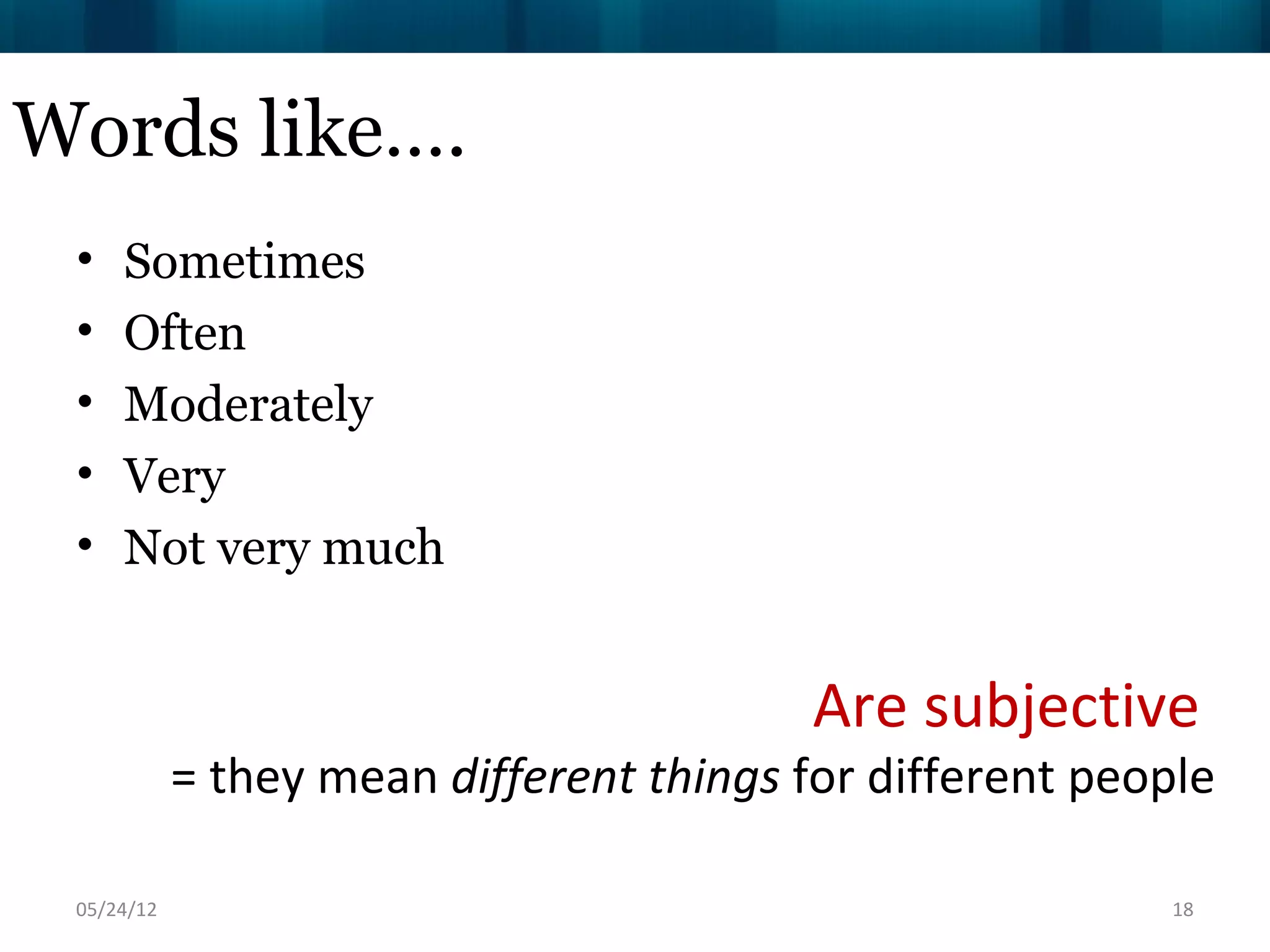

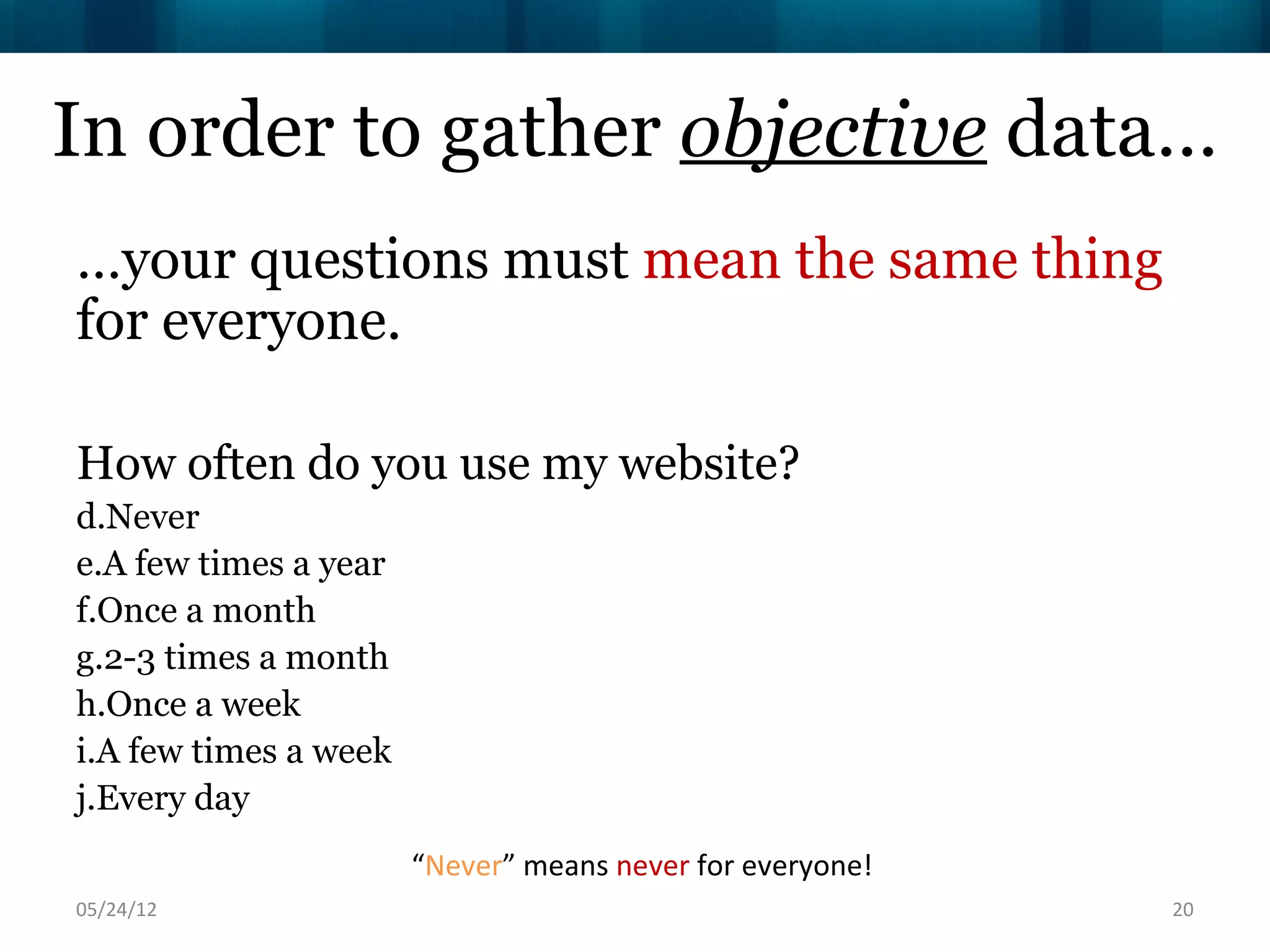

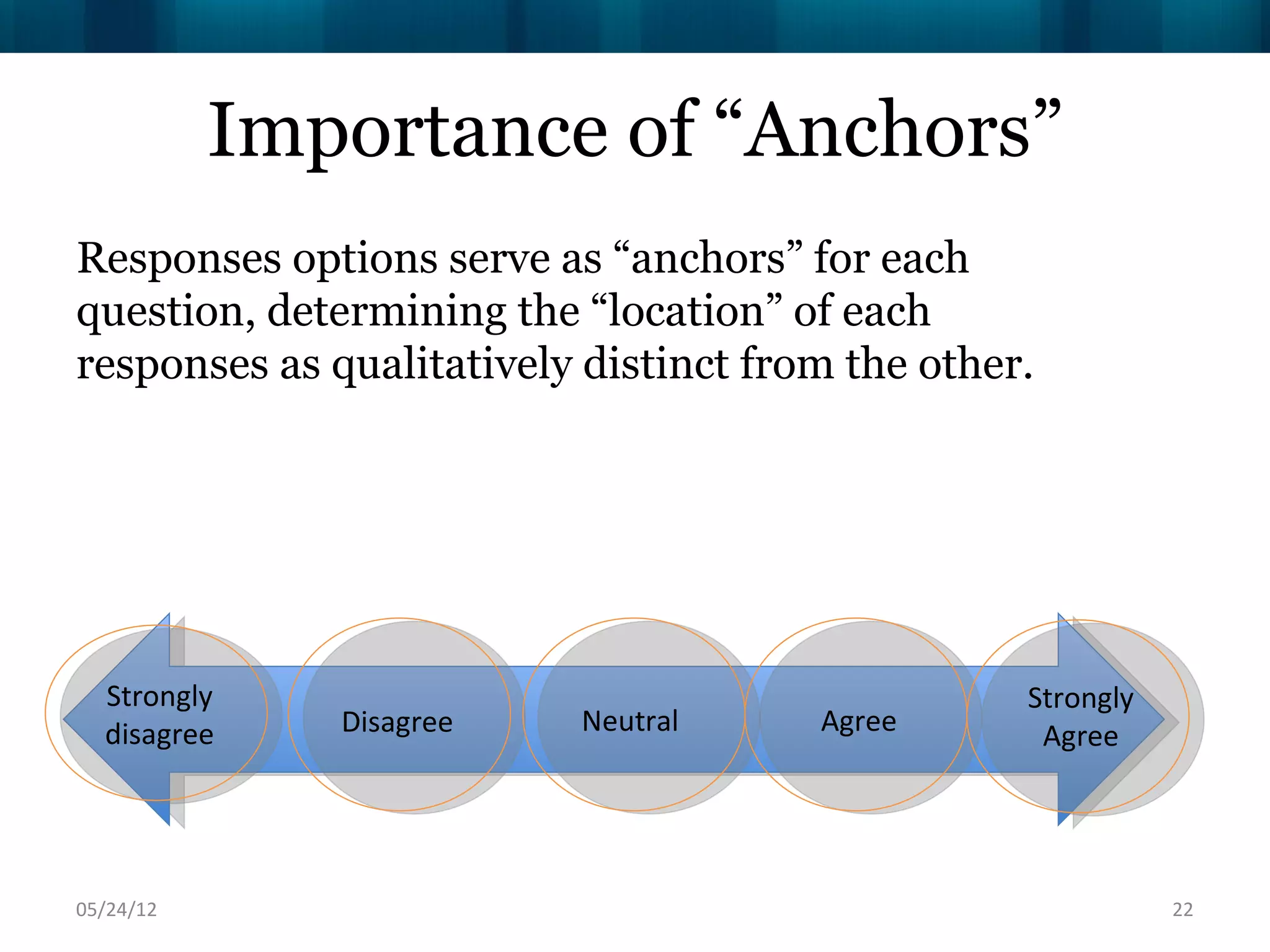
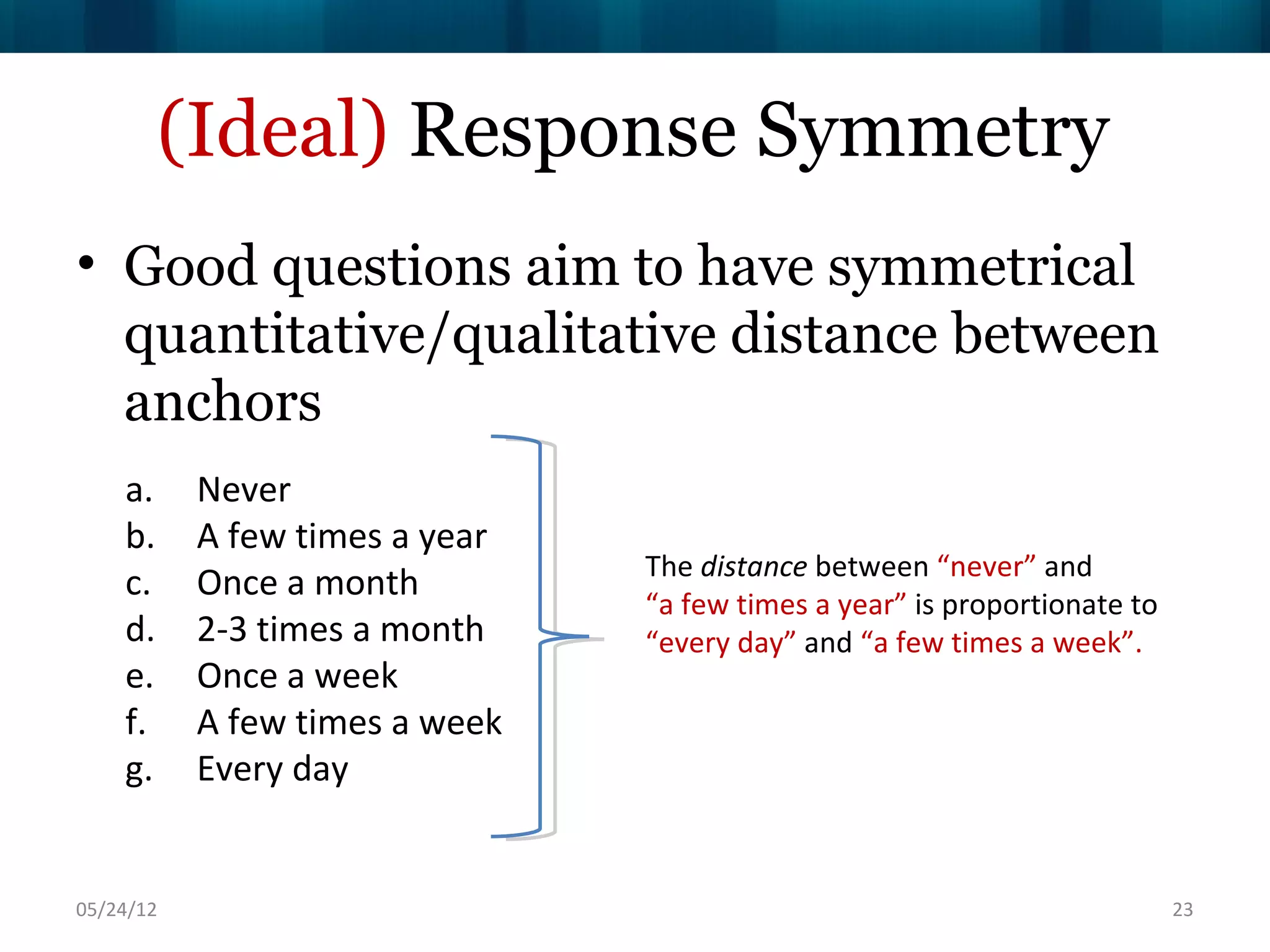
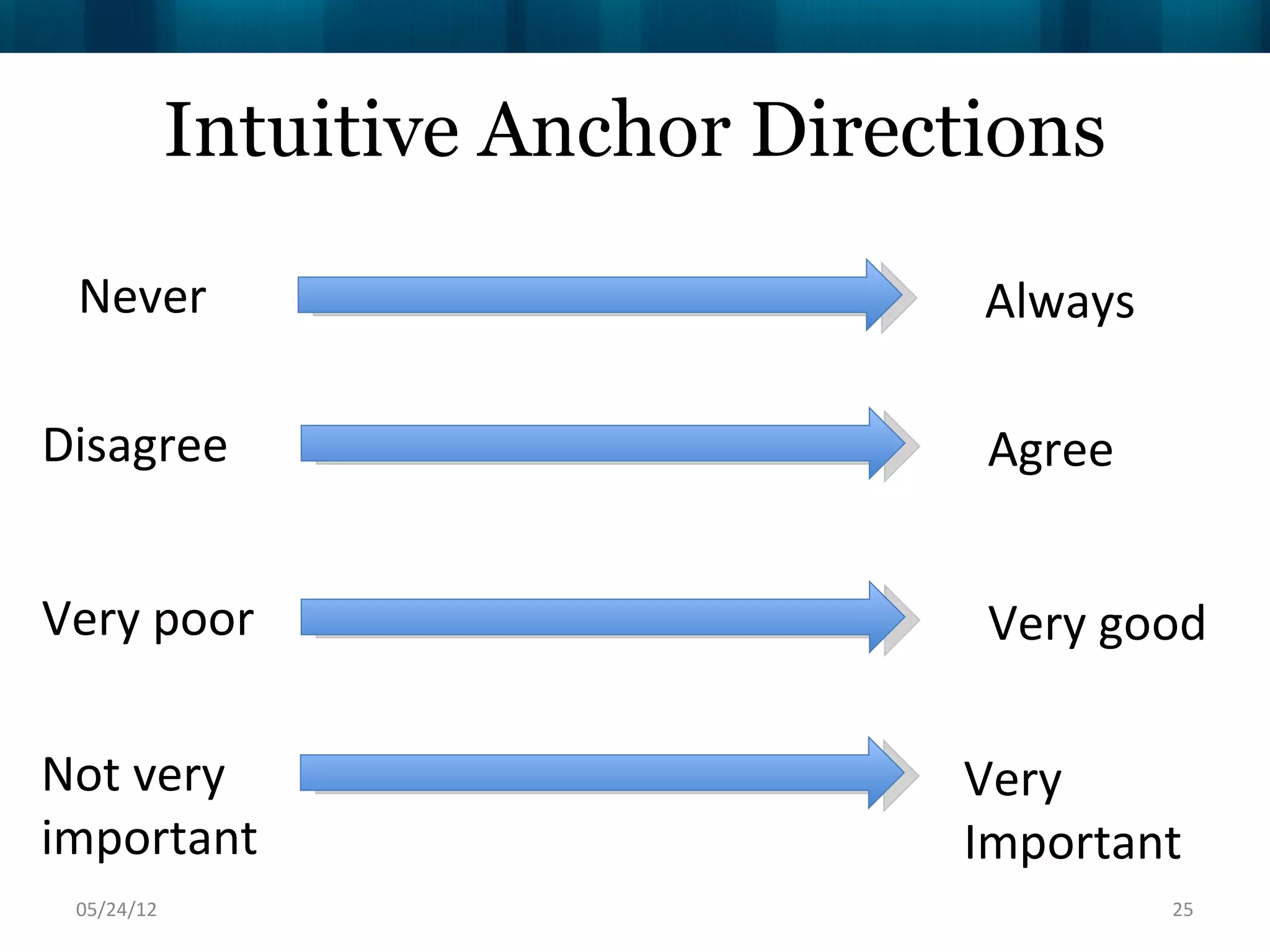

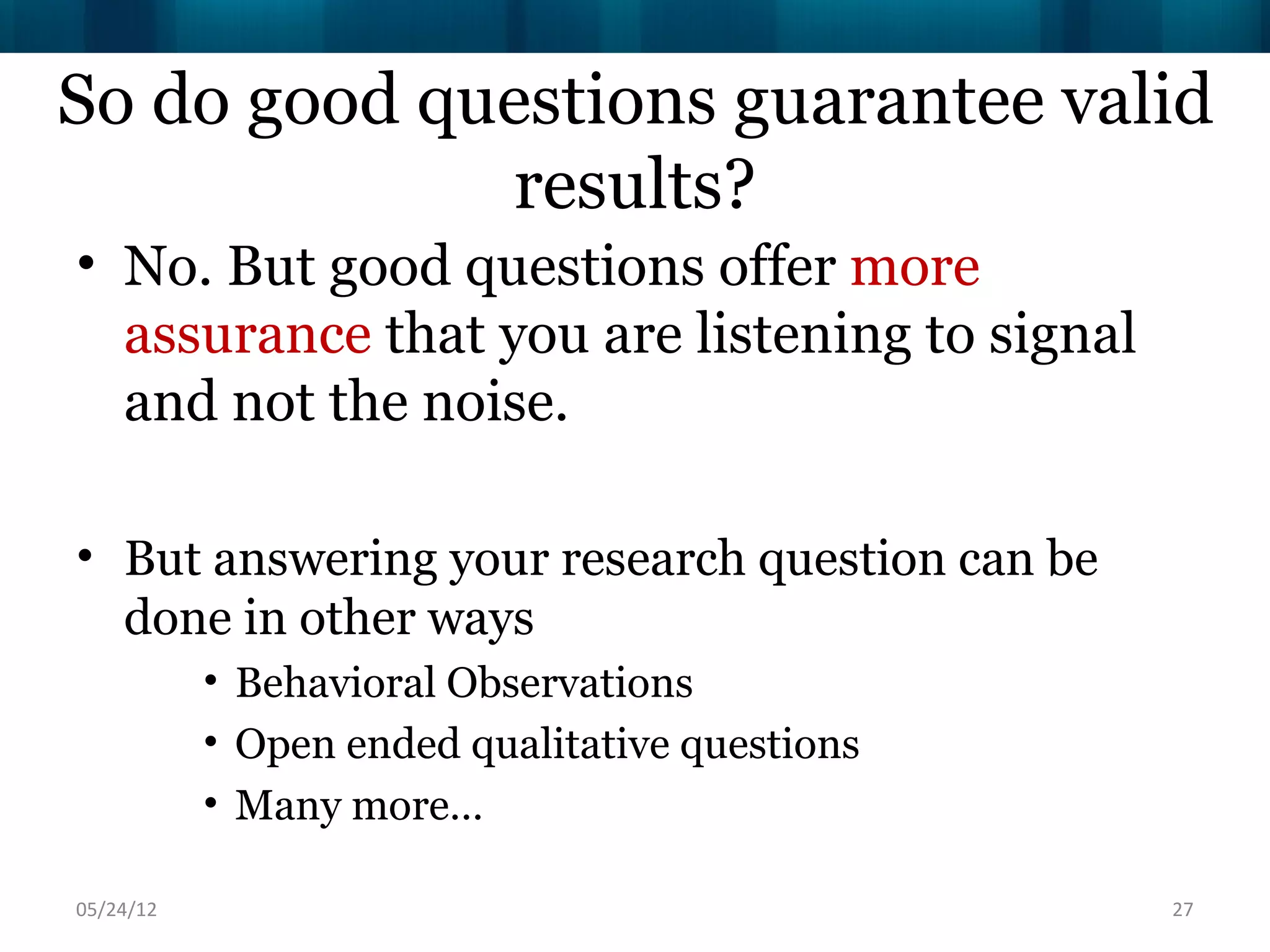



This document discusses the importance of question design in surveys and presents strategies for minimizing researcher bias and obtaining objective data. It notes that surveys are inherently shaped by the researcher's perspectives and that response options can introduce ambiguity and "noise" that obscures the desired information. Specific problematic examples are provided. The document advocates for clear, logically structured questions with unambiguous response anchors that are symmetrically distanced and intuitively ordered. While good questions don't guarantee valid results, they can help ensure the researcher is hearing the intended "signal" rather than unwanted "noise" in the data.


![PowerISO 9.2 Mac Crack + Serial Key Free Download 2026 [Latest] Software.pptx](https://cdn.slidesharecdn.com/ss_thumbnails/software-251207185653-5d5700e6-thumbnail.jpg?width=640&height=640&fit=bounds)
![Moho Pro 14.4 Crack for MacOS Works Until 2050 [Latest] pptx](https://cdn.slidesharecdn.com/ss_thumbnails/softwareoverview-251207192639-797289c4-thumbnail.jpg?width=640&height=640&fit=bounds)
![AnyTrans for iOS 8.9.14.20251127 With Crack for MacOS [Latest] pptx](https://cdn.slidesharecdn.com/ss_thumbnails/softwareoverview-251207190907-2316965f-thumbnail.jpg?width=640&height=640&fit=bounds)


![Chapter4_Initiation_of_Sediment_Motion_v2[1].pptx](https://cdn.slidesharecdn.com/ss_thumbnails/chapter4initiationofsedimentmotionv21-251208223747-f94ef163-thumbnail.jpg?width=640&height=640&fit=bounds)

