Introduction to systemd 
OGAWA Yusaku
What is systemd 
● Init daemon 
● It is designed to be backwards compatible with System 
V init 
● Strength 
○ Parallel startup (Dependency-based startup) 
○ On-demand service activation 
○ Replacements for various daemons and 
utilities such as syslog, cron, etc.
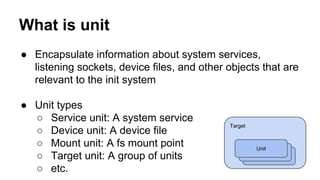
What is unit 
● Encapsulate information about system services, 
listening sockets, device files, and other objects that are 
relevant to the init system 
● Unit types 
○ Service unit: A system service 
○ Device unit: A device file 
○ Mount unit: A fs mount point 
○ Target unit: A group of units 
○ etc. 
Target 
Unit
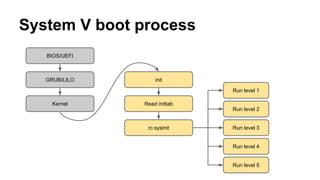
System V boot process 
init 
Read inittab 
rc.sysinit 
BIOS/UEFI 
GRUB/LILO 
Kernel 
Run level 1 
Run level 2 
Run level 3 
Run level 4 
Run level 5
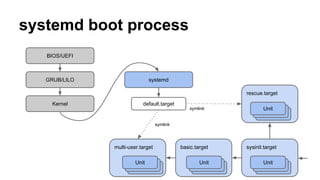
systemd boot process 
systemd 
default.target 
symlink Unit 
multi-user.target basic.target sysinit.target 
BIOS/UEFI 
GRUB/LILO 
Kernel 
symlink 
rescue.target 
Unit Unit Unit
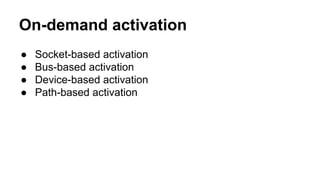
On-demand activation 
● Socket-based activation 
● Bus-based activation 
● Device-based activation 
● Path-based activation

Introduction to systemd

  • 1.
  • 2.
    What is systemd ● Init daemon ● It is designed to be backwards compatible with System V init ● Strength ○ Parallel startup (Dependency-based startup) ○ On-demand service activation ○ Replacements for various daemons and utilities such as syslog, cron, etc.
  • 3.
    What is unit ● Encapsulate information about system services, listening sockets, device files, and other objects that are relevant to the init system ● Unit types ○ Service unit: A system service ○ Device unit: A device file ○ Mount unit: A fs mount point ○ Target unit: A group of units ○ etc. Target Unit
  • 4.
    System V bootprocess init Read inittab rc.sysinit BIOS/UEFI GRUB/LILO Kernel Run level 1 Run level 2 Run level 3 Run level 4 Run level 5
  • 5.
    systemd boot process systemd default.target symlink Unit multi-user.target basic.target sysinit.target BIOS/UEFI GRUB/LILO Kernel symlink rescue.target Unit Unit Unit
  • 6.
    On-demand activation ●Socket-based activation ● Bus-based activation ● Device-based activation ● Path-based activation