Introduction to stigma
and stereotypes: people
with problematic
substance use
Stigma
• What is ‘stigma’?
• Stigma is a ‘stain or attribute’ marking out someone as
unacceptable. It leads to prejudice and discrimination
(UKDPC, 2010: 1)
• Words associated with substance misuse are both labelling and
negative. They lead to judgemental and negative attitudes which can
colour our reactions to people:
Junkie, drunk, thieving scumbag, alchie, crackhead, addict
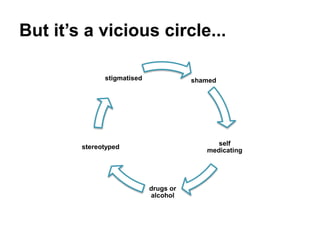
But it’s a vicious circle...
shamed
self
medicating
drugs or
alcohol
stereotyped
stigmatised
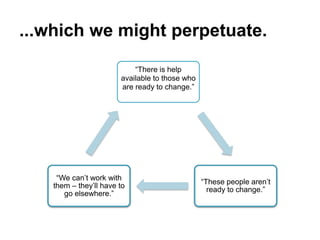
...which we might perpetuate.
“There is help
available to those who
are ready to change.”
“These people aren’t
ready to change.”
“We can’t work with
them – they’ll have to
go elsewhere.”
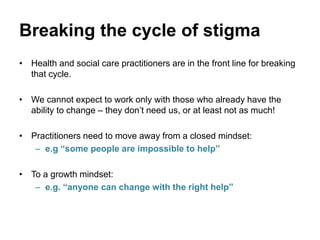
Breaking the cycle of stigma
• Health and social care practitioners are in the front line for breaking
that cycle.
• We cannot expect to work only with those who already have the
ability to change – they don’t need us, or at least not as much!
• Practitioners need to move away from a closed mindset:
– e.g “some people are impossible to help”
• To a growth mindset:
– e.g. “anyone can change with the right help”
NICE, 2007 – person centred care
• Service users need to be able to work in partnership with their health
and social care professionals.
• Good communication between staff and service users is essential –
supported by information tailored to the service user’s needs.
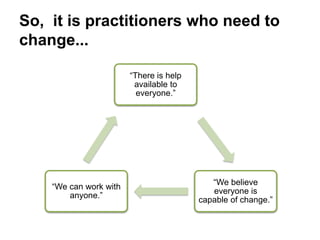
So, it is practitioners who need to
change...
“There is help
available to
everyone.”
“We believe
everyone is
capable of change.”
“We can work with
anyone.”
Reference
NICE (National Institute for Health and Care Excellence) (2007) Drug Misuse:
psychosocial interventions. NICE CG 51.
Introduction to stigma and stereotypes: people with problematic substance use

Introduction to stigma and stereotypes: people with problematic substance use

  • 1.
    Introduction to stigma andstereotypes: people with problematic substance use
  • 2.
    Stigma • What is‘stigma’? • Stigma is a ‘stain or attribute’ marking out someone as unacceptable. It leads to prejudice and discrimination (UKDPC, 2010: 1) • Words associated with substance misuse are both labelling and negative. They lead to judgemental and negative attitudes which can colour our reactions to people: Junkie, drunk, thieving scumbag, alchie, crackhead, addict
  • 3.
    But it’s avicious circle... shamed self medicating drugs or alcohol stereotyped stigmatised
  • 4.
    ...which we mightperpetuate. “There is help available to those who are ready to change.” “These people aren’t ready to change.” “We can’t work with them – they’ll have to go elsewhere.”
  • 5.
    Breaking the cycleof stigma • Health and social care practitioners are in the front line for breaking that cycle. • We cannot expect to work only with those who already have the ability to change – they don’t need us, or at least not as much! • Practitioners need to move away from a closed mindset: – e.g “some people are impossible to help” • To a growth mindset: – e.g. “anyone can change with the right help”
  • 6.
    NICE, 2007 –person centred care • Service users need to be able to work in partnership with their health and social care professionals. • Good communication between staff and service users is essential – supported by information tailored to the service user’s needs.
  • 7.
    So, it ispractitioners who need to change... “There is help available to everyone.” “We believe everyone is capable of change.” “We can work with anyone.”
  • 8.
    Reference NICE (National Institutefor Health and Care Excellence) (2007) Drug Misuse: psychosocial interventions. NICE CG 51.