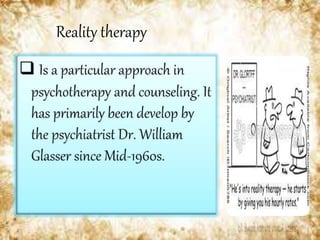
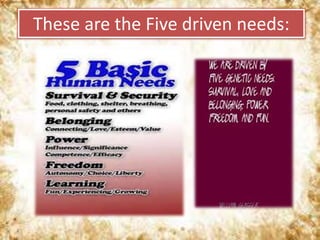
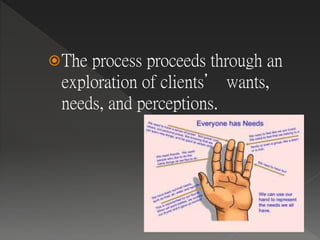
1. Reality therapy is a counseling approach based on choice theory which posits that human behavior is driven by five basic needs and that people have the ability to choose their behaviors.
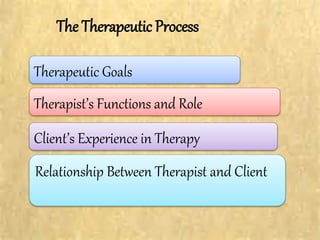
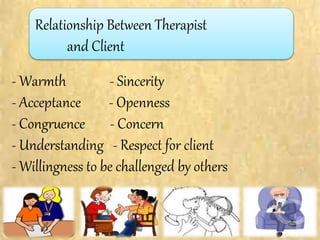
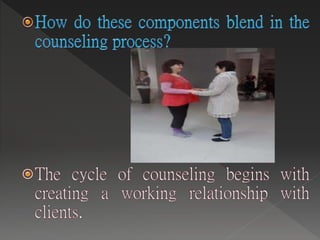
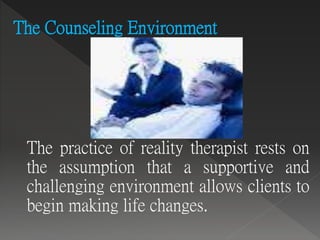
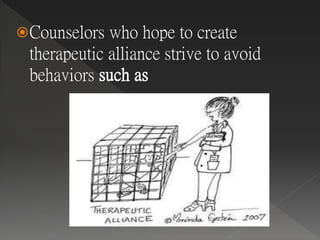
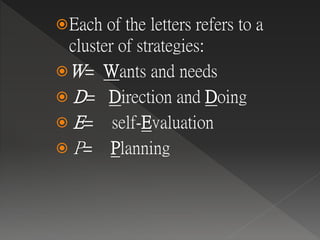
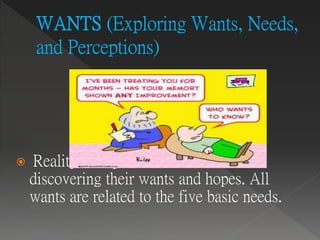
2. The therapeutic process in reality therapy involves creating a supportive counseling environment, exploring a client's wants and needs, evaluating whether their current behaviors are meeting those wants and needs, and developing plans for behavior change.
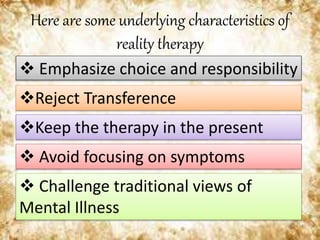
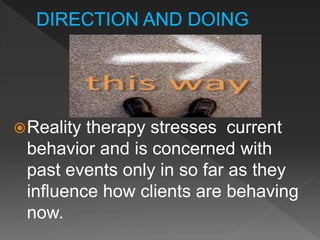
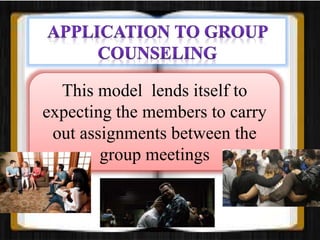
3. Key aspects of reality therapy include keeping therapy focused on the present, emphasizing personal responsibility and choice over past events, avoiding non-constructive techniques like transference, and developing plans that are simple, measurable, and committed to by the client.