Click anywhere to play
Social Stratification, Social
Class, and Ethnicity
Social Stratification
A system by which a society ranks
categories of people in a hierarchy
based on their access to scarce
resources.
Four Basic Principles of
Social Stratification:
It is a characteristic of society, not
simply a reflection of individual
differences.
It persists over generations.
It is universal but variable.
It involves not just inequality but beliefs.
Cultural beliefs serve to
justify social stratification.
That is part of the
reason why it persists.
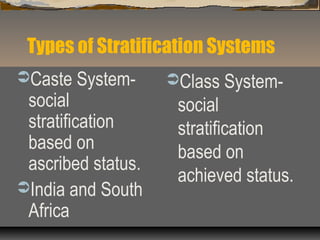
Types of Stratification Systems
Caste System-
social
stratification
based on
ascribed status.
India and South
Africa
Class System-
social
stratification
based on
achieved status.
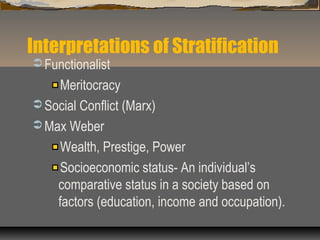
Interpretations of Stratification
 Functionalist
Meritocracy
 Social Conflict (Marx)
 Max Weber
Wealth, Prestige, Power
Socioeconomic status- An individual’s
comparative status in a society based on
factors (education, income and occupation).
People in the US are stratified
based on the following:
Income
Prestige
Wealth
Education
Power
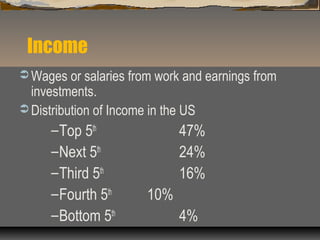
Income
 Wages or salaries from work and earnings from
investments.
 Distribution of Income in the US
–Top 5th
47%
–Next 5th
24%
–Third 5th
16%
–Fourth 5th
10%
–Bottom 5th
4%
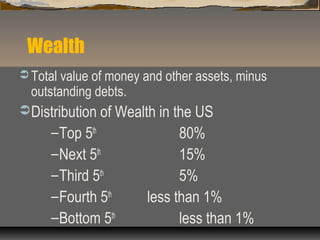
Wealth
 Total value of money and other assets, minus
outstanding debts.
Distribution of Wealth in the US
–Top 5th
80%
–Next 5th
15%
–Third 5th
5%
–Fourth 5th
less than 1%
–Bottom 5th
less than 1%
Click anywhere to play

Introduction to social stratification

  • 1.
  • 2.
  • 3.
    Social Stratification A systemby which a society ranks categories of people in a hierarchy based on their access to scarce resources.
  • 4.
    Four Basic Principlesof Social Stratification: It is a characteristic of society, not simply a reflection of individual differences. It persists over generations. It is universal but variable. It involves not just inequality but beliefs.
  • 5.
    Cultural beliefs serveto justify social stratification. That is part of the reason why it persists.
  • 6.
    Types of StratificationSystems Caste System- social stratification based on ascribed status. India and South Africa Class System- social stratification based on achieved status.
  • 7.
    Interpretations of Stratification Functionalist Meritocracy  Social Conflict (Marx)  Max Weber Wealth, Prestige, Power Socioeconomic status- An individual’s comparative status in a society based on factors (education, income and occupation).
  • 8.
    People in theUS are stratified based on the following: Income Prestige Wealth Education Power
  • 9.
    Income  Wages orsalaries from work and earnings from investments.  Distribution of Income in the US –Top 5th 47% –Next 5th 24% –Third 5th 16% –Fourth 5th 10% –Bottom 5th 4%
  • 10.
    Wealth  Total valueof money and other assets, minus outstanding debts. Distribution of Wealth in the US –Top 5th 80% –Next 5th 15% –Third 5th 5% –Fourth 5th less than 1% –Bottom 5th less than 1%
  • 11.