Introduction to
Pityriasis
Lichenoides
Chronica
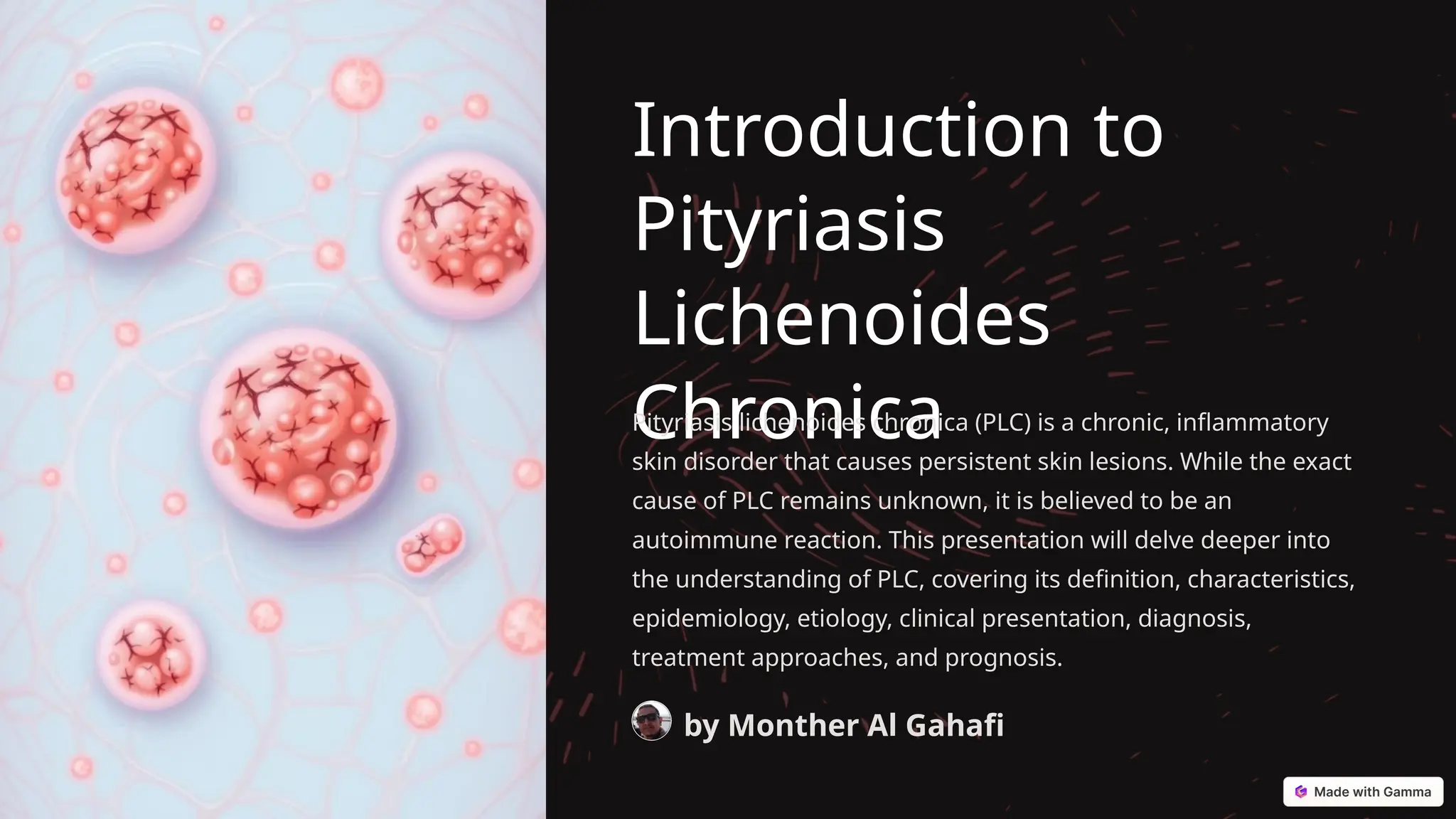
Pityriasis lichenoides chronica (PLC) is a chronic, inflammatory
skin disorder that causes persistent skin lesions. While the exact
cause of PLC remains unknown, it is believed to be an
autoimmune reaction. This presentation will delve deeper into
the understanding of PLC, covering its definition, characteristics,
epidemiology, etiology, clinical presentation, diagnosis,
treatment approaches, and prognosis.
by Monther Al Gahafi
Definition and Characteristics
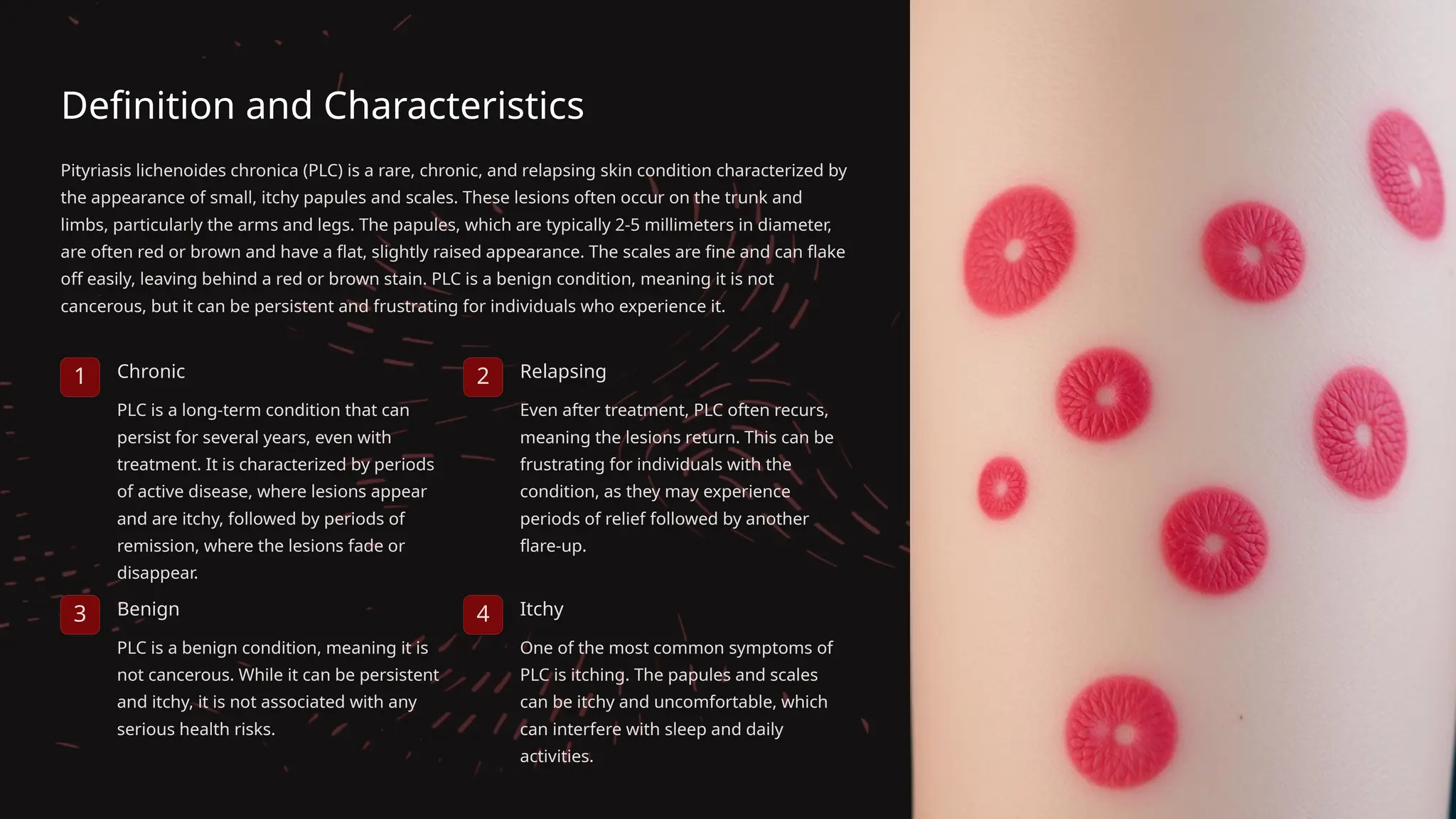
Pityriasis lichenoides chronica (PLC) is a rare, chronic, and relapsing skin condition characterized by
the appearance of small, itchy papules and scales. These lesions often occur on the trunk and
limbs, particularly the arms and legs. The papules, which are typically 2-5 millimeters in diameter,
are often red or brown and have a flat, slightly raised appearance. The scales are fine and can flake
off easily, leaving behind a red or brown stain. PLC is a benign condition, meaning it is not
cancerous, but it can be persistent and frustrating for individuals who experience it.
1 Chronic
PLC is a long-term condition that can
persist for several years, even with
treatment. It is characterized by periods
of active disease, where lesions appear
and are itchy, followed by periods of
remission, where the lesions fade or
disappear.
2 Relapsing
Even after treatment, PLC often recurs,
meaning the lesions return. This can be
frustrating for individuals with the
condition, as they may experience
periods of relief followed by another
flare-up.
3 Benign
PLC is a benign condition, meaning it is
not cancerous. While it can be persistent
and itchy, it is not associated with any
serious health risks.
4 Itchy
One of the most common symptoms of
PLC is itching. The papules and scales
can be itchy and uncomfortable, which
can interfere with sleep and daily
activities.
Epidemiology and Prevalence
The exact prevalence of pityriasis lichenoides chronica (PLC) is unknown, as
it is a rare condition. However, studies have suggested that it affects
approximately 1 in 100,000 people worldwide. PLC can occur at any age,
but it is more common in adults, with a slight male predominance. The
condition is typically diagnosed in individuals between the ages of 20 and
40, but it can occur in younger or older individuals as well.
Region Prevalence
North America 1 in 150,000
Europe 1 in 120,000
Asia 1 in 200,000
Africa 1 in 250,000
Australia 1 in 100,000
Etiology and Pathogenesis
The exact cause of pityriasis lichenoides chronica (PLC) is unknown, but it is believed to be
an autoimmune reaction. The immune system, which normally protects the body from
foreign invaders like bacteria and viruses, mistakenly attacks healthy skin cells. This leads
to the inflammation and skin lesions that characterize PLC. While the exact trigger for this
autoimmune reaction is not known, it is thought to be related to a combination of genetic
and environmental factors. Recent research suggests that certain viral infections, such as
Epstein-Barr virus (EBV), may play a role in the development of PLC.
Genetic Predisposition
Some individuals may have a genetic
predisposition to develop PLC. This
means that they may have certain
genes that make them more
susceptible to developing the
condition.
Environmental Triggers
Environmental factors, such as
exposure to certain chemicals or
allergens, may also contribute to the
development of PLC. These triggers can
vary from person to person.
Viral Infections
Viral infections, particularly those caused by the Epstein-Barr virus (EBV), have been
linked to the development of PLC. This suggests that a viral infection may trigger the
autoimmune reaction that leads to the skin lesions.
Clinical Presentation and Diagnosis
The clinical presentation of pityriasis lichenoides chronica (PLC) can vary from person to
person. The most common symptom is the appearance of small, itchy papules and scales on
the skin. These lesions typically occur on the trunk, arms, and legs, but they can also appear
on the face, neck, and scalp. The papules can be red or brown, and they often have a flat,
slightly raised appearance. The scales are fine and can flake off easily, leaving behind a red or
brown stain.
Skin Examination
A thorough physical examination of the skin is the primary diagnostic tool for
PLC. The dermatologist will assess the appearance, distribution, and
characteristics of the skin lesions.
Histopathology
In cases where the diagnosis is uncertain, a skin biopsy may be performed. This
involves taking a small sample of the affected skin and examining it under a
microscope.
Exclusion of Other Conditions
The dermatologist will rule out other skin conditions that may have similar
symptoms, such as eczema, psoriasis, or lichen planus.
Differential Diagnosis
It is essential to distinguish pityriasis lichenoides chronica (PLC) from other skin conditions that may share similar
symptoms. Some of the most common conditions that need to be considered in the differential diagnosis of PLC
include:
Eczema
Eczema, also known as atopic
dermatitis, is a common
inflammatory skin condition
characterized by dry, itchy, and
red skin. While eczema can cause
papules and scales, they are often
more widespread and associated
with other symptoms, such as
dryness, cracking, and oozing.
Psoriasis
Psoriasis is a chronic skin
condition that causes red, scaly
plaques on the skin. While
psoriasis can sometimes resemble
PLC, the plaques are typically
larger and more sharply defined,
and they may have a silvery or
white scale.
Lichen Planus
Lichen planus is a chronic
inflammatory skin condition that
causes flat, itchy, and often purple
or white lesions. While lichen
planus can have papules and
scales, they are often more
symmetrical and may have a
characteristic lacy or reticular
pattern.
Treatment Approaches
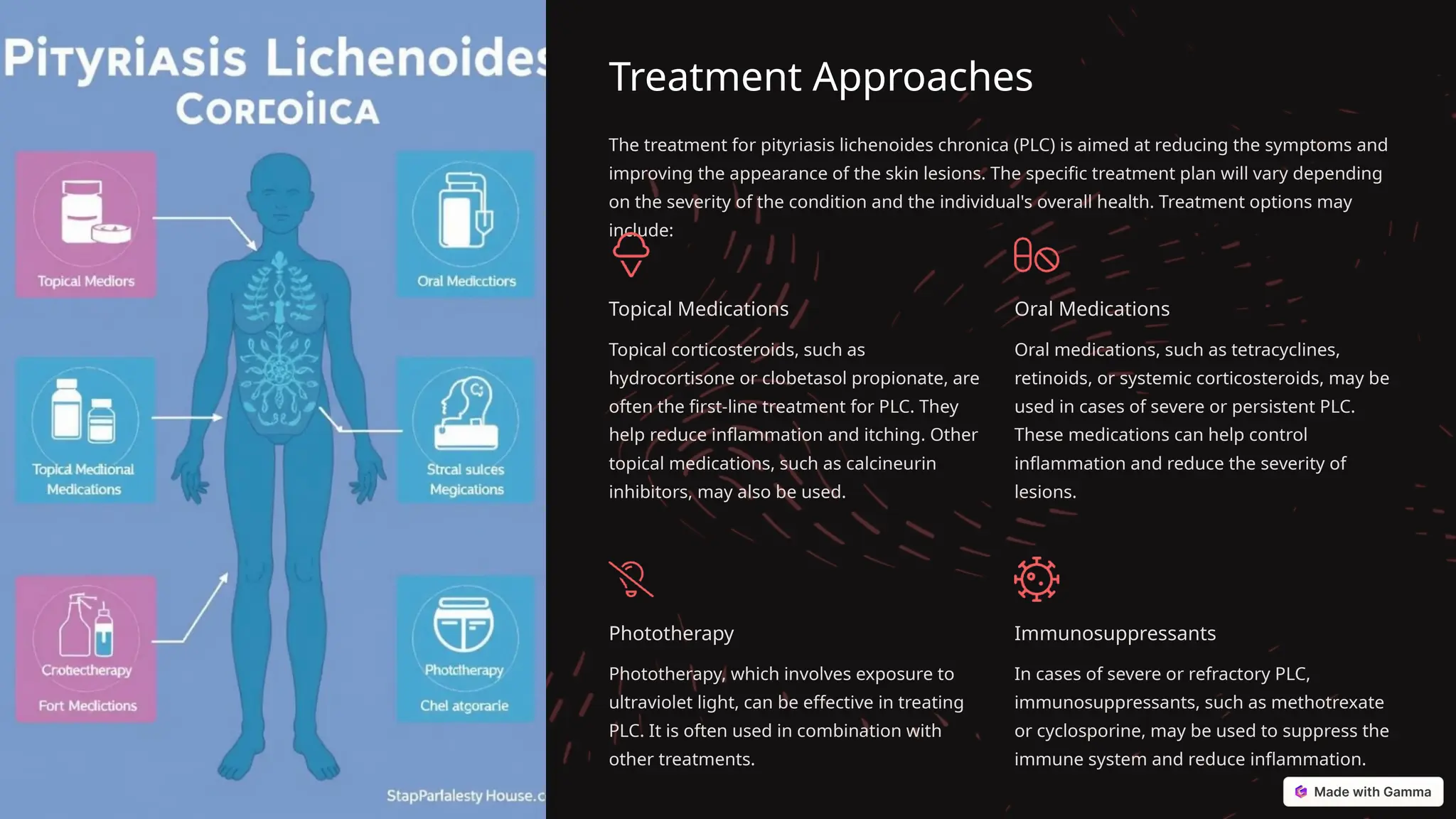
The treatment for pityriasis lichenoides chronica (PLC) is aimed at reducing the symptoms and
improving the appearance of the skin lesions. The specific treatment plan will vary depending
on the severity of the condition and the individual's overall health. Treatment options may
include:
Topical Medications
Topical corticosteroids, such as
hydrocortisone or clobetasol propionate, are
often the first-line treatment for PLC. They
help reduce inflammation and itching. Other
topical medications, such as calcineurin
inhibitors, may also be used.
Oral Medications
Oral medications, such as tetracyclines,
retinoids, or systemic corticosteroids, may be
used in cases of severe or persistent PLC.
These medications can help control
inflammation and reduce the severity of
lesions.
Phototherapy
Phototherapy, which involves exposure to
ultraviolet light, can be effective in treating
PLC. It is often used in combination with
other treatments.
Immunosuppressants
In cases of severe or refractory PLC,
immunosuppressants, such as methotrexate
or cyclosporine, may be used to suppress the
immune system and reduce inflammation.
Prognosis and Outcomes
The prognosis for pityriasis lichenoides chronica (PLC) is generally favorable, with most
individuals responding well to treatment. However, the condition can be persistent and
relapsing, meaning that lesions may recur even after treatment. It is important to work
closely with your dermatologist to develop a treatment plan that effectively manages your
condition and minimizes the risk of recurrence.
1 Treatment Response
Most individuals with PLC respond well to treatment, with a significant
reduction in the severity and frequency of lesions.
2 Recurrence
While most individuals experience relief with treatment, PLC can be
relapsing, meaning that lesions may recur even after treatment. The risk of
recurrence varies from person to person.
3 Long-Term Management
Long-term management of PLC often involves ongoing monitoring and
treatment to control symptoms and prevent recurrences.

Introduction-to-Pityriasis-Lichenoides-Chronica.pptx

  • 1.
    Introduction to Pityriasis Lichenoides Chronica Pityriasis lichenoideschronica (PLC) is a chronic, inflammatory skin disorder that causes persistent skin lesions. While the exact cause of PLC remains unknown, it is believed to be an autoimmune reaction. This presentation will delve deeper into the understanding of PLC, covering its definition, characteristics, epidemiology, etiology, clinical presentation, diagnosis, treatment approaches, and prognosis. by Monther Al Gahafi
  • 2.
    Definition and Characteristics Pityriasislichenoides chronica (PLC) is a rare, chronic, and relapsing skin condition characterized by the appearance of small, itchy papules and scales. These lesions often occur on the trunk and limbs, particularly the arms and legs. The papules, which are typically 2-5 millimeters in diameter, are often red or brown and have a flat, slightly raised appearance. The scales are fine and can flake off easily, leaving behind a red or brown stain. PLC is a benign condition, meaning it is not cancerous, but it can be persistent and frustrating for individuals who experience it. 1 Chronic PLC is a long-term condition that can persist for several years, even with treatment. It is characterized by periods of active disease, where lesions appear and are itchy, followed by periods of remission, where the lesions fade or disappear. 2 Relapsing Even after treatment, PLC often recurs, meaning the lesions return. This can be frustrating for individuals with the condition, as they may experience periods of relief followed by another flare-up. 3 Benign PLC is a benign condition, meaning it is not cancerous. While it can be persistent and itchy, it is not associated with any serious health risks. 4 Itchy One of the most common symptoms of PLC is itching. The papules and scales can be itchy and uncomfortable, which can interfere with sleep and daily activities.
  • 3.
    Epidemiology and Prevalence Theexact prevalence of pityriasis lichenoides chronica (PLC) is unknown, as it is a rare condition. However, studies have suggested that it affects approximately 1 in 100,000 people worldwide. PLC can occur at any age, but it is more common in adults, with a slight male predominance. The condition is typically diagnosed in individuals between the ages of 20 and 40, but it can occur in younger or older individuals as well. Region Prevalence North America 1 in 150,000 Europe 1 in 120,000 Asia 1 in 200,000 Africa 1 in 250,000 Australia 1 in 100,000
  • 4.
    Etiology and Pathogenesis Theexact cause of pityriasis lichenoides chronica (PLC) is unknown, but it is believed to be an autoimmune reaction. The immune system, which normally protects the body from foreign invaders like bacteria and viruses, mistakenly attacks healthy skin cells. This leads to the inflammation and skin lesions that characterize PLC. While the exact trigger for this autoimmune reaction is not known, it is thought to be related to a combination of genetic and environmental factors. Recent research suggests that certain viral infections, such as Epstein-Barr virus (EBV), may play a role in the development of PLC. Genetic Predisposition Some individuals may have a genetic predisposition to develop PLC. This means that they may have certain genes that make them more susceptible to developing the condition. Environmental Triggers Environmental factors, such as exposure to certain chemicals or allergens, may also contribute to the development of PLC. These triggers can vary from person to person. Viral Infections Viral infections, particularly those caused by the Epstein-Barr virus (EBV), have been linked to the development of PLC. This suggests that a viral infection may trigger the autoimmune reaction that leads to the skin lesions.
  • 5.
    Clinical Presentation andDiagnosis The clinical presentation of pityriasis lichenoides chronica (PLC) can vary from person to person. The most common symptom is the appearance of small, itchy papules and scales on the skin. These lesions typically occur on the trunk, arms, and legs, but they can also appear on the face, neck, and scalp. The papules can be red or brown, and they often have a flat, slightly raised appearance. The scales are fine and can flake off easily, leaving behind a red or brown stain. Skin Examination A thorough physical examination of the skin is the primary diagnostic tool for PLC. The dermatologist will assess the appearance, distribution, and characteristics of the skin lesions. Histopathology In cases where the diagnosis is uncertain, a skin biopsy may be performed. This involves taking a small sample of the affected skin and examining it under a microscope. Exclusion of Other Conditions The dermatologist will rule out other skin conditions that may have similar symptoms, such as eczema, psoriasis, or lichen planus.
  • 6.
    Differential Diagnosis It isessential to distinguish pityriasis lichenoides chronica (PLC) from other skin conditions that may share similar symptoms. Some of the most common conditions that need to be considered in the differential diagnosis of PLC include: Eczema Eczema, also known as atopic dermatitis, is a common inflammatory skin condition characterized by dry, itchy, and red skin. While eczema can cause papules and scales, they are often more widespread and associated with other symptoms, such as dryness, cracking, and oozing. Psoriasis Psoriasis is a chronic skin condition that causes red, scaly plaques on the skin. While psoriasis can sometimes resemble PLC, the plaques are typically larger and more sharply defined, and they may have a silvery or white scale. Lichen Planus Lichen planus is a chronic inflammatory skin condition that causes flat, itchy, and often purple or white lesions. While lichen planus can have papules and scales, they are often more symmetrical and may have a characteristic lacy or reticular pattern.
  • 7.
    Treatment Approaches The treatmentfor pityriasis lichenoides chronica (PLC) is aimed at reducing the symptoms and improving the appearance of the skin lesions. The specific treatment plan will vary depending on the severity of the condition and the individual's overall health. Treatment options may include: Topical Medications Topical corticosteroids, such as hydrocortisone or clobetasol propionate, are often the first-line treatment for PLC. They help reduce inflammation and itching. Other topical medications, such as calcineurin inhibitors, may also be used. Oral Medications Oral medications, such as tetracyclines, retinoids, or systemic corticosteroids, may be used in cases of severe or persistent PLC. These medications can help control inflammation and reduce the severity of lesions. Phototherapy Phototherapy, which involves exposure to ultraviolet light, can be effective in treating PLC. It is often used in combination with other treatments. Immunosuppressants In cases of severe or refractory PLC, immunosuppressants, such as methotrexate or cyclosporine, may be used to suppress the immune system and reduce inflammation.
  • 8.
    Prognosis and Outcomes Theprognosis for pityriasis lichenoides chronica (PLC) is generally favorable, with most individuals responding well to treatment. However, the condition can be persistent and relapsing, meaning that lesions may recur even after treatment. It is important to work closely with your dermatologist to develop a treatment plan that effectively manages your condition and minimizes the risk of recurrence. 1 Treatment Response Most individuals with PLC respond well to treatment, with a significant reduction in the severity and frequency of lesions. 2 Recurrence While most individuals experience relief with treatment, PLC can be relapsing, meaning that lesions may recur even after treatment. The risk of recurrence varies from person to person. 3 Long-Term Management Long-term management of PLC often involves ongoing monitoring and treatment to control symptoms and prevent recurrences.