LECTURE NO.1
Veterinary General Pathology 301
Practical Class
Learning Outcomes
• By the end of the lecture you should be able to:
• Define Pathology in two ways
• Define General Pathology
• Discuss about the Morphological Changes
• Explain lesion and types of the Lesion
• Define Gross examination and Histopathology
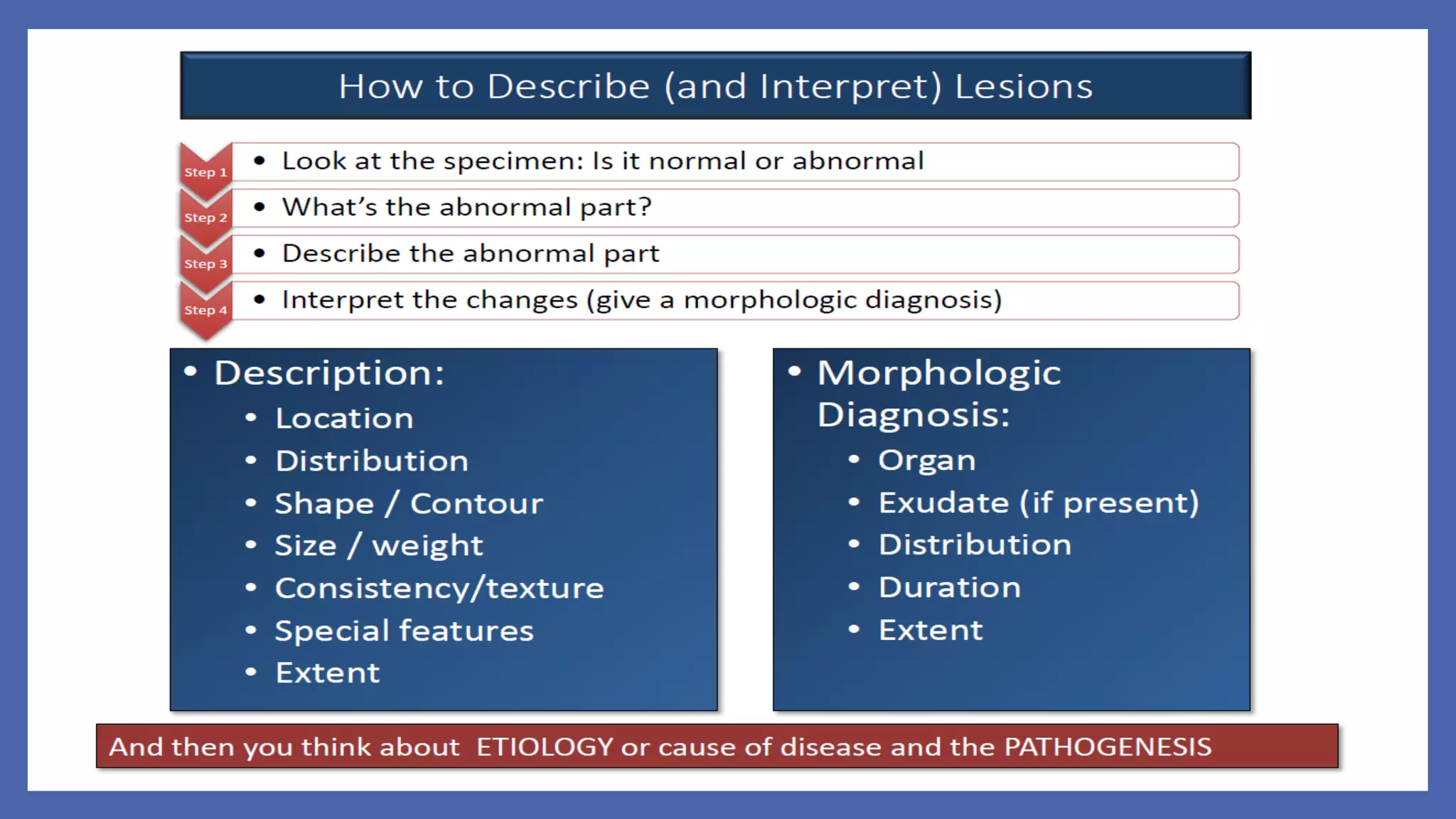
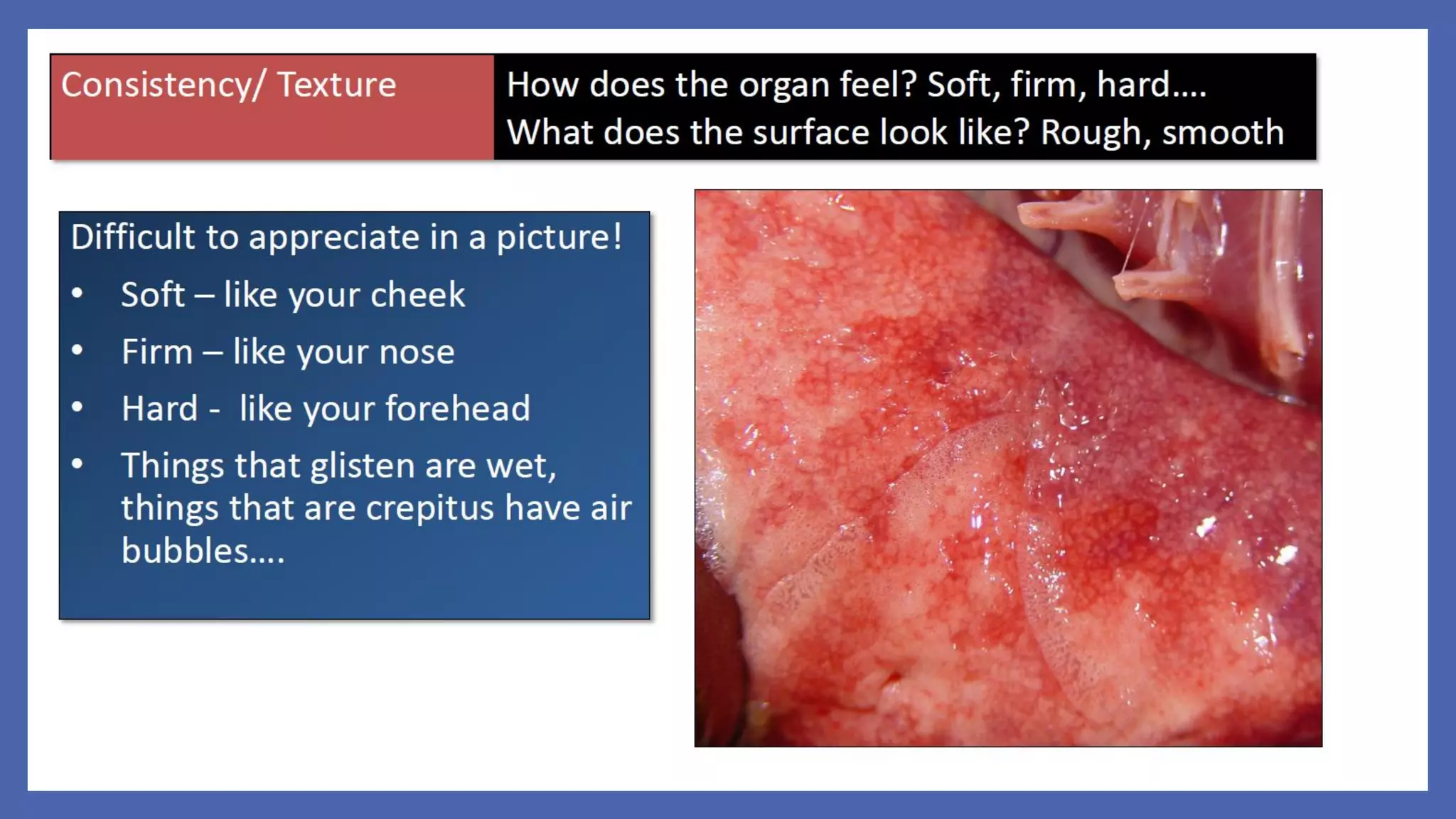
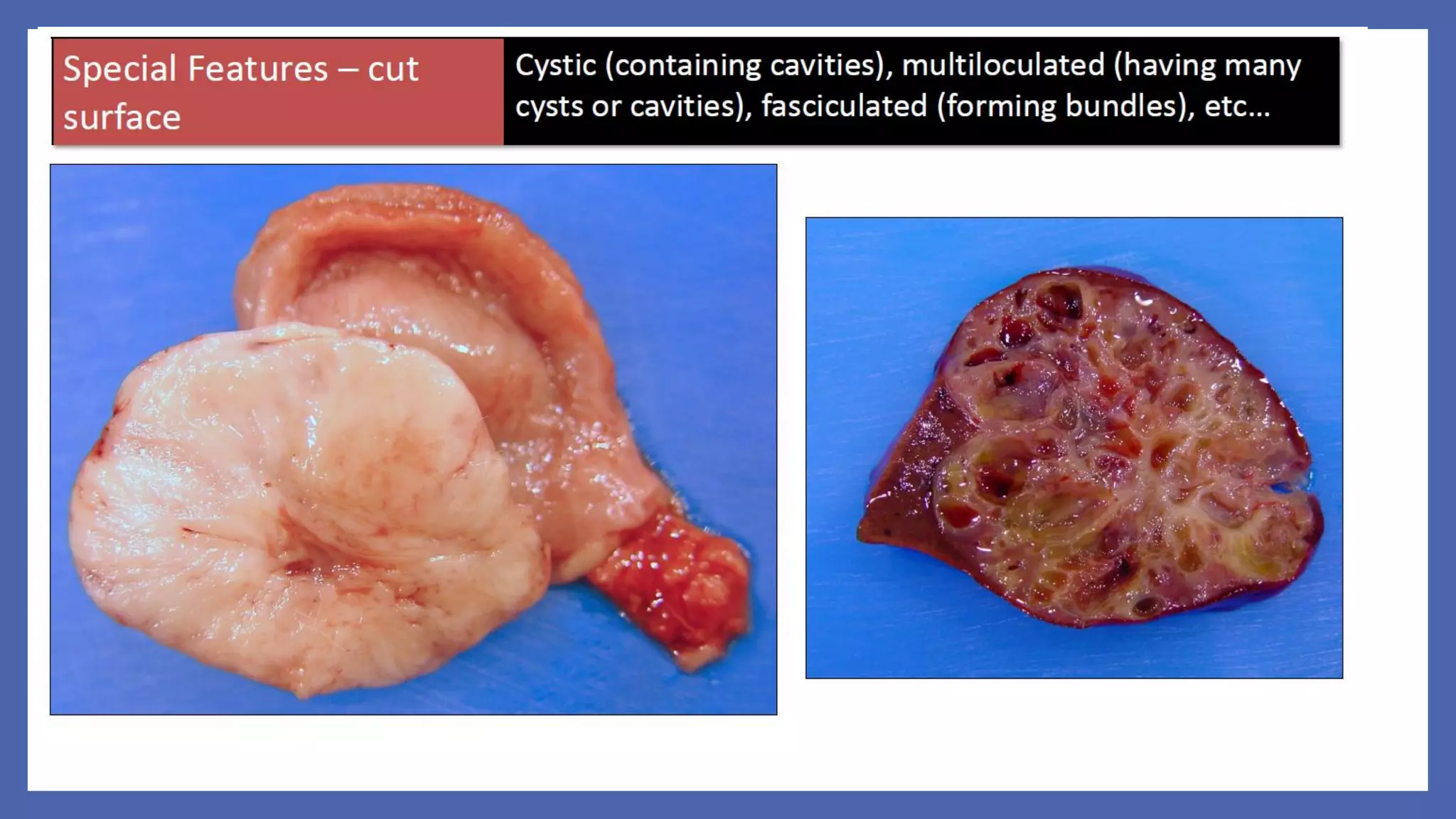
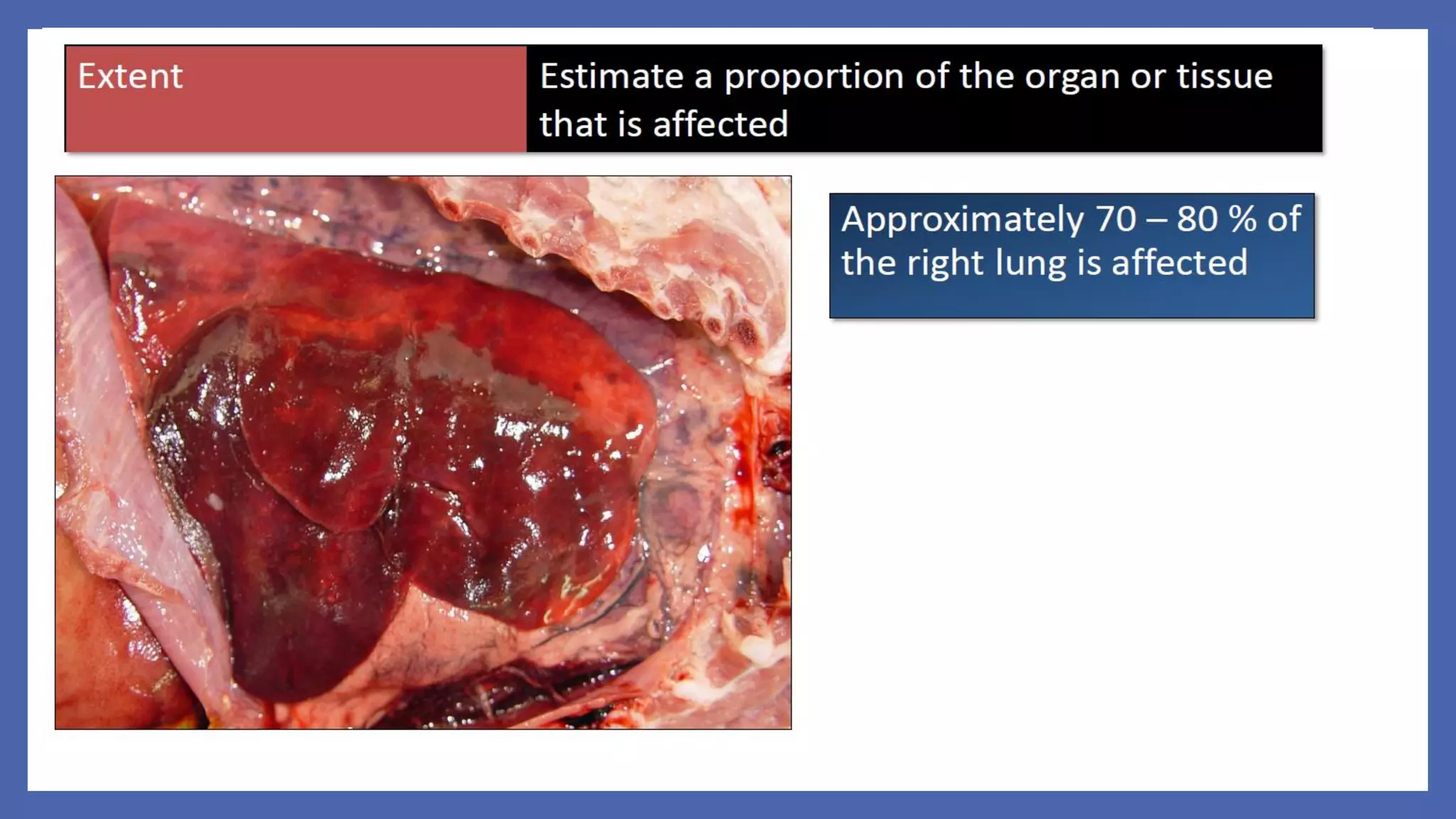
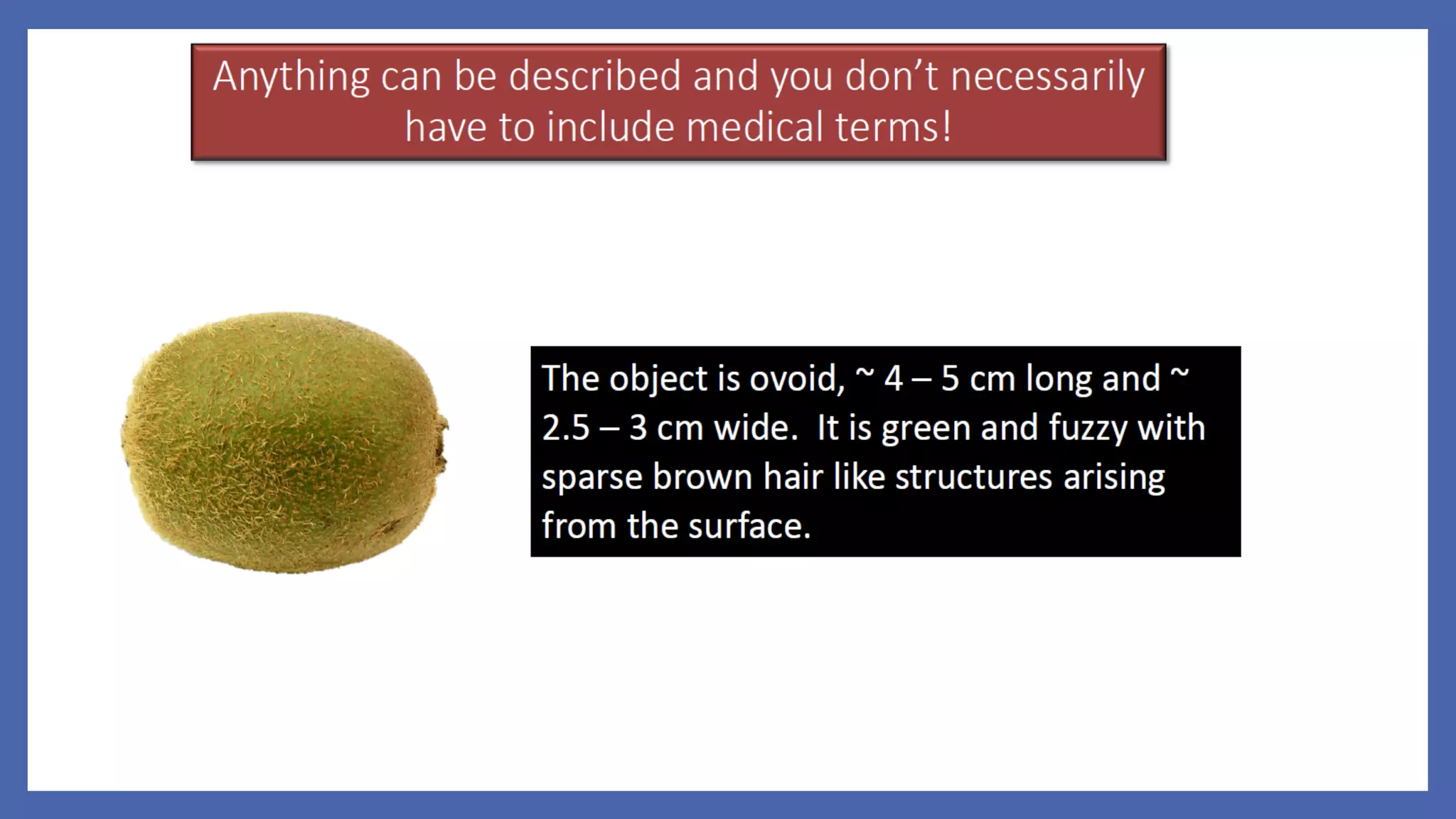
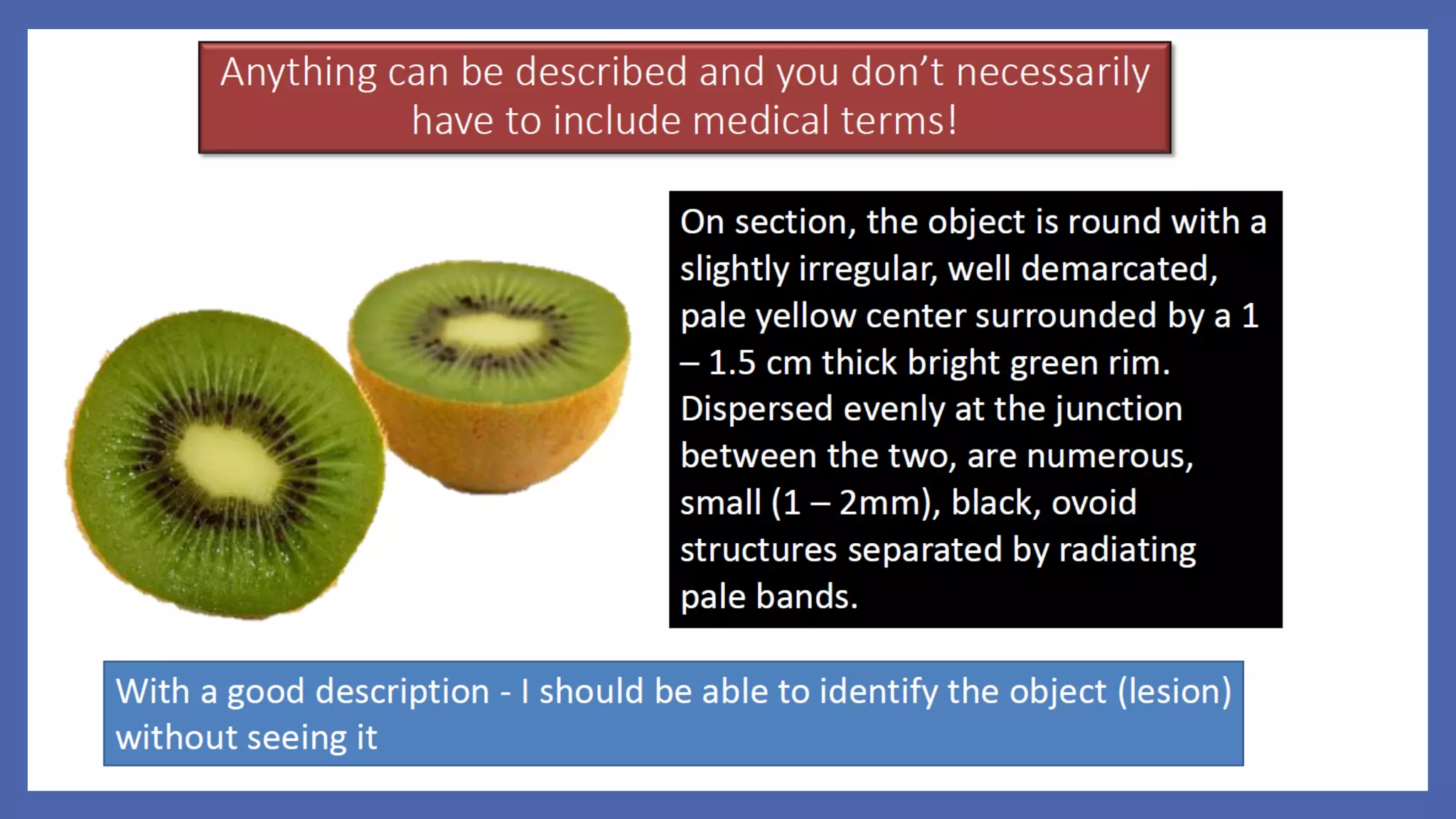
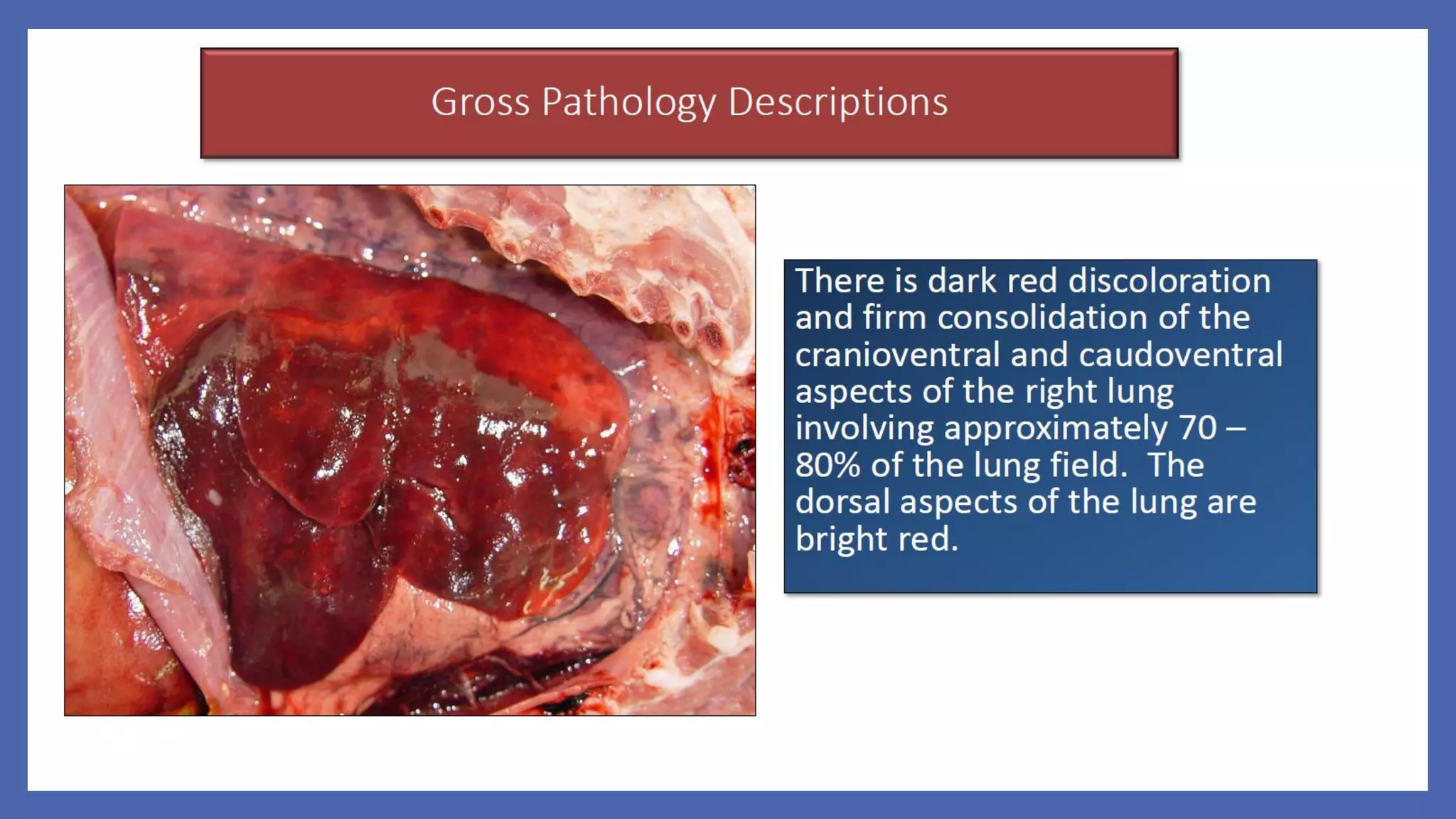
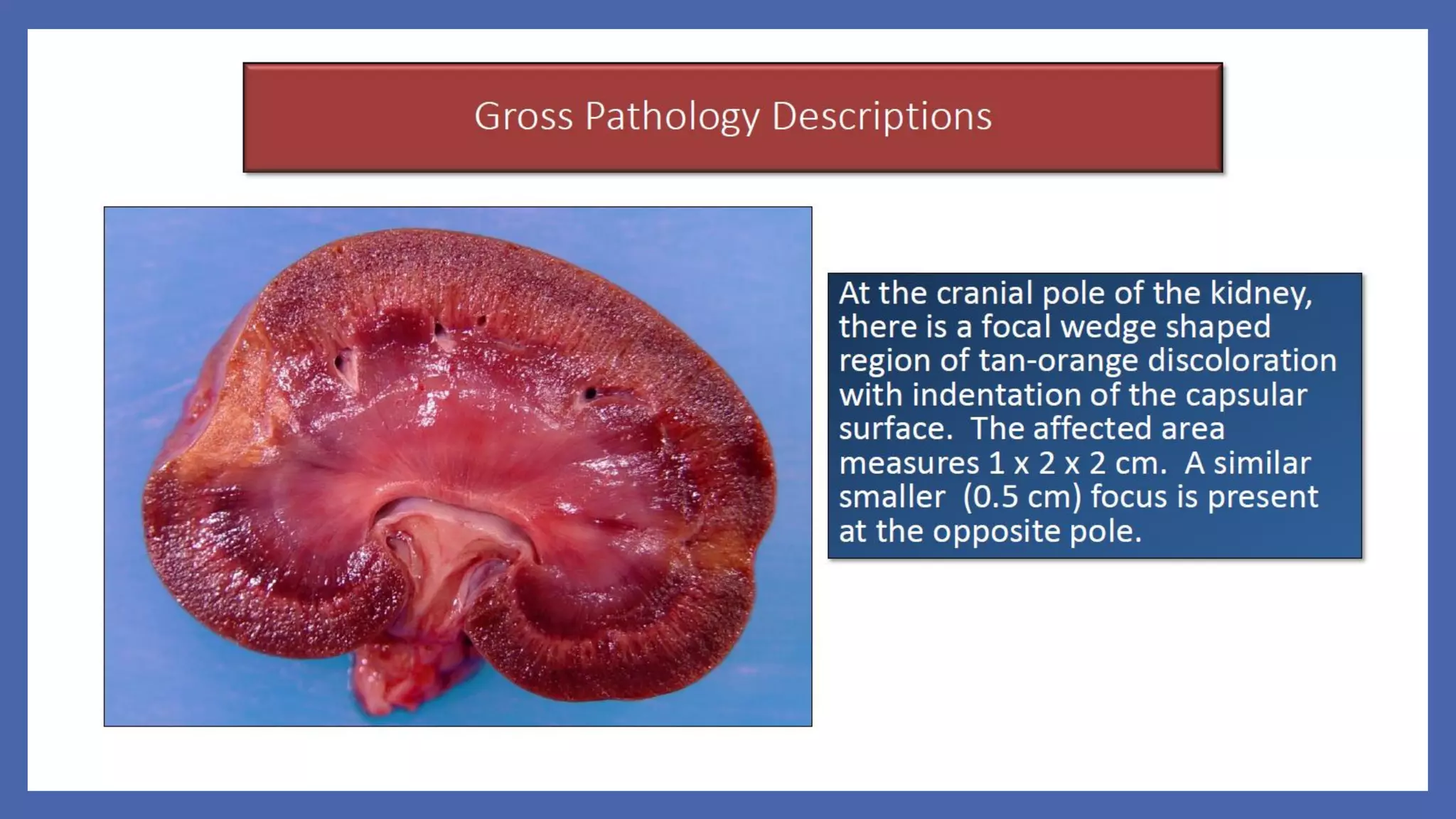
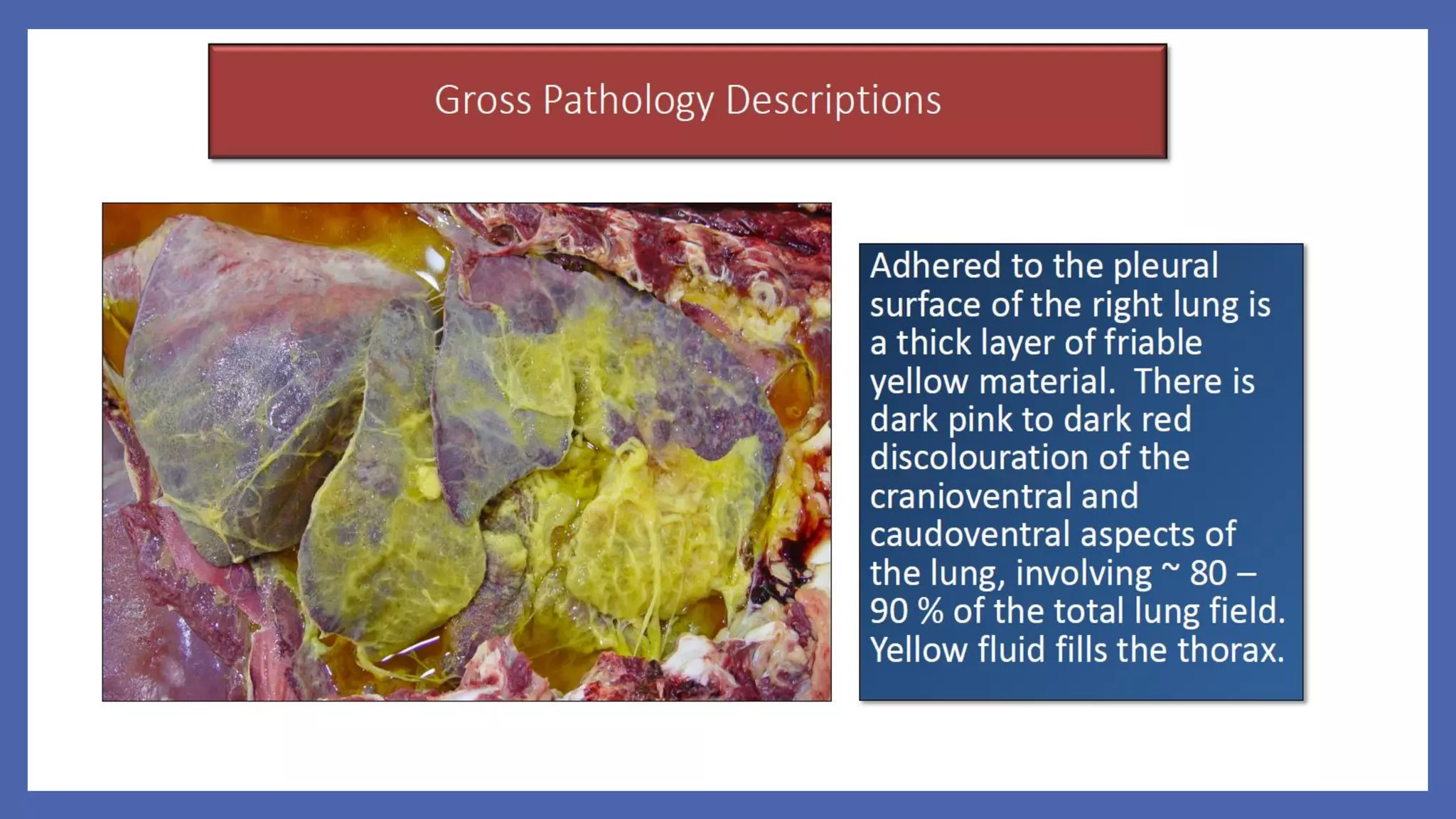
• How to describe the Lesion in Gross examination
Introduction to Pathology
•Pathology:
• Pathology is the study of Disease.
• Pathos – suffering, disease
• Logos – study
Disease?
*loss of ease
*a departure from a
normal state
The better we understand the disease, the better we
can diagnose & treat it
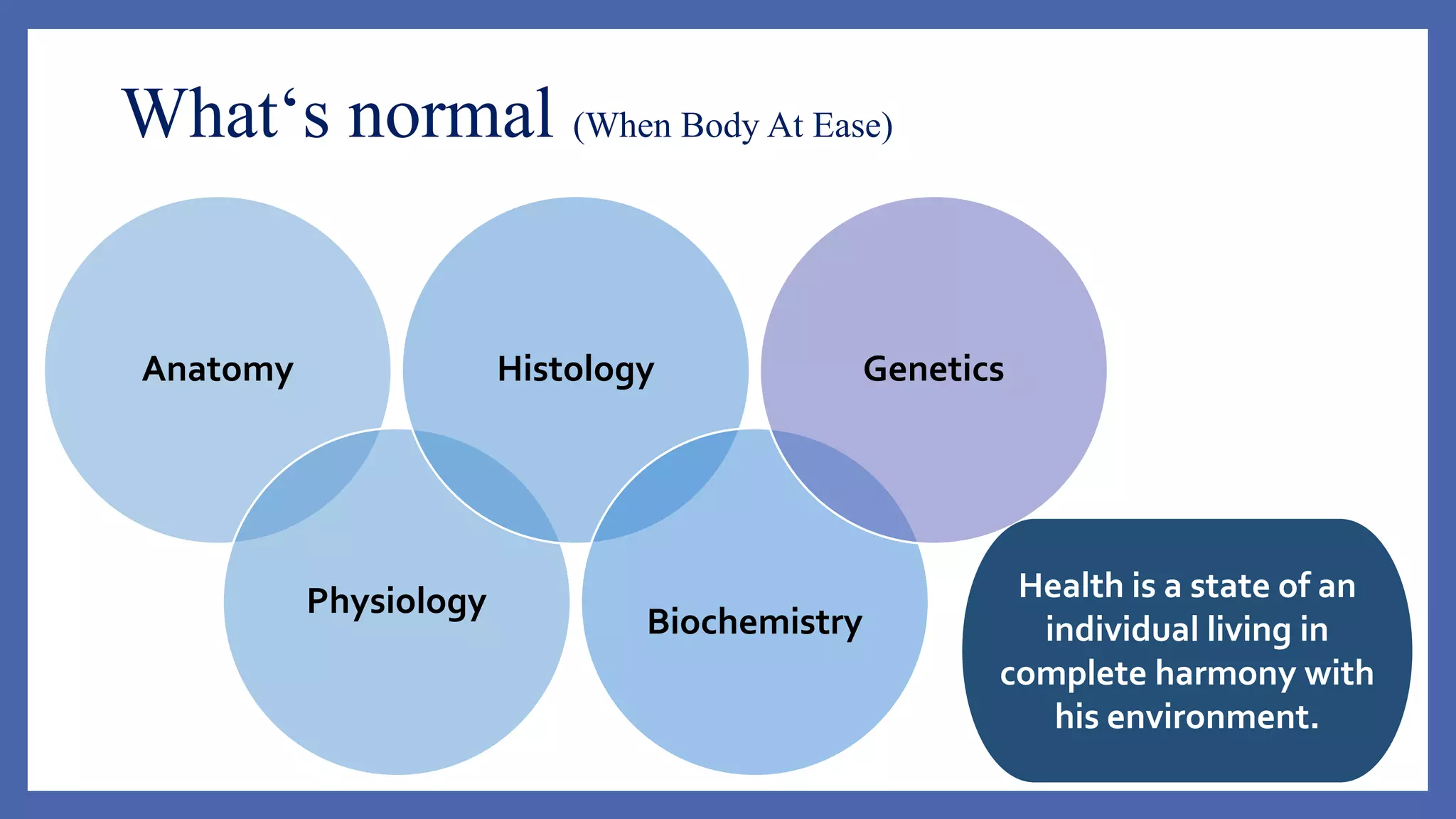
What‘s normal (When Body At Ease)
Anatomy
Physiology
Histology
Biochemistry
Genetics
Health is a state of an
individual living in
complete harmony with
his environment.
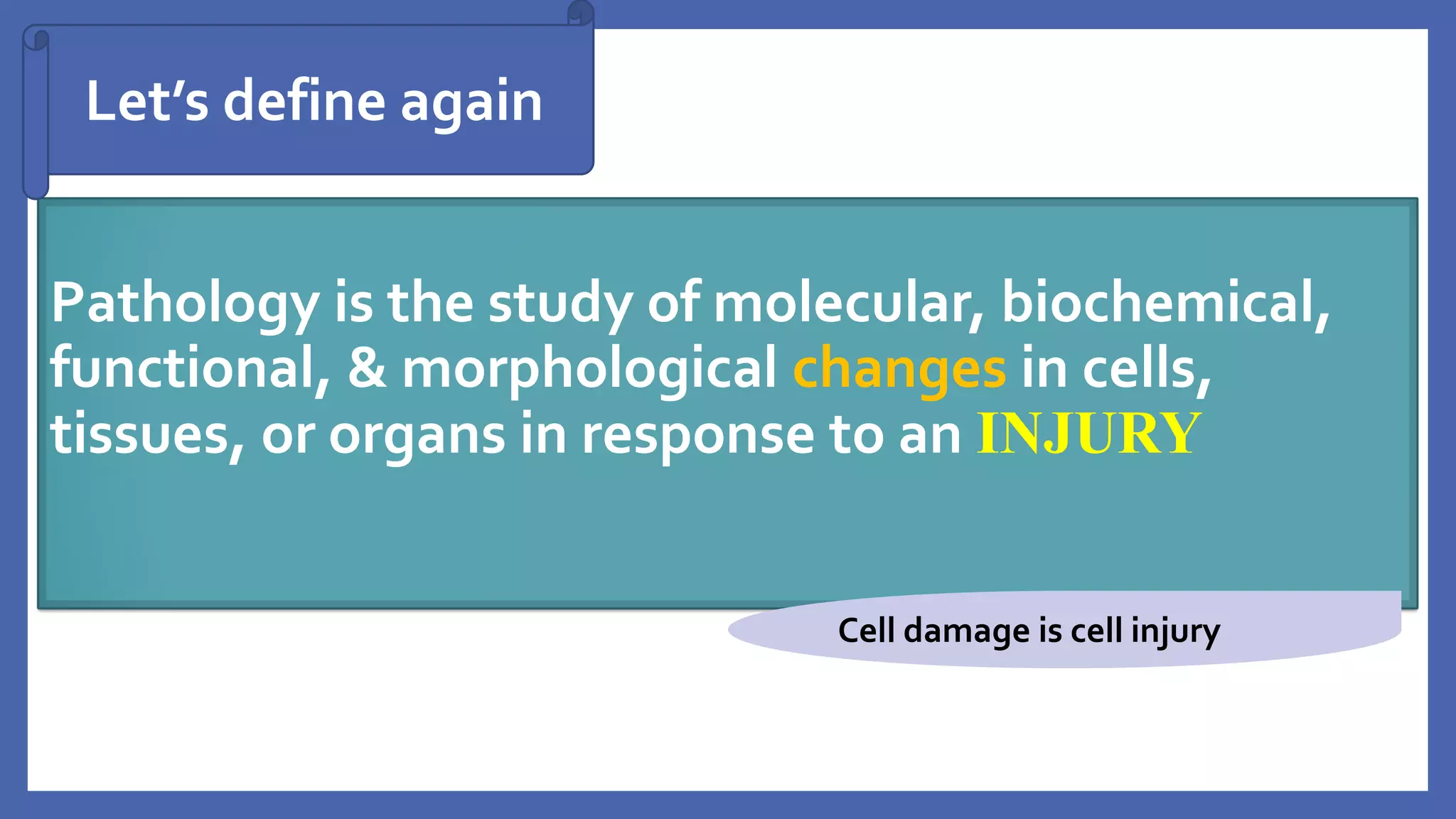
Pathology is the study of molecular, biochemical,
functional, & morphological changes in cells,
tissues, or organs in response to an INJURY
Let’s define again
Cell damage is cell injury
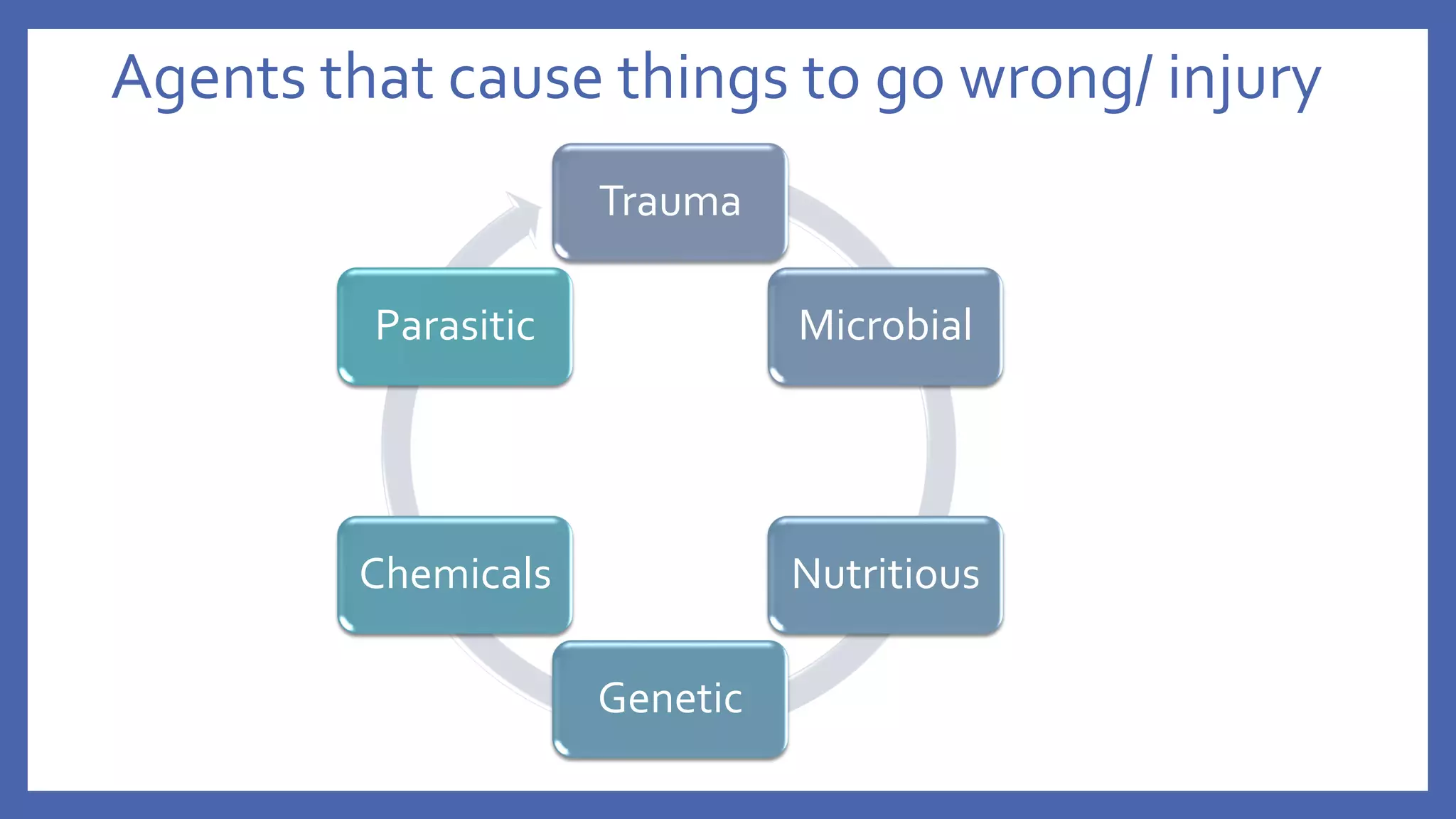
Agents that cause things to go wrong/ injury
Trauma
Microbial
Nutritious
Genetic
Chemicals
Parasitic
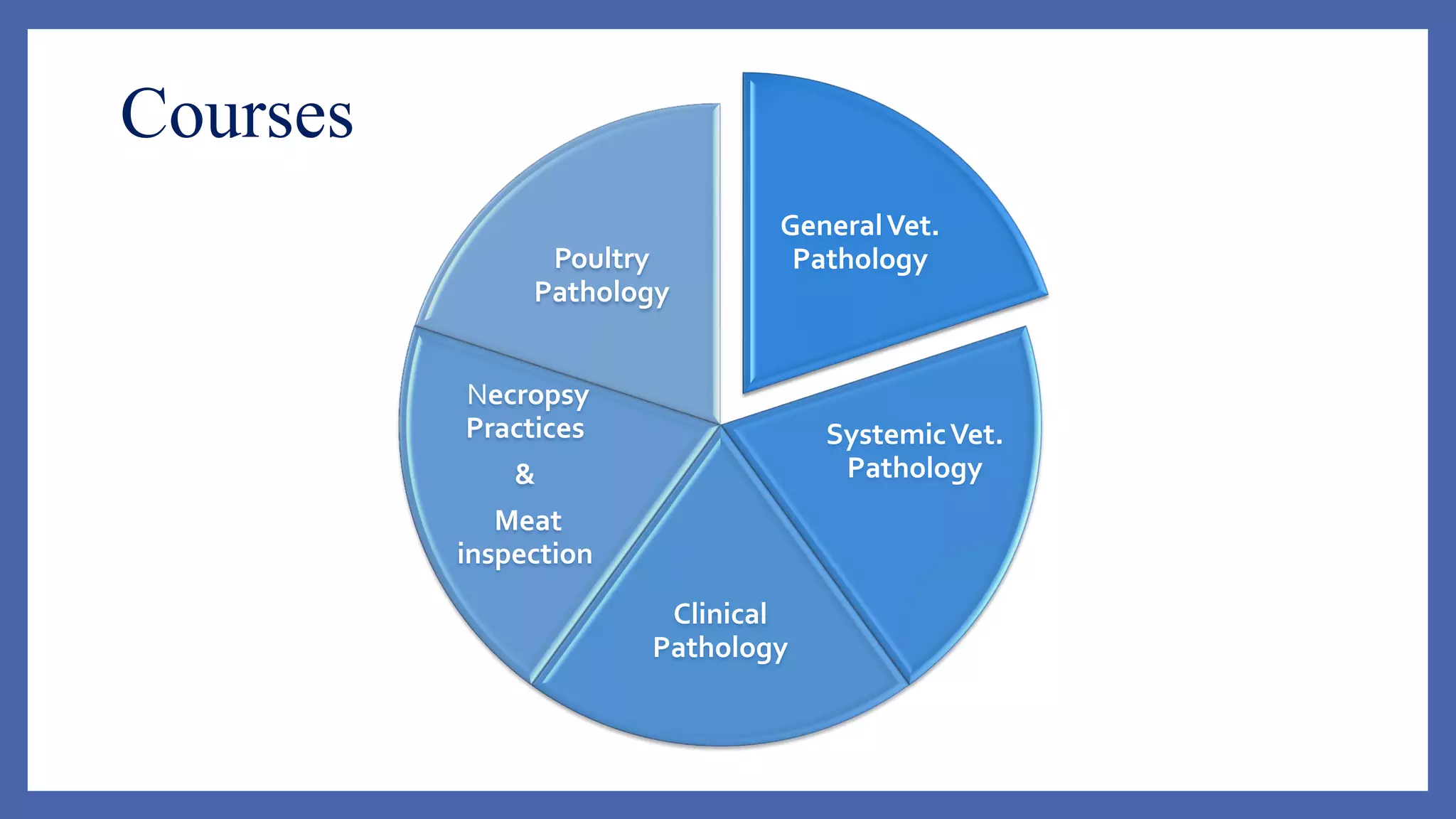
Courses
GeneralVet.
Pathology
SystemicVet.
Pathology
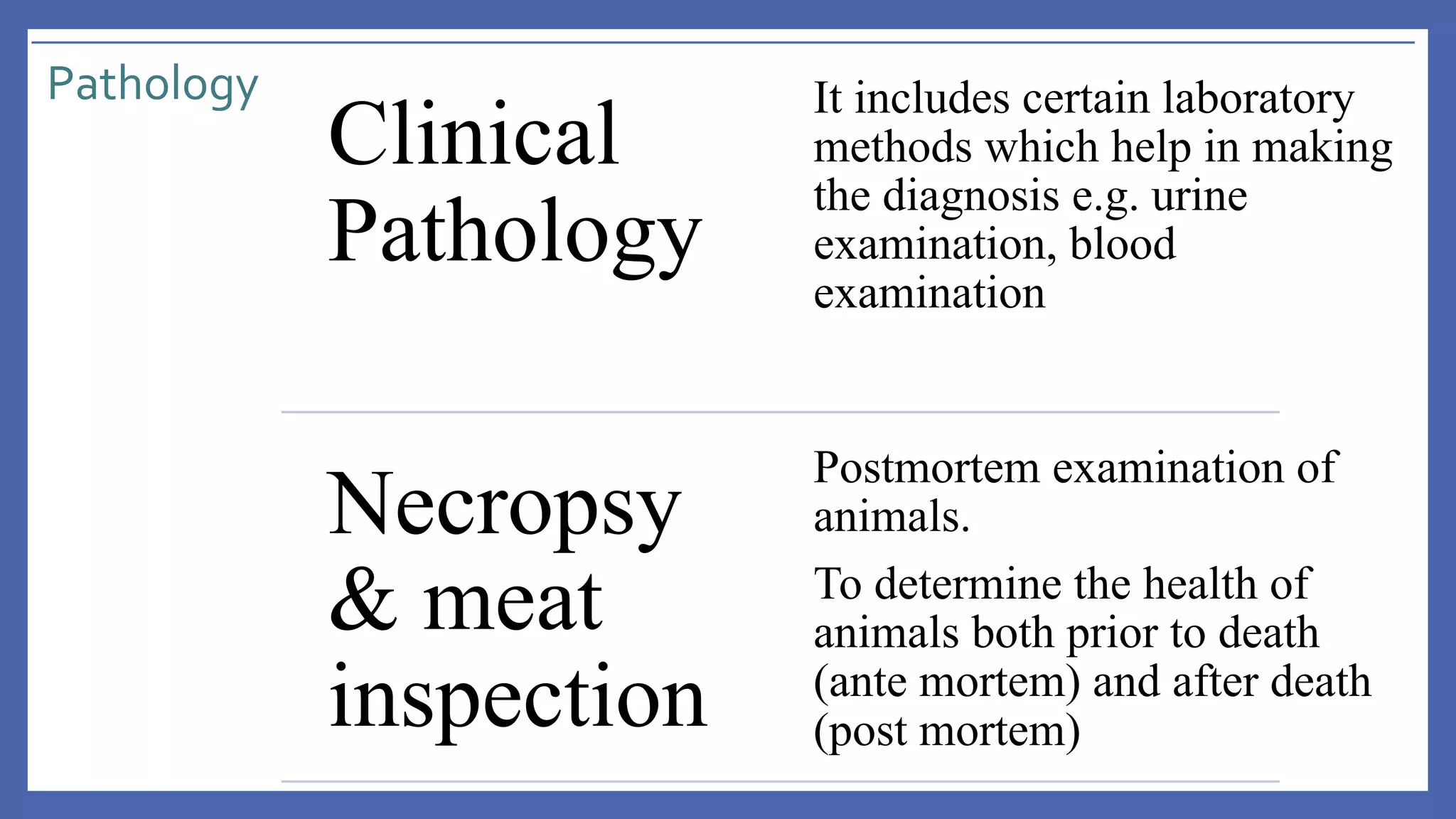
Clinical
Pathology
Necropsy
Practices
&
Meat
inspection
Poultry
Pathology
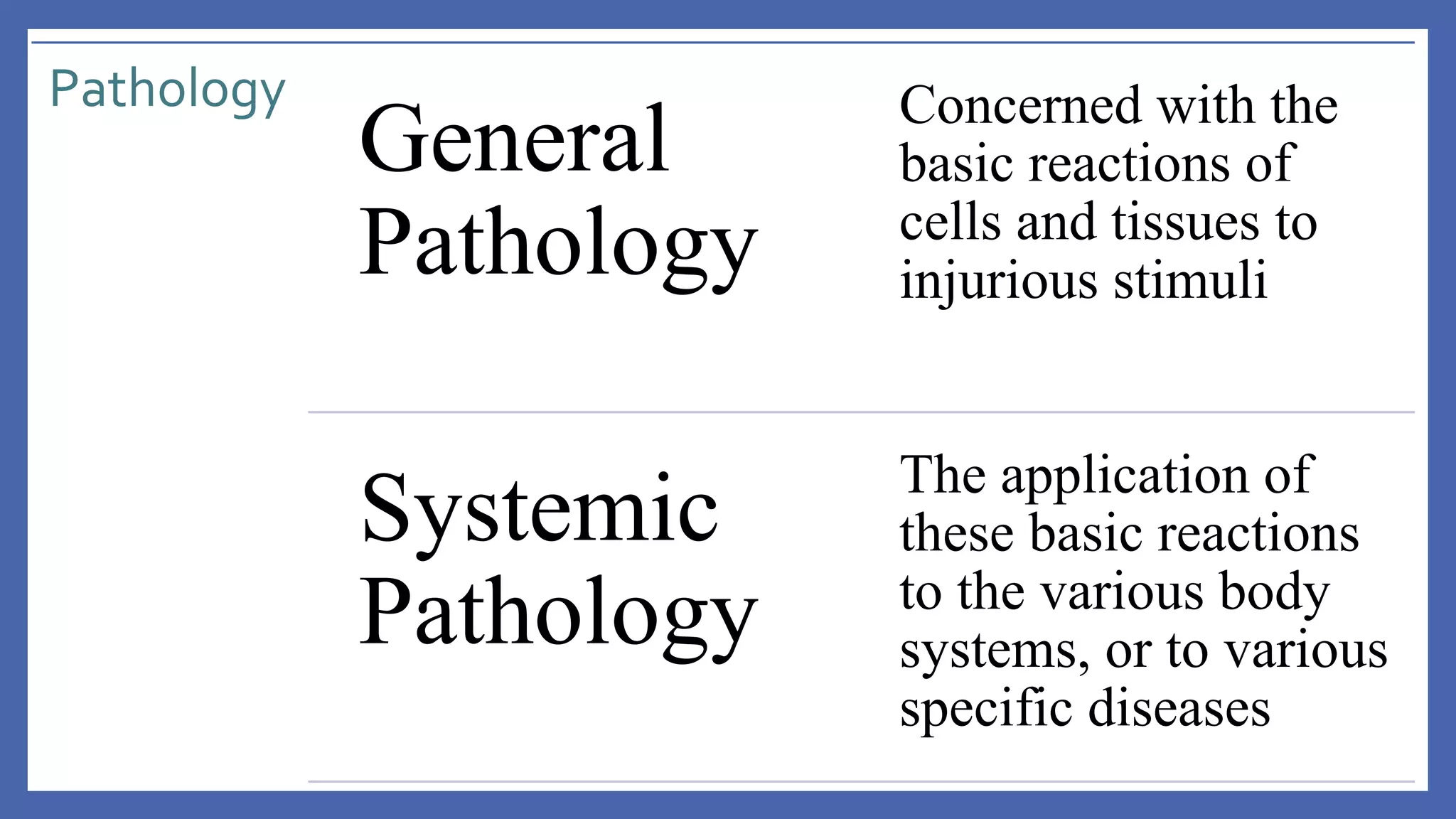
Pathology
General
Pathology
Concerned with the
basic reactions of
cells and tissues to
injurious stimuli
Systemic
Pathology
The application of
these basic reactions
to the various body
systems, or to various
specific diseases
Pathology
Clinical
Pathology
It includes certain laboratory
methods which help in making
the diagnosis e.g. urine
examination, blood
examination
Necropsy
& meat
inspection
Postmortem examination of
animals.
To determine the health of
animals both prior to death
(ante mortem) and after death
(post mortem)
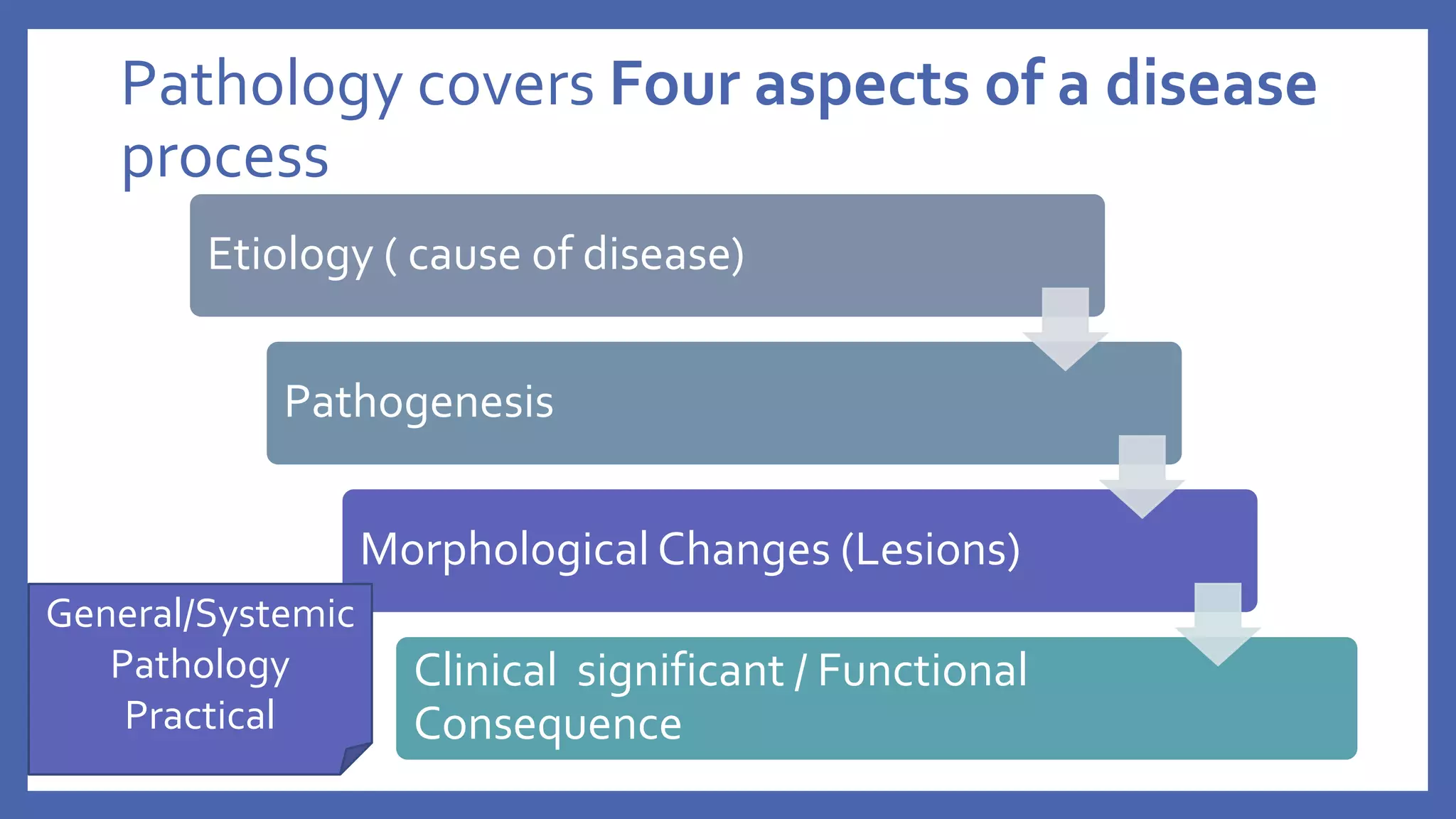
Pathology covers Four aspects of a disease
process
Etiology ( cause of disease)
Pathogenesis
Morphological Changes (Lesions)
Clinical significant / Functional
Consequence
General/Systemic
Pathology
Practical
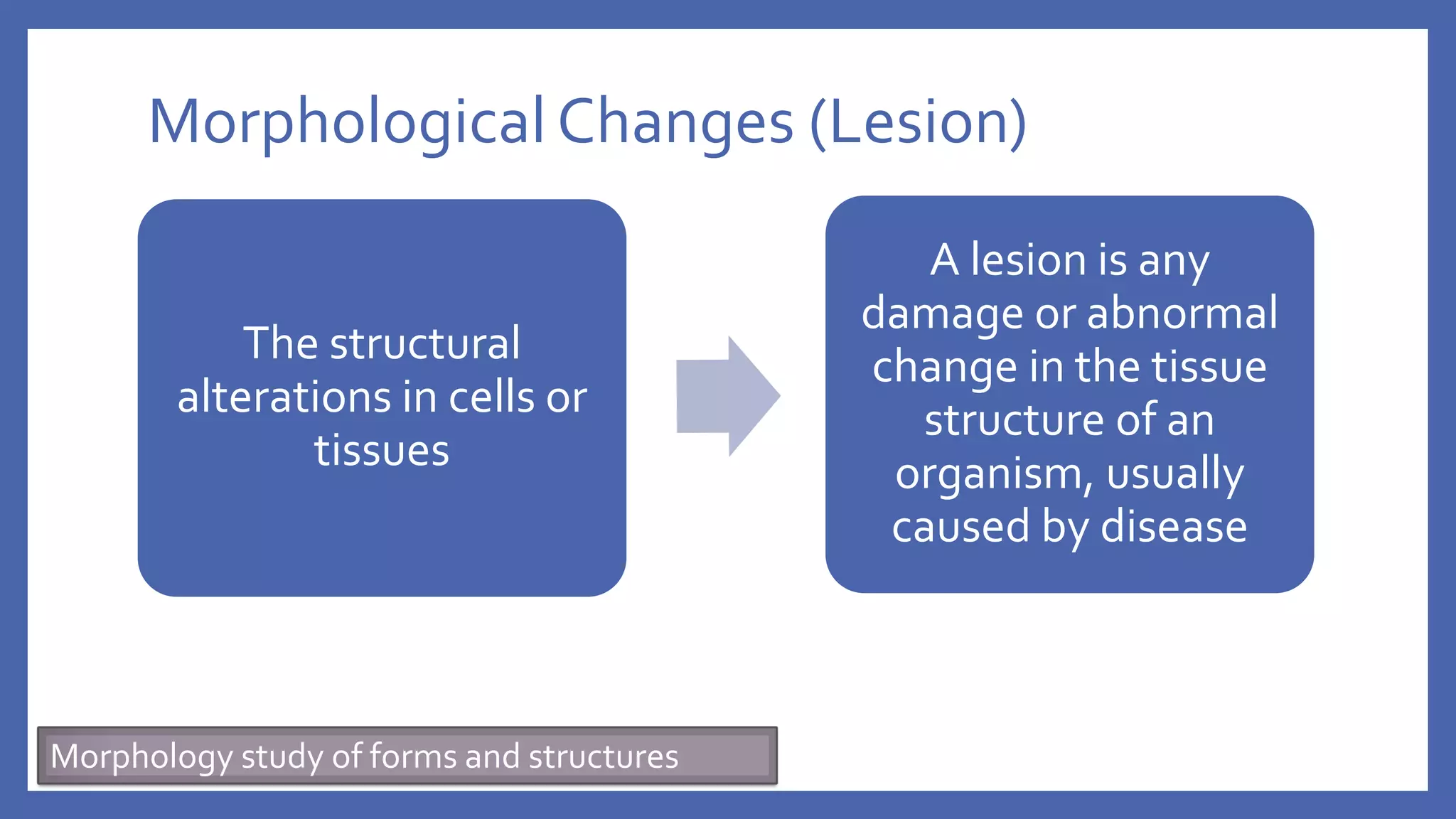
Morphological Changes (Lesion)
The structural
alterations in cells or
tissues
A lesion is any
damage or abnormal
change in the tissue
structure of an
organism, usually
caused by disease
Morphology study of forms and structures
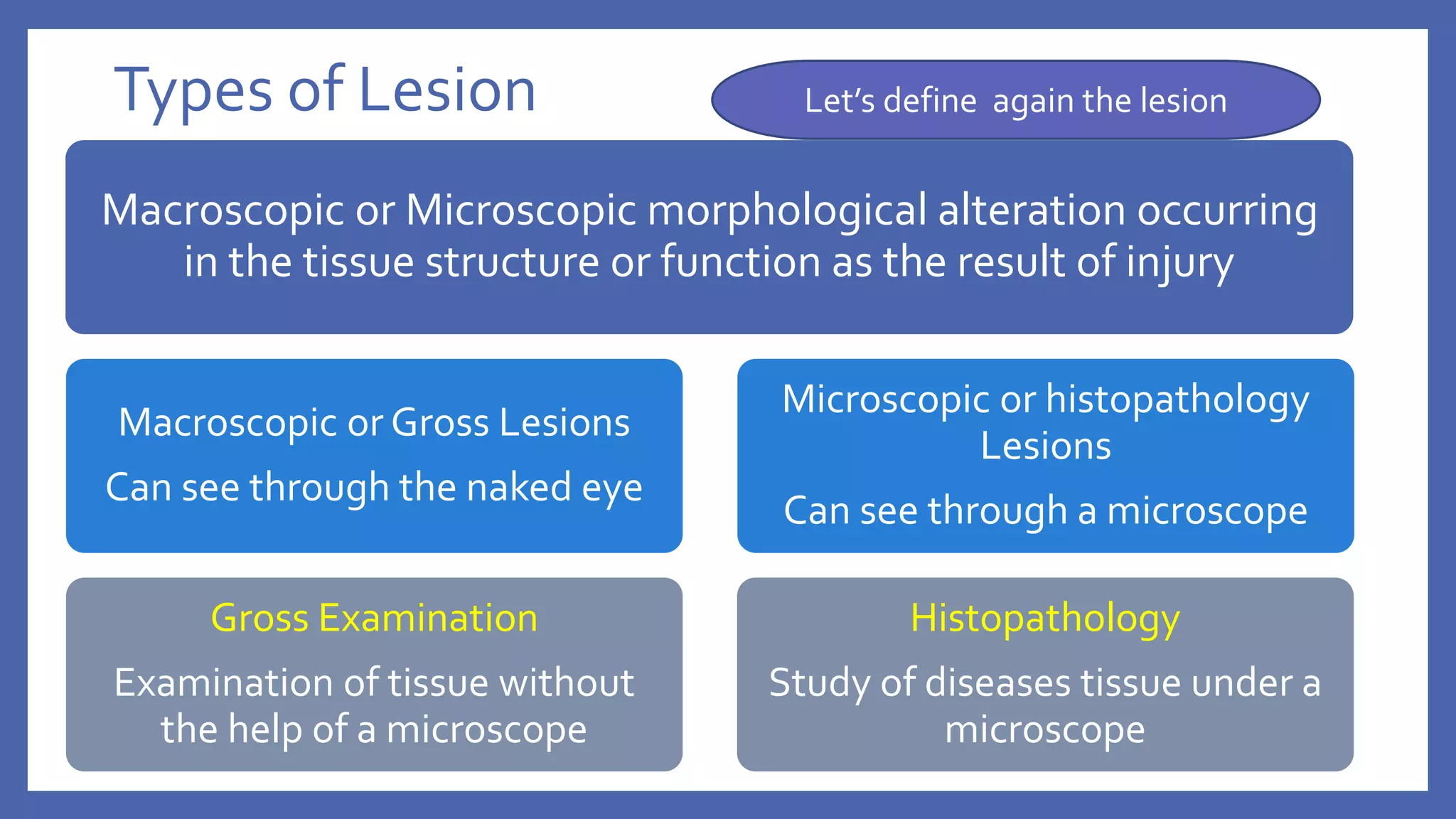
Types of Lesion
Macroscopic or Microscopic morphological alteration occurring
in the tissue structure or function as the result of injury
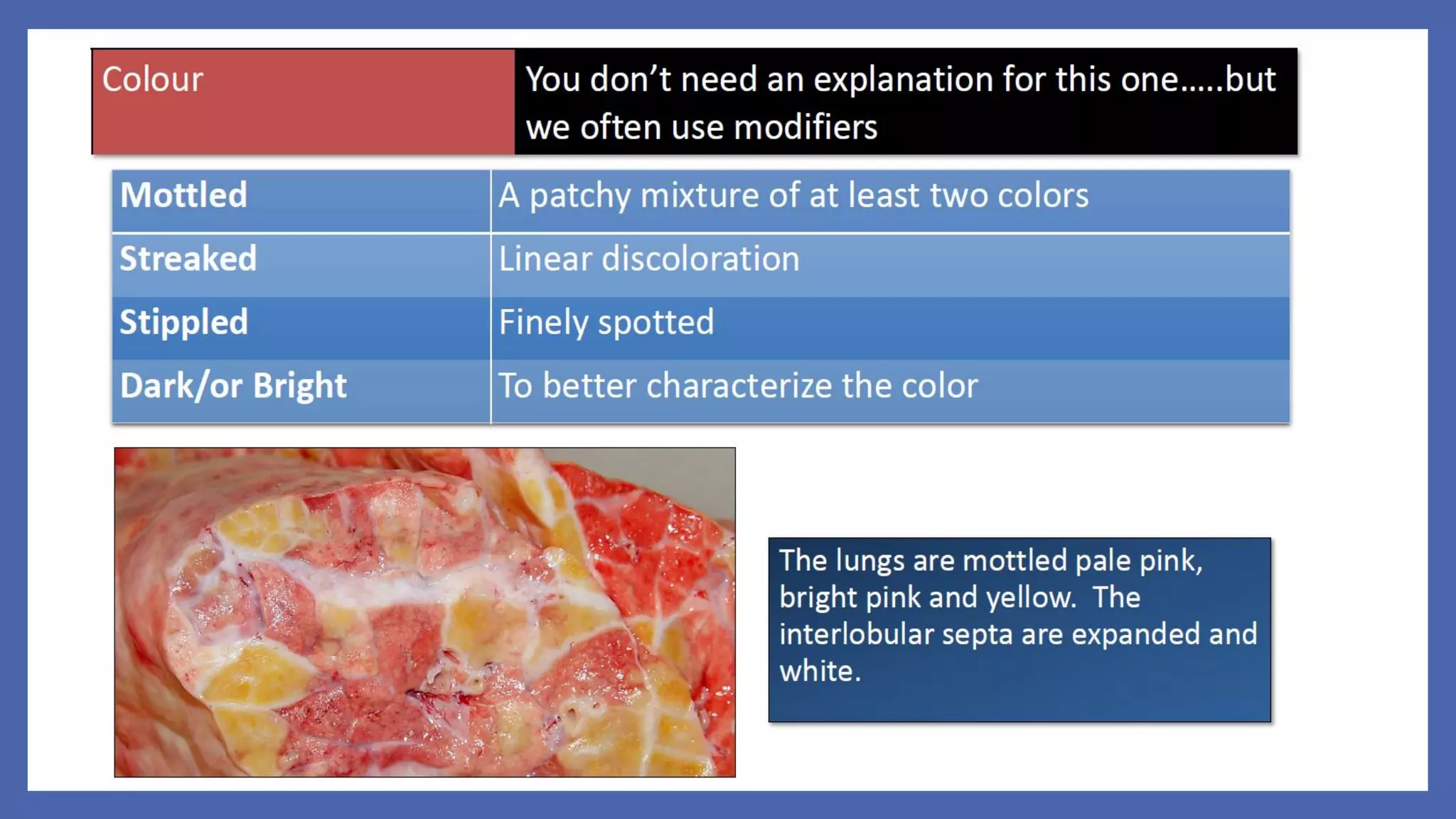
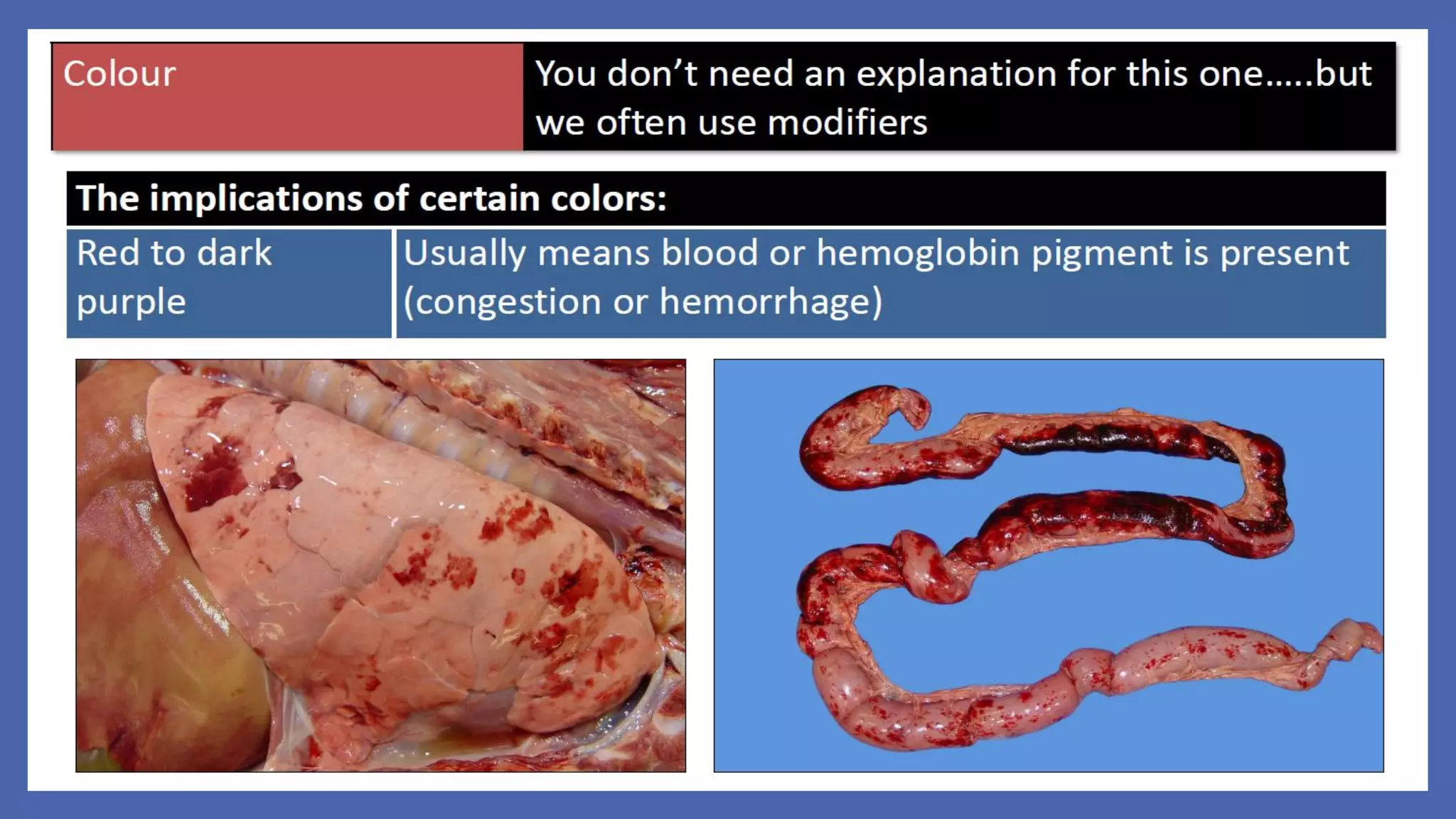
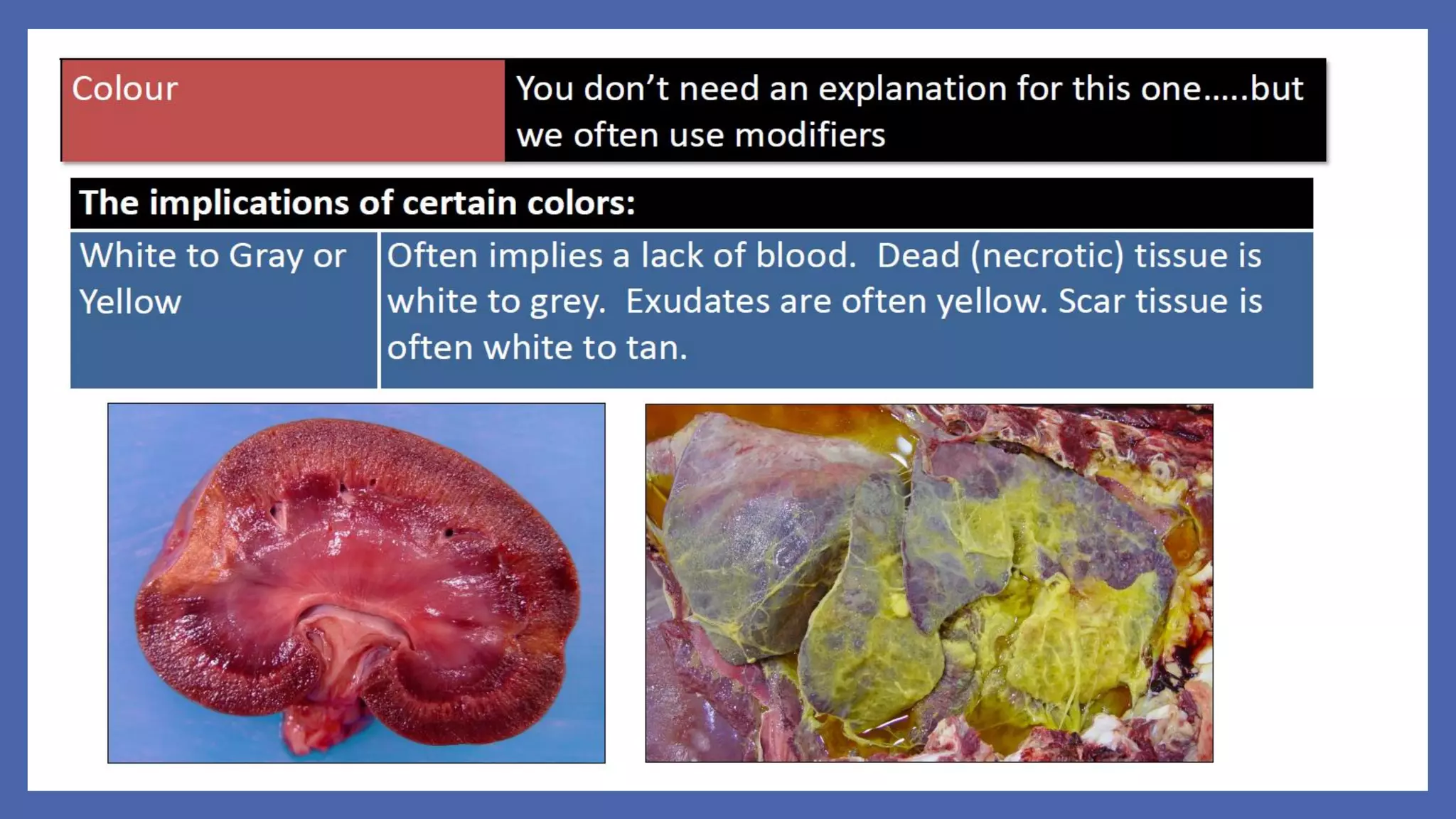
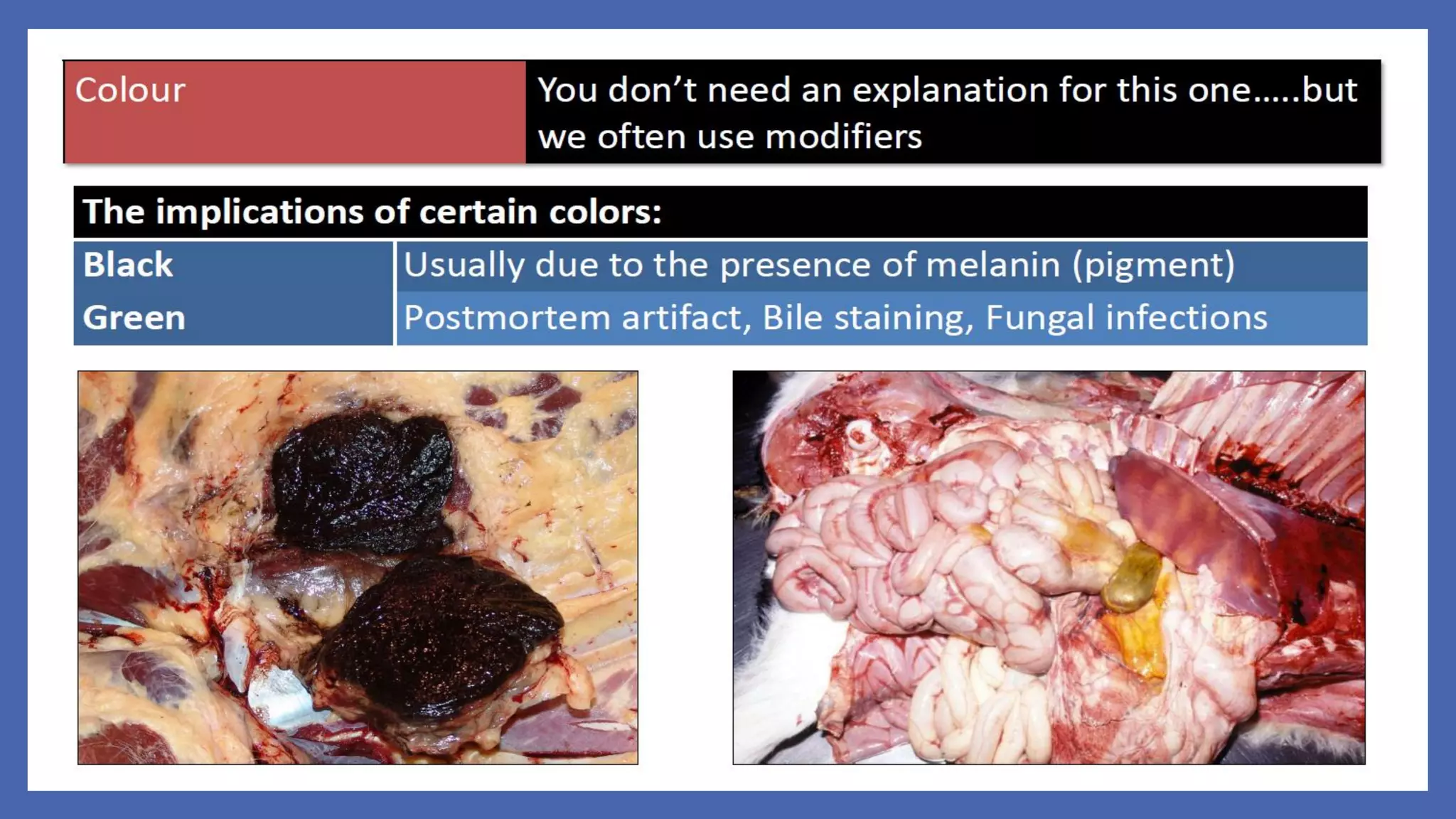
Macroscopic or Gross Lesions
Can see through the naked eye
Gross Examination
Examination of tissue without
the help of a microscope
Microscopic or histopathology
Lesions
Can see through a microscope
Histopathology
Study of diseases tissue under a
microscope
Let’s define again the lesion
GROSS EXAMINATION
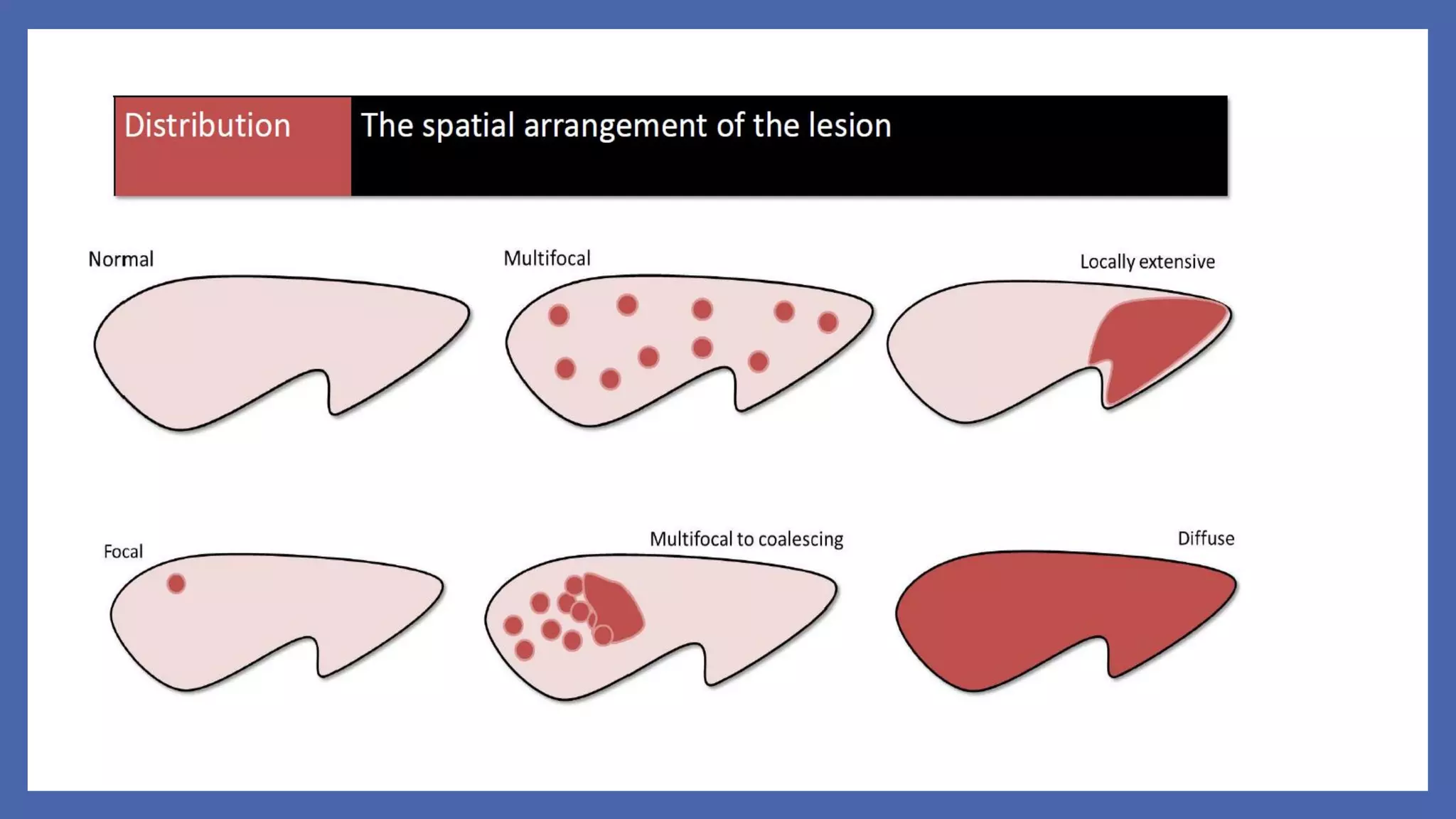
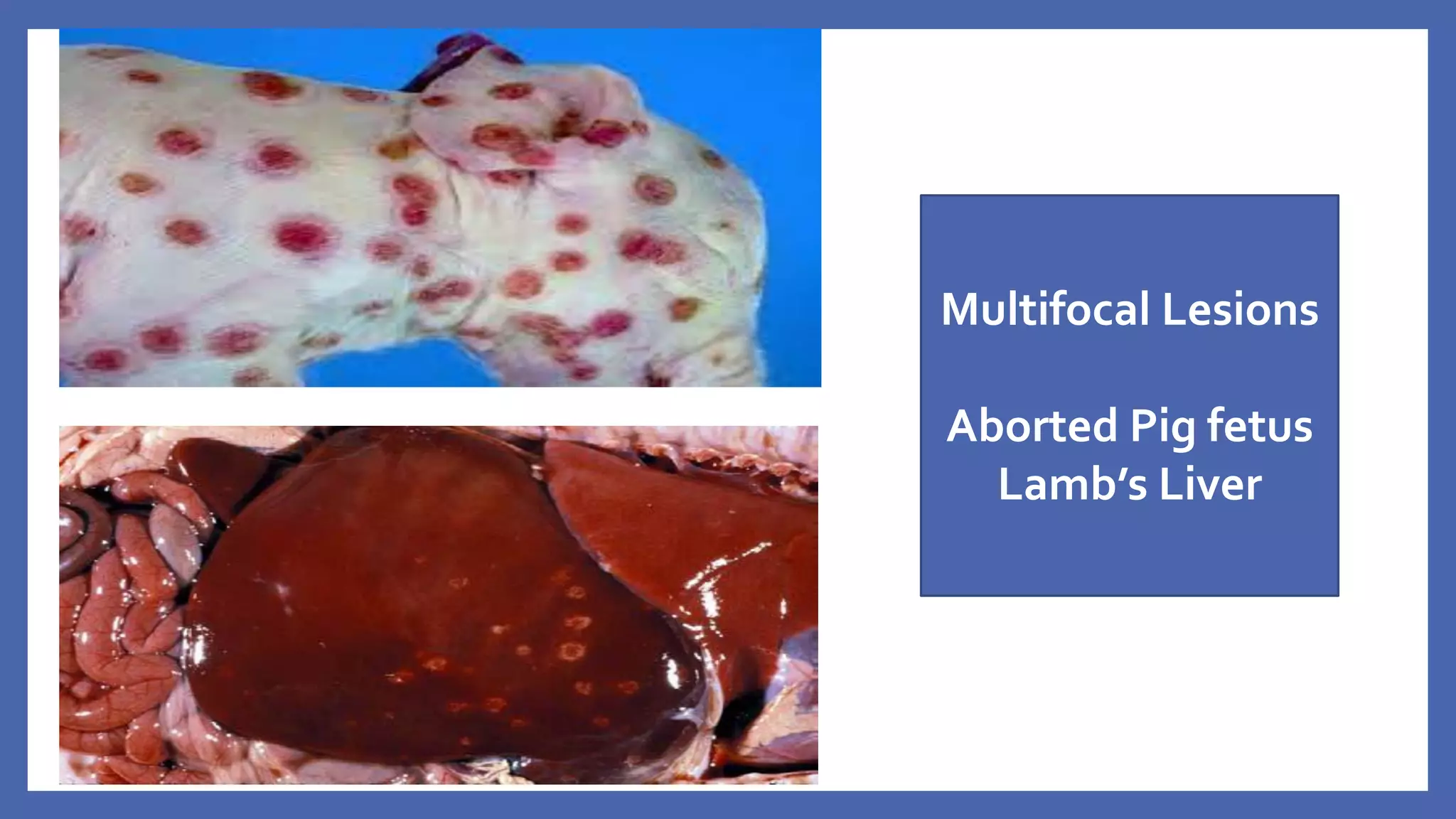
Multifocal Lesions
Aborted Pig fetus
Lamb’s Liver
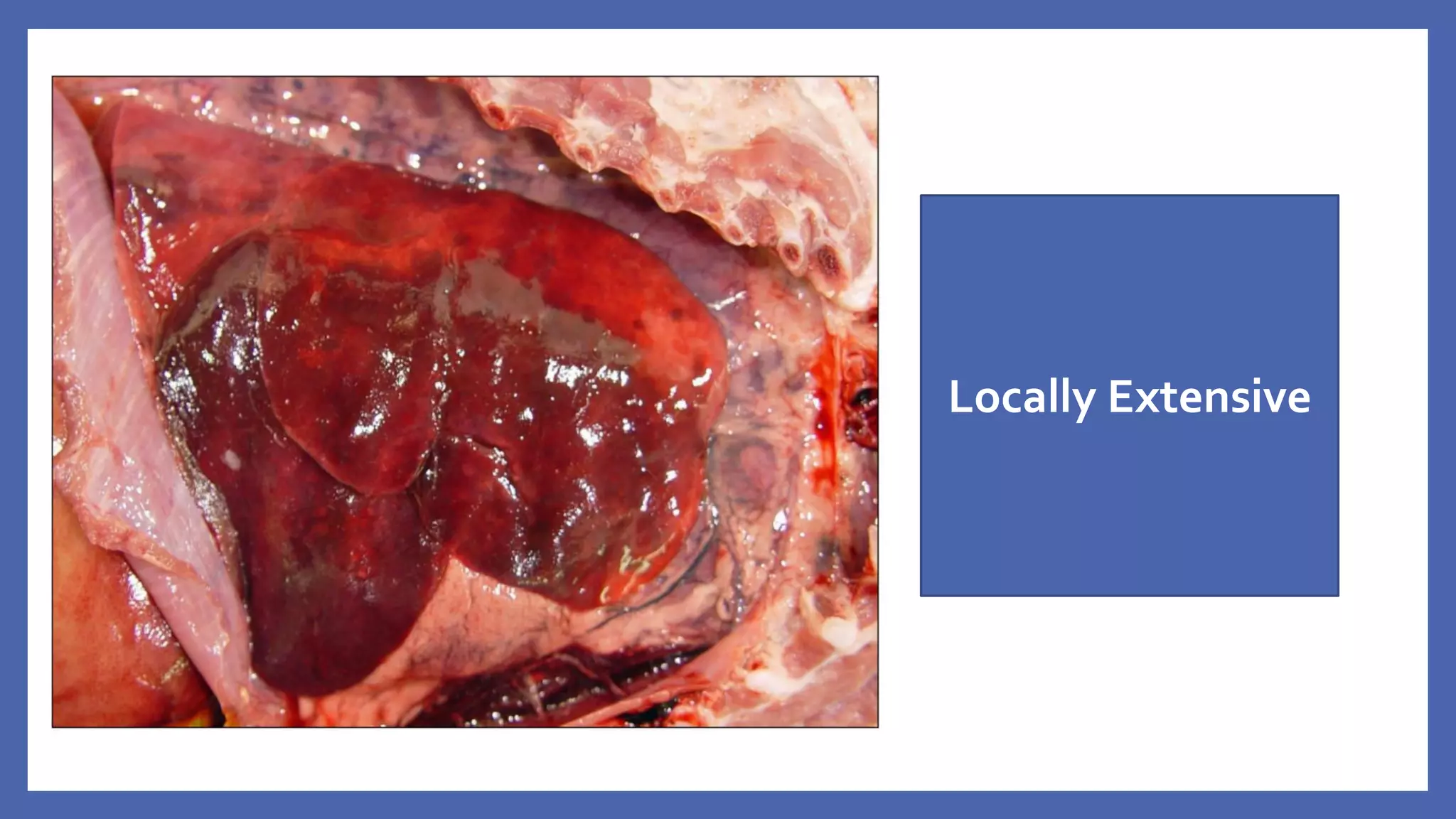
Locally Extensive
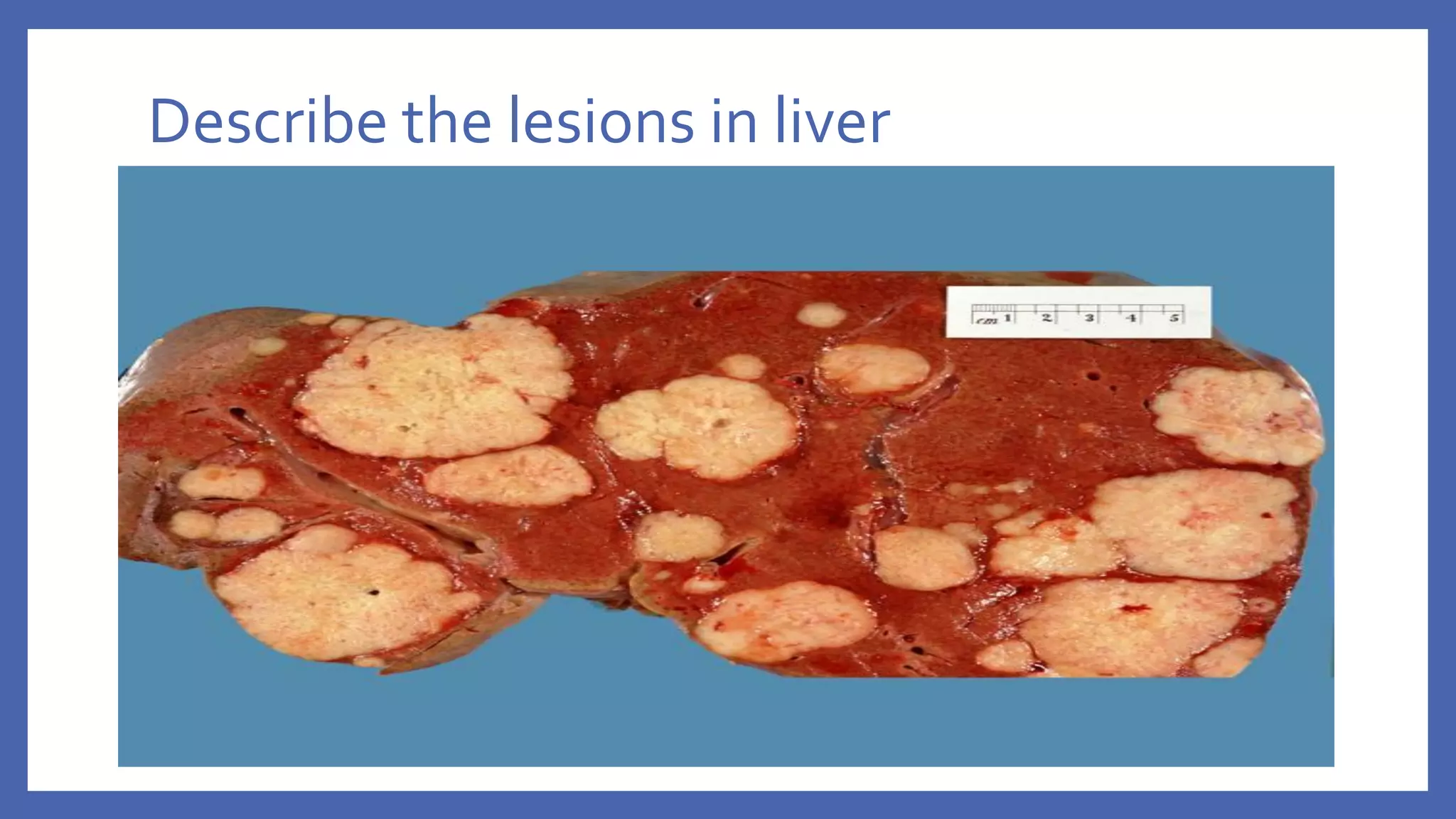
Describe the lesions in liver
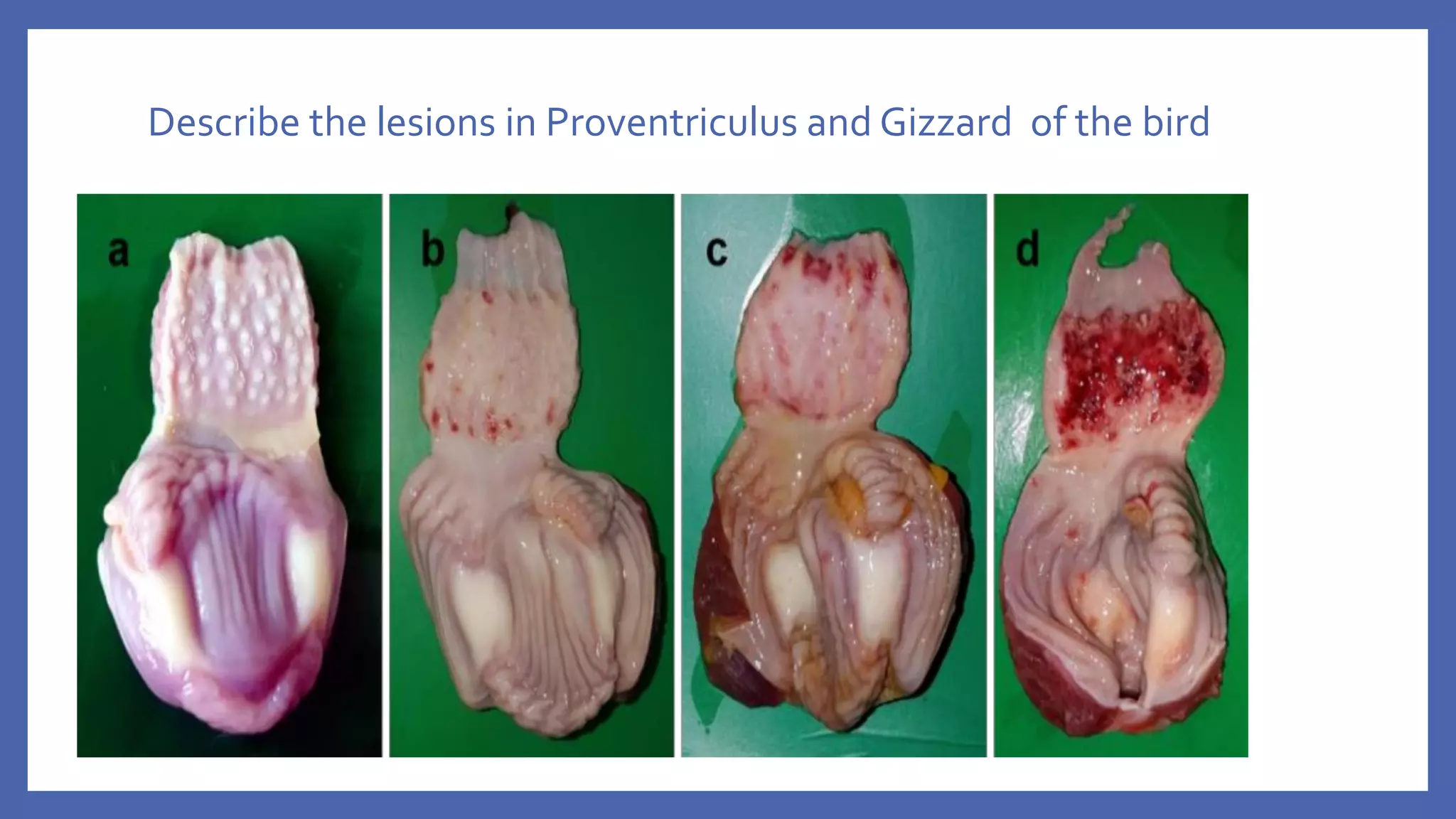
Describe the lesions in Proventriculus and Gizzard of the bird
Revisiting Learning Outcomes
• By the end of the lecture you should be able to:
• Define Pathology in two ways yes/no
• Define General Pathology yes/no
• Discuss about the Morphological Changes yes/no
• Explain lesion and types of the Lesion yes/no
• Define Gross examination and Histopathology yes/no
• How to describe the Lesion in Gross examination yes/no

Introduction to Pathology and how to describe a Lesion

  • 1.
    LECTURE NO.1 Veterinary GeneralPathology 301 Practical Class
  • 2.
    Learning Outcomes • Bythe end of the lecture you should be able to: • Define Pathology in two ways • Define General Pathology • Discuss about the Morphological Changes • Explain lesion and types of the Lesion • Define Gross examination and Histopathology • How to describe the Lesion in Gross examination
  • 3.
    Introduction to Pathology •Pathology: •Pathology is the study of Disease. • Pathos – suffering, disease • Logos – study Disease? *loss of ease *a departure from a normal state The better we understand the disease, the better we can diagnose & treat it
  • 4.
    What‘s normal (WhenBody At Ease) Anatomy Physiology Histology Biochemistry Genetics Health is a state of an individual living in complete harmony with his environment.
  • 5.
    Pathology is thestudy of molecular, biochemical, functional, & morphological changes in cells, tissues, or organs in response to an INJURY Let’s define again Cell damage is cell injury
  • 6.
    Agents that causethings to go wrong/ injury Trauma Microbial Nutritious Genetic Chemicals Parasitic
  • 7.
  • 8.
    Pathology General Pathology Concerned with the basicreactions of cells and tissues to injurious stimuli Systemic Pathology The application of these basic reactions to the various body systems, or to various specific diseases
  • 9.
    Pathology Clinical Pathology It includes certainlaboratory methods which help in making the diagnosis e.g. urine examination, blood examination Necropsy & meat inspection Postmortem examination of animals. To determine the health of animals both prior to death (ante mortem) and after death (post mortem)
  • 10.
    Pathology covers Fouraspects of a disease process Etiology ( cause of disease) Pathogenesis Morphological Changes (Lesions) Clinical significant / Functional Consequence General/Systemic Pathology Practical
  • 11.
    Morphological Changes (Lesion) Thestructural alterations in cells or tissues A lesion is any damage or abnormal change in the tissue structure of an organism, usually caused by disease Morphology study of forms and structures
  • 12.
    Types of Lesion Macroscopicor Microscopic morphological alteration occurring in the tissue structure or function as the result of injury Macroscopic or Gross Lesions Can see through the naked eye Gross Examination Examination of tissue without the help of a microscope Microscopic or histopathology Lesions Can see through a microscope Histopathology Study of diseases tissue under a microscope Let’s define again the lesion
  • 13.
  • 17.
    Multifocal Lesions Aborted Pigfetus Lamb’s Liver
  • 18.
  • 33.
  • 34.
    Describe the lesionsin Proventriculus and Gizzard of the bird
  • 35.
    Revisiting Learning Outcomes •By the end of the lecture you should be able to: • Define Pathology in two ways yes/no • Define General Pathology yes/no • Discuss about the Morphological Changes yes/no • Explain lesion and types of the Lesion yes/no • Define Gross examination and Histopathology yes/no • How to describe the Lesion in Gross examination yes/no