Mr. Yasir - Lecturer
Masters in Allied Health Sciences-MSAHS*
BS Surgical Technology(UOL)
Certificate In Teaching Development (UOL)
Certificate in Clinical Experience(SIMS)
DHPT-FAHS
The University of Lahore
 Students will be able to learn about introduction of
pathology
 Students will be able to learn about division of pathology
 Students will be able to learn about branches of pathology
The term “pathology” is derived from the Greek words pathos which means
disease and logy which means study.
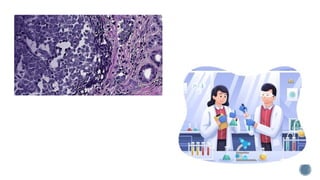
Thus pathology is a branch of biological sciences that deals with the study of
all structural and functional abnormalities (at the level of cells, tissues, organs
and body fluids) that take place as a result of a disease.
Pathologyis considered a vital link between basic
sciences physiology, biochemistry etc) and
clinical sciences (internal surgery, neurology,
dermatology, theriogenology etc).
(anatomy
,
medicine,
The pathological process consists of the following:
1. Injury (damage) created by the causative agent (virus, bacteria, poison,
hypertension etc) on cells, tissues and organs.
2. Reactive changes (pathological changes) against the injury, for example, in
cases of systemic hypertension there is myocardial hypertrophy of the left
heart ventricle due to increase in the resistance to blood flow through the
arterioles.
Pathology includes two major professional divisions:
1. Medical pathology which deals with the study of diseases in humans.
2. Comparative pathology which deals with the study of diseases in all animal
species as well as human diseases.
In academic studies, pathology (medical or comparative) is divided into
two major divisions:
1. Anatomic pathology which deals with the study of the disease effects in
cells, tissues and organs.
2. Clinical pathology which deals with the study of the disease effects in
body fluids and secretions (blood, urine etc.) using certain laboratory
methods.
1. General pathology which deals with the study of the common basic
changes in all tissues as a result of a disease, e.g., cell injury, necrosis,
inflammation and neoplasm.
2. Systemic pathology which deals with the study of morphological
changes in tissues and organs of a particular system as a result of a
disease e. g., pathology of respiratory system, pathology of digestive
system, pathology of nervous system etc.
1. General pathology is a cellular-based study while systemic pathology is an
organ system-based study.
2. The key difference between general and systemic pathology is that the
general pathology is the basic reaction of cells and tissue in response to
abnormal stimuli that govern all diseases. On the other hand, systemic
pathology is the study of diseases as they occur within a particular organ
system.
3. Diagnostic Pathology (Histopathology) which deals with the study of tissue
abnormalities using gross and microscopic examination of biopsy samples.
It is important in all areas of pathology, both in spontaneous and
in
experimentally-induced disease.
4. Cytopathology which deals with the study of cellular
changes.
5. Post-mortem pathology which deals with pathological
examination of human cadaver after death. It is
also known as autopsy or necropsy.
6. Forensic pathology is the subspecialty of pathology that focuses on the
medico-legal investigation of the cause of a sudden or unexpected death by
examination of a dead body. The term forensics is derived from the Latin
word forēnsis which means forum (law court).
7. Physiological pathology which deals with the study of alterations in the functions
of organs and systems of the body as a result to a disease. It is also known as
pathophysiology e.g., pathophysiology of indigestion, diarrhea, abortion etc.
8. Immunopathology which deals with the study of diseases mediated by
immune reactions. Such as immunodeficiency diseases, autoimmune
diseases and hypersensitivity reactions.
9. Molecular pathology which deals with the study of
alterations that take place at the molecular level (e.g., DNA damage)
as a result to a disease.
10. Experimental pathology is the study of diseases that have been created or
induced experimentally to analyze the structural &functional abnormalities
in tissue to better understand the mechanism of underline diseases. Usually

laboratory animals used in experimental pathology (Rabbits, Rats, Mice etc).
Blood is used in many tests. It can be checked in these ways:
1. As a "whole"
2. As the fluid left when red and white blood cells are
removed.
Other body fluids collected for testing may include:
1. Spinal fluid
2. Joint fluids
3. Bone marrow
4. Sputum (phlegm)
5. Urine
Disease: The disease is a condition in which an individual shows a
morphological, biochemical and/or physiological deviation from the normal
status .
Etiology: The term etiology refers to the science that deals with the causes or
origin of the disease or the factors that produce or predispose toward a certain
disease or disorder.
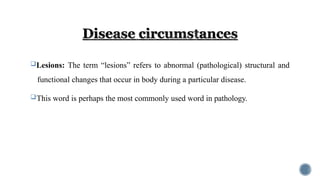
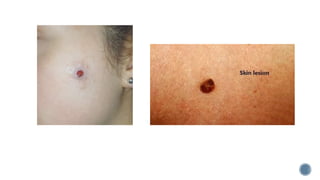
Lesions: The term “lesions” refers to abnormal (pathological) structural and
functional changes that occur in body during a particular disease.
This word is perhaps the most commonly used word in pathology.
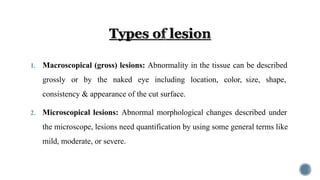
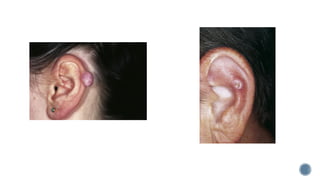
1. Macroscopical (gross) lesions: Abnormality in the tissue can be described
grossly or by the naked eye including location, color, size, shape,
consistency & appearance of the cut surface.
2. Microscopical lesions: Abnormal morphological changes described under
the microscope, lesions need quantification by using some general terms like
mild, moderate, or severe.
Symptom: The term symptom refers to any evidence of a disease as told by
the patient (in case of human being).
Sign: The term sign refers to any evidence of a disease detectable to
a
clinician (can be observed by the clinician).
Diagnosis: The term diagnosis refers to the art or act of identifying
a particular disease from its signs and symptoms.
Prognosis: It is the prediction of the probable outcome of a disease.
Pathogenesis: It is defined as the step by step developmental process from the
beginning of the disease to its termination, or the mechanism by which the
disease is developed.
Pathology is what explains all disease. What happens behind the scenes.
Knowledge of Pathology is a prerequisite to evaluating and ultimately treating
patients.
It’s just like being a mechanic. How would you know how to fix a car engine,
for instance, if you have no idea how it works (Physiology, Biochemistry),
what its parts are (Anatomy), and the different ways in which these parts go
wrong (Pathology).
1. The investigation and diagnosis of disease from the examination of
isolated cells is called as …
2. In systematic pathology, A specific disease can affect individual organs
or
systems like
 Appendicitis
 Inflammation
 Tumor
 The pathology which is concerned with the reactions of cells and tissues to
abnormal stimuli and to inherited defects that are the main causes of
disease, this is?
 The application of pathology to legal purposes where investigation of death
in suspicious circumstances is ………… pathology.
 Which branch of pathology involves the study of diseases related to the
blood, urine, and body fluids?
 Which branch of pathology deals with the examination of cells
obtained through fine-needle aspiration or other minimally invasive
techniques?
https://www.researchgate.net/publication/337669980_Pathology_an_Introduction
Cheng L, Bostwick DG, editors. Essentials of anatomic pathology. New Jersey:
Humana press; 2006.
Scott MA, Stockham SL. Fundamentals of veterinary clinical pathology. John
Wiley & Sons; 2013 May 31.
Isom J, Walsh M, Gardner JM. Social media and pathology: where are we now
and why does it matter?. Advances in anatomic pathology. 2017 Sep
1;24(5):294- 303.
 Students have learnt about introduction of pathology
 Students have learnt about division of pathology
 Students have learnt about branches of pathology
 Students have learnt about disease and disease
circumstances
Introduction to pathology and it's branches

Introduction to pathology and it's branches

  • 2.
    Mr. Yasir -Lecturer Masters in Allied Health Sciences-MSAHS* BS Surgical Technology(UOL) Certificate In Teaching Development (UOL) Certificate in Clinical Experience(SIMS) DHPT-FAHS The University of Lahore
  • 3.
     Students willbe able to learn about introduction of pathology  Students will be able to learn about division of pathology  Students will be able to learn about branches of pathology
  • 4.
    The term “pathology”is derived from the Greek words pathos which means disease and logy which means study. Thus pathology is a branch of biological sciences that deals with the study of all structural and functional abnormalities (at the level of cells, tissues, organs and body fluids) that take place as a result of a disease.
  • 5.
    Pathologyis considered avital link between basic sciences physiology, biochemistry etc) and clinical sciences (internal surgery, neurology, dermatology, theriogenology etc). (anatomy , medicine,
  • 7.
    The pathological processconsists of the following: 1. Injury (damage) created by the causative agent (virus, bacteria, poison, hypertension etc) on cells, tissues and organs. 2. Reactive changes (pathological changes) against the injury, for example, in cases of systemic hypertension there is myocardial hypertrophy of the left heart ventricle due to increase in the resistance to blood flow through the arterioles.
  • 8.
    Pathology includes twomajor professional divisions: 1. Medical pathology which deals with the study of diseases in humans. 2. Comparative pathology which deals with the study of diseases in all animal species as well as human diseases.
  • 9.
    In academic studies,pathology (medical or comparative) is divided into two major divisions: 1. Anatomic pathology which deals with the study of the disease effects in cells, tissues and organs. 2. Clinical pathology which deals with the study of the disease effects in body fluids and secretions (blood, urine etc.) using certain laboratory methods.
  • 10.
    1. General pathologywhich deals with the study of the common basic changes in all tissues as a result of a disease, e.g., cell injury, necrosis, inflammation and neoplasm. 2. Systemic pathology which deals with the study of morphological changes in tissues and organs of a particular system as a result of a disease e. g., pathology of respiratory system, pathology of digestive system, pathology of nervous system etc.
  • 12.
    1. General pathologyis a cellular-based study while systemic pathology is an organ system-based study. 2. The key difference between general and systemic pathology is that the general pathology is the basic reaction of cells and tissue in response to abnormal stimuli that govern all diseases. On the other hand, systemic pathology is the study of diseases as they occur within a particular organ system.
  • 13.
    3. Diagnostic Pathology(Histopathology) which deals with the study of tissue abnormalities using gross and microscopic examination of biopsy samples. It is important in all areas of pathology, both in spontaneous and in experimentally-induced disease.
  • 14.
    4. Cytopathology whichdeals with the study of cellular changes. 5. Post-mortem pathology which deals with pathological examination of human cadaver after death. It is also known as autopsy or necropsy.
  • 15.
    6. Forensic pathologyis the subspecialty of pathology that focuses on the medico-legal investigation of the cause of a sudden or unexpected death by examination of a dead body. The term forensics is derived from the Latin word forēnsis which means forum (law court).
  • 16.
    7. Physiological pathologywhich deals with the study of alterations in the functions of organs and systems of the body as a result to a disease. It is also known as pathophysiology e.g., pathophysiology of indigestion, diarrhea, abortion etc.
  • 17.
    8. Immunopathology whichdeals with the study of diseases mediated by immune reactions. Such as immunodeficiency diseases, autoimmune diseases and hypersensitivity reactions. 9. Molecular pathology which deals with the study of alterations that take place at the molecular level (e.g., DNA damage) as a result to a disease.
  • 18.
    10. Experimental pathologyis the study of diseases that have been created or induced experimentally to analyze the structural &functional abnormalities in tissue to better understand the mechanism of underline diseases. Usually laboratory animals used in experimental pathology (Rabbits, Rats, Mice etc).
  • 20.
    Blood is usedin many tests. It can be checked in these ways: 1. As a "whole" 2. As the fluid left when red and white blood cells are removed.
  • 21.
    Other body fluidscollected for testing may include: 1. Spinal fluid 2. Joint fluids 3. Bone marrow 4. Sputum (phlegm) 5. Urine
  • 22.
    Disease: The diseaseis a condition in which an individual shows a morphological, biochemical and/or physiological deviation from the normal status . Etiology: The term etiology refers to the science that deals with the causes or origin of the disease or the factors that produce or predispose toward a certain disease or disorder.
  • 23.
    Lesions: The term“lesions” refers to abnormal (pathological) structural and functional changes that occur in body during a particular disease. This word is perhaps the most commonly used word in pathology.
  • 25.
    1. Macroscopical (gross)lesions: Abnormality in the tissue can be described grossly or by the naked eye including location, color, size, shape, consistency & appearance of the cut surface. 2. Microscopical lesions: Abnormal morphological changes described under the microscope, lesions need quantification by using some general terms like mild, moderate, or severe.
  • 27.
    Symptom: The termsymptom refers to any evidence of a disease as told by the patient (in case of human being). Sign: The term sign refers to any evidence of a disease detectable to a clinician (can be observed by the clinician).
  • 28.
    Diagnosis: The termdiagnosis refers to the art or act of identifying a particular disease from its signs and symptoms. Prognosis: It is the prediction of the probable outcome of a disease.
  • 29.
    Pathogenesis: It isdefined as the step by step developmental process from the beginning of the disease to its termination, or the mechanism by which the disease is developed.
  • 30.
    Pathology is whatexplains all disease. What happens behind the scenes. Knowledge of Pathology is a prerequisite to evaluating and ultimately treating patients. It’s just like being a mechanic. How would you know how to fix a car engine, for instance, if you have no idea how it works (Physiology, Biochemistry), what its parts are (Anatomy), and the different ways in which these parts go wrong (Pathology).

  • 32.
    1. The investigationand diagnosis of disease from the examination of isolated cells is called as … 2. In systematic pathology, A specific disease can affect individual organs or systems like  Appendicitis  Inflammation  Tumor
  • 33.
     The pathologywhich is concerned with the reactions of cells and tissues to abnormal stimuli and to inherited defects that are the main causes of disease, this is?  The application of pathology to legal purposes where investigation of death in suspicious circumstances is ………… pathology.
  • 34.
     Which branchof pathology involves the study of diseases related to the blood, urine, and body fluids?  Which branch of pathology deals with the examination of cells obtained through fine-needle aspiration or other minimally invasive techniques?
  • 35.
    https://www.researchgate.net/publication/337669980_Pathology_an_Introduction Cheng L, BostwickDG, editors. Essentials of anatomic pathology. New Jersey: Humana press; 2006. Scott MA, Stockham SL. Fundamentals of veterinary clinical pathology. John Wiley & Sons; 2013 May 31. Isom J, Walsh M, Gardner JM. Social media and pathology: where are we now and why does it matter?. Advances in anatomic pathology. 2017 Sep 1;24(5):294- 303.
  • 36.
     Students havelearnt about introduction of pathology  Students have learnt about division of pathology  Students have learnt about branches of pathology  Students have learnt about disease and disease circumstances