Introduction to Linked DataConsuming Linked Data TutorialInternational Semantic Web Conference 2009
Do you SEARCH or do you FIND?
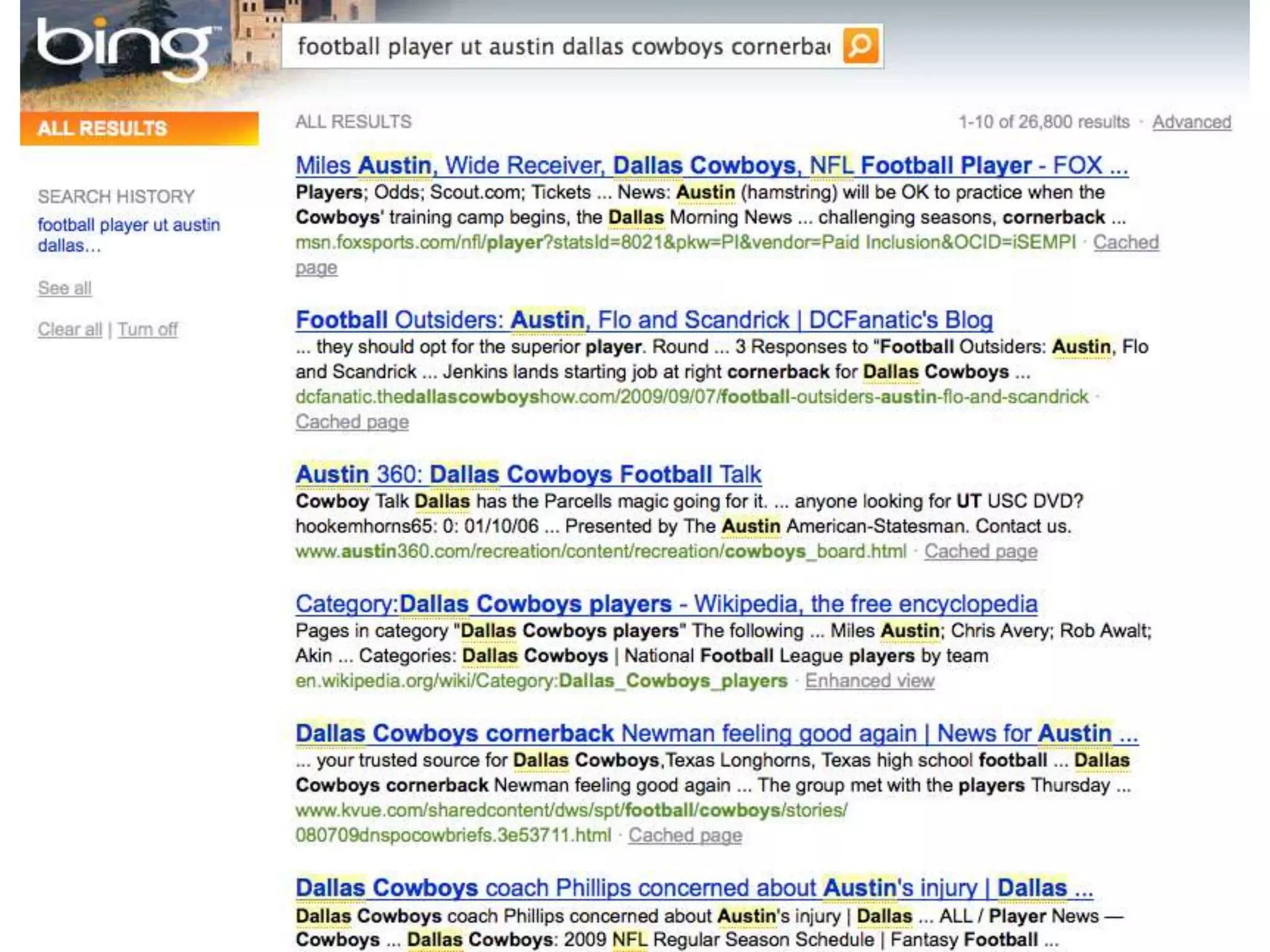
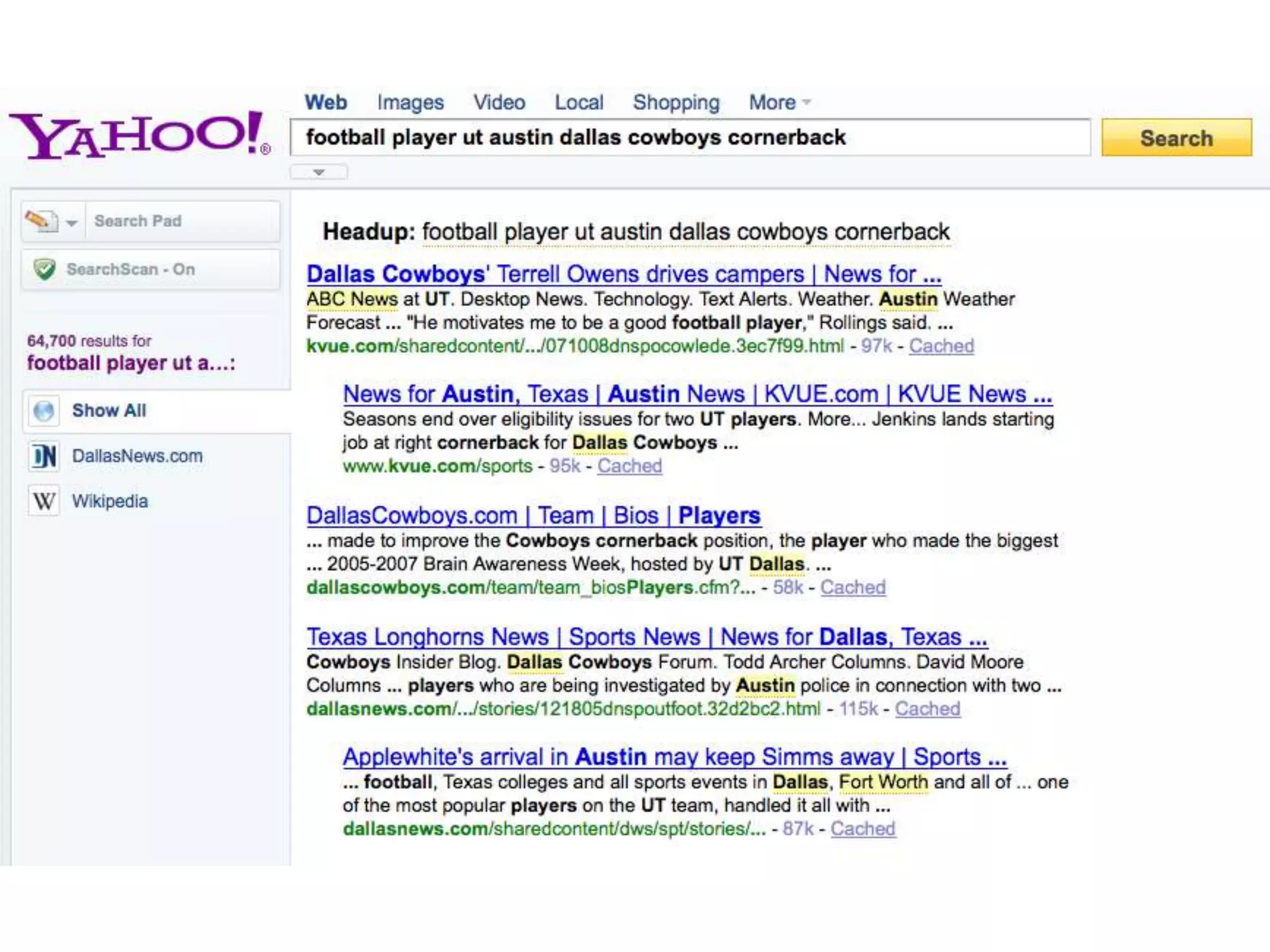
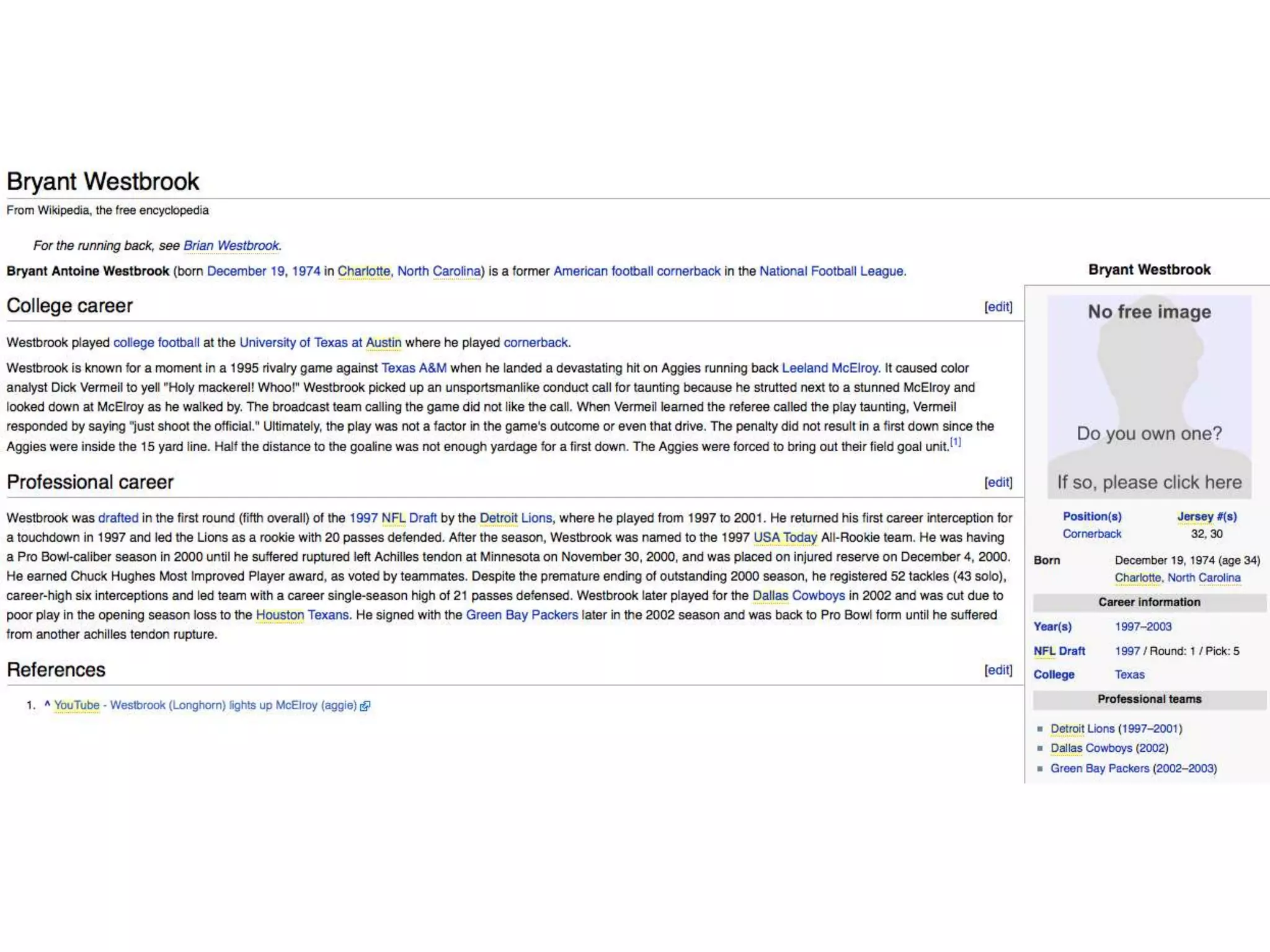
Search forFootball Players who went to the University of Texas at Austin, played for the Dallas Cowboys as Cornerback
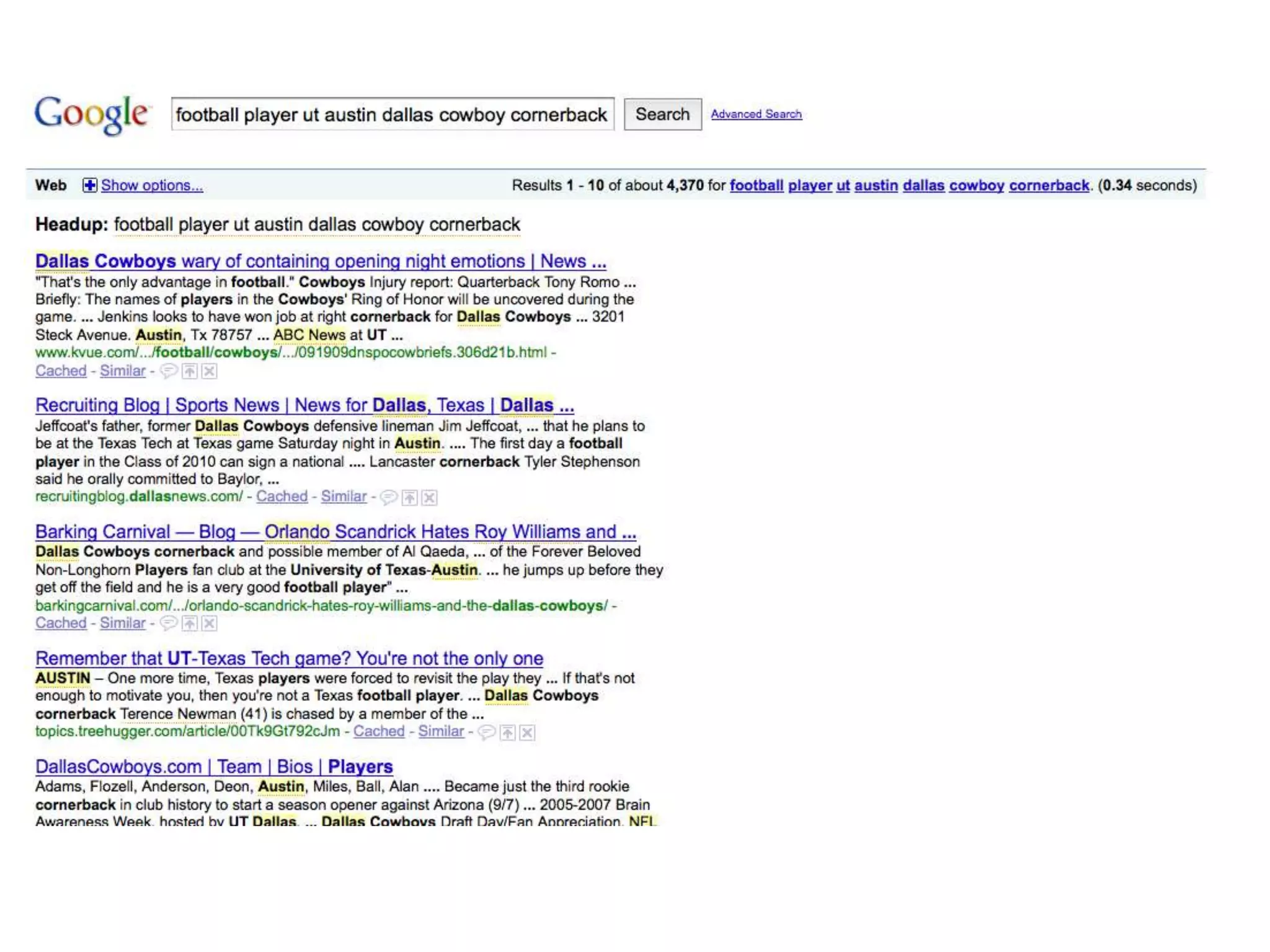
Why can’t we just FIND it…
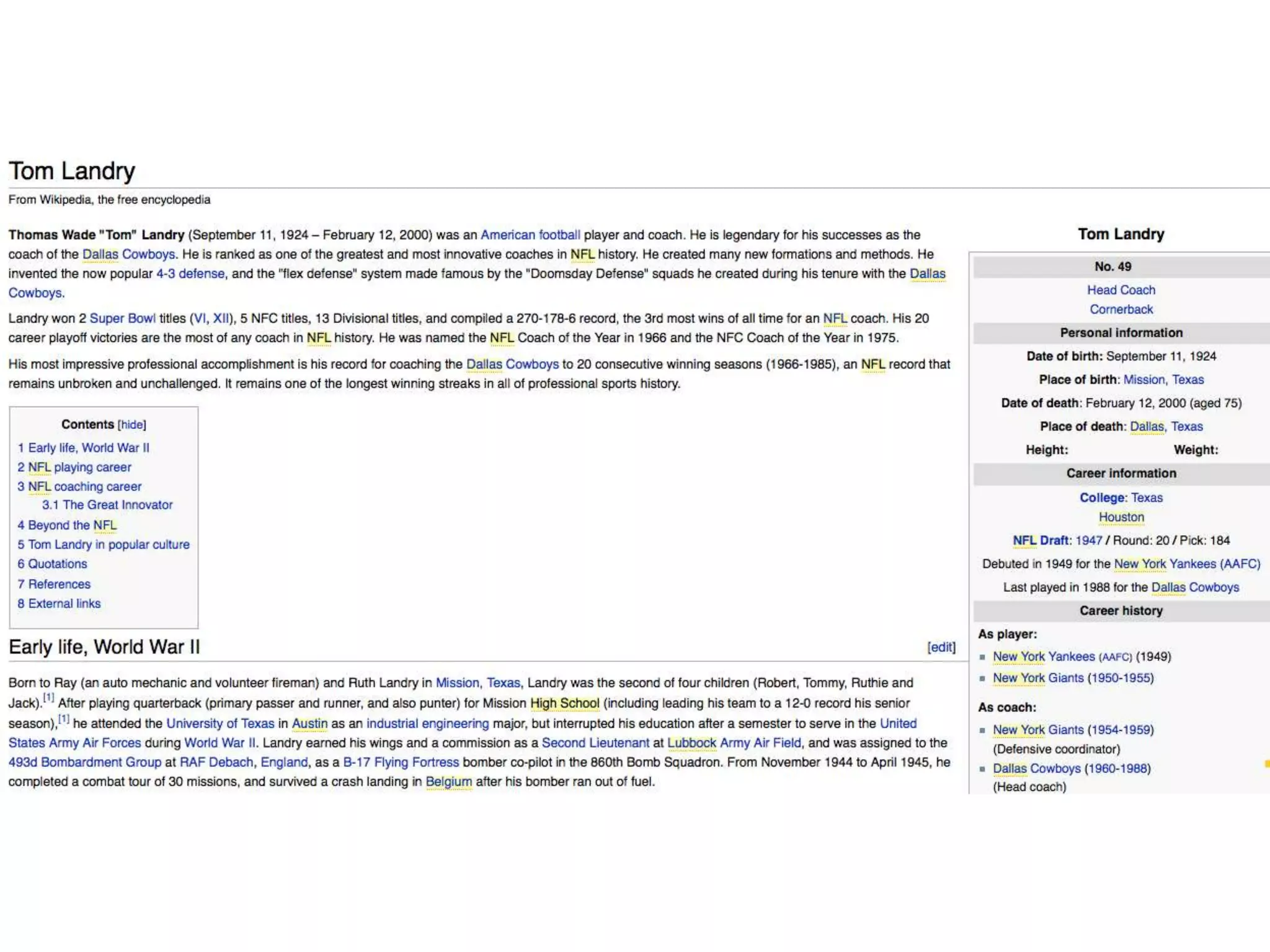
Guess how I FOUND out?
I’ll tell you how I did NOT find it
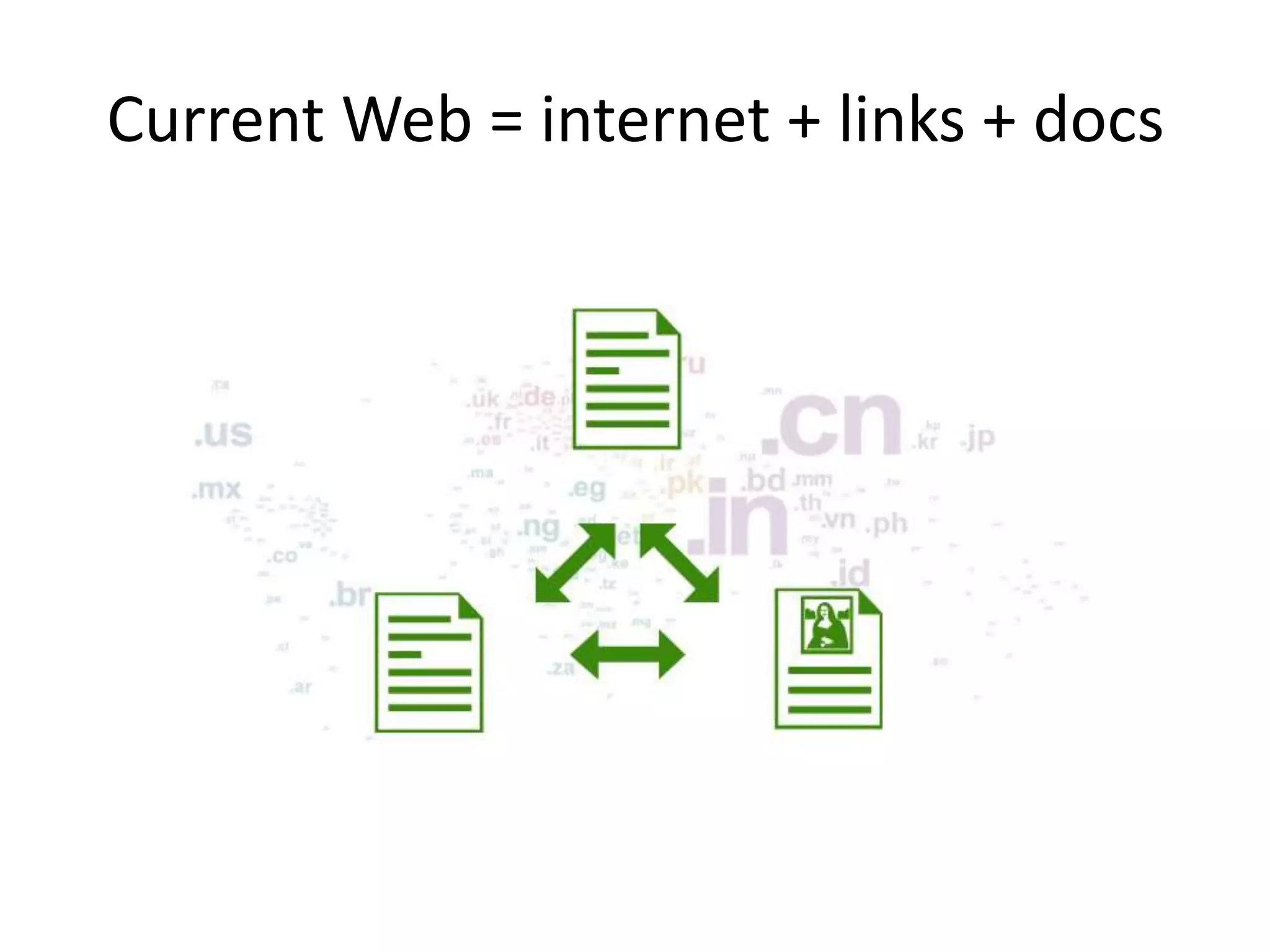
Current Web = internet + links + docs
So what is the problem?The Web has problemsPeople aren’t interested in documentsThey are interested in things People can parse documents and extract meaningWeb pages are written in HTMLHTML describes visualization of informationComputers can’t!
What do we need to do?We need to help machines to understand the web so machines can help us understand thingsThey can learn what we are interested inThey can help us better find what we want
How can we do that?Besides publishing documents on the webwhich computers can’t understand easilyLet’s publish something that computers can understand
RAW DATA!
But wait… don’t we do that already?
Current Data on the WebRelational DatabasesAPIsXMLCSVXLS…Can’t computers and applications already consume that data on the web?
True! But it is all in different formats and data models!
This makes it hard to integrate data
The data in different data sources aren’t linked
For example, how do I know that the Juan Sequeda in Facebook is the same as Juan Sequeda in Twitter
Or if I create a mashup from different services, I have to learn different APIs and I get different formats of data back
Wouldn’t it be great if we had a standard way of publishing data on the Web?
We have a standardized way of publishing documents on the web, right?HTML
Then why can’t we have a standard way of publishing data on the Web?
Good question! And the answer is YES. There is!
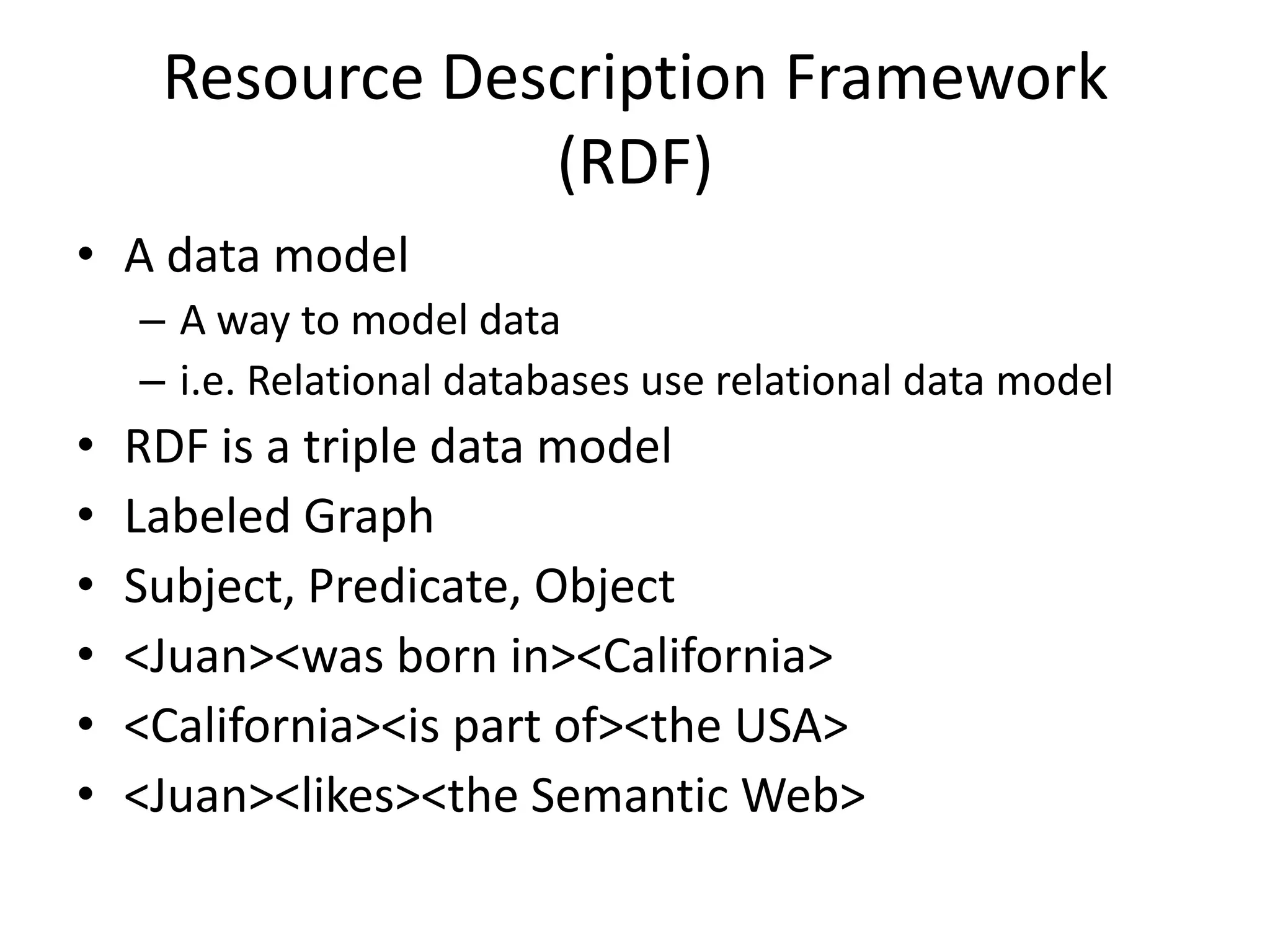
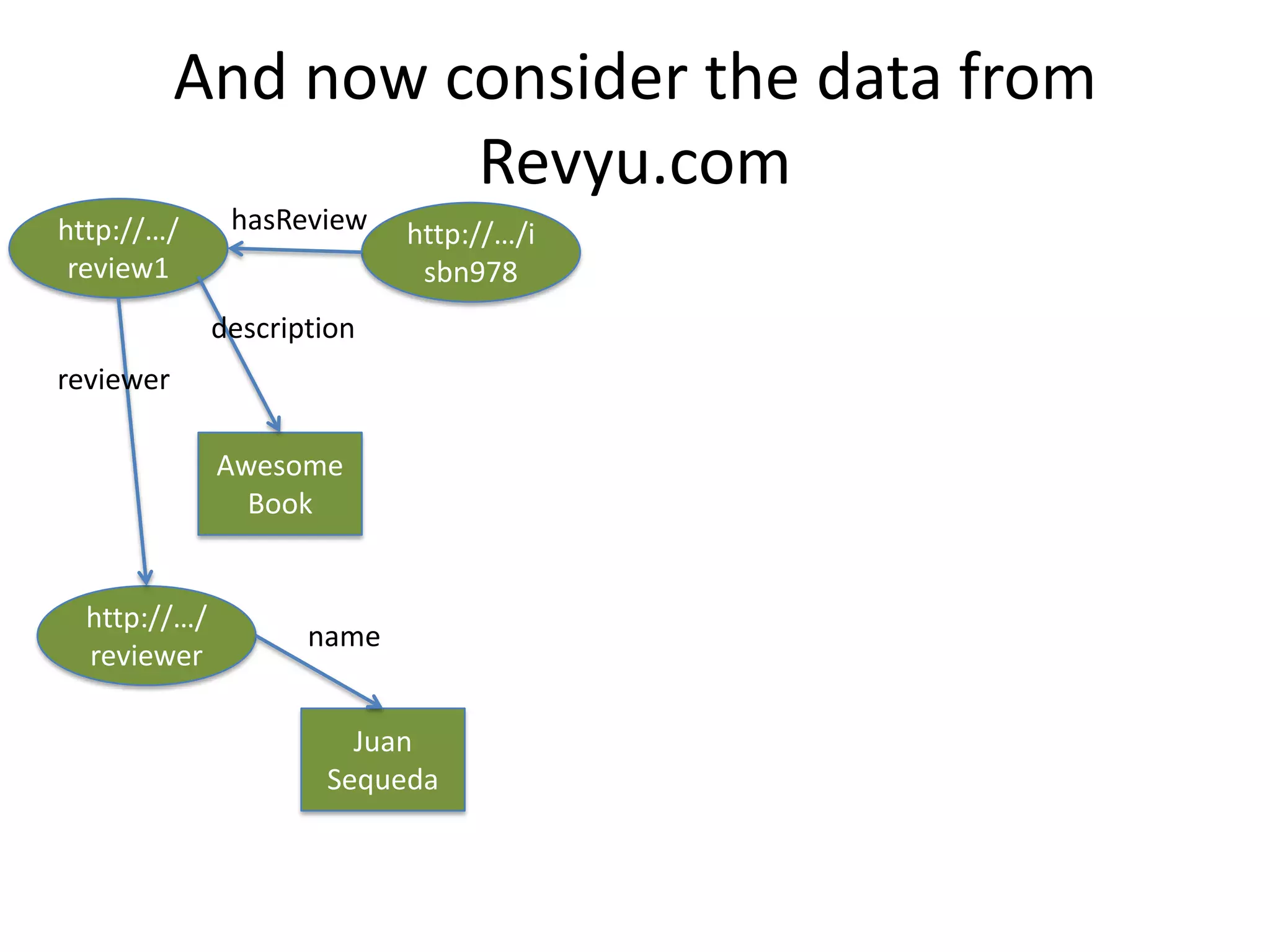
Resource Description Framework (RDF)A data model A way to model datai.e. Relational databases use relational data modelRDF is a triple data modelLabeled GraphSubject, Predicate, Object<Juan> <was born in> <California><California> <is part of> <the USA><Juan> <likes> <the Semantic Web>
RDF can be serialized in different waysRDF/XMLRDFa (RDF in HTML)N3Turtle
So does that mean that I have to publish my data in RDF now?
You don’t have to… but we would like you to 
An example
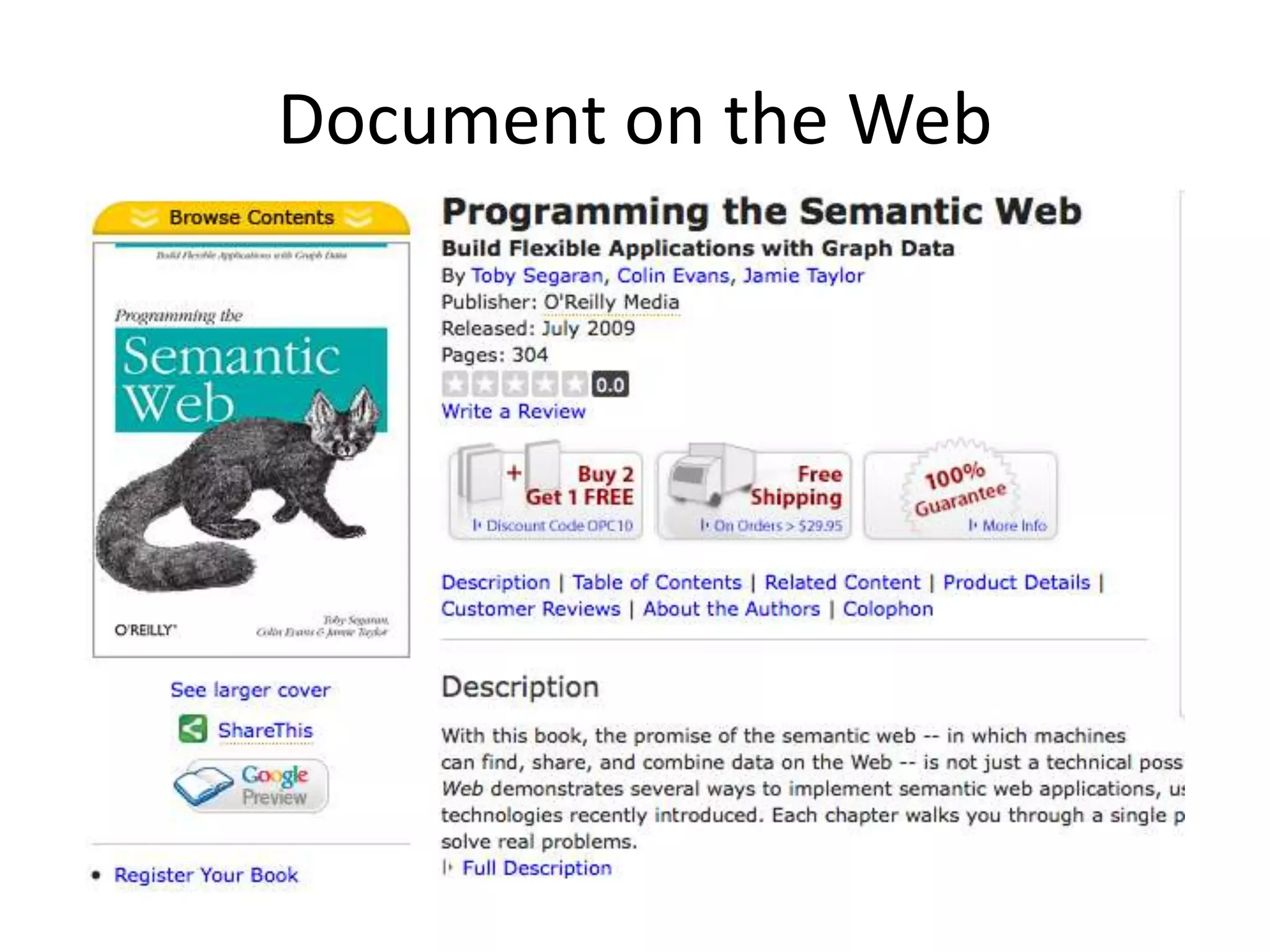
Document on the Web
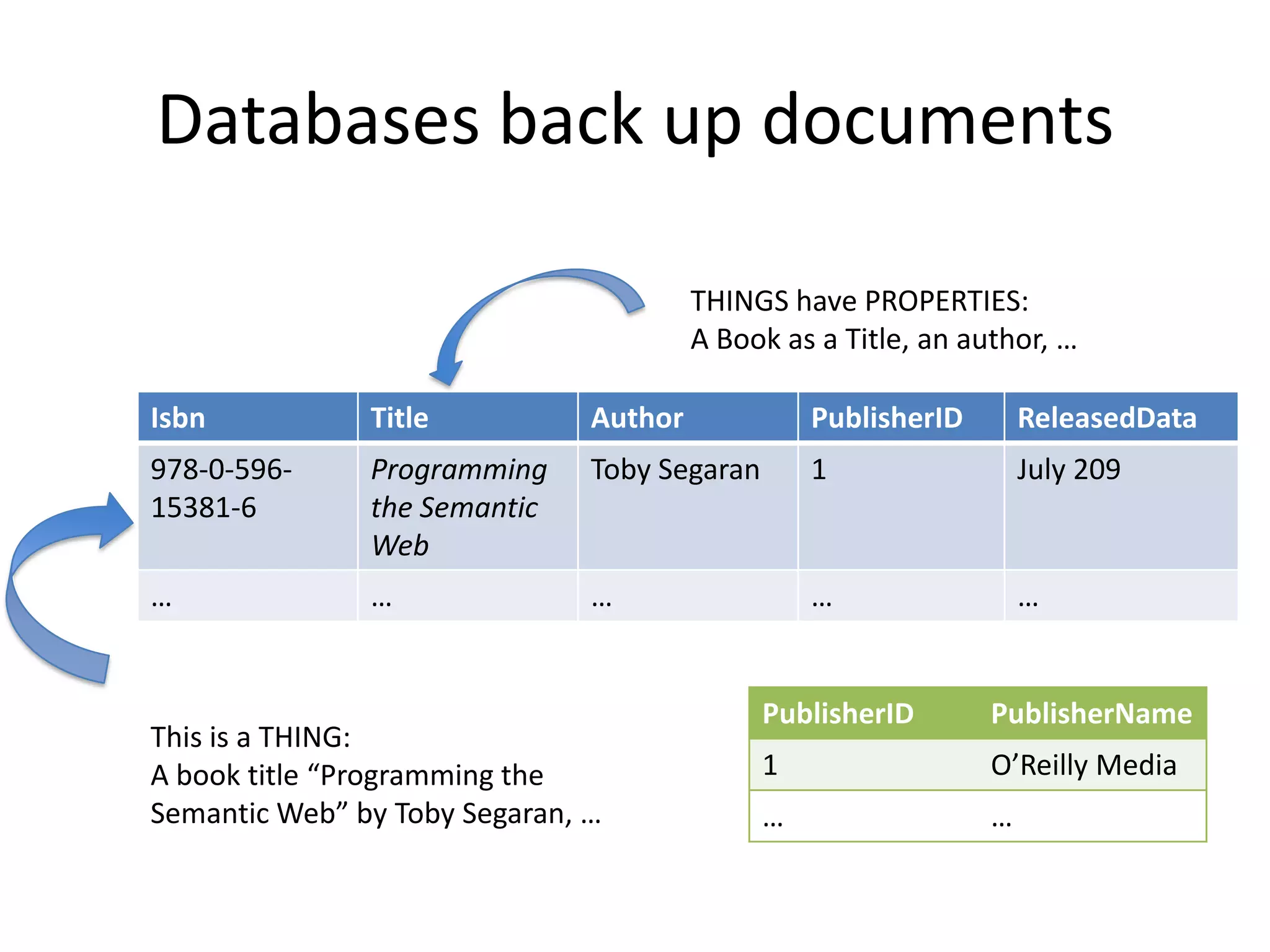
Databases back up documentsTHINGS have PROPERTIES:A Book as a Title, an author, …This is a THING:A book title “Programming the Semantic Web” by Toby Segaran, …
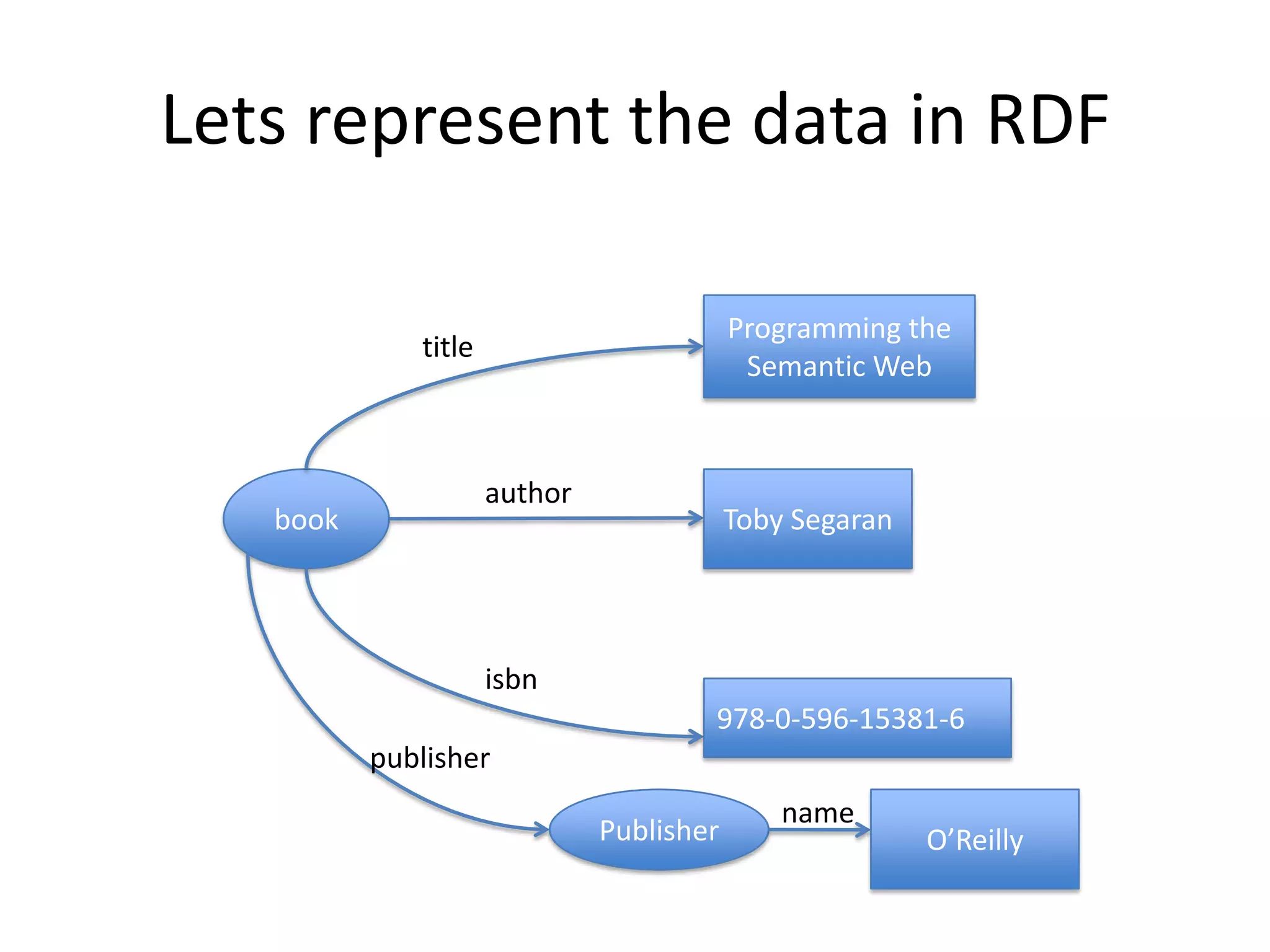
Lets represent the data in RDFProgramming the Semantic WebtitleauthorbookToby Segaranisbn978-0-596-15381-6publishernamePublisherO’Reilly
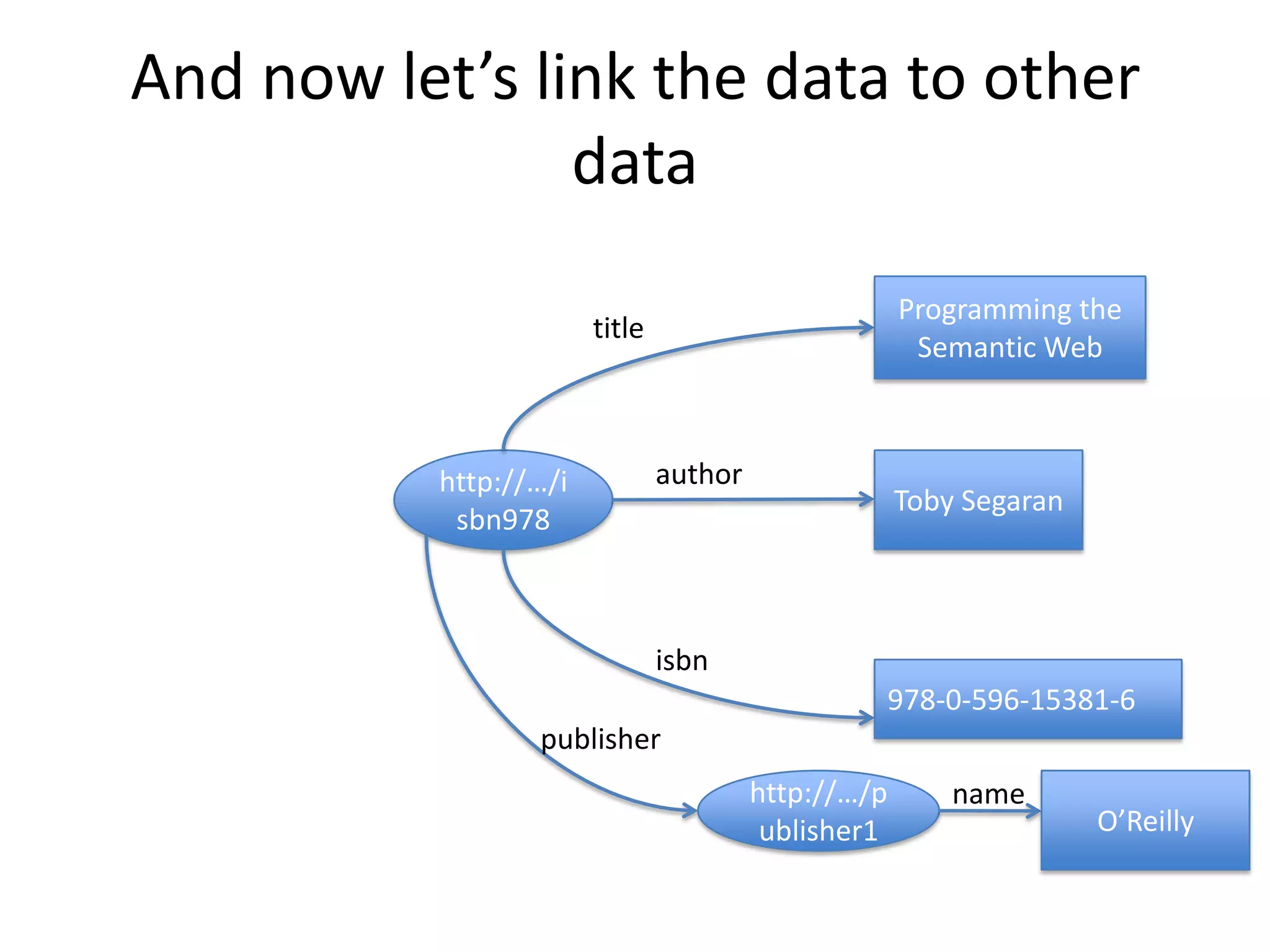
Remember that we are on the webEverything on the web is identified by a URI
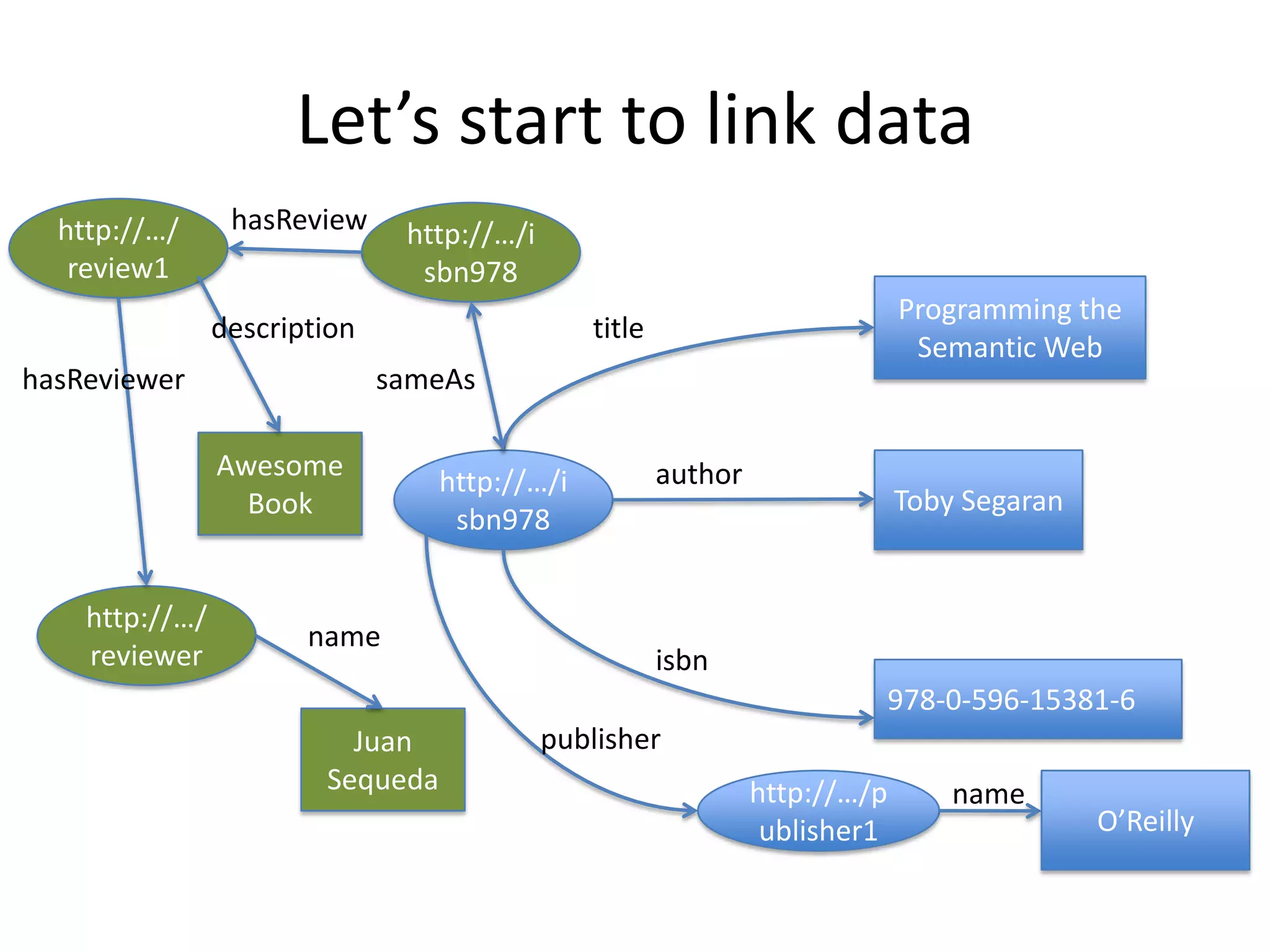
And now let’s link the data to other dataProgramming the Semantic Webtitleauthorhttp://…/isbn978Toby Segaranisbn978-0-596-15381-6publishernamehttp://…/publisher1O’Reilly
And now consider the data from Revyu.comhasReviewhttp://…/review1http://…/isbn978descriptionreviewerAwesome Bookhttp://…/reviewernameJuan Sequeda
Let’s start to link datahasReviewhttp://…/review1http://…/isbn978Programming the Semantic WebtitledescriptionsameAshasReviewerAwesome Bookauthorhttp://…/isbn978Toby Segaranhttp://…/reviewernameisbn978-0-596-15381-6Juan Sequedapublishernamehttp://…/publisher1O’Reilly
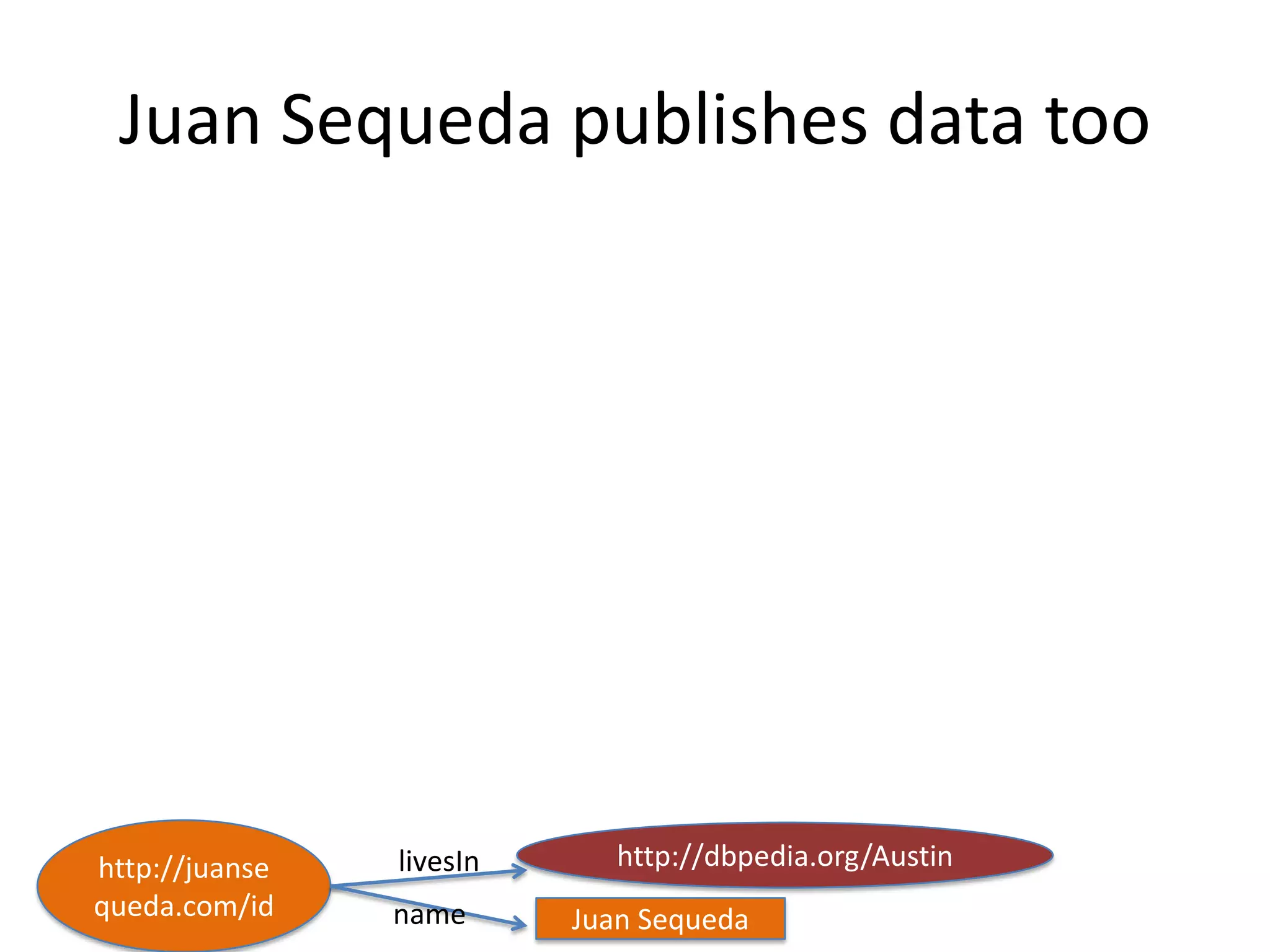
Juan Sequeda publishes data toohttp://juansequeda.com/idhttp://dbpedia.org/AustinlivesInnameJuan Sequeda
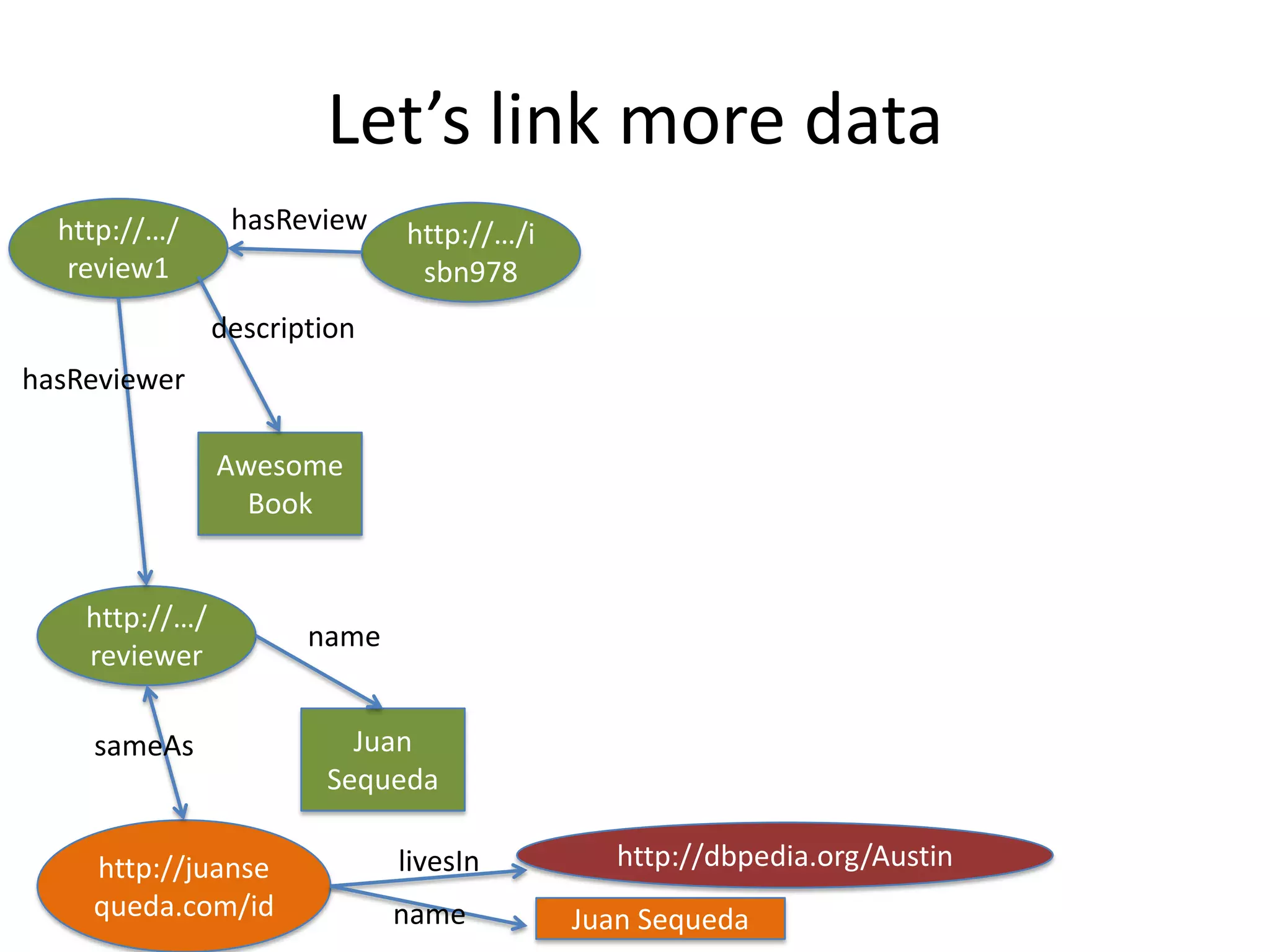
Let’s link more datahasReviewhttp://…/review1http://…/isbn978descriptionhasReviewerAwesome Bookhttp://…/reviewernameJuan SequedasameAshttp://juansequeda.com/idhttp://dbpedia.org/AustinlivesInnameJuan Sequeda
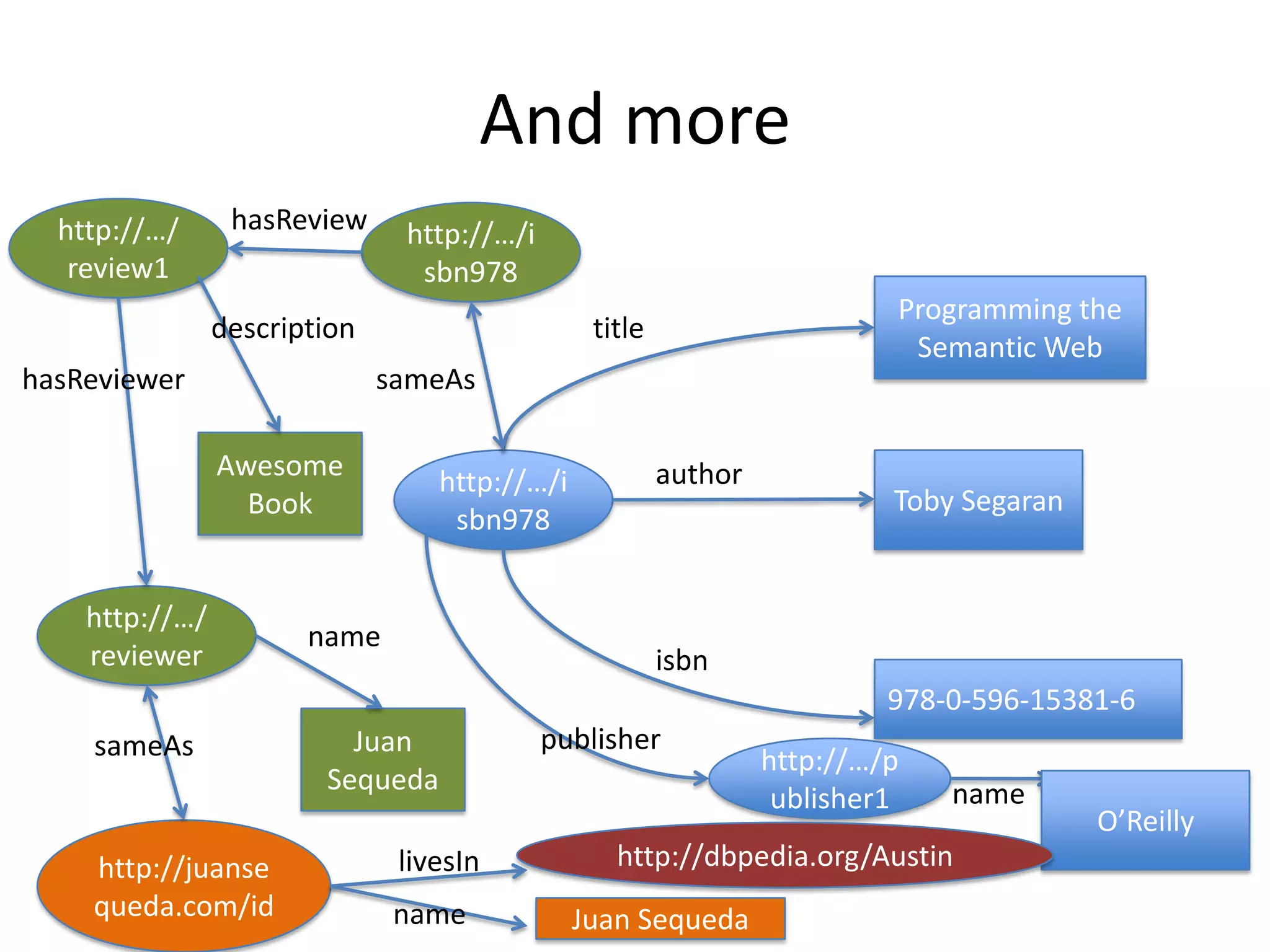
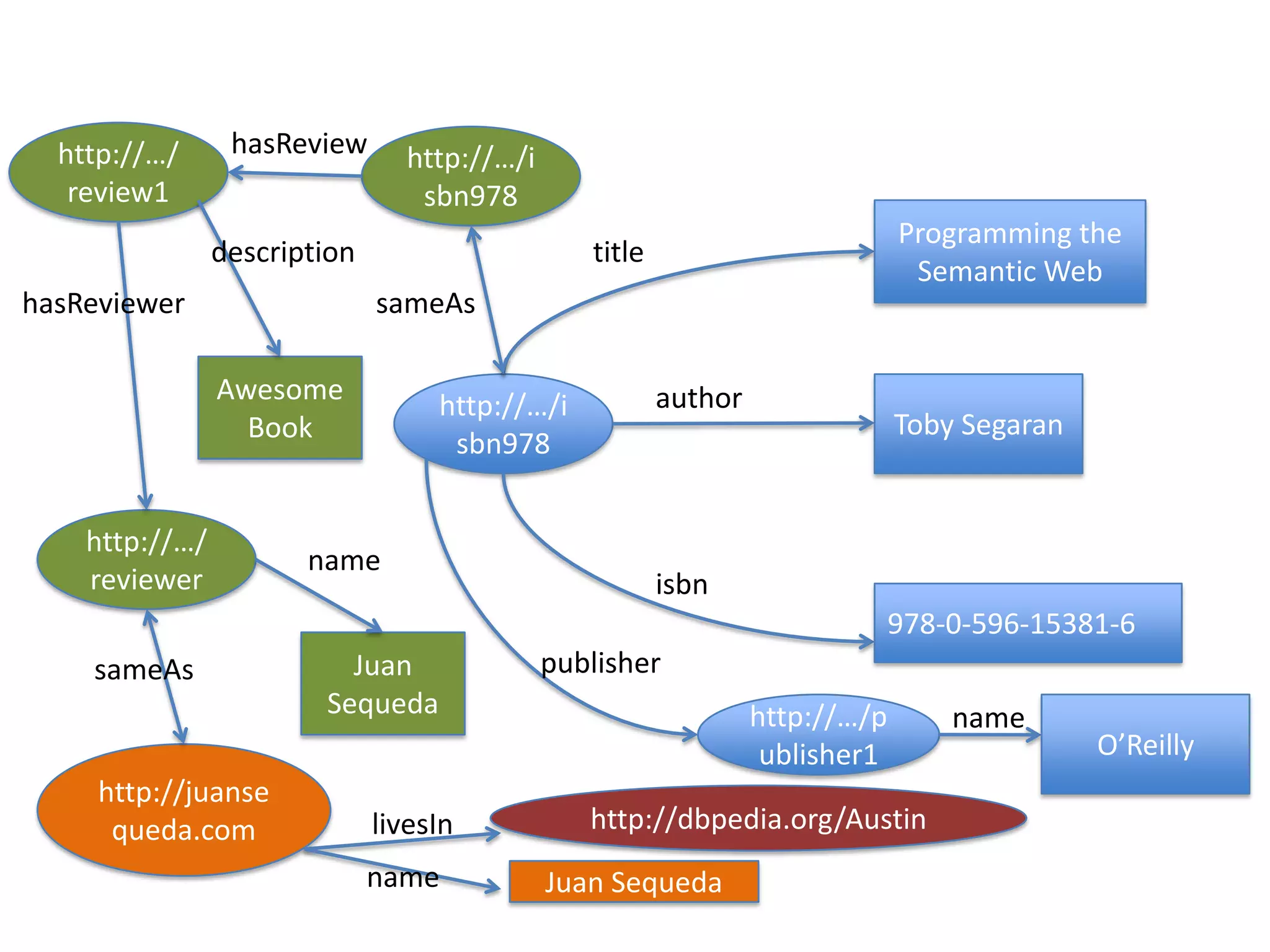
And morehasReviewhttp://…/review1http://…/isbn978Programming the Semantic WebtitledescriptionsameAshasReviewerAwesome Bookauthorhttp://…/isbn978Toby Segaranhttp://…/reviewernameisbn978-0-596-15381-6Juan SequedapublishersameAshttp://…/publisher1nameO’Reillyhttp://juansequeda.com/idhttp://dbpedia.org/AustinlivesInnameJuan Sequeda
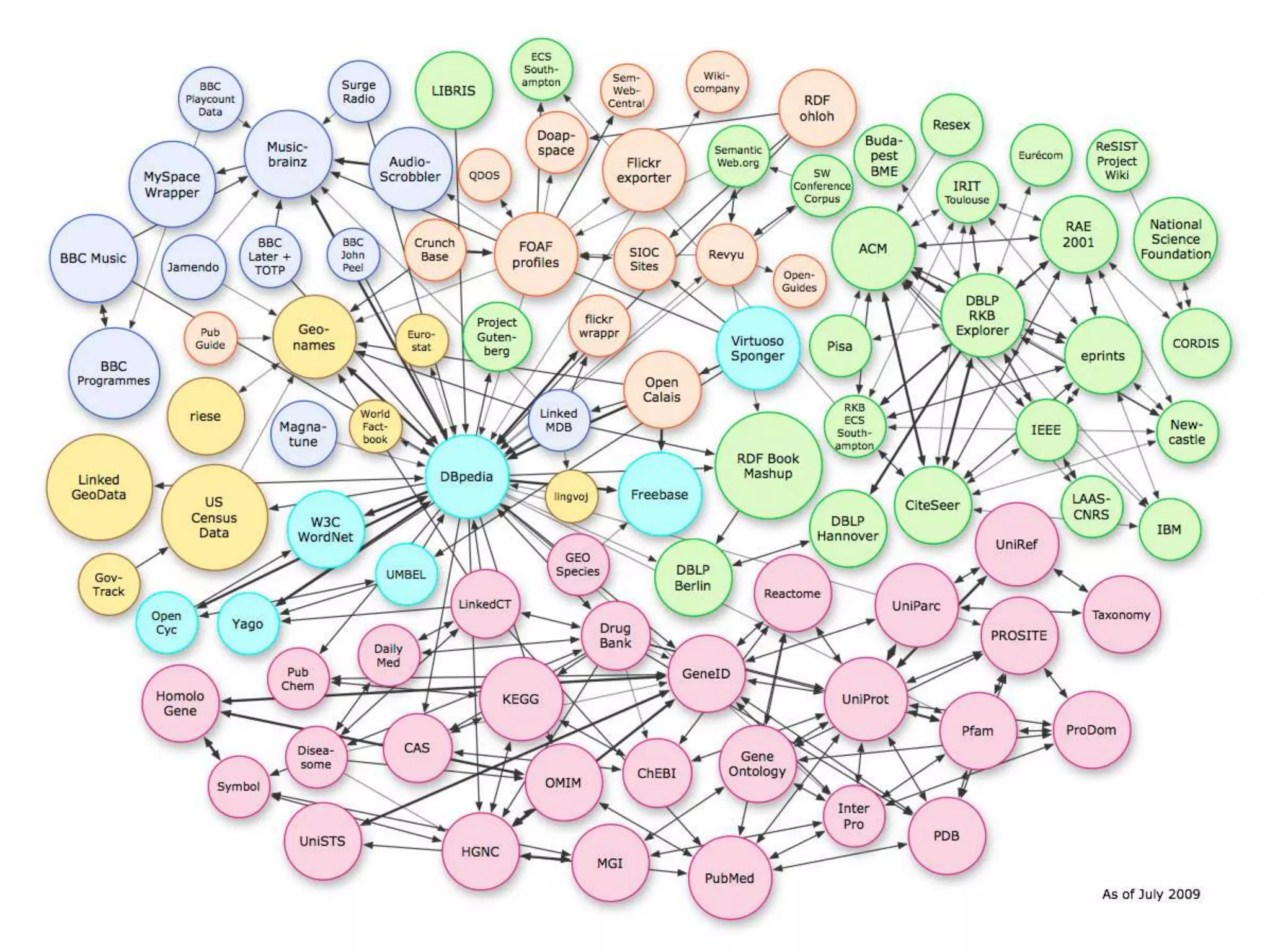
Data on the Web that is in RDF andislinked to other RDF data is LINKED DATA
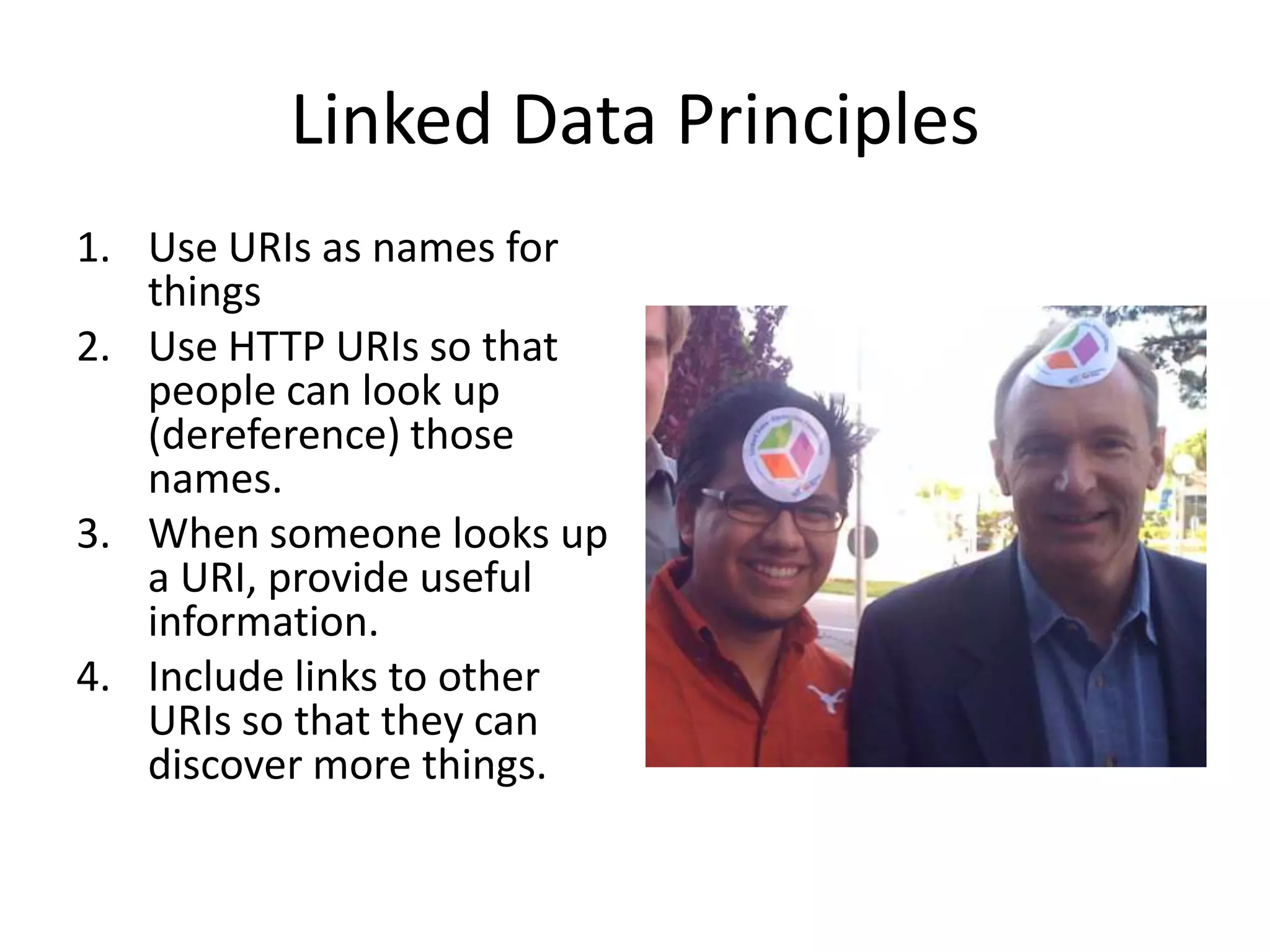
Linked Data PrinciplesUse URIs as names for thingsUse HTTP URIs so that people can look up (dereference) those names.When someone looks up a URI, provide useful information.Include links to other URIs so that they can discover more things.
Linked Data makes the web appear as ONEGIANTHUGEGLOBALDATABASE!
I can query a database with SQL. Is there a way to query Linked Data with a query language?
Yes! There is actually a standardize language for thatSPARQL
FIND all the reviews on the book “Programming the Semantic Web” by people who live in Austin
hasReviewhttp://…/review1http://…/isbn978Programming the Semantic WebtitledescriptionsameAshasReviewerAwesome Bookauthorhttp://…/isbn978Toby Segaranhttp://…/reviewernameisbn978-0-596-15381-6Juan SequedapublishersameAsnamehttp://…/publisher1O’Reillyhttp://juansequeda.comhttp://dbpedia.org/AustinlivesInnameJuan Sequeda
This looks cool, but let’s be realistic. What is the incentive to publish Linked Data?
What was your incentive to publish an HTML page in 1990?
1) Share data in documents2) Because you neighbor was doing it
So why should we publish Linked Data in 2009?
1) Share data as data2) Because you neighbor is doing it
And guess who is starting to publish Linked Data now?
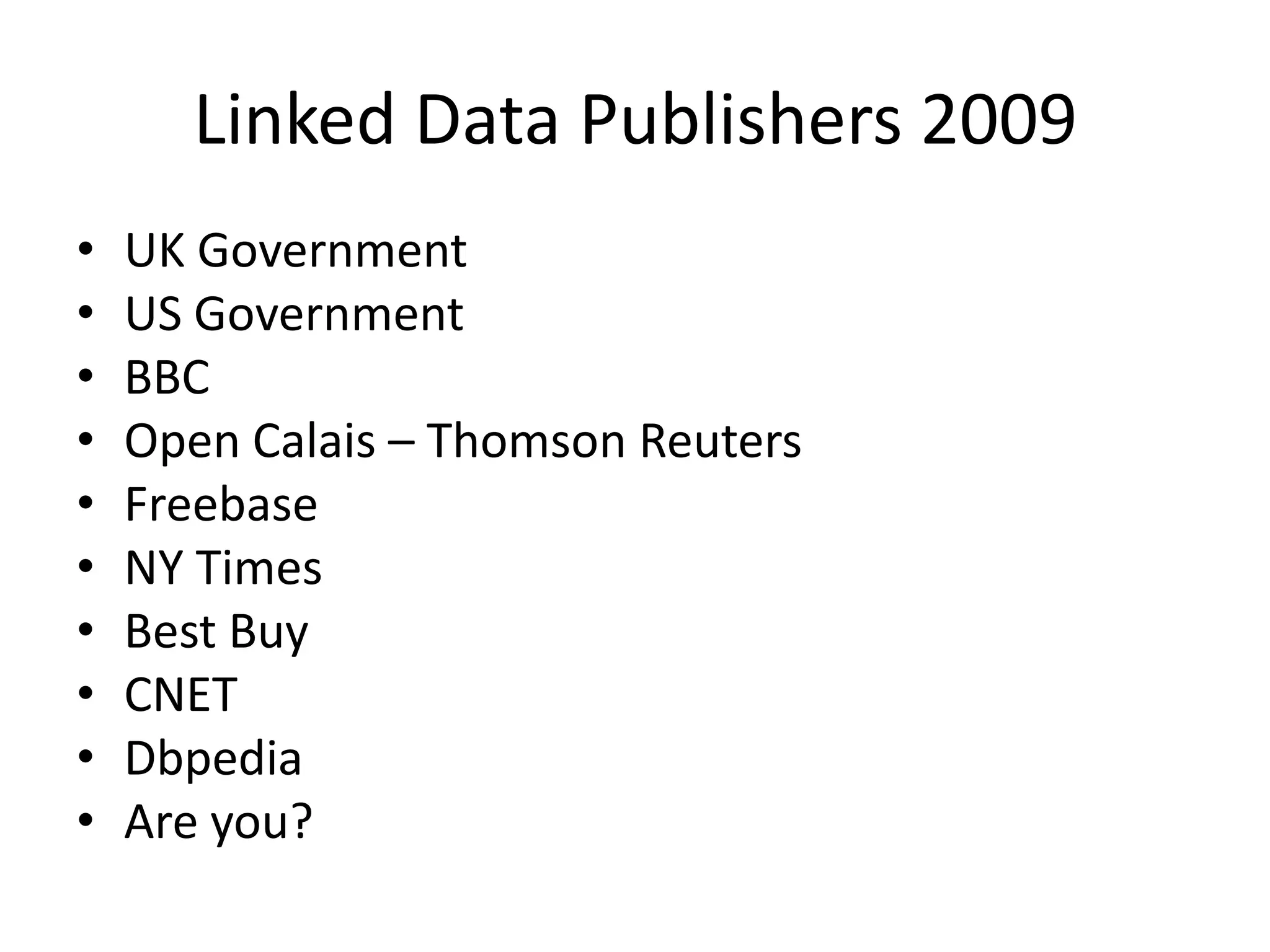
Linked Data Publishers 2009UK GovernmentUS GovernmentBBCOpen Calais – Thomson ReutersFreebaseNY TimesBest BuyCNETDbpediaAre you?
How can I publish Linked Data?
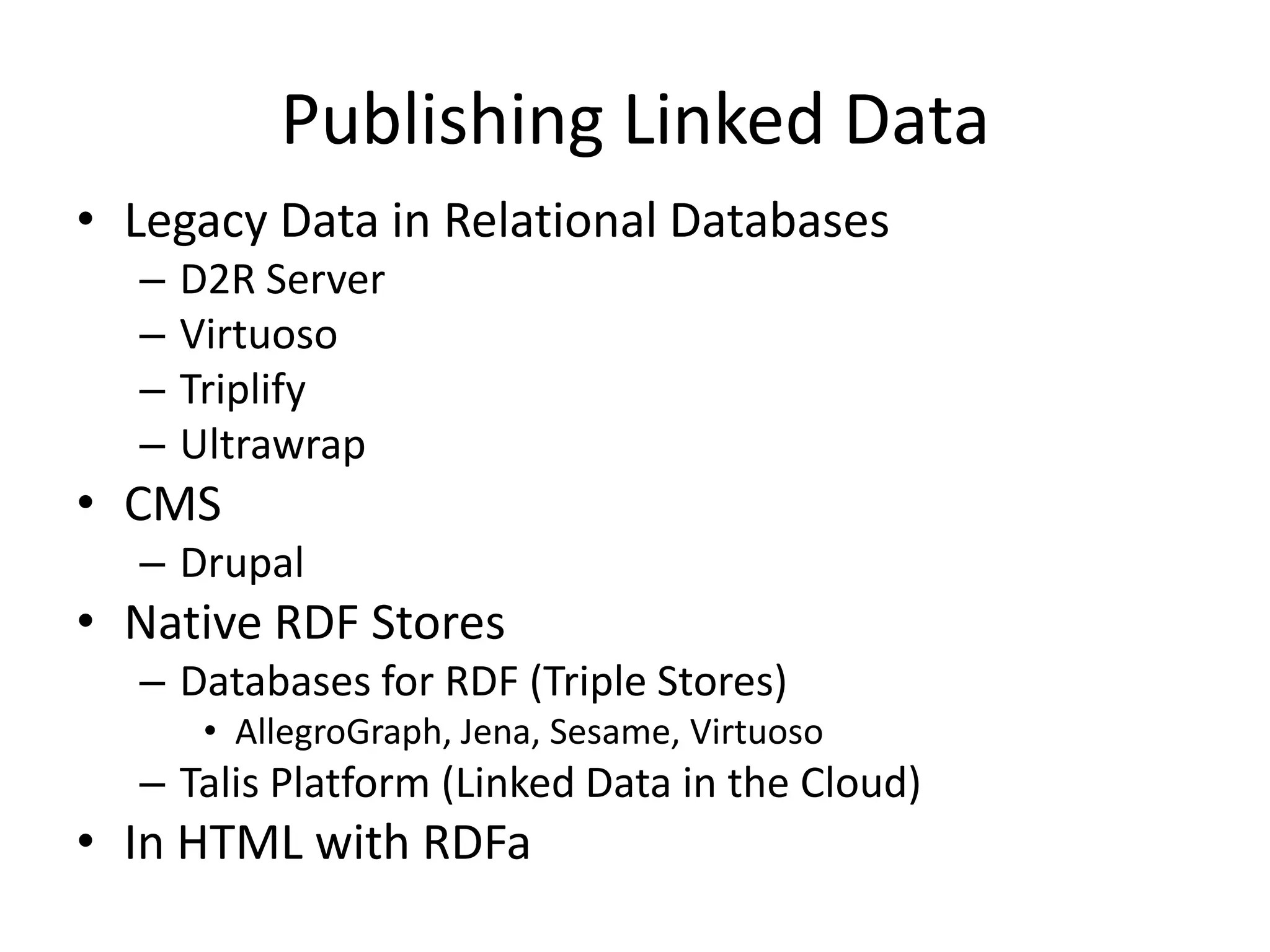
Publishing Linked DataLegacy Data in Relational DatabasesD2R ServerVirtuosoTriplifyUltrawrapCMSDrupalNative RDF StoresDatabases for RDF (Triple Stores)AllegroGraph, Jena, Sesame, VirtuosoTalis Platform (Linked Data in the Cloud)In HTML with RDFa
Questions?

Introduction to Linked Data

  • 1.
    Introduction to LinkedDataConsuming Linked Data TutorialInternational Semantic Web Conference 2009
  • 2.
    Do you SEARCHor do you FIND?
  • 3.
    Search forFootball Playerswho went to the University of Texas at Austin, played for the Dallas Cowboys as Cornerback
  • 7.
    Why can’t wejust FIND it…
  • 10.
    Guess how IFOUND out?
  • 11.
    I’ll tell youhow I did NOT find it
  • 12.
    Current Web =internet + links + docs
  • 13.
    So what isthe problem?The Web has problemsPeople aren’t interested in documentsThey are interested in things People can parse documents and extract meaningWeb pages are written in HTMLHTML describes visualization of informationComputers can’t!
  • 14.
    What do weneed to do?We need to help machines to understand the web so machines can help us understand thingsThey can learn what we are interested inThey can help us better find what we want
  • 15.
    How can wedo that?Besides publishing documents on the webwhich computers can’t understand easilyLet’s publish something that computers can understand
  • 16.
  • 17.
    But wait… don’twe do that already?
  • 18.
    Current Data onthe WebRelational DatabasesAPIsXMLCSVXLS…Can’t computers and applications already consume that data on the web?
  • 19.
    True! But itis all in different formats and data models!
  • 20.
    This makes ithard to integrate data
  • 21.
    The data indifferent data sources aren’t linked
  • 22.
    For example, howdo I know that the Juan Sequeda in Facebook is the same as Juan Sequeda in Twitter
  • 23.
    Or if Icreate a mashup from different services, I have to learn different APIs and I get different formats of data back
  • 24.
    Wouldn’t it begreat if we had a standard way of publishing data on the Web?
  • 25.
    We have astandardized way of publishing documents on the web, right?HTML
  • 26.
    Then why can’twe have a standard way of publishing data on the Web?
  • 27.
    Good question! Andthe answer is YES. There is!
  • 28.
    Resource Description Framework(RDF)A data model A way to model datai.e. Relational databases use relational data modelRDF is a triple data modelLabeled GraphSubject, Predicate, Object<Juan> <was born in> <California><California> <is part of> <the USA><Juan> <likes> <the Semantic Web>
  • 29.
    RDF can beserialized in different waysRDF/XMLRDFa (RDF in HTML)N3Turtle
  • 30.
    So does thatmean that I have to publish my data in RDF now?
  • 31.
    You don’t haveto… but we would like you to 
  • 32.
  • 33.
  • 34.
    Databases back updocumentsTHINGS have PROPERTIES:A Book as a Title, an author, …This is a THING:A book title “Programming the Semantic Web” by Toby Segaran, …
  • 35.
    Lets represent thedata in RDFProgramming the Semantic WebtitleauthorbookToby Segaranisbn978-0-596-15381-6publishernamePublisherO’Reilly
  • 36.
    Remember that weare on the webEverything on the web is identified by a URI
  • 37.
    And now let’slink the data to other dataProgramming the Semantic Webtitleauthorhttp://…/isbn978Toby Segaranisbn978-0-596-15381-6publishernamehttp://…/publisher1O’Reilly
  • 38.
    And now considerthe data from Revyu.comhasReviewhttp://…/review1http://…/isbn978descriptionreviewerAwesome Bookhttp://…/reviewernameJuan Sequeda
  • 39.
    Let’s start tolink datahasReviewhttp://…/review1http://…/isbn978Programming the Semantic WebtitledescriptionsameAshasReviewerAwesome Bookauthorhttp://…/isbn978Toby Segaranhttp://…/reviewernameisbn978-0-596-15381-6Juan Sequedapublishernamehttp://…/publisher1O’Reilly
  • 40.
    Juan Sequeda publishesdata toohttp://juansequeda.com/idhttp://dbpedia.org/AustinlivesInnameJuan Sequeda
  • 41.
    Let’s link moredatahasReviewhttp://…/review1http://…/isbn978descriptionhasReviewerAwesome Bookhttp://…/reviewernameJuan SequedasameAshttp://juansequeda.com/idhttp://dbpedia.org/AustinlivesInnameJuan Sequeda
  • 42.
    And morehasReviewhttp://…/review1http://…/isbn978Programming theSemantic WebtitledescriptionsameAshasReviewerAwesome Bookauthorhttp://…/isbn978Toby Segaranhttp://…/reviewernameisbn978-0-596-15381-6Juan SequedapublishersameAshttp://…/publisher1nameO’Reillyhttp://juansequeda.com/idhttp://dbpedia.org/AustinlivesInnameJuan Sequeda
  • 43.
    Data on theWeb that is in RDF andislinked to other RDF data is LINKED DATA
  • 44.
    Linked Data PrinciplesUseURIs as names for thingsUse HTTP URIs so that people can look up (dereference) those names.When someone looks up a URI, provide useful information.Include links to other URIs so that they can discover more things.
  • 45.
    Linked Data makesthe web appear as ONEGIANTHUGEGLOBALDATABASE!
  • 46.
    I can querya database with SQL. Is there a way to query Linked Data with a query language?
  • 47.
    Yes! There isactually a standardize language for thatSPARQL
  • 48.
    FIND all thereviews on the book “Programming the Semantic Web” by people who live in Austin
  • 49.
    hasReviewhttp://…/review1http://…/isbn978Programming the SemanticWebtitledescriptionsameAshasReviewerAwesome Bookauthorhttp://…/isbn978Toby Segaranhttp://…/reviewernameisbn978-0-596-15381-6Juan SequedapublishersameAsnamehttp://…/publisher1O’Reillyhttp://juansequeda.comhttp://dbpedia.org/AustinlivesInnameJuan Sequeda
  • 50.
    This looks cool,but let’s be realistic. What is the incentive to publish Linked Data?
  • 51.
    What was yourincentive to publish an HTML page in 1990?
  • 52.
    1) Share datain documents2) Because you neighbor was doing it
  • 53.
    So why shouldwe publish Linked Data in 2009?
  • 54.
    1) Share dataas data2) Because you neighbor is doing it
  • 55.
    And guess whois starting to publish Linked Data now?
  • 56.
    Linked Data Publishers2009UK GovernmentUS GovernmentBBCOpen Calais – Thomson ReutersFreebaseNY TimesBest BuyCNETDbpediaAre you?
  • 58.
    How can Ipublish Linked Data?
  • 59.
    Publishing Linked DataLegacyData in Relational DatabasesD2R ServerVirtuosoTriplifyUltrawrapCMSDrupalNative RDF StoresDatabases for RDF (Triple Stores)AllegroGraph, Jena, Sesame, VirtuosoTalis Platform (Linked Data in the Cloud)In HTML with RDFa
  • 60.