Introduction to Genetics for
beginners
An Introduction to basic genetic
concepts and links to health for
individuals who have had minimal
experience of genetics
DNA, genes & chromosomes
The objectives of this presentation are to:
• Understand the role and structure of DNA, genes and
chromosomes.
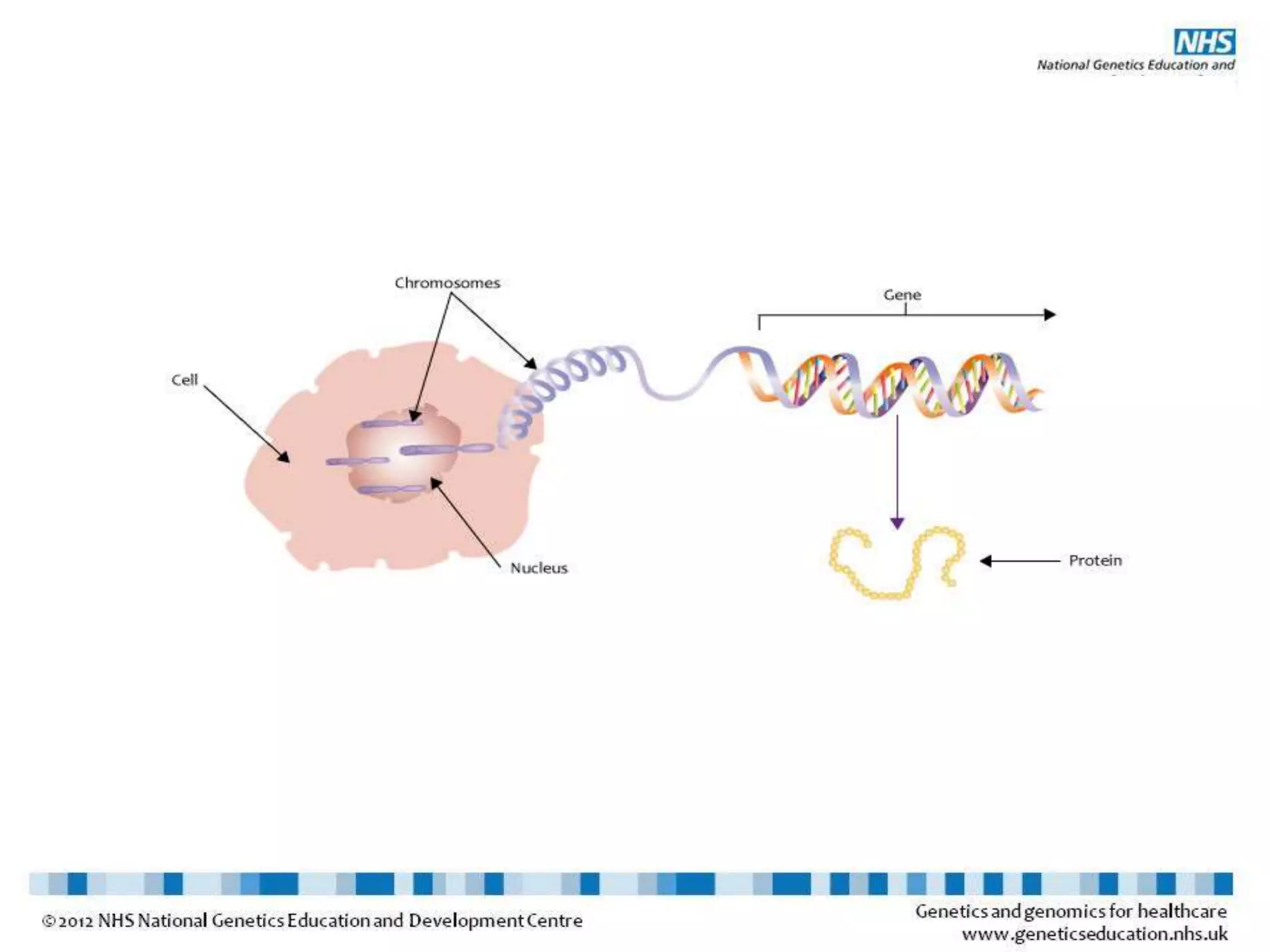
• Understand that proteins are encoded by genes
• Be aware that alterations in genetic material can cause
disease
The structure of DNA, genes & chromosomes
Chromosomes
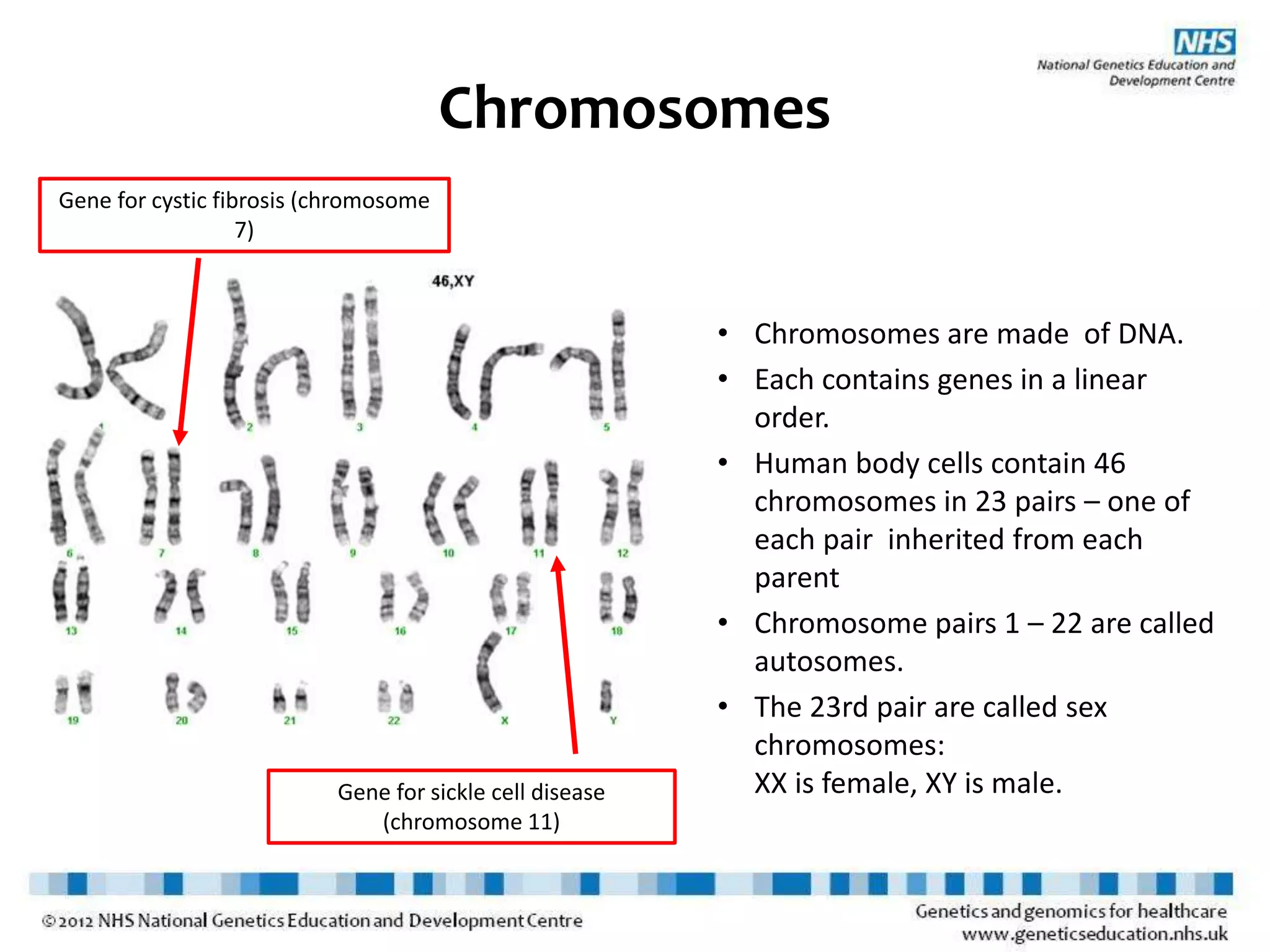
• Chromosomes are made of DNA.
• Each contains genes in a linear
order.
• Human body cells contain 46
chromosomes in 23 pairs – one of
each pair inherited from each
parent
• Chromosome pairs 1 – 22 are called
autosomes.
• The 23rd pair are called sex
chromosomes:
XX is female, XY is male.Gene for sickle cell disease
(chromosome 11)
Gene for cystic fibrosis (chromosome
7)
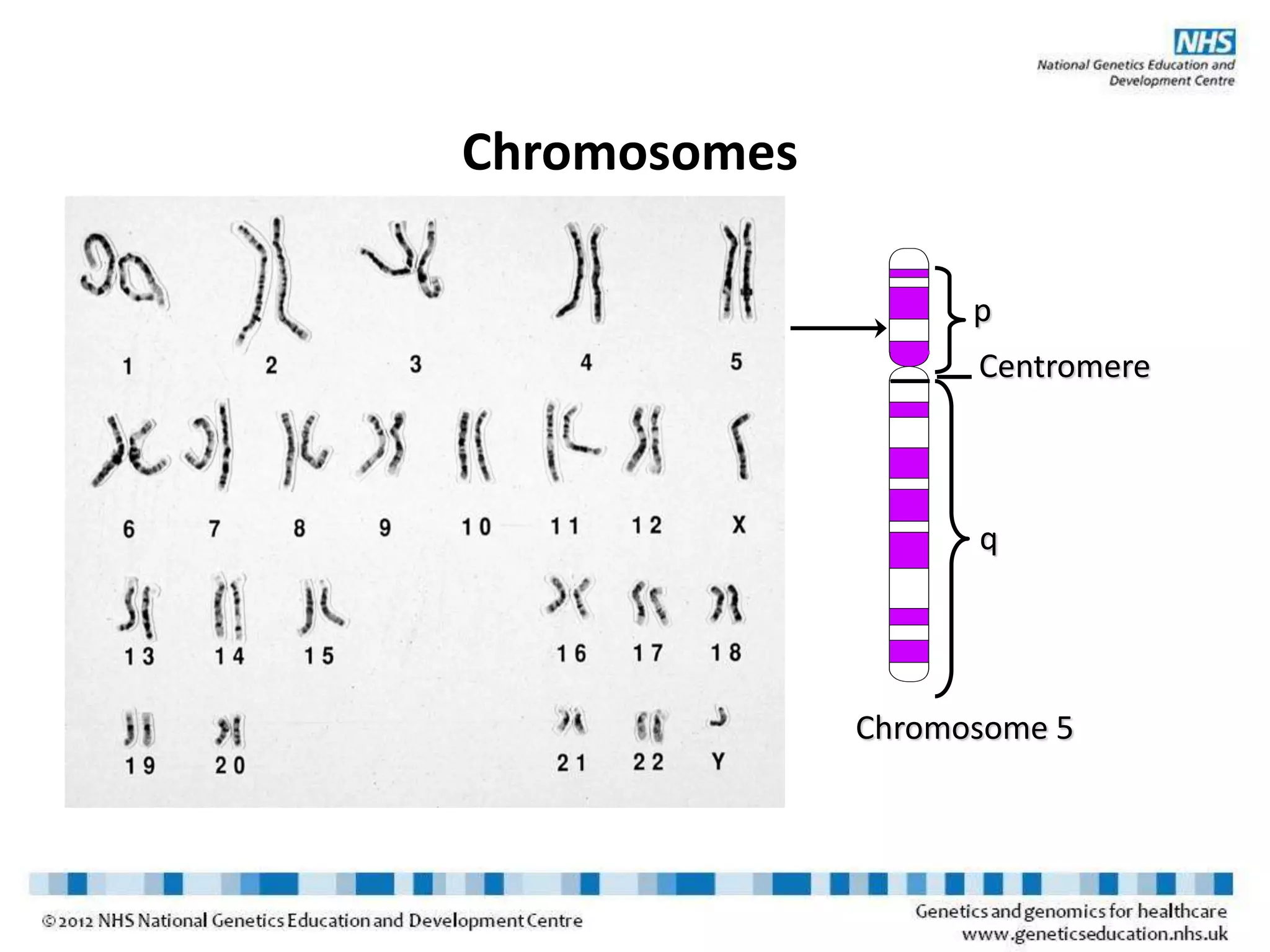
Chromosomes
p
Centromere
q
Chromosome 5
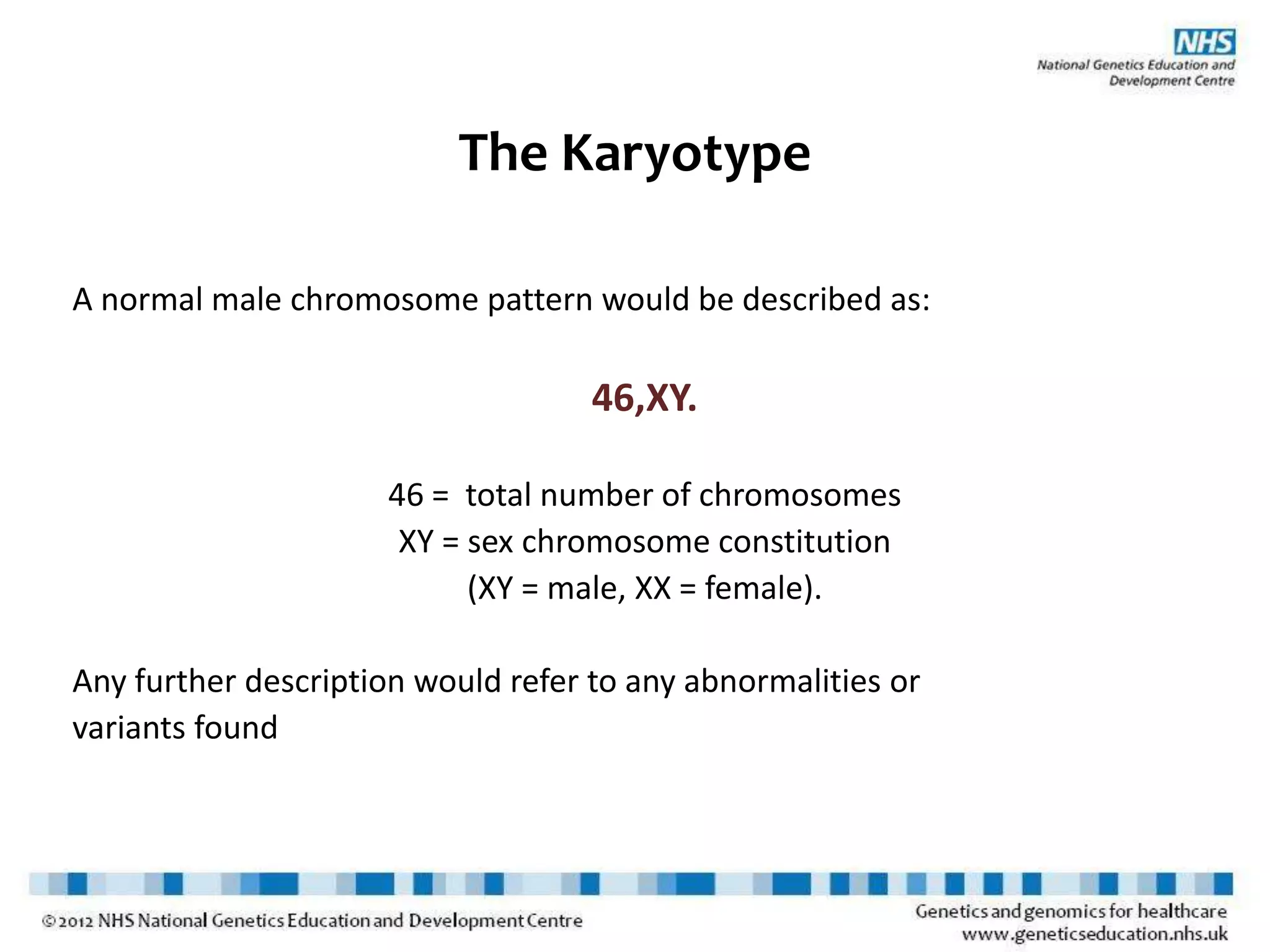
The Karyotype
A normal male chromosome pattern would be described as:
46,XY.
46 = total number of chromosomes
XY = sex chromosome constitution
(XY = male, XX = female).
Any further description would refer to any abnormalities or
variants found
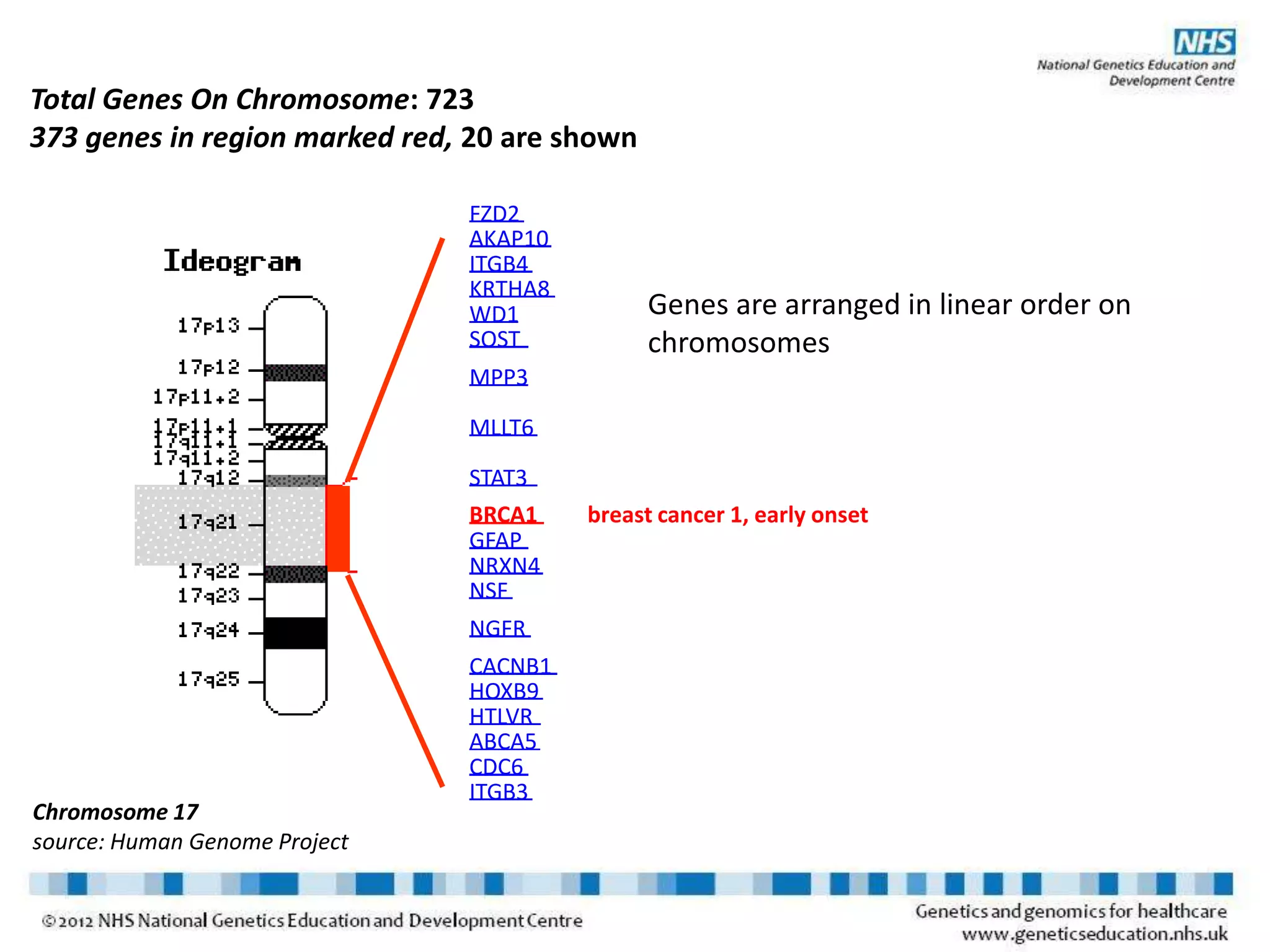
Total Genes On Chromosome: 723
373 genes in region marked red, 20 are shown
FZD2
AKAP10
ITGB4
KRTHA8
WD1
SOST
MPP3
MLLT6
STAT3
BRCA1 breast cancer 1, early onset
GFAP
NRXN4
NSF
NGFR
CACNB1
HOXB9
HTLVR
ABCA5
CDC6
ITGB3
Chromosome 17
source: Human Genome Project
Genes are arranged in linear order on
chromosomes
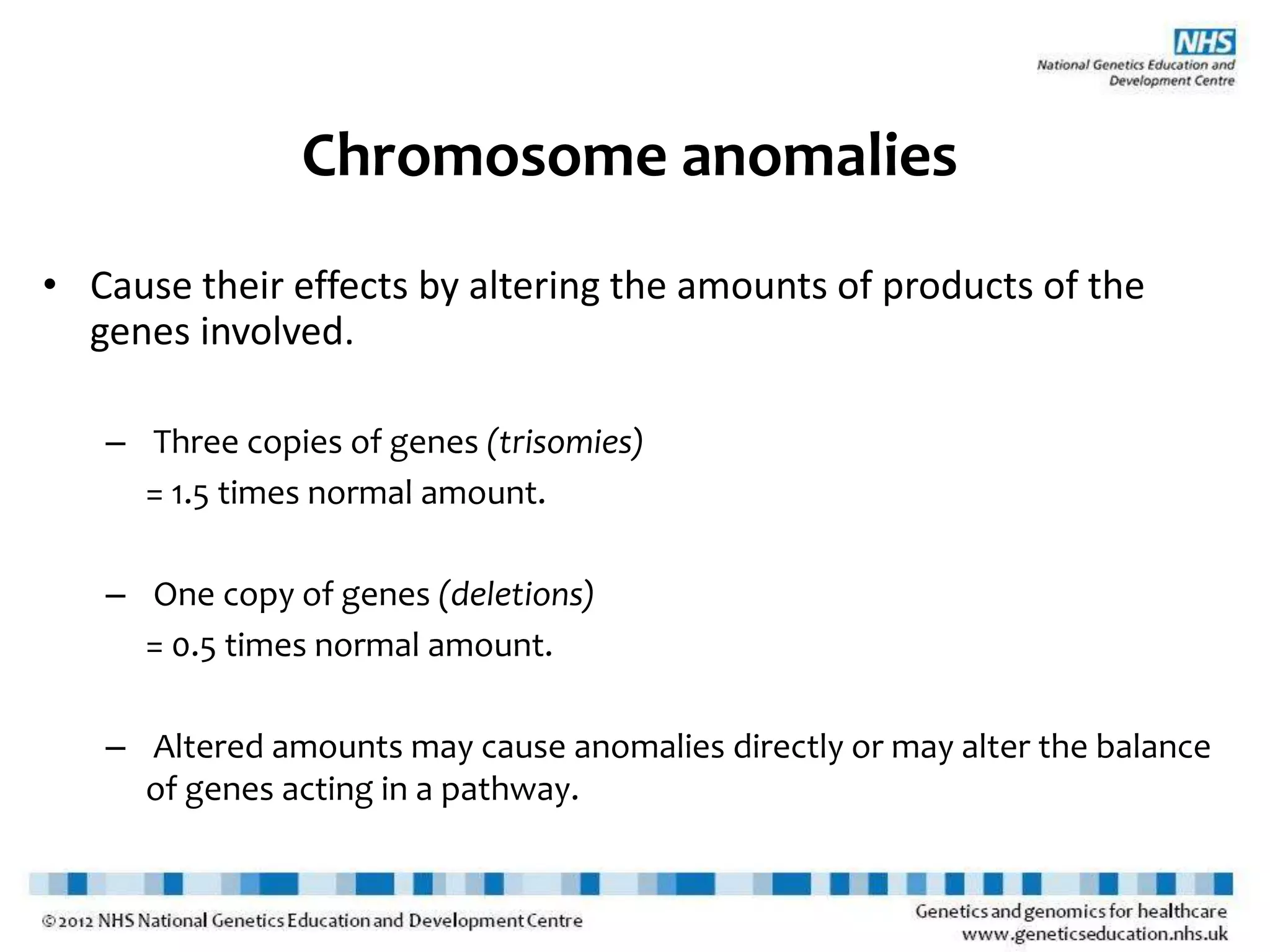
Chromosome anomalies
• Cause their effects by altering the amounts of products of the
genes involved.
– Three copies of genes (trisomies)
= 1.5 times normal amount.
– One copy of genes (deletions)
= 0.5 times normal amount.
– Altered amounts may cause anomalies directly or may alter the balance
of genes acting in a pathway.
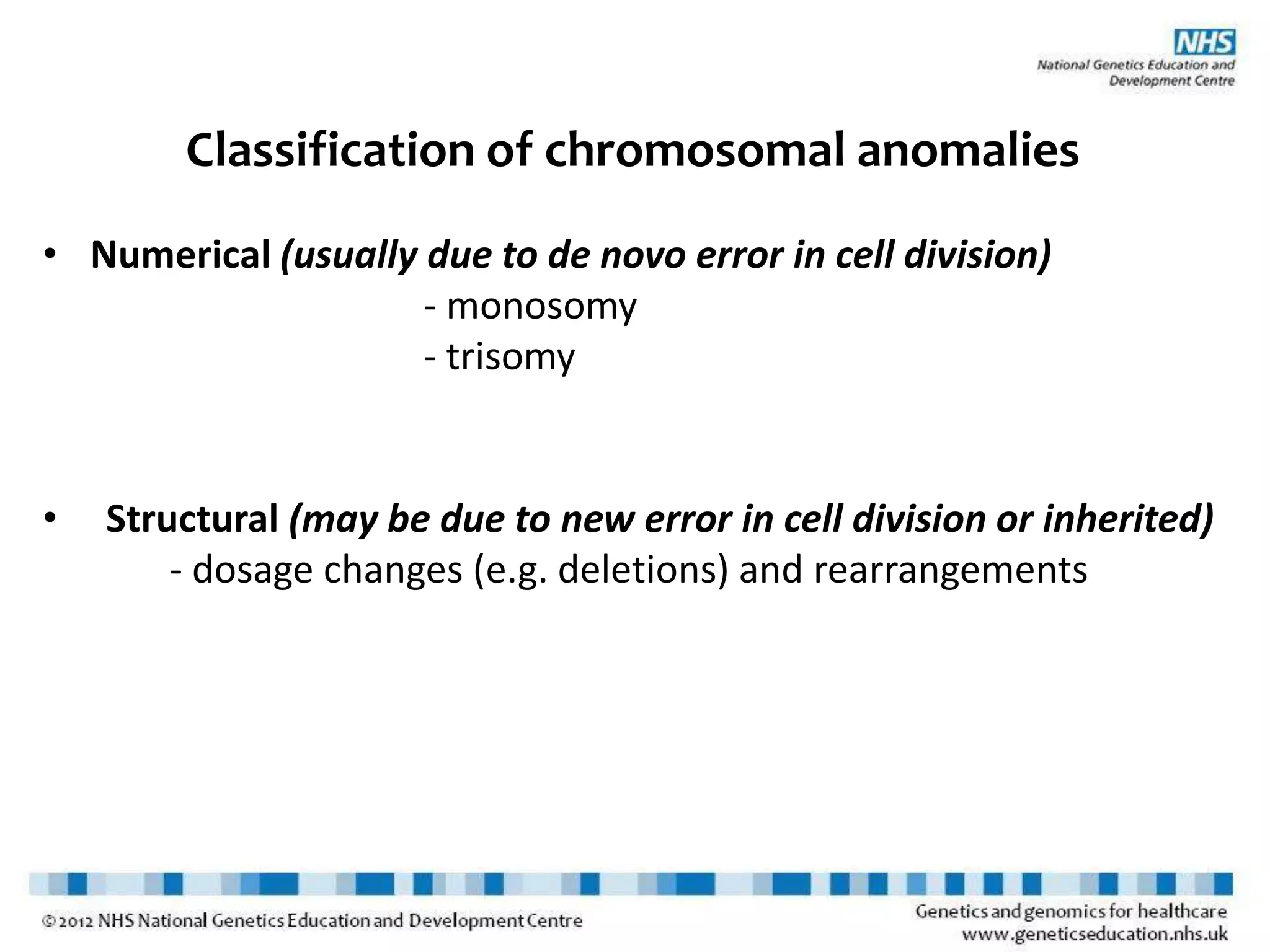
Classification of chromosomal anomalies
• Numerical (usually due to de novo error in cell division)
- monosomy
- trisomy
• Structural (may be due to new error in cell division or inherited)
- dosage changes (e.g. deletions) and rearrangements
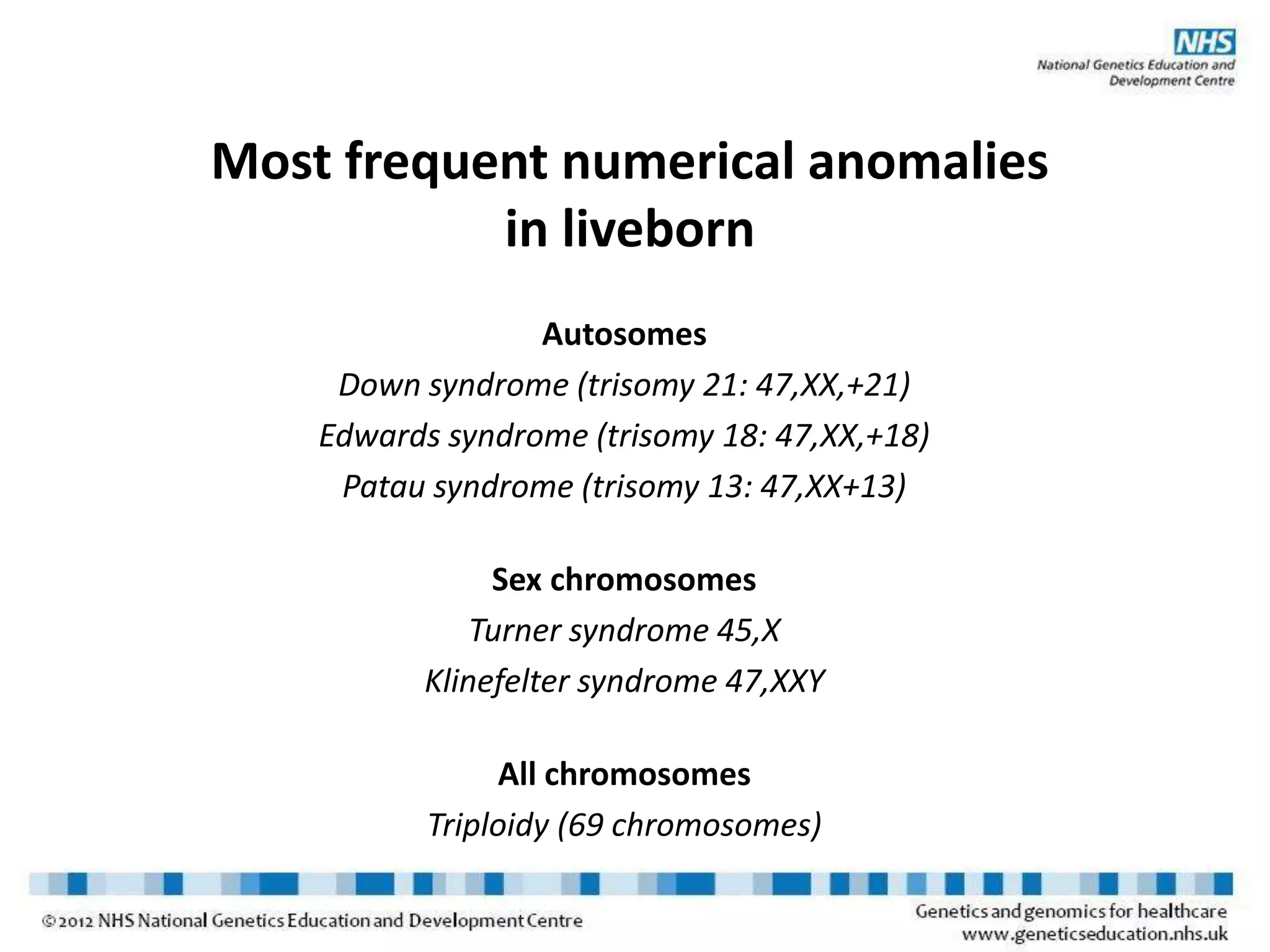
Most frequent numerical anomalies
in liveborn
Autosomes
Down syndrome (trisomy 21: 47,XX,+21)
Edwards syndrome (trisomy 18: 47,XX,+18)
Patau syndrome (trisomy 13: 47,XX+13)
Sex chromosomes
Turner syndrome 45,X
Klinefelter syndrome 47,XXY
All chromosomes
Triploidy (69 chromosomes)
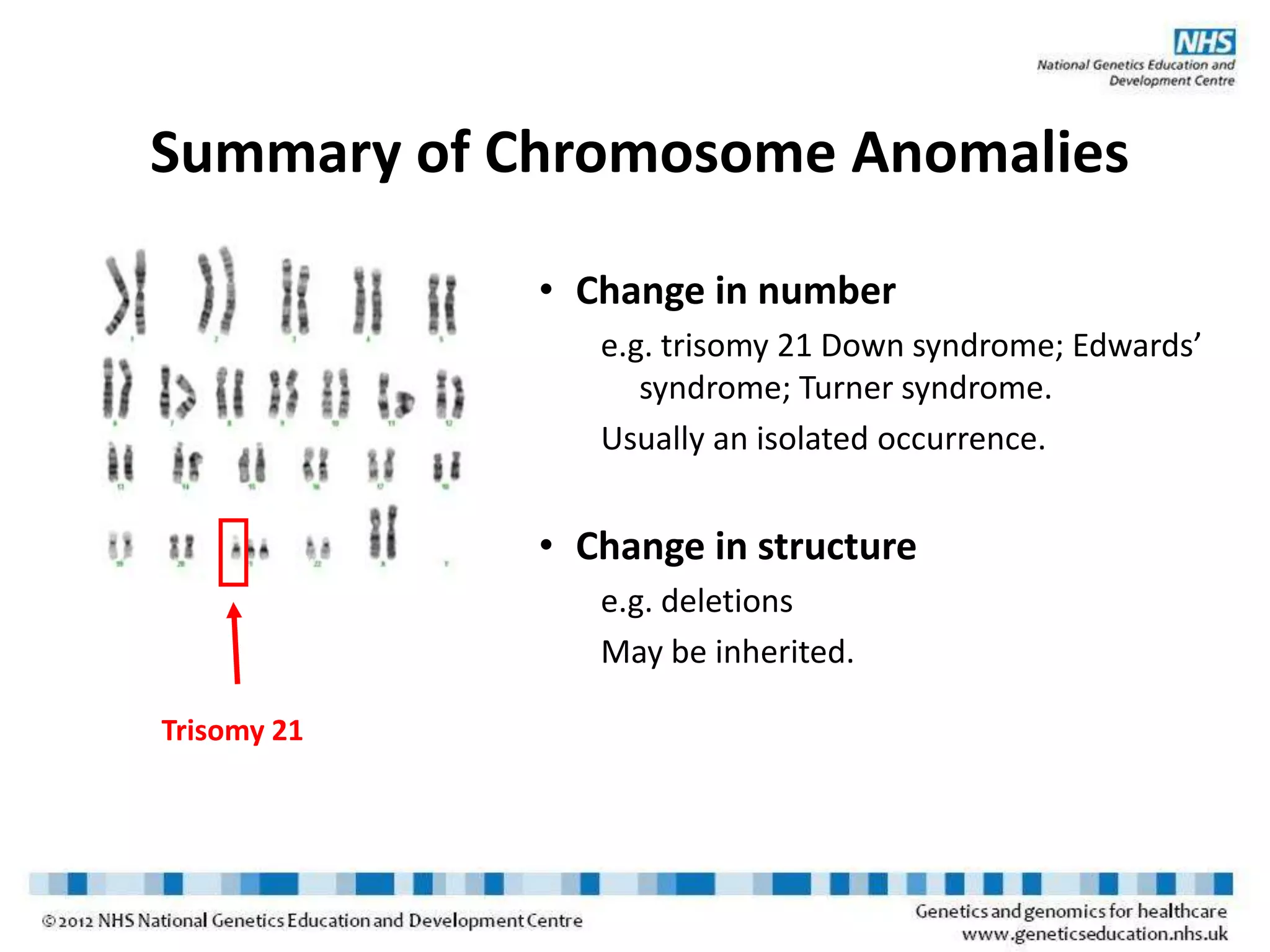
Summary of Chromosome Anomalies
• Change in number
e.g. trisomy 21 Down syndrome; Edwards’
syndrome; Turner syndrome.
Usually an isolated occurrence.
• Change in structure
e.g. deletions
May be inherited.
Trisomy 21
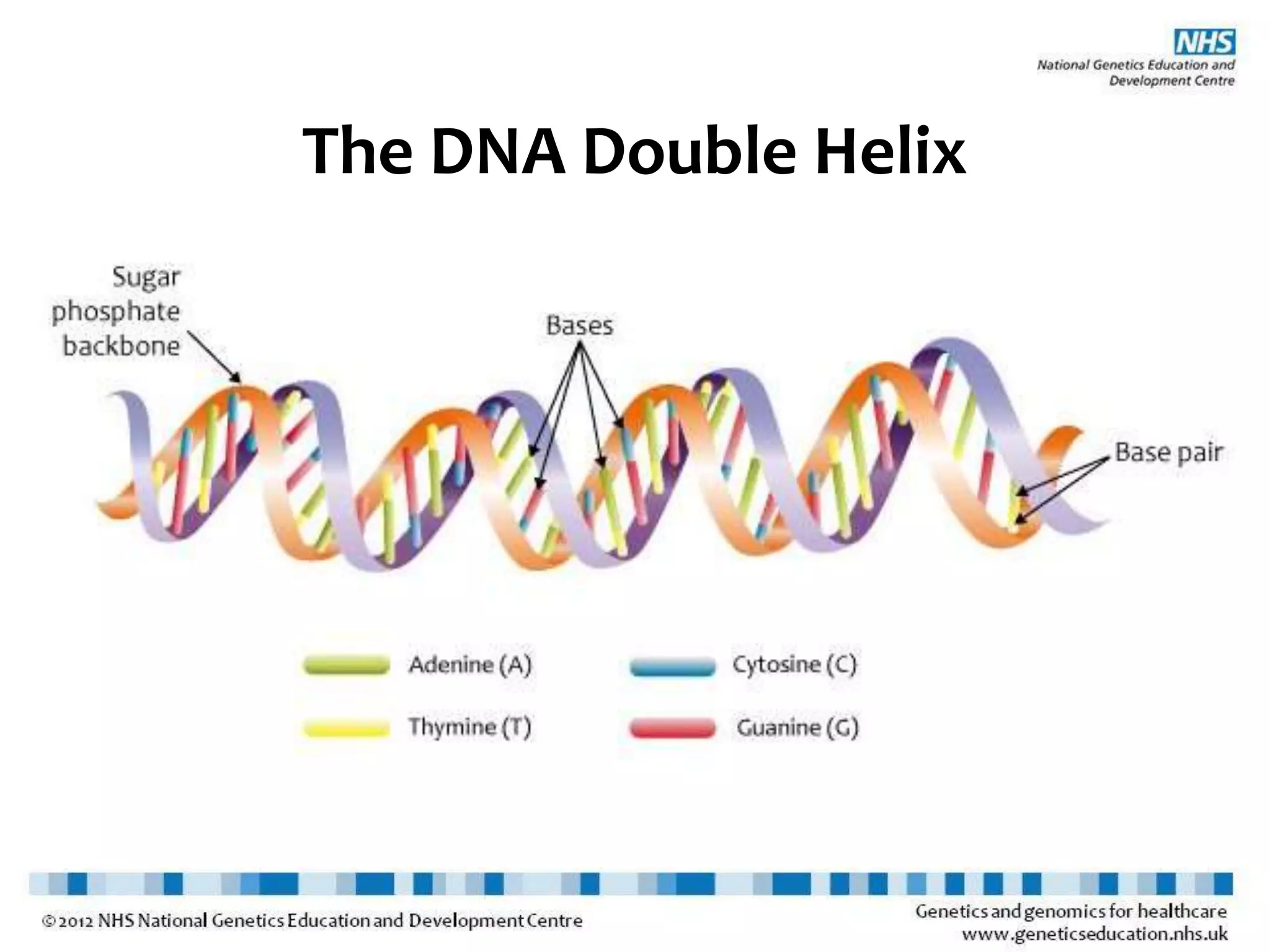
The DNA Double Helix
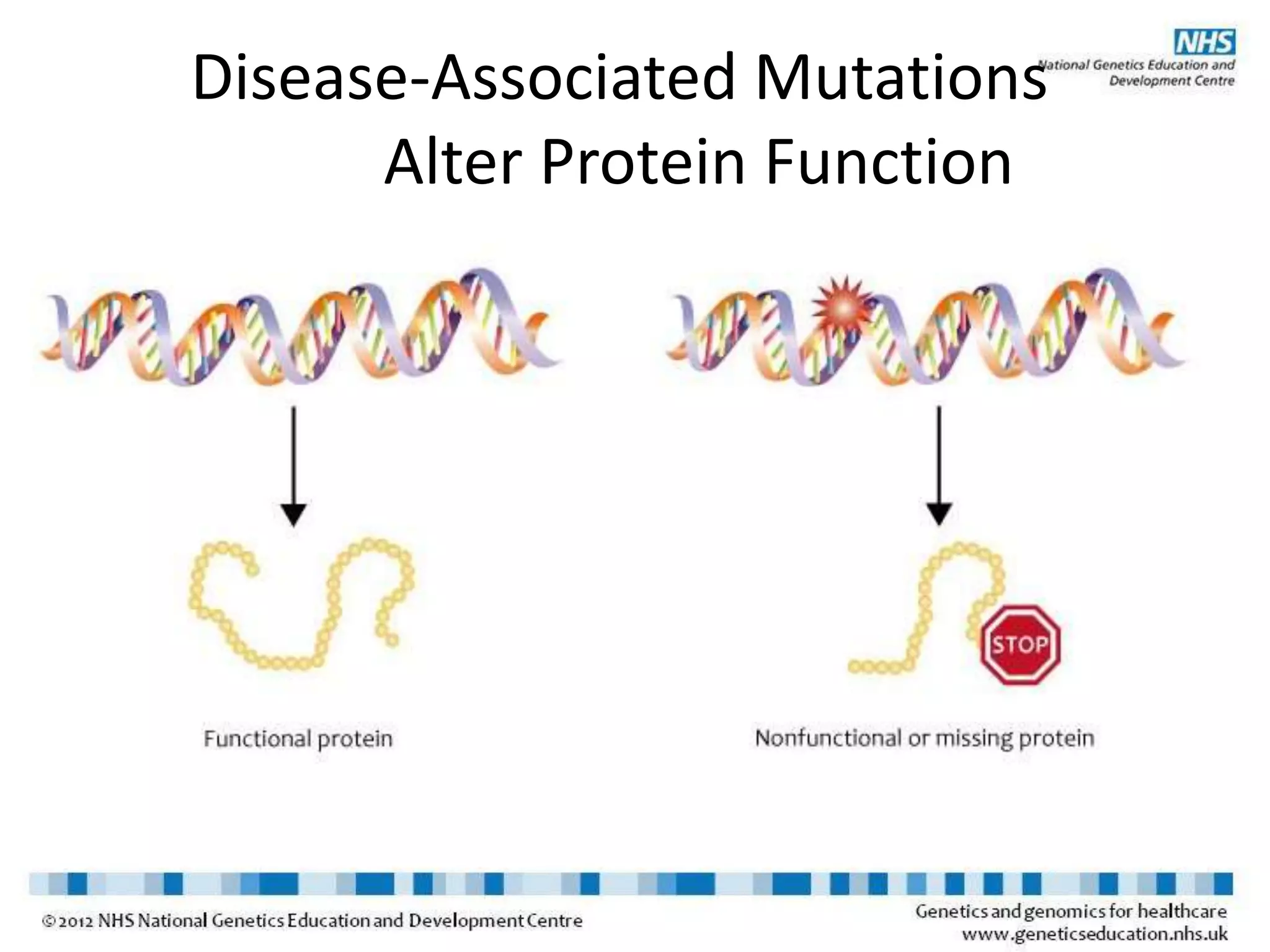
Disease-Associated Mutations
Alter Protein Function
What is a mutation?
• Mutation – an alteration or change in the genetic material
• In clinical use usually = “harmful”
• Inherited
• From exposure to mutagenic agents but more arise
spontaneously through errors in DNA replication / repair
• More likely to be recognised if effects are detrimental
Summary
• Human body cells contain 46 chromosomes in 23 pairs –
one of each pair is inherited from each parent
• Chromosomes are made of DNA
• Each chromosome contains genes in a linear order
• Genes are codes for cells to make proteins
• Alterations in genes or chromosomes alter the protein
produced and can hence cause disease

Introduction to genetics for beginners

  • 1.
    Introduction to Geneticsfor beginners An Introduction to basic genetic concepts and links to health for individuals who have had minimal experience of genetics
  • 2.
    DNA, genes &chromosomes The objectives of this presentation are to: • Understand the role and structure of DNA, genes and chromosomes. • Understand that proteins are encoded by genes • Be aware that alterations in genetic material can cause disease
  • 3.
    The structure ofDNA, genes & chromosomes
  • 4.
    Chromosomes • Chromosomes aremade of DNA. • Each contains genes in a linear order. • Human body cells contain 46 chromosomes in 23 pairs – one of each pair inherited from each parent • Chromosome pairs 1 – 22 are called autosomes. • The 23rd pair are called sex chromosomes: XX is female, XY is male.Gene for sickle cell disease (chromosome 11) Gene for cystic fibrosis (chromosome 7)
  • 5.
  • 6.
    The Karyotype A normalmale chromosome pattern would be described as: 46,XY. 46 = total number of chromosomes XY = sex chromosome constitution (XY = male, XX = female). Any further description would refer to any abnormalities or variants found
  • 7.
    Total Genes OnChromosome: 723 373 genes in region marked red, 20 are shown FZD2 AKAP10 ITGB4 KRTHA8 WD1 SOST MPP3 MLLT6 STAT3 BRCA1 breast cancer 1, early onset GFAP NRXN4 NSF NGFR CACNB1 HOXB9 HTLVR ABCA5 CDC6 ITGB3 Chromosome 17 source: Human Genome Project Genes are arranged in linear order on chromosomes
  • 8.
    Chromosome anomalies • Causetheir effects by altering the amounts of products of the genes involved. – Three copies of genes (trisomies) = 1.5 times normal amount. – One copy of genes (deletions) = 0.5 times normal amount. – Altered amounts may cause anomalies directly or may alter the balance of genes acting in a pathway.
  • 9.
    Classification of chromosomalanomalies • Numerical (usually due to de novo error in cell division) - monosomy - trisomy • Structural (may be due to new error in cell division or inherited) - dosage changes (e.g. deletions) and rearrangements
  • 10.
    Most frequent numericalanomalies in liveborn Autosomes Down syndrome (trisomy 21: 47,XX,+21) Edwards syndrome (trisomy 18: 47,XX,+18) Patau syndrome (trisomy 13: 47,XX+13) Sex chromosomes Turner syndrome 45,X Klinefelter syndrome 47,XXY All chromosomes Triploidy (69 chromosomes)
  • 11.
    Summary of ChromosomeAnomalies • Change in number e.g. trisomy 21 Down syndrome; Edwards’ syndrome; Turner syndrome. Usually an isolated occurrence. • Change in structure e.g. deletions May be inherited. Trisomy 21
  • 12.
  • 15.
  • 16.
    What is amutation? • Mutation – an alteration or change in the genetic material • In clinical use usually = “harmful” • Inherited • From exposure to mutagenic agents but more arise spontaneously through errors in DNA replication / repair • More likely to be recognised if effects are detrimental
  • 17.
    Summary • Human bodycells contain 46 chromosomes in 23 pairs – one of each pair is inherited from each parent • Chromosomes are made of DNA • Each chromosome contains genes in a linear order • Genes are codes for cells to make proteins • Alterations in genes or chromosomes alter the protein produced and can hence cause disease