Preparing for Exams – Part 1
This presentation will Explore how you can best use your time to prepare for exams Show the usefulness of a revision timetable Explore ways in which you can anticipate exam content Consider different learning styles
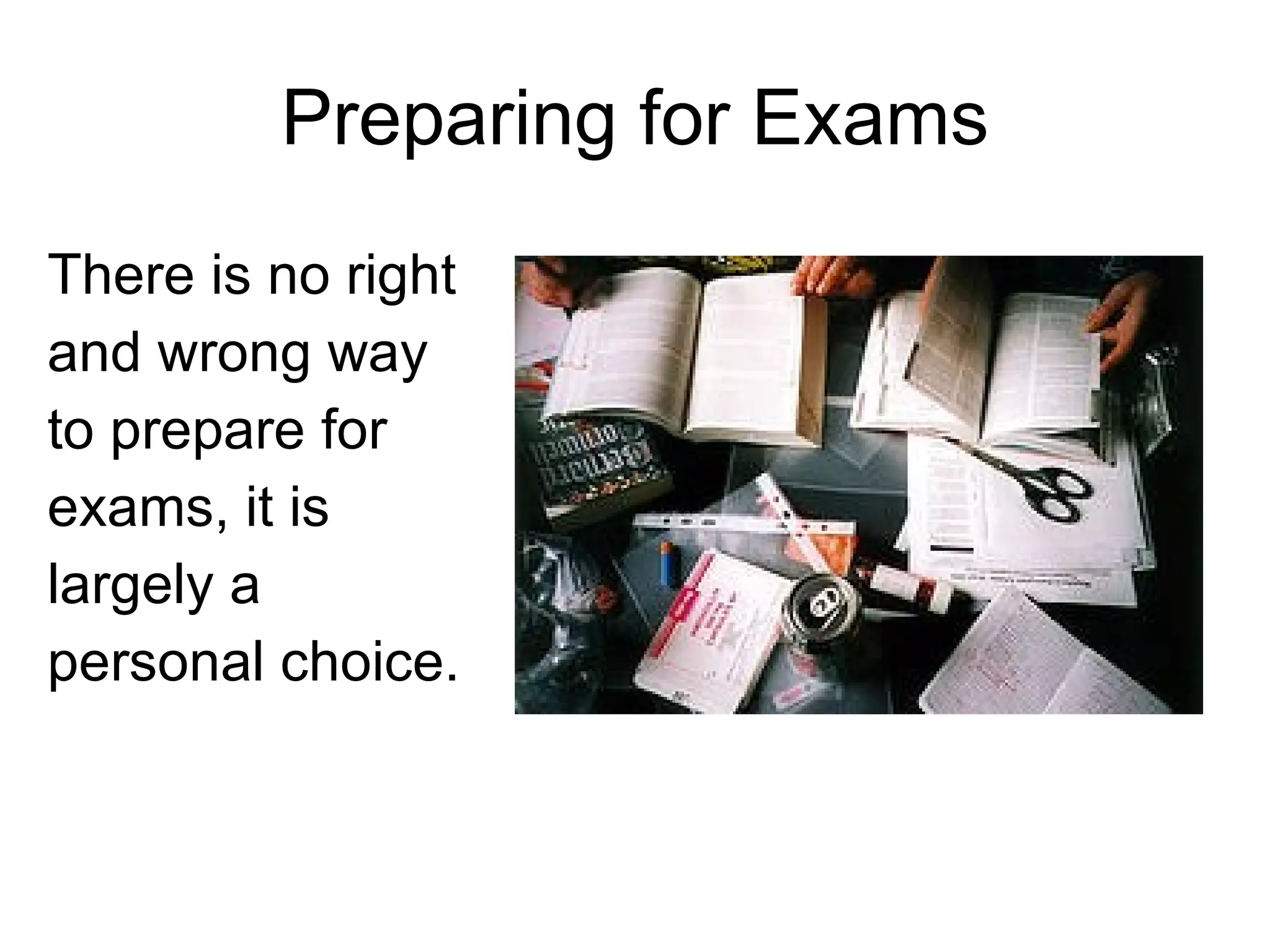
Preparing for Exams There is no right and wrong way to prepare for exams, it is largely a personal choice.
What is revision? This is when you learn things thoroughly in preparation for the exam.
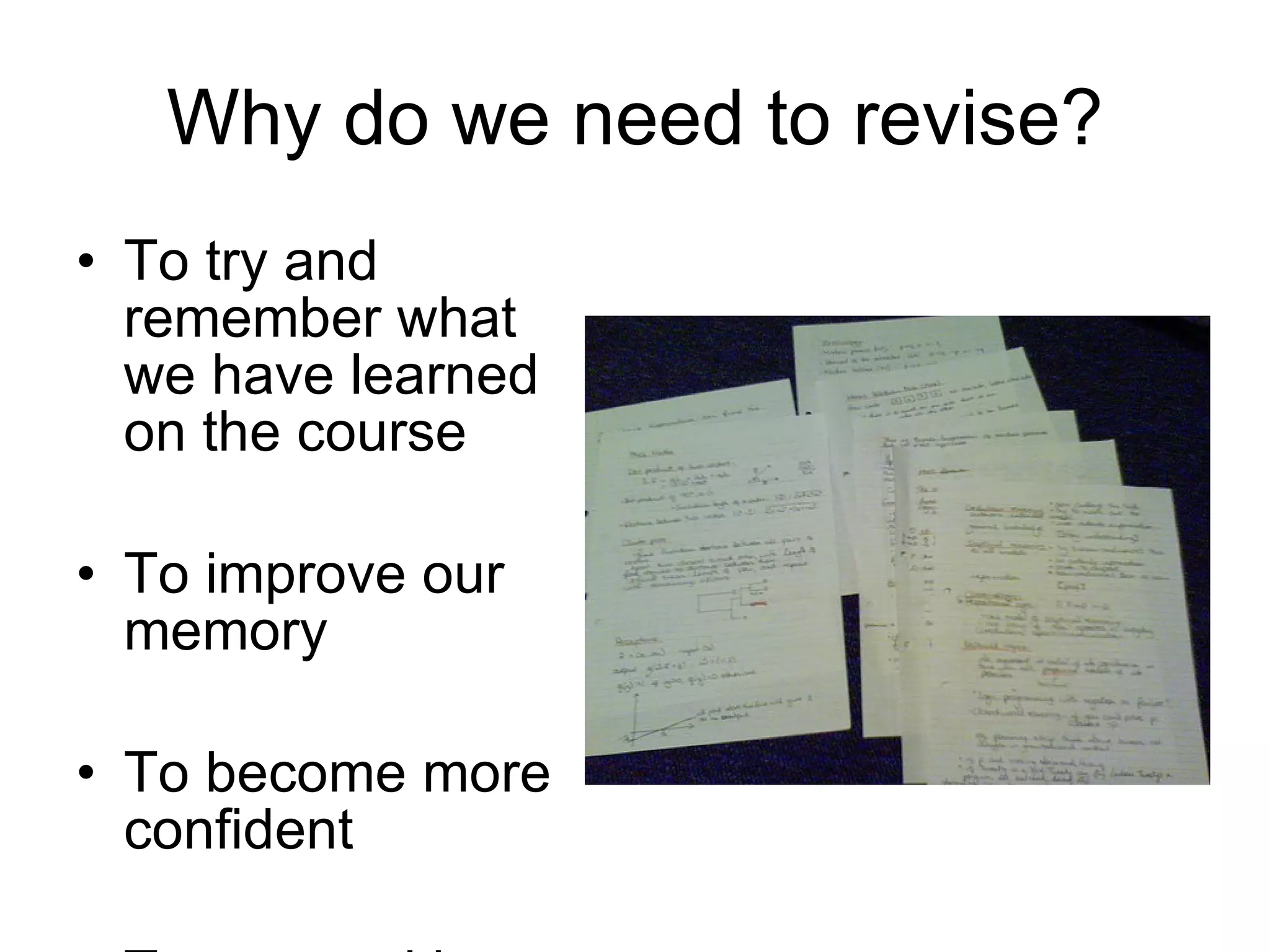
Why do we need to revise? To try and remember what we have learned on the course To improve our memory To become more confident To succeed in our exams
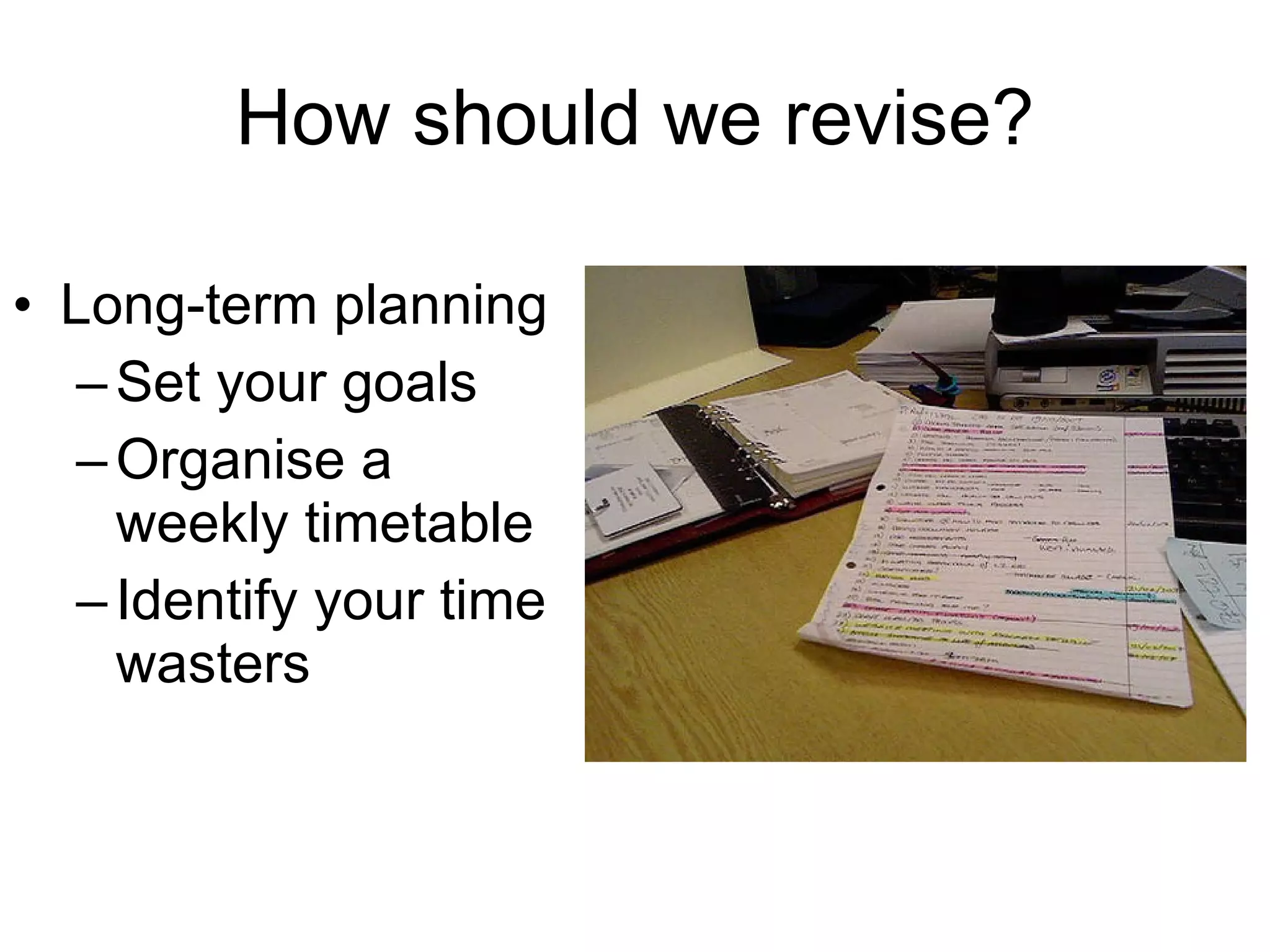
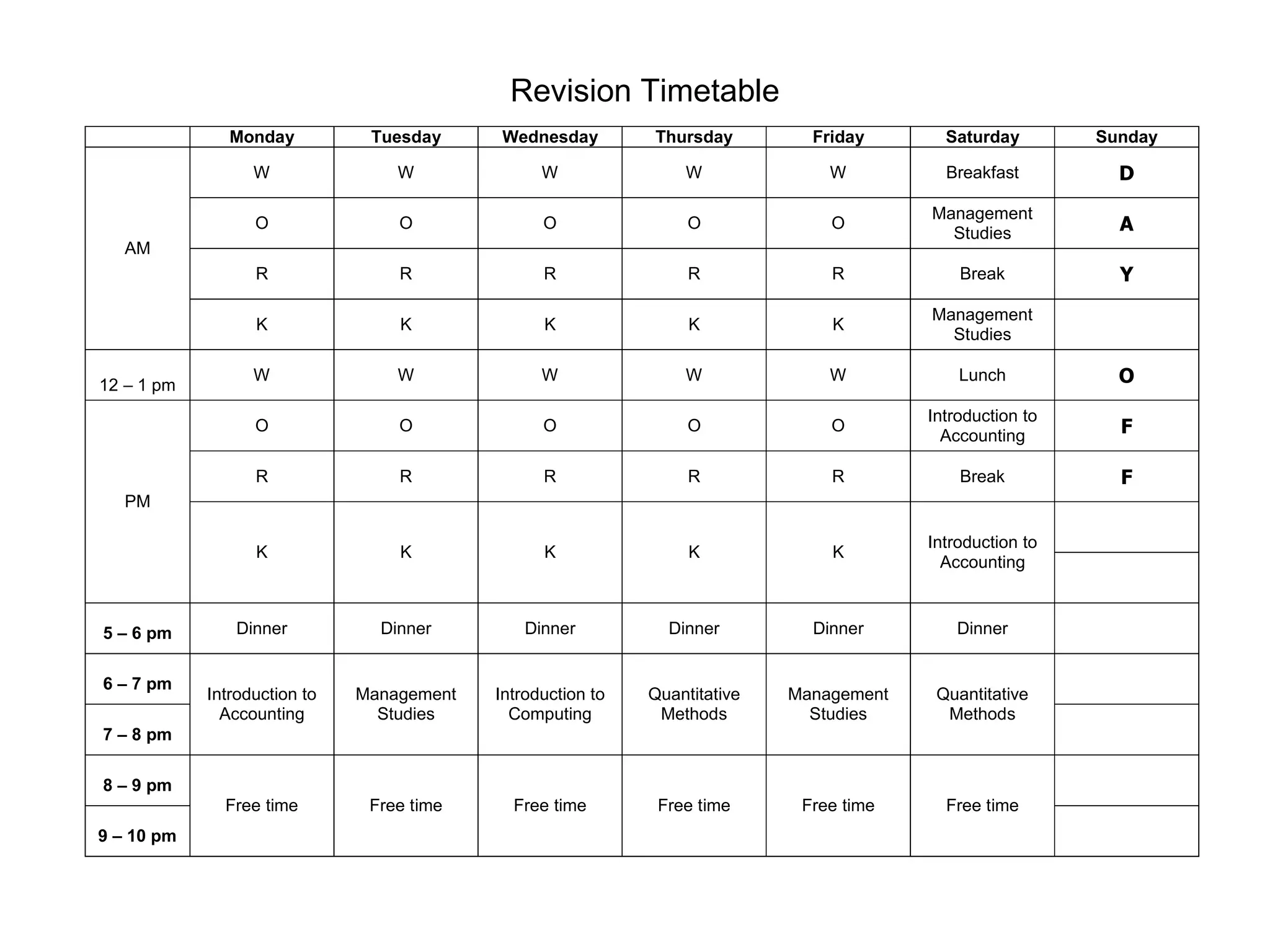
How should we revise? Long-term planning Set your goals Organise a weekly timetable Identify your time wasters
Revision Timetable
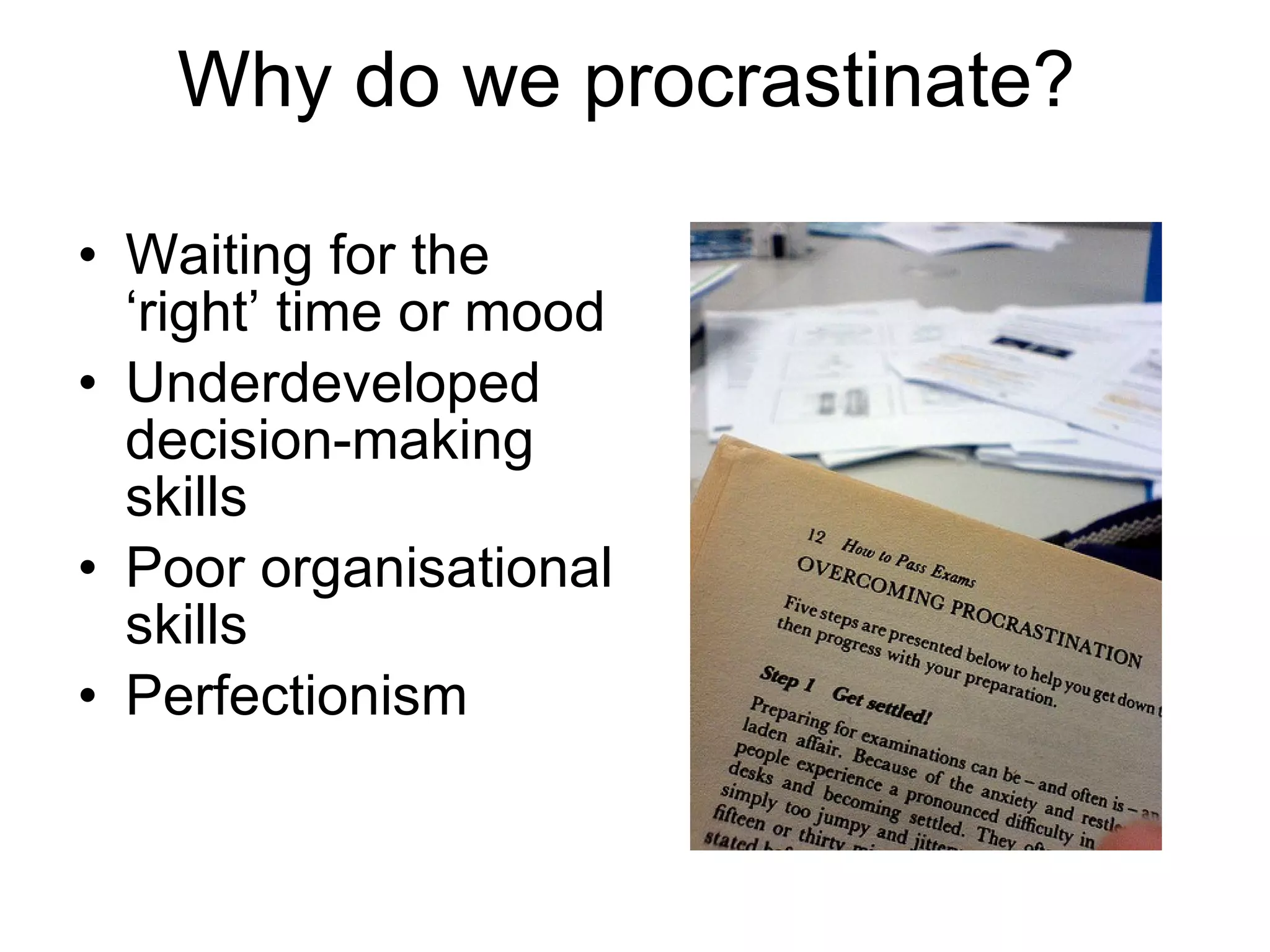
Why do we procrastinate? Waiting for the ‘right’ time or mood Underdeveloped decision-making skills Poor organisational skills Perfectionism
Organise your notes Write out your course notes neatly and clearly, then file them so you can find them easily
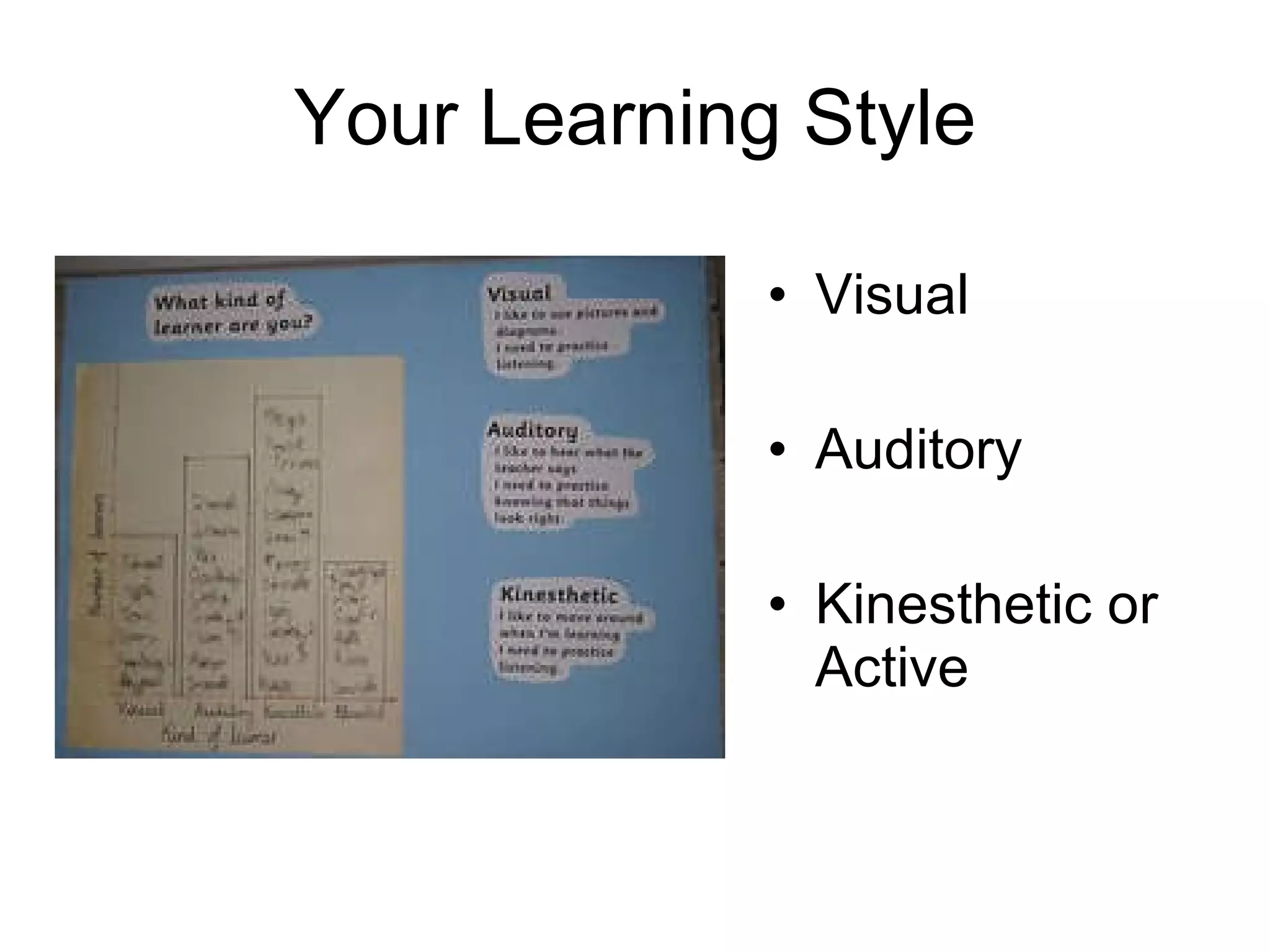
Your Learning Style Visual Auditory Kinesthetic or Active
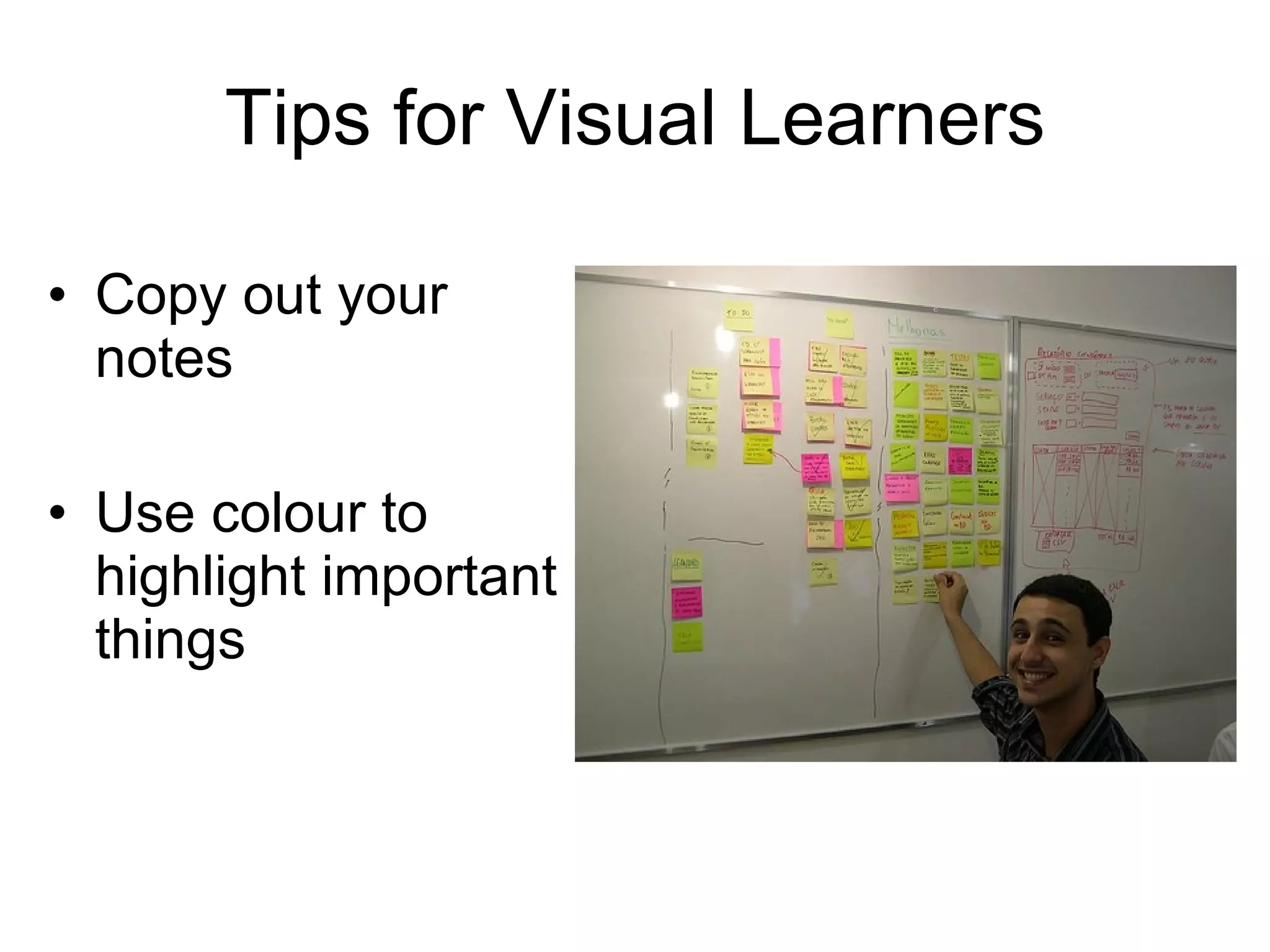
Tips for Visual Learners Copy out your notes Use colour to highlight important things
Tips for Auditory Learners Read your notes aloud. Revise with other students if you can.
Tips for Kinesthetic Learners Make use of all your senses - sight, touch, taste, smell, hearing  hands-on approaches  trial and error  exhibits, samples, photographs...  solutions to problems, previous exam papers
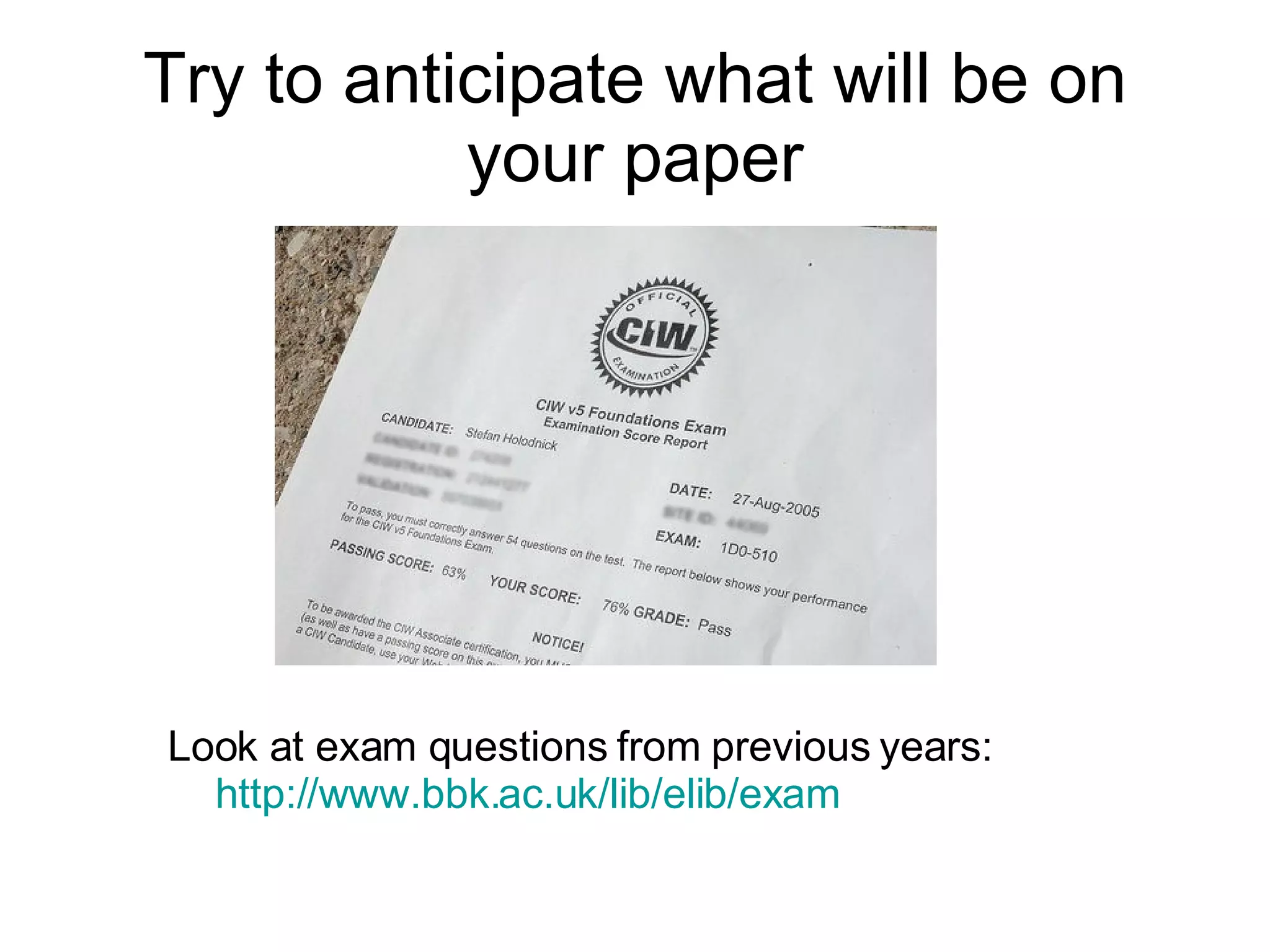
Try to anticipate what will be on your paper Look at exam questions from previous years:  http://www.bbk.ac.uk/lib/elib/exam
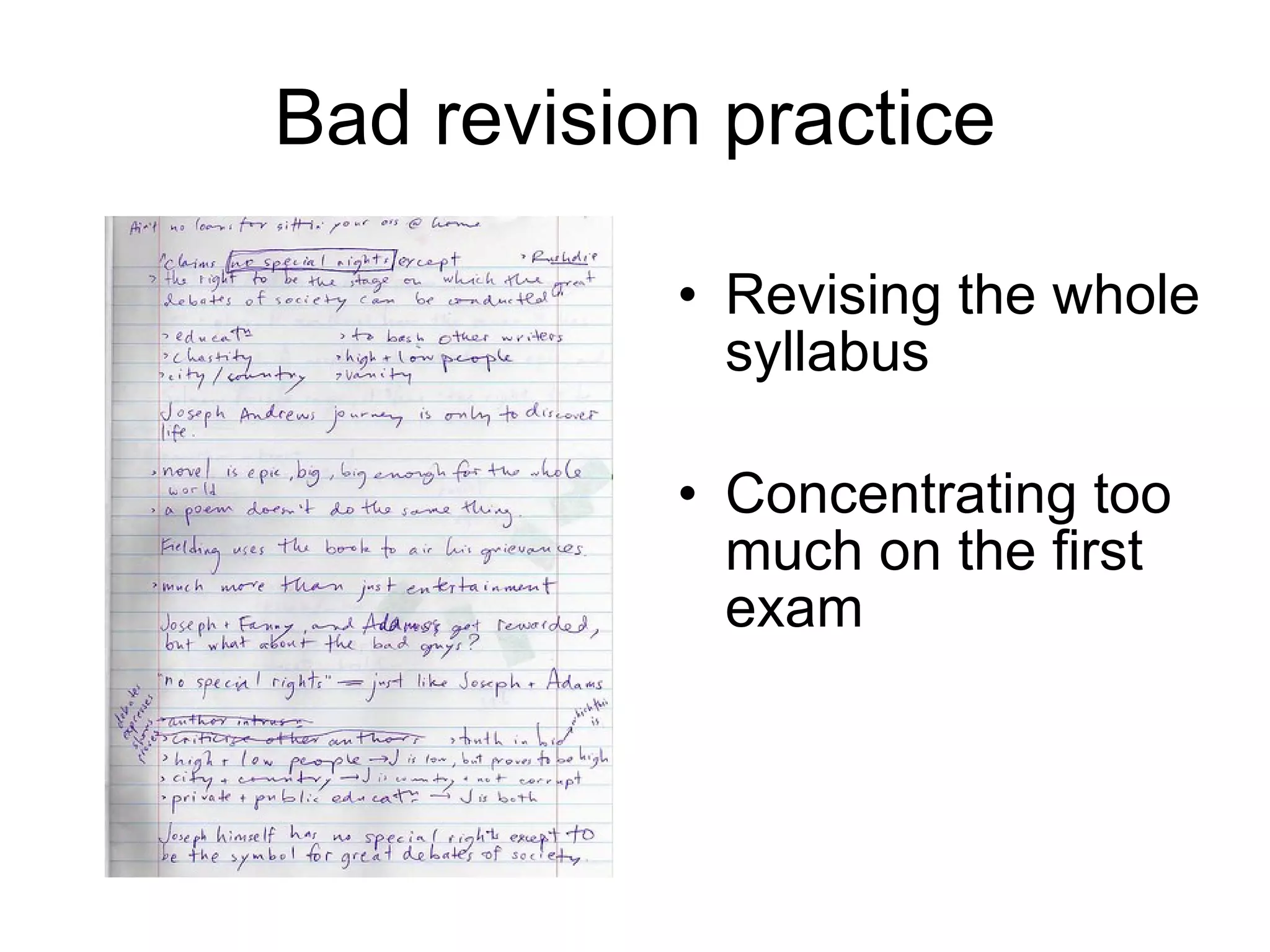
Bad revision practice Revising the whole syllabus Concentrating too much on the first exam
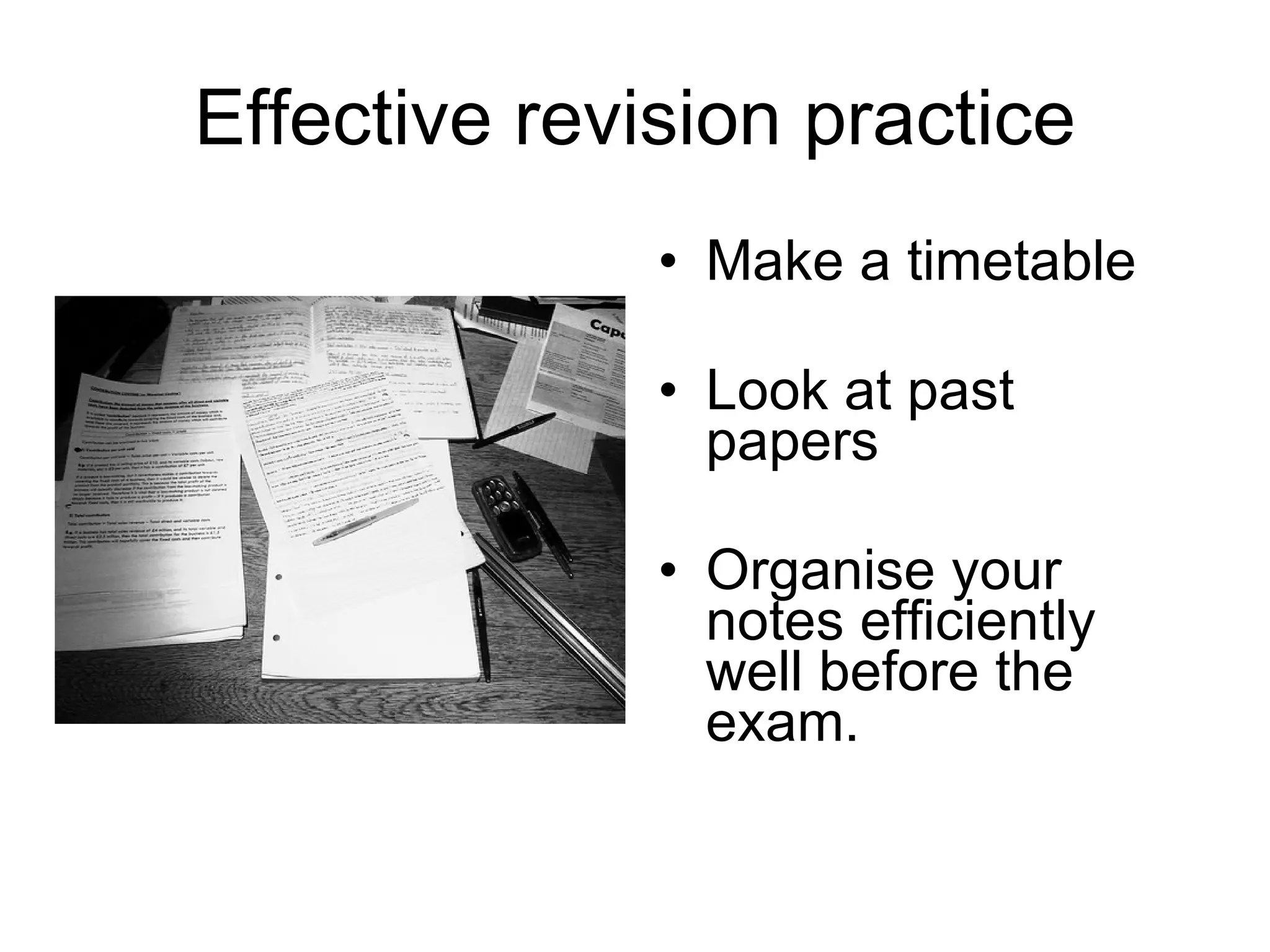
Effective revision practice Make a timetable Look at past papers Organise your notes efficiently well before the exam.
The End of Part 1
Good luck with your exam preparation With thanks to: Katerina Mantouvalou, Birkbeck College Sarah Boynton, University of Portsmouth

Introduction to Exam Skills

  • 1.
  • 2.
    This presentation willExplore how you can best use your time to prepare for exams Show the usefulness of a revision timetable Explore ways in which you can anticipate exam content Consider different learning styles
  • 3.
    Preparing for ExamsThere is no right and wrong way to prepare for exams, it is largely a personal choice.
  • 4.
    What is revision?This is when you learn things thoroughly in preparation for the exam.
  • 5.
    Why do weneed to revise? To try and remember what we have learned on the course To improve our memory To become more confident To succeed in our exams
  • 6.
    How should werevise? Long-term planning Set your goals Organise a weekly timetable Identify your time wasters
  • 7.
  • 8.
    Why do weprocrastinate? Waiting for the ‘right’ time or mood Underdeveloped decision-making skills Poor organisational skills Perfectionism
  • 9.
    Organise your notesWrite out your course notes neatly and clearly, then file them so you can find them easily
  • 10.
    Your Learning StyleVisual Auditory Kinesthetic or Active
  • 11.
    Tips for VisualLearners Copy out your notes Use colour to highlight important things
  • 12.
    Tips for AuditoryLearners Read your notes aloud. Revise with other students if you can.
  • 13.
    Tips for KinestheticLearners Make use of all your senses - sight, touch, taste, smell, hearing hands-on approaches trial and error exhibits, samples, photographs... solutions to problems, previous exam papers
  • 14.
    Try to anticipatewhat will be on your paper Look at exam questions from previous years: http://www.bbk.ac.uk/lib/elib/exam
  • 15.
    Bad revision practiceRevising the whole syllabus Concentrating too much on the first exam
  • 16.
    Effective revision practiceMake a timetable Look at past papers Organise your notes efficiently well before the exam.
  • 17.
    The End ofPart 1
  • 18.
    Good luck withyour exam preparation With thanks to: Katerina Mantouvalou, Birkbeck College Sarah Boynton, University of Portsmouth