

Examination Skills
Most NB skills
• What are the most important exam skills?
– Reading
– Writing
• Corner stones of examination skills
Study scheduling
• What is the goal for writing examinations?
– Perform at your peak
Performing at your peak
• How do you do that?
– Study Schedule
• 3 to choose from
– Semester/year planner
– Weekly planner during term
– Weekly planner during exam
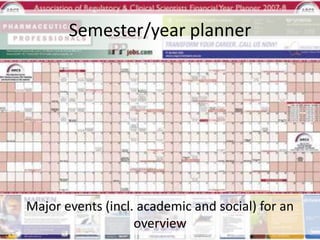
Semester/year planner
Major events (incl. academic and social) for an
overview
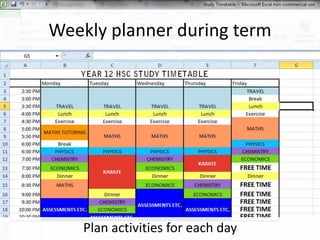
Weekly planner during term
Plan activities for each day
Weekly planner during exam
• What time of day are you most alert?
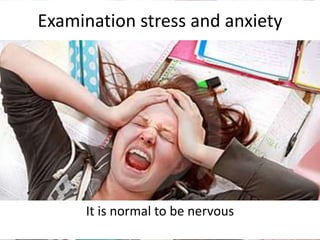
Examination stress and anxiety
It is normal to be nervous
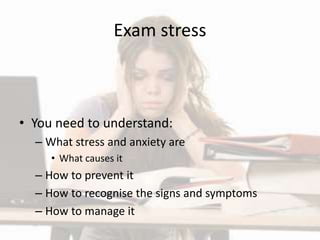
Exam stress
• You need to understand:
– What stress and anxiety are
• What causes it
– How to prevent it
– How to recognise the signs and symptoms
– How to manage it
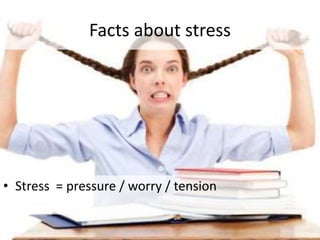
Facts about stress
• Stress = pressure / worry / tension
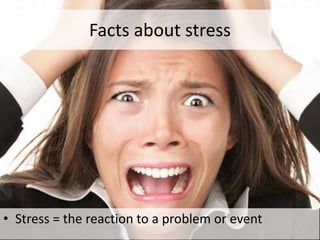
Facts about stress
• Stress = the reaction to a problem or event
Facts about stress
• The causes of stress are known
• It is temporary
• Can be managed
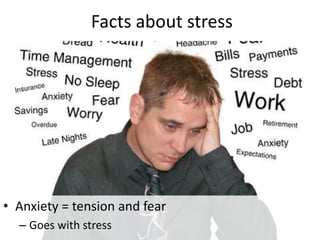
Facts about stress
• Anxiety = tension and fear
– Goes with stress
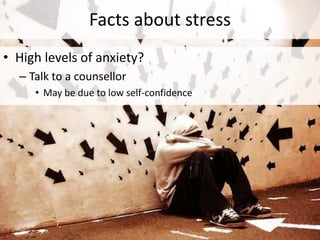
Facts about stress
• High levels of anxiety?
– Talk to a counsellor
• May be due to low self-confidence
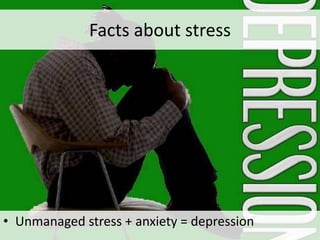
Facts about stress
• Unmanaged stress + anxiety = depression
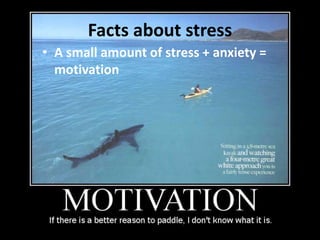
Facts about stress
• A small amount of stress + anxiety =
motivation
Signs and symptoms
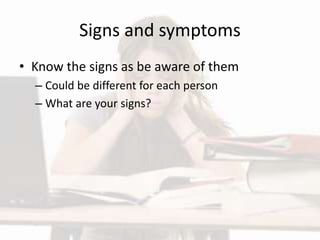
• Know the signs as be aware of them
– Could be different for each person
– What are your signs?
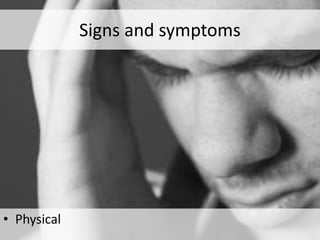
Signs and symptoms
• Physical
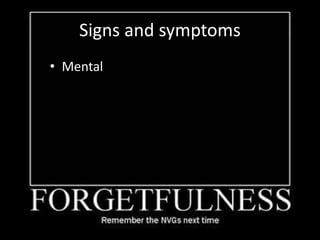
Signs and symptoms
• Mental
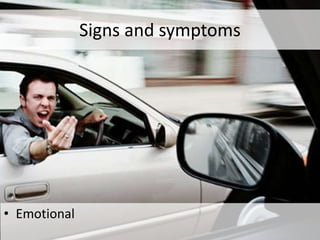
Signs and symptoms
• Emotional
PREVENT ANXIETY AND STRESS
http://www.youtube.com/watch?v=8zxq5KqX1T4&feature=player_embedded
Prevent anxiety and stress
• Get organised
Prevent anxiety and stress
• Eat and sleep well
Prevent anxiety and stress
• Learn how to relax
• Mediation
Prevent anxiety and stress
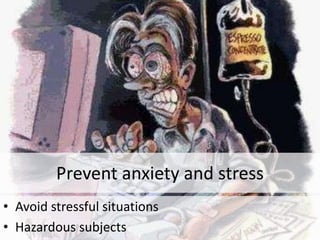
• Avoid stressful situations
• Hazardous subjects
Prevent anxiety and stress
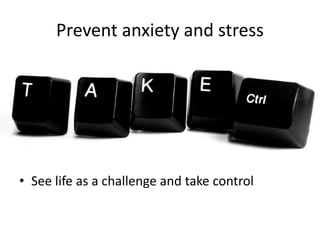
• See life as a challenge and take control
Prevent anxiety and stress
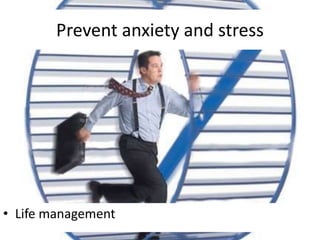
• Life management
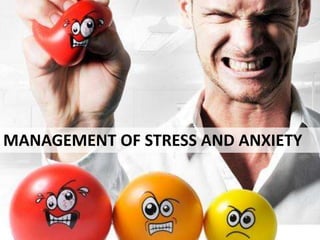
MANAGEMENT OF STRESS AND ANXIETY
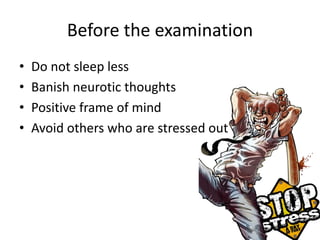
Before the examination
• Do not sleep less
• Banish neurotic thoughts
• Positive frame of mind
• Avoid others who are stressed out
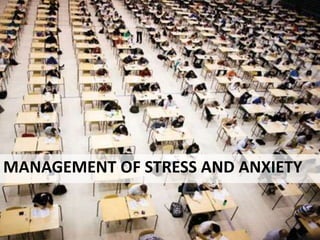
MANAGEMENT OF STRESS AND ANXIETY
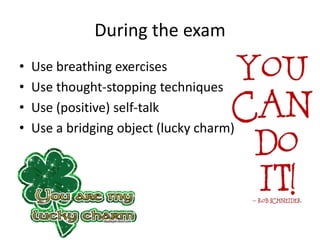
During the exam
• Use breathing exercises
• Use thought-stopping techniques
• Use (positive) self-talk
• Use a bridging object (lucky charm)
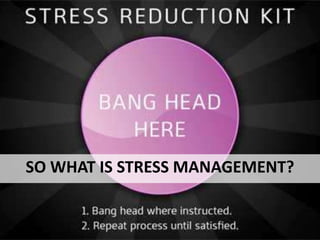
SO WHAT IS STRESS MANAGEMENT?
The ability to maintain control when people and
events create tension that affects you
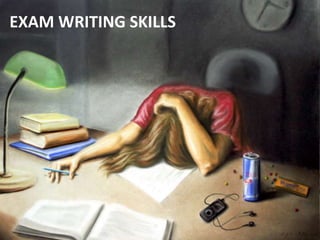
EXAM WRITING SKILLS
Essay exam
• Analyse the question
– including instruction words
• Use relevant examples
• Process to write:
– Get right to the point
• State your main point in the first sentence
– Discuss these points in more detail
– Back your points up with specific details/examples
– Make sure you understand – no point otherwise
– Assessors look for
• Compactness
• Completeness
• Clarity
Multiple choice exam
• Read the question and try to answer it
– Don’t look at the answers yet
• Then read through all the answers
• Eliminate those you know is wrong
• Eliminate answers that are illogical
• Answers that you don’t understand = often wrong
• Never, always, all and none often make answers false
• Be careful of negative questions:
– Which of these are NOT
• Watch your time
• Don’t guess – negative marking
Open book exam
• Don’t underestimate it.
• Tests understanding not recall
• Be familiar with the content
• Do the following:
– Keep up to date with readings & assignments
– Prepare short notes
– Select the material to bring into the exam venue
– Anticipate model questions
– Organise your material – coloured stickers
Maths, stats & accounting exams
• Prepare well in advance
• Make sure you understand each step BEFORE
moving to the next
– Get help if needed
• During the exam:
– Read the question carefully (interpret it correctly)
– Write your answer step by step
– Keep checking your calculations
– If you get stuck
• Move to the next problem and come back later
– Recheck all your work
Managing the exam writing process
Before the exam
• Use your time productively
– Prioritise what to study
– Plan before you start (Study timetable)
– Listen for clues from the lecturer
– Arrange a group study session
– Identify the difficult areas and work through them
– Work on test and exam papers
• Discuss your answers with your classmates
– Make your own test papers and review your answers
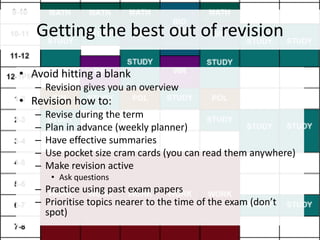
Getting the best out of revision
• Avoid hitting a blank
– Revision gives you an overview
• Revision how to:
– Revise during the term
– Plan in advance (weekly planner)
– Have effective summaries
– Use pocket size cram cards (you can read them anywhere)
– Make revision active
• Ask questions
– Practice using past exam papers
– Prioritise topics nearer to the time of the exam (don’t
spot)
Be prepared
• Check the date, time and venue of exam
• Put stationary together
• Plan your transport
• Visit venue in advance
The morning before the exam
• Have breakfast
– Keep coffee to a minimum
• Leave enough time to get to the venue
• Stay calm
– Avoid panic talk at the venue
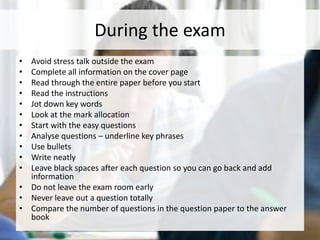
During the exam
• Avoid stress talk outside the exam
• Complete all information on the cover page
• Read through the entire paper before you start
• Read the instructions
• Jot down key words
• Look at the mark allocation
• Start with the easy questions
• Analyse questions – underline key phrases
• Use bullets
• Write neatly
• Leave black spaces after each question so you can go back and add
information
• Do not leave the exam room early
• Never leave out a question totally
• Compare the number of questions in the question paper to the answer
book
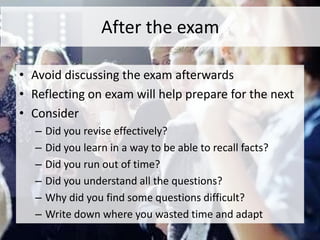
After the exam
• Avoid discussing the exam afterwards
• Reflecting on exam will help prepare for the next
• Consider
– Did you revise effectively?
– Did you learn in a way to be able to recall facts?
– Did you run out of time?
– Did you understand all the questions?
– Why did you find some questions difficult?
– Write down where you wasted time and adapt
Exam writing skills
Exam writing skills

Exam writing skills

  • 1.
  • 2.
    Most NB skills •What are the most important exam skills? – Reading – Writing • Corner stones of examination skills
  • 3.
    Study scheduling • Whatis the goal for writing examinations? – Perform at your peak
  • 4.
    Performing at yourpeak • How do you do that? – Study Schedule • 3 to choose from – Semester/year planner – Weekly planner during term – Weekly planner during exam
  • 5.
    Semester/year planner Major events(incl. academic and social) for an overview
  • 6.
    Weekly planner duringterm Plan activities for each day
  • 7.
    Weekly planner duringexam • What time of day are you most alert?
  • 8.
    Examination stress andanxiety It is normal to be nervous
  • 9.
    Exam stress • Youneed to understand: – What stress and anxiety are • What causes it – How to prevent it – How to recognise the signs and symptoms – How to manage it
  • 10.
    Facts about stress •Stress = pressure / worry / tension
  • 11.
    Facts about stress •Stress = the reaction to a problem or event
  • 12.
    Facts about stress •The causes of stress are known • It is temporary • Can be managed
  • 13.
    Facts about stress •Anxiety = tension and fear – Goes with stress
  • 14.
    Facts about stress •High levels of anxiety? – Talk to a counsellor • May be due to low self-confidence
  • 15.
    Facts about stress •Unmanaged stress + anxiety = depression
  • 16.
    Facts about stress •A small amount of stress + anxiety = motivation
  • 17.
    Signs and symptoms •Know the signs as be aware of them – Could be different for each person – What are your signs?
  • 18.
  • 19.
  • 20.
  • 21.
    PREVENT ANXIETY ANDSTRESS http://www.youtube.com/watch?v=8zxq5KqX1T4&feature=player_embedded
  • 22.
    Prevent anxiety andstress • Get organised
  • 23.
    Prevent anxiety andstress • Eat and sleep well
  • 24.
    Prevent anxiety andstress • Learn how to relax • Mediation
  • 25.
    Prevent anxiety andstress • Avoid stressful situations • Hazardous subjects
  • 26.
  • 27.
    Prevent anxiety andstress • See life as a challenge and take control
  • 28.
    Prevent anxiety andstress • Life management
  • 29.
  • 30.
    Before the examination •Do not sleep less • Banish neurotic thoughts • Positive frame of mind • Avoid others who are stressed out
  • 31.
  • 32.
    During the exam •Use breathing exercises • Use thought-stopping techniques • Use (positive) self-talk • Use a bridging object (lucky charm)
  • 33.
    SO WHAT ISSTRESS MANAGEMENT?
  • 34.
    The ability tomaintain control when people and events create tension that affects you
  • 35.
  • 36.
    Essay exam • Analysethe question – including instruction words • Use relevant examples • Process to write: – Get right to the point • State your main point in the first sentence – Discuss these points in more detail – Back your points up with specific details/examples – Make sure you understand – no point otherwise – Assessors look for • Compactness • Completeness • Clarity
  • 37.
    Multiple choice exam •Read the question and try to answer it – Don’t look at the answers yet • Then read through all the answers • Eliminate those you know is wrong • Eliminate answers that are illogical • Answers that you don’t understand = often wrong • Never, always, all and none often make answers false • Be careful of negative questions: – Which of these are NOT • Watch your time • Don’t guess – negative marking
  • 38.
    Open book exam •Don’t underestimate it. • Tests understanding not recall • Be familiar with the content • Do the following: – Keep up to date with readings & assignments – Prepare short notes – Select the material to bring into the exam venue – Anticipate model questions – Organise your material – coloured stickers
  • 39.
    Maths, stats &accounting exams • Prepare well in advance • Make sure you understand each step BEFORE moving to the next – Get help if needed • During the exam: – Read the question carefully (interpret it correctly) – Write your answer step by step – Keep checking your calculations – If you get stuck • Move to the next problem and come back later – Recheck all your work
  • 40.
    Managing the examwriting process
  • 41.
    Before the exam •Use your time productively – Prioritise what to study – Plan before you start (Study timetable) – Listen for clues from the lecturer – Arrange a group study session – Identify the difficult areas and work through them – Work on test and exam papers • Discuss your answers with your classmates – Make your own test papers and review your answers
  • 42.
    Getting the bestout of revision • Avoid hitting a blank – Revision gives you an overview • Revision how to: – Revise during the term – Plan in advance (weekly planner) – Have effective summaries – Use pocket size cram cards (you can read them anywhere) – Make revision active • Ask questions – Practice using past exam papers – Prioritise topics nearer to the time of the exam (don’t spot)
  • 43.
    Be prepared • Checkthe date, time and venue of exam • Put stationary together • Plan your transport • Visit venue in advance
  • 44.
    The morning beforethe exam • Have breakfast – Keep coffee to a minimum • Leave enough time to get to the venue • Stay calm – Avoid panic talk at the venue
  • 45.
    During the exam •Avoid stress talk outside the exam • Complete all information on the cover page • Read through the entire paper before you start • Read the instructions • Jot down key words • Look at the mark allocation • Start with the easy questions • Analyse questions – underline key phrases • Use bullets • Write neatly • Leave black spaces after each question so you can go back and add information • Do not leave the exam room early • Never leave out a question totally • Compare the number of questions in the question paper to the answer book
  • 46.
    After the exam •Avoid discussing the exam afterwards • Reflecting on exam will help prepare for the next • Consider – Did you revise effectively? – Did you learn in a way to be able to recall facts? – Did you run out of time? – Did you understand all the questions? – Why did you find some questions difficult? – Write down where you wasted time and adapt