Presented By: Bhawesh Sharma ( Marketing
Executive)
bhaweshsharma123@gmail.com
M&M Industries, Nashik
 Insects are the most abundant animals on Earth.
 They can survive every situation and they are updating
themselves according to situations.
 More than 1 million different types of insects have been
identified.
 Some insects eat our crops or food in storage; others can bite
or sting us, our livestock, or our pets. A few insects spread
diseases.
 Certain insects are helpful to us by producing products we
can use (for example, honey), by pollinating our crops, or by
attacking pest insects.
Source of data is wikipedia.org
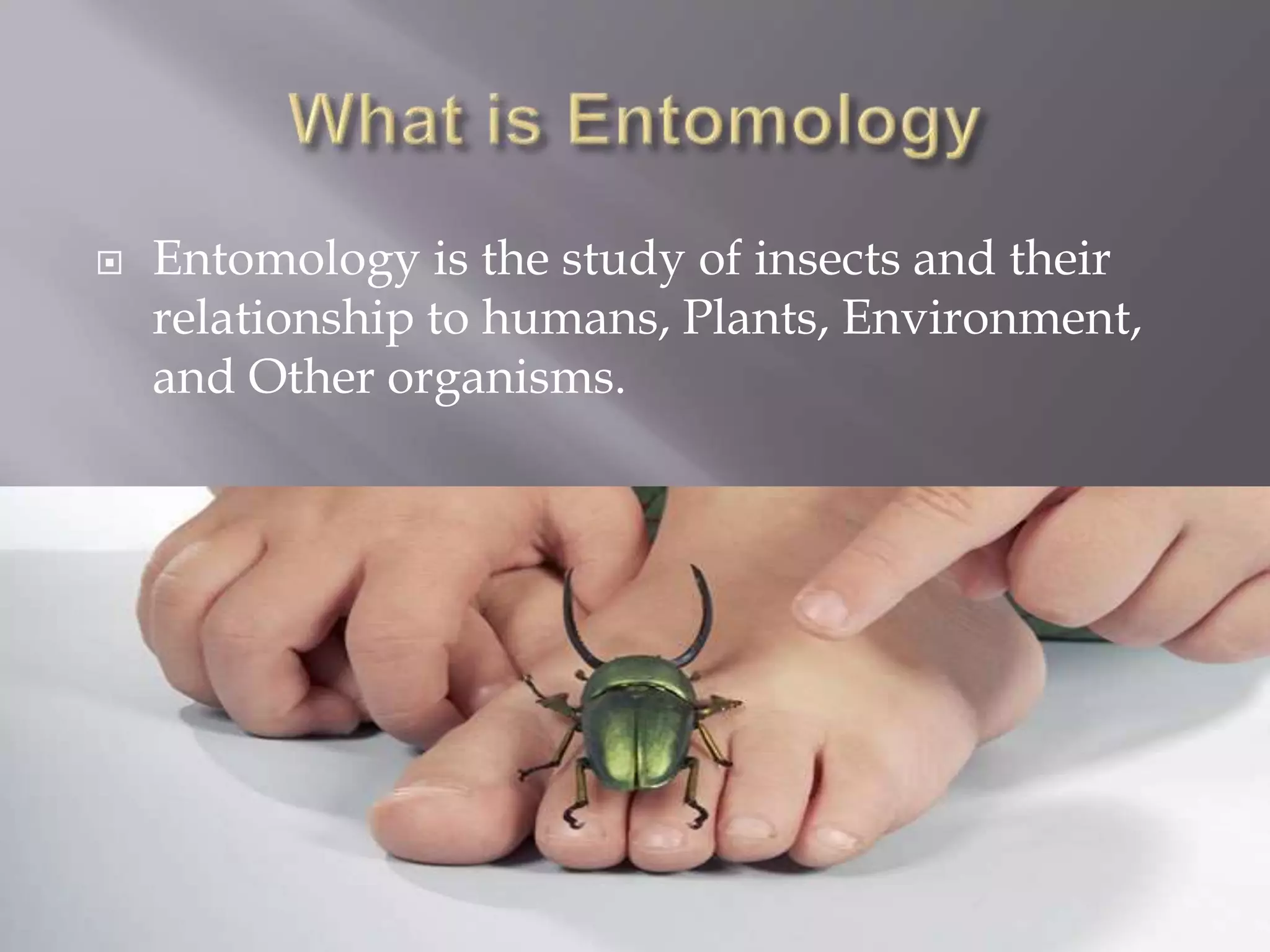
 Entomology is the study of insects and their
relationship to humans, Plants, Environment,
and Other organisms.
The word "insect" comes from
the Latin word insectum, meaning with a
divided body, because insects appear cut into
three sections.
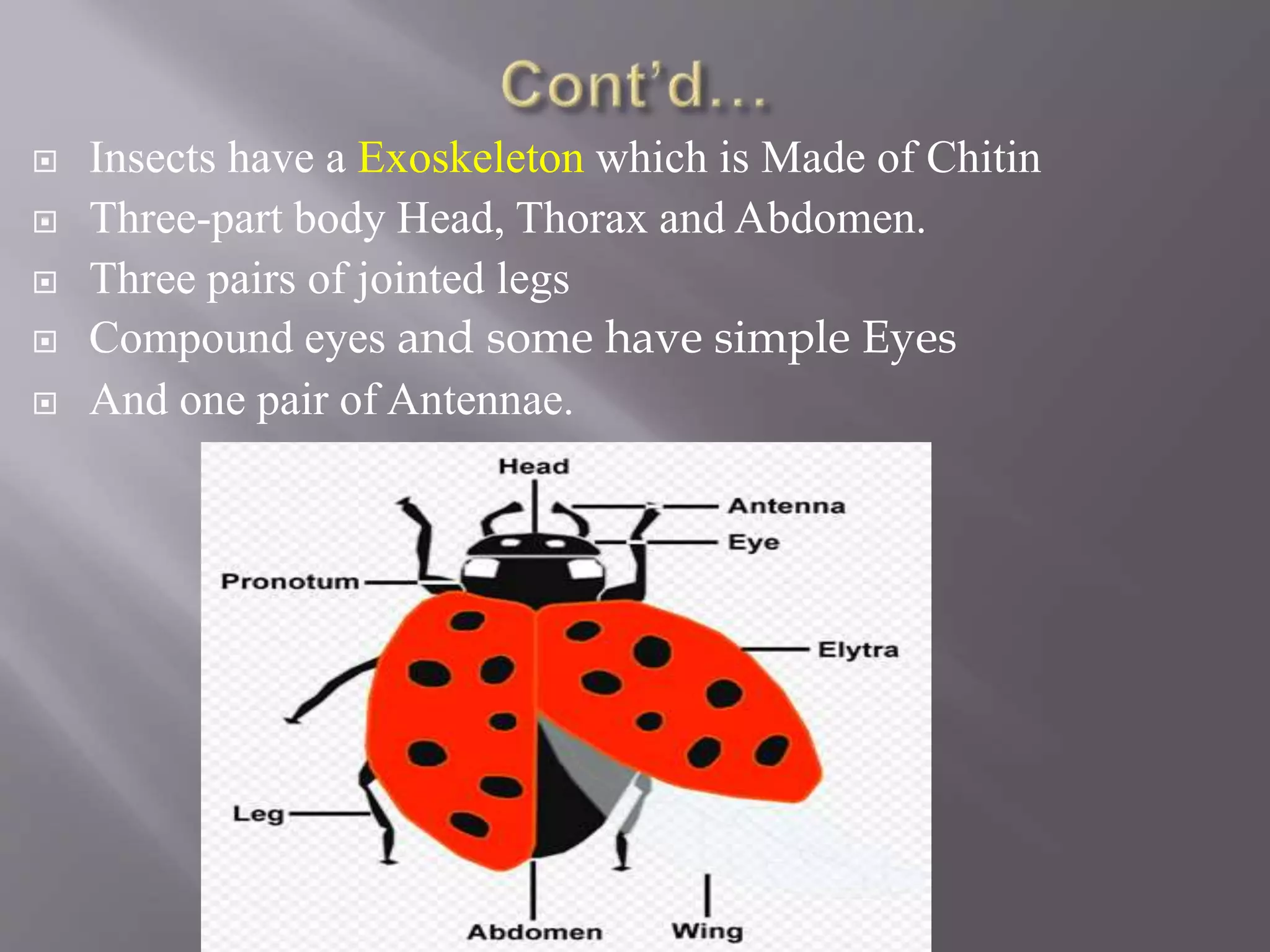
 Insects have a Exoskeleton which is Made of Chitin
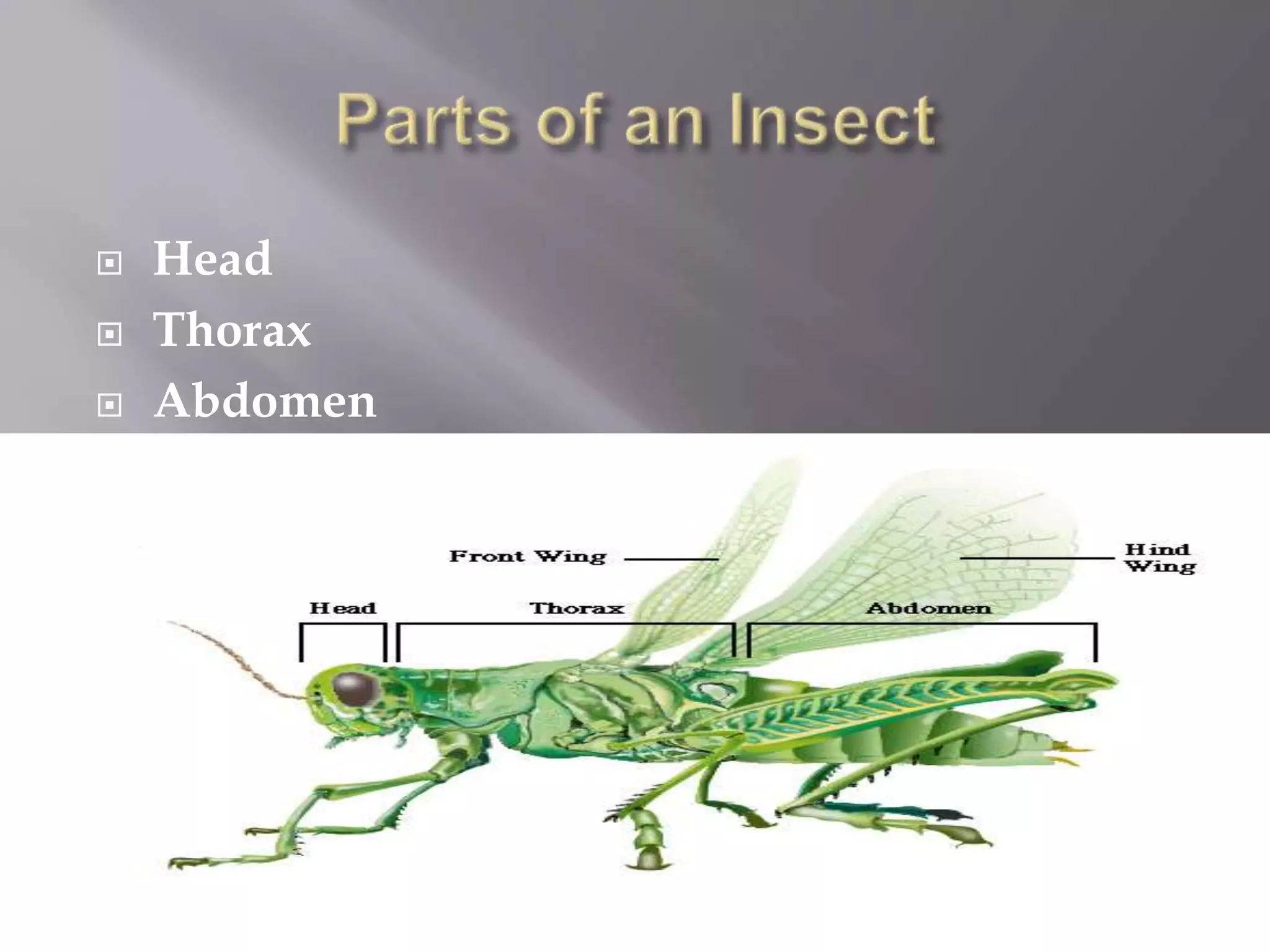
 Three-part body Head, Thorax and Abdomen.
 Three pairs of jointed legs
 Compound eyes and some have simple Eyes
 And one pair of Antennae.
 Insects have no internal skeleton .
 They rely on their hard outer coating,
exoskeleton.
 which protects their inner organs and
supports their body
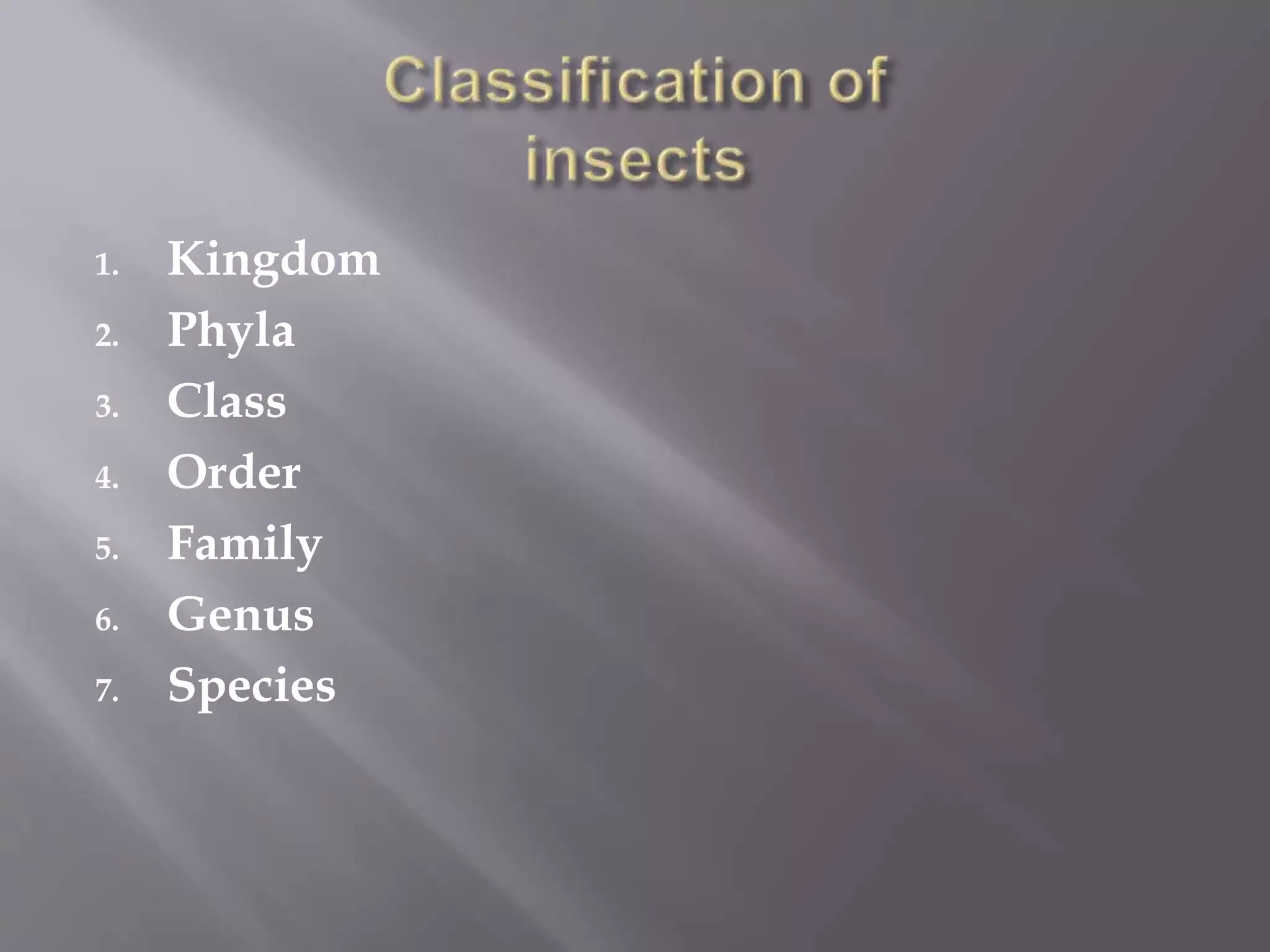
1. Kingdom
2. Phyla
3. Class
4. Order
5. Family
6. Genus
7. Species
 The highest level is the Kingdom
 The most specific is the species level.
 Organisms are usually classified by the genus
and species.
 This is called a binomial nomenclature.
 Kingdom — Animal
 Phylum — Arthropoda (Jointed legs)
 Class — Hexapoda (insects)
 Order — Lepidoptera (butterflies and moths)
 Family — Noctuidue (noctuids)
 Genus — Helicoverpa
 Species — Helicoverpa armigera
(American bollworm)
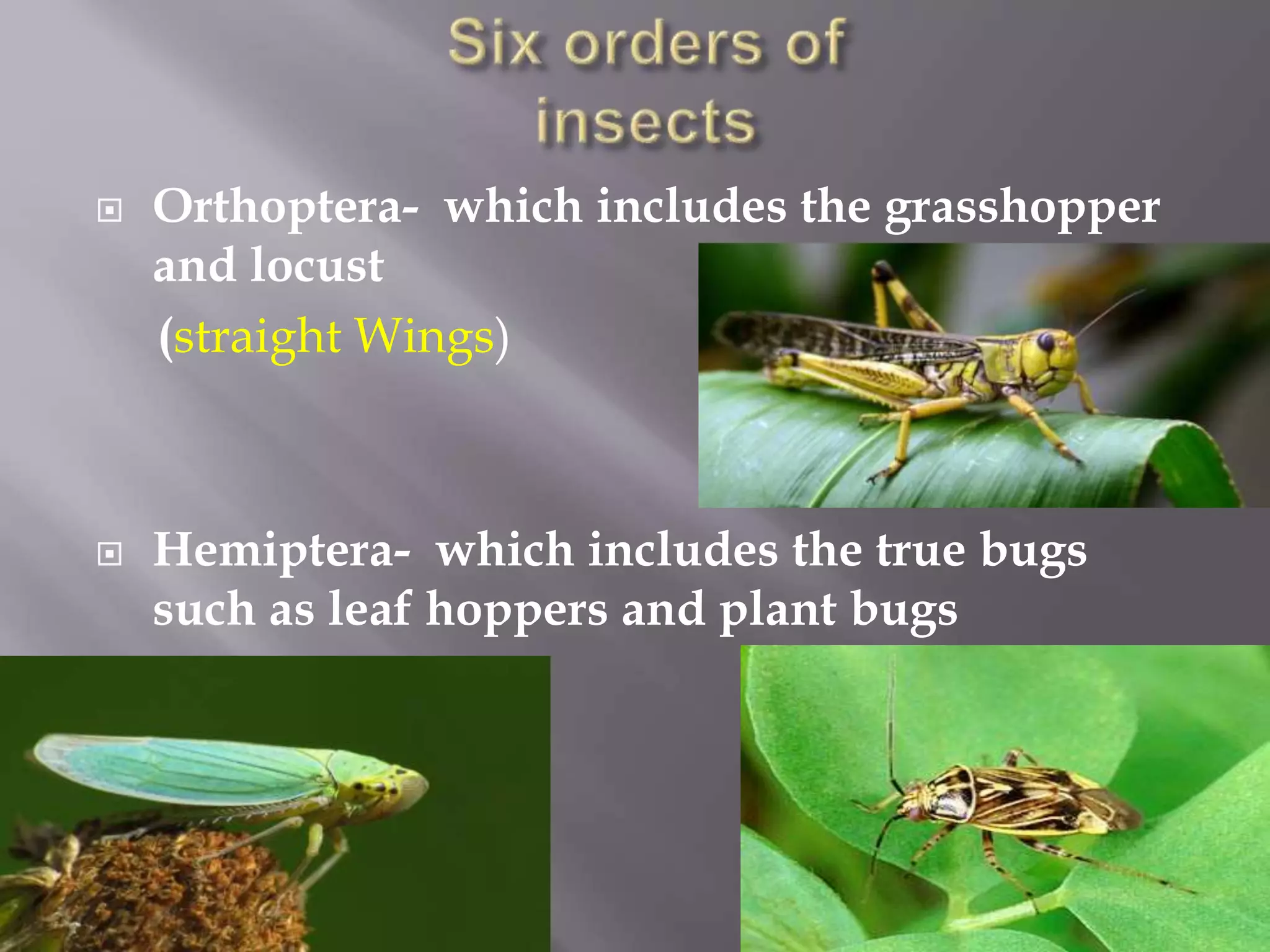
 Orthoptera- which includes the grasshopper
and locust
(straight Wings)
 Hemiptera- which includes the true bugs
such as leaf hoppers and plant bugs
 Lepidoptera – moths and Butterflies ( Scale Wings)
 – Homoptera- aphids
(Equal Wings)
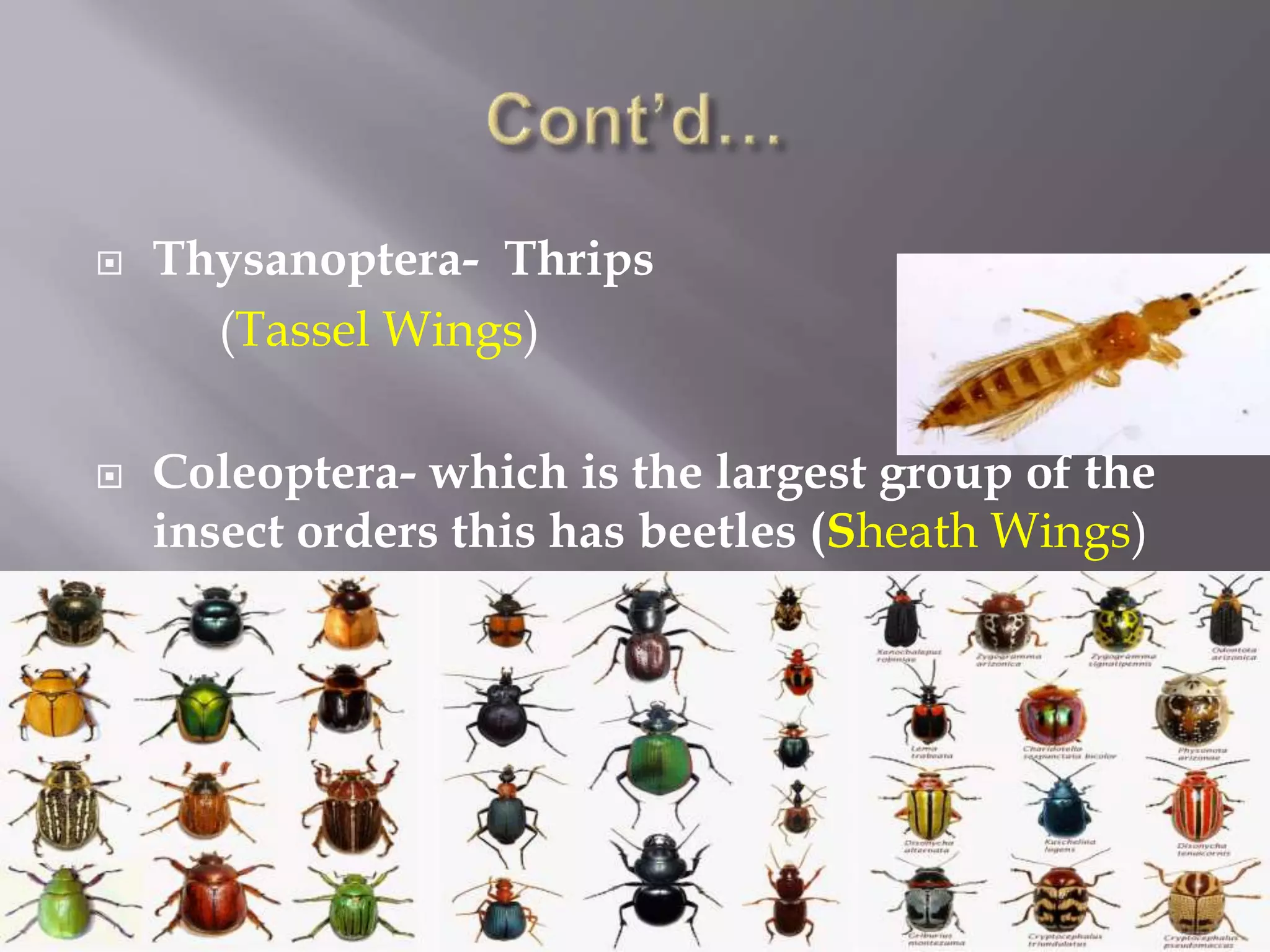
 Thysanoptera- Thrips
(Tassel Wings)
 Coleoptera- which is the largest group of the
insect orders this has beetles (Sheath Wings)
 Head
 Thorax
 Abdomen
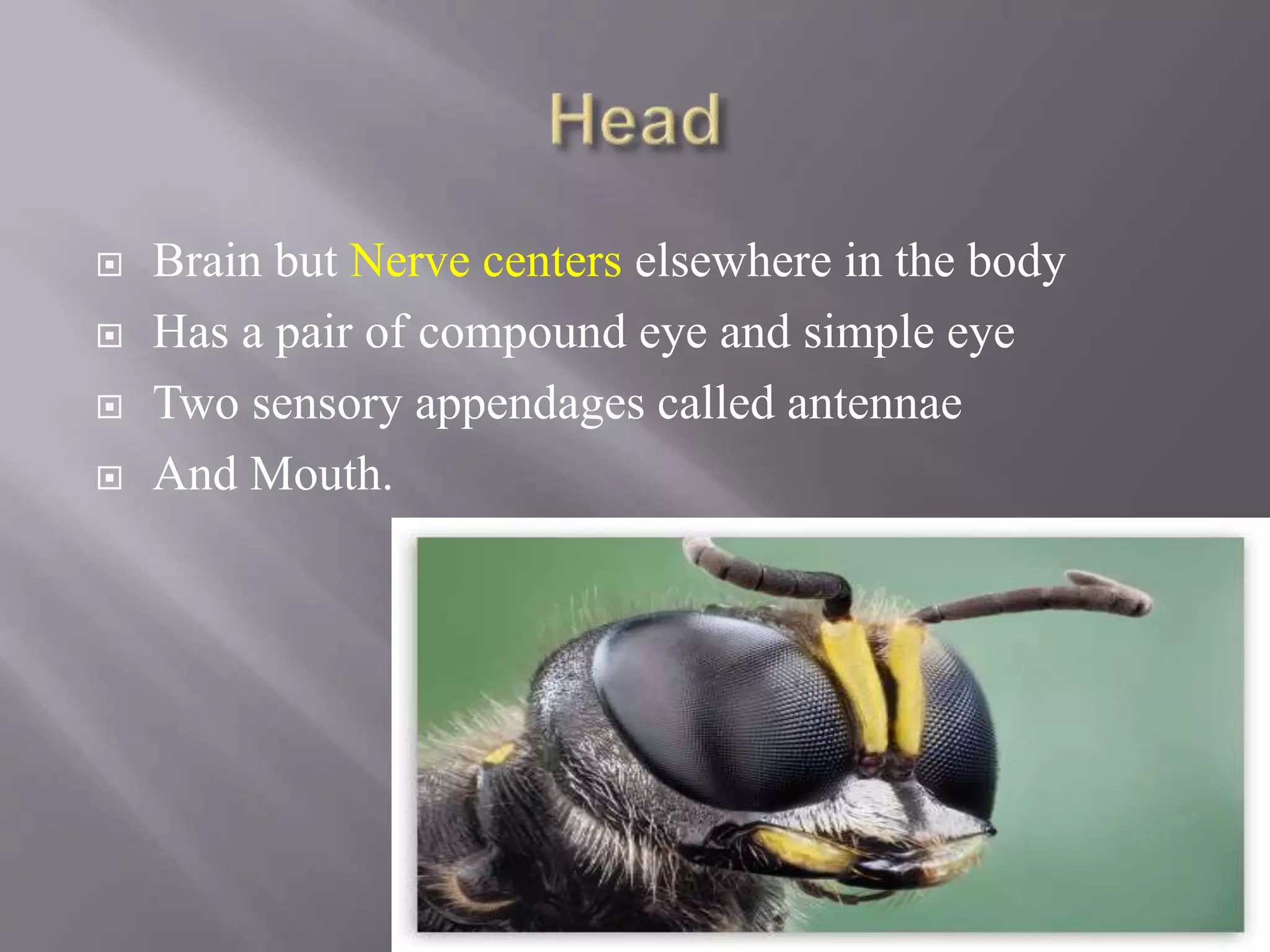
 Brain but Nerve centers elsewhere in the body
 Has a pair of compound eye and simple eye
 Two sensory appendages called antennae
 And Mouth.
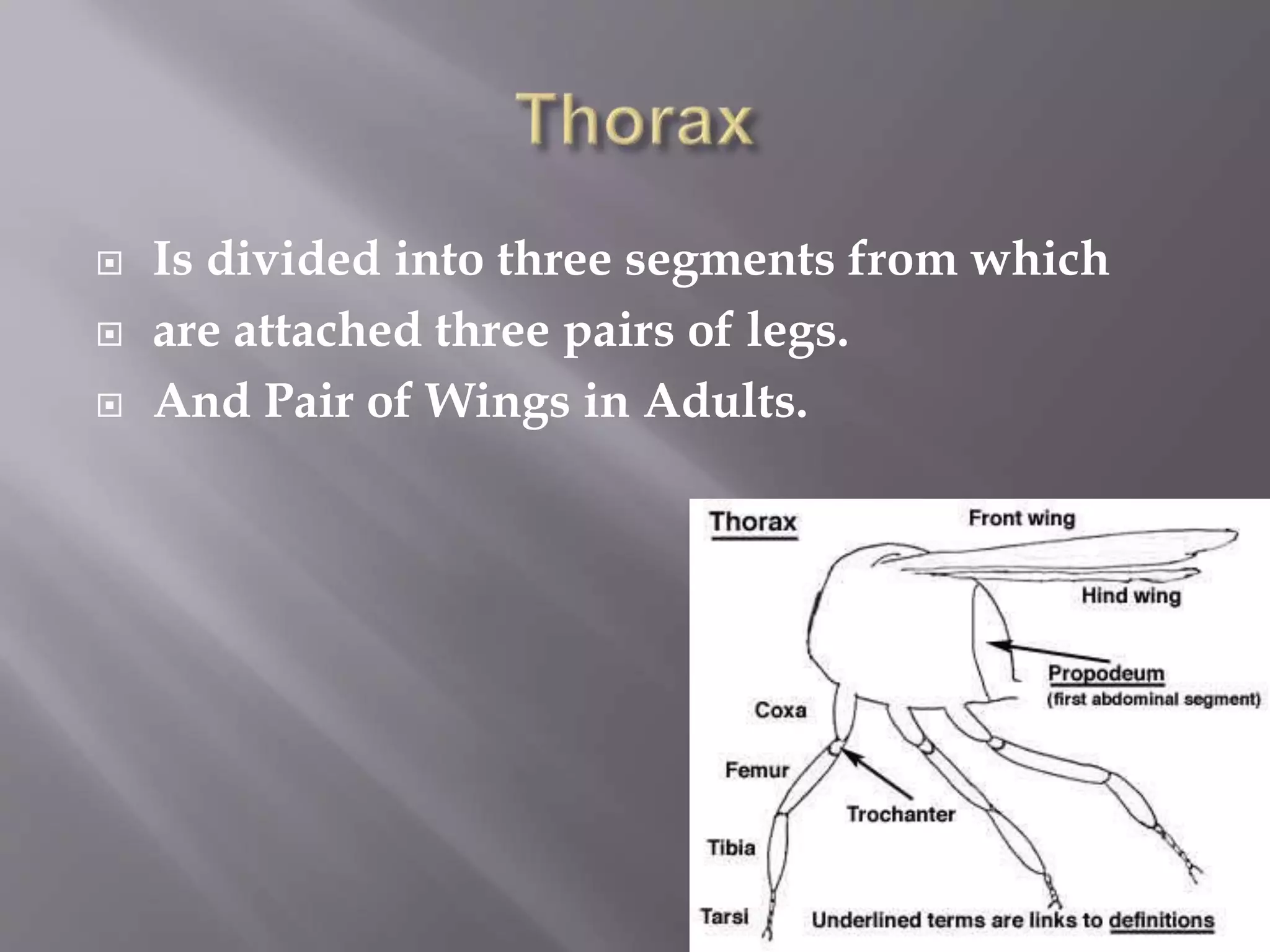
 Is divided into three segments from which
 are attached three pairs of legs.
 And Pair of Wings in Adults.
 Is attached to the thorax
 which will contain more segments
 Like Execratory System and Reproduction
Organs.
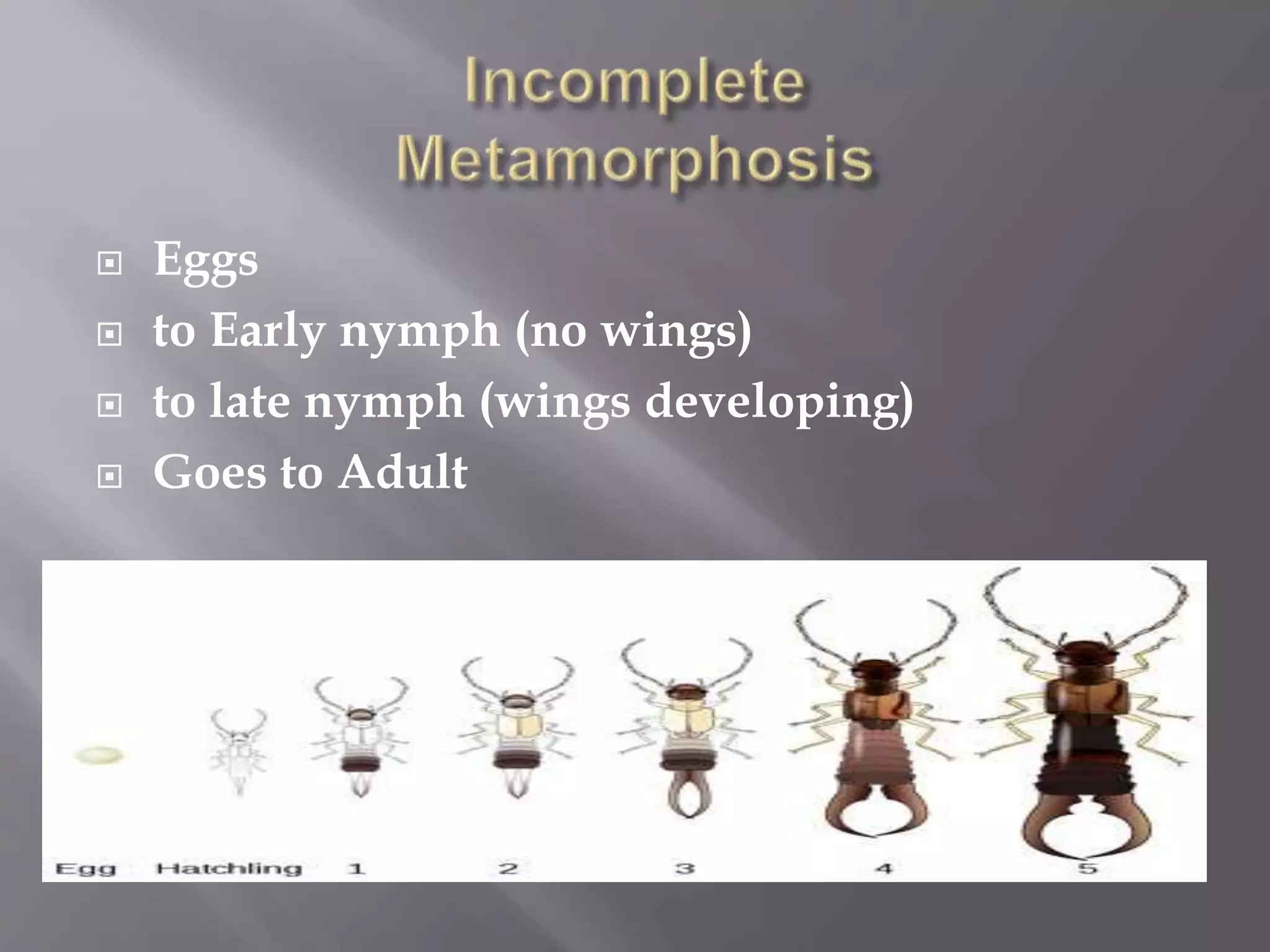
 Incomplete Metamorphosis
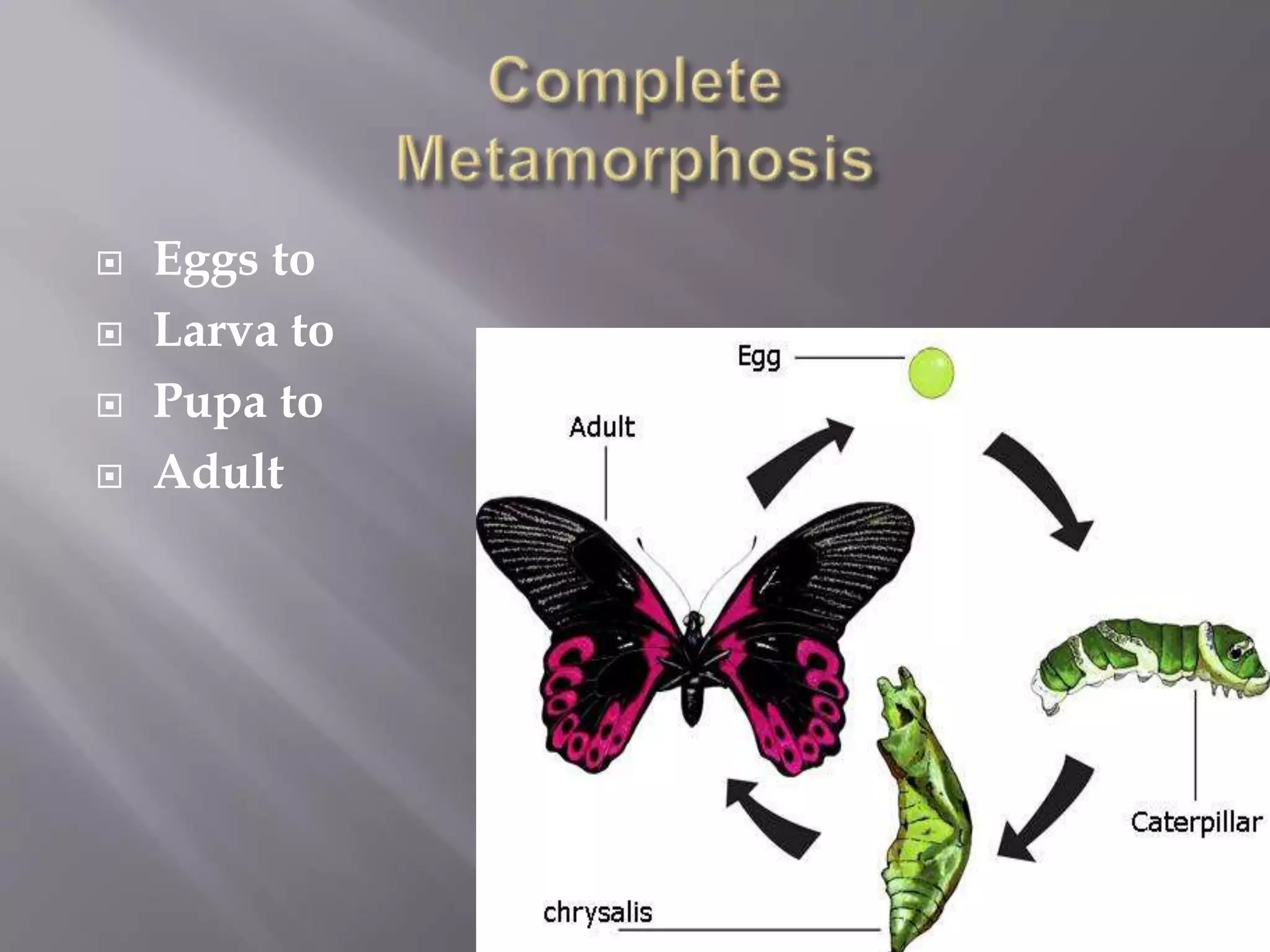
 Complete Metamorphosis
 Eggs
 to Early nymph (no wings)
 to late nymph (wings developing)
 Goes to Adult
 The order Orthoptera & Hemiptera encompasses
the more than 80,000 species of true bugs in Class
Insecta.
 Members generally possess two sets of wings, but
some exceptions have reduced wings or no wings at
all.
 Bugs possess mouths designed to puncture and slurp
liquids such as sap.
 After bugs hatch from their eggs, they pass five
nymph stages before entering adulthood.
 Order Hemiptera includes many of the destructive
bugs, such as aphids, known to agriculture
 Eggs to
 Larva to
 Pupa to
 Adult
 Next Presentation on Insects Mouthparts and
theirs examples
Thank You
Bhawesh Sharma
(Marketing Executive
)M&M Industry Nashik

Introduction to Entomology

  • 1.
    Presented By: BhaweshSharma ( Marketing Executive) bhaweshsharma123@gmail.com M&M Industries, Nashik
  • 3.
     Insects arethe most abundant animals on Earth.  They can survive every situation and they are updating themselves according to situations.  More than 1 million different types of insects have been identified.  Some insects eat our crops or food in storage; others can bite or sting us, our livestock, or our pets. A few insects spread diseases.  Certain insects are helpful to us by producing products we can use (for example, honey), by pollinating our crops, or by attacking pest insects. Source of data is wikipedia.org
  • 4.
     Entomology isthe study of insects and their relationship to humans, Plants, Environment, and Other organisms.
  • 5.
    The word "insect"comes from the Latin word insectum, meaning with a divided body, because insects appear cut into three sections.
  • 6.
     Insects havea Exoskeleton which is Made of Chitin  Three-part body Head, Thorax and Abdomen.  Three pairs of jointed legs  Compound eyes and some have simple Eyes  And one pair of Antennae.
  • 7.
     Insects haveno internal skeleton .  They rely on their hard outer coating, exoskeleton.  which protects their inner organs and supports their body
  • 8.
    1. Kingdom 2. Phyla 3.Class 4. Order 5. Family 6. Genus 7. Species
  • 9.
     The highestlevel is the Kingdom  The most specific is the species level.  Organisms are usually classified by the genus and species.  This is called a binomial nomenclature.
  • 10.
     Kingdom —Animal  Phylum — Arthropoda (Jointed legs)  Class — Hexapoda (insects)  Order — Lepidoptera (butterflies and moths)  Family — Noctuidue (noctuids)  Genus — Helicoverpa  Species — Helicoverpa armigera (American bollworm)
  • 11.
     Orthoptera- whichincludes the grasshopper and locust (straight Wings)  Hemiptera- which includes the true bugs such as leaf hoppers and plant bugs
  • 12.
     Lepidoptera –moths and Butterflies ( Scale Wings)  – Homoptera- aphids (Equal Wings)
  • 13.
     Thysanoptera- Thrips (TasselWings)  Coleoptera- which is the largest group of the insect orders this has beetles (Sheath Wings)
  • 14.
  • 15.
     Brain butNerve centers elsewhere in the body  Has a pair of compound eye and simple eye  Two sensory appendages called antennae  And Mouth.
  • 16.
     Is dividedinto three segments from which  are attached three pairs of legs.  And Pair of Wings in Adults.
  • 17.
     Is attachedto the thorax  which will contain more segments  Like Execratory System and Reproduction Organs.
  • 18.
     Incomplete Metamorphosis Complete Metamorphosis
  • 19.
     Eggs  toEarly nymph (no wings)  to late nymph (wings developing)  Goes to Adult
  • 20.
     The orderOrthoptera & Hemiptera encompasses the more than 80,000 species of true bugs in Class Insecta.  Members generally possess two sets of wings, but some exceptions have reduced wings or no wings at all.  Bugs possess mouths designed to puncture and slurp liquids such as sap.  After bugs hatch from their eggs, they pass five nymph stages before entering adulthood.  Order Hemiptera includes many of the destructive bugs, such as aphids, known to agriculture
  • 21.
     Eggs to Larva to  Pupa to  Adult
  • 22.
     Next Presentationon Insects Mouthparts and theirs examples
  • 23.
    Thank You Bhawesh Sharma (MarketingExecutive )M&M Industry Nashik