

Introduction to
Depreciation
from
businessbankingcoach.com
in association with
There’s a lot of confusion
about what depreciation
actually is. Some think it
has something to do with
an asset losing its
value……..
…….. while others think
that it’s a mechanism for
a business to create a
fund for the replacement
of the asset when it’s no
longer functional.
So, in this
presentation, let’s
take a look at what
depreciation really is,
how it’s calculated
and ……
….what impact it has on
the income statement,
the balance sheet and
the cash flow statement.
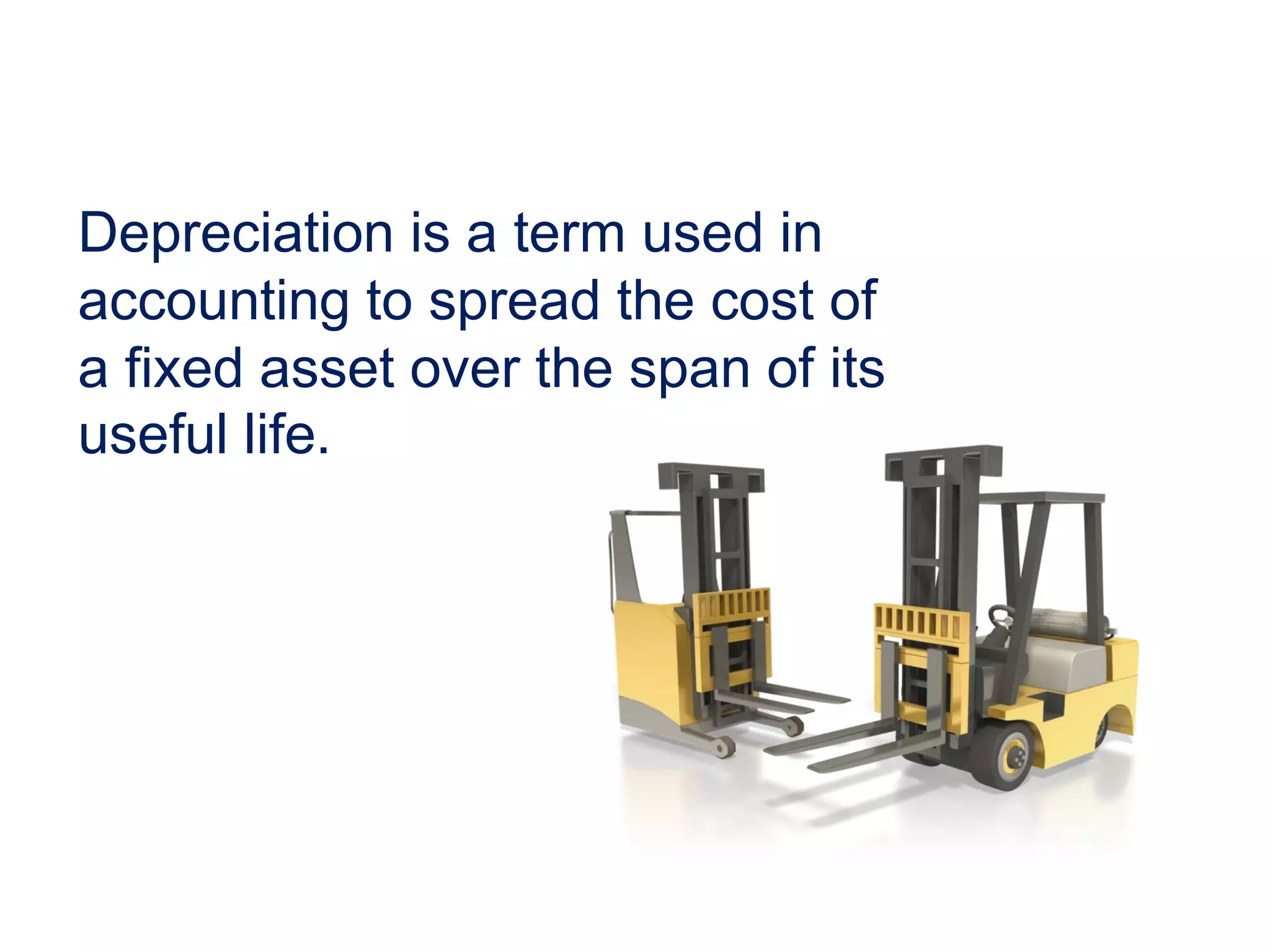
Depreciation is a term used in
accounting to spread the cost of
a fixed asset over the span of its
useful life.
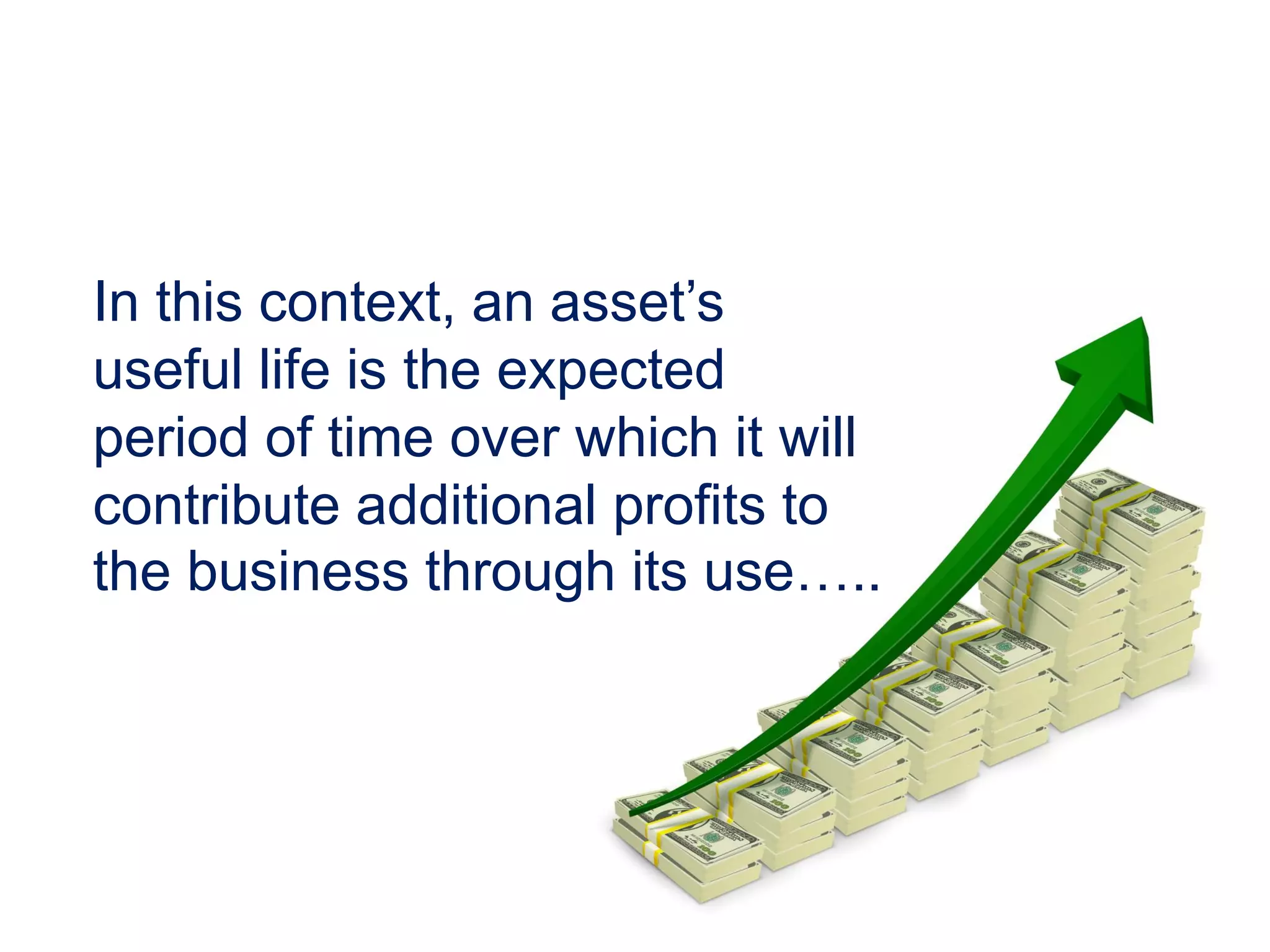
In this context, an asset’s
useful life is the expected
period of time over which it will
contribute additional profits to
the business through its use…..
….. that is, by being more
productive either by
increasing output or
reducing the cost of
production.
The “useful life” of fixed
assets is often confused
with the period of time
that the tax authorities
allow an accelerated tax
deduction on the cost of
certain types of fixed
assets.
This tax allowance is
usually known as a “wear
and tear allowance” or
something similar.
There is no direct
relationship between
depreciation and the “wear
and tear allowance”.
The amount of depreciation
calculated annually is
included as an expense in
the income statement and
therefore has the effect of
reducing profits.
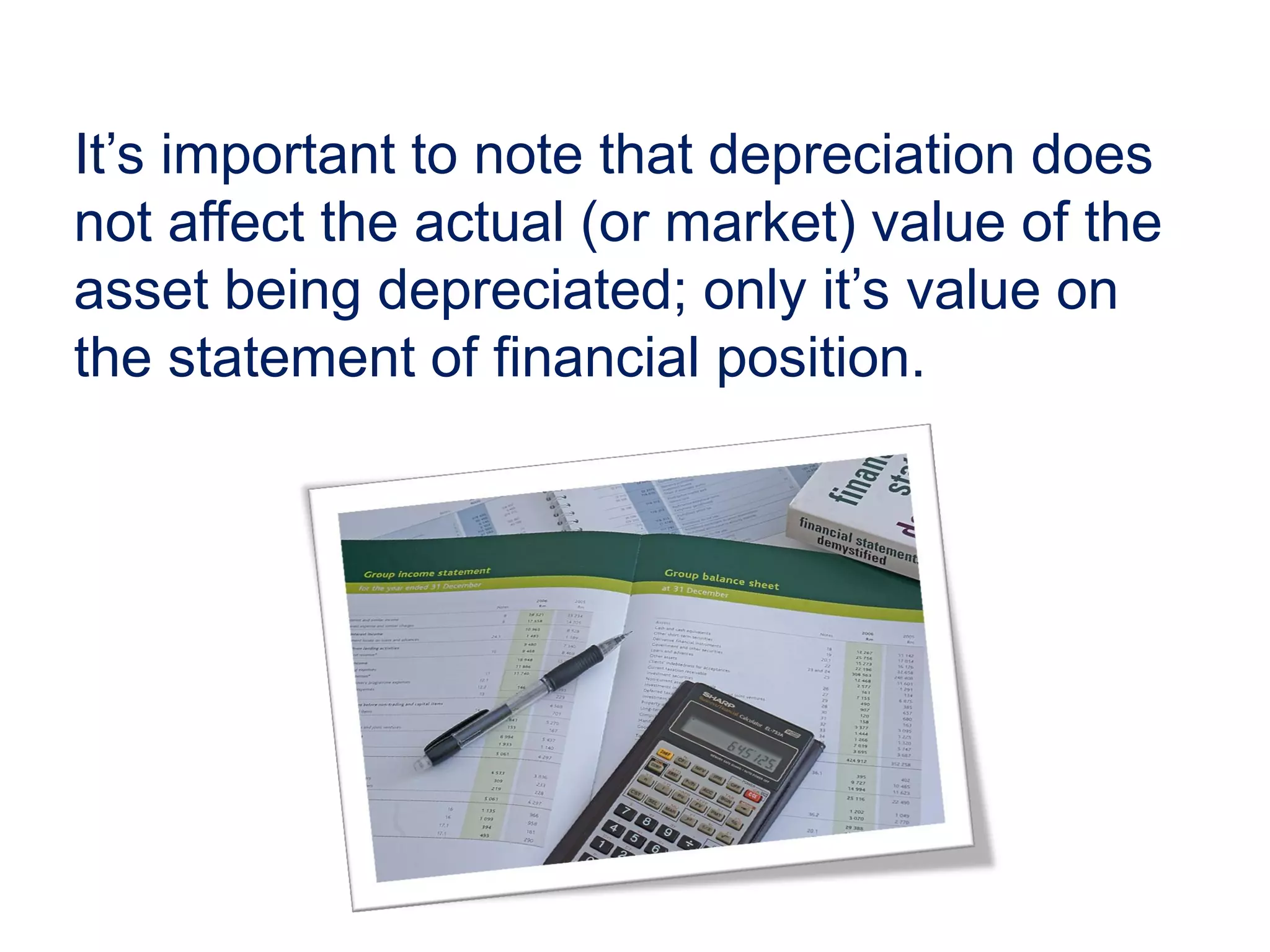
It’s important to note that depreciation does
not affect the actual (or market) value of the
asset being depreciated; only it’s value on
the statement of financial position.
On the balance sheet, the assets that are
being depreciated are shown at the net
book value…..
….. that is, the initial cost
of the asset less the
accumulated amounts of
depreciation that have
been calculated in
respect of that asset.
Let’s give an example
to explain the impact
on the balance sheet
and what happens
when cost and market
value are sometimes
different…..
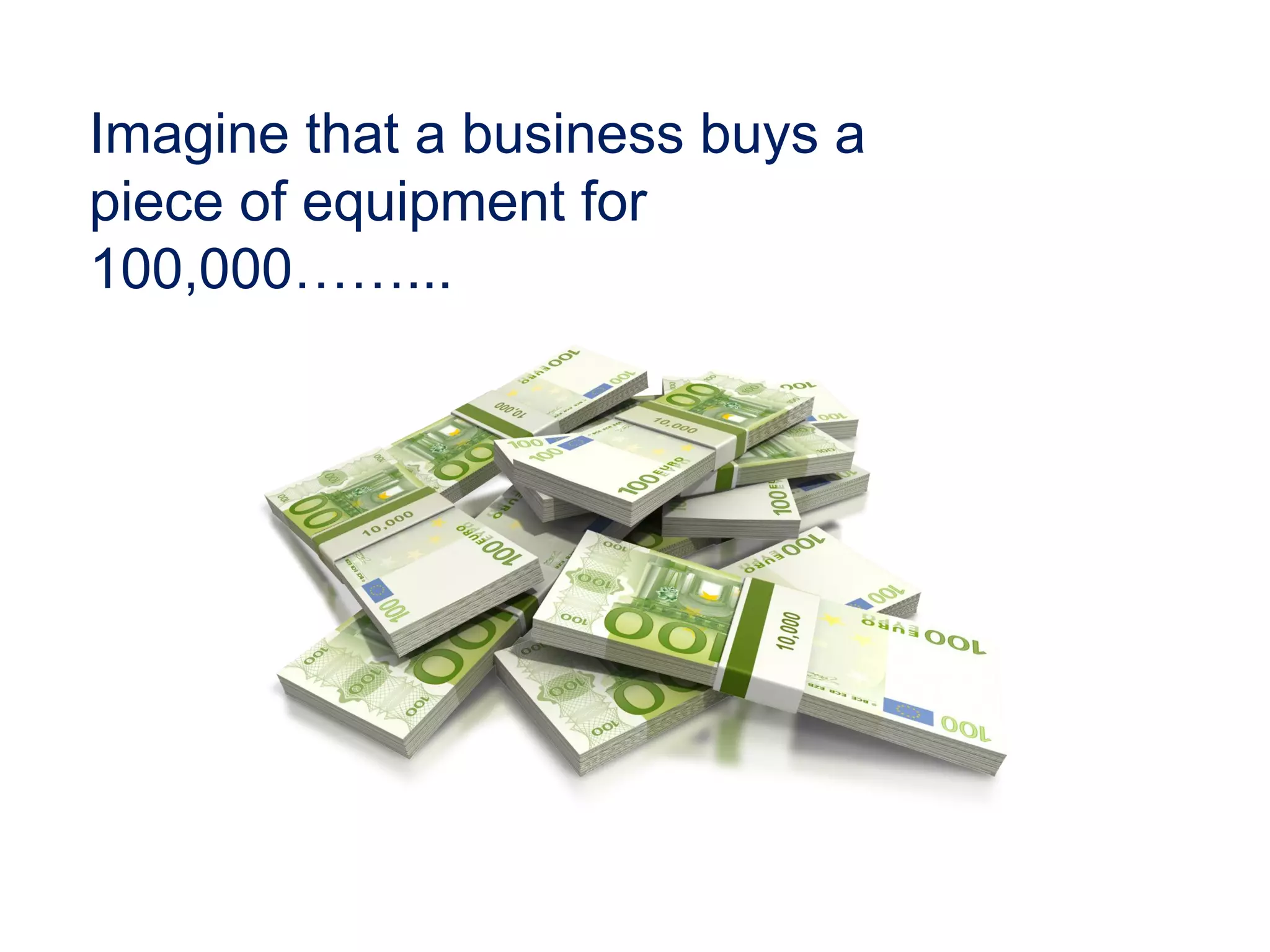
Imagine that a business buys a
piece of equipment for
100,000……...
…….that is the
amount of the
transaction that will
initially appear in
the accounts of the
business.
However, the business may have bought that
equipment cheaply from another business
that needed to raise some cash quickly.
Let’s say that the
equipment was worth
200,000, i.e. more than the
business actually paid for it.
In calculating the
depreciation, the actual (or
market) value is irrelevant –
the equipment will be
depreciated based on its
cost (100,000)…..
… not its value (200,000).
Now imagine that the
business depreciates
the equipment over 3
years and….
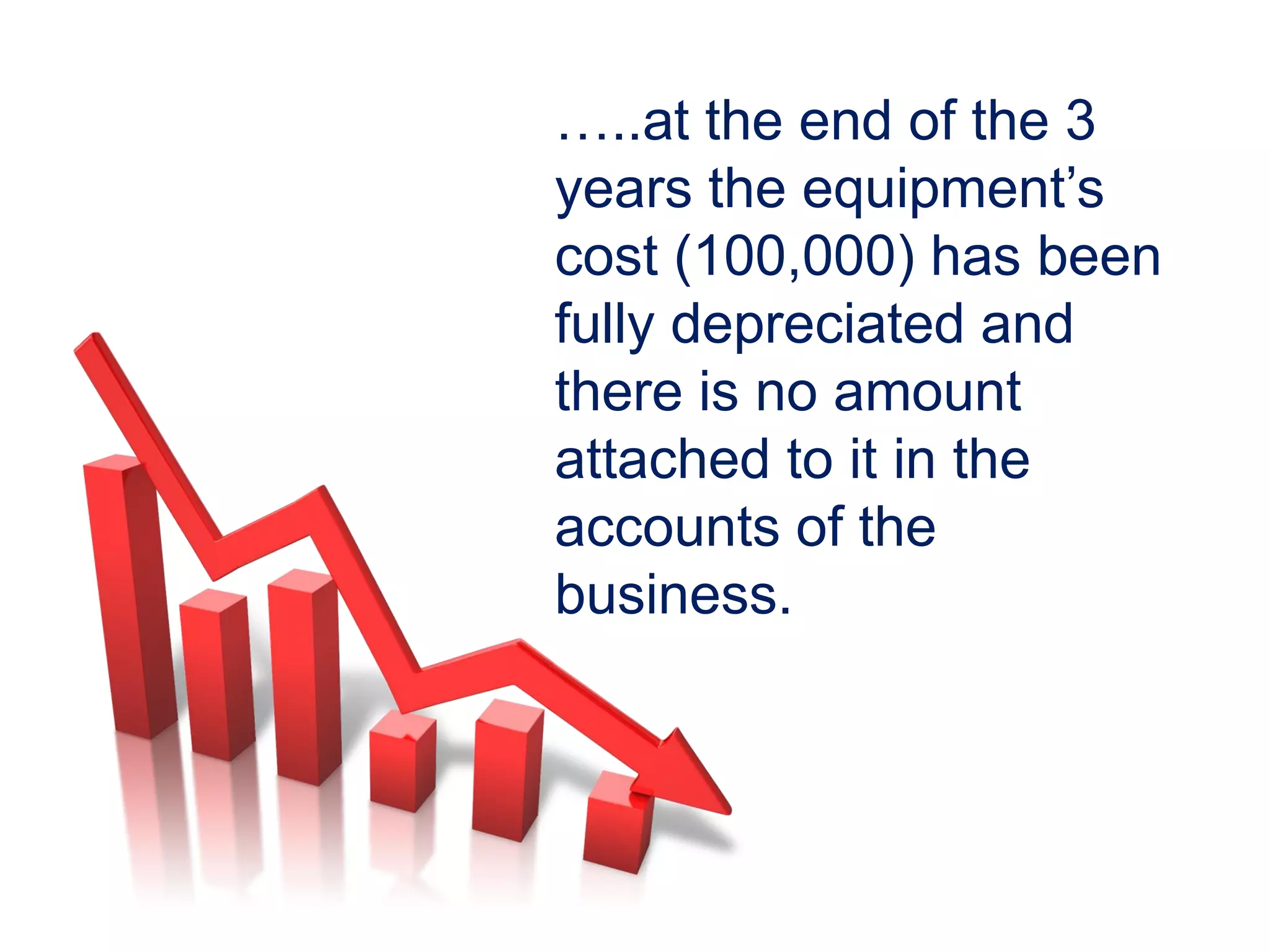
…..at the end of the 3
years the equipment’s
cost (100,000) has been
fully depreciated and
there is no amount
attached to it in the
accounts of the
business.
That doesn’t mean that
the asset has no market
value if the business
wanted to sell it, only that
its cost has now been
fully depreciated.
Because it was
purchased cheaply, the
equipment still has a
market value after 3
years of 50,000.
So, in this example, the
market value of the asset
has not reduced to zero as
a result of depreciation…..
…..it was simply an
accounting procedure to
expense the cost of the
equipment over its useful
life.
The key point to take away
from this is that the value of
an asset that you see on the
balance sheet …..
…….usually bears no
relation to its actual value
and in your analysis you
should keep that firmly in
mind and try to get actual
assets values if you want to
determine the true value of
the business.
One final point; no cash
changes hands following the
calculation of depreciation
so it never features on a
cash flow statement.
We do hope that you enjoyed this presentation.
For more commercial and business banking content,
please visit our website at
www.businessbankingcoach.com
where you can subscribe to our blog, listen to our podcasts
or view and download our other Slideshare presentations.
If you have any questions about this presentation
or any of our other content, please send us an email at
support@businessbankingcoach.com

Introduction to depreciation

  • 1.
  • 2.
    There’s a lotof confusion about what depreciation actually is. Some think it has something to do with an asset losing its value……..
  • 3.
    …….. while othersthink that it’s a mechanism for a business to create a fund for the replacement of the asset when it’s no longer functional.
  • 4.
    So, in this presentation,let’s take a look at what depreciation really is, how it’s calculated and ……
  • 5.
    ….what impact ithas on the income statement, the balance sheet and the cash flow statement.
  • 6.
    Depreciation is aterm used in accounting to spread the cost of a fixed asset over the span of its useful life.
  • 7.
    In this context,an asset’s useful life is the expected period of time over which it will contribute additional profits to the business through its use…..
  • 8.
    ….. that is,by being more productive either by increasing output or reducing the cost of production.
  • 9.
    The “useful life”of fixed assets is often confused with the period of time that the tax authorities allow an accelerated tax deduction on the cost of certain types of fixed assets.
  • 10.
    This tax allowanceis usually known as a “wear and tear allowance” or something similar. There is no direct relationship between depreciation and the “wear and tear allowance”.
  • 11.
    The amount ofdepreciation calculated annually is included as an expense in the income statement and therefore has the effect of reducing profits.
  • 12.
    It’s important tonote that depreciation does not affect the actual (or market) value of the asset being depreciated; only it’s value on the statement of financial position.
  • 13.
    On the balancesheet, the assets that are being depreciated are shown at the net book value….. ….. that is, the initial cost of the asset less the accumulated amounts of depreciation that have been calculated in respect of that asset.
  • 14.
    Let’s give anexample to explain the impact on the balance sheet and what happens when cost and market value are sometimes different…..
  • 15.
    Imagine that abusiness buys a piece of equipment for 100,000……...
  • 16.
    …….that is the amountof the transaction that will initially appear in the accounts of the business.
  • 17.
    However, the businessmay have bought that equipment cheaply from another business that needed to raise some cash quickly.
  • 18.
    Let’s say thatthe equipment was worth 200,000, i.e. more than the business actually paid for it.
  • 19.
    In calculating the depreciation,the actual (or market) value is irrelevant – the equipment will be depreciated based on its cost (100,000)….. … not its value (200,000).
  • 20.
    Now imagine thatthe business depreciates the equipment over 3 years and….
  • 21.
    …..at the endof the 3 years the equipment’s cost (100,000) has been fully depreciated and there is no amount attached to it in the accounts of the business.
  • 22.
    That doesn’t meanthat the asset has no market value if the business wanted to sell it, only that its cost has now been fully depreciated.
  • 23.
    Because it was purchasedcheaply, the equipment still has a market value after 3 years of 50,000.
  • 24.
    So, in thisexample, the market value of the asset has not reduced to zero as a result of depreciation…..
  • 25.
    …..it was simplyan accounting procedure to expense the cost of the equipment over its useful life.
  • 26.
    The key pointto take away from this is that the value of an asset that you see on the balance sheet …..
  • 27.
    …….usually bears no relationto its actual value and in your analysis you should keep that firmly in mind and try to get actual assets values if you want to determine the true value of the business.
  • 28.
    One final point;no cash changes hands following the calculation of depreciation so it never features on a cash flow statement.
  • 29.
    We do hopethat you enjoyed this presentation. For more commercial and business banking content, please visit our website at www.businessbankingcoach.com where you can subscribe to our blog, listen to our podcasts or view and download our other Slideshare presentations. If you have any questions about this presentation or any of our other content, please send us an email at support@businessbankingcoach.com