Analysing business risks:
Macro-environment
from
businessbankingcoach.com
In the macro-environment, new risk
factors are constantly appearing and
they are much more difficult to
identify, both for the managers of the
business as well as for bankers.
The major changes
or developments in
the macro-
environment are
usually outside the
business’ control.
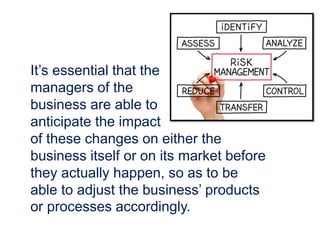
It’s essential that the
managers of the
business are able to
anticipate the impact
of these changes on either the
business itself or on its market before
they actually happen, so as to be
able to adjust the business’ products
or processes accordingly.
As part of our credit risk assessment we
must ensure that the management of the
business is aware of possible changes in
its macro-environment
Failure to do so may
result in the business
losing any competitive
advantage that it might
have had and
compromising its very
existence.
Note that when the
business is operating
across-borders and
revenues and cash
flows come from
foreign sources you
would need to
consider these factors
in those countries as
well as in your home
country.
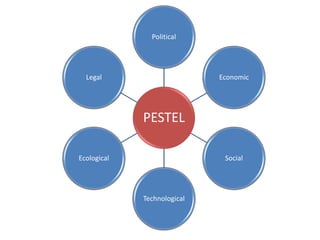
The acronym PESTEL is used to describe
the components of the business’ macro-
environment. Each of these components
comprises a number of
factors that can positively
or negatively affect
businesses of
all sizes……….
……although it should be noted that
most businesses and/or industries
will not be affected by all the factors
simultaneously or to the same
degree as others.
The idea is to consider each of these
factors in turn and the changes that are
taking place in these environments and to
determine whether, and to what extent,
the business that we are assessing will
be affected by the changes.
PESTEL
Political
Economic
Social
Technological
Ecological
Legal
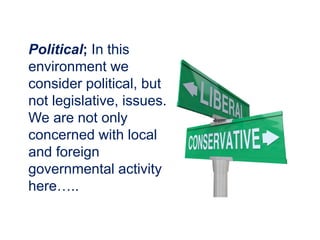
Political; In this
environment we
consider political, but
not legislative, issues.
We are not only
concerned with local
and foreign
governmental activity
here…..
…..but also the
activities of
organisations
(such as NGO’s)
and special-
interest groups
and the
pressure they
bring to bear on
government
policy.
We should also consider the government’s
general policies, plans and attitudes
towards economic development in the
country over the medium to long-term.
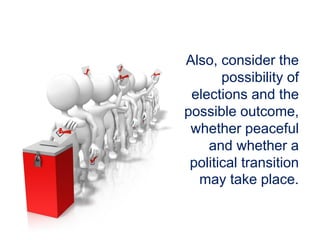
Also, consider the
possibility of
elections and the
possible outcome,
whether peaceful
and whether a
political transition
may take place.
Economic; This
environment, perhaps
more than any of the
others, is the one that
most influences
business decisions,
especially in developing
economies that are
prone to sudden and
significant economic
shocks from external
sources.
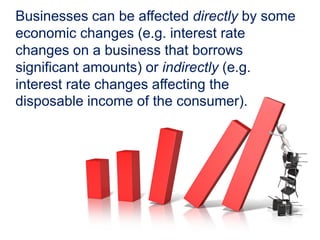
Businesses can be affected directly by some
economic changes (e.g. interest rate
changes on a business that borrows
significant amounts) or indirectly (e.g.
interest rate changes affecting the
disposable income of the consumer).
Social; In this environment
we consider the business’
broader market, i.e. its
customers and their changing
attitudes and values and the
general trends that affect the
way the market buys products
and services.
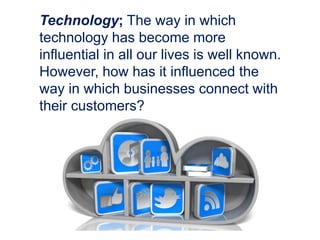
Technology; The way in which
technology has become more
influential in all our lives is well known.
However, how has it influenced the
way in which businesses connect with
their customers?
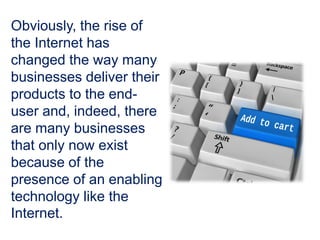
Obviously, the rise of
the Internet has
changed the way many
businesses deliver their
products to the end-
user and, indeed, there
are many businesses
that only now exist
because of the
presence of an enabling
technology like the
Internet.
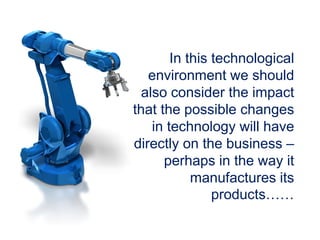
In this technological
environment we should
also consider the impact
that the possible changes
in technology will have
directly on the business –
perhaps in the way it
manufactures its
products……
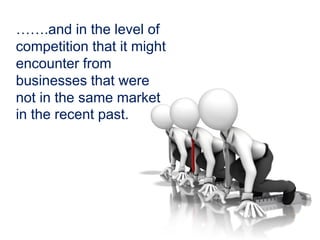
…….and in the level of
competition that it might
encounter from
businesses that were
not in the same market
in the recent past.
Ecological; There are
two aspects to this
environment. Firstly,
the ecological issues
have to be considered
and, of course, not
all businesses are
affected by these
concerns.
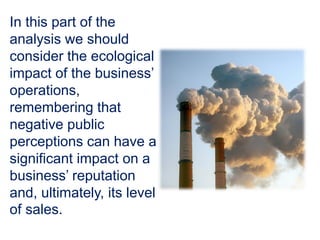
In this part of the
analysis we should
consider the ecological
impact of the business’
operations,
remembering that
negative public
perceptions can have a
significant impact on a
business’ reputation
and, ultimately, its level
of sales.
Secondly, there are some issues regarding
the way in which the business treats its
physical environment – not in an
ecological sense – but in the way in which,
for example, it plans its operations so that
disturbance and noise are minimised.
Legal; This
environment is similar to
the political environment
which we discussed
earlier but analysis is
restricted to only
legislative issues,
especially focusing
on the effect that up-
coming legislation may
have on the business.
This would include both
changes to existing
legislation and
completely new
legislation. Mostly,
changes in this
environment would
have a direct impact on
the business.
I do hope that you enjoyed this presentation.
For more commercial and business banking content,
please visit www.businessbankingcoach.com
where you can subscribe to the business banking
blog, watch the videos or view and download
other Slideshare presentations.
If you have any questions about this presentation
or any other content, please send an email at
support@businessbankingcoach.com

Analysing business risks; macro environment

  • 1.
  • 2.
    In the macro-environment,new risk factors are constantly appearing and they are much more difficult to identify, both for the managers of the business as well as for bankers.
  • 3.
    The major changes ordevelopments in the macro- environment are usually outside the business’ control.
  • 4.
    It’s essential thatthe managers of the business are able to anticipate the impact of these changes on either the business itself or on its market before they actually happen, so as to be able to adjust the business’ products or processes accordingly.
  • 5.
    As part ofour credit risk assessment we must ensure that the management of the business is aware of possible changes in its macro-environment
  • 6.
    Failure to doso may result in the business losing any competitive advantage that it might have had and compromising its very existence.
  • 7.
    Note that whenthe business is operating across-borders and revenues and cash flows come from foreign sources you would need to consider these factors in those countries as well as in your home country.
  • 8.
    The acronym PESTELis used to describe the components of the business’ macro- environment. Each of these components comprises a number of factors that can positively or negatively affect businesses of all sizes……….
  • 9.
    ……although it shouldbe noted that most businesses and/or industries will not be affected by all the factors simultaneously or to the same degree as others.
  • 10.
    The idea isto consider each of these factors in turn and the changes that are taking place in these environments and to determine whether, and to what extent, the business that we are assessing will be affected by the changes.
  • 11.
  • 12.
    Political; In this environmentwe consider political, but not legislative, issues. We are not only concerned with local and foreign governmental activity here…..
  • 13.
    …..but also the activitiesof organisations (such as NGO’s) and special- interest groups and the pressure they bring to bear on government policy.
  • 14.
    We should alsoconsider the government’s general policies, plans and attitudes towards economic development in the country over the medium to long-term.
  • 15.
    Also, consider the possibilityof elections and the possible outcome, whether peaceful and whether a political transition may take place.
  • 16.
    Economic; This environment, perhaps morethan any of the others, is the one that most influences business decisions, especially in developing economies that are prone to sudden and significant economic shocks from external sources.
  • 17.
    Businesses can beaffected directly by some economic changes (e.g. interest rate changes on a business that borrows significant amounts) or indirectly (e.g. interest rate changes affecting the disposable income of the consumer).
  • 18.
    Social; In thisenvironment we consider the business’ broader market, i.e. its customers and their changing attitudes and values and the general trends that affect the way the market buys products and services.
  • 19.
    Technology; The wayin which technology has become more influential in all our lives is well known. However, how has it influenced the way in which businesses connect with their customers?
  • 20.
    Obviously, the riseof the Internet has changed the way many businesses deliver their products to the end- user and, indeed, there are many businesses that only now exist because of the presence of an enabling technology like the Internet.
  • 21.
    In this technological environmentwe should also consider the impact that the possible changes in technology will have directly on the business – perhaps in the way it manufactures its products……
  • 22.
    …….and in thelevel of competition that it might encounter from businesses that were not in the same market in the recent past.
  • 23.
    Ecological; There are twoaspects to this environment. Firstly, the ecological issues have to be considered and, of course, not all businesses are affected by these concerns.
  • 24.
    In this partof the analysis we should consider the ecological impact of the business’ operations, remembering that negative public perceptions can have a significant impact on a business’ reputation and, ultimately, its level of sales.
  • 25.
    Secondly, there aresome issues regarding the way in which the business treats its physical environment – not in an ecological sense – but in the way in which, for example, it plans its operations so that disturbance and noise are minimised.
  • 26.
    Legal; This environment issimilar to the political environment which we discussed earlier but analysis is restricted to only legislative issues, especially focusing on the effect that up- coming legislation may have on the business.
  • 27.
    This would includeboth changes to existing legislation and completely new legislation. Mostly, changes in this environment would have a direct impact on the business.
  • 28.
    I do hopethat you enjoyed this presentation. For more commercial and business banking content, please visit www.businessbankingcoach.com where you can subscribe to the business banking blog, watch the videos or view and download other Slideshare presentations. If you have any questions about this presentation or any other content, please send an email at support@businessbankingcoach.com