



Analysing Business Risks:
Management Quality
from
businessbankingcoach.com
in association with
We know that an analysis of
business risk is the first step in the
credit assessment process.
But how should
the analysis be
structured?
There’s an argument
that says an analyst
should first analyse a
business’s macro-
environment and then
its market environment
before paying any
attention to the micro-
environment.
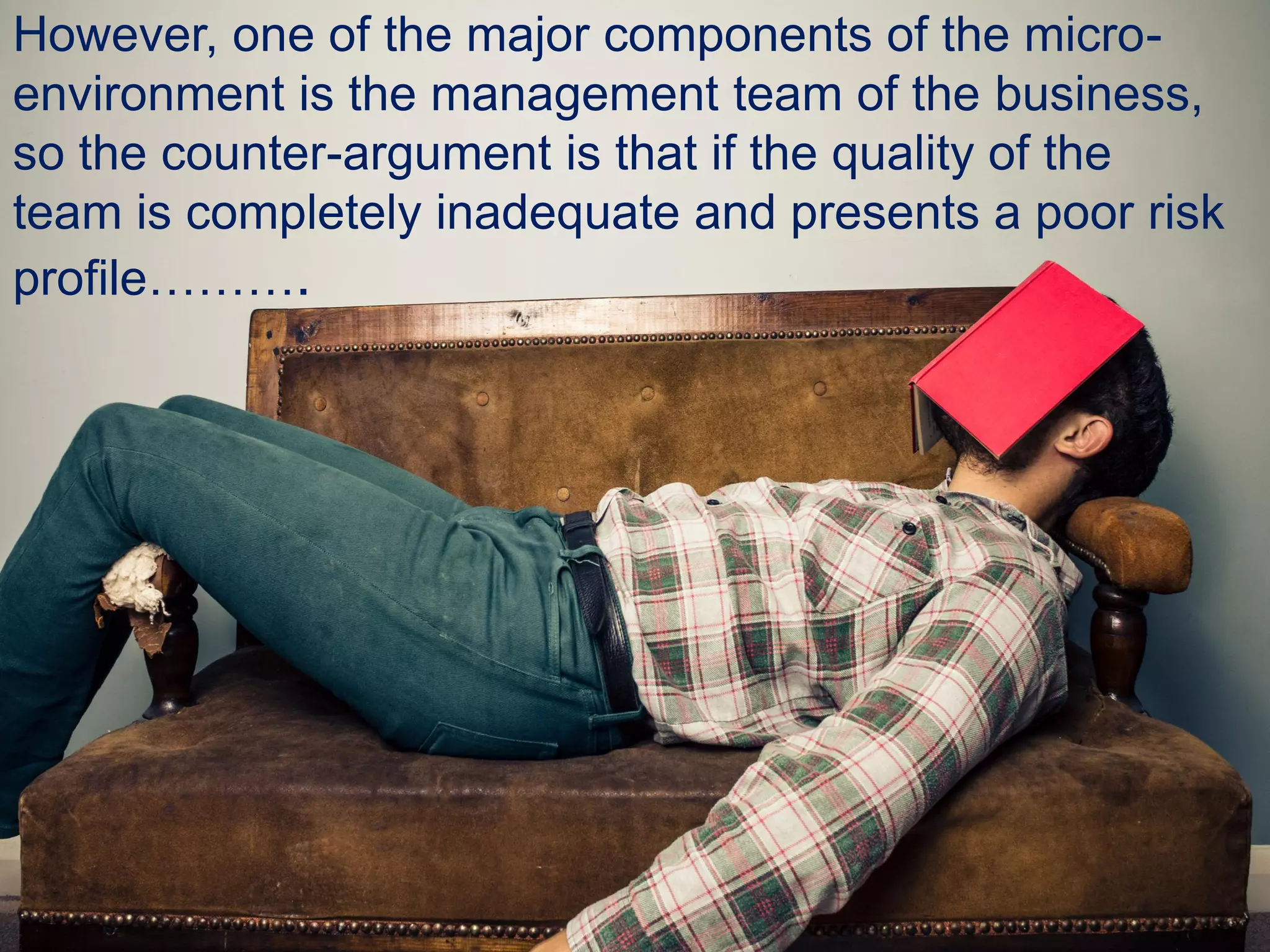
However, one of the major components of the micro-
environment is the management team of the business,
so the counter-argument is that if the quality of the
team is completely inadequate and presents a poor risk
profile……….
there’s no point in wasting
time analysing the external
environments since the
bank wouldn’t want to be
exposed to a poorly
managed business.
Analysts taking that
view would then
analyse management
quality first and only if
that’s acceptable would
they then turn to the
external environments.
We don’t take sides in the argument.
The main thing is that the business’s
operations and structure are understood
which means that all of these
environments have to be analysed before
turning to the financial performance and
position of the business.
What should an
analyst be looking
for in an analysis of
the management
team?
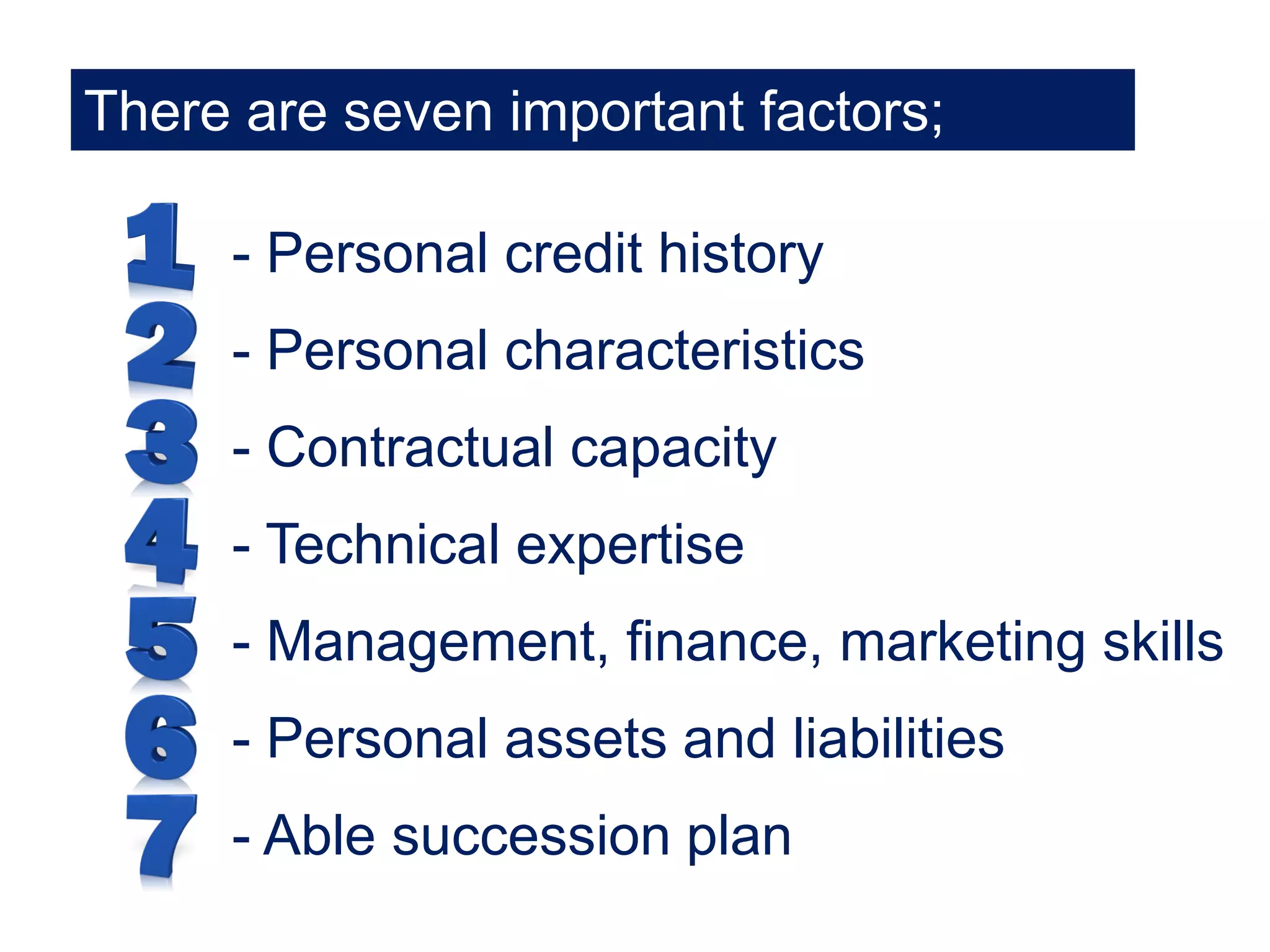
There are seven important factors;
- Personal credit history
- Personal characteristics
- Contractual capacity
- Technical expertise
- Management, finance, marketing skills
- Personal assets and liabilities
- Able succession plan
Personal credit history;
do the managers of the
business have clear
credit records? If not,
there is little likelihood
that the bank will provide
finance to the business.
To be clear, this is not
about the business’s
credit history – it’s the
personal credit histories
of the management
team that have to be
tested here………..
…….the reason being
that if people are not
sufficiently disciplined to
manage their own
money effectively,
they’re unlikely to
manage the
business’s finances
any better.
Personal characteristics; this
has been covered in some detail
in a previous presentation in
which the point was made that
many business problems and
failures are caused by the
personal attitudes of the
managers/owners.
We always want to see
positive characteristics,
e.g. commitment to the
business, transparency,
openness, hard
working, not status
driven or
egotistical etc.
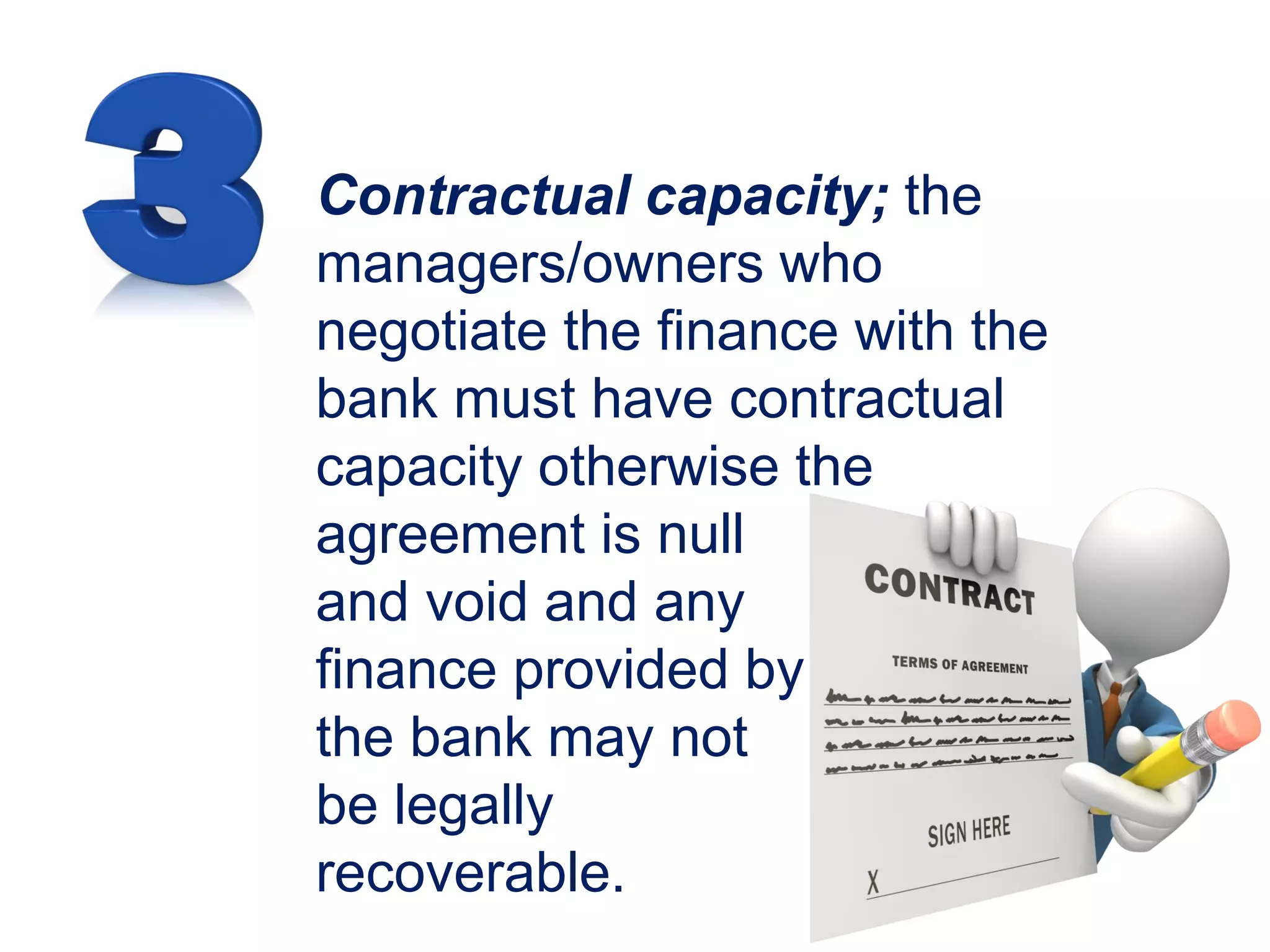
Contractual capacity; the
managers/owners who
negotiate the finance with the
bank must have contractual
capacity otherwise the
agreement is null
and void and any
finance provided by
the bank may not
be legally
recoverable.
Technical expertise; this is really
relevant to smaller businesses
but usually a particular type
of business is
started by a
person because
they have the
necessary
technical expertise, e.g. a trained
baker might start a bakery
business.
However, if the
manager does not have
the required technical
expertise it would be
necessary for the bank
to find out whether
someone has been
employed with that
expertise.
This may be a problem
if that person leaves the
business at a later date
taking their critical skills
with them.
Management, finance and
marketing skills; these are
the main skills that managers
of smaller businesses
commonly lack.
Again, people start
businesses because they
have the necessary technical
expertise but………
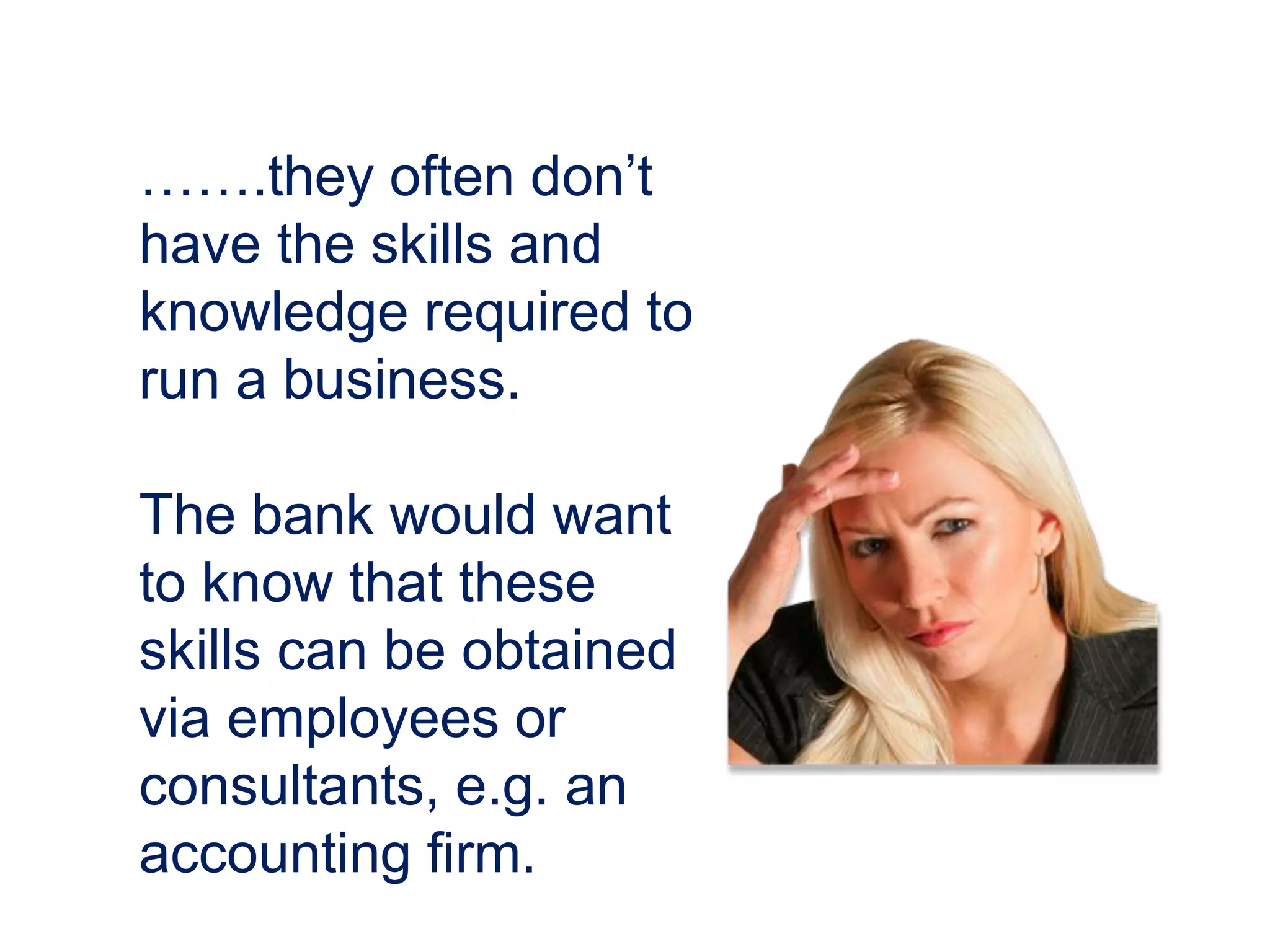
…….they often don’t
have the skills and
knowledge required to
run a business.
The bank would want
to know that these
skills can be obtained
via employees or
consultants, e.g. an
accounting firm.
Under this heading we would also
look at the experience of the
management team in the industry
and their track record of success or
otherwise.
Personal assets and liabilities;
this tells us whether the
managers/owners have assets
outside the business and
whether they could be used as a
secondary source of repayment
should the business fail for any
reason.
Of course, these
assets can also be
used as collateral,
should it be required.
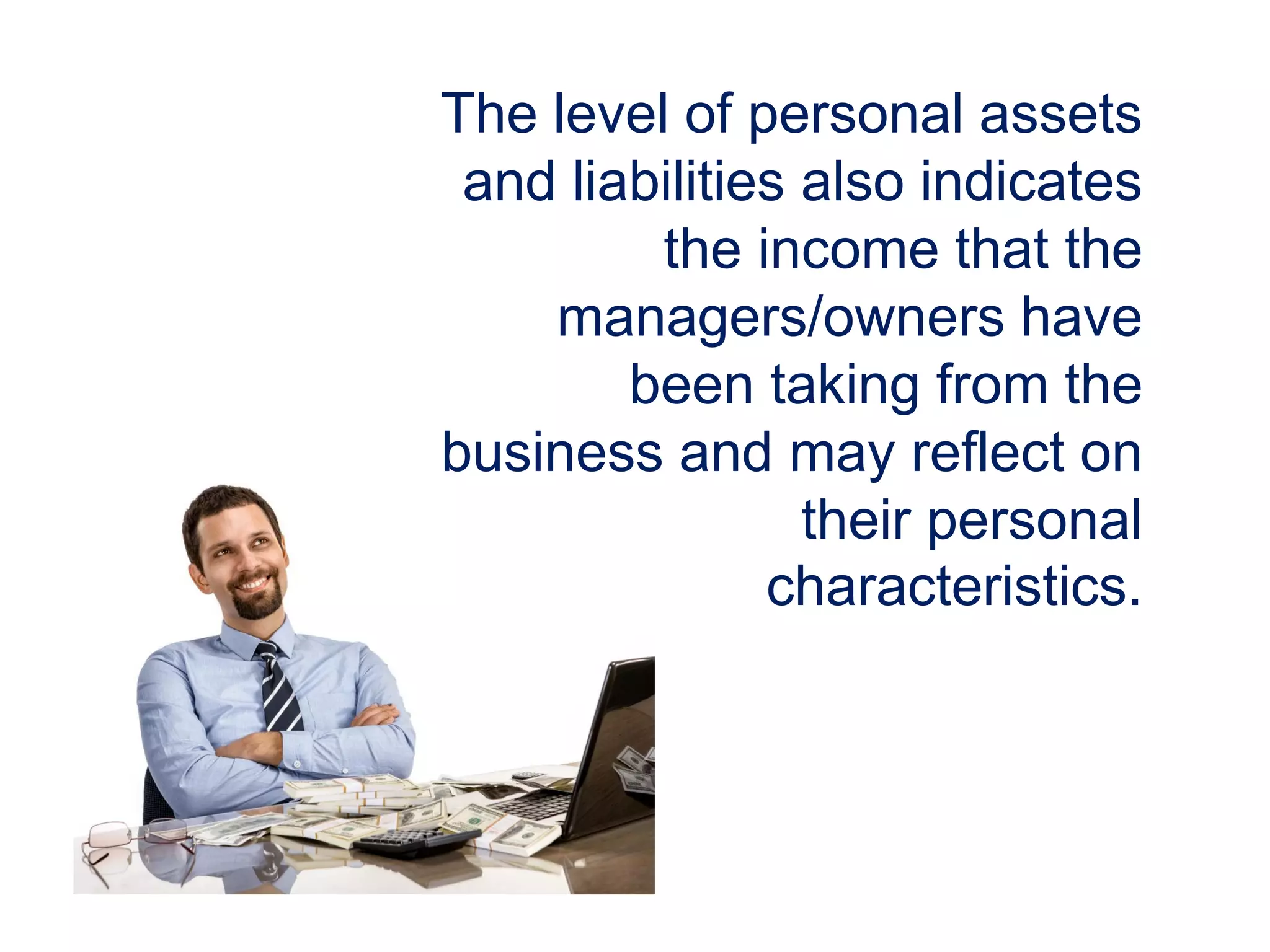
The level of personal assets
and liabilities also indicates
the income that the
managers/owners have
been taking from the
business and may reflect on
their personal
characteristics.
Able succession plan; very
often a business is run and
managed by one key person
and the bank will be concerned
to know what would happen to
the business if that person were
to become incapacitated or if he
or she died suddenly.
Not only should there be a
succession plan in place but
the person identified as the
successor should be
adequately trained in the key
areas of the business so
that he or she could
continue the business
at short notice.
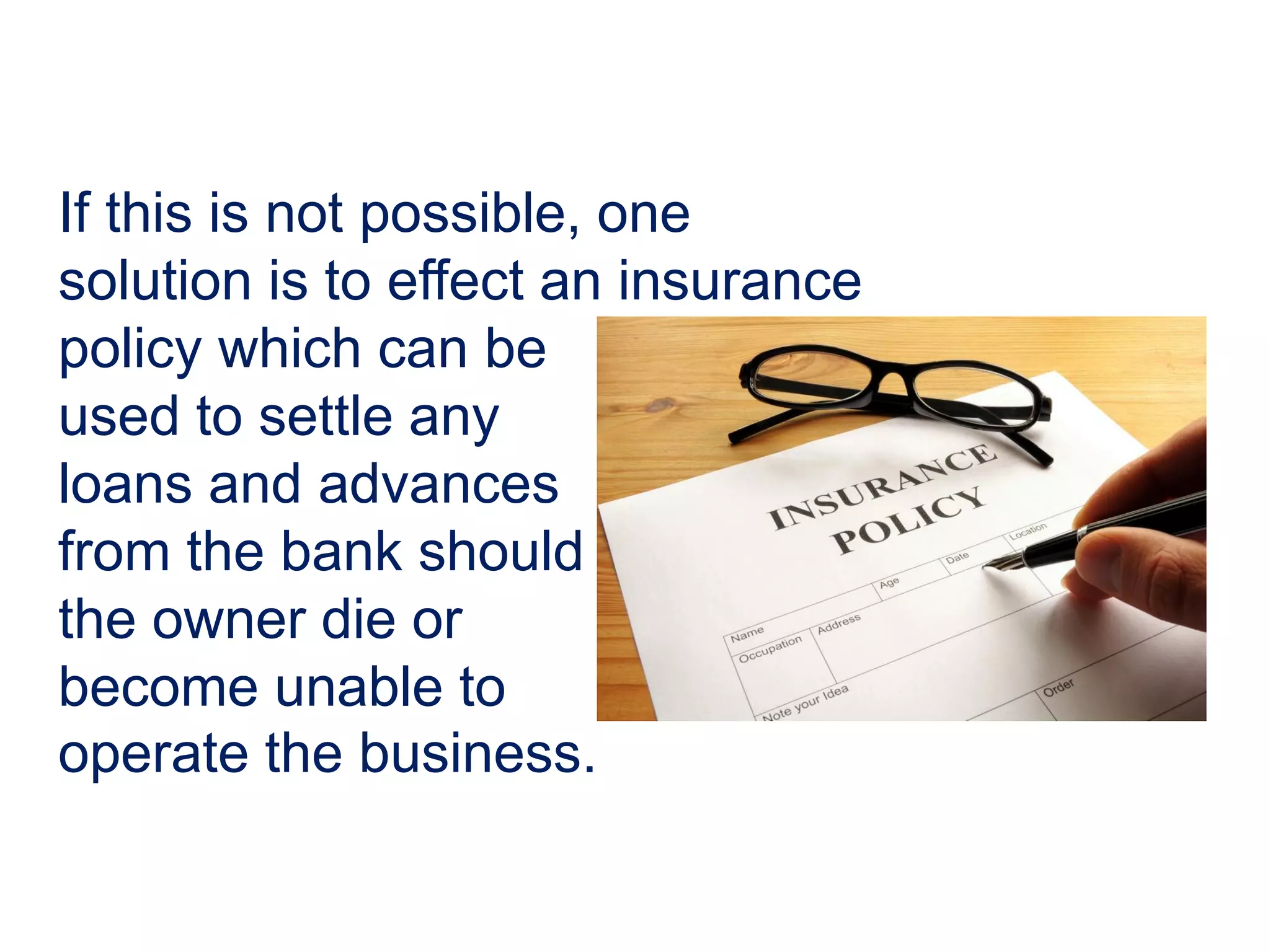
If this is not possible, one
solution is to effect an insurance
policy which can be
used to settle any
loans and advances
from the bank should
the owner die or
become unable to
operate the business.
We do hope that you enjoyed this presentation.
For more commercial and business banking content,
please visit our website at
www.businessbankingcoach.com
where you can subscribe to our blog, listen to our podcasts
or view and download our other Slideshare presentations.
If you have any questions about this presentation
or any of our other content, please send us an email at
support@businessbankingcoach.com

Analysing business risks; management quality

  • 1.
    Analysing Business Risks: ManagementQuality from businessbankingcoach.com in association with
  • 2.
    We know thatan analysis of business risk is the first step in the credit assessment process. But how should the analysis be structured?
  • 3.
    There’s an argument thatsays an analyst should first analyse a business’s macro- environment and then its market environment before paying any attention to the micro- environment.
  • 4.
    However, one ofthe major components of the micro- environment is the management team of the business, so the counter-argument is that if the quality of the team is completely inadequate and presents a poor risk profile……….
  • 5.
    there’s no pointin wasting time analysing the external environments since the bank wouldn’t want to be exposed to a poorly managed business.
  • 6.
    Analysts taking that viewwould then analyse management quality first and only if that’s acceptable would they then turn to the external environments.
  • 7.
    We don’t takesides in the argument. The main thing is that the business’s operations and structure are understood which means that all of these environments have to be analysed before turning to the financial performance and position of the business.
  • 8.
    What should an analystbe looking for in an analysis of the management team?
  • 9.
    There are sevenimportant factors; - Personal credit history - Personal characteristics - Contractual capacity - Technical expertise - Management, finance, marketing skills - Personal assets and liabilities - Able succession plan
  • 10.
    Personal credit history; dothe managers of the business have clear credit records? If not, there is little likelihood that the bank will provide finance to the business.
  • 11.
    To be clear,this is not about the business’s credit history – it’s the personal credit histories of the management team that have to be tested here………..
  • 12.
    …….the reason being thatif people are not sufficiently disciplined to manage their own money effectively, they’re unlikely to manage the business’s finances any better.
  • 13.
    Personal characteristics; this hasbeen covered in some detail in a previous presentation in which the point was made that many business problems and failures are caused by the personal attitudes of the managers/owners.
  • 14.
    We always wantto see positive characteristics, e.g. commitment to the business, transparency, openness, hard working, not status driven or egotistical etc.
  • 15.
    Contractual capacity; the managers/ownerswho negotiate the finance with the bank must have contractual capacity otherwise the agreement is null and void and any finance provided by the bank may not be legally recoverable.
  • 16.
    Technical expertise; thisis really relevant to smaller businesses but usually a particular type of business is started by a person because they have the necessary technical expertise, e.g. a trained baker might start a bakery business.
  • 17.
    However, if the managerdoes not have the required technical expertise it would be necessary for the bank to find out whether someone has been employed with that expertise.
  • 18.
    This may bea problem if that person leaves the business at a later date taking their critical skills with them.
  • 19.
    Management, finance and marketingskills; these are the main skills that managers of smaller businesses commonly lack. Again, people start businesses because they have the necessary technical expertise but………
  • 20.
    …….they often don’t havethe skills and knowledge required to run a business. The bank would want to know that these skills can be obtained via employees or consultants, e.g. an accounting firm.
  • 21.
    Under this headingwe would also look at the experience of the management team in the industry and their track record of success or otherwise.
  • 22.
    Personal assets andliabilities; this tells us whether the managers/owners have assets outside the business and whether they could be used as a secondary source of repayment should the business fail for any reason.
  • 23.
    Of course, these assetscan also be used as collateral, should it be required.
  • 24.
    The level ofpersonal assets and liabilities also indicates the income that the managers/owners have been taking from the business and may reflect on their personal characteristics.
  • 25.
    Able succession plan;very often a business is run and managed by one key person and the bank will be concerned to know what would happen to the business if that person were to become incapacitated or if he or she died suddenly.
  • 26.
    Not only shouldthere be a succession plan in place but the person identified as the successor should be adequately trained in the key areas of the business so that he or she could continue the business at short notice.
  • 27.
    If this isnot possible, one solution is to effect an insurance policy which can be used to settle any loans and advances from the bank should the owner die or become unable to operate the business.
  • 28.
    We do hopethat you enjoyed this presentation. For more commercial and business banking content, please visit our website at www.businessbankingcoach.com where you can subscribe to our blog, listen to our podcasts or view and download our other Slideshare presentations. If you have any questions about this presentation or any of our other content, please send us an email at support@businessbankingcoach.com