Published by www.lecturesheet.com
        Meaning of Depreciation:-
   Generally Depreciation is one kind of expenses . The word
    depreciation comes from a Latin word Depretium. Here de means
    decline and pretium means price. So Depreciation means decrease
    in the value of fixed or capital assets.
   Not having fixed system, different organizations use different
    methods for calculating deprecation. Deprecation is a guessed
    expense. For this reason it is said that deprecation is a process of
    cost allocation, not a process of assets valuation.
   Deprecation is charged on fixed assets such as building,equipments.
   Kieso said “Depreciation is the allocation of the cost of plant asset
    to expense over its useful life in a rational and systematic manner”
   “ Deprecation is the systematic allocation of the depreciable amount
    of an asset over its useful life.” IFRS
Depreciation vs Fluctuation:-

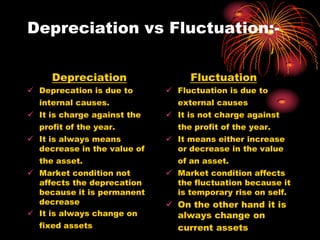
     Depreciation                 Fluctuation
 Deprecation is due to       Fluctuation is due to
  internal causes.             external causes
 It is charge against the    It is not charge against
  profit of the year.          the profit of the year.
 It is always means          It means either increase
  decrease in the value of     or decrease in the value
  the asset.                   of an asset.
 Market condition not        Market condition affects
  affects the deprecation      the fluctuation because it
  because it is permanent      is temporary rise on self.
  decrease                    On the other hand it is
 It is always change on       always change on
  fixed assets                 current assets
Objectives/Why providing depreciation?
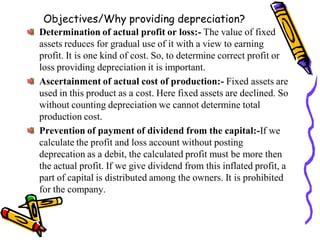
Determination of actual profit or loss:- The value of fixed
assets reduces for gradual use of it with a view to earning
profit. It is one kind of cost. So, to determine correct profit or
loss providing depreciation it is important.
Ascertainment of actual cost of production:- Fixed assets are
used in this product as a cost. Here fixed assets are declined. So
without counting depreciation we cannot determine total
production cost.
Prevention of payment of dividend from the capital:-If we
calculate the profit and loss account without posting
deprecation as a debit, the calculated profit must be more then
the actual profit. If we give dividend from this inflated profit, a
part of capital is distributed among the owners. It is prohibited
for the company.
Determination of correct value of asset:-If we want to
  determine the correct value of asset at the end of the accounting
  period, we have to subtract the depreciation of this year from
  the primary value of the asset.
• Exhibition of true and fair view:-The cost of the fixed asset is
  declined by the gradual use of it. If we show this value in the
  financial statement without consideration of this depreciation,
  the actual financial condition of the enterprise is not publication
• Maintenance of Capital:-After using assets we can not get back
  the same amount of assets. So every year depreciation is posted
  to the debit side of the profit and loss account with a view to
  getting back the actual amount.
  Reduction of tax Liabilities:-Net income is reduced as a result
  of providing depreciation. So the amount of tax is reduced.
  Replace the assets:-The deprecation amount used to replace the
  asset when the asset is scrapped
Causes of depreciation:-
 Wear and tear
 Effluxion of time
 Obsolescence
 Exhaustion
 Effects of the weather and other
 elements
Measure of depreciation:-
 The original cost of the asset
 The addition of asset during the year, taking into
 consideration the dates on which these additions
 were made for the purpose of calculations.
 The interest that could be earned if the sum spend
 in the purchase of the asset had been invested
 outside.
 The estimated efficiency of the life of the asset.
 Different methods that may be used to caculation
Continue
The scrap, break-up or the residual value of
the asset.
Obsolescence, i.e., the change of the asset
going out of fashion.
Deprecation should be provided according
to the income tax Act and companies Act.
Question no 61 and 64 for case study

Depreciation

  • 1.
    Published by www.lecturesheet.com Meaning of Depreciation:-  Generally Depreciation is one kind of expenses . The word depreciation comes from a Latin word Depretium. Here de means decline and pretium means price. So Depreciation means decrease in the value of fixed or capital assets.  Not having fixed system, different organizations use different methods for calculating deprecation. Deprecation is a guessed expense. For this reason it is said that deprecation is a process of cost allocation, not a process of assets valuation.  Deprecation is charged on fixed assets such as building,equipments.  Kieso said “Depreciation is the allocation of the cost of plant asset to expense over its useful life in a rational and systematic manner”  “ Deprecation is the systematic allocation of the depreciable amount of an asset over its useful life.” IFRS
  • 2.
    Depreciation vs Fluctuation:- Depreciation Fluctuation  Deprecation is due to  Fluctuation is due to internal causes. external causes  It is charge against the  It is not charge against profit of the year. the profit of the year.  It is always means  It means either increase decrease in the value of or decrease in the value the asset. of an asset.  Market condition not  Market condition affects affects the deprecation the fluctuation because it because it is permanent is temporary rise on self. decrease  On the other hand it is  It is always change on always change on fixed assets current assets
  • 3.
    Objectives/Why providing depreciation? Determinationof actual profit or loss:- The value of fixed assets reduces for gradual use of it with a view to earning profit. It is one kind of cost. So, to determine correct profit or loss providing depreciation it is important. Ascertainment of actual cost of production:- Fixed assets are used in this product as a cost. Here fixed assets are declined. So without counting depreciation we cannot determine total production cost. Prevention of payment of dividend from the capital:-If we calculate the profit and loss account without posting deprecation as a debit, the calculated profit must be more then the actual profit. If we give dividend from this inflated profit, a part of capital is distributed among the owners. It is prohibited for the company.
  • 4.
    Determination of correctvalue of asset:-If we want to determine the correct value of asset at the end of the accounting period, we have to subtract the depreciation of this year from the primary value of the asset. • Exhibition of true and fair view:-The cost of the fixed asset is declined by the gradual use of it. If we show this value in the financial statement without consideration of this depreciation, the actual financial condition of the enterprise is not publication • Maintenance of Capital:-After using assets we can not get back the same amount of assets. So every year depreciation is posted to the debit side of the profit and loss account with a view to getting back the actual amount. Reduction of tax Liabilities:-Net income is reduced as a result of providing depreciation. So the amount of tax is reduced. Replace the assets:-The deprecation amount used to replace the asset when the asset is scrapped
  • 5.
    Causes of depreciation:- Wear and tear Effluxion of time Obsolescence Exhaustion Effects of the weather and other elements
  • 6.
    Measure of depreciation:- The original cost of the asset The addition of asset during the year, taking into consideration the dates on which these additions were made for the purpose of calculations. The interest that could be earned if the sum spend in the purchase of the asset had been invested outside. The estimated efficiency of the life of the asset. Different methods that may be used to caculation
  • 7.
    Continue The scrap, break-upor the residual value of the asset. Obsolescence, i.e., the change of the asset going out of fashion. Deprecation should be provided according to the income tax Act and companies Act. Question no 61 and 64 for case study