DR. WAN NAJWA ZAINI WAN MOHAMED
RADIOLOGIST AND HEAD,
JPD, HQE II
30-31 JULY 2015 HQE II BASIC CT BRAIN INTERPRETATION
 HISTORY
 BASIC PRINCIPLES
 INDICATIONS, PREPARATIONS
 ARTIFACTS
30-31 JULY 2015 HQE II BASIC CT BRAIN INTERPRETATION
 CT BRAIN is an extremely useful diagnostic
tool used routinely in hospital care.
 Because many disease processes are time
dependent and require immediate action, a
quality physician needs to be able to accurately
interpret and act upon certain CT findings
without specialist (e.g., radiologist) assistance.
 It has been shown that even a brief educational
intervention can significantly improve the
physician’s ability to interpret cranial CT scans.
30-31 JULY 2015 HQE II BASIC CT BRAIN INTERPRETATION
 Founder of X-ray
on 8th November,
1895
 German physicist,
Wilhelm Conrad
Röntgen
 First X-Ray taken
– wife’s hand
30-31 JULY 2015 HQE II BASIC CT BRAIN INTERPRETATION
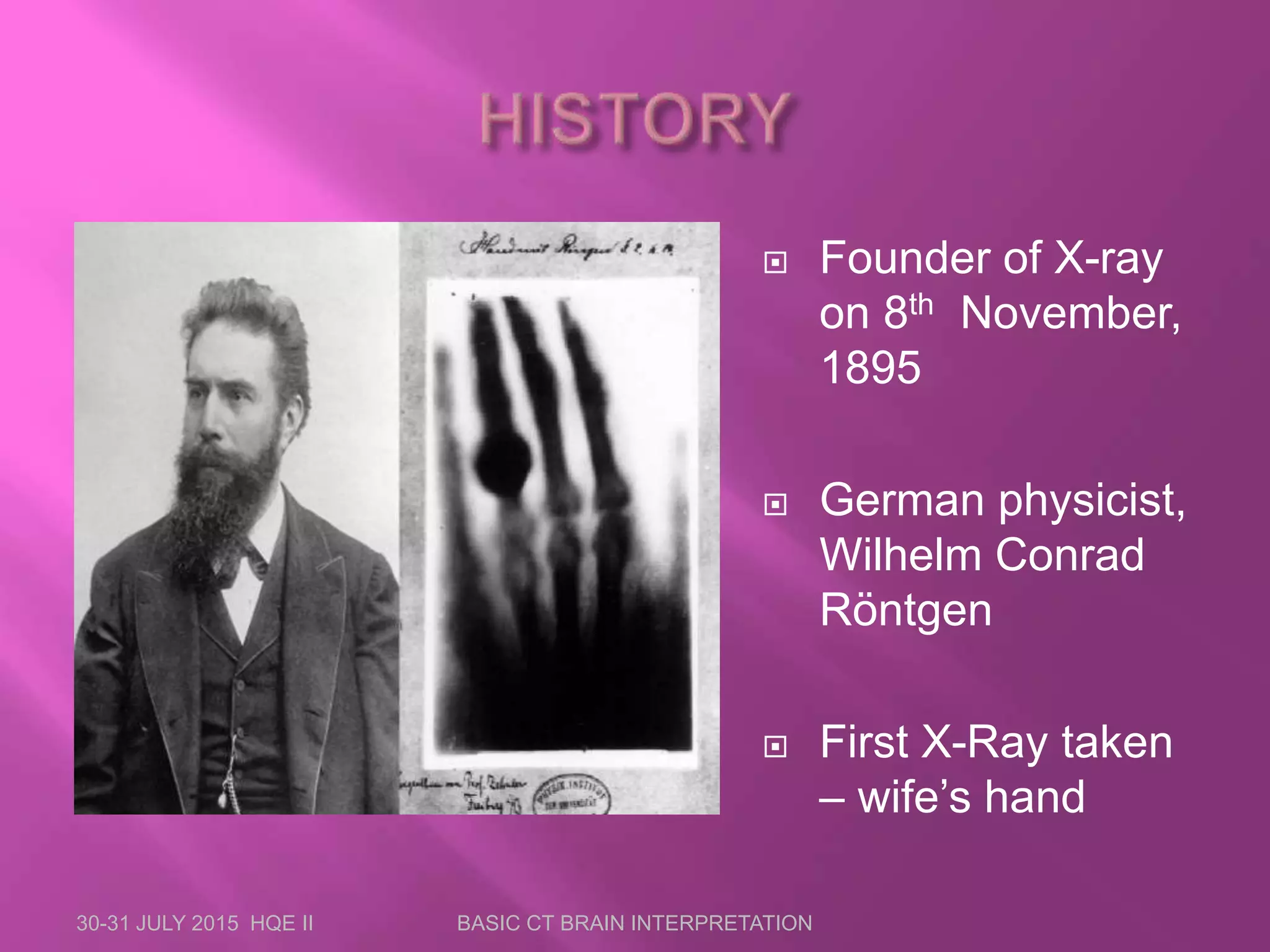
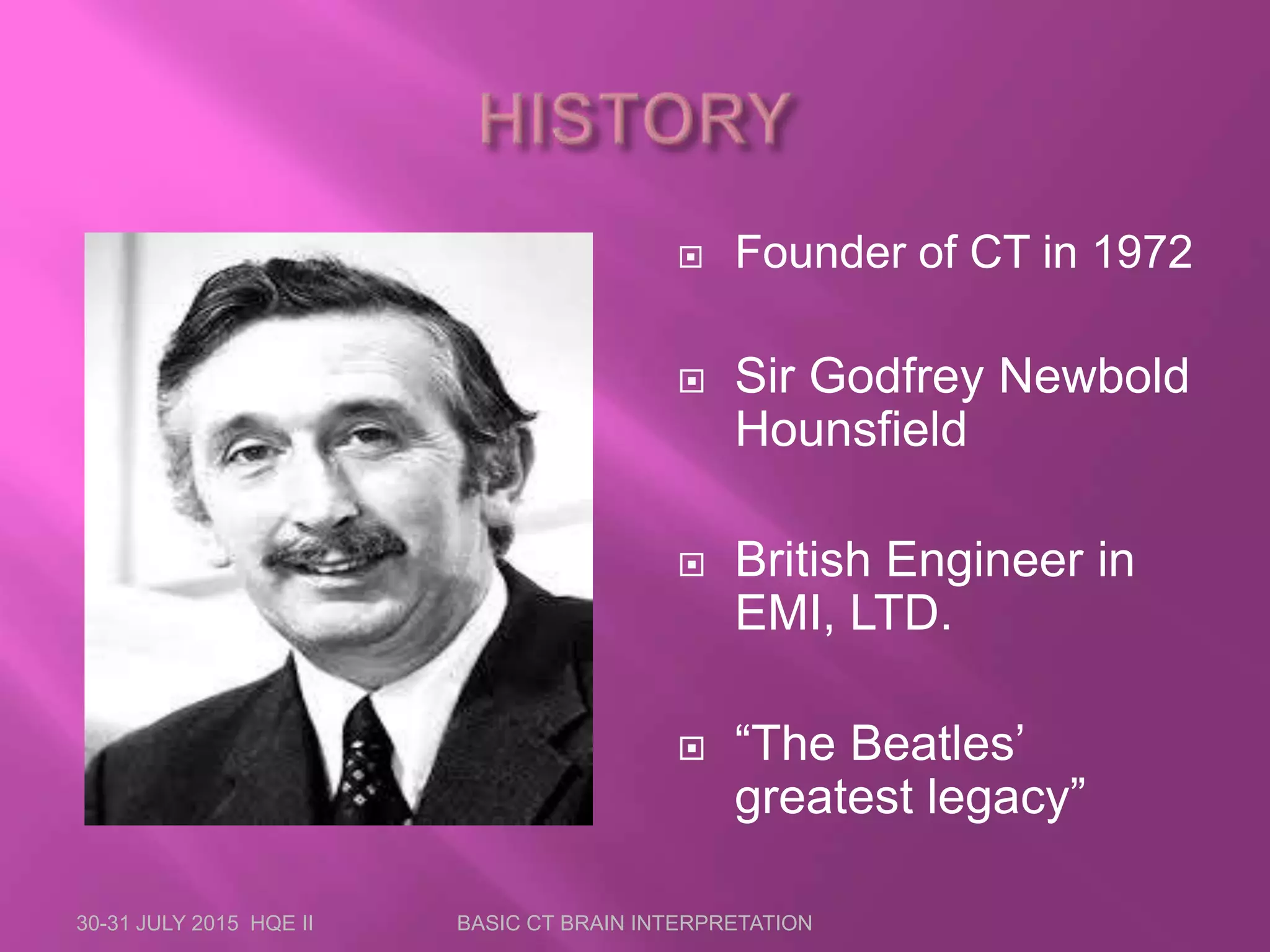
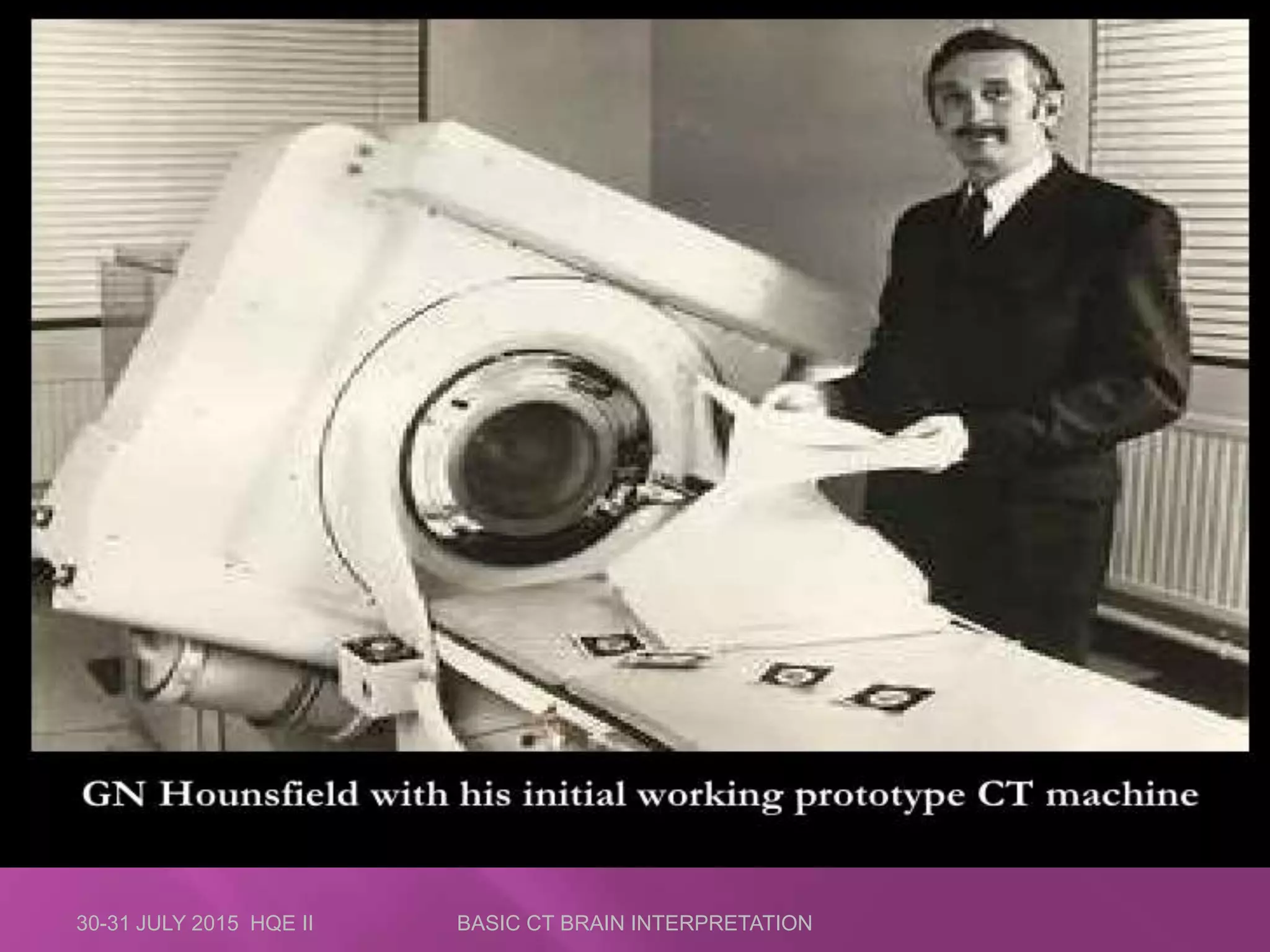
 Founder of CT in 1972
 Sir Godfrey Newbold
Hounsfield
 British Engineer in
EMI, LTD.
 “The Beatles’
greatest legacy”
30-31 JULY 2015 HQE II BASIC CT BRAIN INTERPRETATION
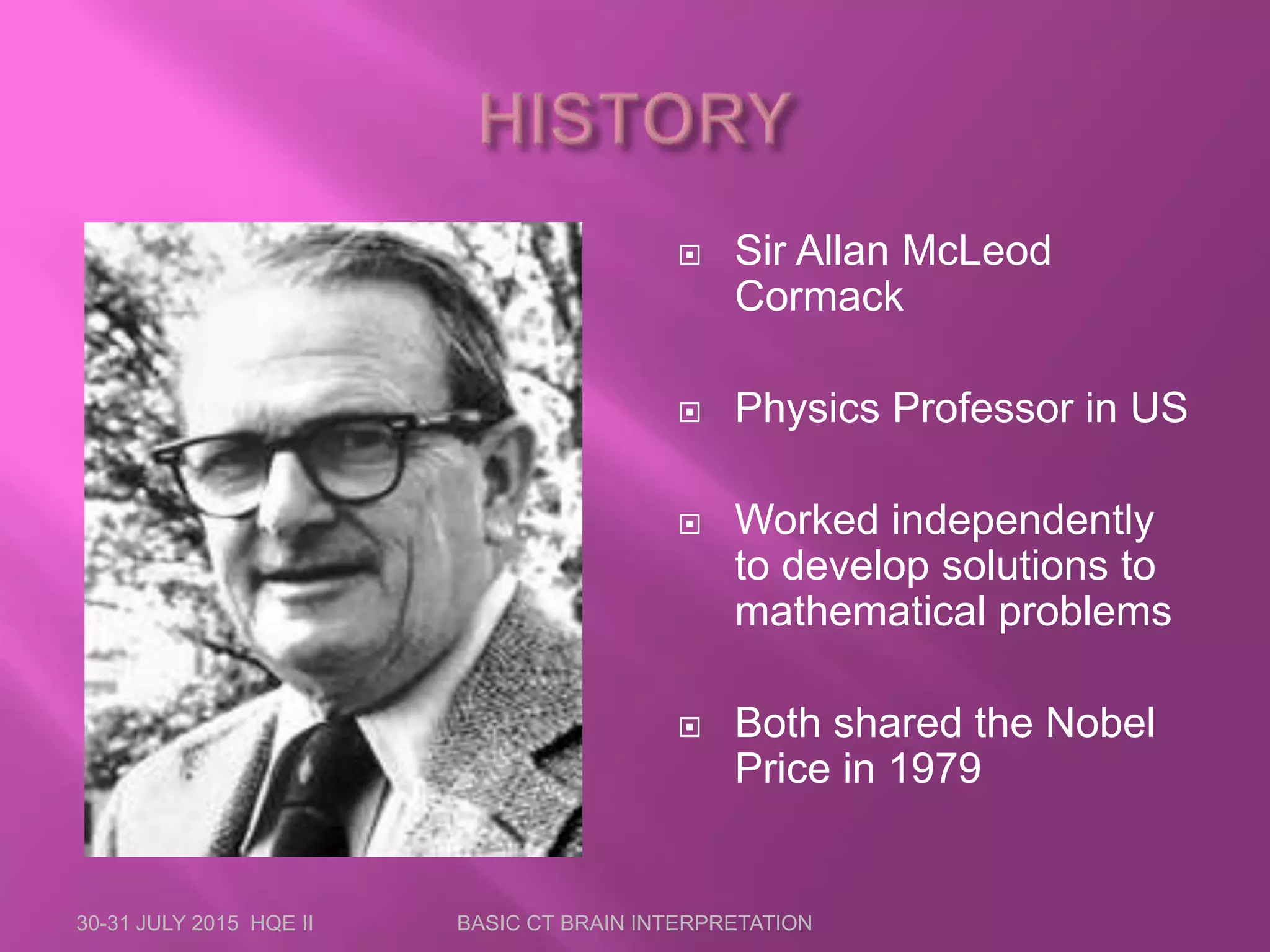
 Sir Allan McLeod
Cormack
 Physics Professor in US
 Worked independently
to develop solutions to
mathematical problems
 Both shared the Nobel
Price in 1979
30-31 JULY 2015 HQE II BASIC CT BRAIN INTERPRETATION
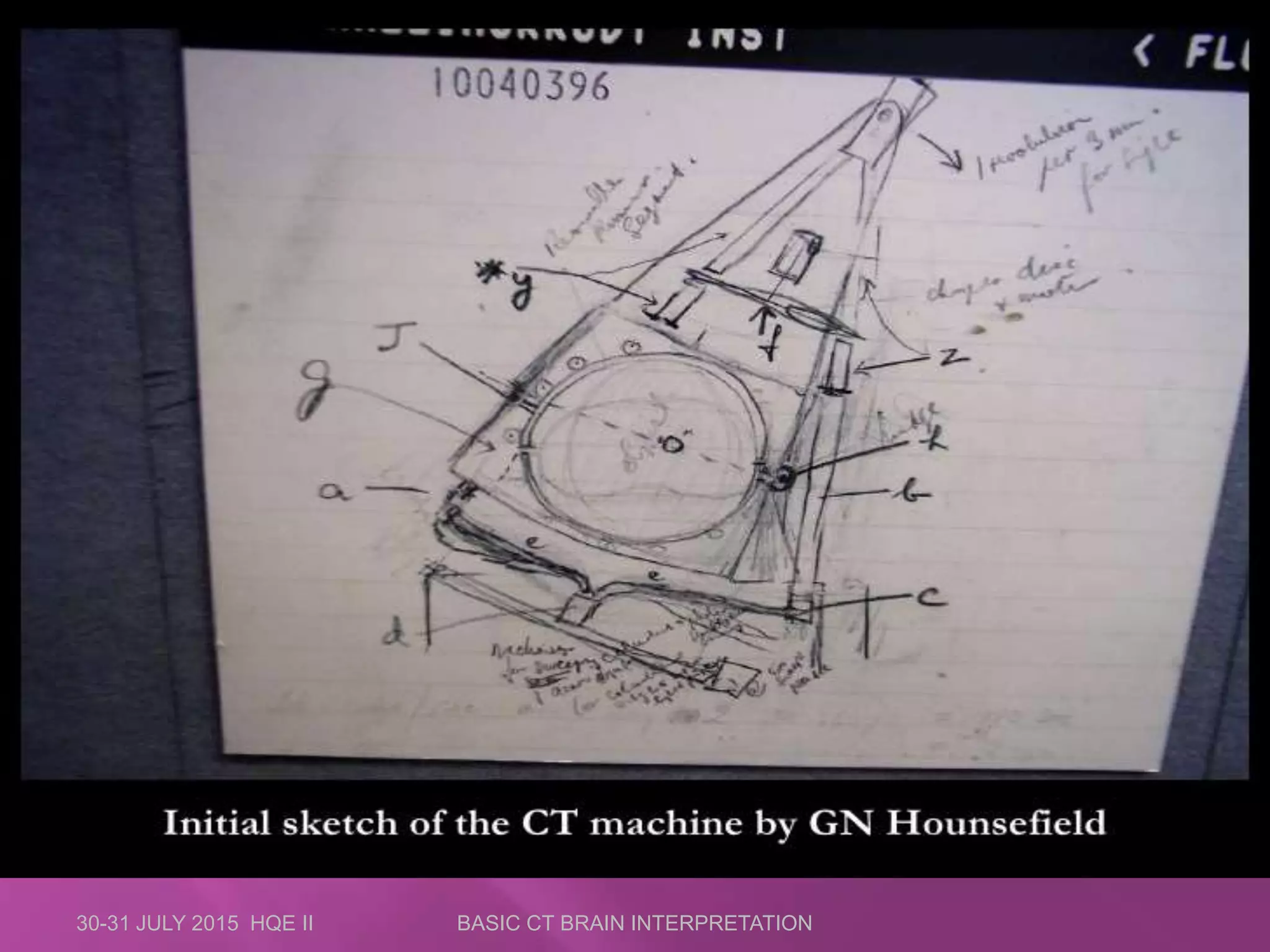
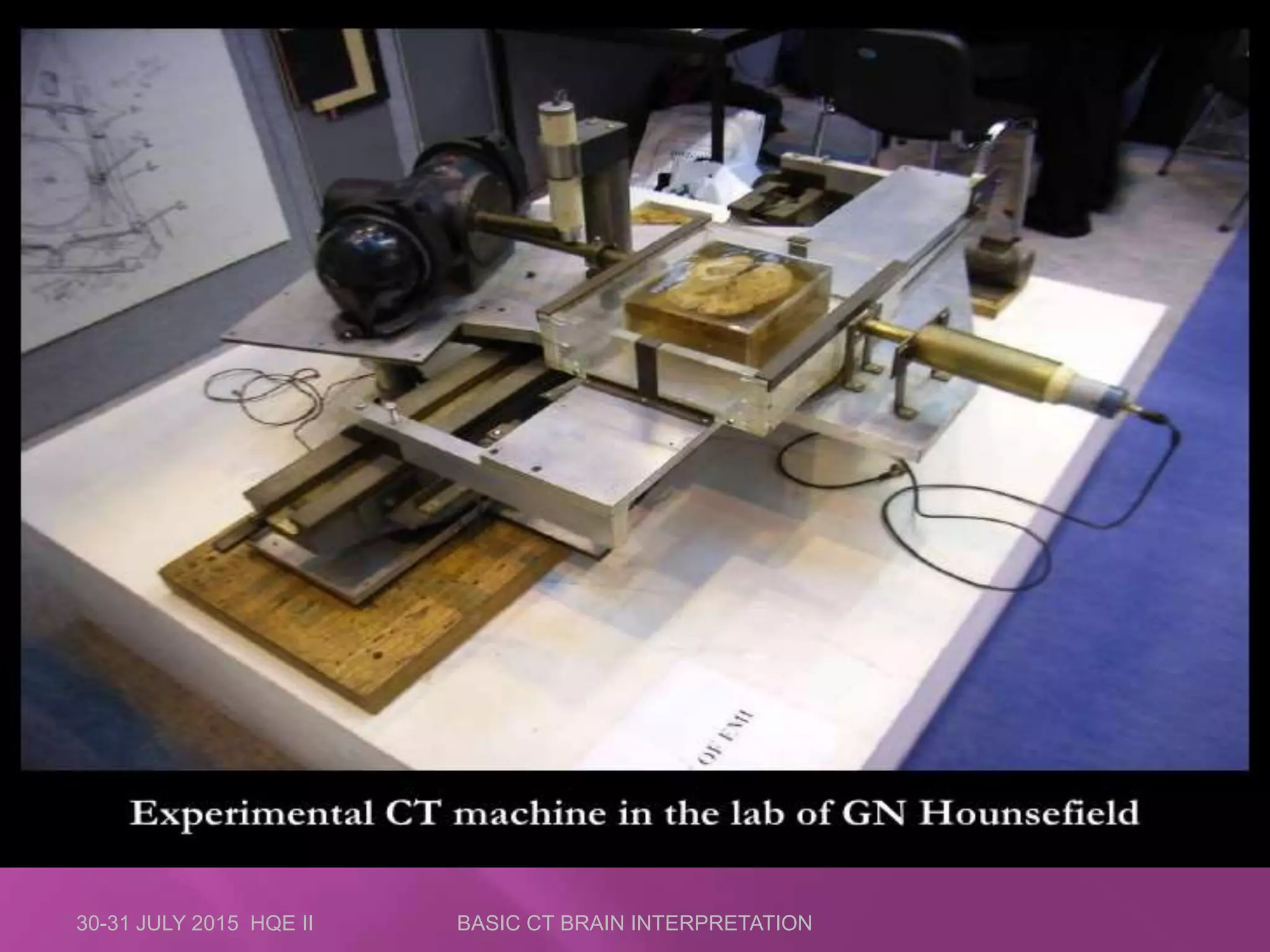
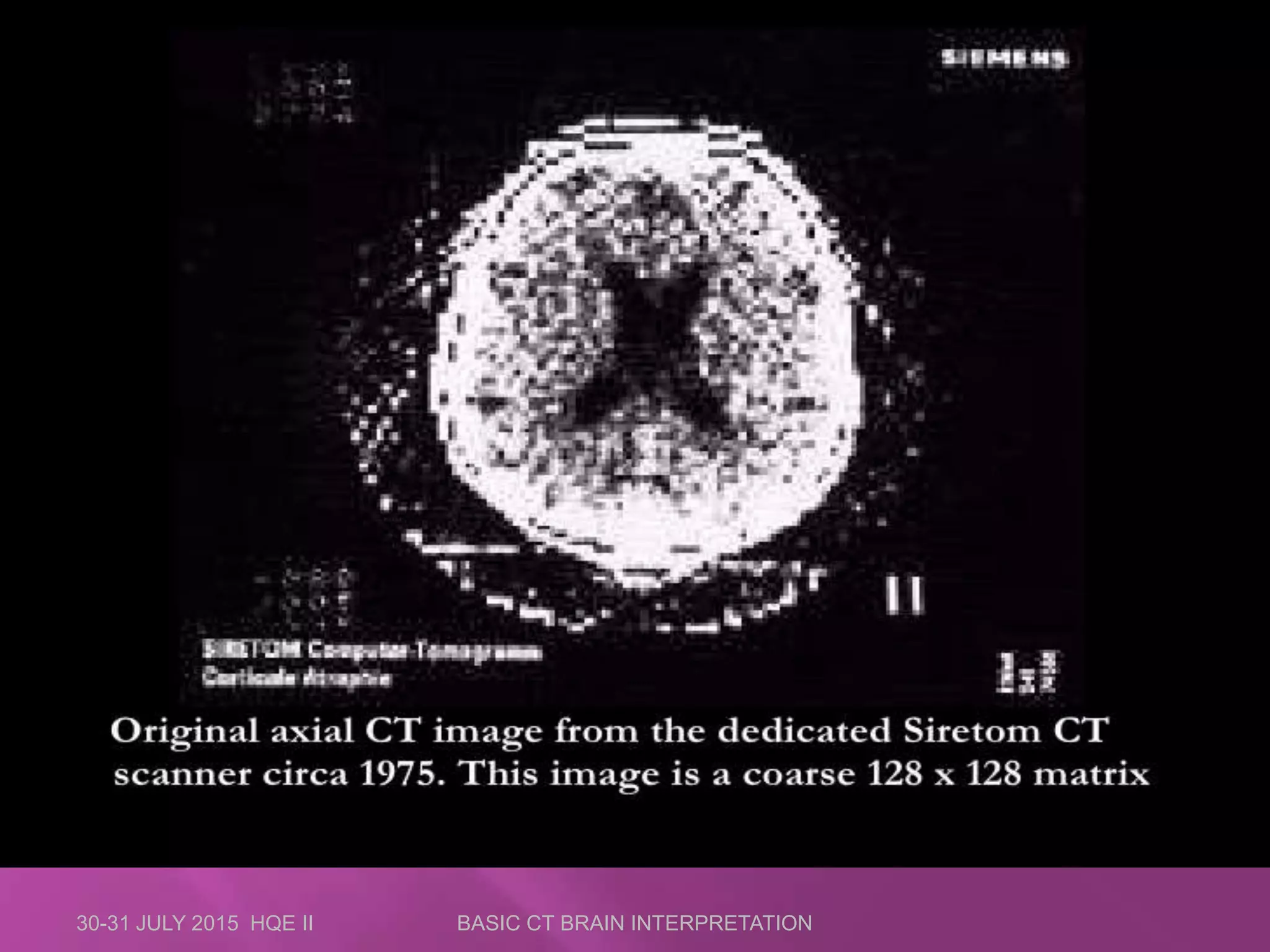
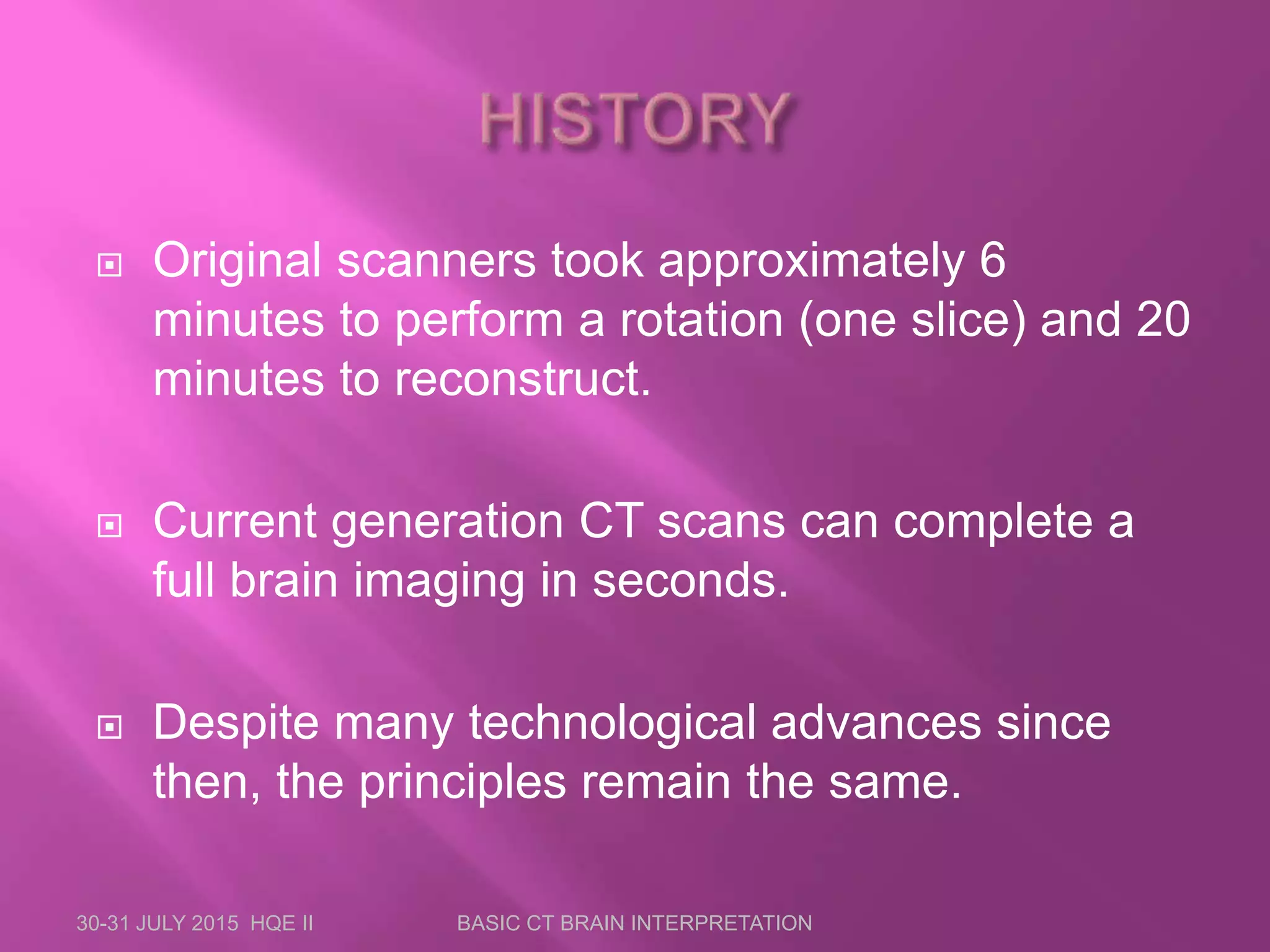
 Original scanners took approximately 6
minutes to perform a rotation (one slice) and 20
minutes to reconstruct.
 Current generation CT scans can complete a
full brain imaging in seconds.
 Despite many technological advances since
then, the principles remain the same.
30-31 JULY 2015 HQE II BASIC CT BRAIN INTERPRETATION
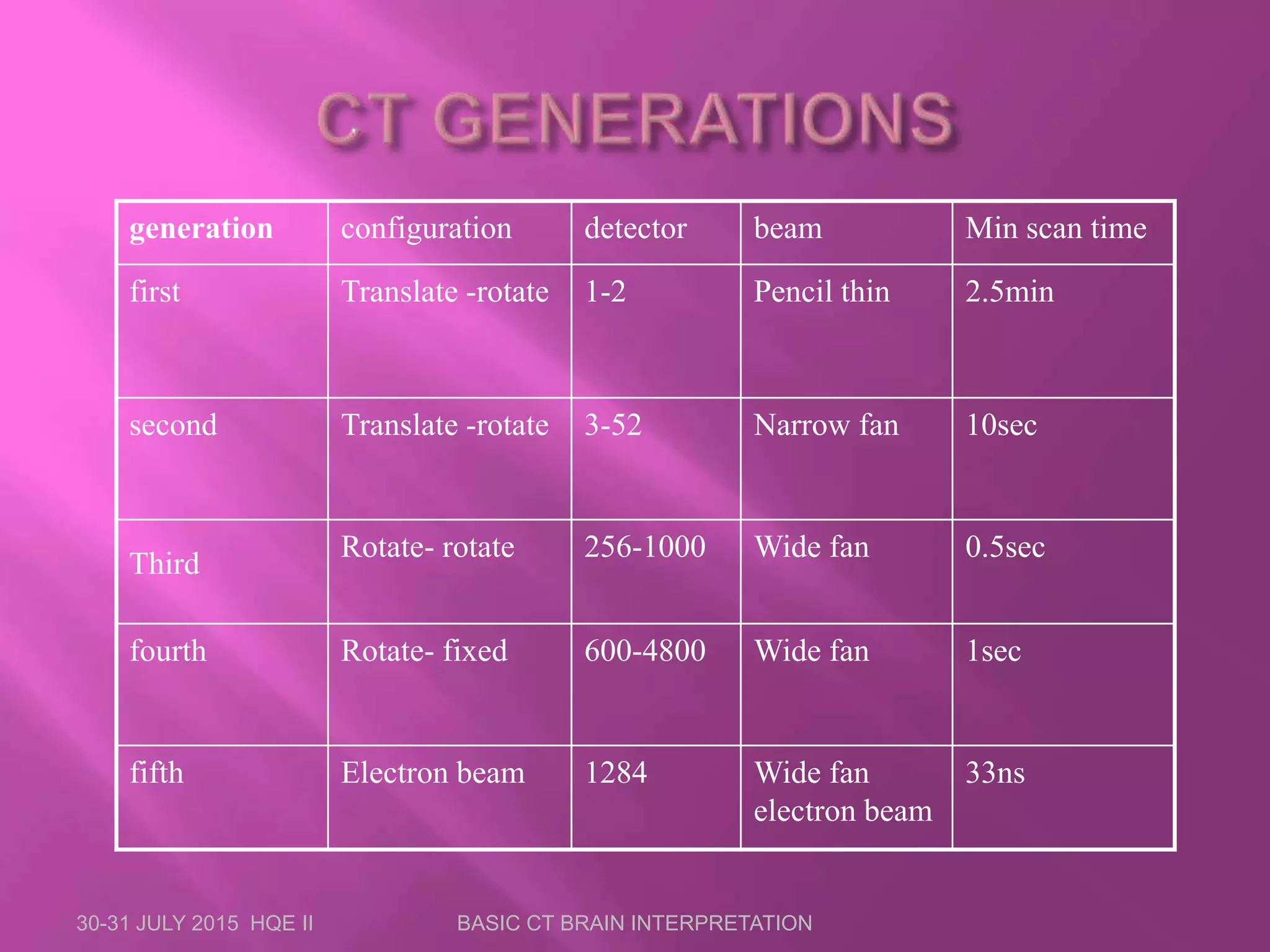
generation configuration detector beam Min scan time
first Translate -rotate 1-2 Pencil thin 2.5min
second Translate -rotate 3-52 Narrow fan 10sec
Third
Rotate- rotate 256-1000 Wide fan 0.5sec
fourth Rotate- fixed 600-4800 Wide fan 1sec
fifth Electron beam 1284 Wide fan
electron beam
33ns
30-31 JULY 2015 HQE II BASIC CT BRAIN INTERPRETATION
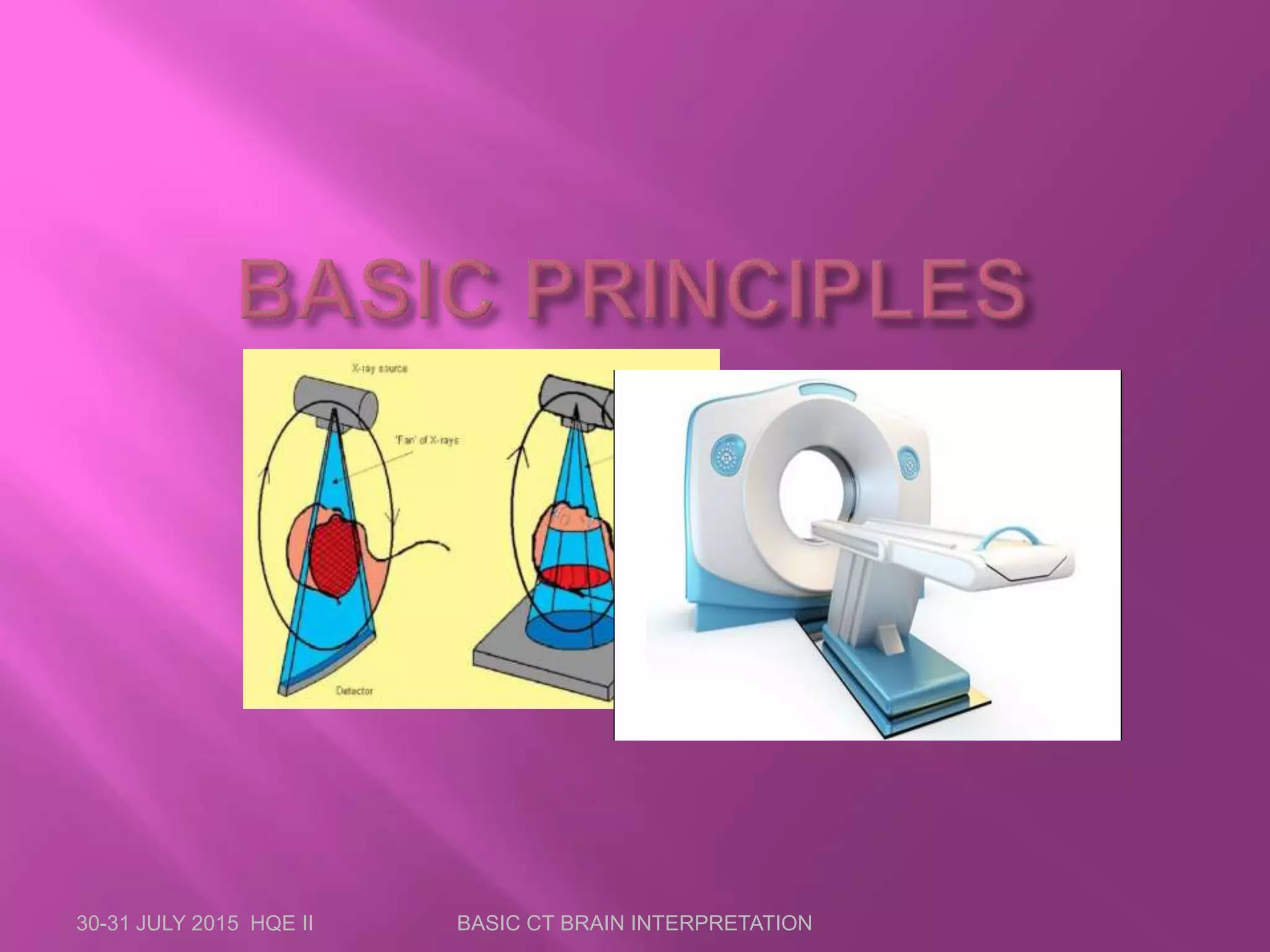
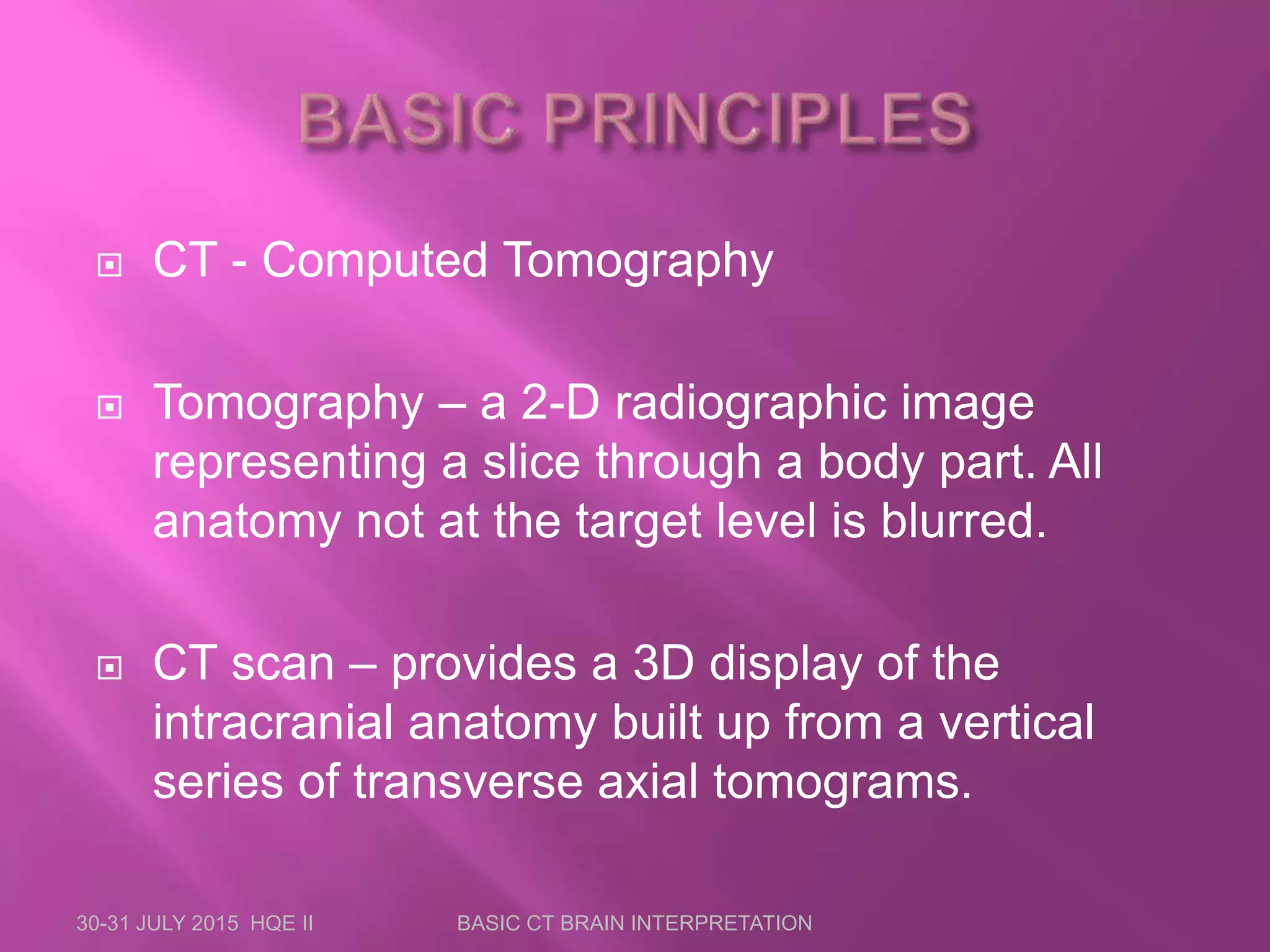
 CT - Computed Tomography
 Tomography – a 2-D radiographic image
representing a slice through a body part. All
anatomy not at the target level is blurred.
 CT scan – provides a 3D display of the
intracranial anatomy built up from a vertical
series of transverse axial tomograms.
30-31 JULY 2015 HQE II BASIC CT BRAIN INTERPRETATION
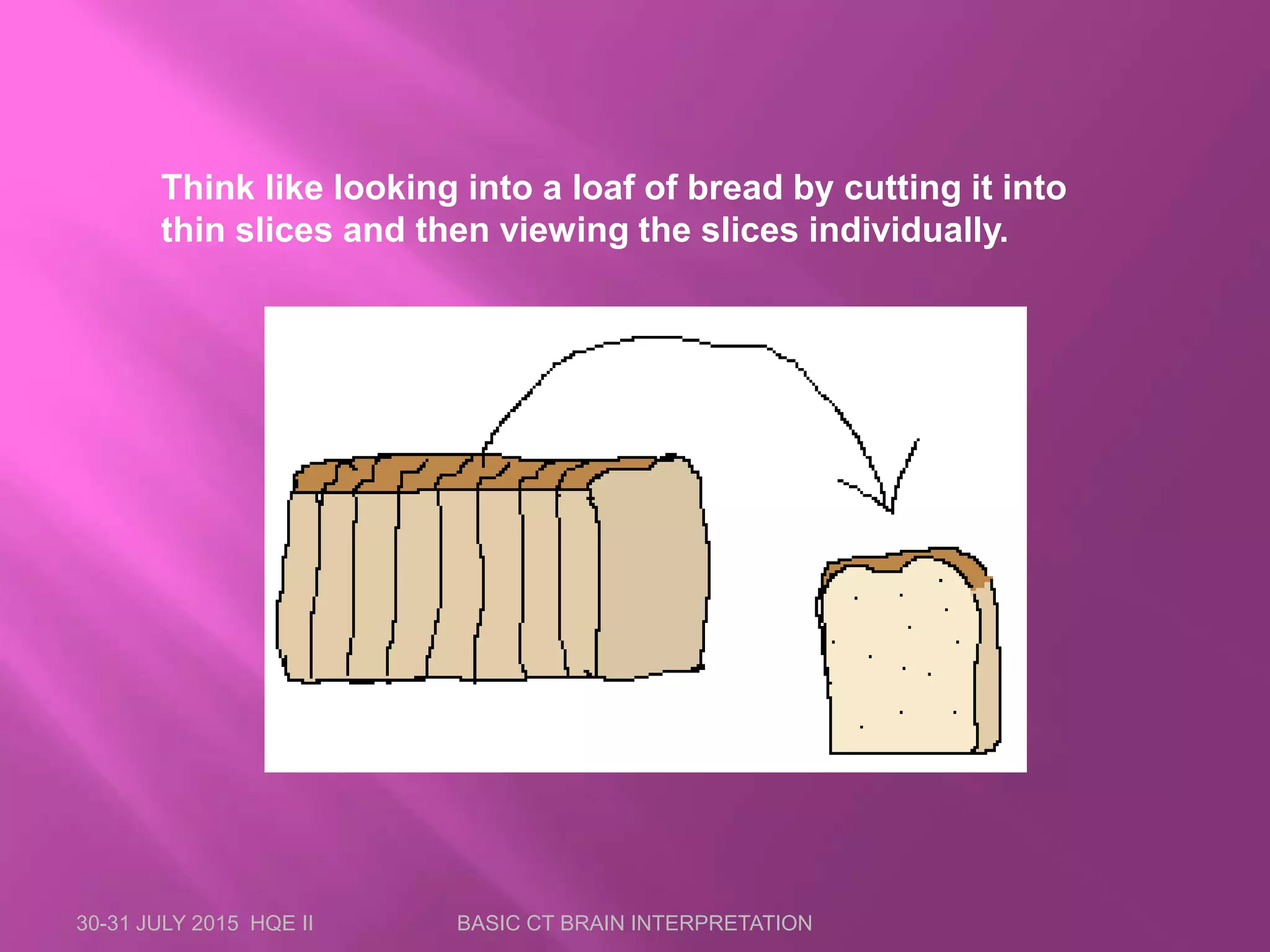
Think like looking into a loaf of bread by cutting it into
thin slices and then viewing the slices individually.
 Each tomogram represents a horizontal slice
through the patient’s head.
 CT Scan combines X-Rays and detectors
coupled with a computer to create cross
sectional image of any part of the body.
30-31 JULY 2015 HQE II BASIC CT BRAIN INTERPRETATION
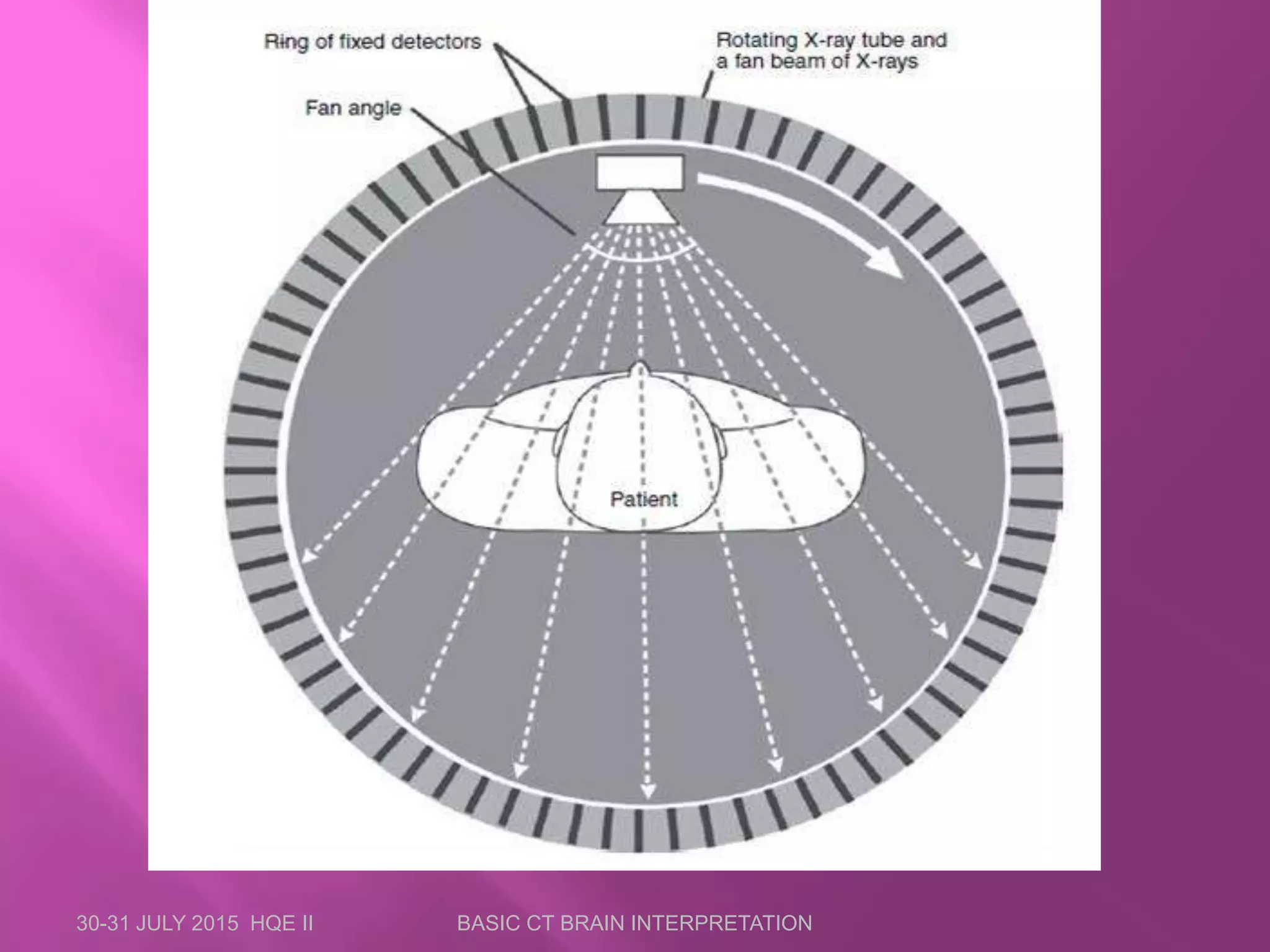
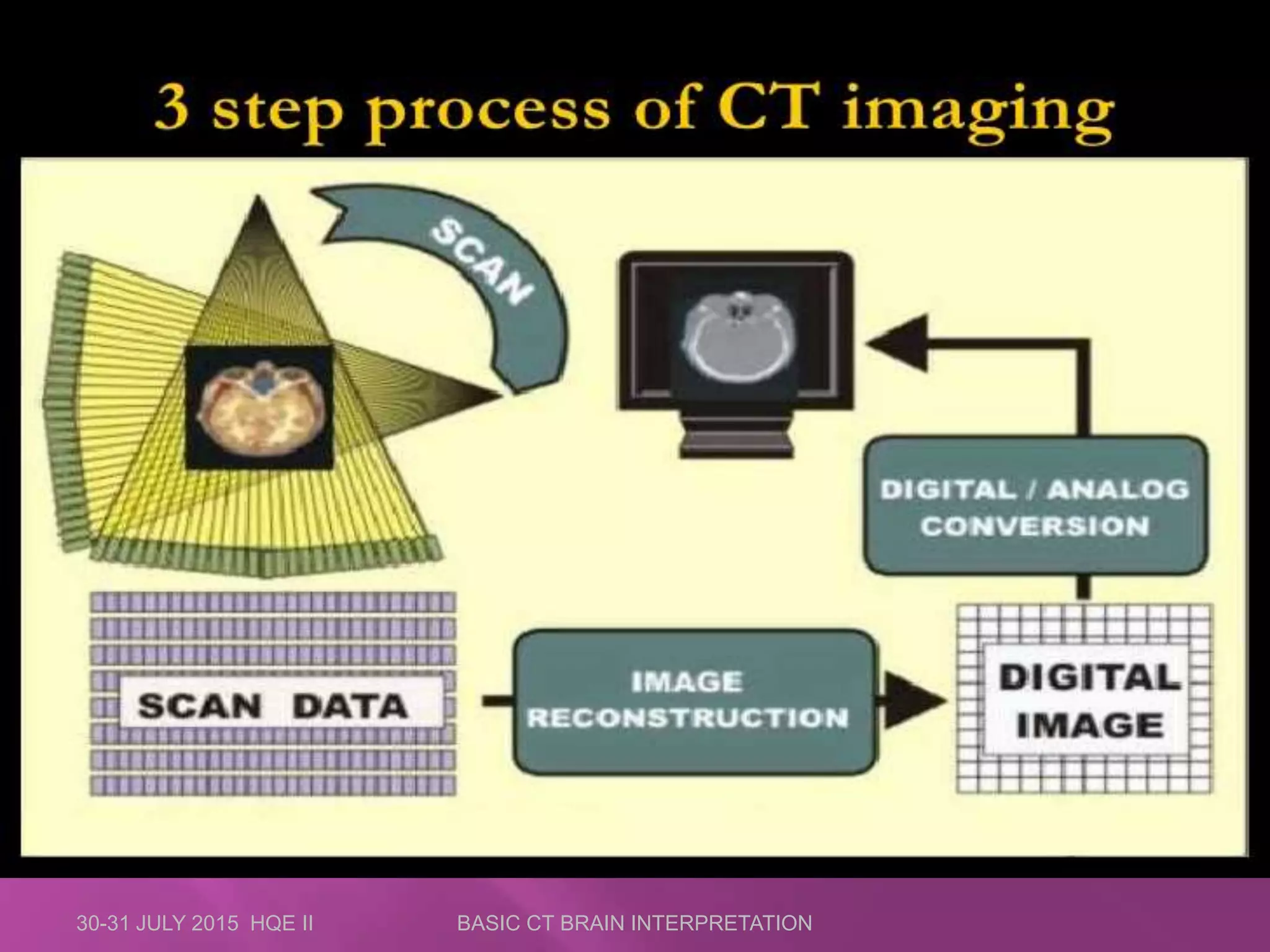
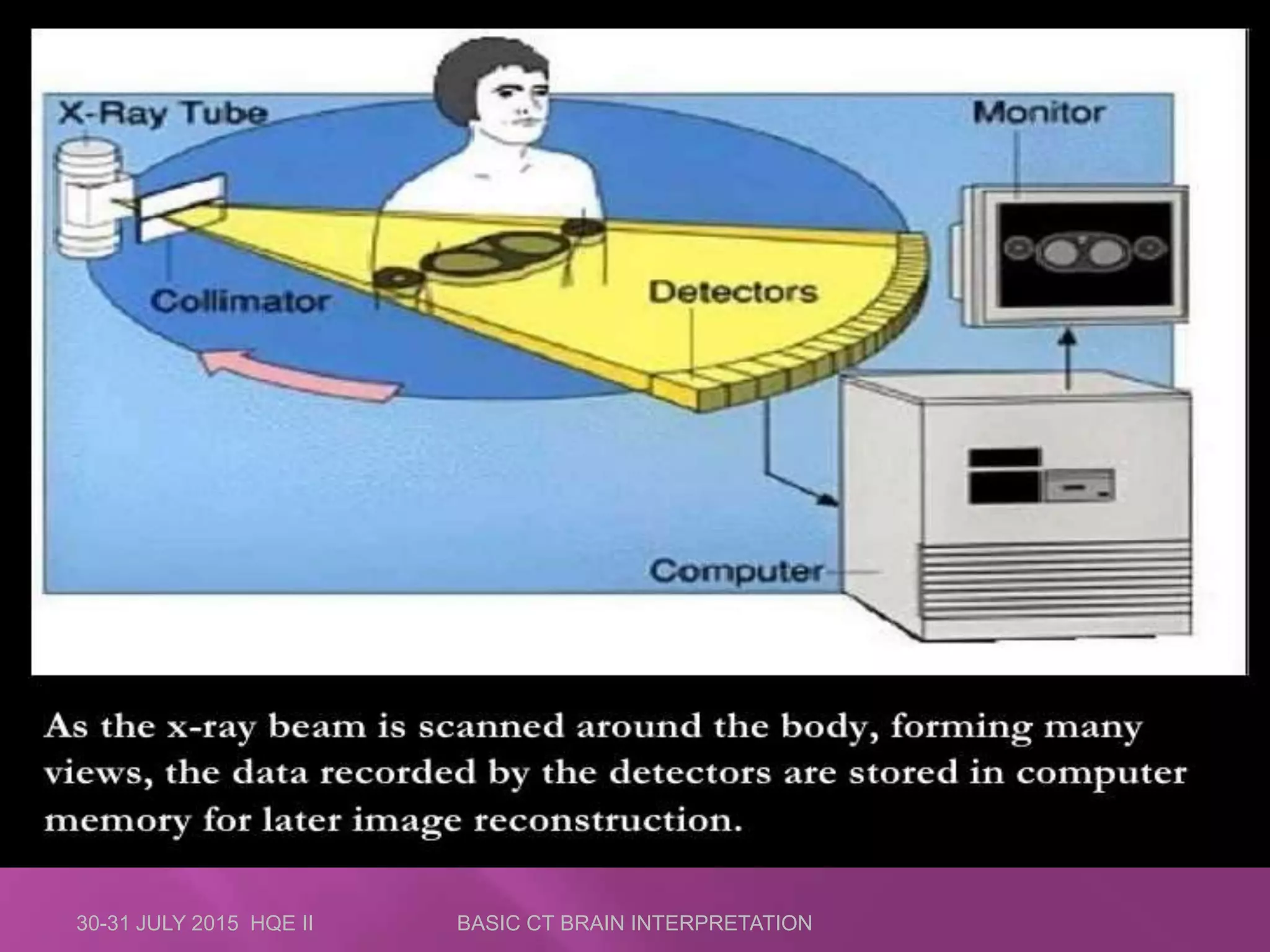
 CT X-Ray beams moves around the patient in
a circular path.
 The transmitted X-rays are received and
absorbed by arrays of detectors across the
patient on the opposite side of the circle from
the X-Ray source.
 Images are then reconstructed from the X-ray
absorption data using mathemathical
processes.
30-31 JULY 2015 HQE II BASIC CT BRAIN INTERPRETATION
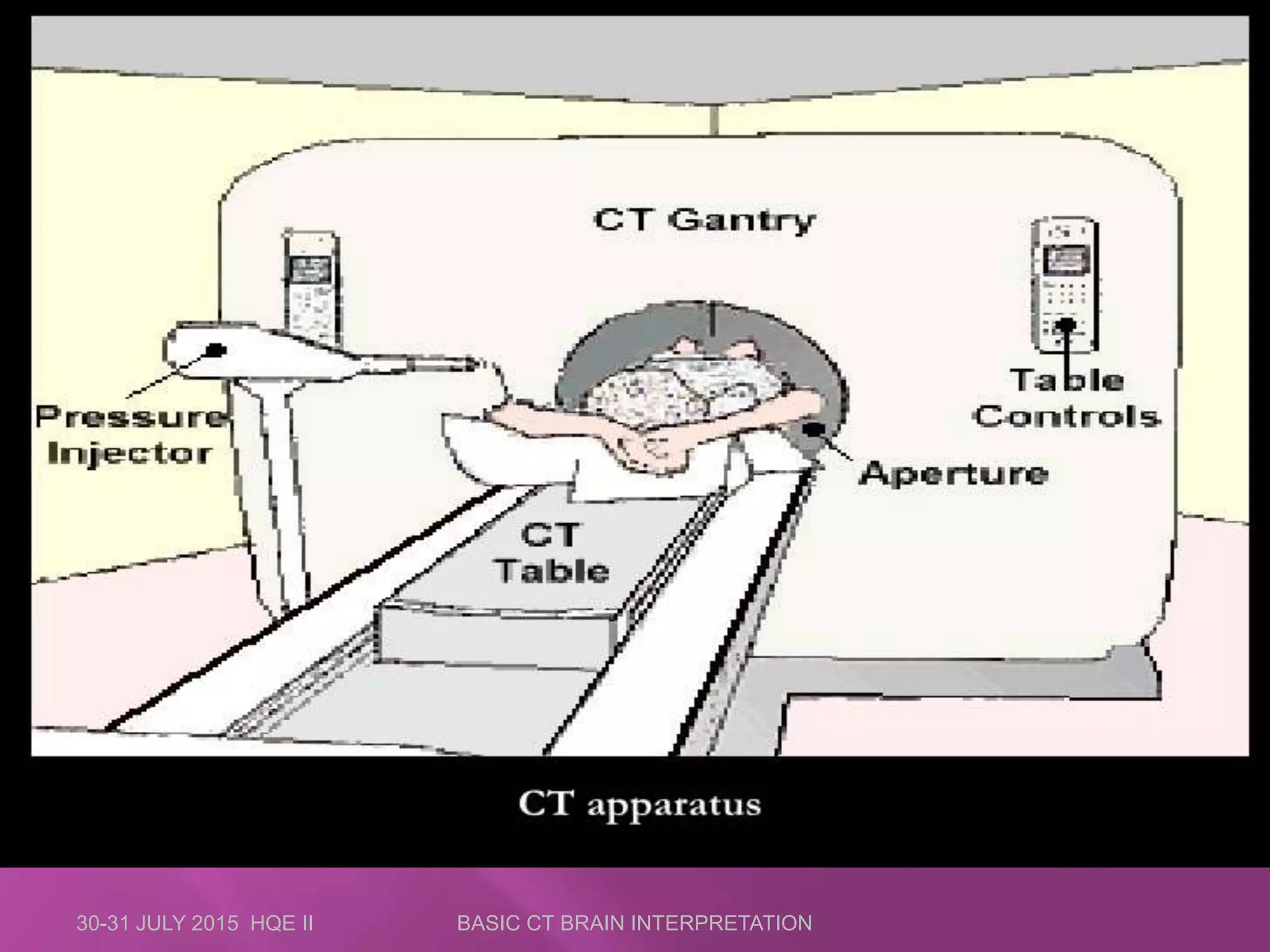
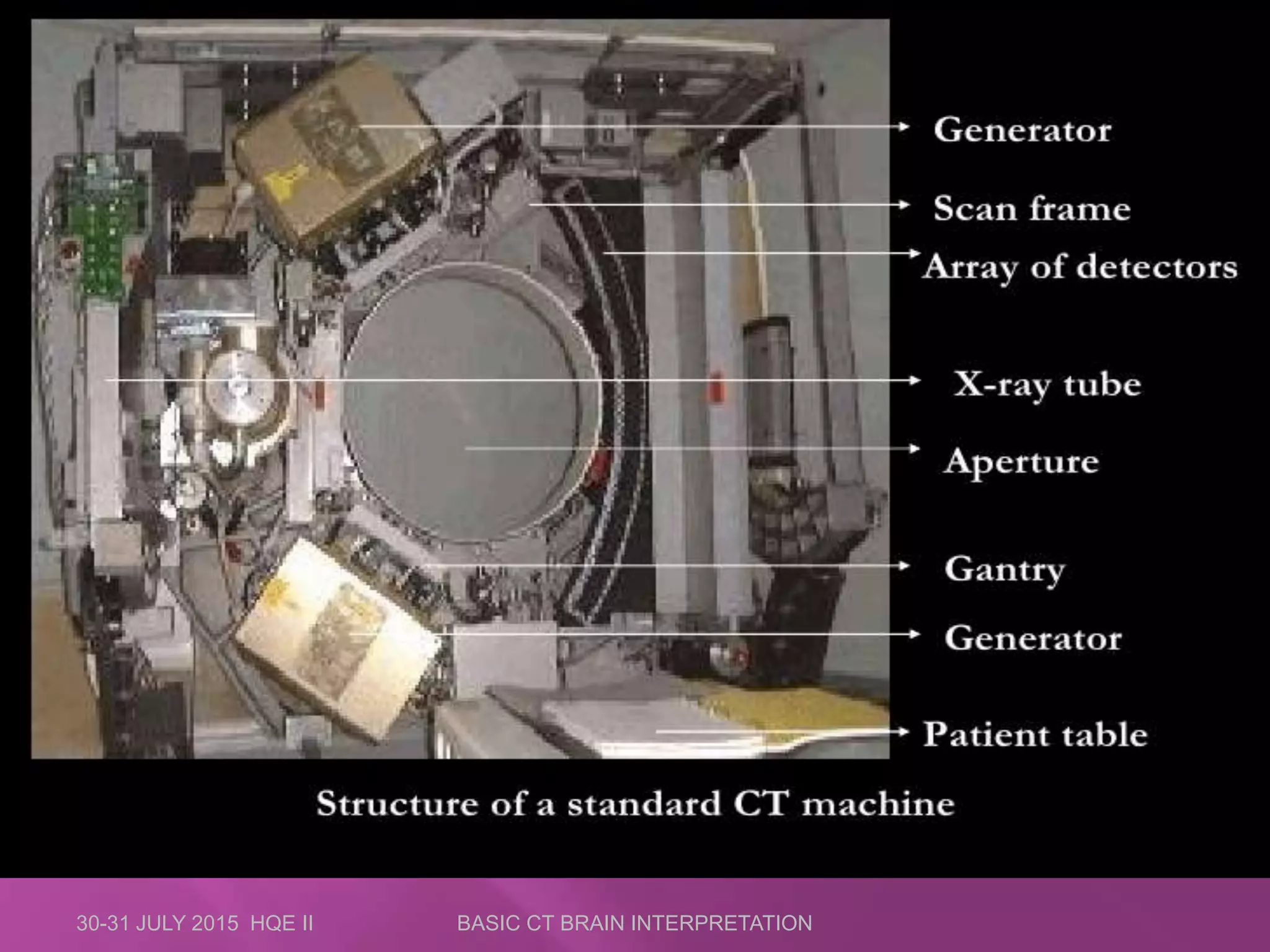
 Gantry
1. X-Ray tube
2. Generators
3. Collimators & Filters
4. Detector arrays & DAS
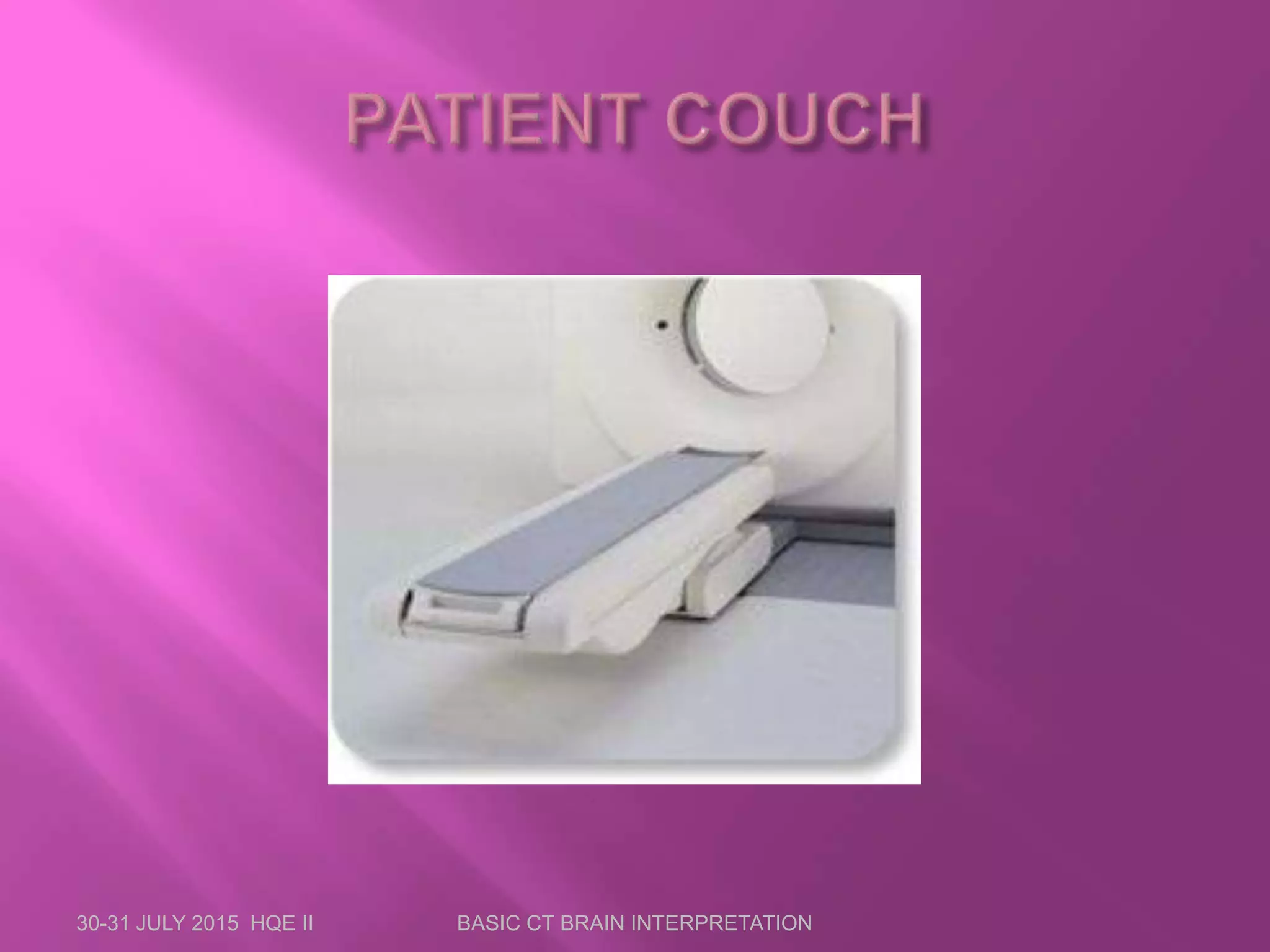
 Patient couch
 Computer console
30-31 JULY 2015 HQE II BASIC CT BRAIN INTERPRETATION
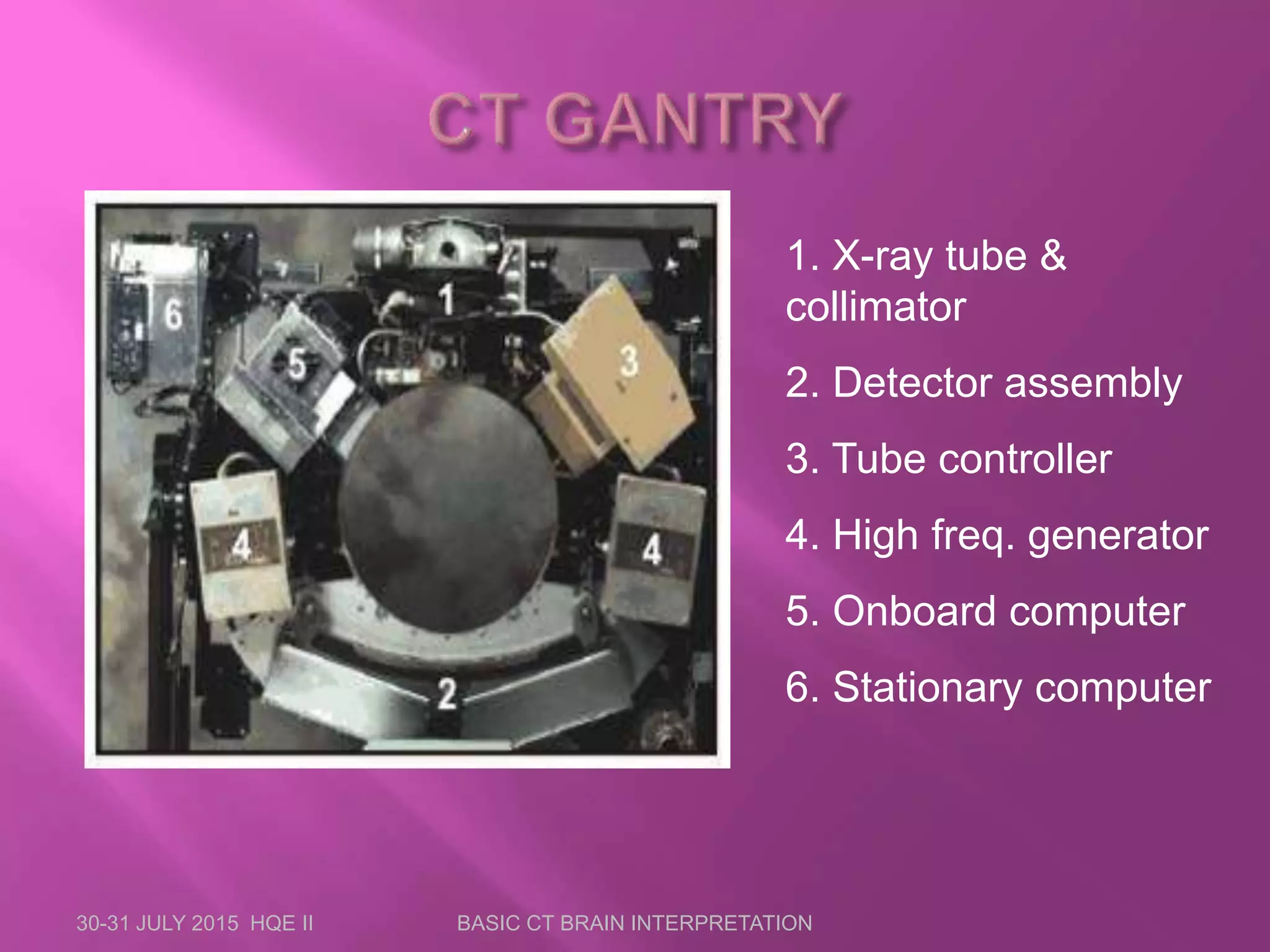
1. X-ray tube &
collimator
2. Detector assembly
3. Tube controller
4. High freq. generator
5. Onboard computer
6. Stationary computer
30-31 JULY 2015 HQE II BASIC CT BRAIN INTERPRETATION
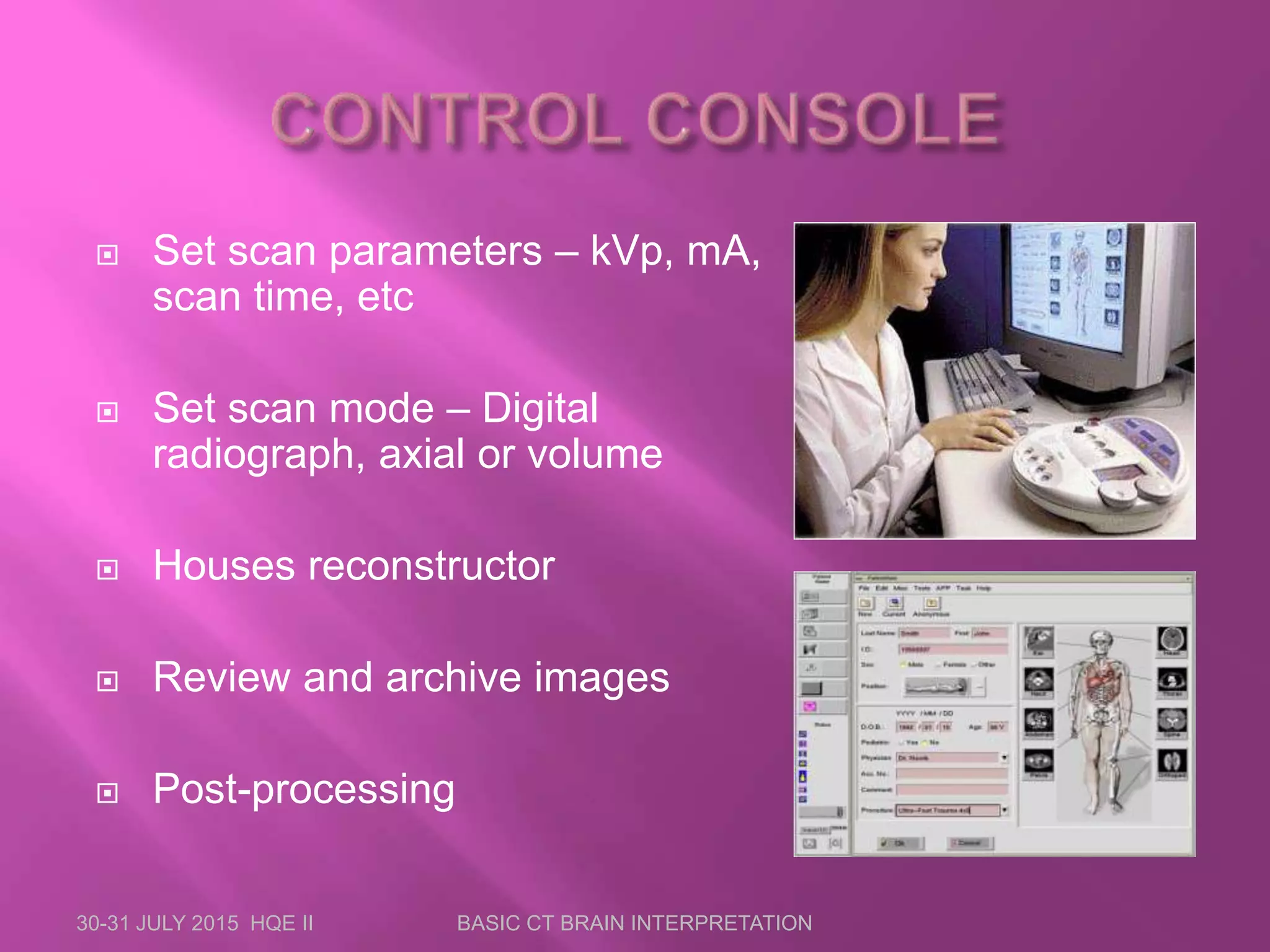
 Set scan parameters – kVp, mA,
scan time, etc
 Set scan mode – Digital
radiograph, axial or volume
 Houses reconstructor
 Review and archive images
 Post-processing
30-31 JULY 2015 HQE II BASIC CT BRAIN INTERPRETATION
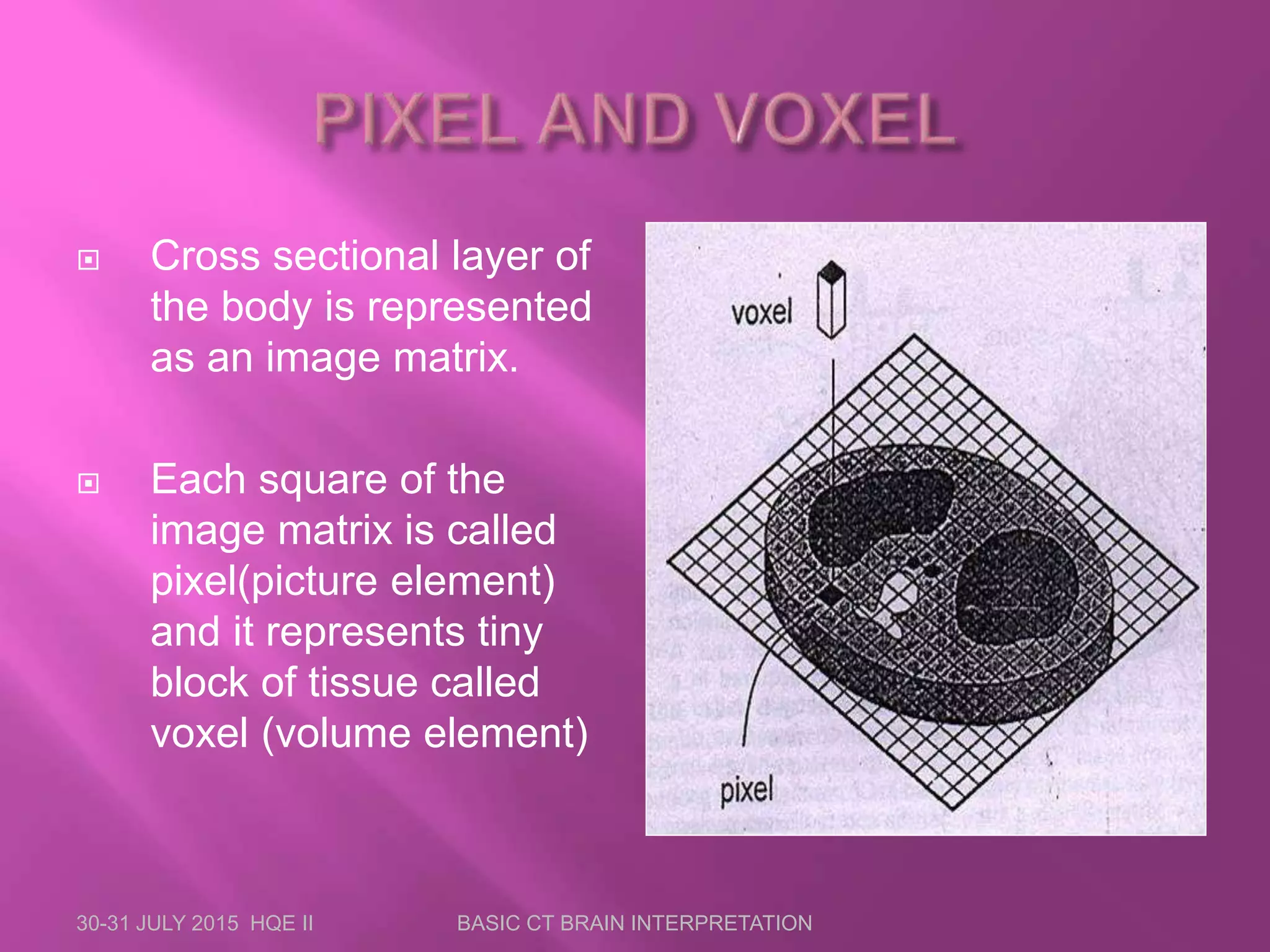
 Cross sectional layer of
the body is represented
as an image matrix.
 Each square of the
image matrix is called
pixel(picture element)
and it represents tiny
block of tissue called
voxel (volume element)
30-31 JULY 2015 HQE II BASIC CT BRAIN INTERPRETATION
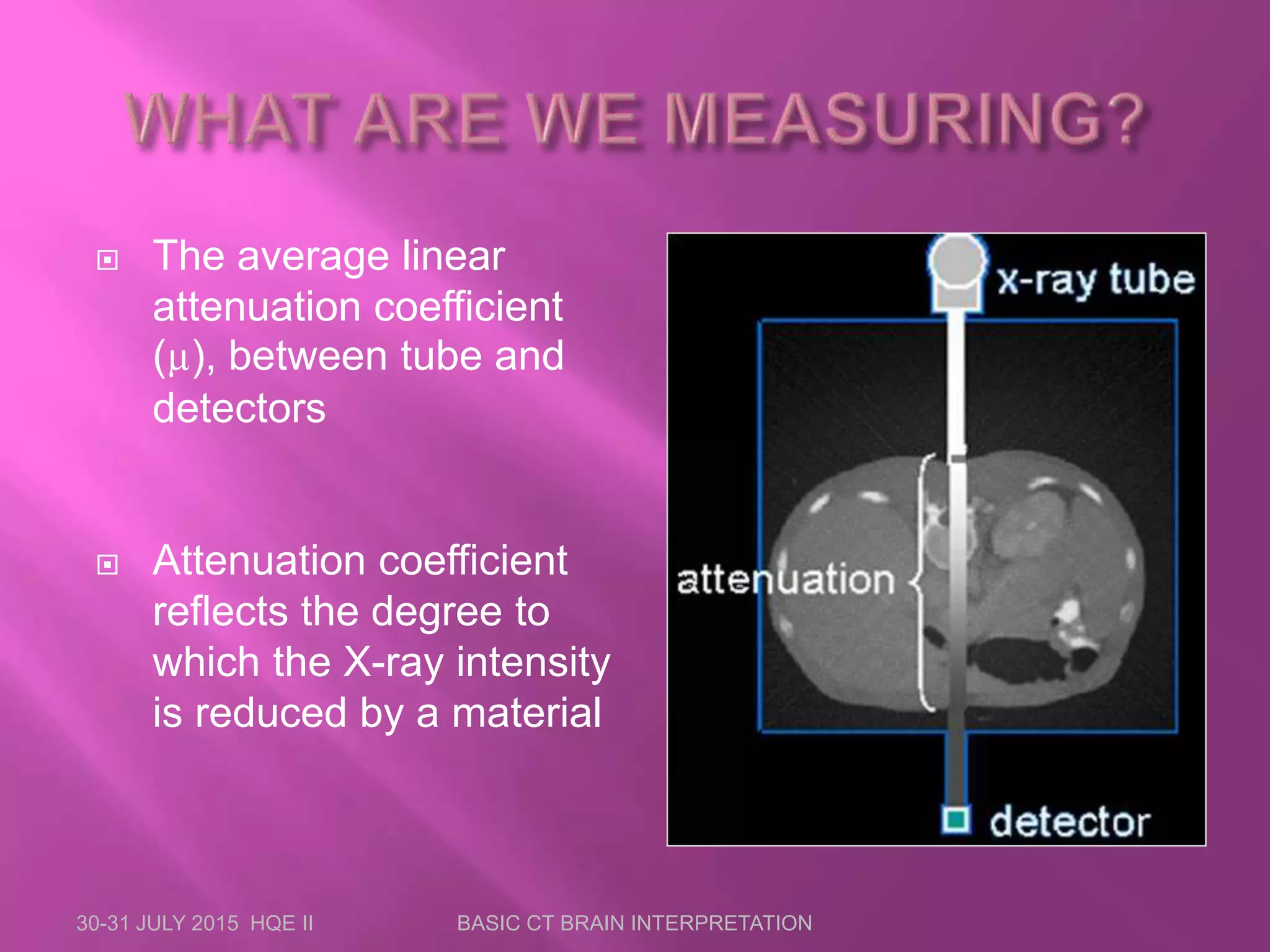
 The average linear
attenuation coefficient
(µ), between tube and
detectors
 Attenuation coefficient
reflects the degree to
which the X-ray intensity
is reduced by a material
30-31 JULY 2015 HQE II BASIC CT BRAIN INTERPRETATION
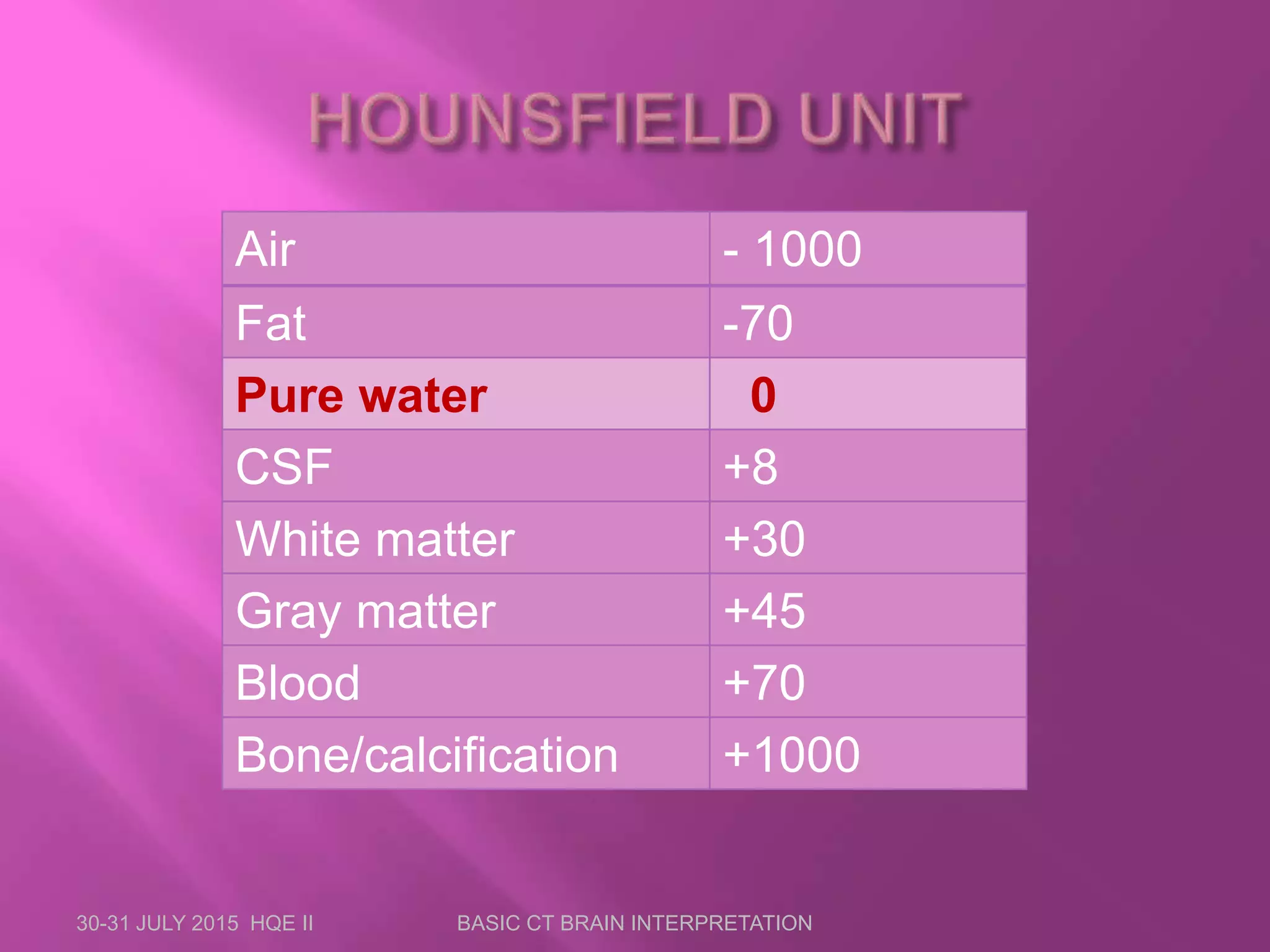
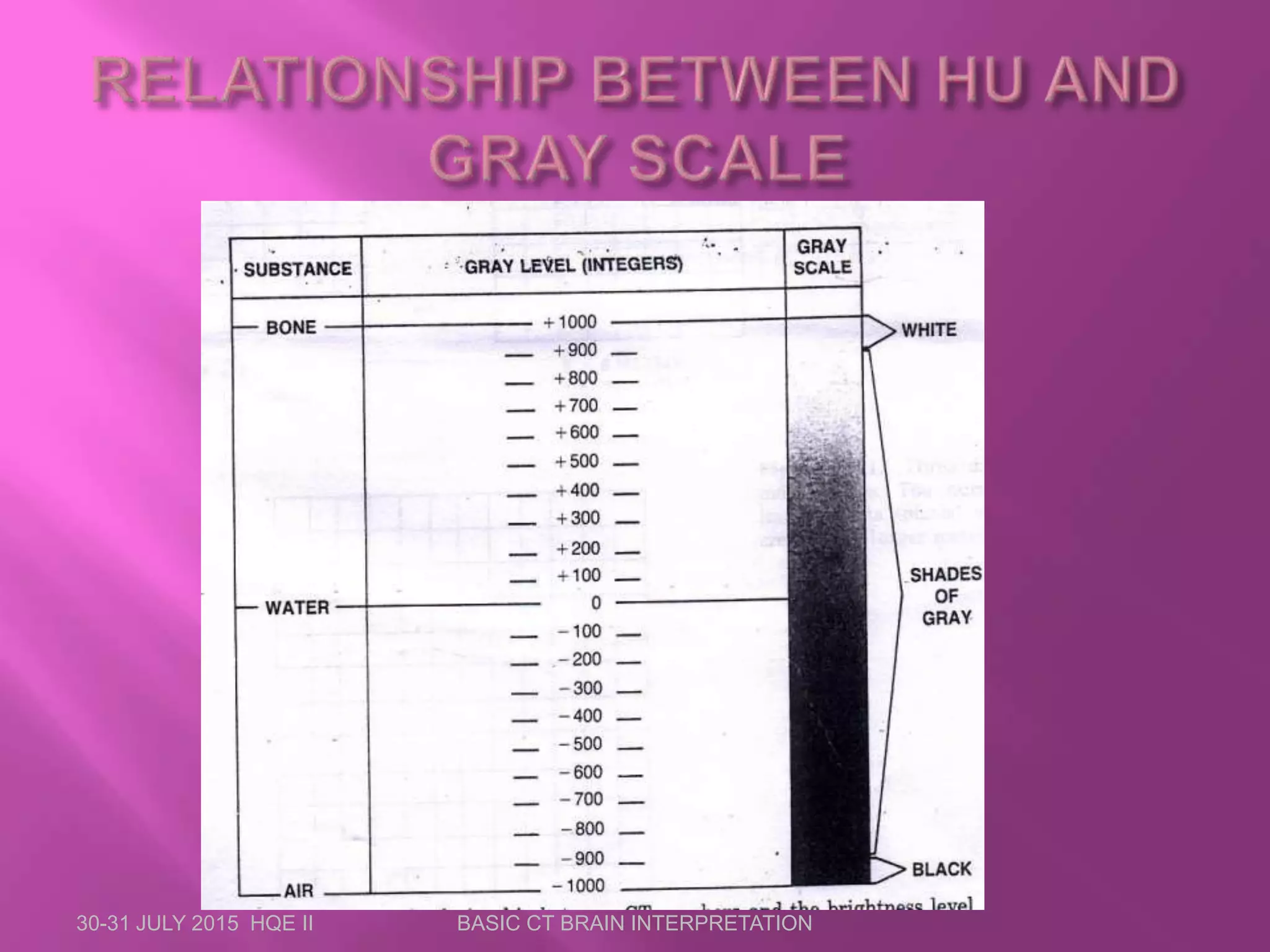
Air - 1000
Fat -70
Pure water 0
CSF +8
White matter +30
Gray matter +45
Blood +70
Bone/calcification +1000
30-31 JULY 2015 HQE II BASIC CT BRAIN INTERPRETATION
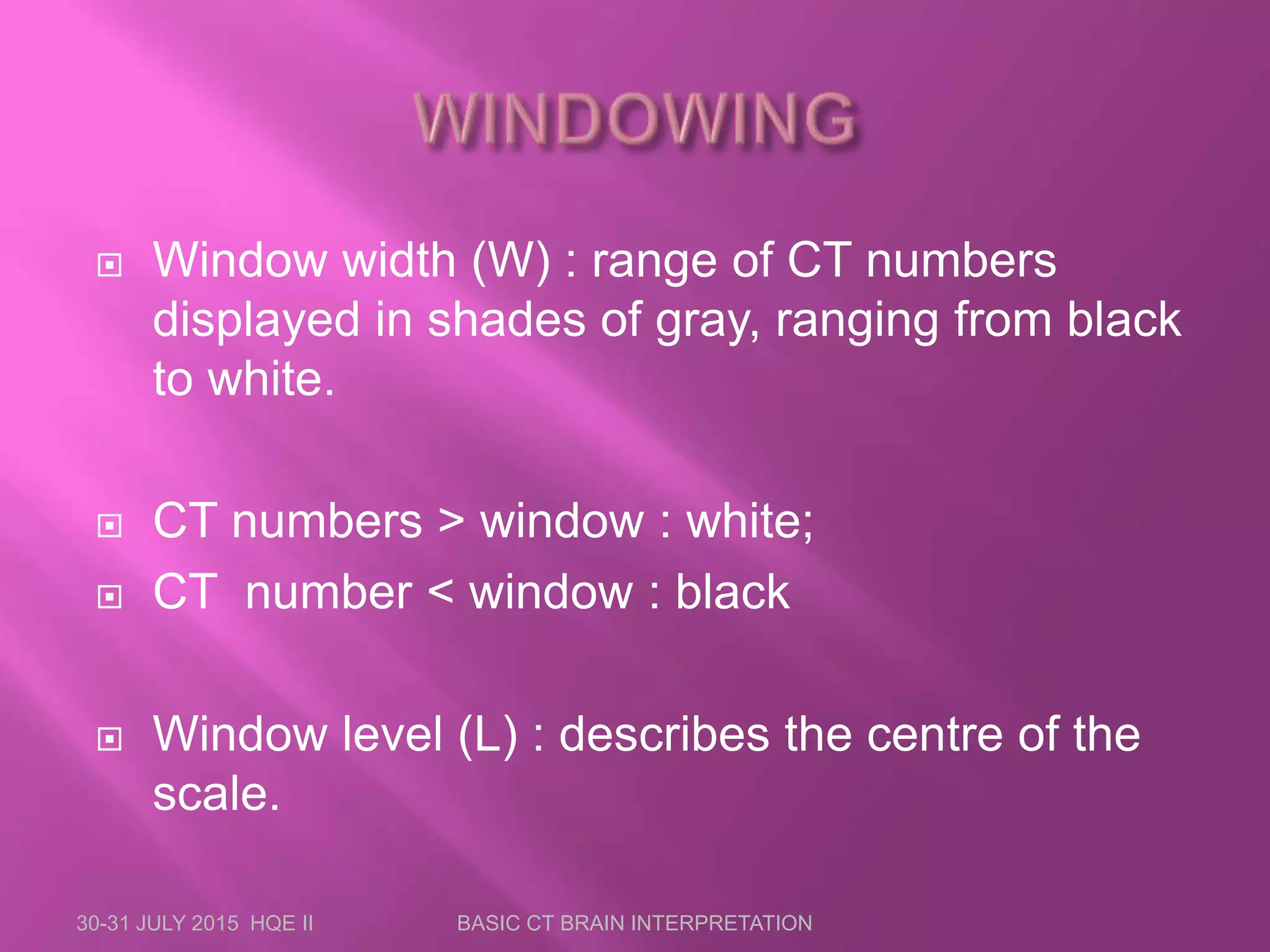
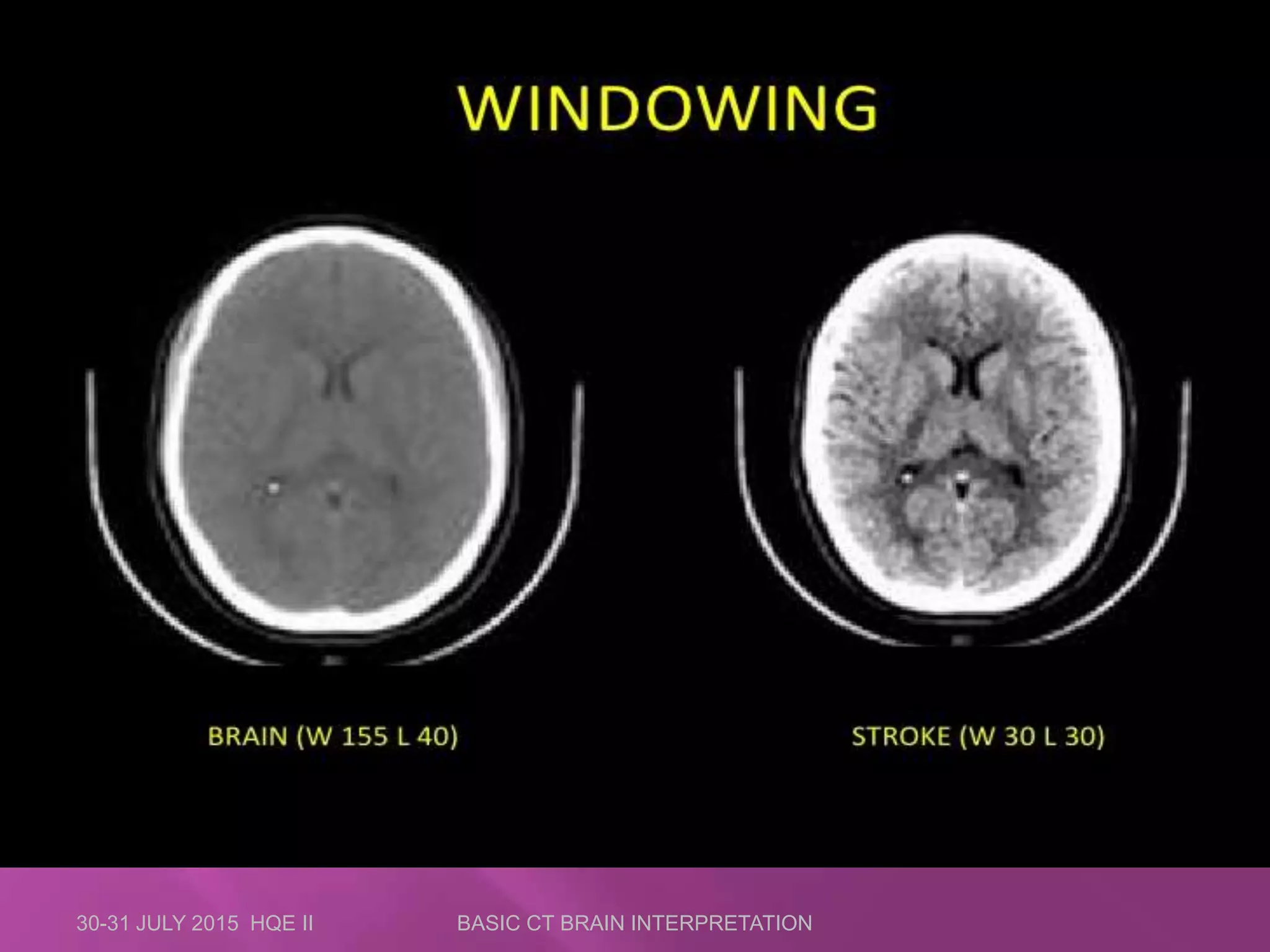
 Window width (W) : range of CT numbers
displayed in shades of gray, ranging from black
to white.
 CT numbers > window : white;
 CT number < window : black
 Window level (L) : describes the centre of the
scale.
30-31 JULY 2015 HQE II BASIC CT BRAIN INTERPRETATION
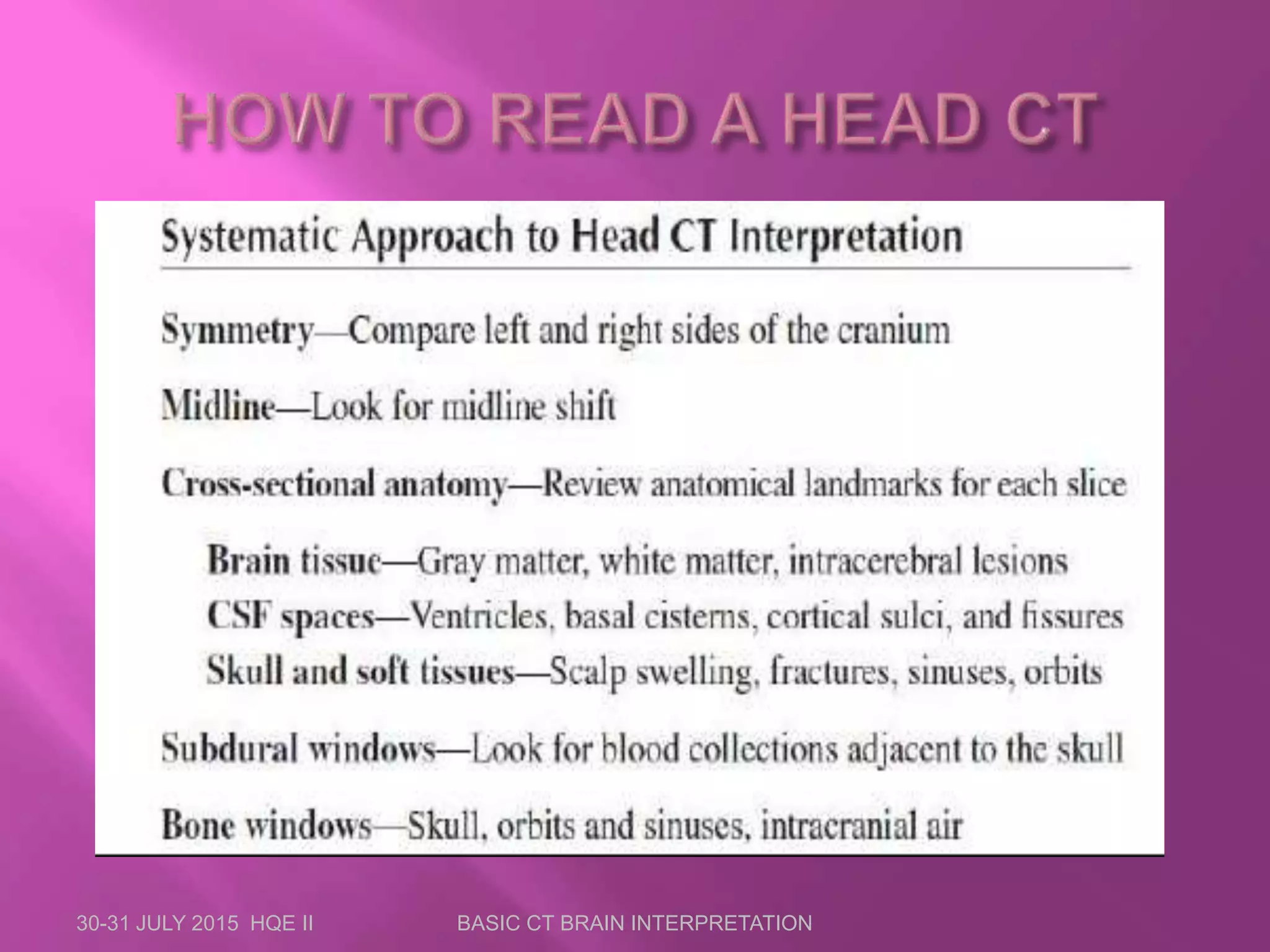
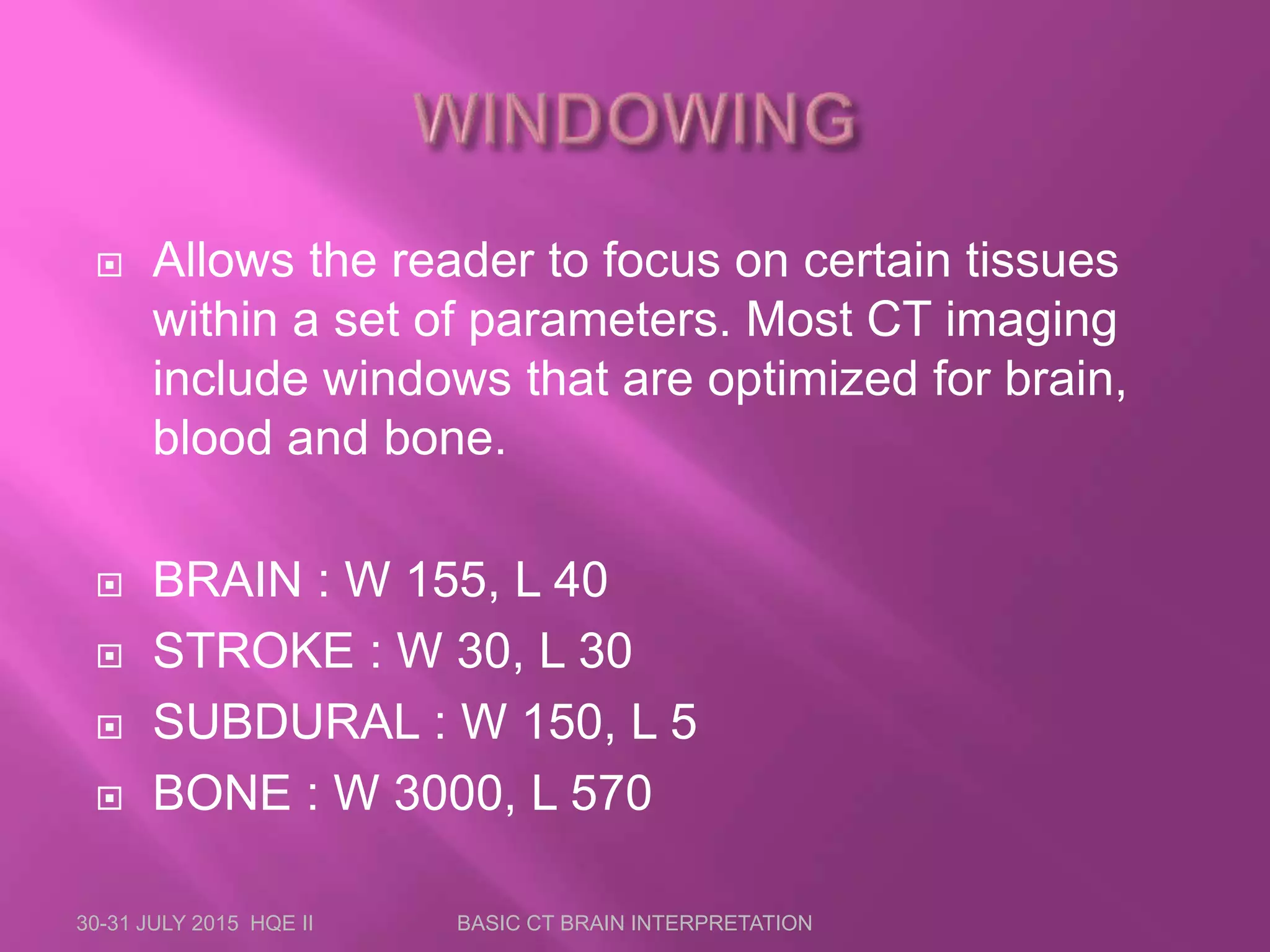
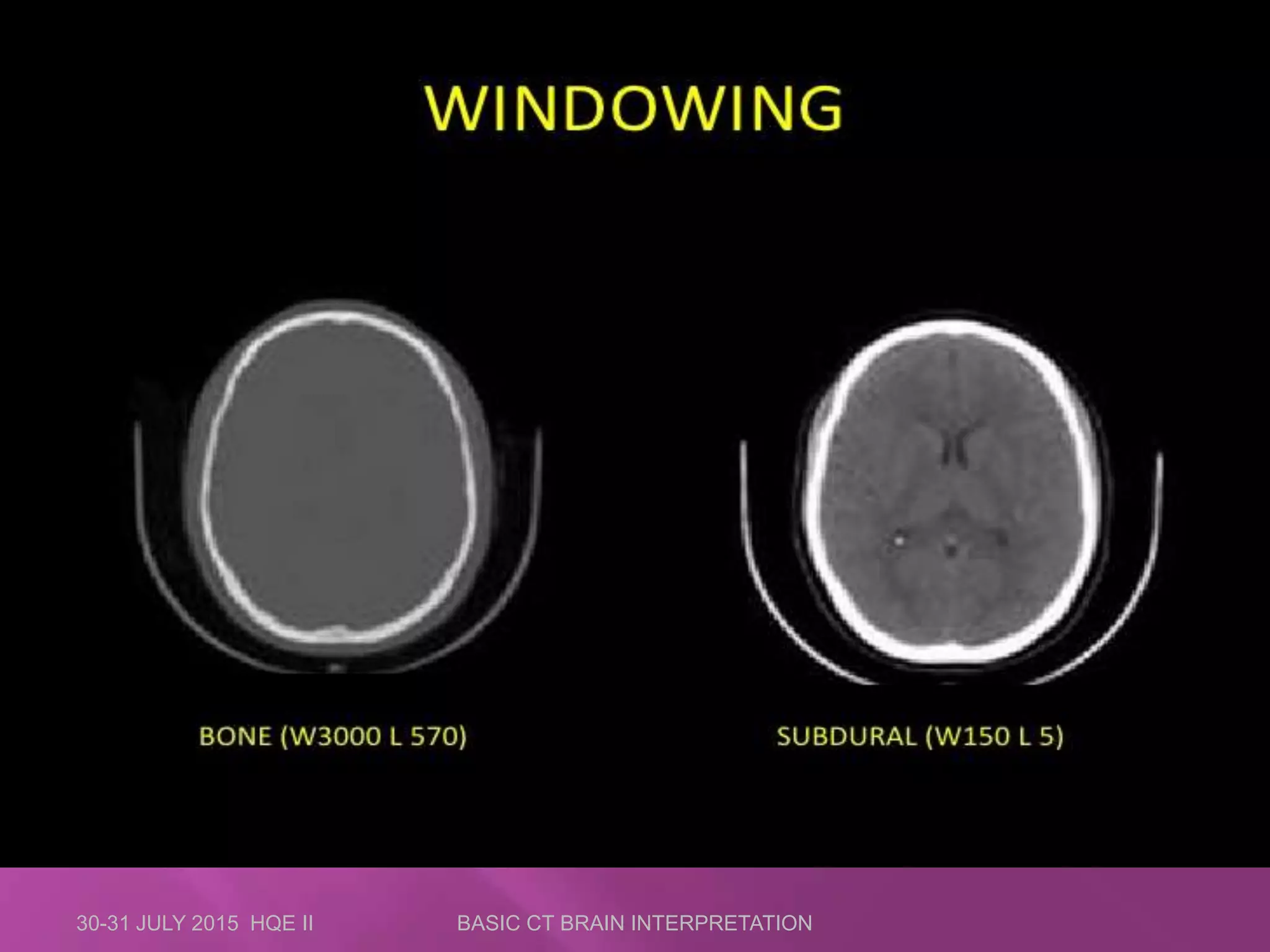
 Allows the reader to focus on certain tissues
within a set of parameters. Most CT imaging
include windows that are optimized for brain,
blood and bone.
 BRAIN : W 155, L 40
 STROKE : W 30, L 30
 SUBDURAL : W 150, L 5
 BONE : W 3000, L 570
30-31 JULY 2015 HQE II BASIC CT BRAIN INTERPRETATION
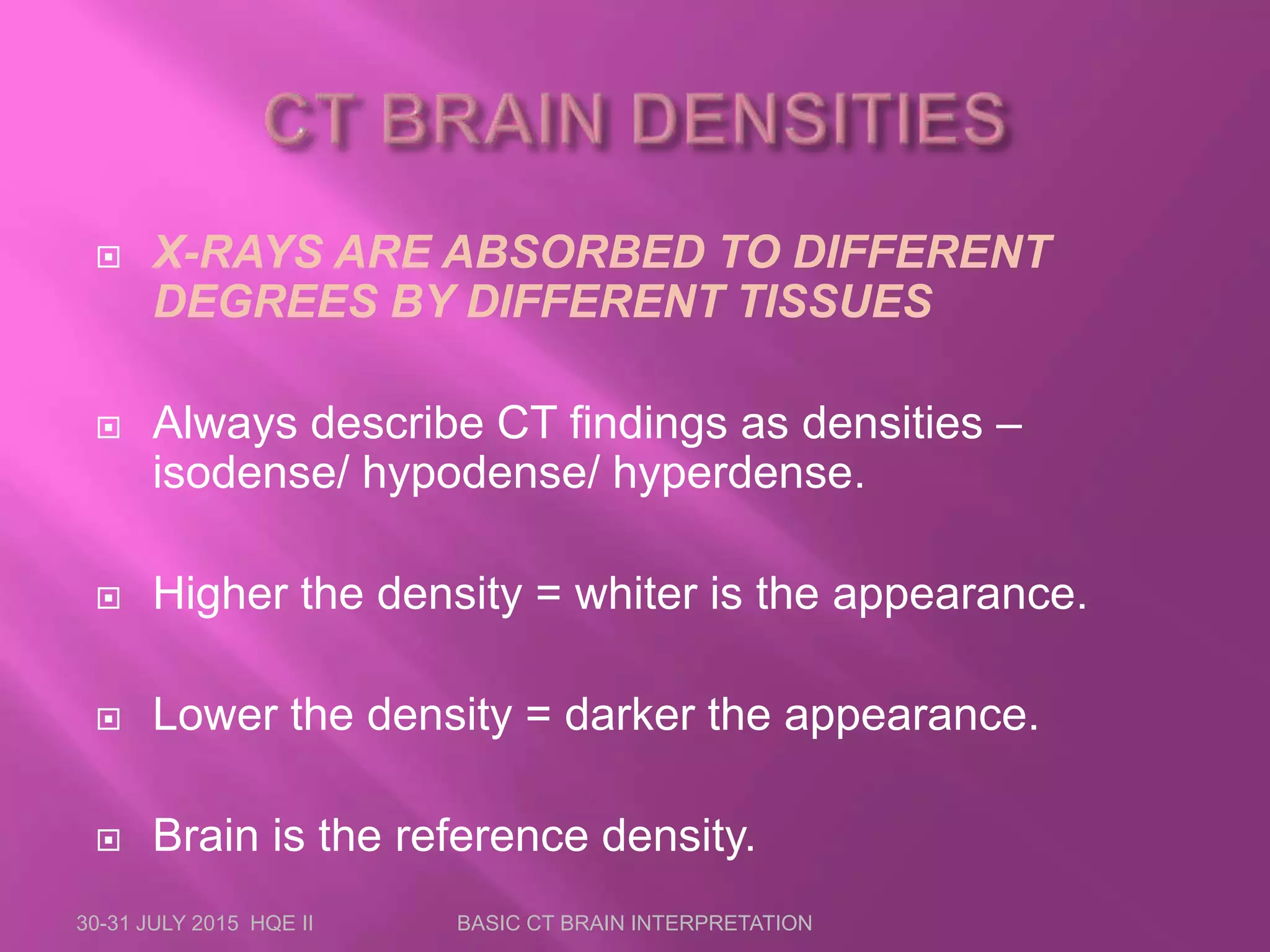
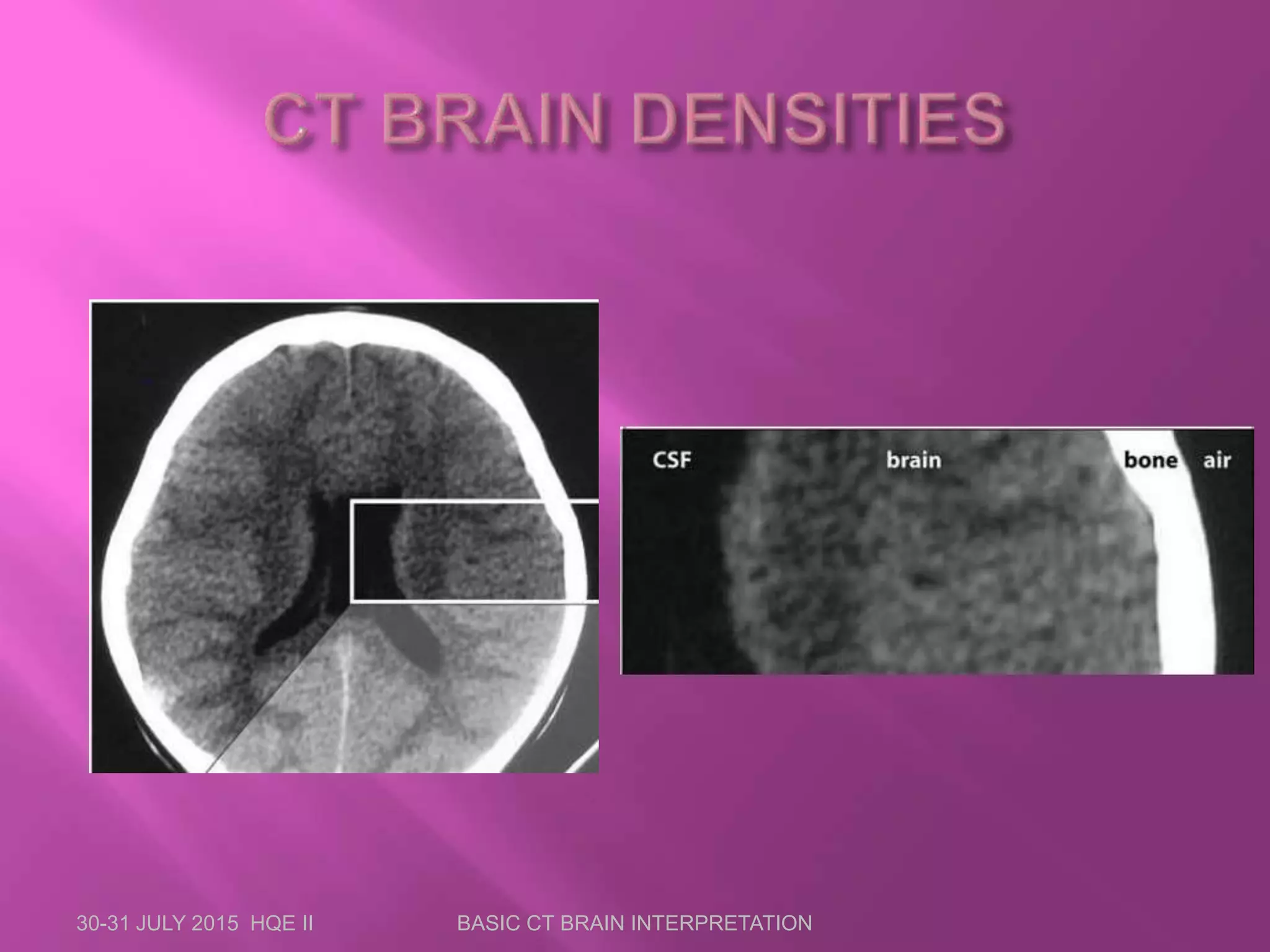
 X-RAYS ARE ABSORBED TO DIFFERENT
DEGREES BY DIFFERENT TISSUES
 Always describe CT findings as densities –
isodense/ hypodense/ hyperdense.
 Higher the density = whiter is the appearance.
 Lower the density = darker the appearance.
 Brain is the reference density.
30-31 JULY 2015 HQE II BASIC CT BRAIN INTERPRETATION
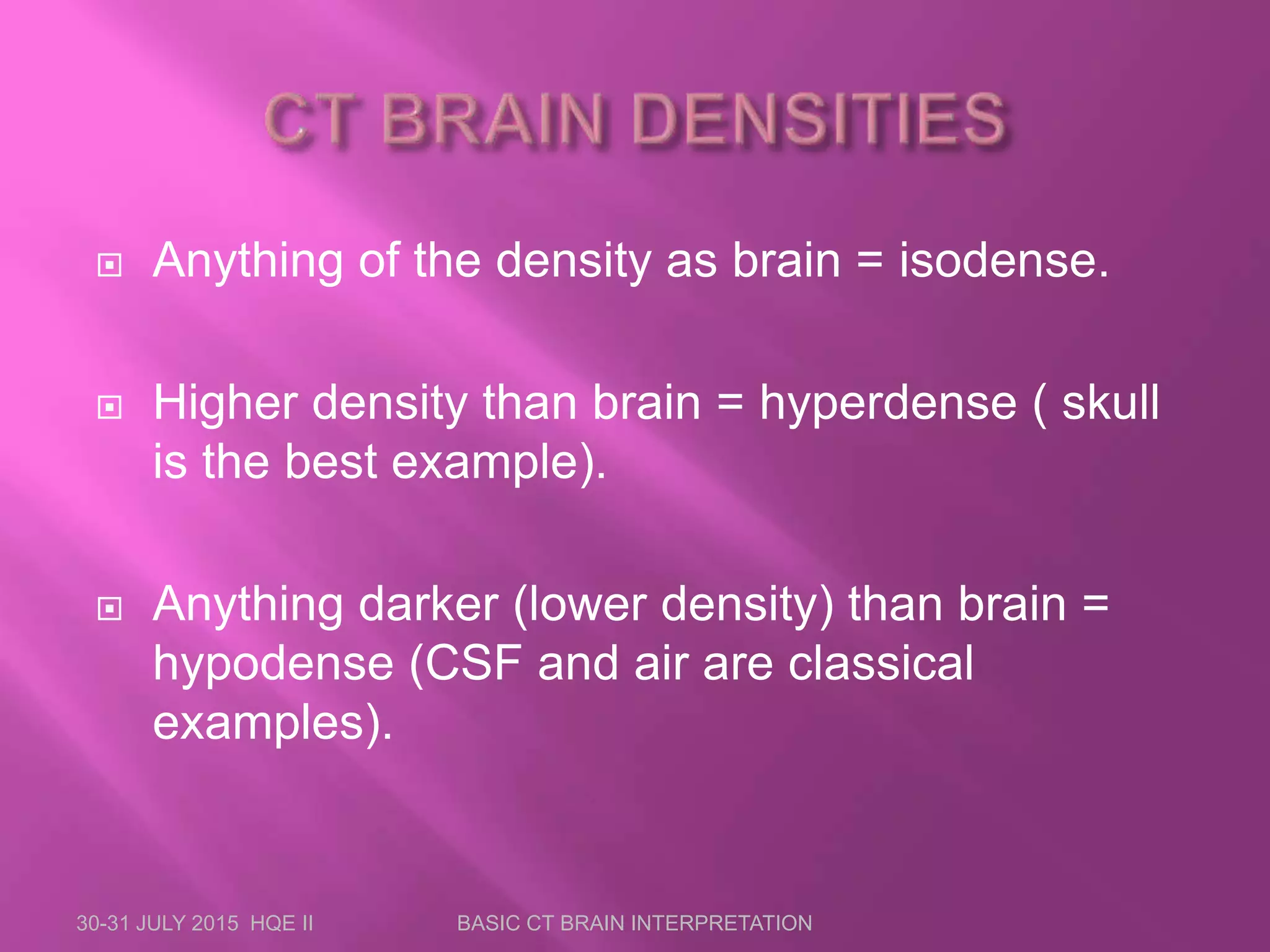
 Anything of the density as brain = isodense.
 Higher density than brain = hyperdense ( skull
is the best example).
 Anything darker (lower density) than brain =
hypodense (CSF and air are classical
examples).
30-31 JULY 2015 HQE II BASIC CT BRAIN INTERPRETATION
 Acute head trauma
 Suspected acute intracranial hemorrhage
 Vascular occlusive disease (acute and chronic) or vasculitis
(including use of CT angiography and/or venography)
 Aneurysm evaluation
 Detection or evaluation of calcification
 Immediate postoperative evaluation following surgical
treatment of tumor, intracranial hemorrhage, or hemorrhagic
lesionS
 Treated or untreated vascular lesions
 Mental status change
 Increased intracranial pressure
 Headache
30-31 JULY 2015 HQE II BASIC CT BRAIN INTERPRETATION
 Acute neurologic deficits
 Suspected intracranial infection
 Suspected hydrocephalus
 Certain congenital skull and brain lesions (such as, but not
limited to, craniosynostosis, macrocephaly, and
microcephaly)
 Evaluating psychiatric disorders
 Brain herniation
 Suspected mass or tumor
 CT guidance and image integration for neurosurgical,
neurointerventional, and other therapeutic procedures
 Certain skull lesions (such as, but not limited to, fibrous
dysplasia, Paget disease, histiocytosis, osteolytic
lesions,and skeletal tumors)
30-31 JULY 2015 HQE II BASIC CT BRAIN INTERPRETATION
 When MR imaging is unavailable or contraindicated, or if the supervising
physician determines CT to be appropriate
 Diplopia
 Cranial nerve dysfunction
 Seizures
 Apnea
 Syncope
 Ataxia
 Suspicion of neurodegenerative disease
 Developmental delay
 Neuroendocrine dysfunction
 Drug toxicity
 Congenital morphologic brain abnormalities
 Abusive head trauma and postmortem forensic investigations
 Brain death
 Suspected shunt malfunctions or shunt revisions
30-31 JULY 2015 HQE II BASIC CT BRAIN INTERPRETATION
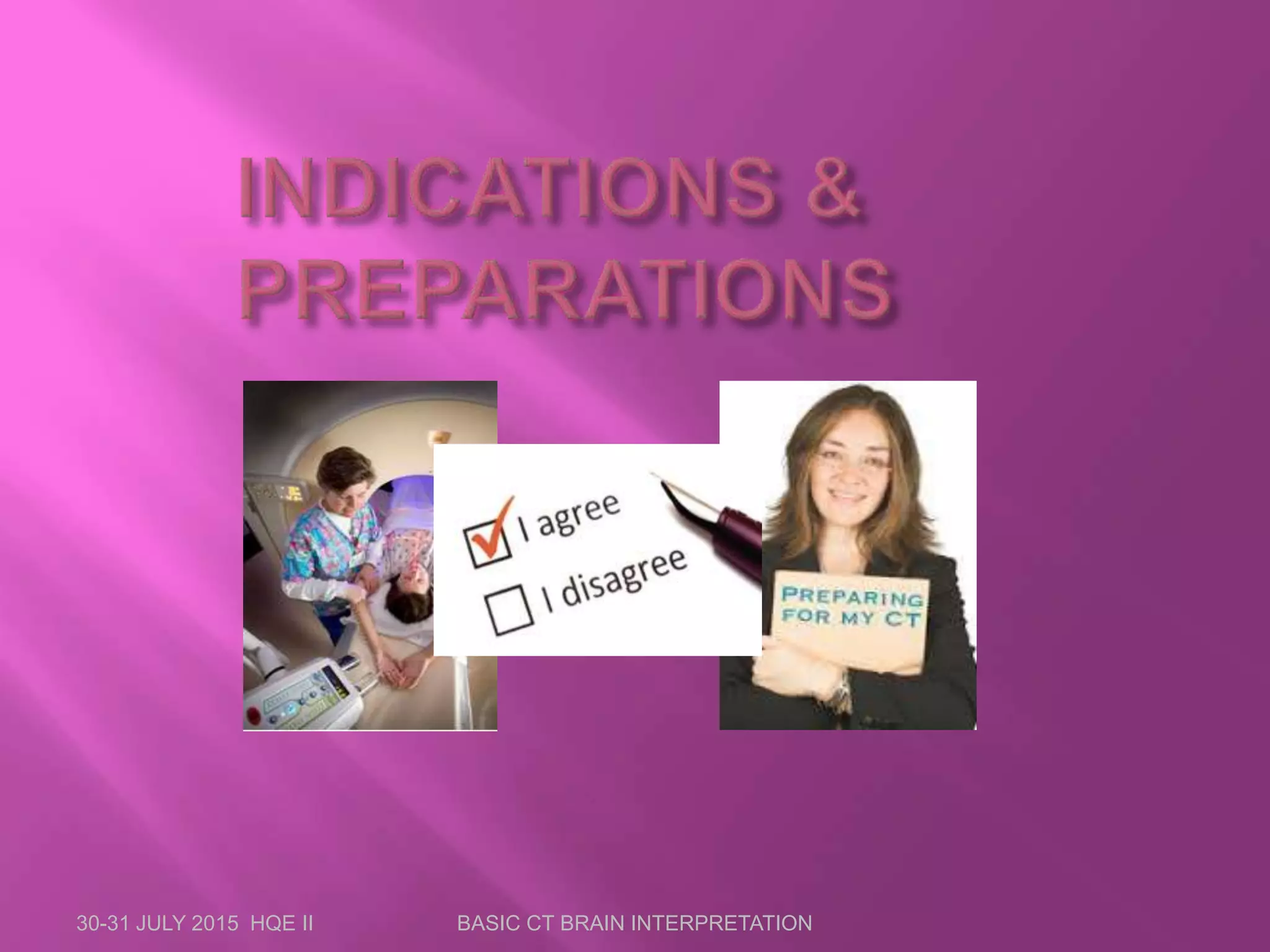
 Informed consent.
 Remove all metallic accessories, eyeglasses,
jewelleries, dentures, hearing aid.
 Enquire about pregnancy, diabetes, renal
dysfunction, food allergies, asthma, cardiac
and other medical illness.
30-31 JULY 2015 HQE II BASIC CT BRAIN INTERPRETATION
 Avooid food at least 4 hours prior to a contrast
study.
 Adequate hydration pre and post contrasted
scan.
30-31 JULY 2015 HQE II BASIC CT BRAIN INTERPRETATION
 Sedation – children, uncoorperative patients.
 Avoid breasfeeding 24 hours after contrasted
study.
 Equipped to deal with anaphylactic reactions.
 ALARA concept.
30-31 JULY 2015 HQE II BASIC CT BRAIN INTERPRETATION
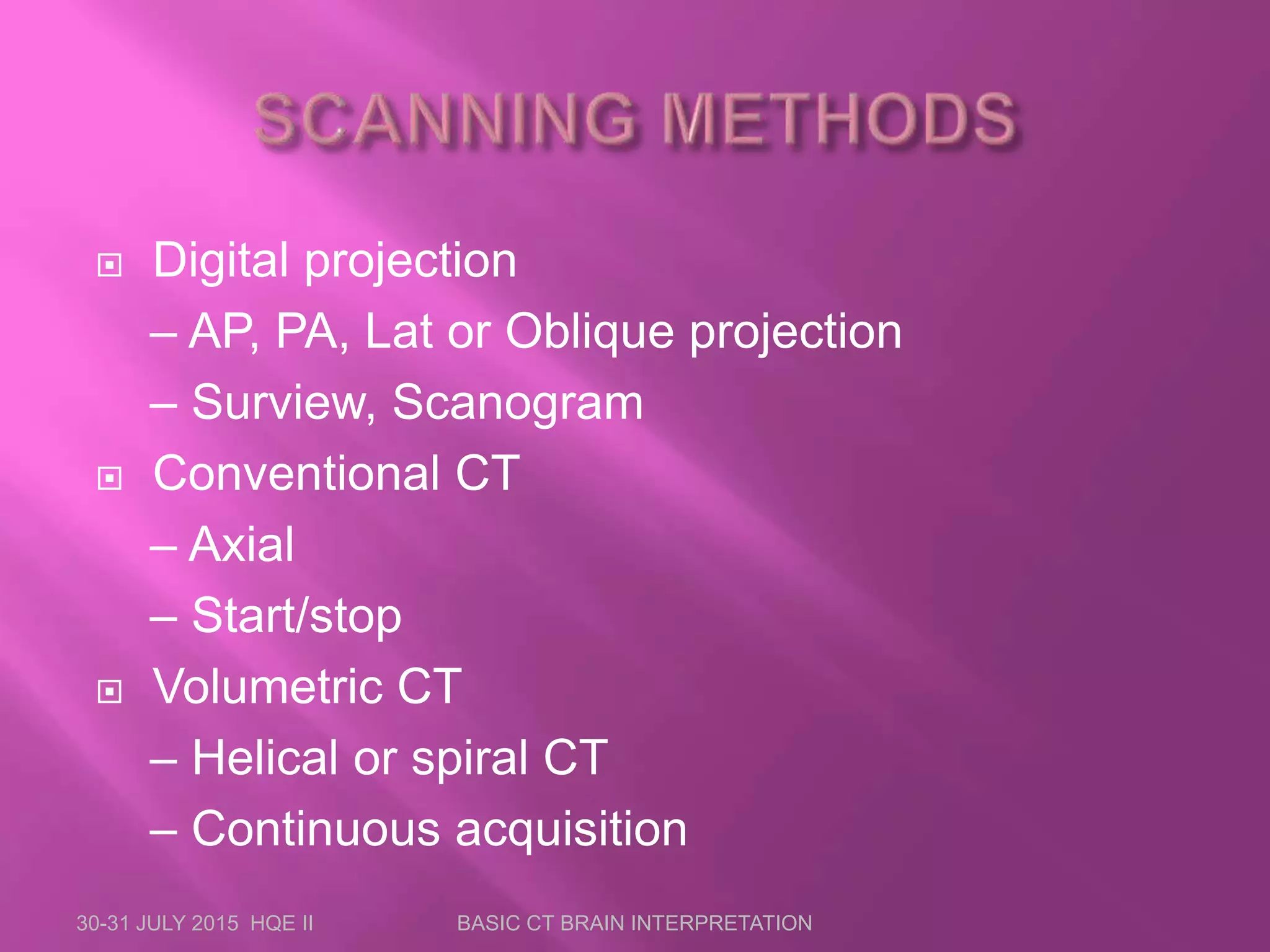
 Digital projection
– AP, PA, Lat or Oblique projection
– Surview, Scanogram
 Conventional CT
– Axial
– Start/stop
 Volumetric CT
– Helical or spiral CT
– Continuous acquisition
30-31 JULY 2015 HQE II BASIC CT BRAIN INTERPRETATION
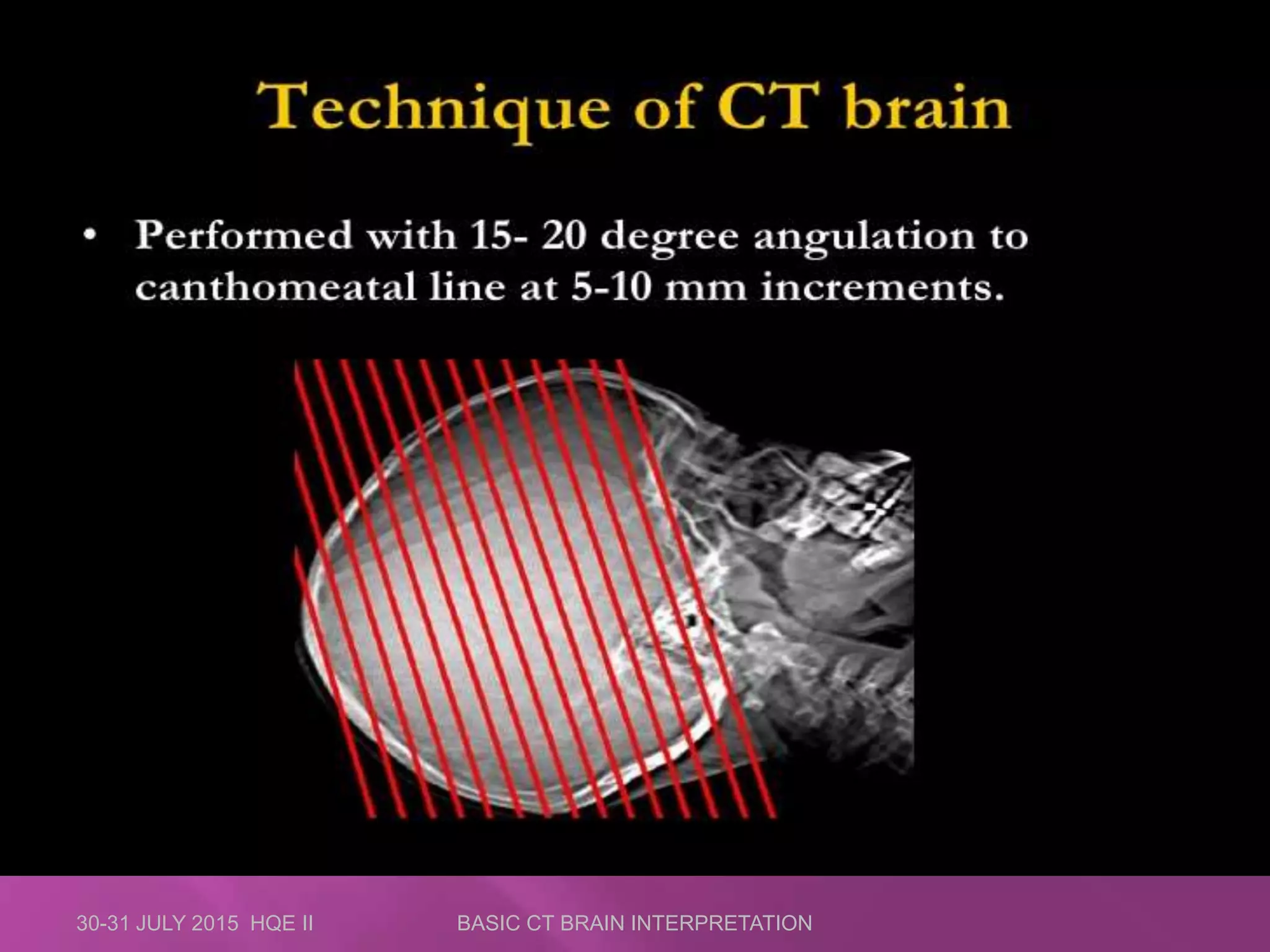
 A scannogram/ topogram of the head is done
using digital projection method.
 For head scans, conventional axial or slice by
slice method is commonly used.
 For CTA studies, volumetric or helical/spiral CT
is used.
30-31 JULY 2015 HQE II BASIC CT BRAIN INTERPRETATION
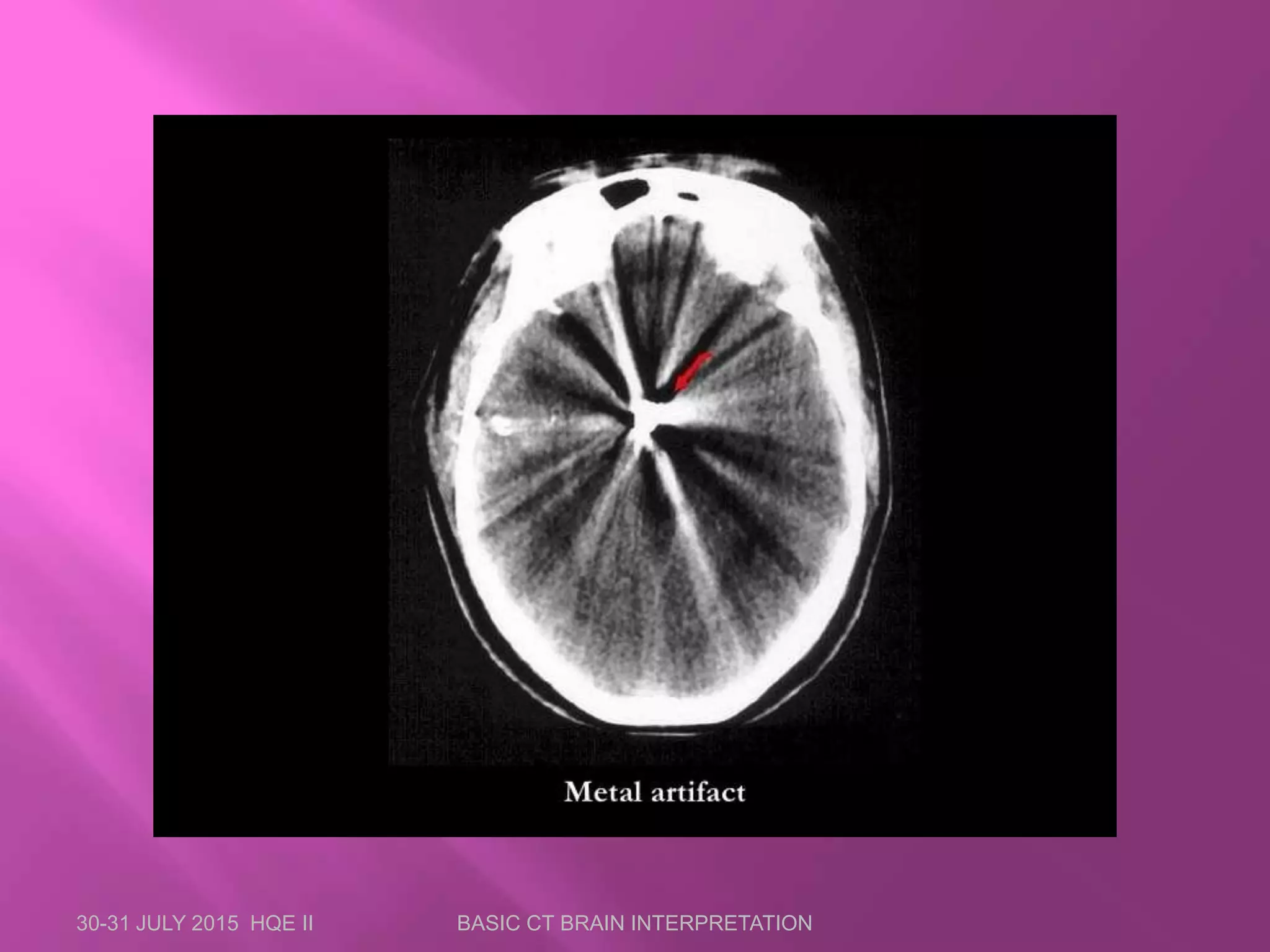
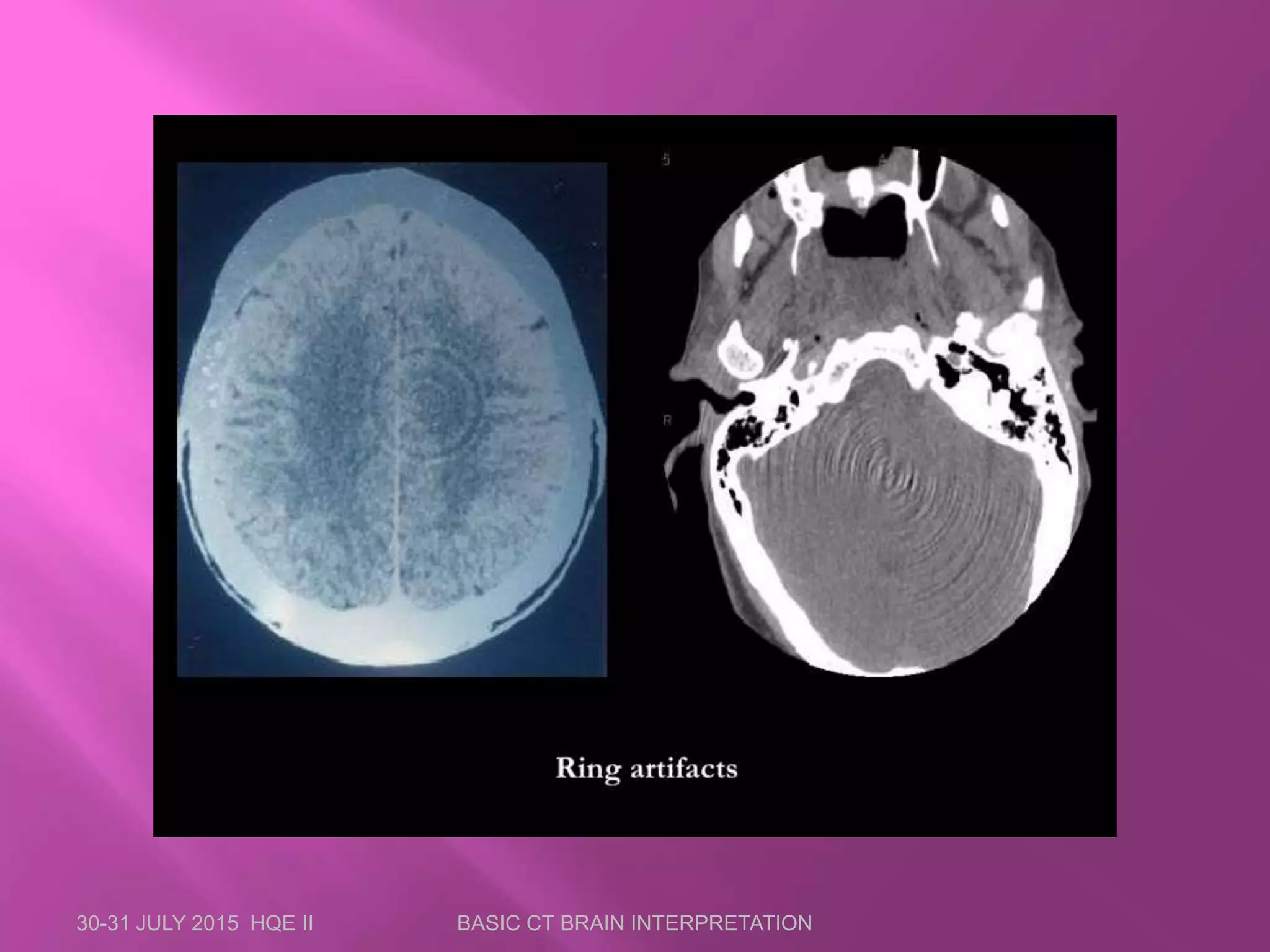
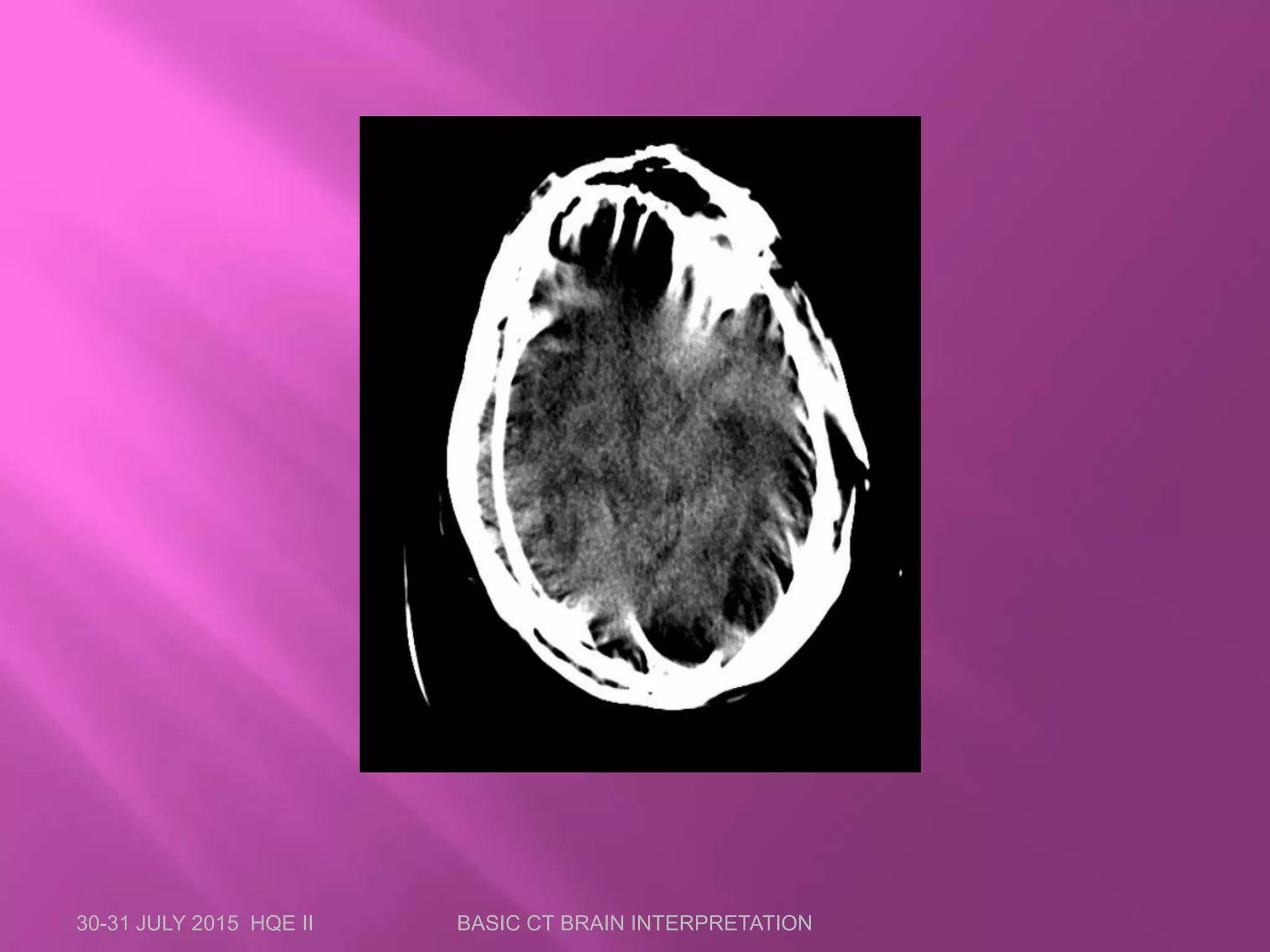
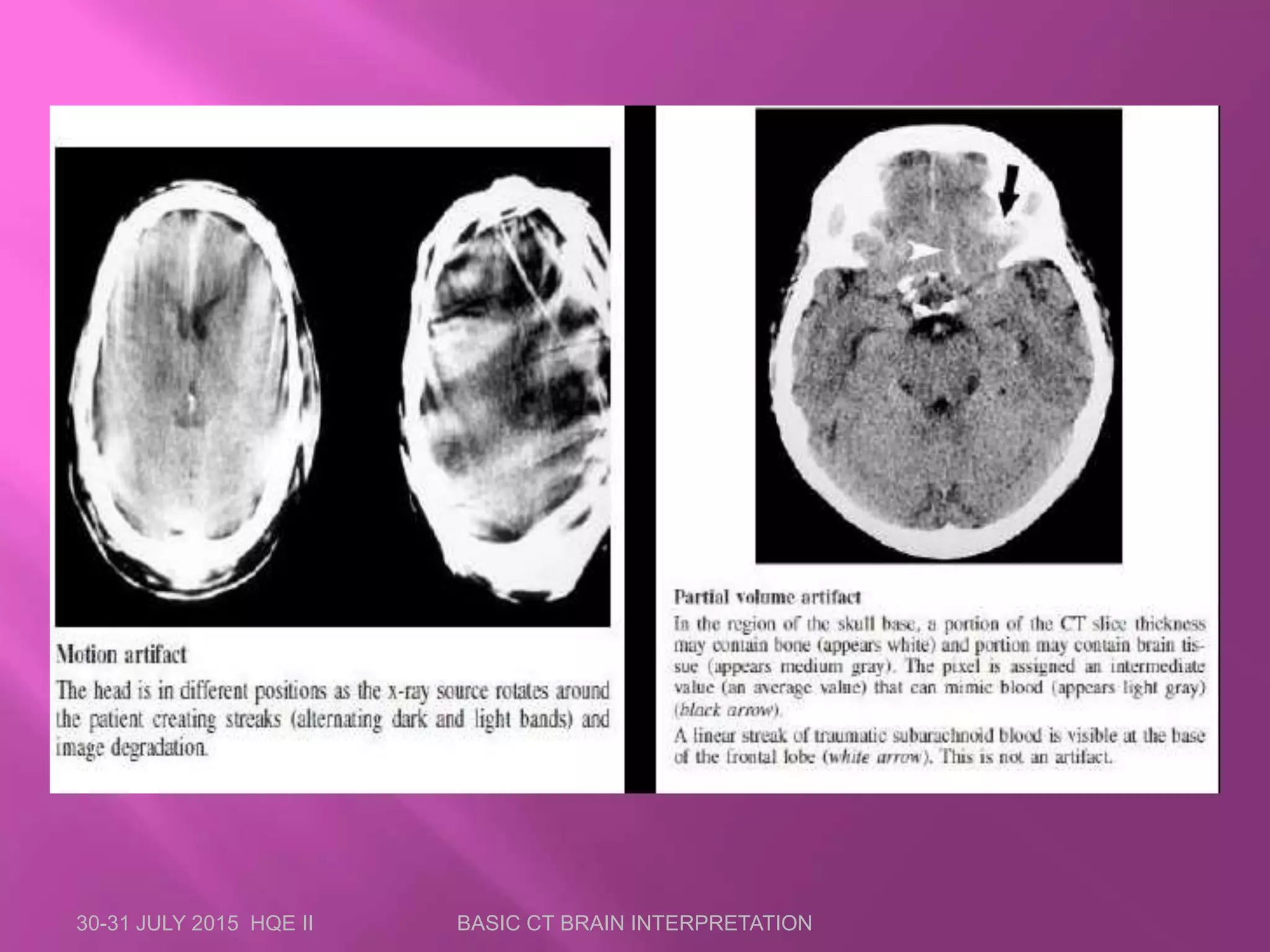
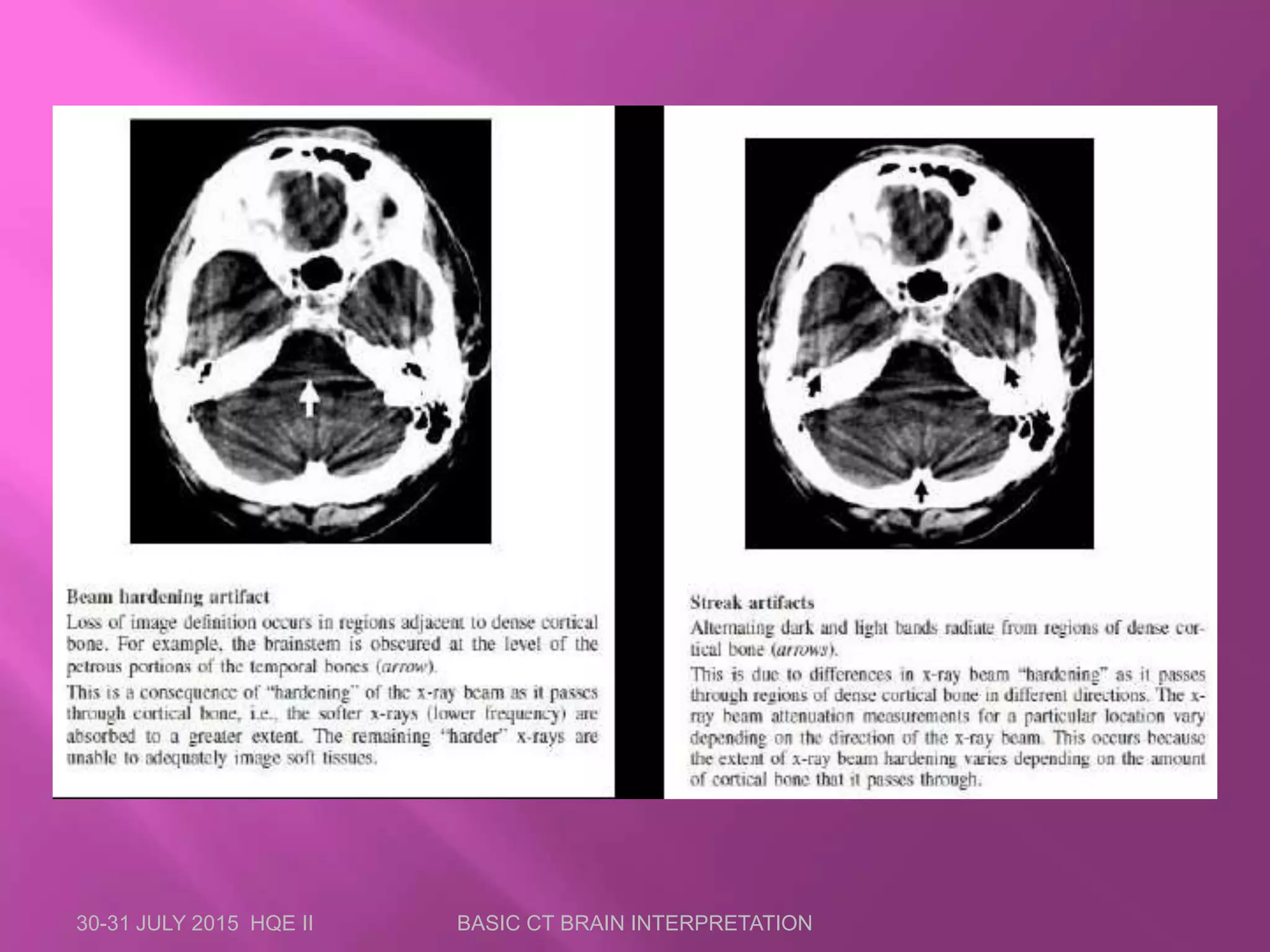
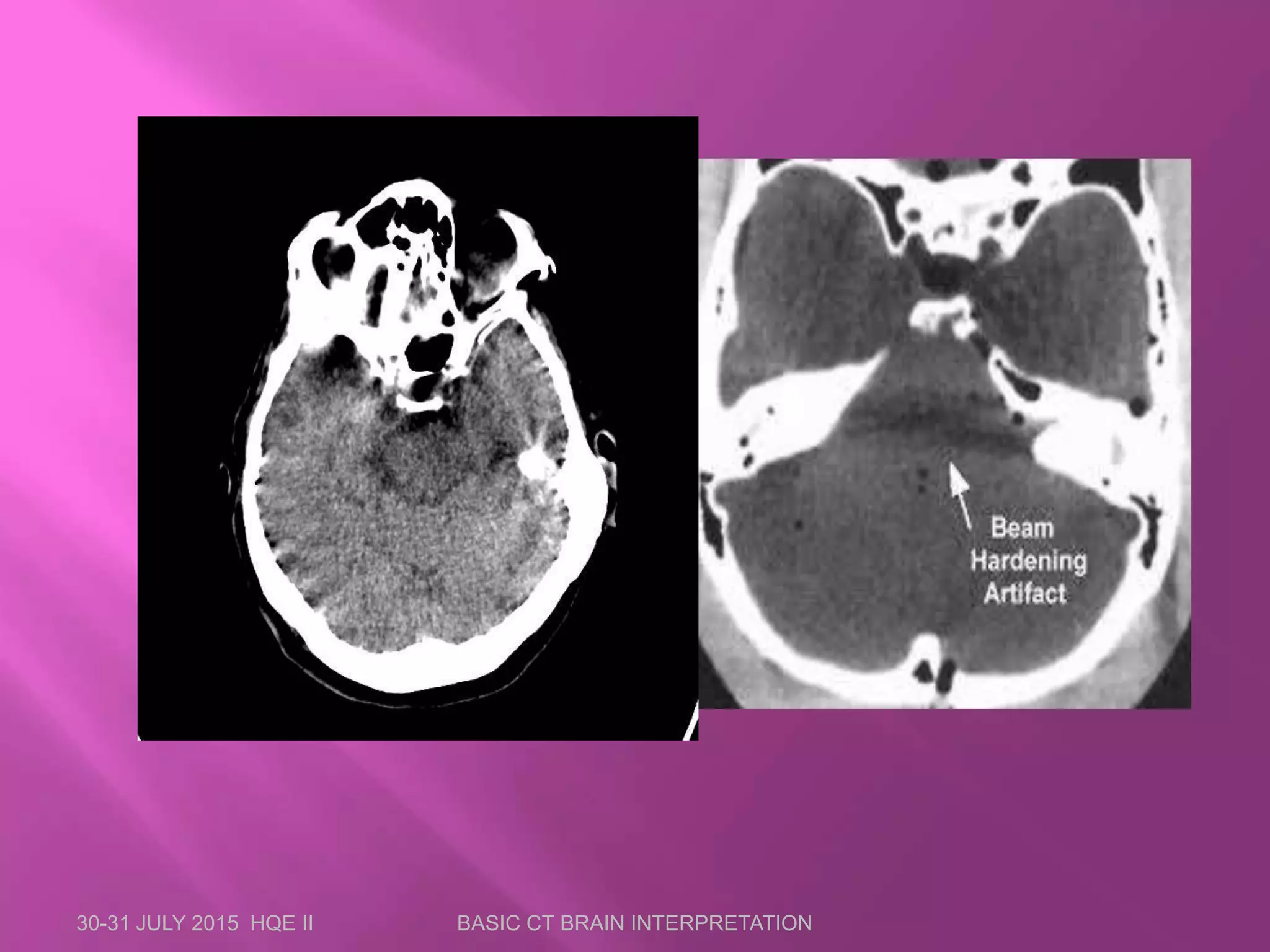
 Artifacts are distortions or errors in the image
that are unrelated to the object scanned.
 Most common artifacts in CT are:
 Motion artifacts
 Streak artifacts
 Beam hardening artifacts
 Partial voluming artifacts
 Ring artifacts
30-31 JULY 2015 HQE II BASIC CT BRAIN INTERPRETATION

Introduction to CT Brain: The Basic Principles

  • 1.
    DR. WAN NAJWAZAINI WAN MOHAMED RADIOLOGIST AND HEAD, JPD, HQE II 30-31 JULY 2015 HQE II BASIC CT BRAIN INTERPRETATION
  • 2.
     HISTORY  BASICPRINCIPLES  INDICATIONS, PREPARATIONS  ARTIFACTS 30-31 JULY 2015 HQE II BASIC CT BRAIN INTERPRETATION
  • 3.
     CT BRAINis an extremely useful diagnostic tool used routinely in hospital care.  Because many disease processes are time dependent and require immediate action, a quality physician needs to be able to accurately interpret and act upon certain CT findings without specialist (e.g., radiologist) assistance.  It has been shown that even a brief educational intervention can significantly improve the physician’s ability to interpret cranial CT scans. 30-31 JULY 2015 HQE II BASIC CT BRAIN INTERPRETATION
  • 4.
    30-31 JULY 2015HQE II BASIC CT BRAIN INTERPRETATION
  • 5.
    30-31 JULY 2015HQE II BASIC CT BRAIN INTERPRETATION
  • 6.
     Founder ofX-ray on 8th November, 1895  German physicist, Wilhelm Conrad Röntgen  First X-Ray taken – wife’s hand 30-31 JULY 2015 HQE II BASIC CT BRAIN INTERPRETATION
  • 7.
     Founder ofCT in 1972  Sir Godfrey Newbold Hounsfield  British Engineer in EMI, LTD.  “The Beatles’ greatest legacy” 30-31 JULY 2015 HQE II BASIC CT BRAIN INTERPRETATION
  • 8.
     Sir AllanMcLeod Cormack  Physics Professor in US  Worked independently to develop solutions to mathematical problems  Both shared the Nobel Price in 1979 30-31 JULY 2015 HQE II BASIC CT BRAIN INTERPRETATION
  • 9.
    30-31 JULY 2015HQE II BASIC CT BRAIN INTERPRETATION
  • 10.
    30-31 JULY 2015HQE II BASIC CT BRAIN INTERPRETATION
  • 11.
    30-31 JULY 2015HQE II BASIC CT BRAIN INTERPRETATION
  • 12.
    30-31 JULY 2015HQE II BASIC CT BRAIN INTERPRETATION
  • 13.
     Original scannerstook approximately 6 minutes to perform a rotation (one slice) and 20 minutes to reconstruct.  Current generation CT scans can complete a full brain imaging in seconds.  Despite many technological advances since then, the principles remain the same. 30-31 JULY 2015 HQE II BASIC CT BRAIN INTERPRETATION
  • 14.
    30-31 JULY 2015HQE II BASIC CT BRAIN INTERPRETATION generation configuration detector beam Min scan time first Translate -rotate 1-2 Pencil thin 2.5min second Translate -rotate 3-52 Narrow fan 10sec Third Rotate- rotate 256-1000 Wide fan 0.5sec fourth Rotate- fixed 600-4800 Wide fan 1sec fifth Electron beam 1284 Wide fan electron beam 33ns
  • 15.
    30-31 JULY 2015HQE II BASIC CT BRAIN INTERPRETATION
  • 16.
    30-31 JULY 2015HQE II BASIC CT BRAIN INTERPRETATION  CT - Computed Tomography  Tomography – a 2-D radiographic image representing a slice through a body part. All anatomy not at the target level is blurred.  CT scan – provides a 3D display of the intracranial anatomy built up from a vertical series of transverse axial tomograms.
  • 17.
    30-31 JULY 2015HQE II BASIC CT BRAIN INTERPRETATION Think like looking into a loaf of bread by cutting it into thin slices and then viewing the slices individually.
  • 18.
     Each tomogramrepresents a horizontal slice through the patient’s head.  CT Scan combines X-Rays and detectors coupled with a computer to create cross sectional image of any part of the body. 30-31 JULY 2015 HQE II BASIC CT BRAIN INTERPRETATION
  • 19.
    30-31 JULY 2015HQE II BASIC CT BRAIN INTERPRETATION
  • 20.
     CT X-Raybeams moves around the patient in a circular path.  The transmitted X-rays are received and absorbed by arrays of detectors across the patient on the opposite side of the circle from the X-Ray source.  Images are then reconstructed from the X-ray absorption data using mathemathical processes. 30-31 JULY 2015 HQE II BASIC CT BRAIN INTERPRETATION
  • 21.
    30-31 JULY 2015HQE II BASIC CT BRAIN INTERPRETATION
  • 22.
     Gantry 1. X-Raytube 2. Generators 3. Collimators & Filters 4. Detector arrays & DAS  Patient couch  Computer console 30-31 JULY 2015 HQE II BASIC CT BRAIN INTERPRETATION
  • 23.
    30-31 JULY 2015HQE II BASIC CT BRAIN INTERPRETATION
  • 24.
    30-31 JULY 2015HQE II BASIC CT BRAIN INTERPRETATION 1. X-ray tube & collimator 2. Detector assembly 3. Tube controller 4. High freq. generator 5. Onboard computer 6. Stationary computer
  • 25.
    30-31 JULY 2015HQE II BASIC CT BRAIN INTERPRETATION
  • 26.
     Set scanparameters – kVp, mA, scan time, etc  Set scan mode – Digital radiograph, axial or volume  Houses reconstructor  Review and archive images  Post-processing 30-31 JULY 2015 HQE II BASIC CT BRAIN INTERPRETATION
  • 27.
    30-31 JULY 2015HQE II BASIC CT BRAIN INTERPRETATION
  • 28.
    30-31 JULY 2015HQE II BASIC CT BRAIN INTERPRETATION
  • 29.
     Cross sectionallayer of the body is represented as an image matrix.  Each square of the image matrix is called pixel(picture element) and it represents tiny block of tissue called voxel (volume element) 30-31 JULY 2015 HQE II BASIC CT BRAIN INTERPRETATION
  • 30.
     The averagelinear attenuation coefficient (µ), between tube and detectors  Attenuation coefficient reflects the degree to which the X-ray intensity is reduced by a material 30-31 JULY 2015 HQE II BASIC CT BRAIN INTERPRETATION
  • 31.
    30-31 JULY 2015HQE II BASIC CT BRAIN INTERPRETATION Air - 1000 Fat -70 Pure water 0 CSF +8 White matter +30 Gray matter +45 Blood +70 Bone/calcification +1000
  • 32.
    30-31 JULY 2015HQE II BASIC CT BRAIN INTERPRETATION
  • 33.
     Window width(W) : range of CT numbers displayed in shades of gray, ranging from black to white.  CT numbers > window : white;  CT number < window : black  Window level (L) : describes the centre of the scale. 30-31 JULY 2015 HQE II BASIC CT BRAIN INTERPRETATION
  • 34.
     Allows thereader to focus on certain tissues within a set of parameters. Most CT imaging include windows that are optimized for brain, blood and bone.  BRAIN : W 155, L 40  STROKE : W 30, L 30  SUBDURAL : W 150, L 5  BONE : W 3000, L 570 30-31 JULY 2015 HQE II BASIC CT BRAIN INTERPRETATION
  • 35.
    30-31 JULY 2015HQE II BASIC CT BRAIN INTERPRETATION
  • 36.
    30-31 JULY 2015HQE II BASIC CT BRAIN INTERPRETATION
  • 37.
     X-RAYS AREABSORBED TO DIFFERENT DEGREES BY DIFFERENT TISSUES  Always describe CT findings as densities – isodense/ hypodense/ hyperdense.  Higher the density = whiter is the appearance.  Lower the density = darker the appearance.  Brain is the reference density. 30-31 JULY 2015 HQE II BASIC CT BRAIN INTERPRETATION
  • 38.
     Anything ofthe density as brain = isodense.  Higher density than brain = hyperdense ( skull is the best example).  Anything darker (lower density) than brain = hypodense (CSF and air are classical examples). 30-31 JULY 2015 HQE II BASIC CT BRAIN INTERPRETATION
  • 39.
    30-31 JULY 2015HQE II BASIC CT BRAIN INTERPRETATION
  • 40.
    30-31 JULY 2015HQE II BASIC CT BRAIN INTERPRETATION
  • 41.
     Acute headtrauma  Suspected acute intracranial hemorrhage  Vascular occlusive disease (acute and chronic) or vasculitis (including use of CT angiography and/or venography)  Aneurysm evaluation  Detection or evaluation of calcification  Immediate postoperative evaluation following surgical treatment of tumor, intracranial hemorrhage, or hemorrhagic lesionS  Treated or untreated vascular lesions  Mental status change  Increased intracranial pressure  Headache 30-31 JULY 2015 HQE II BASIC CT BRAIN INTERPRETATION
  • 42.
     Acute neurologicdeficits  Suspected intracranial infection  Suspected hydrocephalus  Certain congenital skull and brain lesions (such as, but not limited to, craniosynostosis, macrocephaly, and microcephaly)  Evaluating psychiatric disorders  Brain herniation  Suspected mass or tumor  CT guidance and image integration for neurosurgical, neurointerventional, and other therapeutic procedures  Certain skull lesions (such as, but not limited to, fibrous dysplasia, Paget disease, histiocytosis, osteolytic lesions,and skeletal tumors) 30-31 JULY 2015 HQE II BASIC CT BRAIN INTERPRETATION
  • 43.
     When MRimaging is unavailable or contraindicated, or if the supervising physician determines CT to be appropriate  Diplopia  Cranial nerve dysfunction  Seizures  Apnea  Syncope  Ataxia  Suspicion of neurodegenerative disease  Developmental delay  Neuroendocrine dysfunction  Drug toxicity  Congenital morphologic brain abnormalities  Abusive head trauma and postmortem forensic investigations  Brain death  Suspected shunt malfunctions or shunt revisions 30-31 JULY 2015 HQE II BASIC CT BRAIN INTERPRETATION
  • 44.
     Informed consent. Remove all metallic accessories, eyeglasses, jewelleries, dentures, hearing aid.  Enquire about pregnancy, diabetes, renal dysfunction, food allergies, asthma, cardiac and other medical illness. 30-31 JULY 2015 HQE II BASIC CT BRAIN INTERPRETATION
  • 45.
     Avooid foodat least 4 hours prior to a contrast study.  Adequate hydration pre and post contrasted scan. 30-31 JULY 2015 HQE II BASIC CT BRAIN INTERPRETATION
  • 46.
     Sedation –children, uncoorperative patients.  Avoid breasfeeding 24 hours after contrasted study.  Equipped to deal with anaphylactic reactions.  ALARA concept. 30-31 JULY 2015 HQE II BASIC CT BRAIN INTERPRETATION
  • 47.
    30-31 JULY 2015HQE II BASIC CT BRAIN INTERPRETATION
  • 48.
    30-31 JULY 2015HQE II BASIC CT BRAIN INTERPRETATION
  • 49.
    30-31 JULY 2015HQE II BASIC CT BRAIN INTERPRETATION
  • 50.
    30-31 JULY 2015HQE II BASIC CT BRAIN INTERPRETATION
  • 51.
     Digital projection –AP, PA, Lat or Oblique projection – Surview, Scanogram  Conventional CT – Axial – Start/stop  Volumetric CT – Helical or spiral CT – Continuous acquisition 30-31 JULY 2015 HQE II BASIC CT BRAIN INTERPRETATION
  • 52.
     A scannogram/topogram of the head is done using digital projection method.  For head scans, conventional axial or slice by slice method is commonly used.  For CTA studies, volumetric or helical/spiral CT is used. 30-31 JULY 2015 HQE II BASIC CT BRAIN INTERPRETATION
  • 53.
    30-31 JULY 2015HQE II BASIC CT BRAIN INTERPRETATION
  • 54.
     Artifacts aredistortions or errors in the image that are unrelated to the object scanned.  Most common artifacts in CT are:  Motion artifacts  Streak artifacts  Beam hardening artifacts  Partial voluming artifacts  Ring artifacts 30-31 JULY 2015 HQE II BASIC CT BRAIN INTERPRETATION
  • 55.
    30-31 JULY 2015HQE II BASIC CT BRAIN INTERPRETATION
  • 56.
    30-31 JULY 2015HQE II BASIC CT BRAIN INTERPRETATION
  • 57.
    30-31 JULY 2015HQE II BASIC CT BRAIN INTERPRETATION
  • 58.
    30-31 JULY 2015HQE II BASIC CT BRAIN INTERPRETATION
  • 59.
    30-31 JULY 2015HQE II BASIC CT BRAIN INTERPRETATION
  • 60.
    30-31 JULY 2015HQE II BASIC CT BRAIN INTERPRETATION
  • 61.
    30-31 JULY 2015HQE II BASIC CT BRAIN INTERPRETATION
  • 62.
    30-31 JULY 2015HQE II BASIC CT BRAIN INTERPRETATION