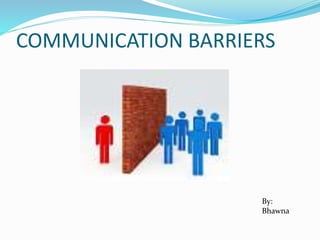
COMMUNICATION BARRIERS
By:
Bhawna
COMMUNICATION IS THE ART OF TRANSMITTING KNOWLEDGE,
IDEAS, INFORMATION AND THOUGHTS FROM ONE PERSON TO
ANOTHER. THE TRANSFER SHOULD BE SUCH THAT THE RECEIVER
SHOULD UNDERSTAND THE MEANING AND CONTENT OF THE
MESSAGE AND GIVE PROPER FEEDBACK. COMMUNICATION IS
COMPLETE WHEN THE RECEIVER UNDERSTANDS THE MESSAGE IN
THE SAME SENSE AS THE COMMUNICATOR INTENDS TO CONVEY.
A COMMUNICATION BARRIER IS ANYTHING THAT PREVENTS US
FROM RECEIVING AND UNDERSTANDING THE MESSAGE OTHERS USE
TO CONVEY THEIR INFORMATION, IDEAS, THOUGHTS.. AND MOST
COMMON CAUSE OF COMMUNICATION BARRIER IS PEOPLE
HOLDING DIFFERENT ATTITUDES, VALUES, KNOWLEDGE,
EXPERIENCE AND IDEAS.
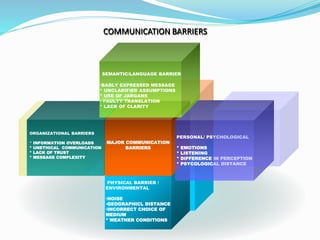
PHYSICAL BARRIER /
ENVIRONMENTAL
•NOISE
•GEOGRAPHICL DISTANCE
•INCORRECT CHOICE OF
MEDIUM
* WEATHER CONDITIONS
ORGANIZATIONAL BARRIERS
* INFORMATION OVERLOADS
* UNETHICAL COMMUNICATION
* LACK OF TRUST
* MESSAGE COMPLEXITY
MAJOR COMMUNICATION
BARRIERS
PERSONAL/ PSYCHOLOGICAL
* EMOTIONS
* LISTENING
* DIFFERENCE IN PERCEPTION
* PSYCOLOGICAL DISTANCE
SEMANTIC/LANGUAGE BARRIER
•BADLY EXPRESSED MESSAGE
* UNCLARIFIED ASSUMPTIONS
* USE OF JARGANS
• FAULTY TRANSLATION
* LACK OF CLARITY
COMMUNICATION BARRIERS
SEMANTIC BARRIERS
Semantic barriers are also known as Language Barriers. Semantic barriers happens when people do not
speak the same language, or do not have the same level of ability in a language. Use of jargons or technical
words with people can create confusion. Any problem arises from the expression or transmission of
meaning. One must aim at simplicity, clarity and brevity so as to minimize the chances of different
interpretations.
Various types of semantic barriers found in day to day use:
 Wrong interpretation
Badly expressed message
 Words having similar pronunciation but multiple meaning
 Use of Technical Language
 Unclarified Assumptions
PERSONAL/ PYSCHOLOGICAL BARRIERS
Personal or psychological barriers are the prime barriers in interpersonal communication. The common
cause of this barrier is people have different attitudes, value and discrimination. The behaviours like bias,
generalizations and stereo-typing cause communication barrier. People also have a personal feeling of
fears, hope, desires, likes, dislikes, attitudes and opinions.
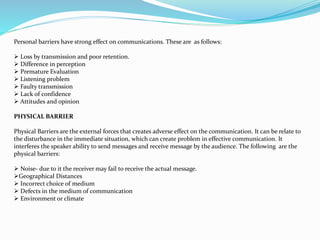
Personal barriers have strong effect on communications. These are as follows:
 Loss by transmission and poor retention.
 Difference in perception
 Premature Evaluation
 Listening problem
 Faulty transmission
 Lack of confidence
 Attitudes and opinion
PHYSICAL BARRIER
Physical Barriers are the external forces that creates adverse effect on the communication. It can be relate to
the disturbance in the immediate situation, which can create problem in effective communication. It
interferes the speaker ability to send messages and receive message by the audience. The following are the
physical barriers:
 Noise- due to it the receiver may fail to receive the actual message.
Geographical Distances
 Incorrect choice of medium
 Defects in the medium of communication
 Environment or climate
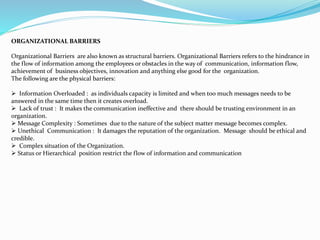
ORGANIZATIONAL BARRIERS
Organizational Barriers are also known as structural barriers. Organizational Barriers refers to the hindrance in
the flow of information among the employees or obstacles in the way of communication, information flow,
achievement of business objectives, innovation and anything else good for the organization.
The following are the physical barriers:
 Information Overloaded : as individuals capacity is limited and when too much messages needs to be
answered in the same time then it creates overload.
 Lack of trust : It makes the communication ineffective and there should be trusting environment in an
organization.
 Message Complexity : Sometimes due to the nature of the subject matter message becomes complex.
 Unethical Communication : It damages the reputation of the organization. Message should be ethical and
credible.
 Complex situation of the Organization.
 Status or Hierarchical position restrict the flow of information and communication
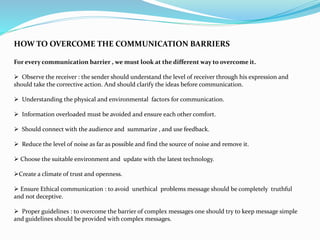
HOW TO OVERCOME THE COMMUNICATION BARRIERS
For every communication barrier , we must look at the different way to overcome it.
 Observe the receiver : the sender should understand the level of receiver through his expression and
should take the corrective action. And should clarify the ideas before communication.
 Understanding the physical and environmental factors for communication.
 Information overloaded must be avoided and ensure each other comfort.
 Should connect with the audience and summarize , and use feedback.
 Reduce the level of noise as far as possible and find the source of noise and remove it.
 Choose the suitable environment and update with the latest technology.
Create a climate of trust and openness.
 Ensure Ethical communication : to avoid unethical problems message should be completely truthful
and not deceptive.
 Proper guidelines : to overcome the barrier of complex messages one should try to keep message simple
and guidelines should be provided with complex messages.
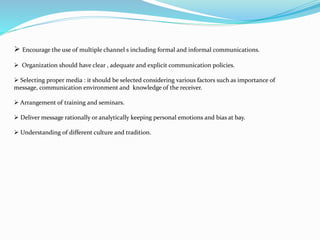
 Encourage the use of multiple channel s including formal and informal communications.
 Organization should have clear , adequate and explicit communication policies.
 Selecting proper media : it should be selected considering various factors such as importance of
message, communication environment and knowledge of the receiver.
 Arrangement of training and seminars.
 Deliver message rationally or analytically keeping personal emotions and bias at bay.
 Understanding of different culture and tradition.
Communication barriers

Communication barriers

  • 1.
  • 2.
    COMMUNICATION IS THEART OF TRANSMITTING KNOWLEDGE, IDEAS, INFORMATION AND THOUGHTS FROM ONE PERSON TO ANOTHER. THE TRANSFER SHOULD BE SUCH THAT THE RECEIVER SHOULD UNDERSTAND THE MEANING AND CONTENT OF THE MESSAGE AND GIVE PROPER FEEDBACK. COMMUNICATION IS COMPLETE WHEN THE RECEIVER UNDERSTANDS THE MESSAGE IN THE SAME SENSE AS THE COMMUNICATOR INTENDS TO CONVEY. A COMMUNICATION BARRIER IS ANYTHING THAT PREVENTS US FROM RECEIVING AND UNDERSTANDING THE MESSAGE OTHERS USE TO CONVEY THEIR INFORMATION, IDEAS, THOUGHTS.. AND MOST COMMON CAUSE OF COMMUNICATION BARRIER IS PEOPLE HOLDING DIFFERENT ATTITUDES, VALUES, KNOWLEDGE, EXPERIENCE AND IDEAS.
  • 3.
    PHYSICAL BARRIER / ENVIRONMENTAL •NOISE •GEOGRAPHICLDISTANCE •INCORRECT CHOICE OF MEDIUM * WEATHER CONDITIONS ORGANIZATIONAL BARRIERS * INFORMATION OVERLOADS * UNETHICAL COMMUNICATION * LACK OF TRUST * MESSAGE COMPLEXITY MAJOR COMMUNICATION BARRIERS PERSONAL/ PSYCHOLOGICAL * EMOTIONS * LISTENING * DIFFERENCE IN PERCEPTION * PSYCOLOGICAL DISTANCE SEMANTIC/LANGUAGE BARRIER •BADLY EXPRESSED MESSAGE * UNCLARIFIED ASSUMPTIONS * USE OF JARGANS • FAULTY TRANSLATION * LACK OF CLARITY COMMUNICATION BARRIERS
  • 4.
    SEMANTIC BARRIERS Semantic barriersare also known as Language Barriers. Semantic barriers happens when people do not speak the same language, or do not have the same level of ability in a language. Use of jargons or technical words with people can create confusion. Any problem arises from the expression or transmission of meaning. One must aim at simplicity, clarity and brevity so as to minimize the chances of different interpretations. Various types of semantic barriers found in day to day use:  Wrong interpretation Badly expressed message  Words having similar pronunciation but multiple meaning  Use of Technical Language  Unclarified Assumptions PERSONAL/ PYSCHOLOGICAL BARRIERS Personal or psychological barriers are the prime barriers in interpersonal communication. The common cause of this barrier is people have different attitudes, value and discrimination. The behaviours like bias, generalizations and stereo-typing cause communication barrier. People also have a personal feeling of fears, hope, desires, likes, dislikes, attitudes and opinions.
  • 5.
    Personal barriers havestrong effect on communications. These are as follows:  Loss by transmission and poor retention.  Difference in perception  Premature Evaluation  Listening problem  Faulty transmission  Lack of confidence  Attitudes and opinion PHYSICAL BARRIER Physical Barriers are the external forces that creates adverse effect on the communication. It can be relate to the disturbance in the immediate situation, which can create problem in effective communication. It interferes the speaker ability to send messages and receive message by the audience. The following are the physical barriers:  Noise- due to it the receiver may fail to receive the actual message. Geographical Distances  Incorrect choice of medium  Defects in the medium of communication  Environment or climate
  • 6.
    ORGANIZATIONAL BARRIERS Organizational Barriersare also known as structural barriers. Organizational Barriers refers to the hindrance in the flow of information among the employees or obstacles in the way of communication, information flow, achievement of business objectives, innovation and anything else good for the organization. The following are the physical barriers:  Information Overloaded : as individuals capacity is limited and when too much messages needs to be answered in the same time then it creates overload.  Lack of trust : It makes the communication ineffective and there should be trusting environment in an organization.  Message Complexity : Sometimes due to the nature of the subject matter message becomes complex.  Unethical Communication : It damages the reputation of the organization. Message should be ethical and credible.  Complex situation of the Organization.  Status or Hierarchical position restrict the flow of information and communication
  • 7.
    HOW TO OVERCOMETHE COMMUNICATION BARRIERS For every communication barrier , we must look at the different way to overcome it.  Observe the receiver : the sender should understand the level of receiver through his expression and should take the corrective action. And should clarify the ideas before communication.  Understanding the physical and environmental factors for communication.  Information overloaded must be avoided and ensure each other comfort.  Should connect with the audience and summarize , and use feedback.  Reduce the level of noise as far as possible and find the source of noise and remove it.  Choose the suitable environment and update with the latest technology. Create a climate of trust and openness.  Ensure Ethical communication : to avoid unethical problems message should be completely truthful and not deceptive.  Proper guidelines : to overcome the barrier of complex messages one should try to keep message simple and guidelines should be provided with complex messages.
  • 8.
     Encourage theuse of multiple channel s including formal and informal communications.  Organization should have clear , adequate and explicit communication policies.  Selecting proper media : it should be selected considering various factors such as importance of message, communication environment and knowledge of the receiver.  Arrangement of training and seminars.  Deliver message rationally or analytically keeping personal emotions and bias at bay.  Understanding of different culture and tradition.