Techniques for Bioremediation
DEPARTMENT OF BIOINFORMATICS AND
BIOTECHNOLOGY
GC UNIVERSITY FAISALABAD
HASNAT KHAN 16618
Bioremediation
Bioremediation is a treatment process that uses naturally occurring microorganisms (yeast, fungi,
or bacteria) to break down, or degrade, hazardous substances into less toxic or nontoxic
substances.
How does it work?
Bioremediation technologies assist microorganisms' growth and increase microbial populations
by creating optimum environmental conditions for them to detoxify the maximum amount of
contaminants. The specific bioremediation technology used is determined by several factors, for
instance, the type of microorganisms present, the site conditions, and the quantity and toxicity of
contaminant chemicals.
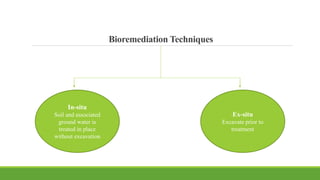
Bioremediation Techniques
In-situ
Soil and associated
ground water is
treated in place
without excavation
Ex-situ
Excavate prior to
treatment
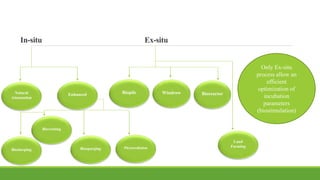
In-situ Ex-situ
oOnly Ex-situ
process allow an
efficient
optimization of
incubation
parameters
(biostimulation)
Natural
Attenuation
Enhanced Biopile Windrow Bioreactor
Bioslurping
Bioventing
Biosparging Phytorediation
Land
Farming
In-situ
In situ remediation is
performed directly on the site
without excavating soil
contaminants or disturbance to
the soil structure.
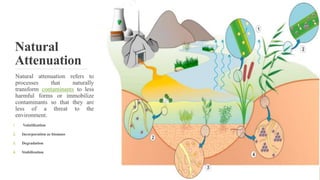
Natural
Attenuation
Natural attenuation refers to
processes that naturally
transform contaminants to less
harmful forms or immobilize
contaminants so that they are
less of a threat to the
environment.
1. Volatilization
2. Incorporation as biomass
3. Degradation
4. Stabilization
Enhanced
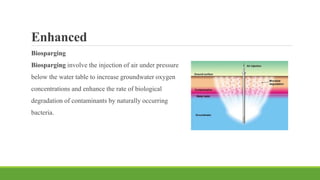
Biosparging
Biosparging involve the injection of air under pressure
below the water table to increase groundwater oxygen
concentrations and enhance the rate of biological
degradation of contaminants by naturally occurring
bacteria.
Enhanced
Bioventing
Bioventing is a process of stimulating the natural in situ biodegradation of contaminants in soil
by providing air or oxygen to existing soil microorganisms.
Enhanced
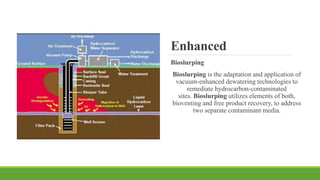
Bioslurping
Bioslurping is the adaptation and application of
vacuum-enhanced dewatering technologies to
remediate hydrocarbon-contaminated
sites. Bioslurping utilizes elements of both,
bioventing and free product recovery, to address
two separate contaminant media.
Enhanced
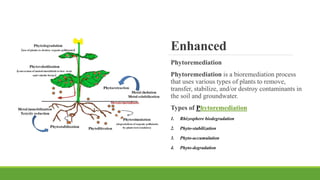
Phytoremediation
Phytoremediation is a bioremediation process
that uses various types of plants to remove,
transfer, stabilize, and/or destroy contaminants in
the soil and groundwater.
Types of Phytoremediation
1. Rhizosphere biodegradation
2. Phyto-stabilization
3. Phyto-accumulation
4. Phyto-degradation
Ex-situ
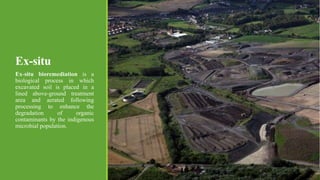
Ex-situ bioremediation is a
biological process in which
excavated soil is placed in a
lined above-ground treatment
area and aerated following
processing to enhance the
degradation of organic
contaminants by the indigenous
microbial population.
Ex-situ
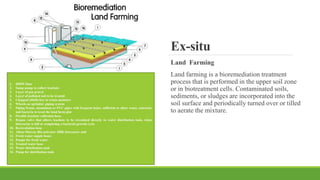
Land Farming
Land farming is a bioremediation treatment
process that is performed in the upper soil zone
or in biotreatment cells. Contaminated soils,
sediments, or sludges are incorporated into the
soil surface and periodically turned over or tilled
to aerate the mixture.
1. HDPE liner
2. Sump pump to collect leachate
3. Layer of pea gravel
4. Layer of polluted soil to be treated
5. Chopped alfalfa hay to retain moisture
6. Wheels on sprinkler piping system
7. Piping frame, aluminium or PVC pipes with frequent holes, sufficient to allow water, nutrients
and bacteria to treat the land farm plot
8. Flexible leachate collection hose.
9. Bypass valve that allows leachate to be circulated directly to water distribution tank, when
bioreactor is full or completing a bacterial growth cycle
10. Recirculation hose
11. Alken-Murray Bio activator 2000, bioreactor unit
12. Fresh water supply hoses
13. Pumps for fresh water
14. Treated water hose
15. Water distribution tank
16. Pump for distribution tank
Ex-situ
Biopile
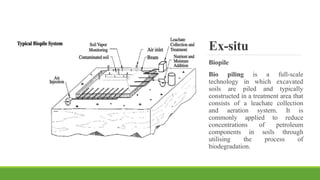
Bio piling is a full-scale
technology in which excavated
soils are piled and typically
constructed in a treatment area that
consists of a leachate collection
and aeration system. It is
commonly applied to reduce
concentrations of petroleum
components in soils through
utilising the process of
biodegradation.
Ex-situ
Bioreactor
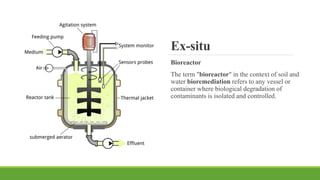
The term "bioreactor" in the context of soil and
water bioremediation refers to any vessel or
container where biological degradation of
contaminants is isolated and controlled.
Ex-situ
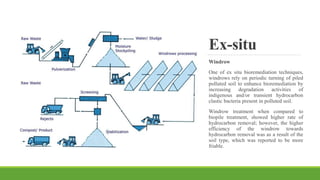
Windrow
One of ex situ bioremediation techniques,
windrows rely on periodic turning of piled
polluted soil to enhance bioremediation by
increasing degradation activities of
indigenous and/or transient hydrocarbon
clastic bacteria present in polluted soil.
Windrow treatment when compared to
biopile treatment, showed higher rate of
hydrocarbon removal; however, the higher
efficiency of the windrow towards
hydrocarbon removal was as a result of the
soil type, which was reported to be more
friable.

Techniques for bioremediation

  • 1.
    Techniques for Bioremediation DEPARTMENTOF BIOINFORMATICS AND BIOTECHNOLOGY GC UNIVERSITY FAISALABAD HASNAT KHAN 16618
  • 2.
    Bioremediation Bioremediation is atreatment process that uses naturally occurring microorganisms (yeast, fungi, or bacteria) to break down, or degrade, hazardous substances into less toxic or nontoxic substances. How does it work? Bioremediation technologies assist microorganisms' growth and increase microbial populations by creating optimum environmental conditions for them to detoxify the maximum amount of contaminants. The specific bioremediation technology used is determined by several factors, for instance, the type of microorganisms present, the site conditions, and the quantity and toxicity of contaminant chemicals.
  • 3.
    Bioremediation Techniques In-situ Soil andassociated ground water is treated in place without excavation Ex-situ Excavate prior to treatment
  • 4.
    In-situ Ex-situ oOnly Ex-situ processallow an efficient optimization of incubation parameters (biostimulation) Natural Attenuation Enhanced Biopile Windrow Bioreactor Bioslurping Bioventing Biosparging Phytorediation Land Farming
  • 5.
    In-situ In situ remediationis performed directly on the site without excavating soil contaminants or disturbance to the soil structure.
  • 6.
    Natural Attenuation Natural attenuation refersto processes that naturally transform contaminants to less harmful forms or immobilize contaminants so that they are less of a threat to the environment. 1. Volatilization 2. Incorporation as biomass 3. Degradation 4. Stabilization
  • 7.
    Enhanced Biosparging Biosparging involve theinjection of air under pressure below the water table to increase groundwater oxygen concentrations and enhance the rate of biological degradation of contaminants by naturally occurring bacteria.
  • 8.
    Enhanced Bioventing Bioventing is aprocess of stimulating the natural in situ biodegradation of contaminants in soil by providing air or oxygen to existing soil microorganisms.
  • 9.
    Enhanced Bioslurping Bioslurping is theadaptation and application of vacuum-enhanced dewatering technologies to remediate hydrocarbon-contaminated sites. Bioslurping utilizes elements of both, bioventing and free product recovery, to address two separate contaminant media.
  • 10.
    Enhanced Phytoremediation Phytoremediation is abioremediation process that uses various types of plants to remove, transfer, stabilize, and/or destroy contaminants in the soil and groundwater. Types of Phytoremediation 1. Rhizosphere biodegradation 2. Phyto-stabilization 3. Phyto-accumulation 4. Phyto-degradation
  • 11.
    Ex-situ Ex-situ bioremediation isa biological process in which excavated soil is placed in a lined above-ground treatment area and aerated following processing to enhance the degradation of organic contaminants by the indigenous microbial population.
  • 12.
    Ex-situ Land Farming Land farmingis a bioremediation treatment process that is performed in the upper soil zone or in biotreatment cells. Contaminated soils, sediments, or sludges are incorporated into the soil surface and periodically turned over or tilled to aerate the mixture. 1. HDPE liner 2. Sump pump to collect leachate 3. Layer of pea gravel 4. Layer of polluted soil to be treated 5. Chopped alfalfa hay to retain moisture 6. Wheels on sprinkler piping system 7. Piping frame, aluminium or PVC pipes with frequent holes, sufficient to allow water, nutrients and bacteria to treat the land farm plot 8. Flexible leachate collection hose. 9. Bypass valve that allows leachate to be circulated directly to water distribution tank, when bioreactor is full or completing a bacterial growth cycle 10. Recirculation hose 11. Alken-Murray Bio activator 2000, bioreactor unit 12. Fresh water supply hoses 13. Pumps for fresh water 14. Treated water hose 15. Water distribution tank 16. Pump for distribution tank
  • 13.
    Ex-situ Biopile Bio piling isa full-scale technology in which excavated soils are piled and typically constructed in a treatment area that consists of a leachate collection and aeration system. It is commonly applied to reduce concentrations of petroleum components in soils through utilising the process of biodegradation.
  • 14.
    Ex-situ Bioreactor The term "bioreactor"in the context of soil and water bioremediation refers to any vessel or container where biological degradation of contaminants is isolated and controlled.
  • 15.
    Ex-situ Windrow One of exsitu bioremediation techniques, windrows rely on periodic turning of piled polluted soil to enhance bioremediation by increasing degradation activities of indigenous and/or transient hydrocarbon clastic bacteria present in polluted soil. Windrow treatment when compared to biopile treatment, showed higher rate of hydrocarbon removal; however, the higher efficiency of the windrow towards hydrocarbon removal was as a result of the soil type, which was reported to be more friable.