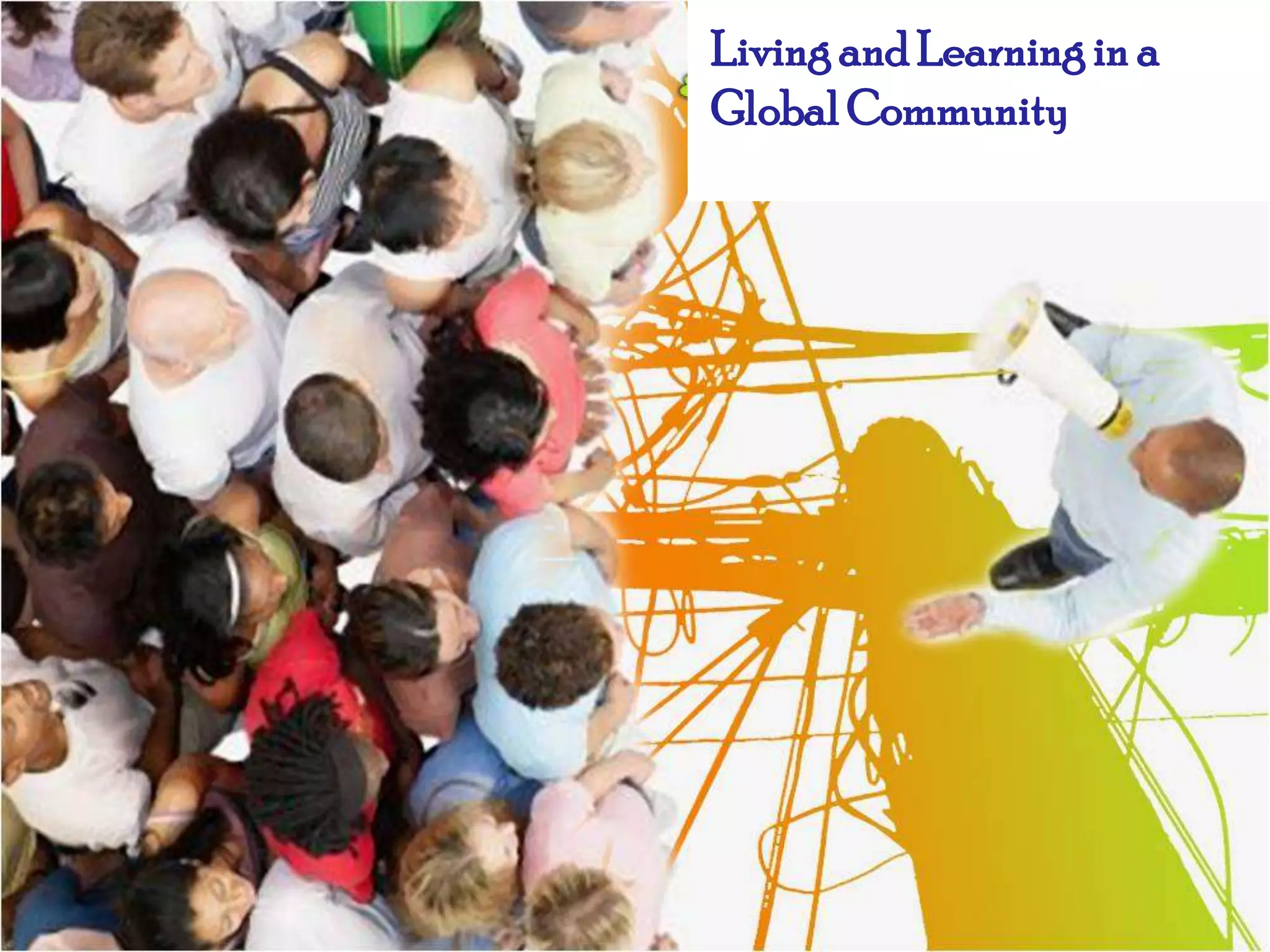
Living and Learning in a Global Community
HousekeepingPaperless handoutshttp://21stcenturylearning.wikispaces.comhttp://delicious.com/tag/lbc10Sheryl Nussbaum-BeachCo-Founder & CEO Powerful Learning Practice, LLChttp://plpnetwork.comsheryl@plpnetwork.com
How will education be different tomorrow because of our meeting today? How will you contextualize and mobilize what you learn?How will you leverage, how will you enable your faculty to leverage- collective intelligence?
As a teacher, student, parent, administrator, policy maker…Are you using the smallest number of high leverage, easy to understand actions to unleash stunningly powerful consequence?
Principle of the Path“Direction-not intention-determines our destination.” Andy StanleyAre your daily choices as a 21st Century Administrator taking you and your school in the direction you want to go?
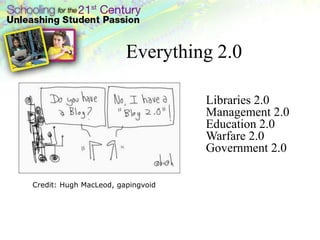
Everything 2.0By the year 2011 80% of all Fortune 500 companies will be using immersive worlds – Gartner Vice President Jackie Fenn Libraries 2.0Management 2.0 Education 2.0Warfare 2.0Government 2.0Credit: Hugh MacLeod, gapingvoid
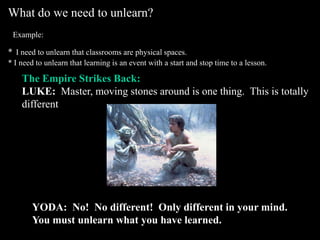
What do we need to unlearn? Example:*I need to unlearn that classrooms are physical spaces.* I need to unlearn that learning is an event with a start and stop time to a lesson.The Empire Strikes Back:LUKE:  Master, moving stones around is one thing.  This is totallydifferent. YODA:  No!  No different!  Only different in your mind.  You must unlearn what you have learned.
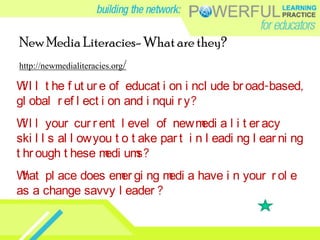
New Media Literacies- What are they?http://newmedialiteracies.org/Will the future of education include broad-based, global reflection and inquiry?Will your current level of new media literacy skills allow you to take part in leading learning through these mediums?What place does emerging media have in your role as a change savvy leader?
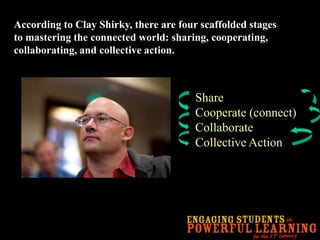
According to Clay Shirky, there are four scaffolded stages to mastering the connected world: sharing, cooperating, collaborating, and collective action.ShareCooperate (connect)CollaborateCollective Action
Define CommunityDefine Networks
A Definition of CommunityCommunities are quite simply, collections of individuals who are bound together by natural will and a set of shared ideas and ideals.“A system in which people can enter into relations that are determined by problems or shared ambitions rather than by rules or structure.” (Heckscher, 1994, p. 24).The process of social learning that occurs when people who have a common interest in some subject or problem collaborate over an extended period to share ideas, find solutions, and build innovations. (Wikipedia)
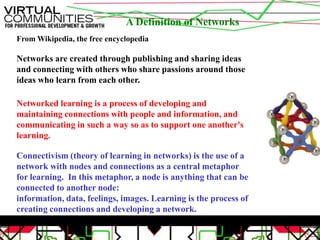
A Definition of NetworksFrom Wikipedia, the free encyclopediaNetworks are created through publishing and sharing ideas and connecting with others who share passions around those ideas who learn from each other.Networked learning is a process of developing and maintaining connections with people and information, and communicating in such a way so as to support one another's learning.Connectivism (theory of learning in networks) is the use of a network with nodes and connections as a central metaphor for learning.  In this metaphor, a node is anything that can be connected to another node: information, data, feelings, images. Learning is the process of creating connections and developing a network.
Community is the New Professional Development Cochran-Smith and Lytle (1999a) describe three ways of knowing and constructing knowledge that align closely with PLP's philosophy and are worth mentioning here. Knowledge for Practice is often reflected in traditional PD efforts when a trainer shares with teachers information produced by educational researchers. This knowledge presumes a commonly accepted degree of correctness about what is being shared. The learner is typically passive in this kind of "sit and get" experience. This kind of knowledge is difficult for teachers to transfer to classrooms without support and follow through. After a workshop, much of what was useful gets lost in the daily grind, pressures and isolation of teaching. Knowledge in Practice recognizes the importance of teacher experience and practical knowledge in improving classroom practice. As a teacher tests out new strategies and assimilates them into teaching routines they construct knowledge in practice. They learn by doing. This knowledge is strengthened when teachers reflect and share with one another lessons learned during specific teaching sessions and describe the tacit knowledge embedded in their experiences. 
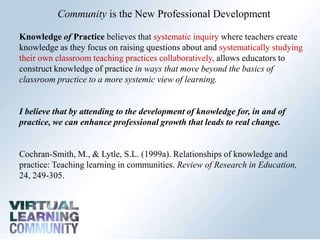
Community is the New Professional Development Knowledge of Practice believes that systematic inquiry where teachers create knowledge as they focus on raising questions about and systematically studying their own classroom teaching practices collaboratively, allows educators to construct knowledge of practice in ways that move beyond the basics of classroom practice to a more systemic view of learning.I believe that by attending to the development of knowledge for, in and of practice, we can enhance professional growth that leads to real change. Cochran-Smith, M., & Lytle, S.L. (1999a). Relationships of knowledge and practice: Teaching learning in communities. Review of Research in Education, 24, 249-305.
PD of the 21st Century will be—teacher directed through:Connections & Relationships(PLNs, PLCs & CoP)
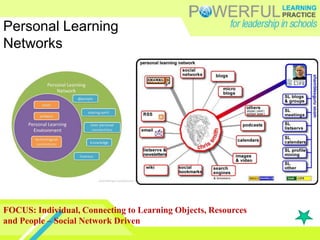
Personal Learning NetworksFOCUS: Individual, Connecting to Learning Objects, Resources and People – Social Network Driven
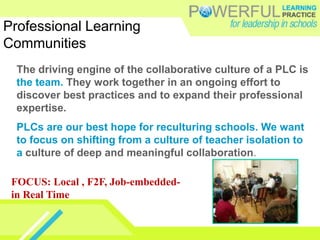
Professional Learning CommunitiesThe driving engine of the collaborative culture of a PLC is the team. They work together in an ongoing effort to discover best practices and to expand their professional expertise. PLCs are our best hope for reculturing schools. We want to focus on shifting from a culture of teacher isolation to a culture of deep and meaningful collaboration.FOCUS: Local , F2F, Job-embedded- in Real Time
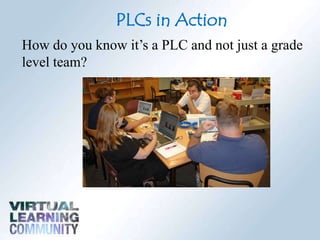
How do you know it’s a PLC and not just a grade level team?PLCs in Action
CommunitiesBuilding capacity in both individuals and groupsSelf efficacy  and collective efficacy Global citizenship within a local context
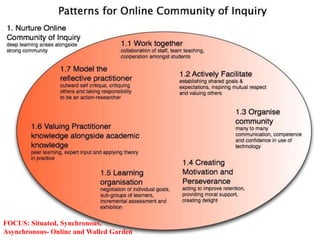
Communities of PracticeFOCUS: Situated, Synchronous, Asynchronous- Online and Walled Garden
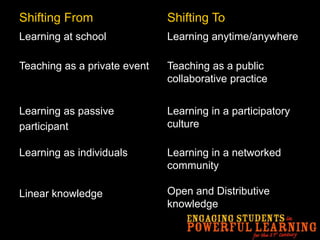
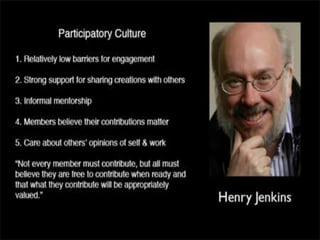
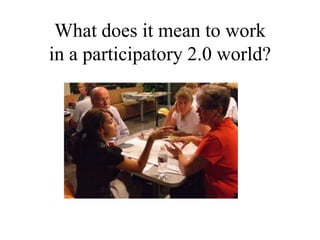
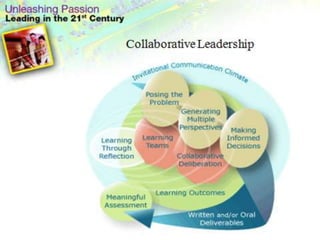
What does it mean to work in a participatory 2.0 world?
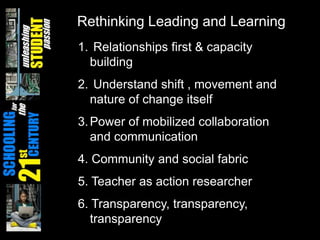
Rethinking Leading and LearningRelationships first & capacity building Understand shift , movement and nature of change itselfPower of mobilized collaboration and communication4. Community and social fabric 5. Teacher as action researcher6. Transparency, transparency, transparency
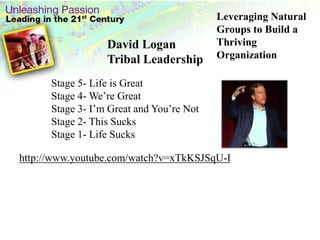
Leveraging Natural Groups to Build a Thriving OrganizationDavid LoganTribal LeadershipStage 5- Life is GreatStage 4- We’re GreatStage 3- I’m Great and You’re NotStage 2- This SucksStage 1- Life Suckshttp://www.youtube.com/watch?v=xTkKSJSqU-I
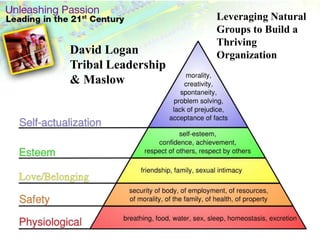
Leveraging Natural Groups to Build a Thriving OrganizationDavid LoganTribal Leadership& Maslow
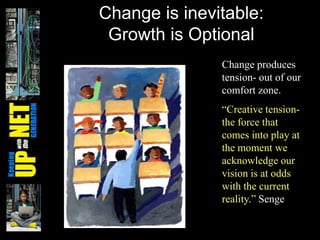
Change is inevitable: Growth is OptionalChange produces tension- out of our comfort zone.“Creative tension- the force that comes into play at the moment we acknowledge our vision is at odds with the current reality.” Senge
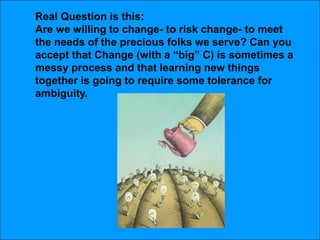
Real Question is this:Are we willing to change- to risk change- to meet the needs of the precious folks we serve? Can you accept that Change (with a “big” C) is sometimes a messy process and that learning new things together is going to require some tolerance for ambiguity.
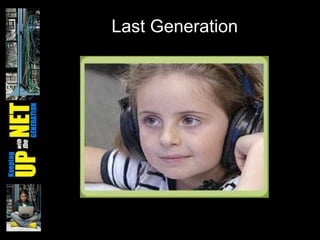
Last Generation
Want your teachers to learn in this way? PLP leads job-embedded, ongoing PD.Want to know more?http://plpnetwork.com/infosession/

Istelbc

  • 1.
    Living and Learningin a Global Community
  • 2.
  • 3.
    How will educationbe different tomorrow because of our meeting today? How will you contextualize and mobilize what you learn?How will you leverage, how will you enable your faculty to leverage- collective intelligence?
  • 4.
    As a teacher,student, parent, administrator, policy maker…Are you using the smallest number of high leverage, easy to understand actions to unleash stunningly powerful consequence?
  • 5.
    Principle of thePath“Direction-not intention-determines our destination.” Andy StanleyAre your daily choices as a 21st Century Administrator taking you and your school in the direction you want to go?
  • 6.
    Everything 2.0By theyear 2011 80% of all Fortune 500 companies will be using immersive worlds – Gartner Vice President Jackie Fenn Libraries 2.0Management 2.0 Education 2.0Warfare 2.0Government 2.0Credit: Hugh MacLeod, gapingvoid
  • 7.
    What do weneed to unlearn? Example:*I need to unlearn that classrooms are physical spaces.* I need to unlearn that learning is an event with a start and stop time to a lesson.The Empire Strikes Back:LUKE:  Master, moving stones around is one thing.  This is totallydifferent. YODA:  No!  No different!  Only different in your mind.  You must unlearn what you have learned.
  • 10.
    New Media Literacies-What are they?http://newmedialiteracies.org/Will the future of education include broad-based, global reflection and inquiry?Will your current level of new media literacy skills allow you to take part in leading learning through these mediums?What place does emerging media have in your role as a change savvy leader?
  • 11.
    According to ClayShirky, there are four scaffolded stages to mastering the connected world: sharing, cooperating, collaborating, and collective action.ShareCooperate (connect)CollaborateCollective Action
  • 12.
  • 13.
    A Definition ofCommunityCommunities are quite simply, collections of individuals who are bound together by natural will and a set of shared ideas and ideals.“A system in which people can enter into relations that are determined by problems or shared ambitions rather than by rules or structure.” (Heckscher, 1994, p. 24).The process of social learning that occurs when people who have a common interest in some subject or problem collaborate over an extended period to share ideas, find solutions, and build innovations. (Wikipedia)
  • 14.
    A Definition ofNetworksFrom Wikipedia, the free encyclopediaNetworks are created through publishing and sharing ideas and connecting with others who share passions around those ideas who learn from each other.Networked learning is a process of developing and maintaining connections with people and information, and communicating in such a way so as to support one another's learning.Connectivism (theory of learning in networks) is the use of a network with nodes and connections as a central metaphor for learning. In this metaphor, a node is anything that can be connected to another node: information, data, feelings, images. Learning is the process of creating connections and developing a network.
  • 15.
    Community is theNew Professional Development Cochran-Smith and Lytle (1999a) describe three ways of knowing and constructing knowledge that align closely with PLP's philosophy and are worth mentioning here. Knowledge for Practice is often reflected in traditional PD efforts when a trainer shares with teachers information produced by educational researchers. This knowledge presumes a commonly accepted degree of correctness about what is being shared. The learner is typically passive in this kind of "sit and get" experience. This kind of knowledge is difficult for teachers to transfer to classrooms without support and follow through. After a workshop, much of what was useful gets lost in the daily grind, pressures and isolation of teaching. Knowledge in Practice recognizes the importance of teacher experience and practical knowledge in improving classroom practice. As a teacher tests out new strategies and assimilates them into teaching routines they construct knowledge in practice. They learn by doing. This knowledge is strengthened when teachers reflect and share with one another lessons learned during specific teaching sessions and describe the tacit knowledge embedded in their experiences. 
  • 16.
    Community is theNew Professional Development Knowledge of Practice believes that systematic inquiry where teachers create knowledge as they focus on raising questions about and systematically studying their own classroom teaching practices collaboratively, allows educators to construct knowledge of practice in ways that move beyond the basics of classroom practice to a more systemic view of learning.I believe that by attending to the development of knowledge for, in and of practice, we can enhance professional growth that leads to real change. Cochran-Smith, M., & Lytle, S.L. (1999a). Relationships of knowledge and practice: Teaching learning in communities. Review of Research in Education, 24, 249-305.
  • 17.
    PD of the21st Century will be—teacher directed through:Connections & Relationships(PLNs, PLCs & CoP)
  • 18.
    Personal Learning NetworksFOCUS:Individual, Connecting to Learning Objects, Resources and People – Social Network Driven
  • 19.
    Professional Learning CommunitiesThedriving engine of the collaborative culture of a PLC is the team. They work together in an ongoing effort to discover best practices and to expand their professional expertise. PLCs are our best hope for reculturing schools. We want to focus on shifting from a culture of teacher isolation to a culture of deep and meaningful collaboration.FOCUS: Local , F2F, Job-embedded- in Real Time
  • 20.
    How do youknow it’s a PLC and not just a grade level team?PLCs in Action
  • 21.
    CommunitiesBuilding capacity inboth individuals and groupsSelf efficacy and collective efficacy Global citizenship within a local context
  • 22.
    Communities of PracticeFOCUS:Situated, Synchronous, Asynchronous- Online and Walled Garden
  • 23.
    What does itmean to work in a participatory 2.0 world?
  • 24.
    Rethinking Leading andLearningRelationships first & capacity building Understand shift , movement and nature of change itselfPower of mobilized collaboration and communication4. Community and social fabric 5. Teacher as action researcher6. Transparency, transparency, transparency
  • 25.
    Leveraging Natural Groupsto Build a Thriving OrganizationDavid LoganTribal LeadershipStage 5- Life is GreatStage 4- We’re GreatStage 3- I’m Great and You’re NotStage 2- This SucksStage 1- Life Suckshttp://www.youtube.com/watch?v=xTkKSJSqU-I
  • 26.
    Leveraging Natural Groupsto Build a Thriving OrganizationDavid LoganTribal Leadership& Maslow
  • 28.
    Change is inevitable:Growth is OptionalChange produces tension- out of our comfort zone.“Creative tension- the force that comes into play at the moment we acknowledge our vision is at odds with the current reality.” Senge
  • 29.
    Real Question isthis:Are we willing to change- to risk change- to meet the needs of the precious folks we serve? Can you accept that Change (with a “big” C) is sometimes a messy process and that learning new things together is going to require some tolerance for ambiguity.
  • 30.
  • 31.
    Want your teachersto learn in this way? PLP leads job-embedded, ongoing PD.Want to know more?http://plpnetwork.com/infosession/