Introduction to Linguistics
  Session 10: Lexicology
              


                                        Edi Brata
                   http://e-learning.edibrata.com
Preview to the Previous Session
        (Morphology)
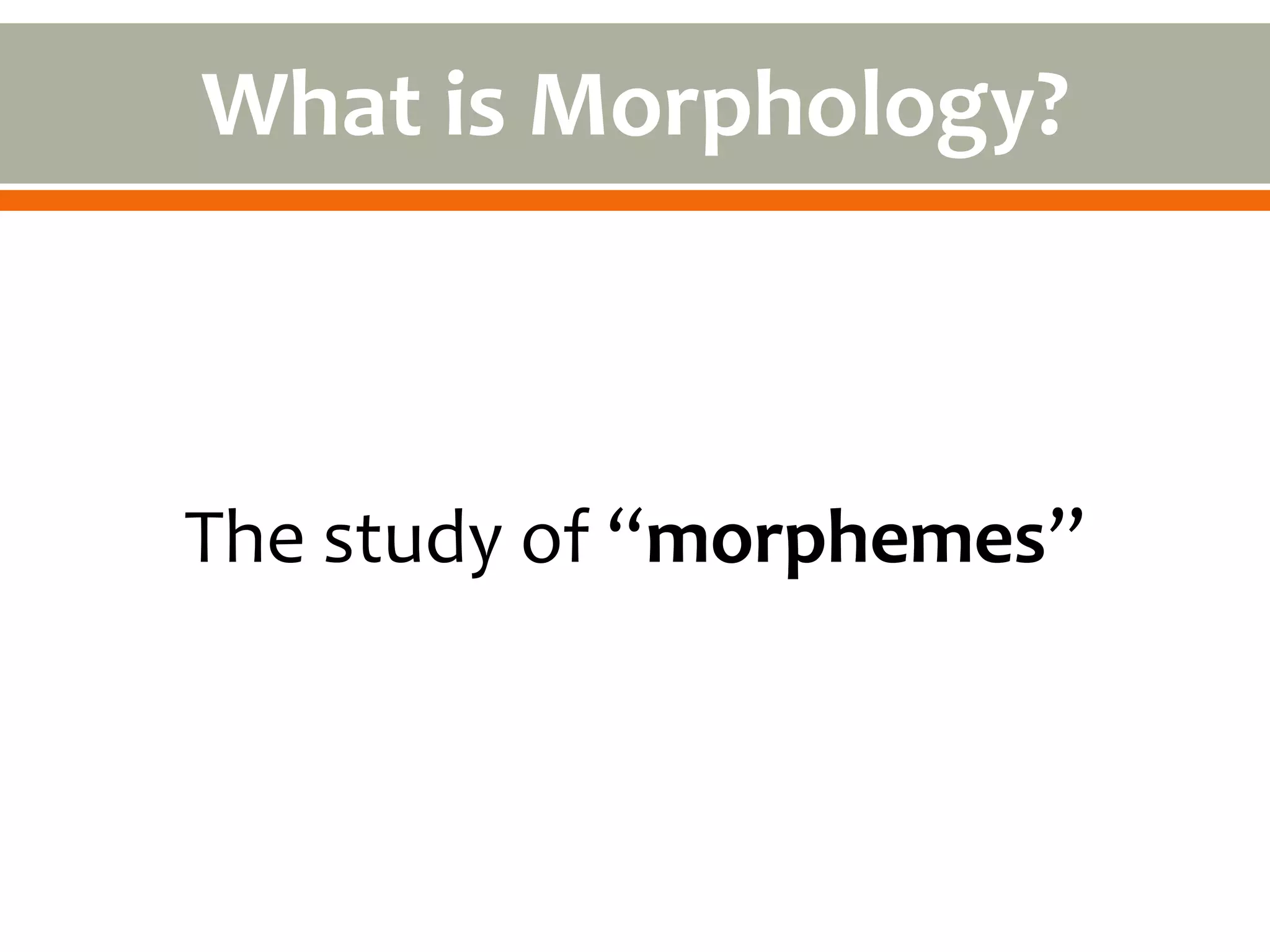
What is Morphology?


The study of “morphemes”
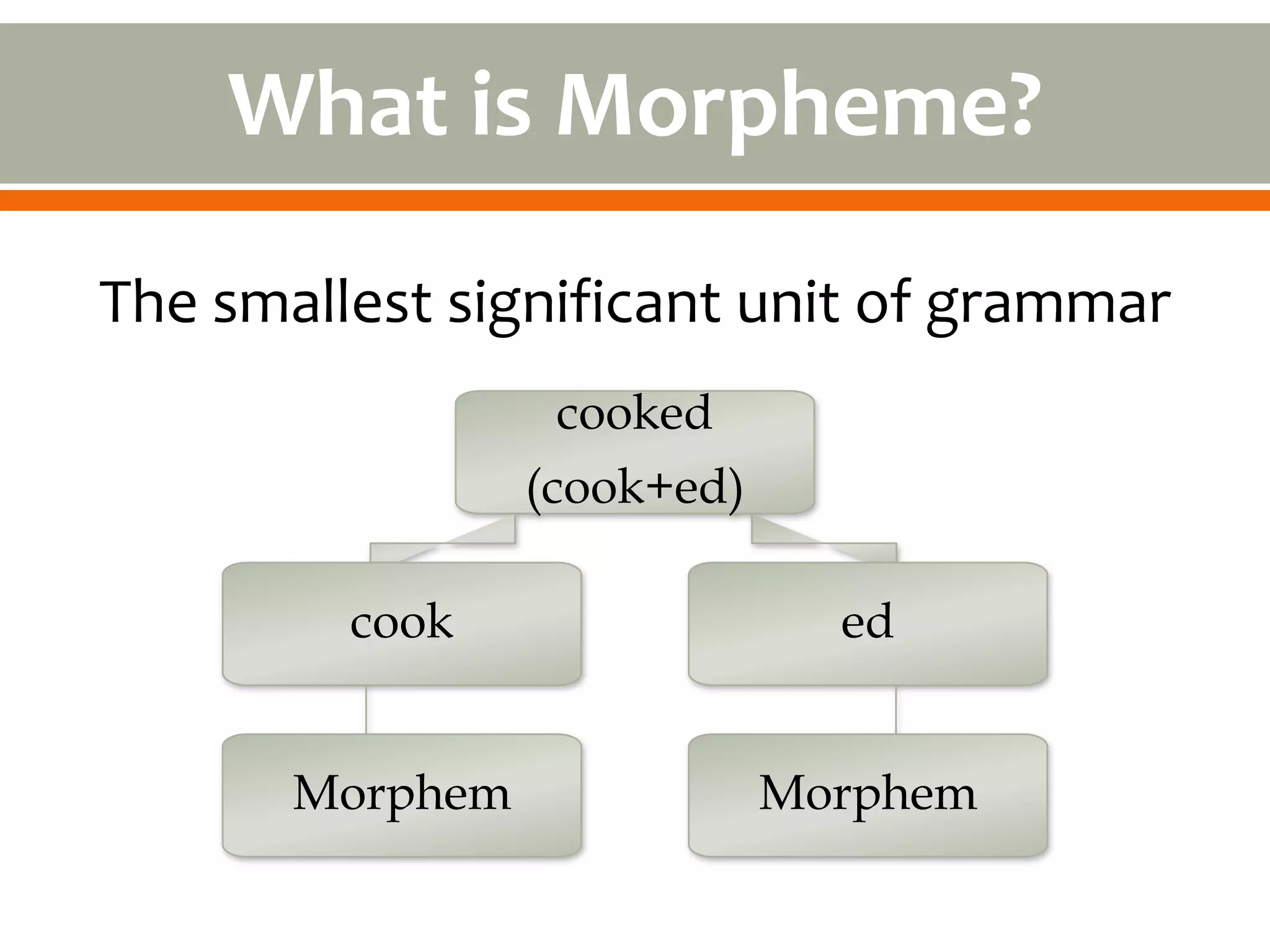
What is Morpheme?
The smallest significant unit of grammar
                  cooked
                 (cook+ed)

         cook                  ed


       Morphem               Morphem
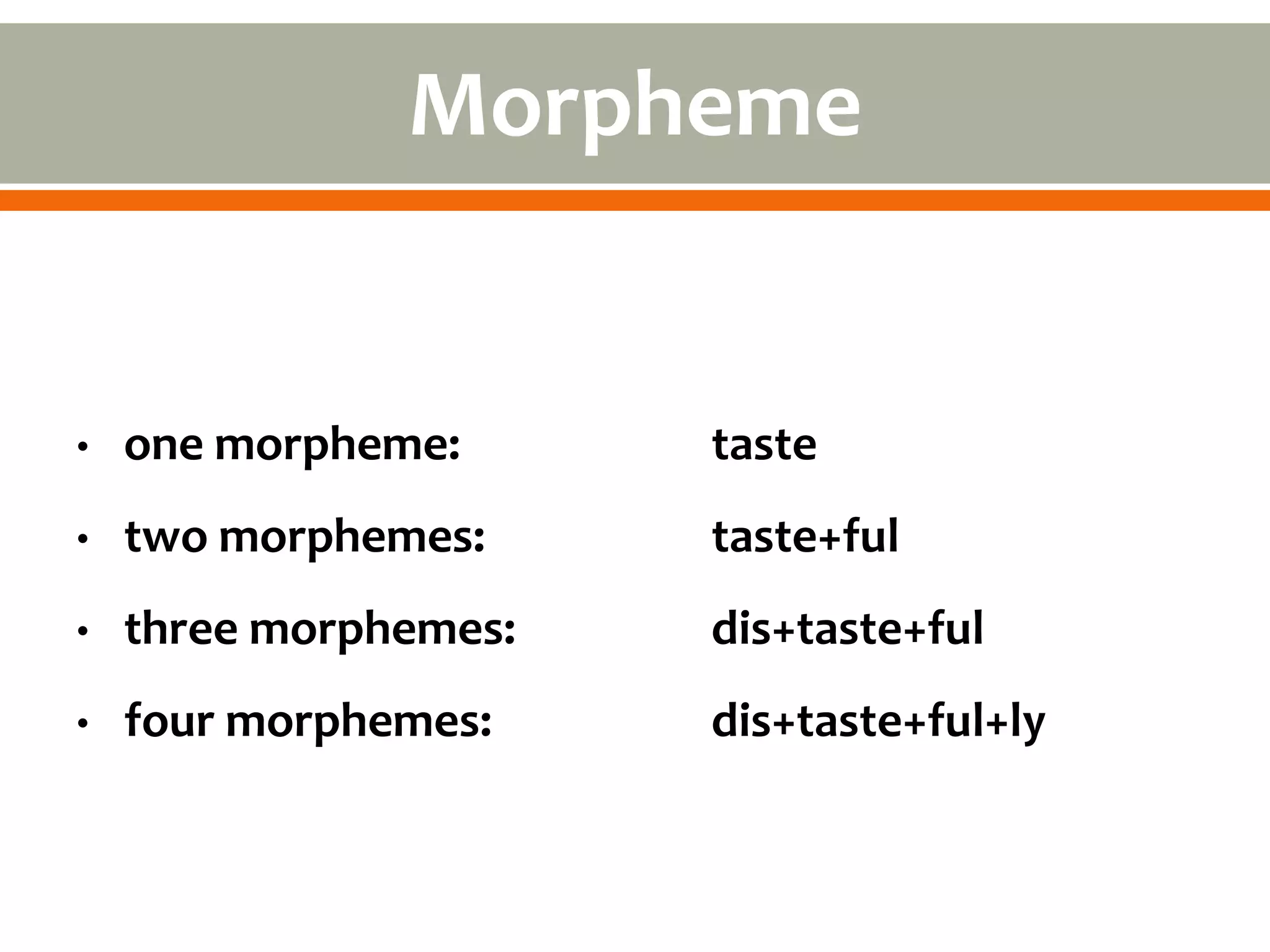
Morpheme


•   one morpheme:      taste
•   two morphemes:     taste+ful
•   three morphemes:   dis+taste+ful
•   four morphemes:    dis+taste+ful+ly
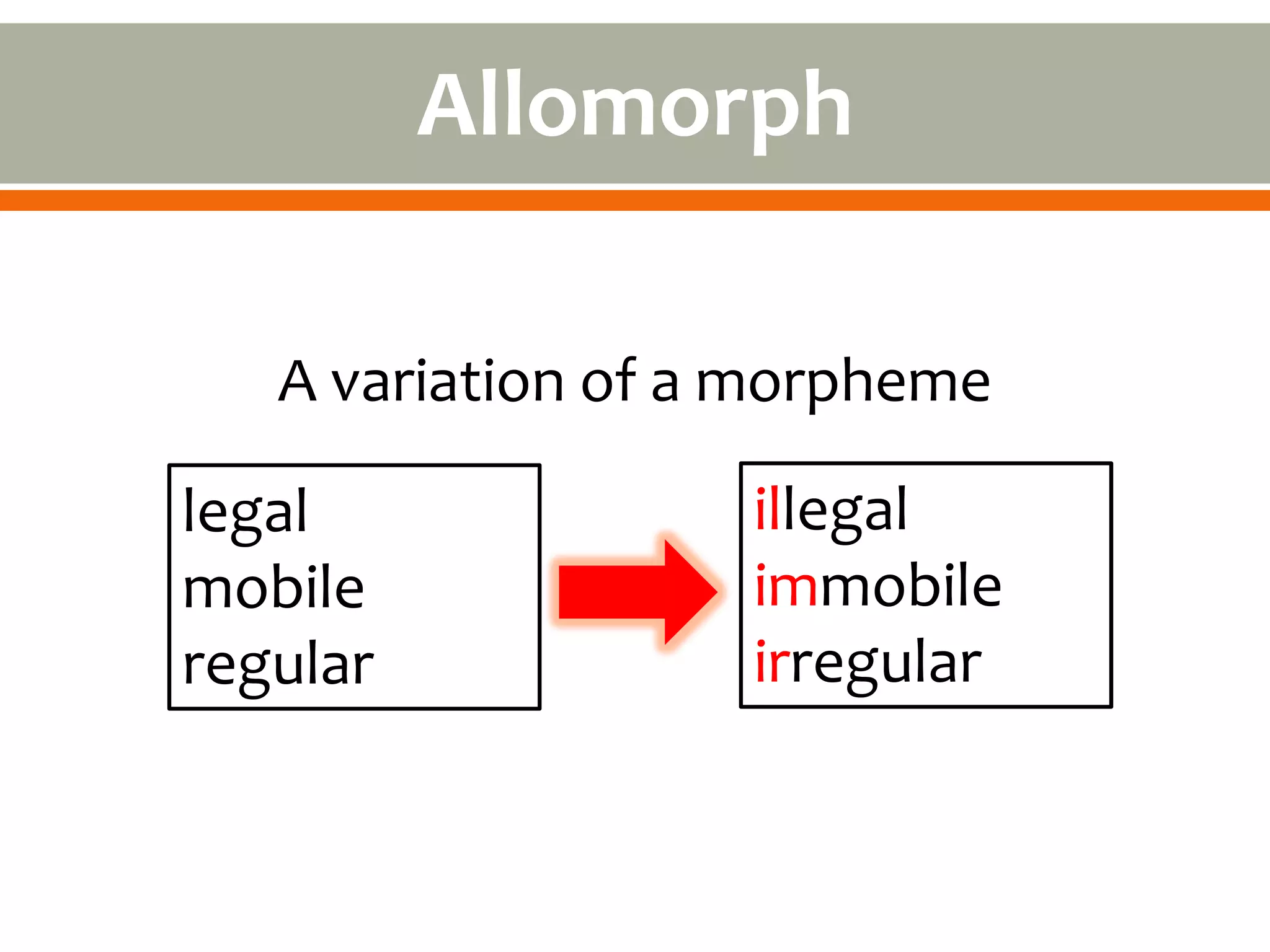
Allomorph

   A variation of a morpheme

legal              illegal
mobile             immobile
regular            irregular
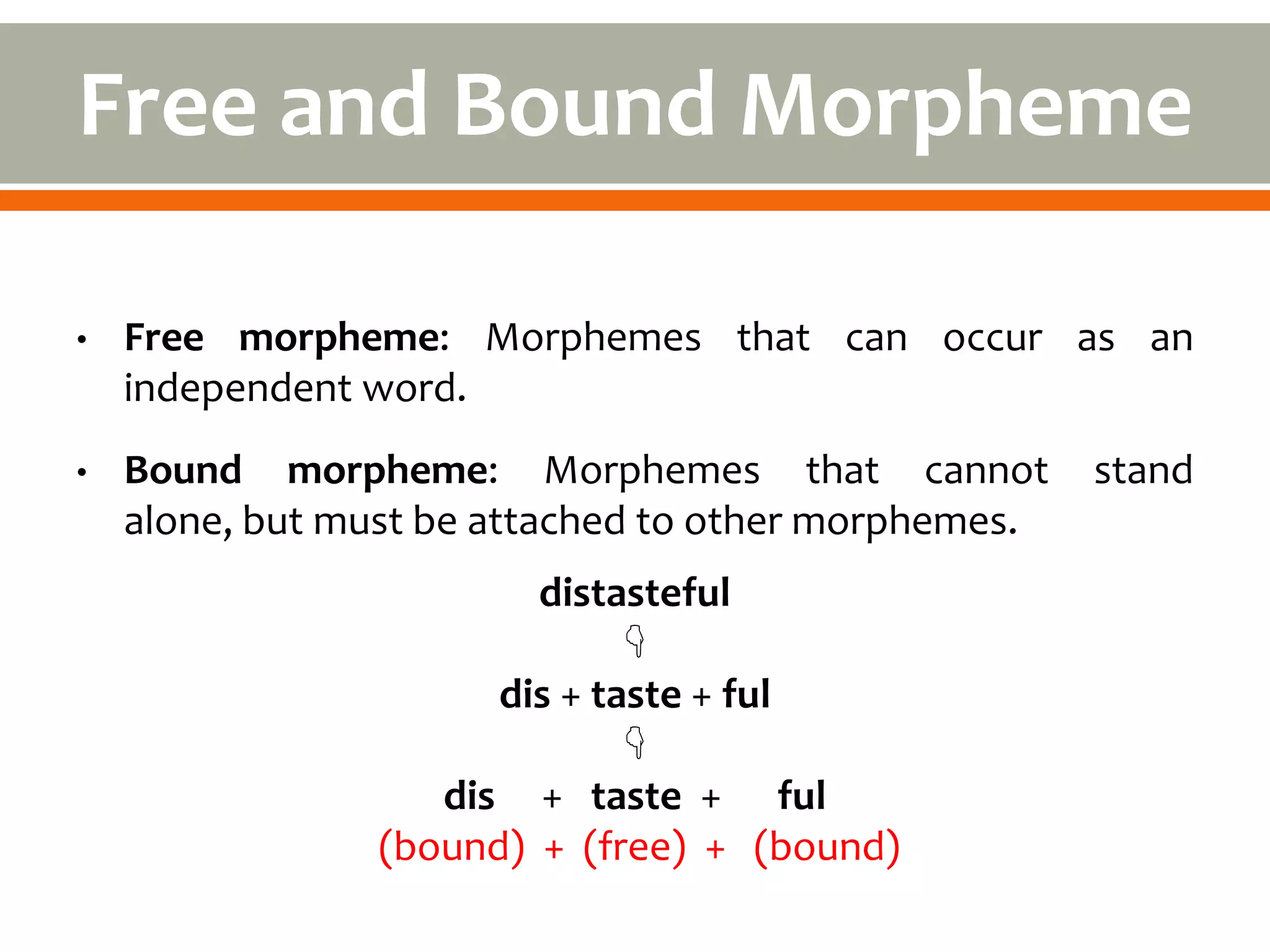
Free and Bound Morpheme

•   Free morpheme: Morphemes that can occur as an
    independent word.
•   Bound morpheme: Morphemes that cannot             stand
    alone, but must be attached to other morphemes.
                        distasteful
                              
                      dis + taste + ful
                              
                   dis + taste + ful
                (bound) + (free) + (bound)
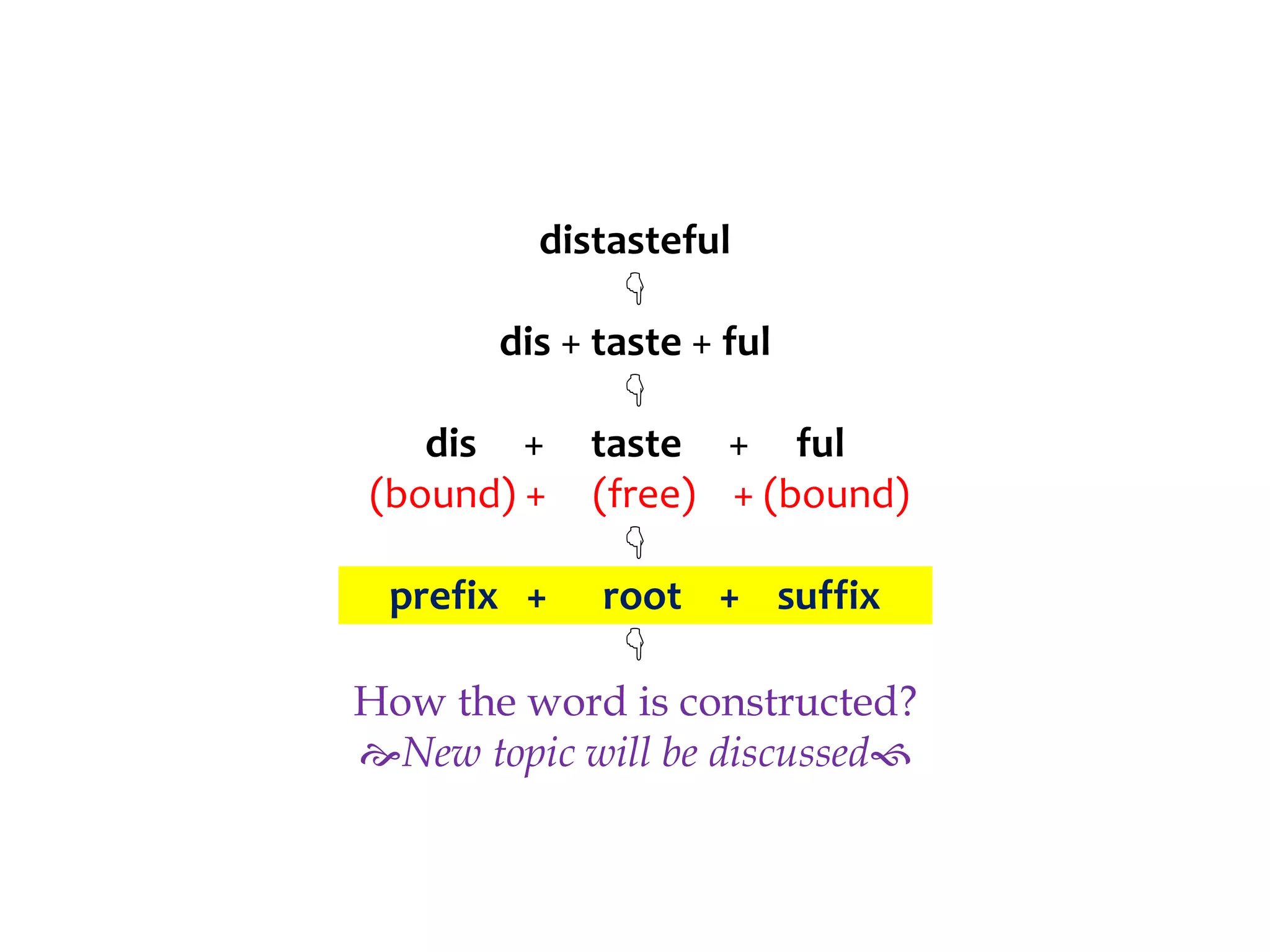
Our New Topic
          distasteful
                
        dis + taste + ful
                
    dis + taste + ful
 (bound) + (free) + (bound)
                
  prefix + root + suffix
                
 How the word is constructed?
 New topic will be discussed
Lexicology
Lexicology
    Lexicology What it is?

•    “The study of the lexicon or lexis (specified as the
     vocabulary or total stock of words of a language)”
     (Lipka, 1992: 1).

•    In simple, it is the study of words.
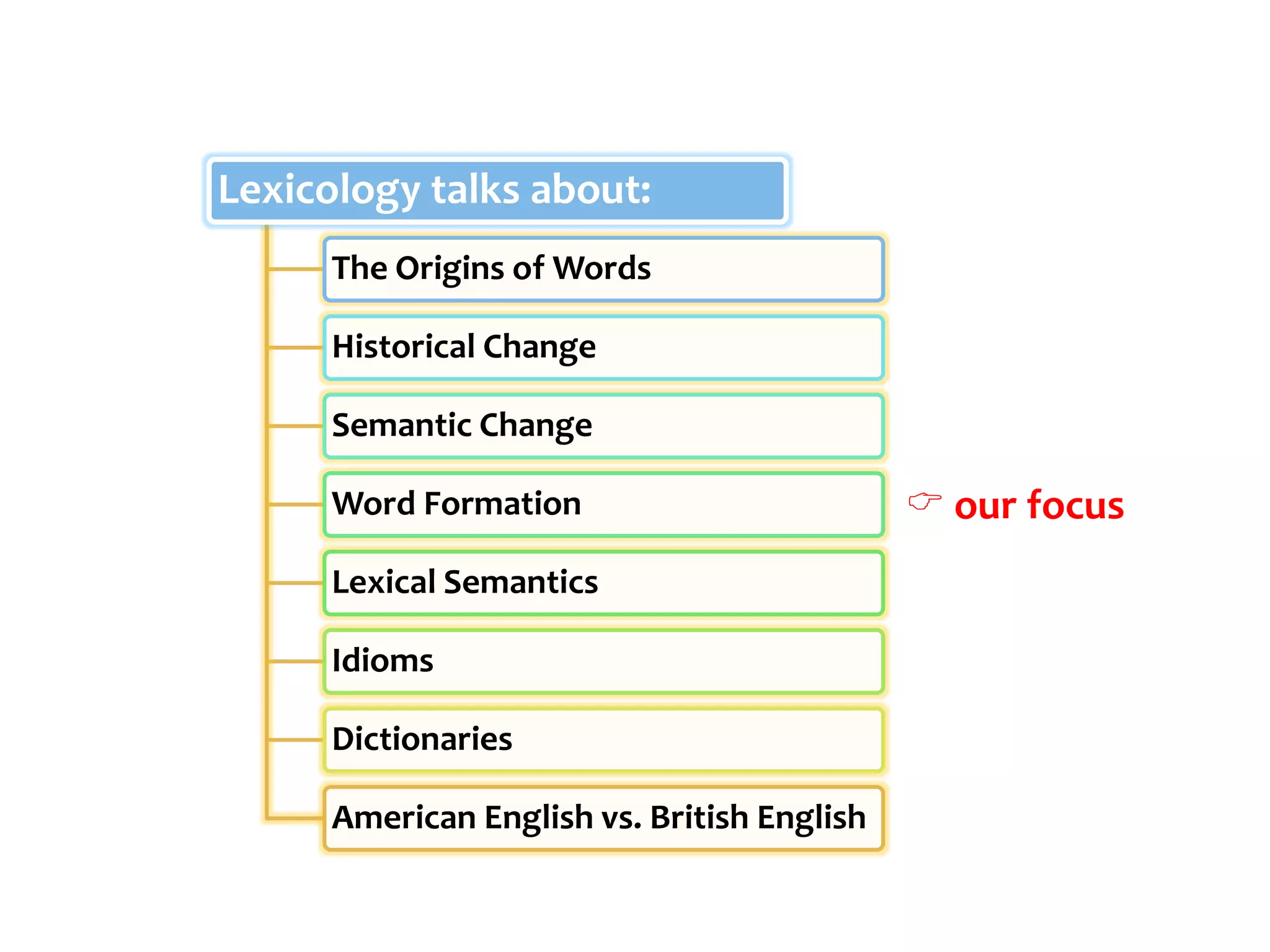
Lexicology talks about:
      The Origins of Words

      Historical Change

      Semantic Change

      Word Formation                          our focus
      Lexical Semantics

      Idioms

      Dictionaries

      American English vs. British English
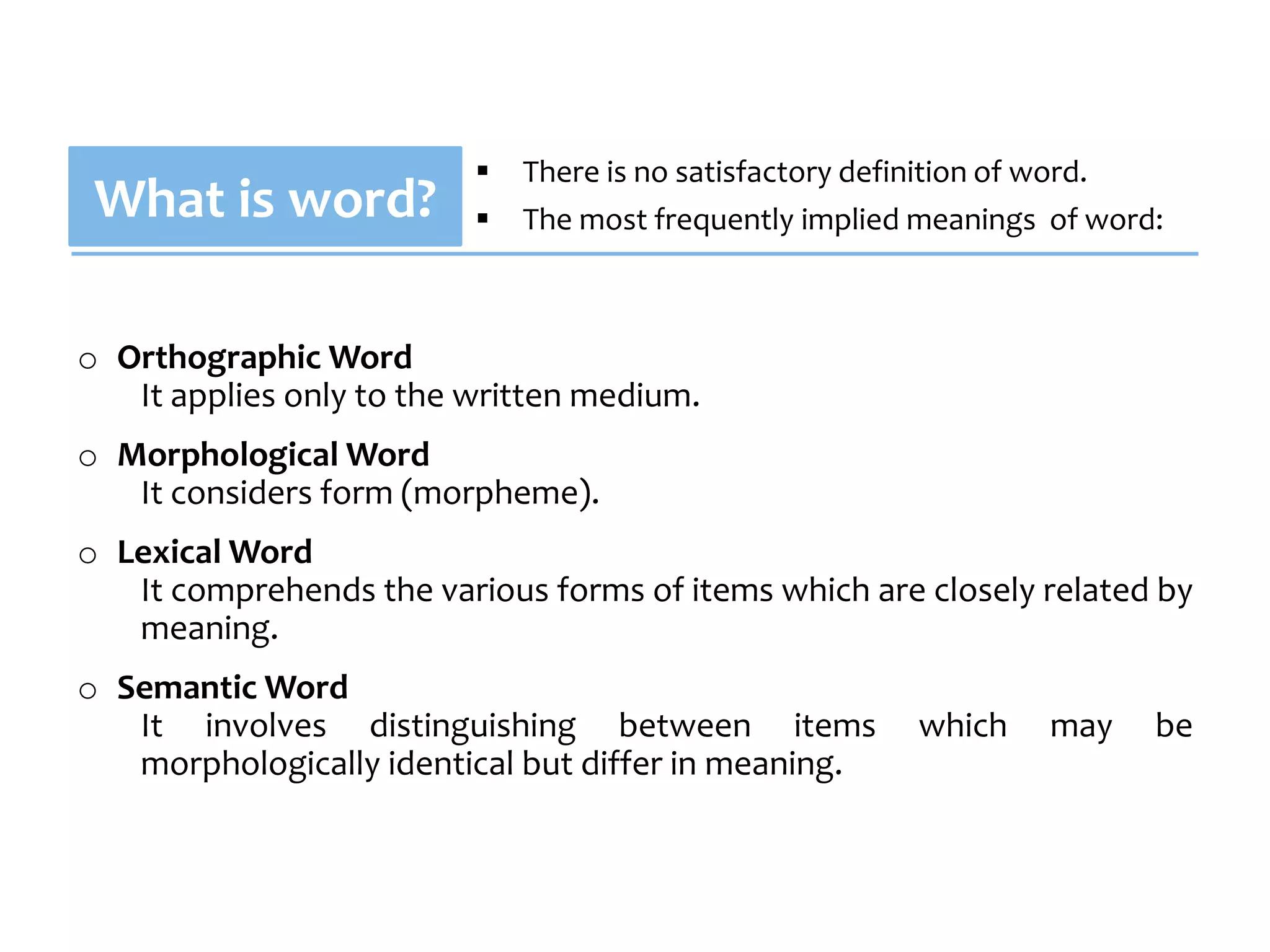
   There is no satisfactory definition of word.
 What is word?               The most frequently implied meanings of word:


o Orthographic Word
   It applies only to the written medium.
o Morphological Word
   It considers form (morpheme).
o Lexical Word
   It comprehends the various forms of items which are closely related by
   meaning.
o Semantic Word
   It involves distinguishing between items              which     may    be
   morphologically identical but differ in meaning.
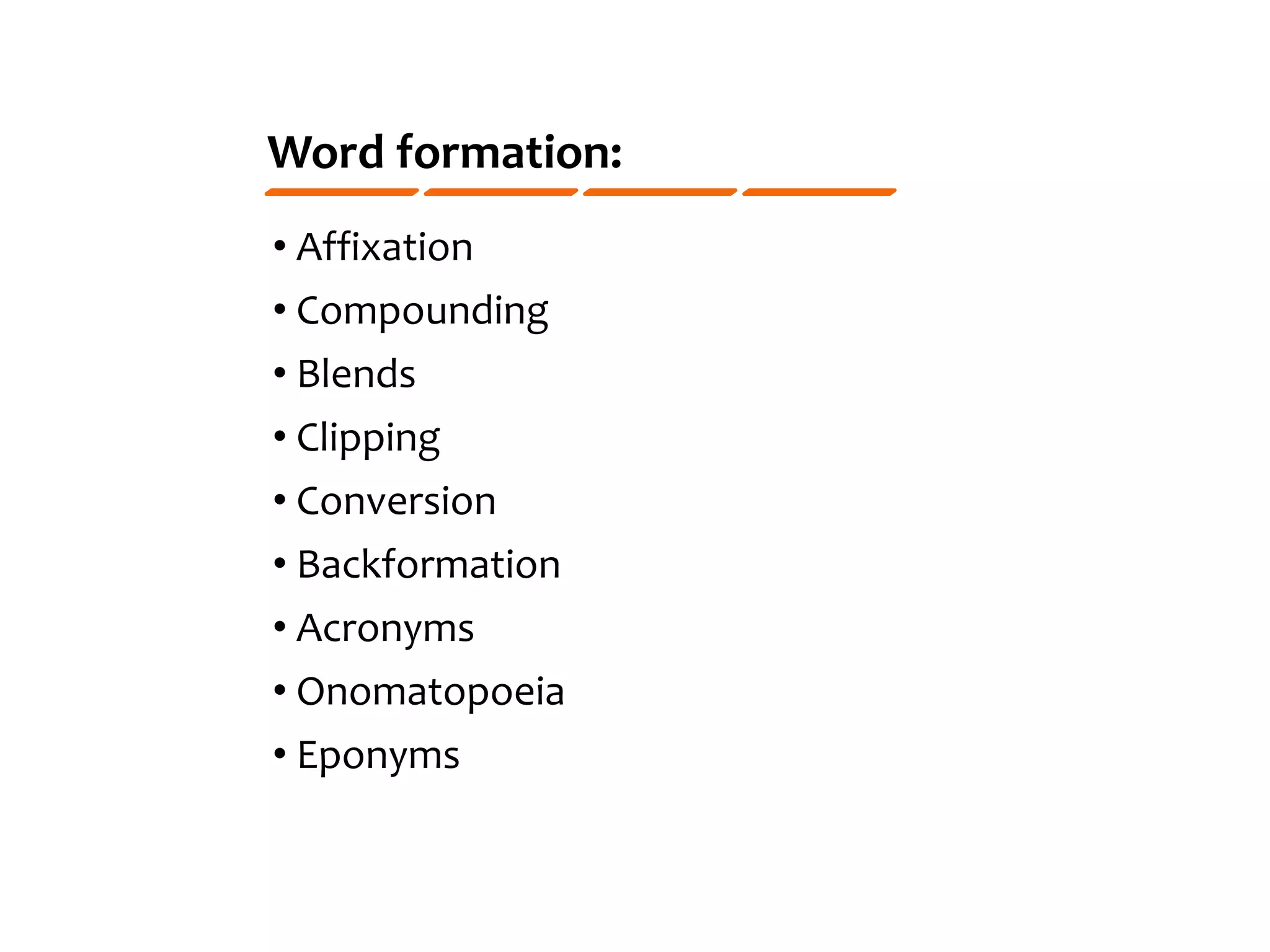
Word formation:
• Affixation
• Compounding
• Blends
• Clipping
• Conversion
• Backformation
• Acronyms
• Onomatopoeia
• Eponyms
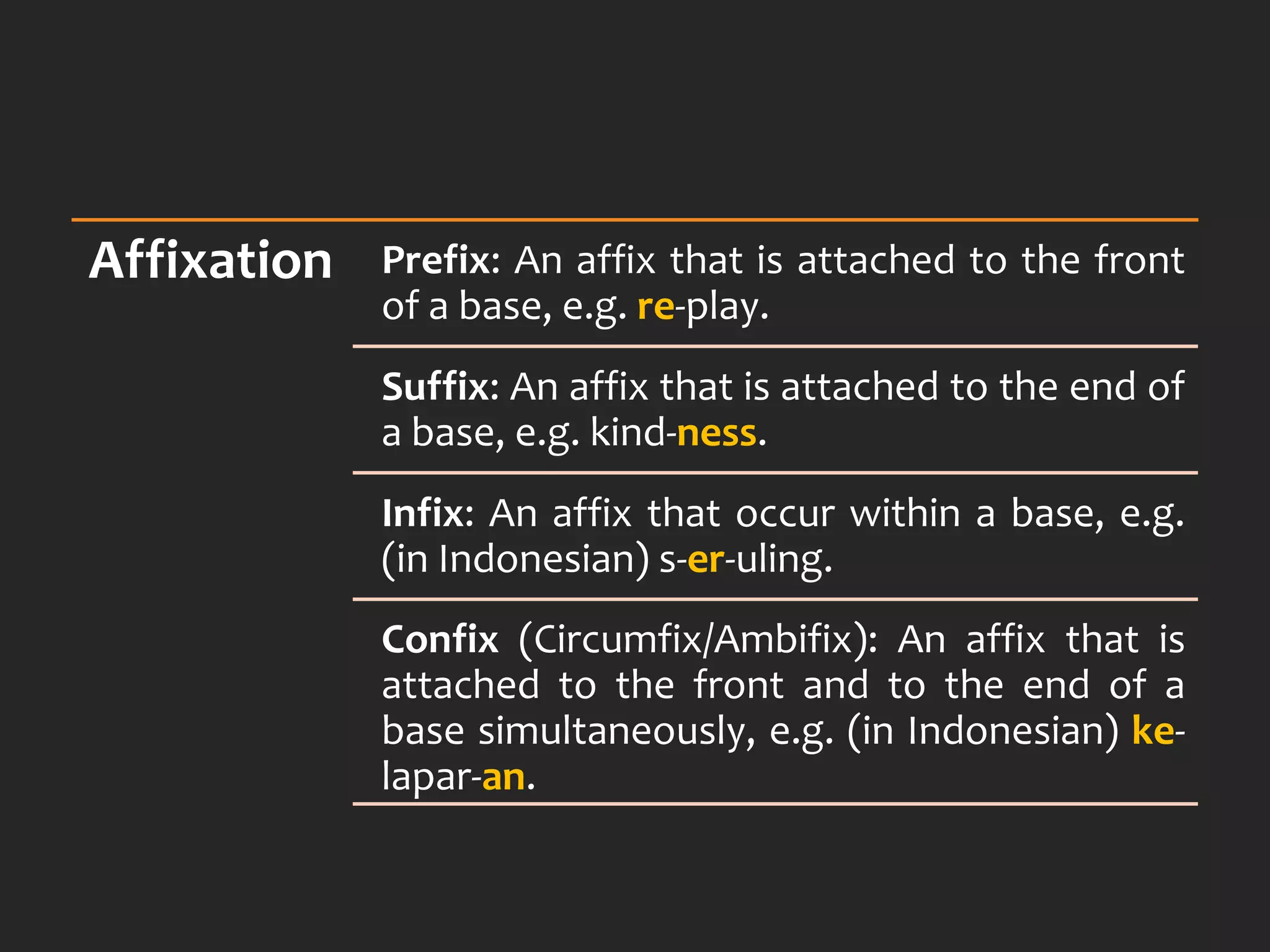
Affixation   Prefix: An affix that is attached to the front
             of a base, e.g. re-play.
             Suffix: An affix that is attached to the end of
             a base, e.g. kind-ness.
             Infix: An affix that occur within a base, e.g.
             (in Indonesian) s-er-uling.
             Confix (Circumfix/Ambifix): An affix that is
             attached to the front and to the end of a
             base simultaneously, e.g. (in Indonesian) ke-
             lapar-an.
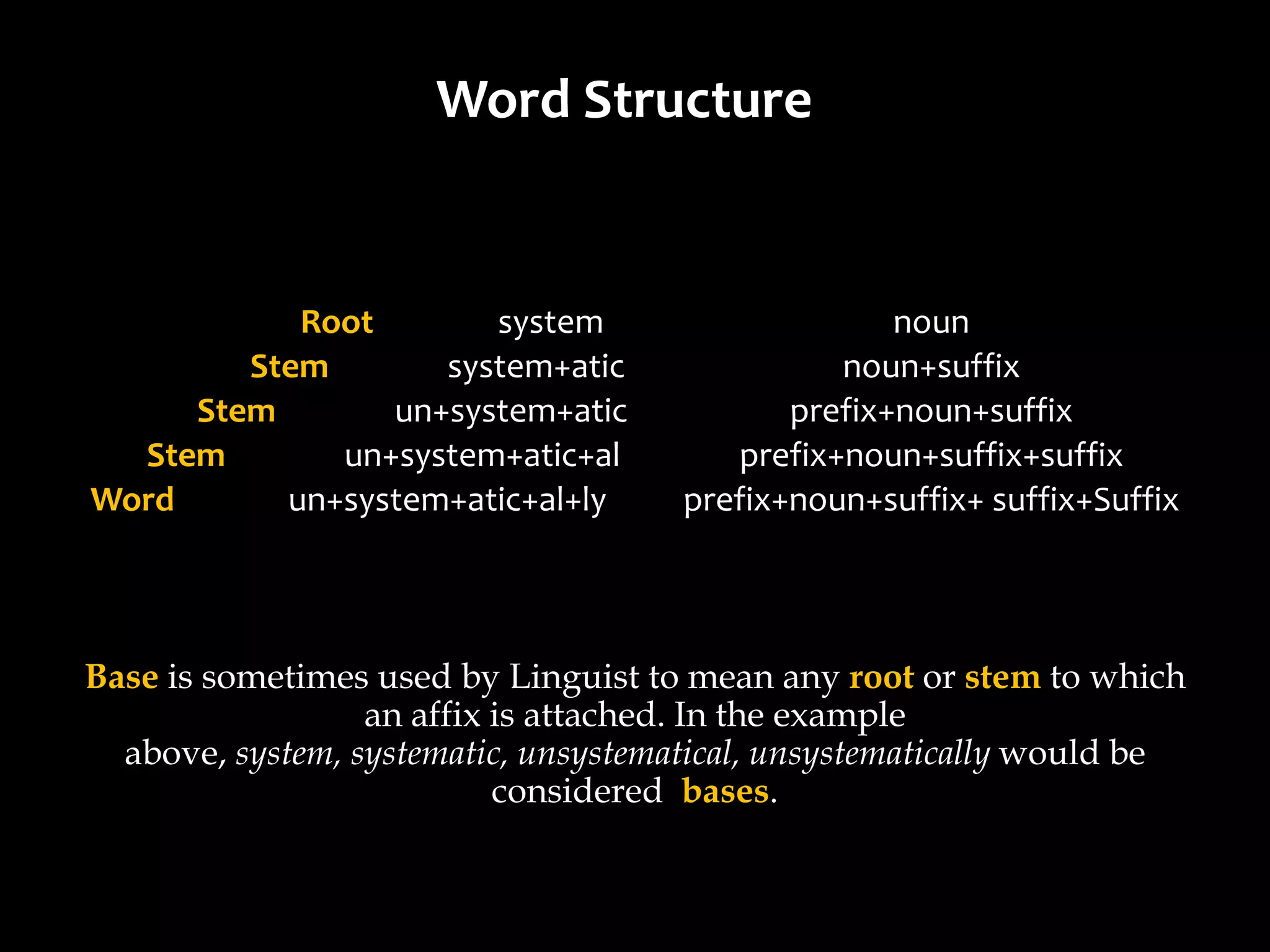
Word Structure


           Root       system                        noun
        Stem       system+atic                  noun+suffix
     Stem       un+system+atic               prefix+noun+suffix
  Stem       un+system+atic+al           prefix+noun+suffix+suffix
Word      un+system+atic+al+ly        prefix+noun+suffix+ suffix+Suffix


Base is sometimes used by Linguist to mean any root or stem to which
                  an affix is attached. In the example
  above, system, systematic, unsystematical, unsystematically would be
                           considered bases.
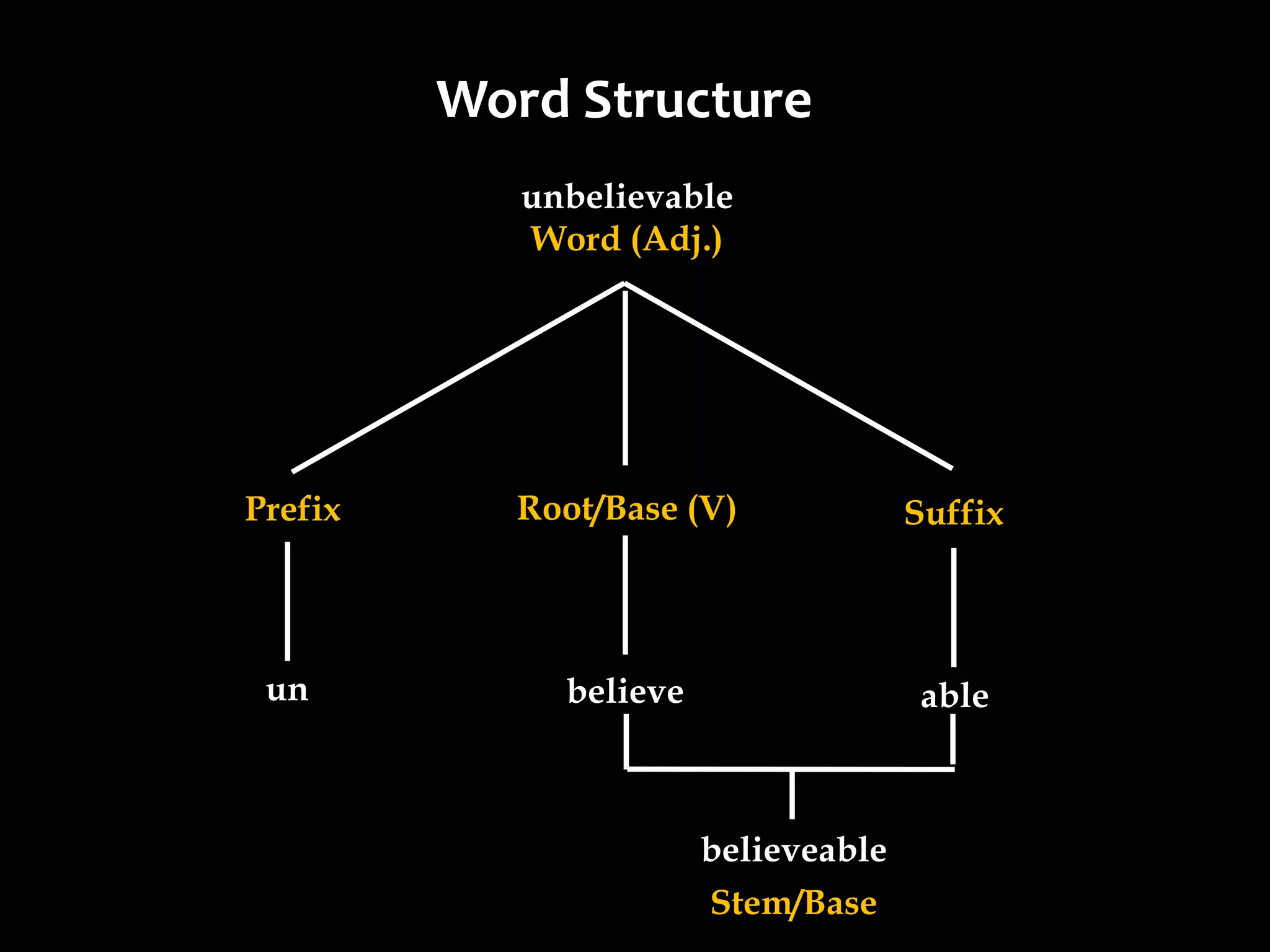
Word Structure
            unbelievable
            Word (Adj.)


Prefix     Root/Base (V)              Suffix


 un           believe                  able


                        believeable
                        Stem/Base
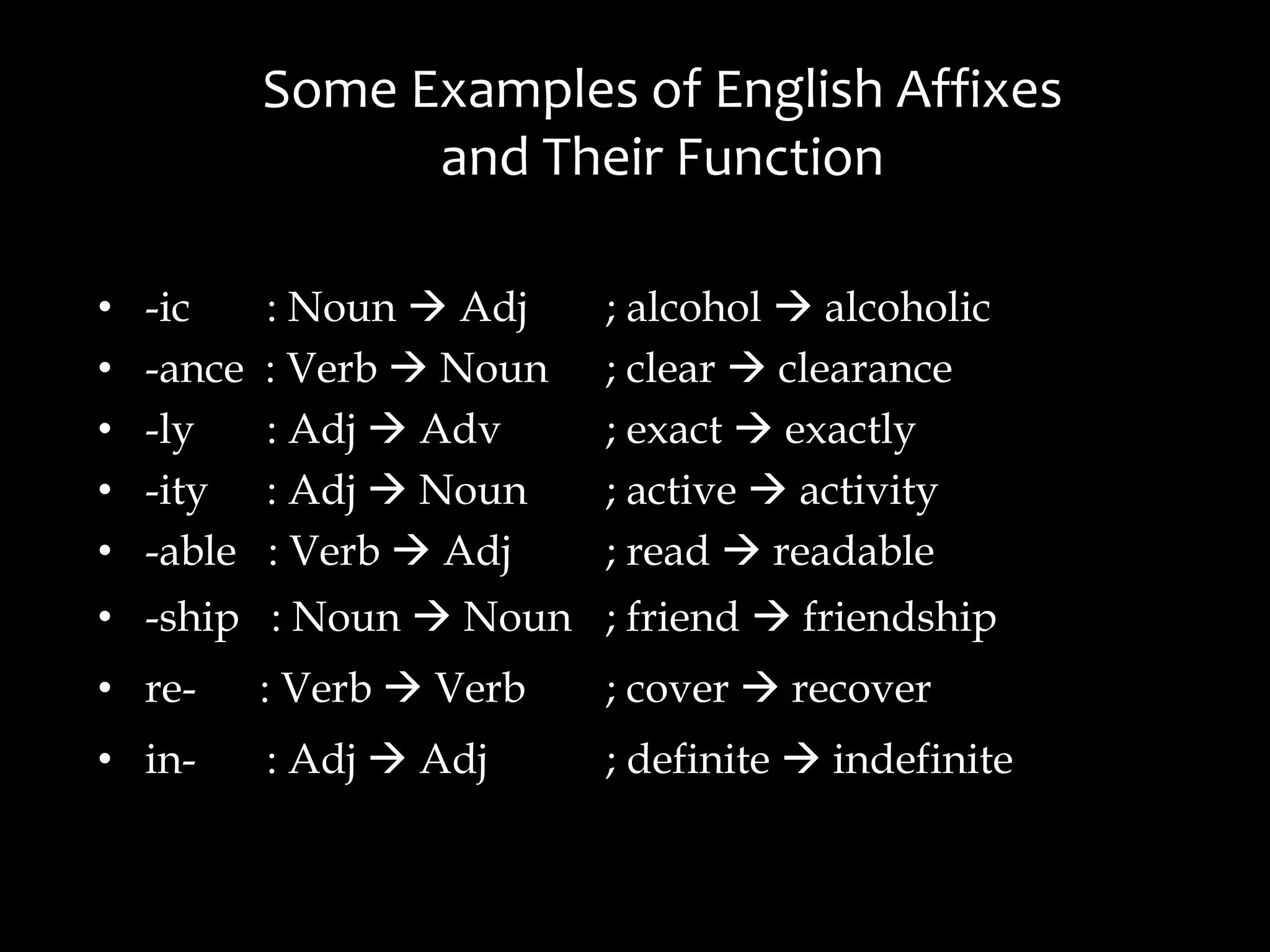
Some Examples of English Affixes
                  and Their Function

•   -ic     : Noun  Adj    ; alcohol  alcoholic
•   -ance   : Verb  Noun   ; clear  clearance
•   -ly     : Adj  Adv     ; exact  exactly
•   -ity    : Adj  Noun    ; active  activity
•   -able   : Verb  Adj    ; read  readable
• -ship : Noun  Noun ; friend  friendship
• re-       : Verb  Verb   ; cover  recover
• in-       : Adj  Adj     ; definite  indefinite
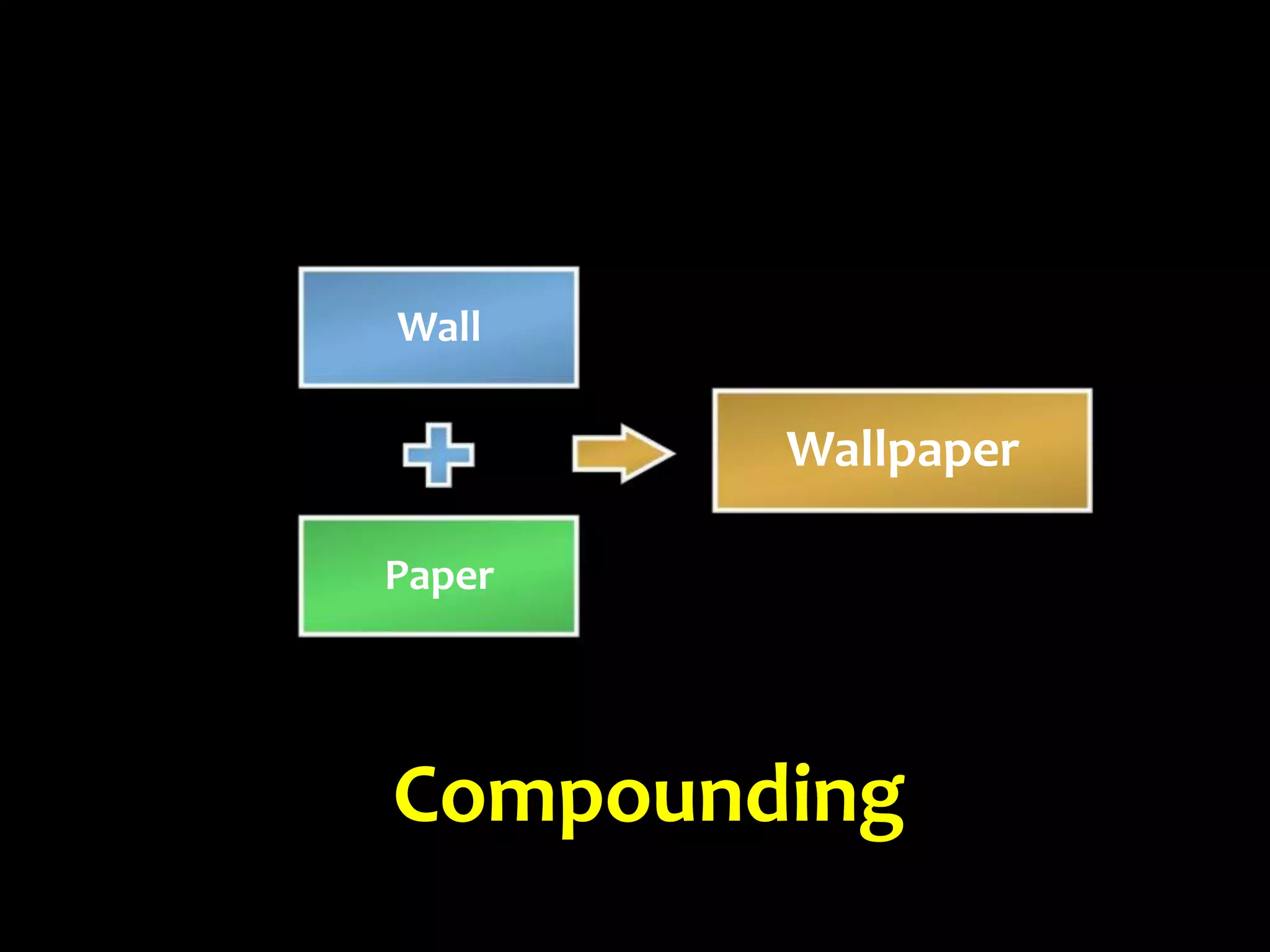
Wall

        Wallpaper

Paper


Compounding
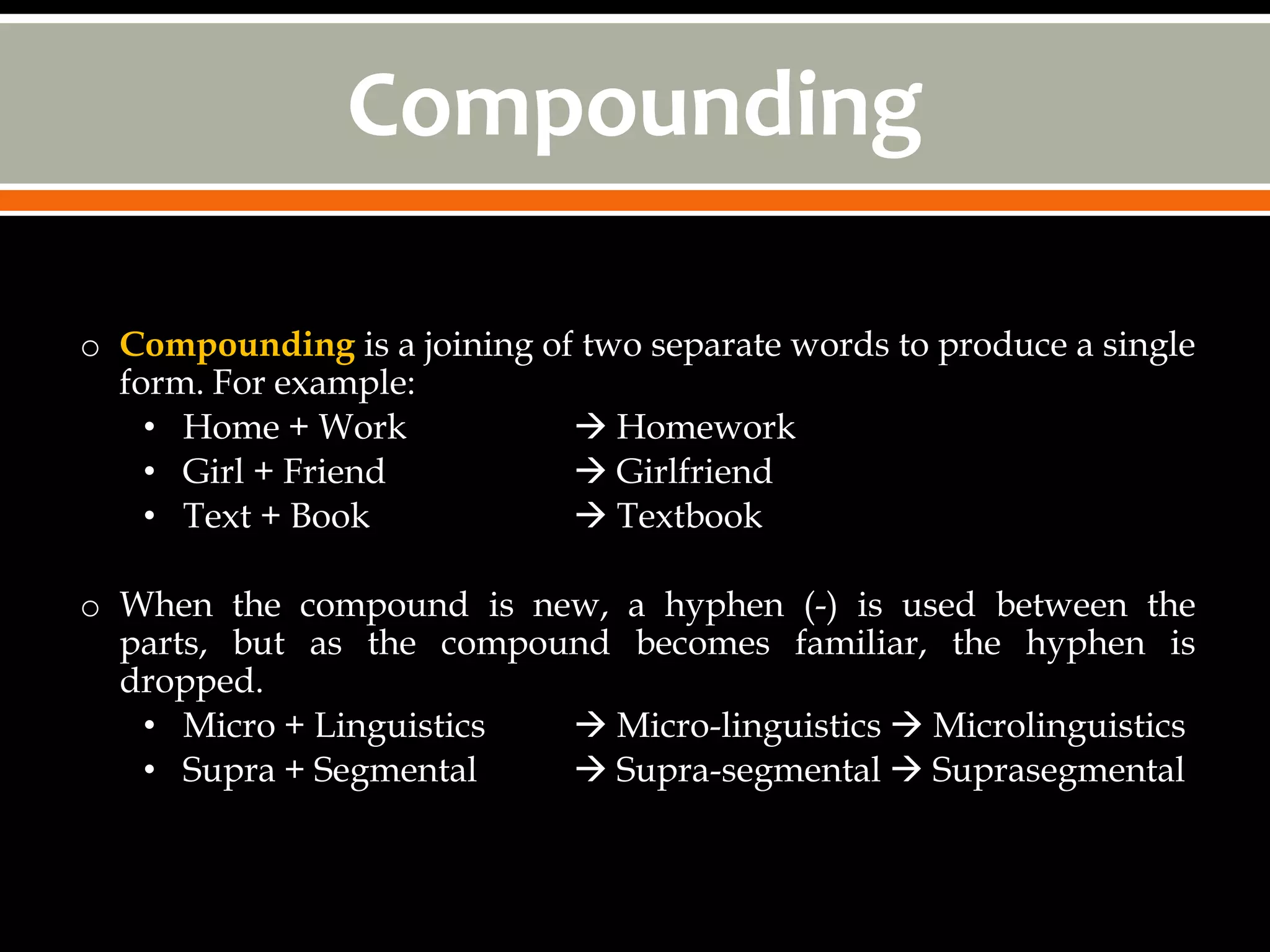
Compounding

o Compounding is a joining of two separate words to produce a single
  form. For example:
    • Home + Work             Homework
    • Girl + Friend           Girlfriend
    • Text + Book             Textbook

o When the compound is new, a hyphen (-) is used between the
  parts, but as the compound becomes familiar, the hyphen is
  dropped.
   • Micro + Linguistics   Micro-linguistics  Microlinguistics
   • Supra + Segmental     Supra-segmental  Suprasegmental
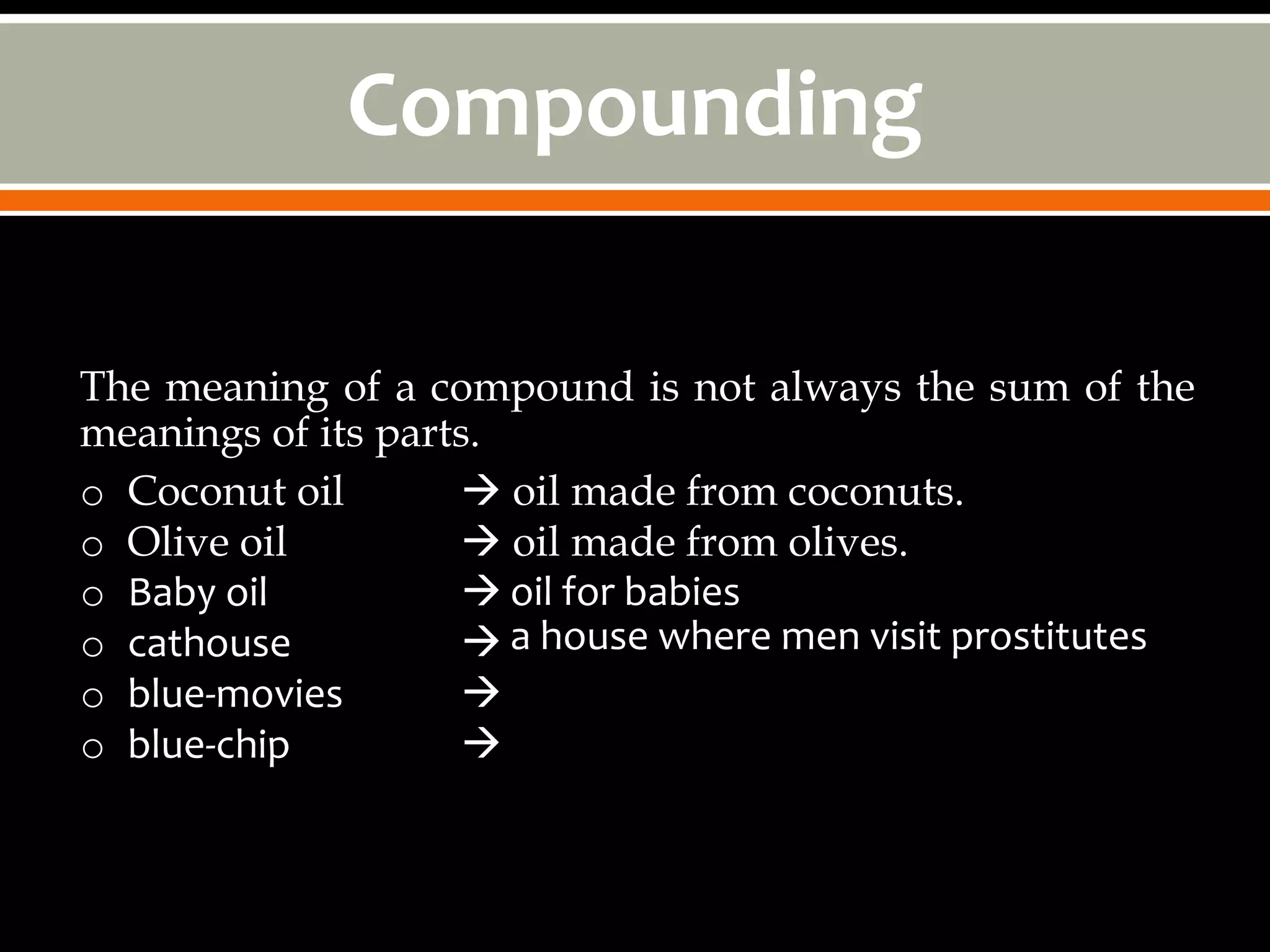
Compounding

The meaning of a compound is not always the sum of the
meanings of its parts.
o Coconut oil        oil made from coconuts.
o Olive oil          oil made from olives.
o Baby oil            oil for babies
o cathouse            a house where men visit prostitutes
o blue-movies        
o blue-chip          
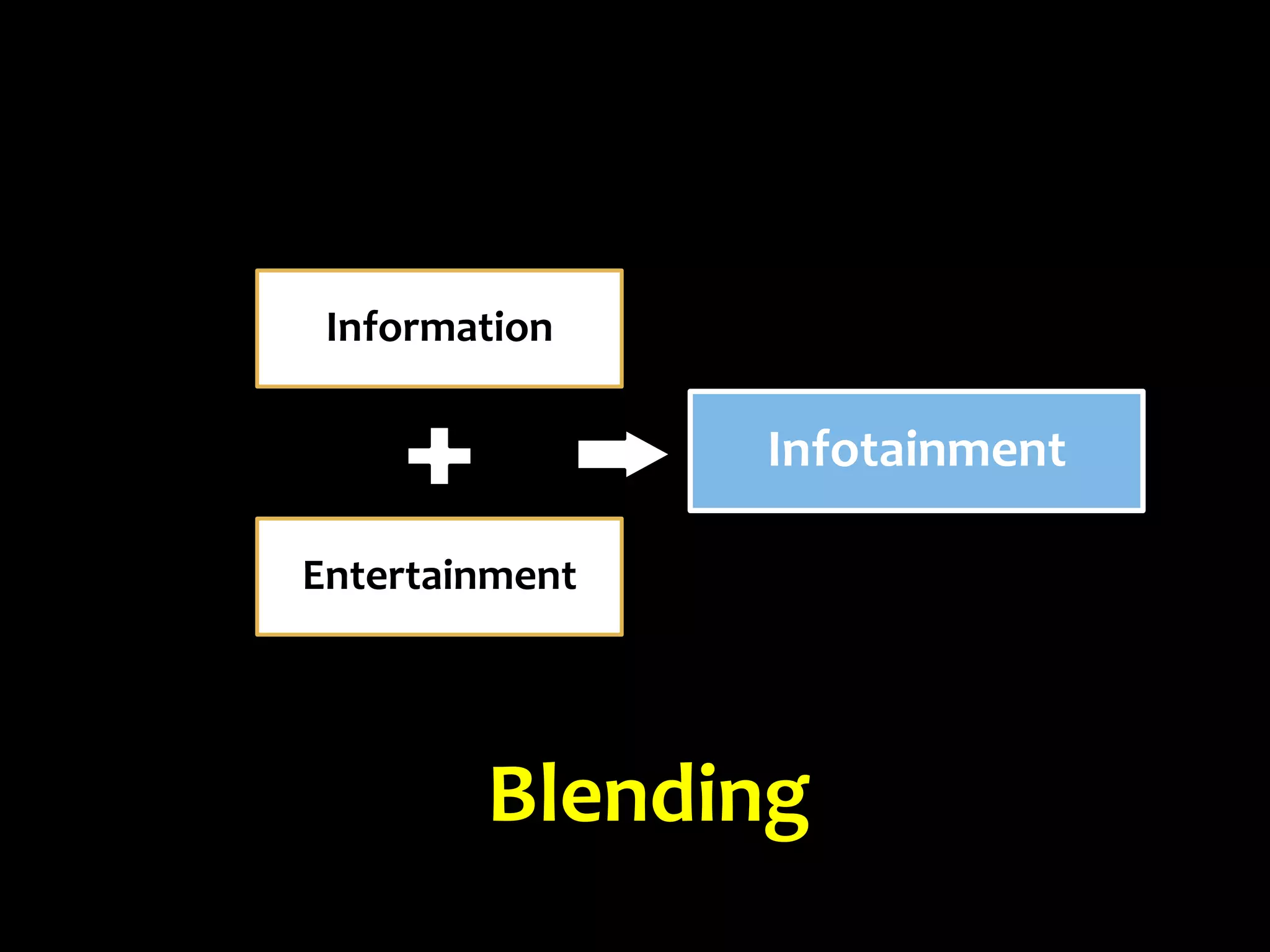
Information

                Infotainment

Entertainment


        Blending
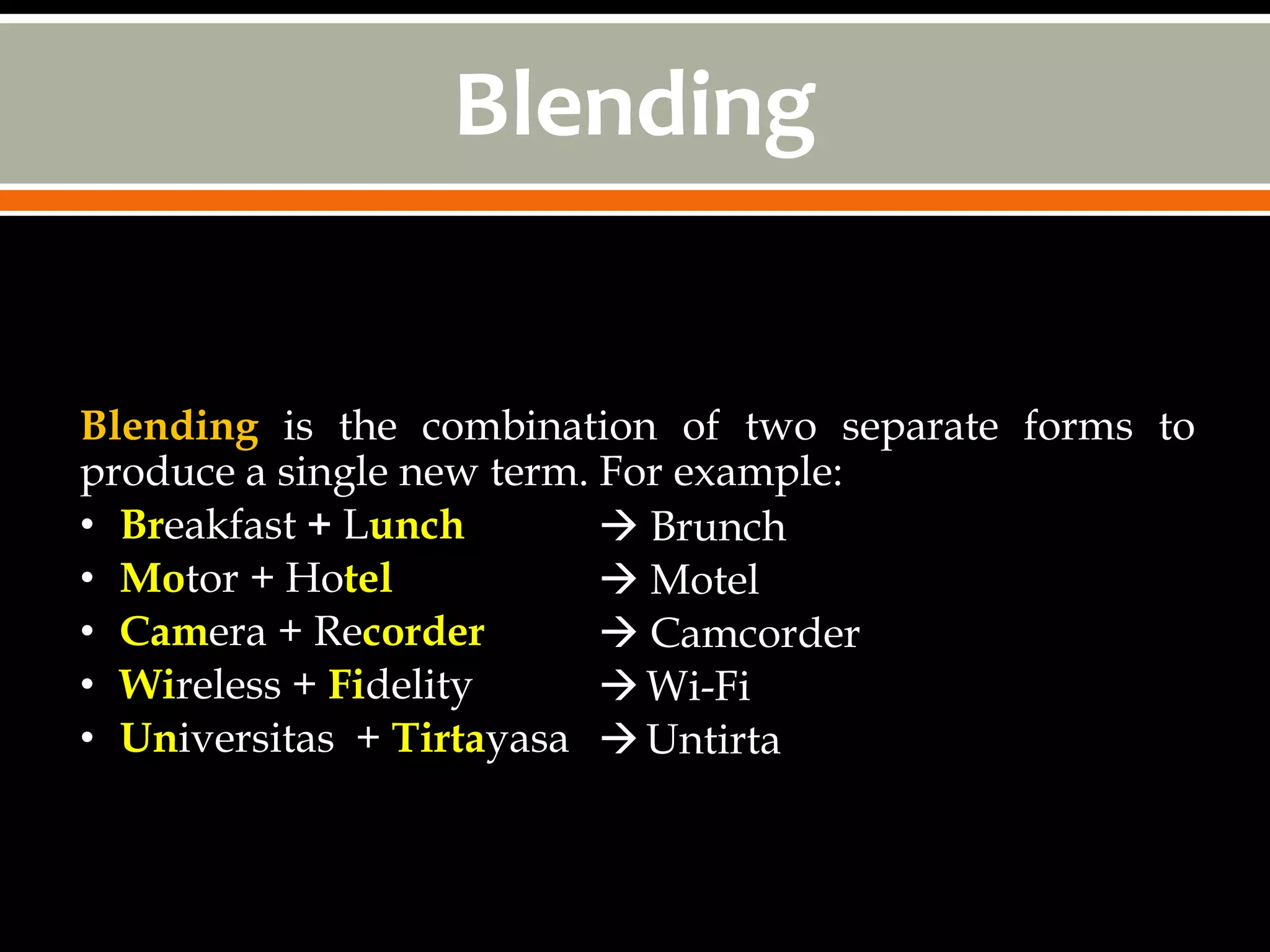
Blending


Blending is the combination of two separate forms to
produce a single new term. For example:
• Breakfast + Lunch         Brunch
• Motor + Hotel             Motel
• Camera + Recorder         Camcorder
• Wireless + Fidelity       Wi-Fi
• Universitas + Tirtayasa  Untirta
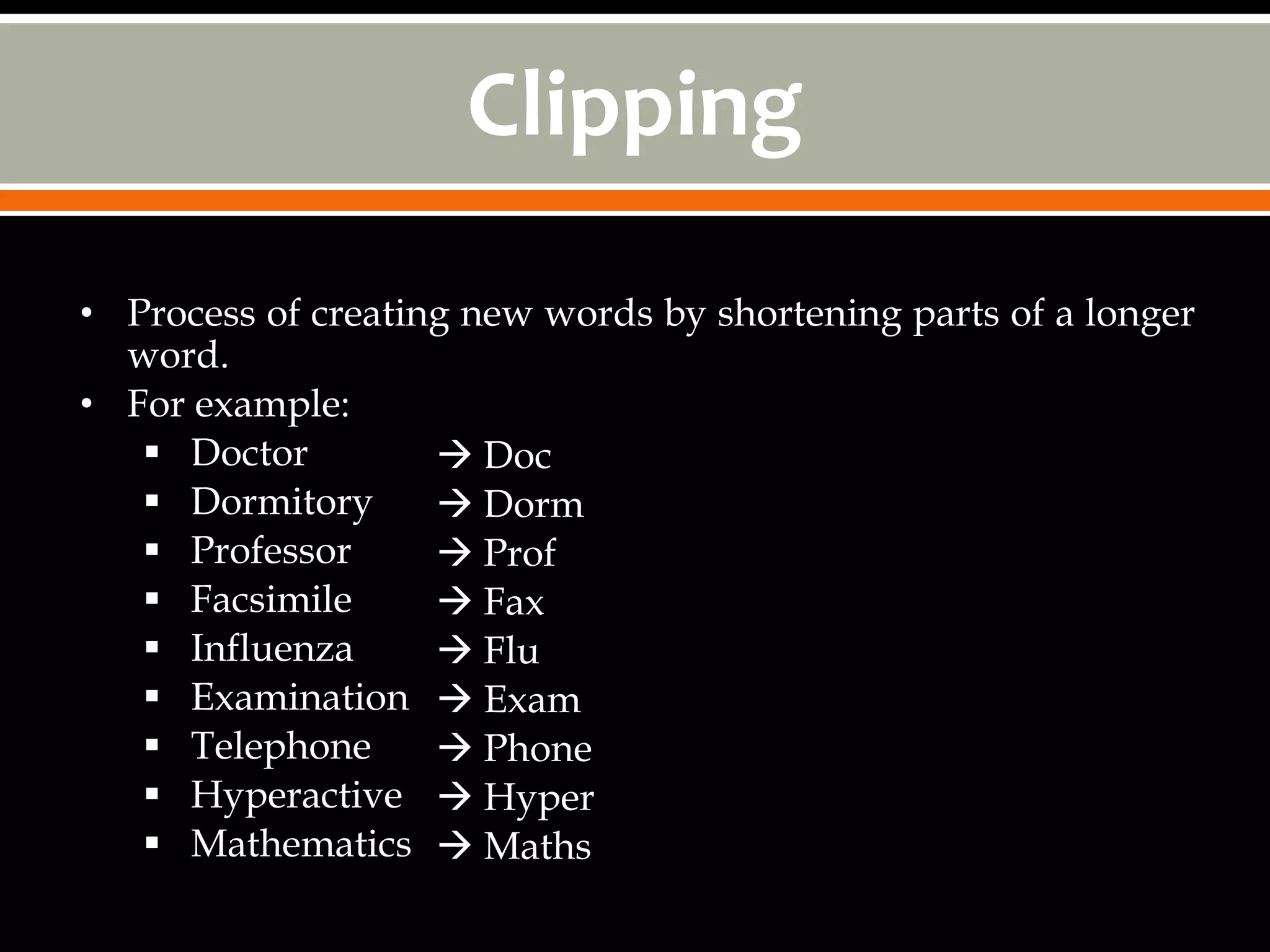
Clipping

• Process of creating new words by shortening parts of a longer
  word.
• For example:
    Doctor          Doc
    Dormitory       Dorm
    Professor       Prof
    Facsimile       Fax
    Influenza       Flu
    Examination  Exam
    Telephone       Phone
    Hyperactive  Hyper
    Mathematics  Maths
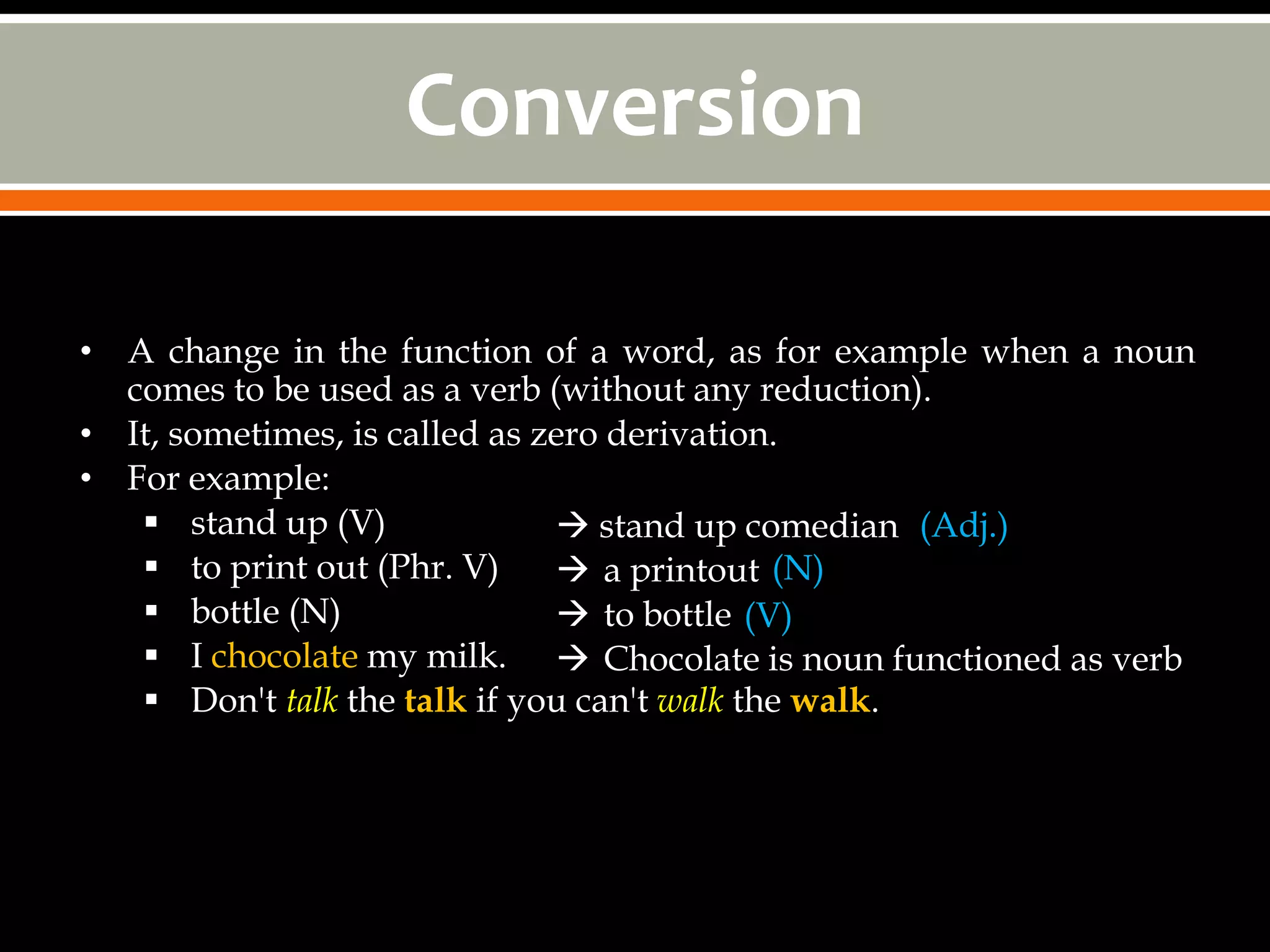
Conversion

• A change in the function of a word, as for example when a noun
  comes to be used as a verb (without any reduction).
• It, sometimes, is called as zero derivation.
• For example:
    stand up (V)               stand up comedian (Adj.)
    to print out (Phr. V)      a printout (N)
    bottle (N)                 to bottle (V)
    I chocolate my milk.  Chocolate is noun functioned as verb
    Don't talk the talk if you can't walk the walk.
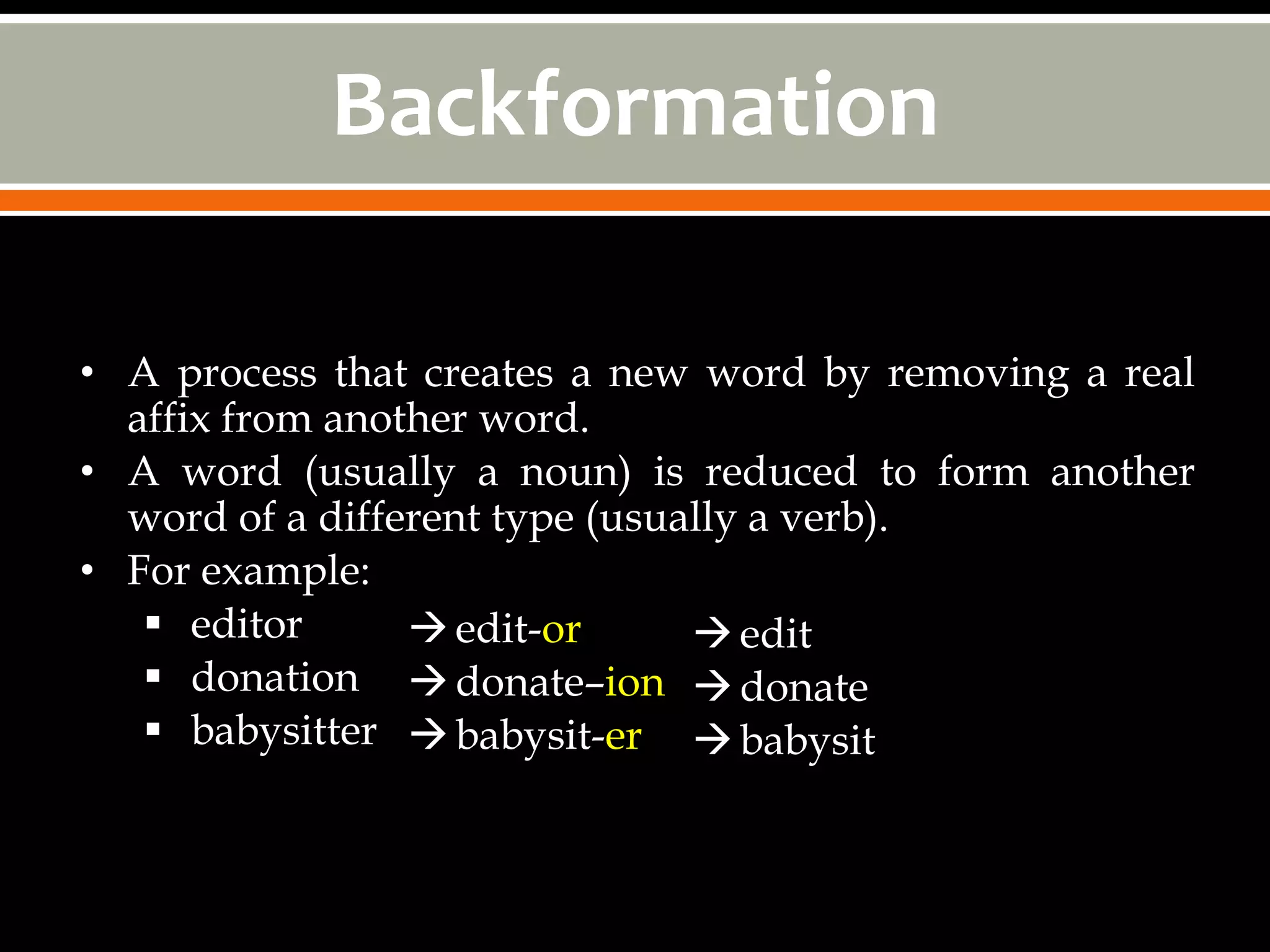
Backformation

• A process that creates a new word by removing a real
  affix from another word.
• A word (usually a noun) is reduced to form another
  word of a different type (usually a verb).
• For example:
    editor       edit-or       edit
    donation  donate–ion  donate
    babysitter  babysit-er  babysit
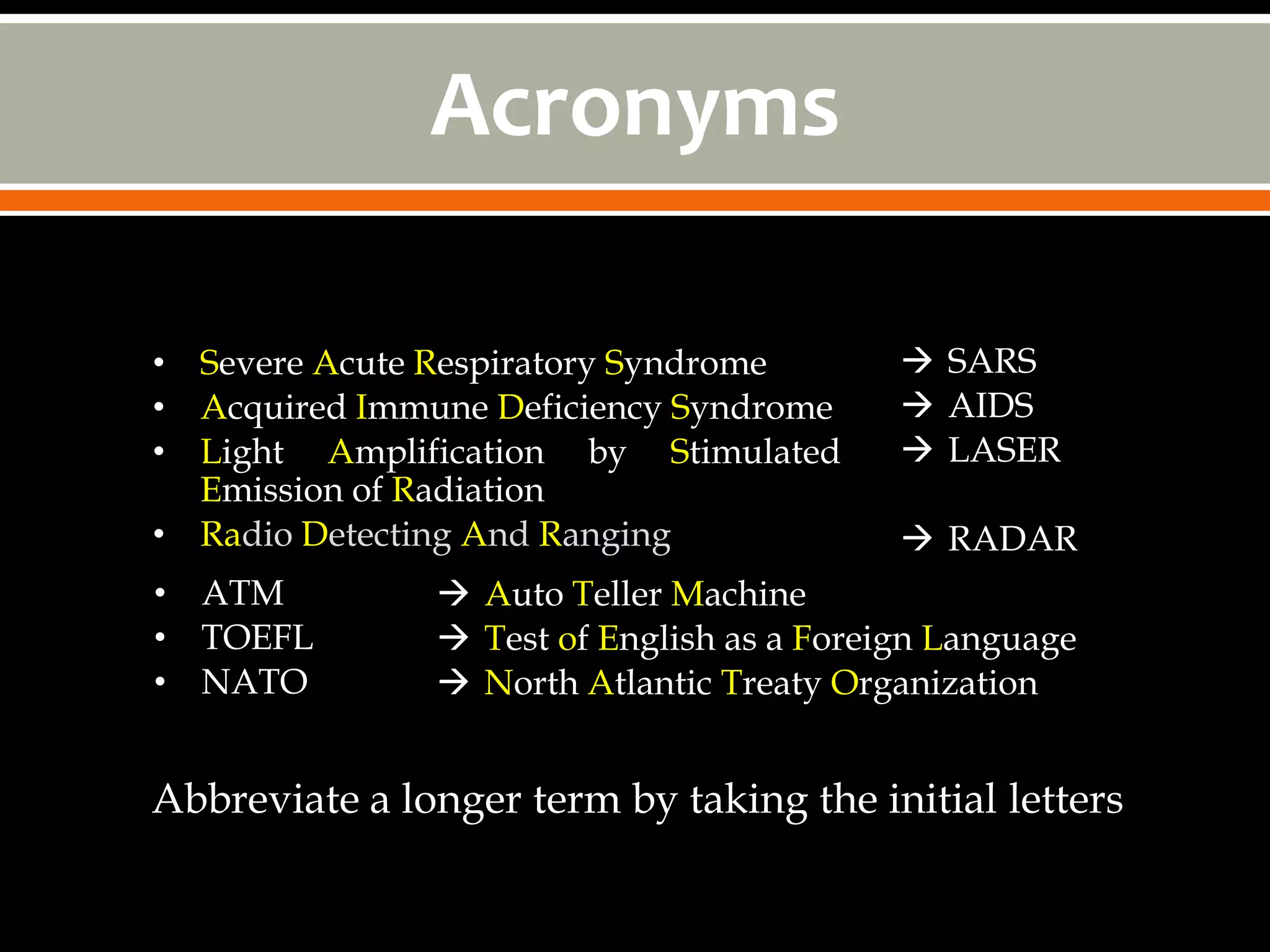
Acronyms

• Severe Acute Respiratory Syndrome         SARS
• Acquired Immune Deficiency Syndrome       AIDS
• Light Amplification by Stimulated         LASER
  Emission of Radiation
• Radio Detecting And Ranging               RADAR
• ATM           Auto Teller Machine
• TOEFL         Test of English as a Foreign Language
• NATO          North Atlantic Treaty Organization


Abbreviate a longer term by taking the initial letters
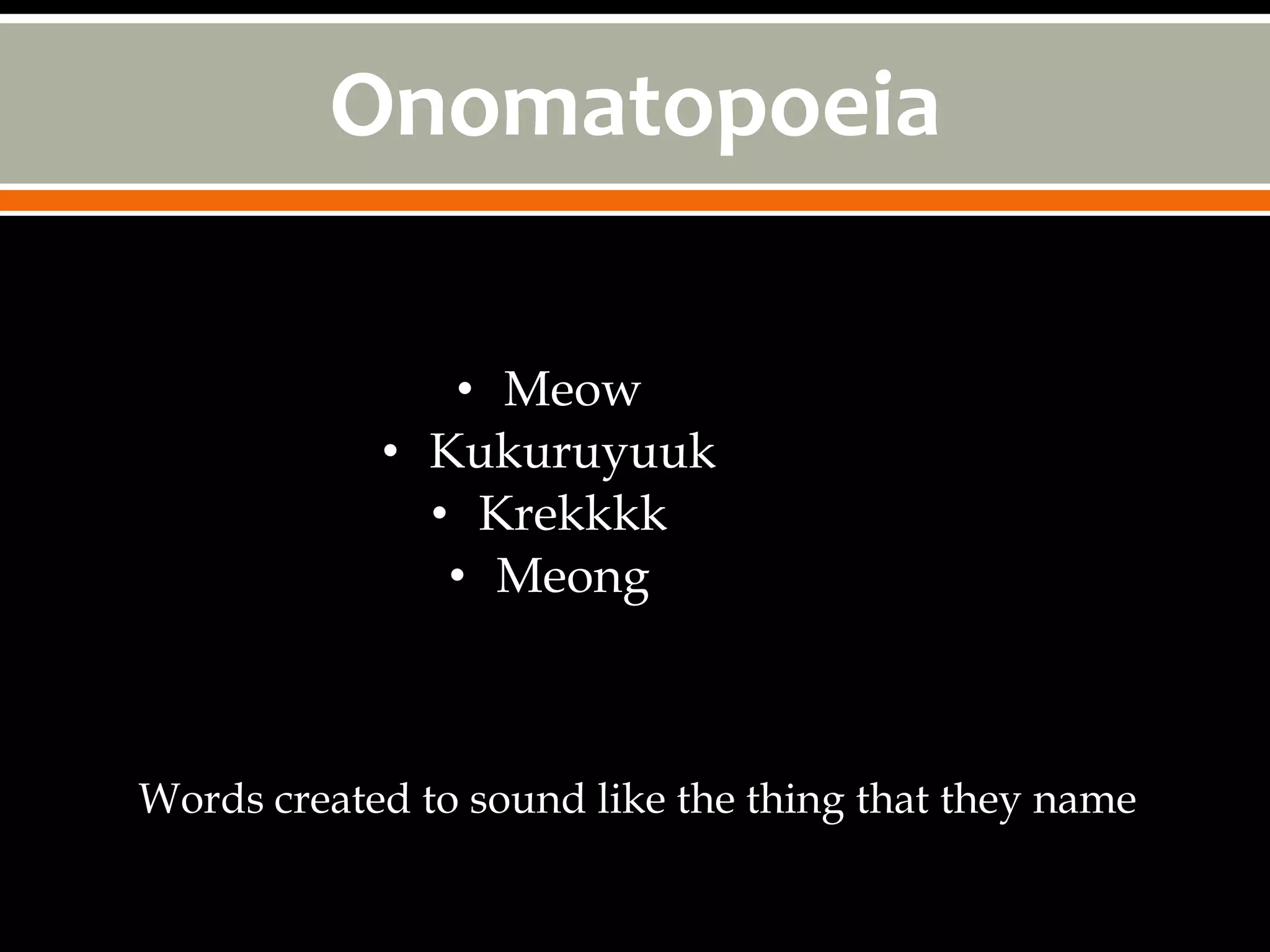
Onomatopoeia

               • Meow
            • Kukuruyuuk
              • Krekkkk
               • Meong


Words created to sound like the thing that they name
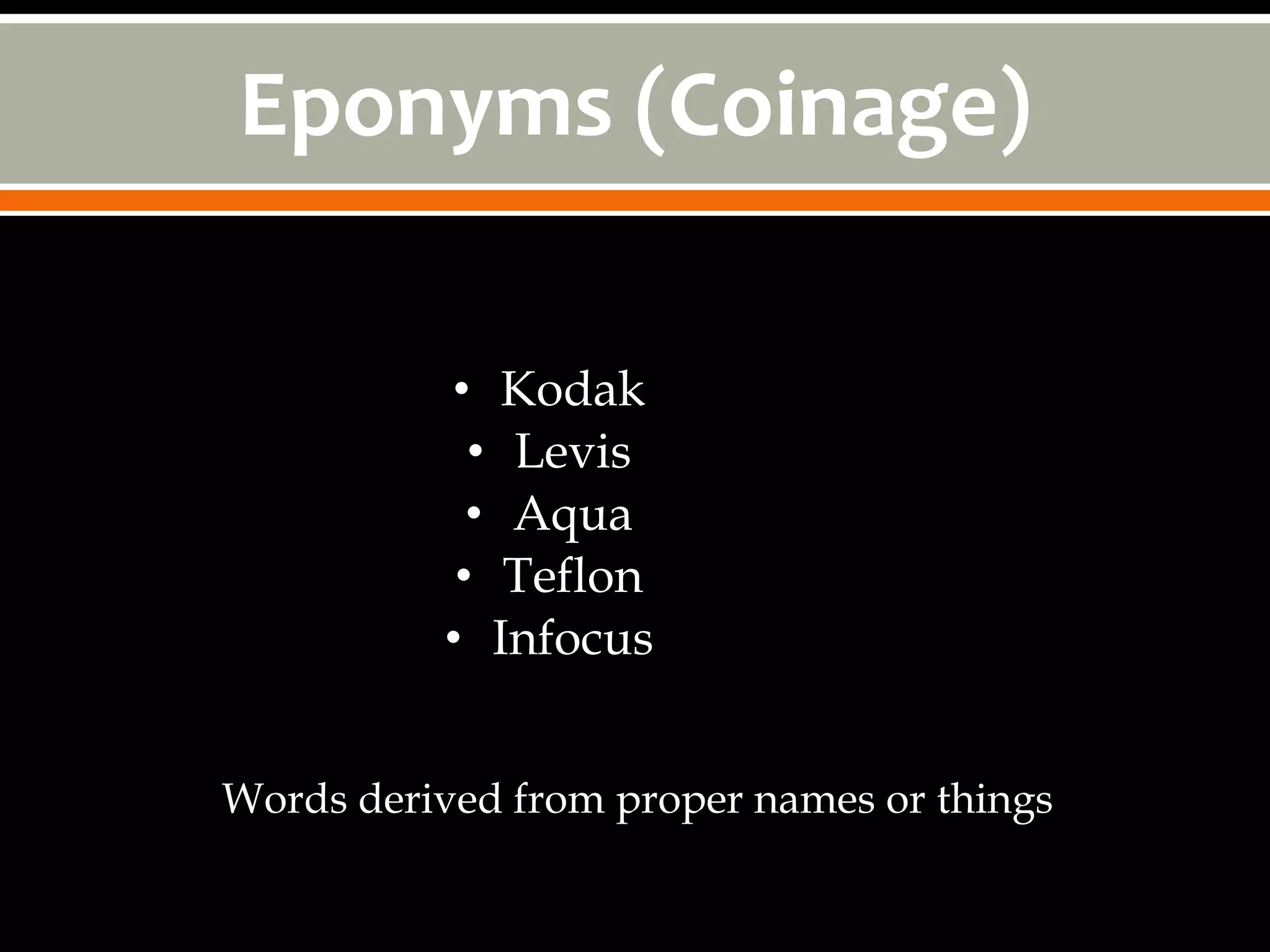
Eponyms (Coinage)

          • Kodak
            • Levis
            • Aqua
           • Teflon
          • Infocus


Words derived from proper names or things
Thank You
          http://e-learning.edibrata.com
(Some materials are directly adopted from some sources)

Intro. to Linguistics_10 Lexicology

  • 1.
    Introduction to Linguistics Session 10: Lexicology   Edi Brata http://e-learning.edibrata.com
  • 2.
    Preview to thePrevious Session (Morphology)
  • 3.
    What is Morphology? Thestudy of “morphemes”
  • 4.
    What is Morpheme? Thesmallest significant unit of grammar cooked (cook+ed) cook ed Morphem Morphem
  • 5.
    Morpheme • one morpheme: taste • two morphemes: taste+ful • three morphemes: dis+taste+ful • four morphemes: dis+taste+ful+ly
  • 6.
    Allomorph A variation of a morpheme legal illegal mobile immobile regular irregular
  • 7.
    Free and BoundMorpheme • Free morpheme: Morphemes that can occur as an independent word. • Bound morpheme: Morphemes that cannot stand alone, but must be attached to other morphemes. distasteful  dis + taste + ful  dis + taste + ful (bound) + (free) + (bound)
  • 8.
    Our New Topic distasteful  dis + taste + ful  dis + taste + ful (bound) + (free) + (bound)  prefix + root + suffix  How the word is constructed? New topic will be discussed
  • 9.
  • 10.
    Lexicology Lexicology What it is? • “The study of the lexicon or lexis (specified as the vocabulary or total stock of words of a language)” (Lipka, 1992: 1). • In simple, it is the study of words.
  • 11.
    Lexicology talks about: The Origins of Words Historical Change Semantic Change Word Formation  our focus Lexical Semantics Idioms Dictionaries American English vs. British English
  • 12.
    There is no satisfactory definition of word. What is word?  The most frequently implied meanings of word: o Orthographic Word It applies only to the written medium. o Morphological Word It considers form (morpheme). o Lexical Word It comprehends the various forms of items which are closely related by meaning. o Semantic Word It involves distinguishing between items which may be morphologically identical but differ in meaning.
  • 13.
    Word formation: • Affixation •Compounding • Blends • Clipping • Conversion • Backformation • Acronyms • Onomatopoeia • Eponyms
  • 14.
    Affixation Prefix: An affix that is attached to the front of a base, e.g. re-play. Suffix: An affix that is attached to the end of a base, e.g. kind-ness. Infix: An affix that occur within a base, e.g. (in Indonesian) s-er-uling. Confix (Circumfix/Ambifix): An affix that is attached to the front and to the end of a base simultaneously, e.g. (in Indonesian) ke- lapar-an.
  • 15.
    Word Structure Root system noun Stem system+atic noun+suffix Stem un+system+atic prefix+noun+suffix Stem un+system+atic+al prefix+noun+suffix+suffix Word un+system+atic+al+ly prefix+noun+suffix+ suffix+Suffix Base is sometimes used by Linguist to mean any root or stem to which an affix is attached. In the example above, system, systematic, unsystematical, unsystematically would be considered bases.
  • 16.
    Word Structure unbelievable Word (Adj.) Prefix Root/Base (V) Suffix un believe able believeable Stem/Base
  • 17.
    Some Examples ofEnglish Affixes and Their Function • -ic : Noun  Adj ; alcohol  alcoholic • -ance : Verb  Noun ; clear  clearance • -ly : Adj  Adv ; exact  exactly • -ity : Adj  Noun ; active  activity • -able : Verb  Adj ; read  readable • -ship : Noun  Noun ; friend  friendship • re- : Verb  Verb ; cover  recover • in- : Adj  Adj ; definite  indefinite
  • 18.
    Wall Wallpaper Paper Compounding
  • 19.
    Compounding o Compounding isa joining of two separate words to produce a single form. For example: • Home + Work  Homework • Girl + Friend  Girlfriend • Text + Book  Textbook o When the compound is new, a hyphen (-) is used between the parts, but as the compound becomes familiar, the hyphen is dropped. • Micro + Linguistics  Micro-linguistics  Microlinguistics • Supra + Segmental  Supra-segmental  Suprasegmental
  • 20.
    Compounding The meaning ofa compound is not always the sum of the meanings of its parts. o Coconut oil  oil made from coconuts. o Olive oil  oil made from olives. o Baby oil  oil for babies o cathouse  a house where men visit prostitutes o blue-movies  o blue-chip 
  • 21.
    Information Infotainment Entertainment Blending
  • 22.
    Blending Blending is thecombination of two separate forms to produce a single new term. For example: • Breakfast + Lunch  Brunch • Motor + Hotel  Motel • Camera + Recorder  Camcorder • Wireless + Fidelity  Wi-Fi • Universitas + Tirtayasa  Untirta
  • 23.
    Clipping • Process ofcreating new words by shortening parts of a longer word. • For example:  Doctor  Doc  Dormitory  Dorm  Professor  Prof  Facsimile  Fax  Influenza  Flu  Examination  Exam  Telephone  Phone  Hyperactive  Hyper  Mathematics  Maths
  • 24.
    Conversion • A changein the function of a word, as for example when a noun comes to be used as a verb (without any reduction). • It, sometimes, is called as zero derivation. • For example:  stand up (V)  stand up comedian (Adj.)  to print out (Phr. V)  a printout (N)  bottle (N)  to bottle (V)  I chocolate my milk.  Chocolate is noun functioned as verb  Don't talk the talk if you can't walk the walk.
  • 25.
    Backformation • A processthat creates a new word by removing a real affix from another word. • A word (usually a noun) is reduced to form another word of a different type (usually a verb). • For example:  editor  edit-or  edit  donation  donate–ion  donate  babysitter  babysit-er  babysit
  • 26.
    Acronyms • Severe AcuteRespiratory Syndrome  SARS • Acquired Immune Deficiency Syndrome  AIDS • Light Amplification by Stimulated  LASER Emission of Radiation • Radio Detecting And Ranging  RADAR • ATM  Auto Teller Machine • TOEFL  Test of English as a Foreign Language • NATO  North Atlantic Treaty Organization Abbreviate a longer term by taking the initial letters
  • 27.
    Onomatopoeia • Meow • Kukuruyuuk • Krekkkk • Meong Words created to sound like the thing that they name
  • 28.
    Eponyms (Coinage) • Kodak • Levis • Aqua • Teflon • Infocus Words derived from proper names or things
  • 29.
    Thank You http://e-learning.edibrata.com (Some materials are directly adopted from some sources)