Intro to BusinessChapter 10 - MarketingLesson 10-2
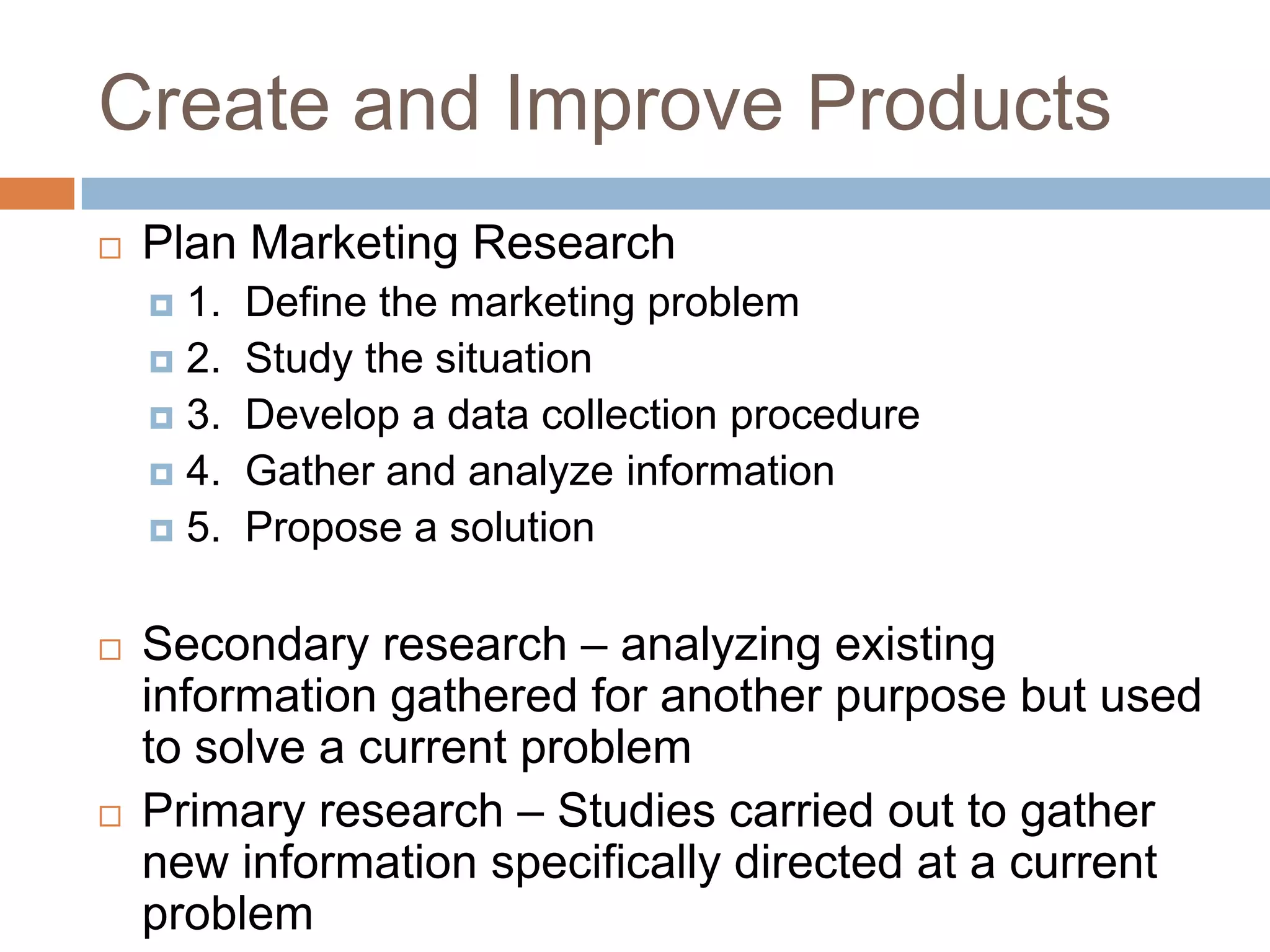
Create and Improve ProductsPlan Marketing Research1.  Define the marketing problem2.  Study the situation3.  Develop a data collection procedure4.  Gather and analyze information5.  Propose a solutionSecondary research – analyzing existing information gathered for another purpose but used to solve a current problemPrimary research – Studies carried out to gather new information specifically directed at a current problem
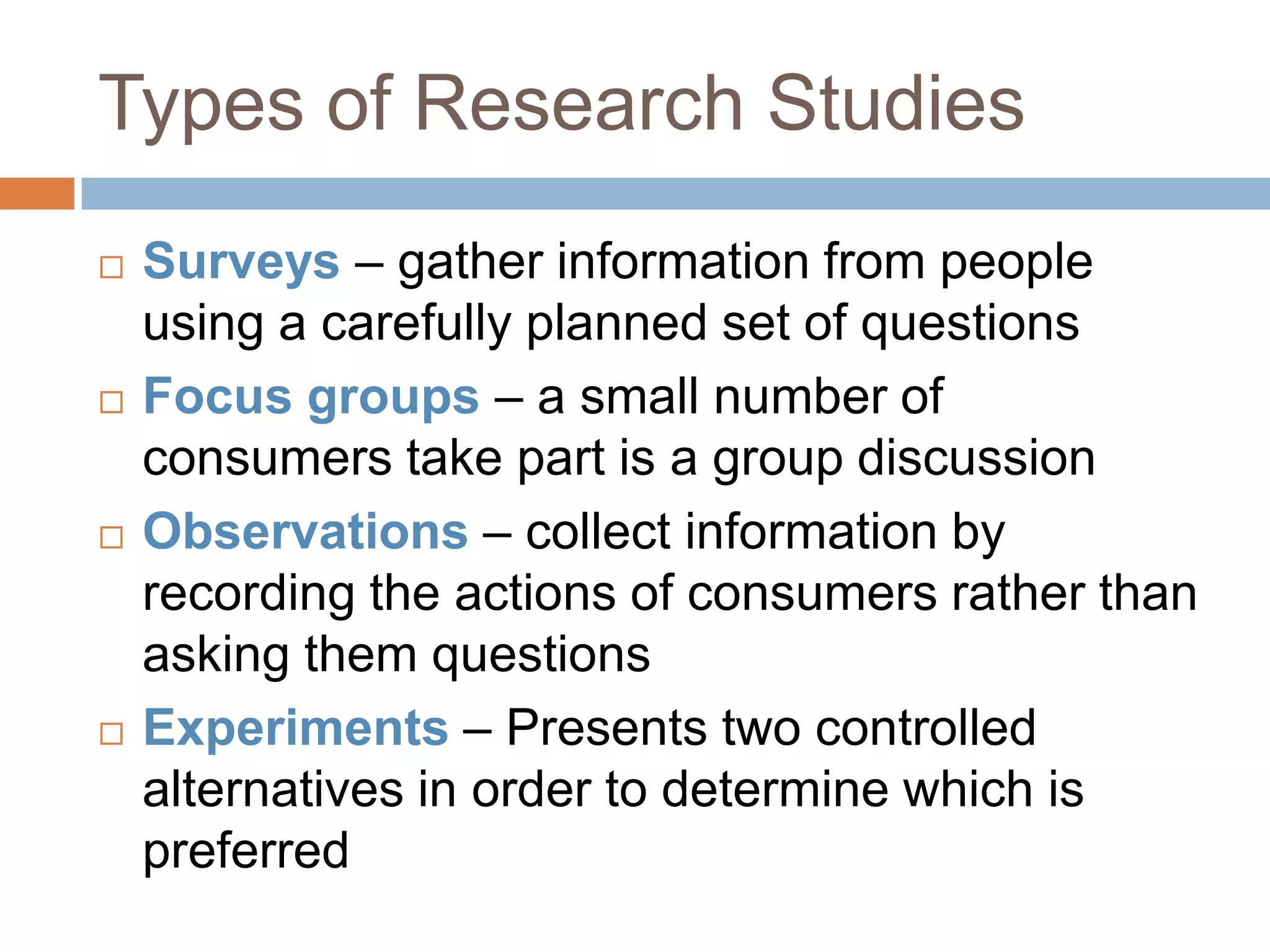
Types of Research StudiesSurveys – gather information from people using a carefully planned set of questionsFocus groups – a small number of consumers take part is a group discussionObservations – collect information by recording the actions of consumers rather than asking them questionsExperiments – Presents two controlled alternatives in order to determine which is preferred
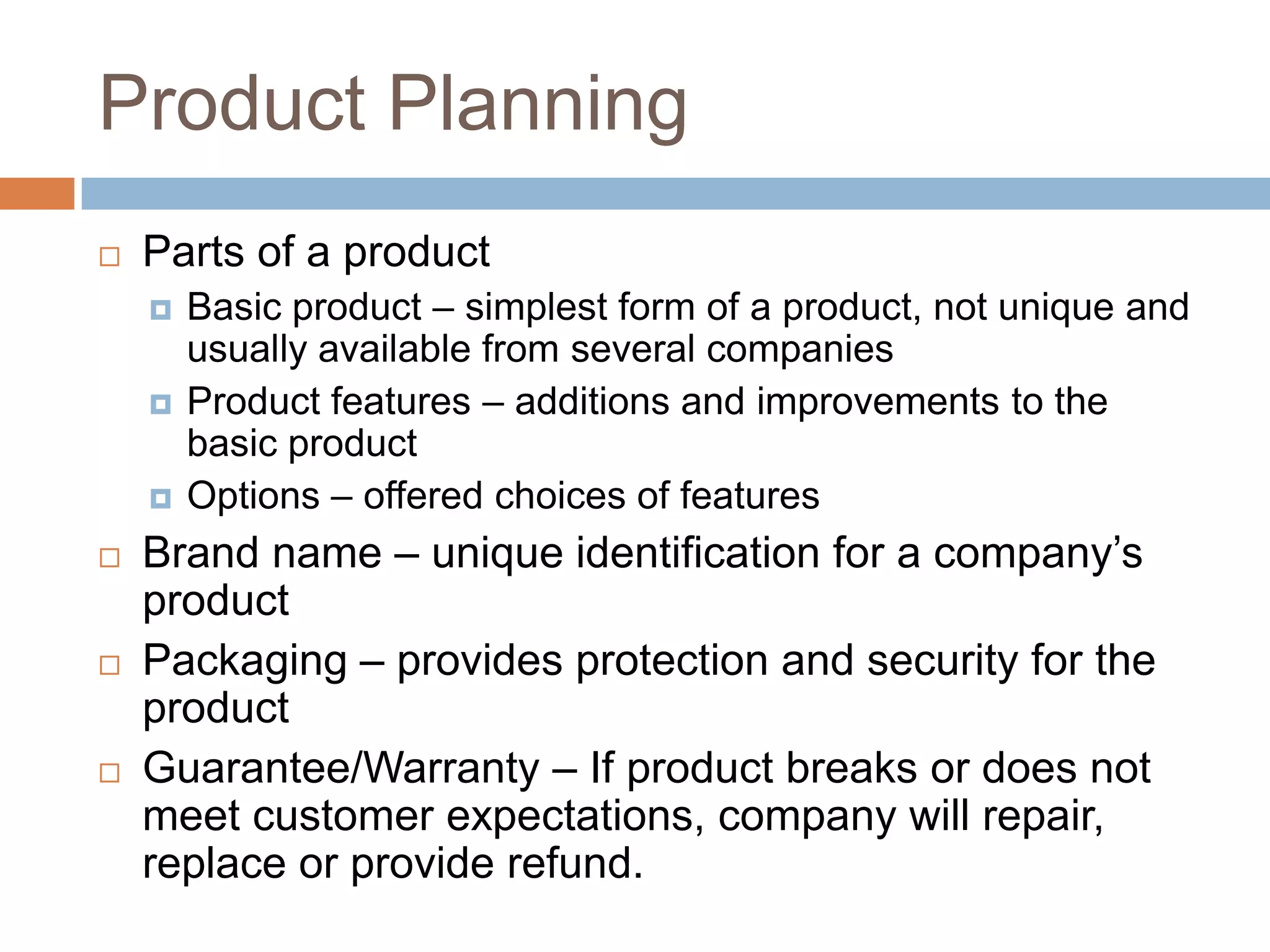
Product PlanningParts of a productBasic product – simplest form of a product, not unique and usually available from several companiesProduct features – additions and improvements to the basic productOptions – offered choices of featuresBrand name – unique identification for a company’s productPackaging – provides protection and security for the productGuarantee/Warranty – If product breaks or does not meet customer expectations, company will repair, replace or provide refund.
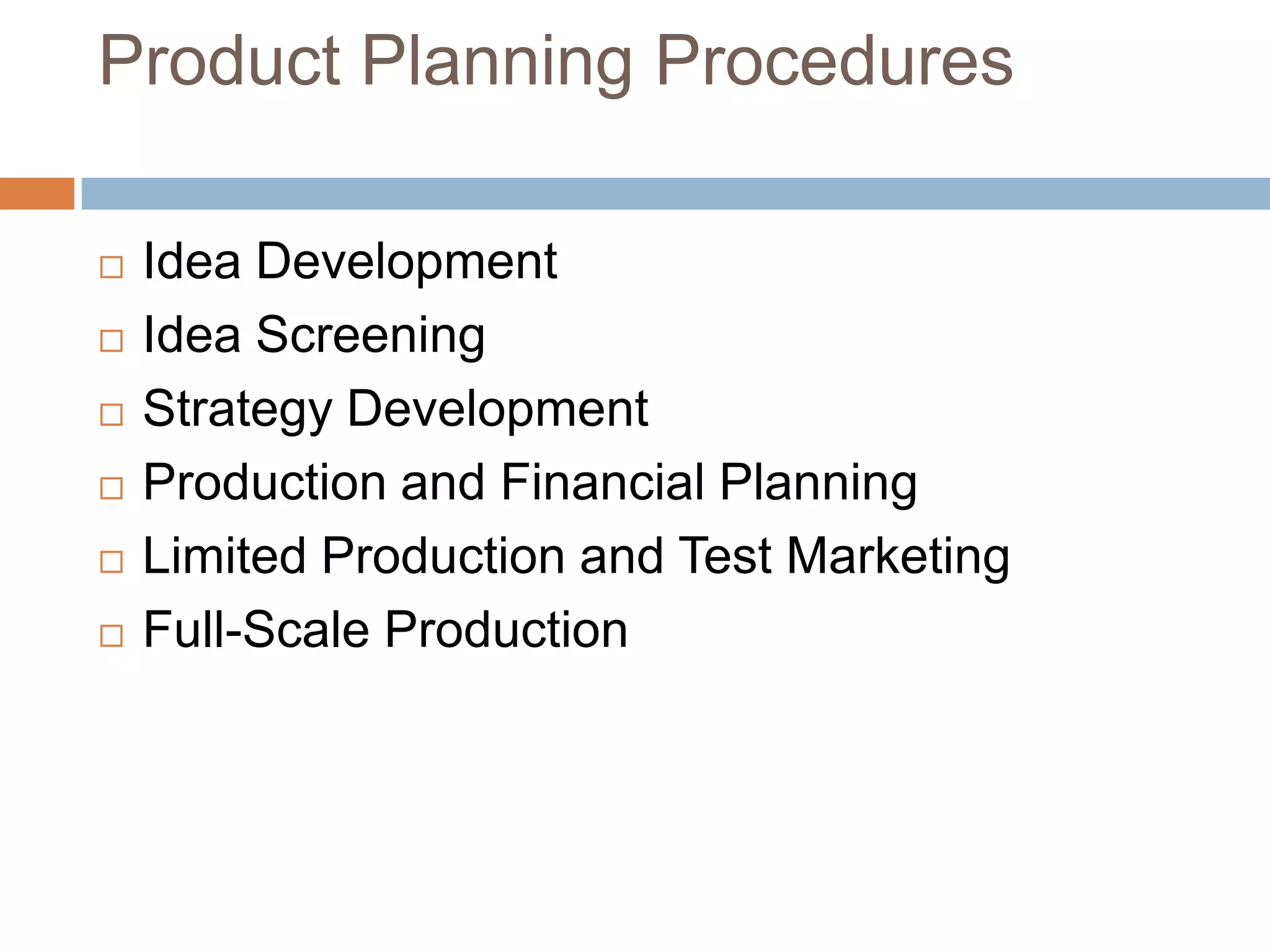
Product Planning ProceduresIdea DevelopmentIdea ScreeningStrategy DevelopmentProduction and Financial PlanningLimited Production and Test MarketingFull-Scale Production
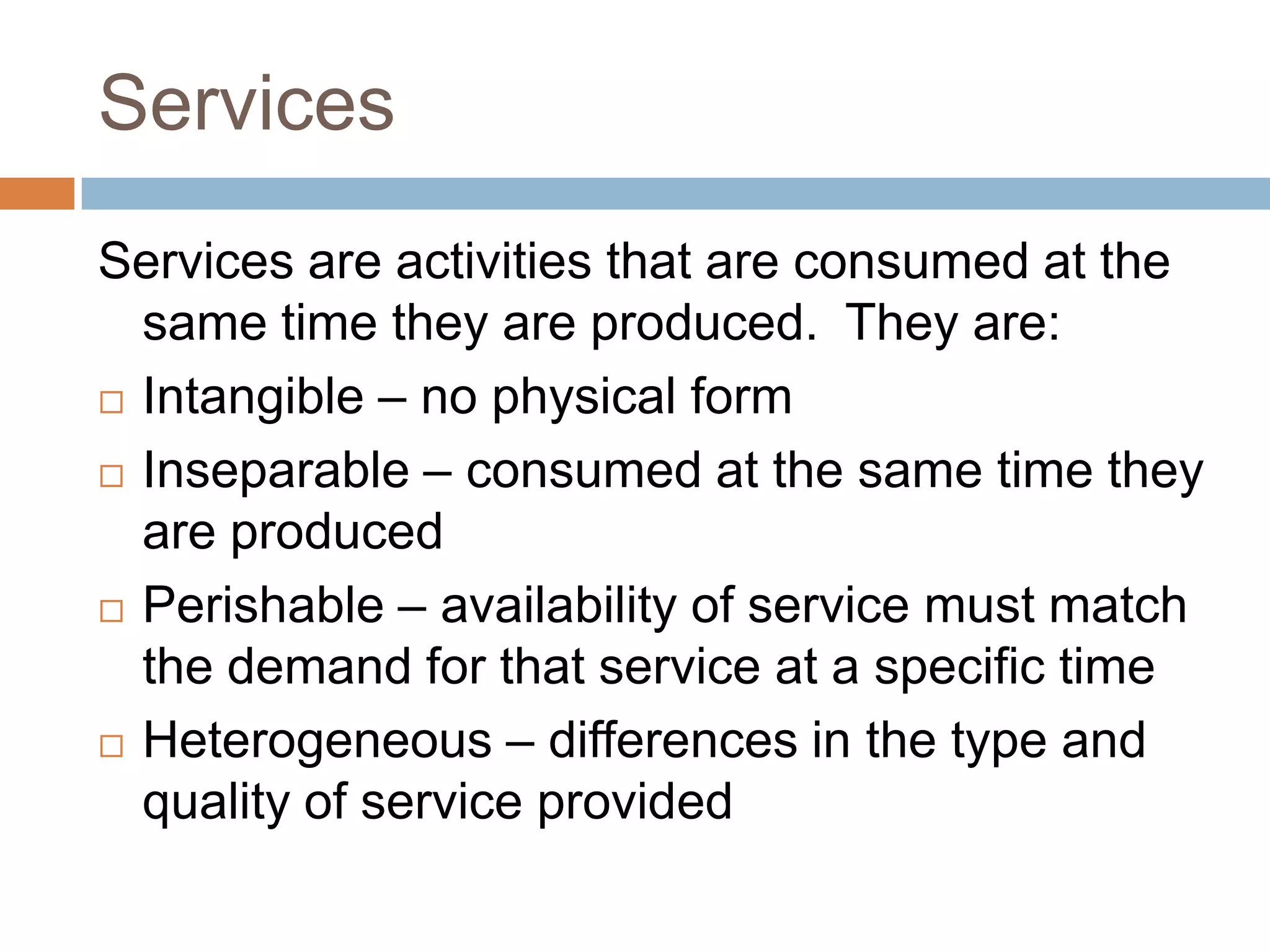
ServicesServices are activities that are consumed at the same time they are produced.  They are:Intangible – no physical formInseparable – consumed at the same time they are producedPerishable – availability of service must match the demand for that service at a specific timeHeterogeneous – differences in the type and quality of service provided
Intro to BusinessChapter 10 - MarketingLesson 10-3
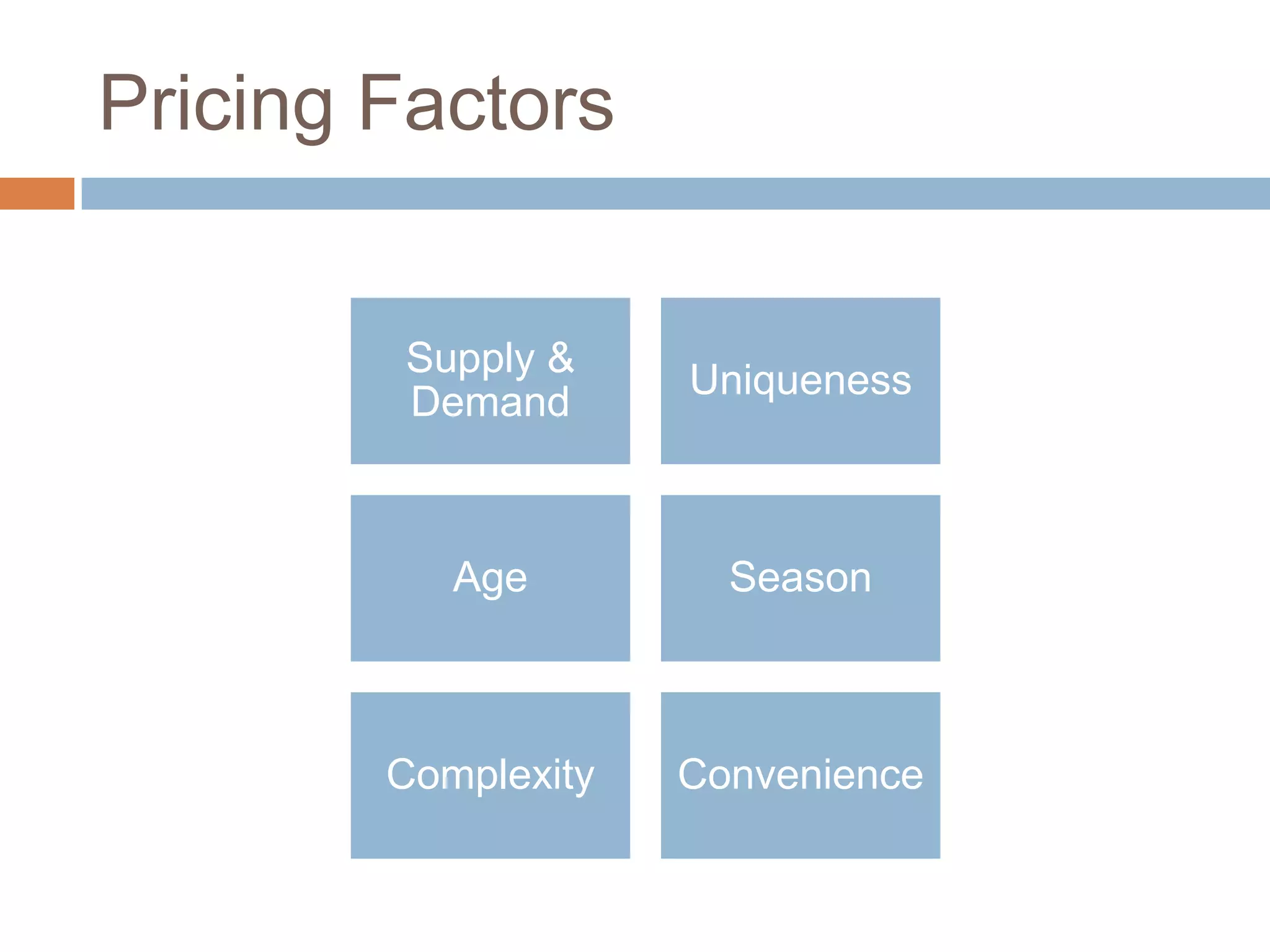
Pricing Factors
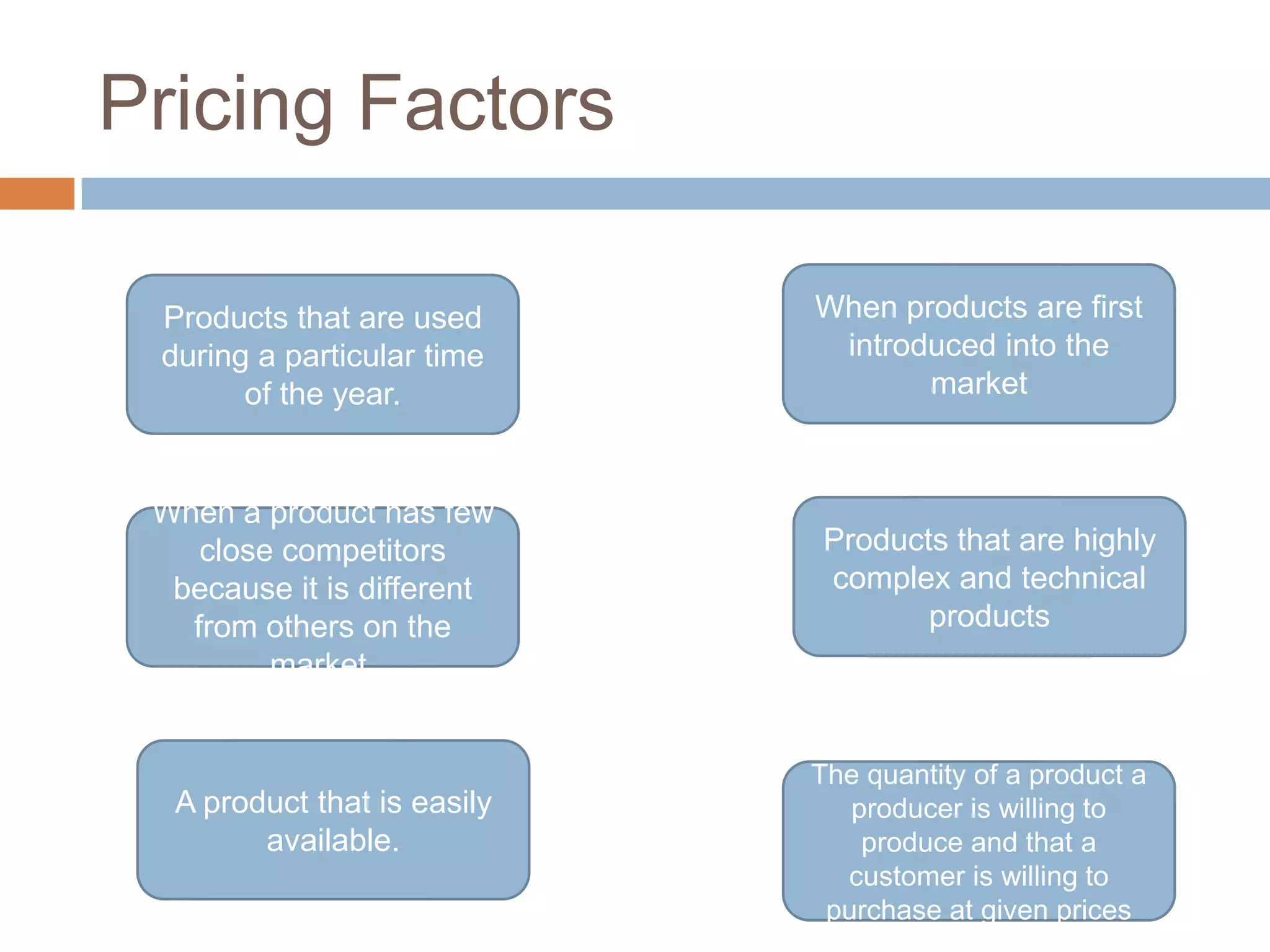
AgeSeasonComplexityUniquenessConvenienceSupply & DemandPricing FactorsWhen products are first introduced into the marketProducts that are used during a particular time of the year.Products that are highly complex and technical productsWhen a product has few close competitors because it is different  from others on the market.A product that is easily available.The quantity of a product a producer is willing to produce and that a customer is willing to purchase at given prices
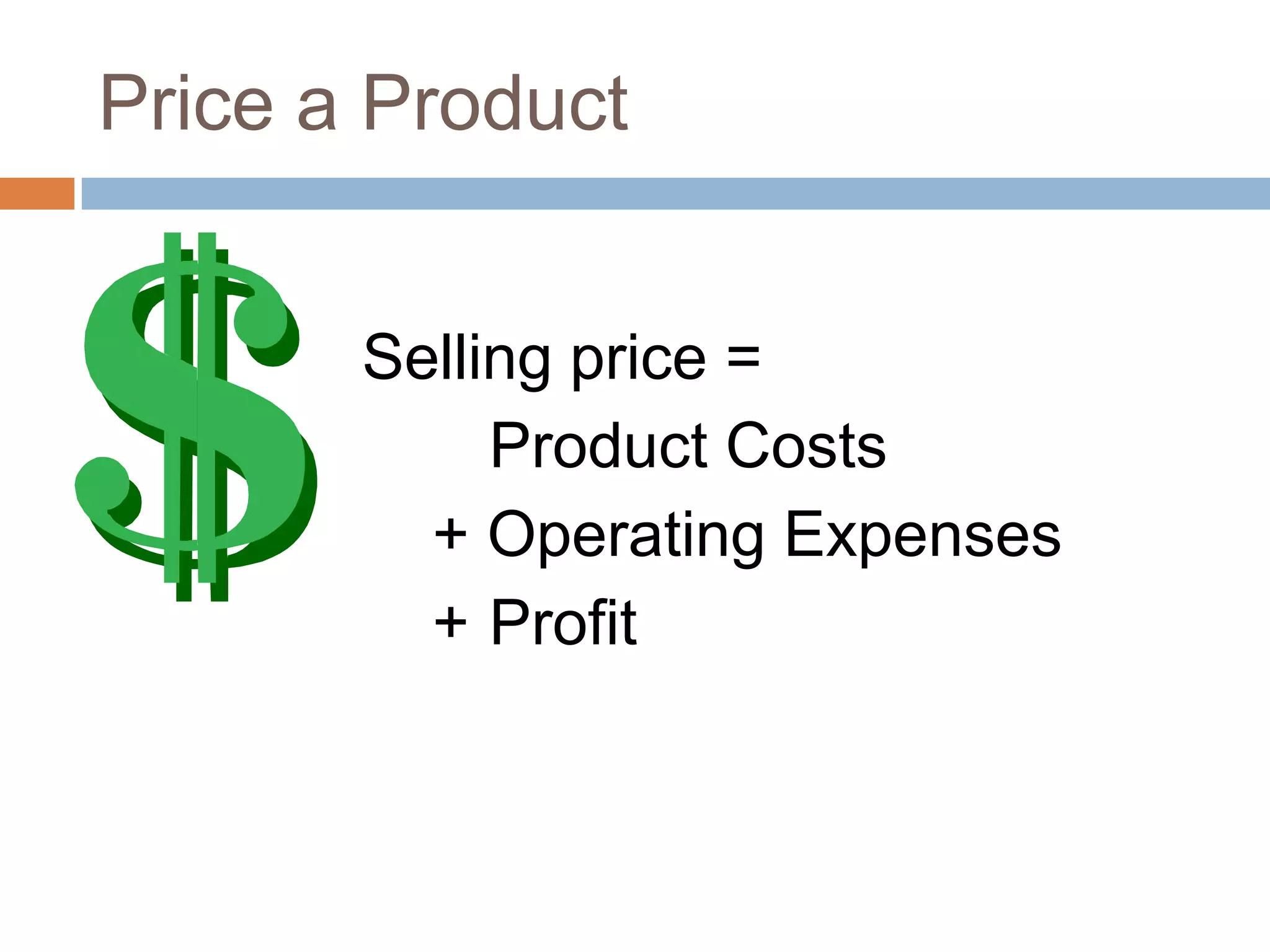
Price a ProductSelling price =		Product Costs     + Operating Expenses    +	Profit
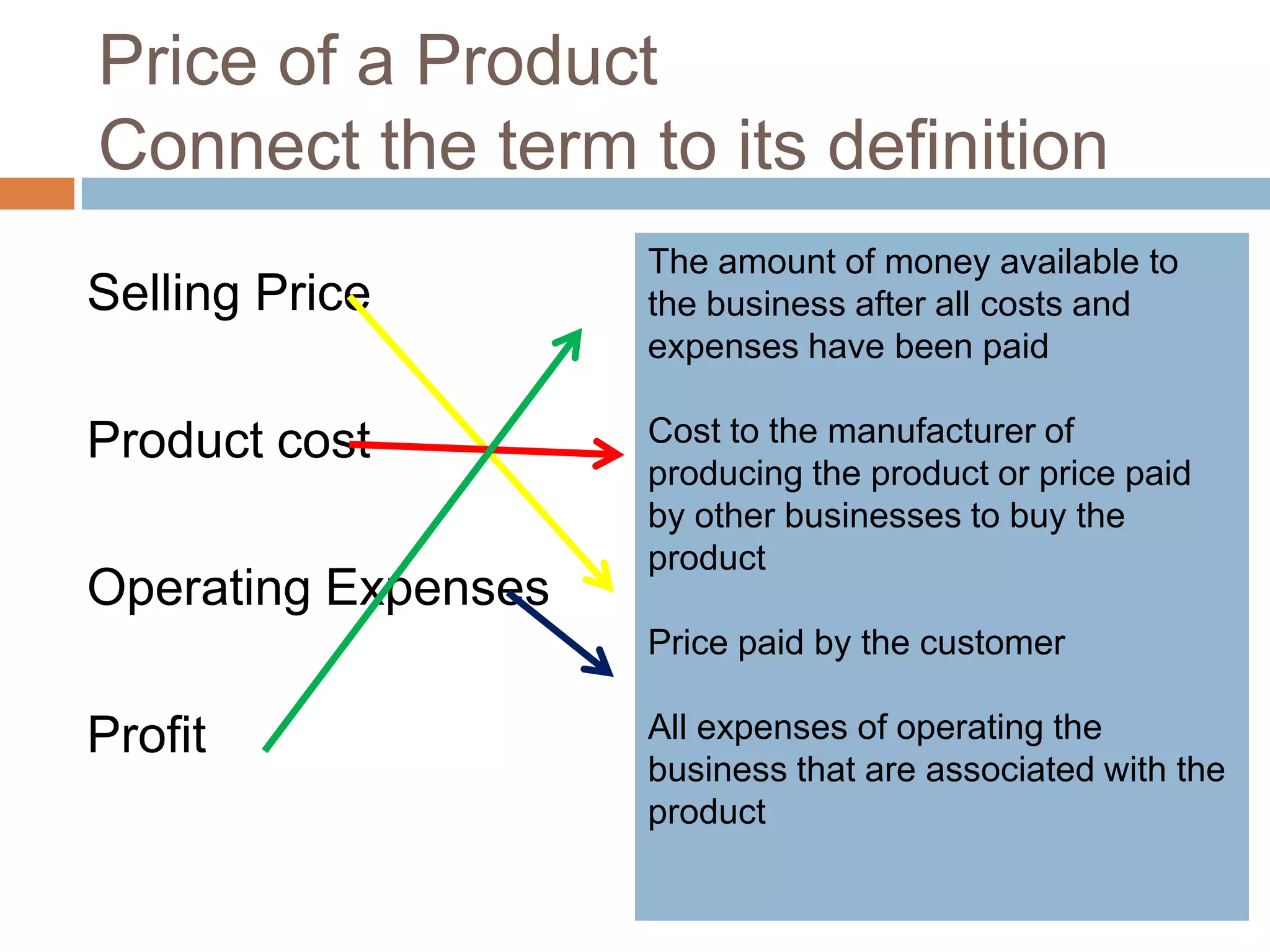
Price of a ProductConnect the term to its definitionThe amount of money available to the business after all costs and expenses have been paidCost to the manufacturer of producing the product or price paid by other businesses to buy the productPrice paid by the customerAll expenses of operating the business that are associated with the productSelling Price Product cost Operating Expenses Profit
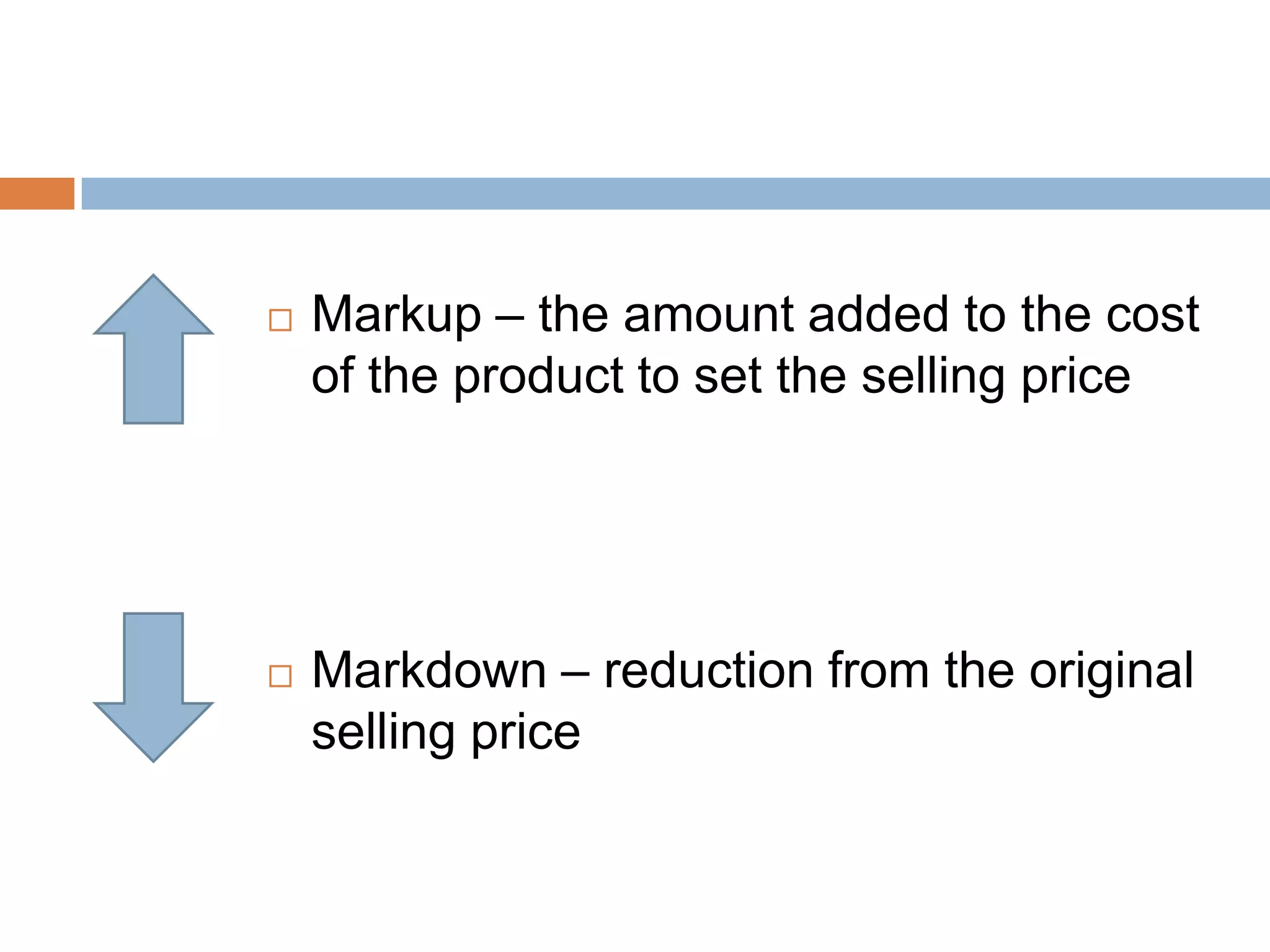
Markup – the amount added to the cost of the product to set the selling priceMarkdown – reduction from the original selling price
Channels of DistributionDistribution involves determining the best methods and procedures to use so customers can find, obtain, and use a product or serviceDistribution – locations and methods used to make a product or service available to the target market.Channel of Distribution – the route a product follows and the businesses involved in moving a product from producer to final consumer
Need for Distribution ChannelsDifferences in QuantityAssortmentLocationTimingDistribution channels take large quantities and breaks them into quantities customers want to buy.
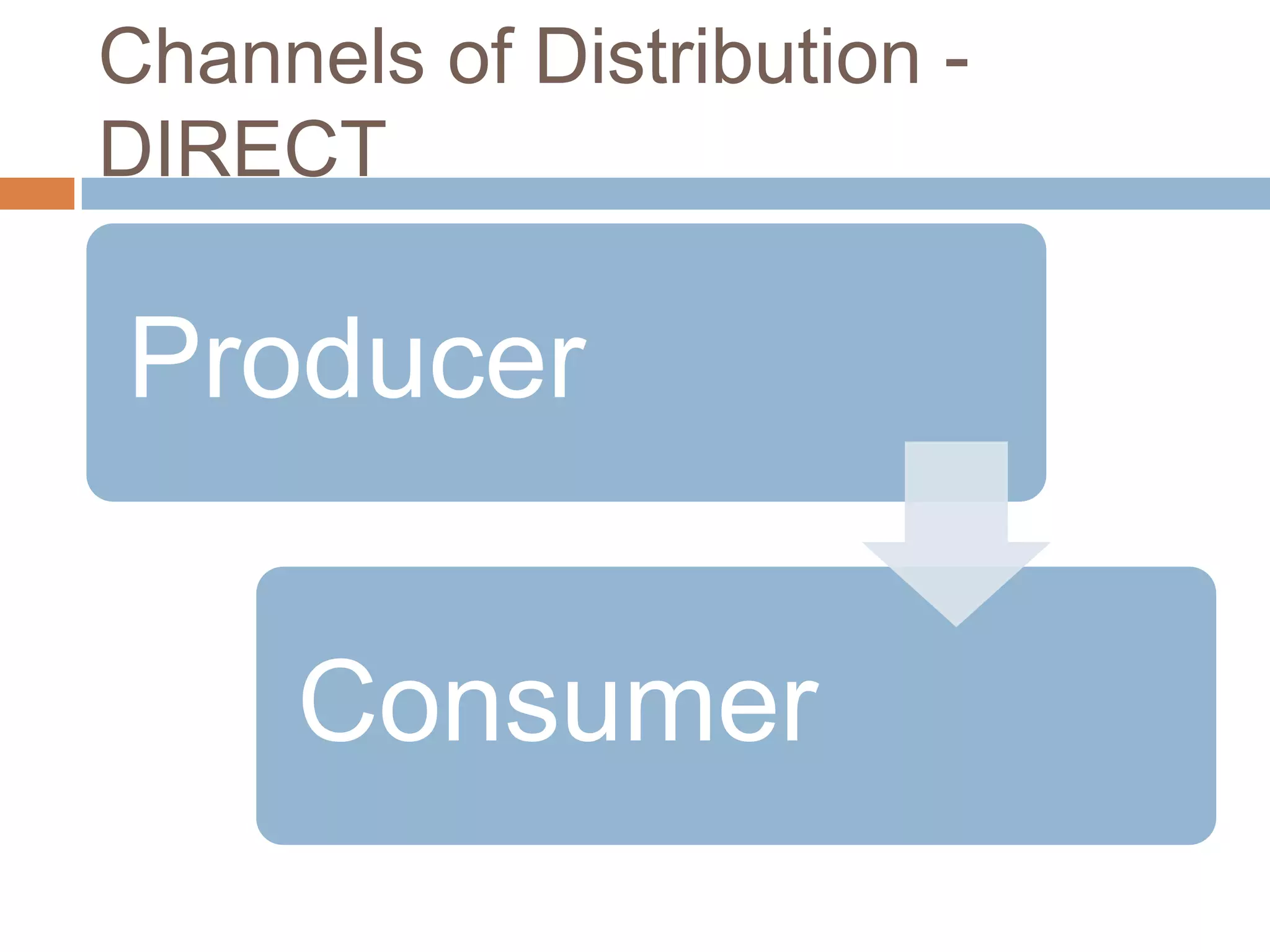
Channels of Distribution - DIRECT
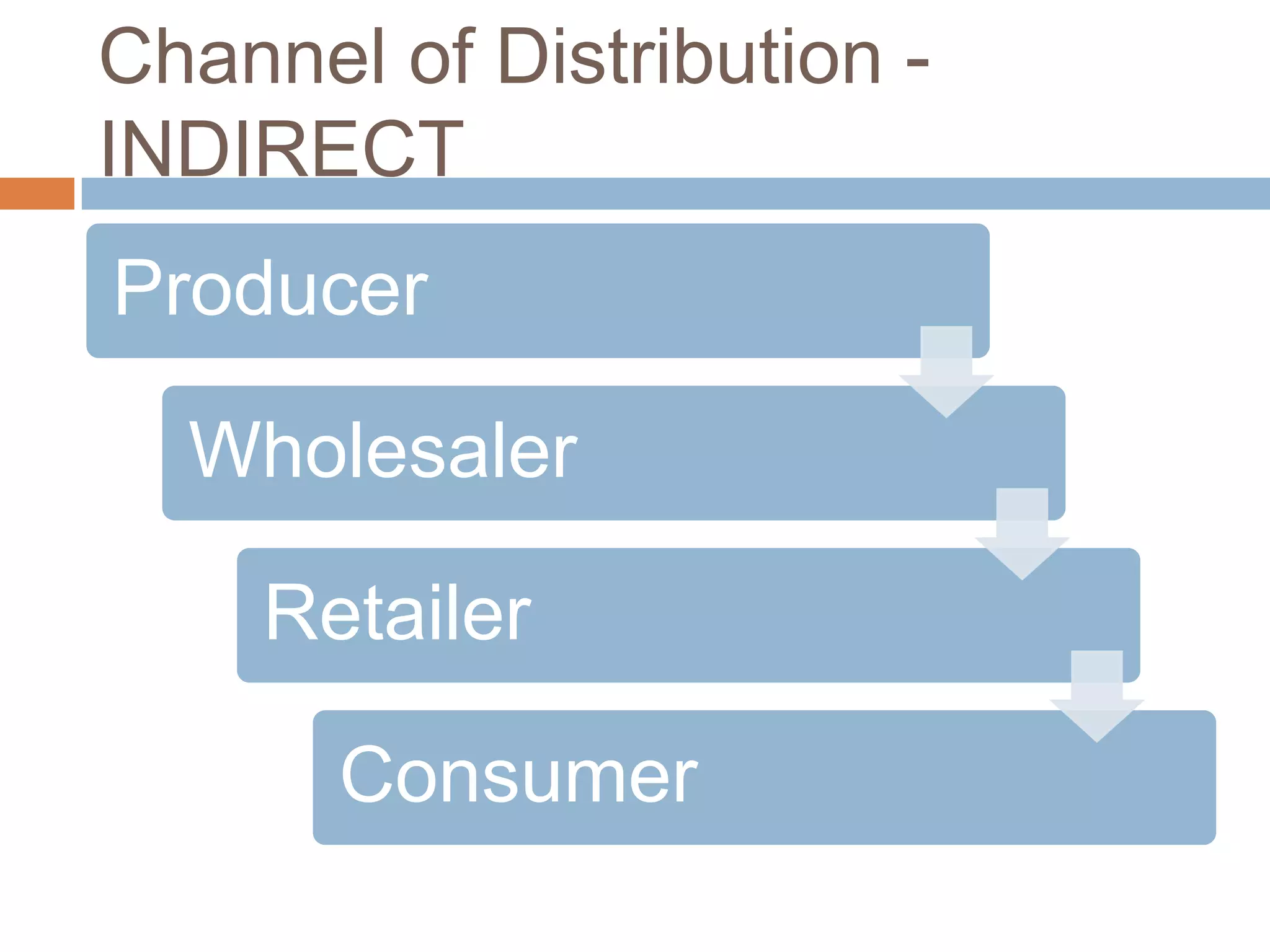
Channel of Distribution - INDIRECT
Introduction to BusinessChapter 10 - MarketingLesson 10-4
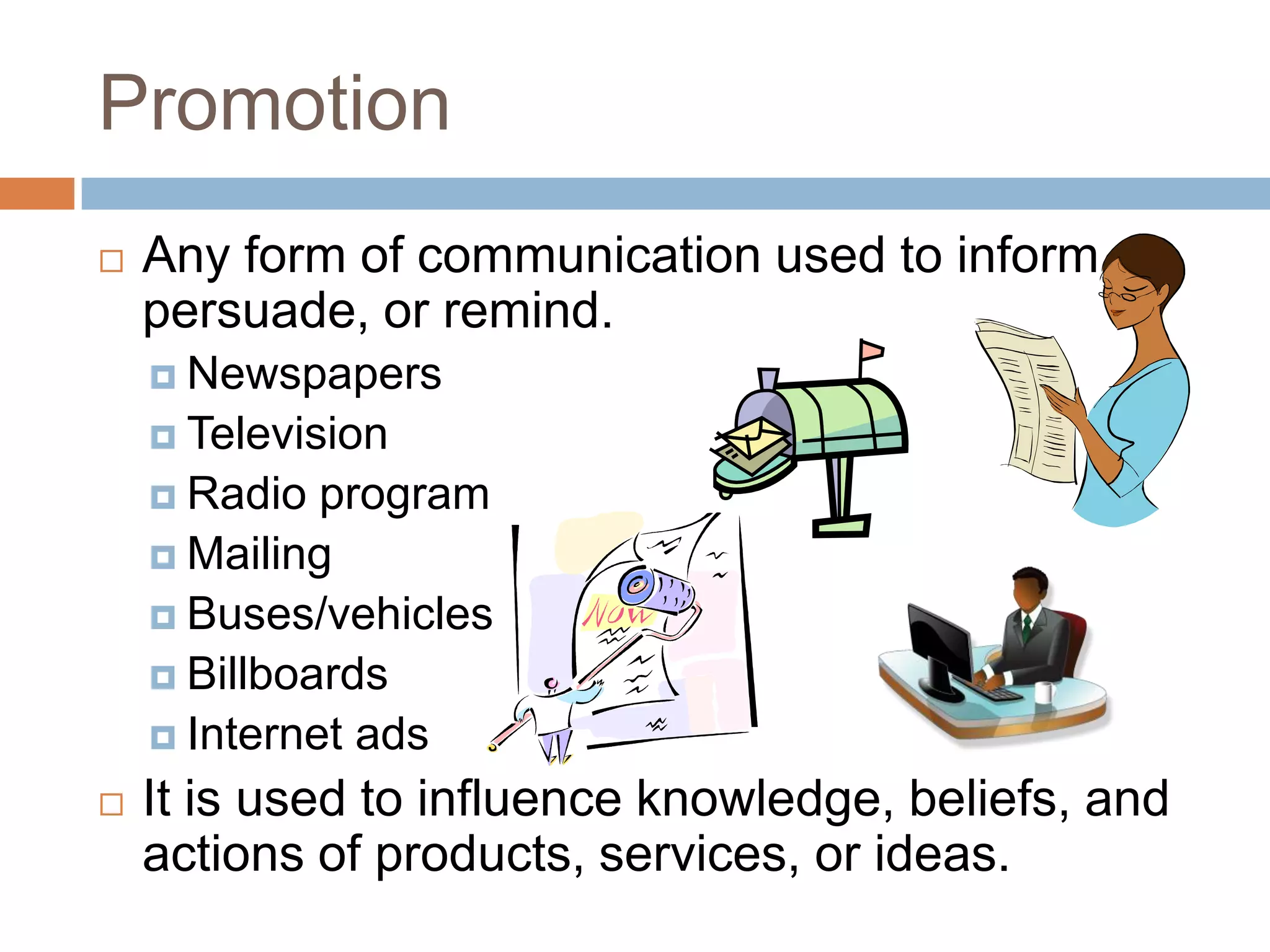
PromotionAny form of communication used to inform, persuade, or remind.NewspapersTelevisionRadio programMailingBuses/vehiclesBillboardsInternet adsIt is used to influence knowledge, beliefs, and actions of products, services, or ideas.
Effective CommunicationGroup Activity
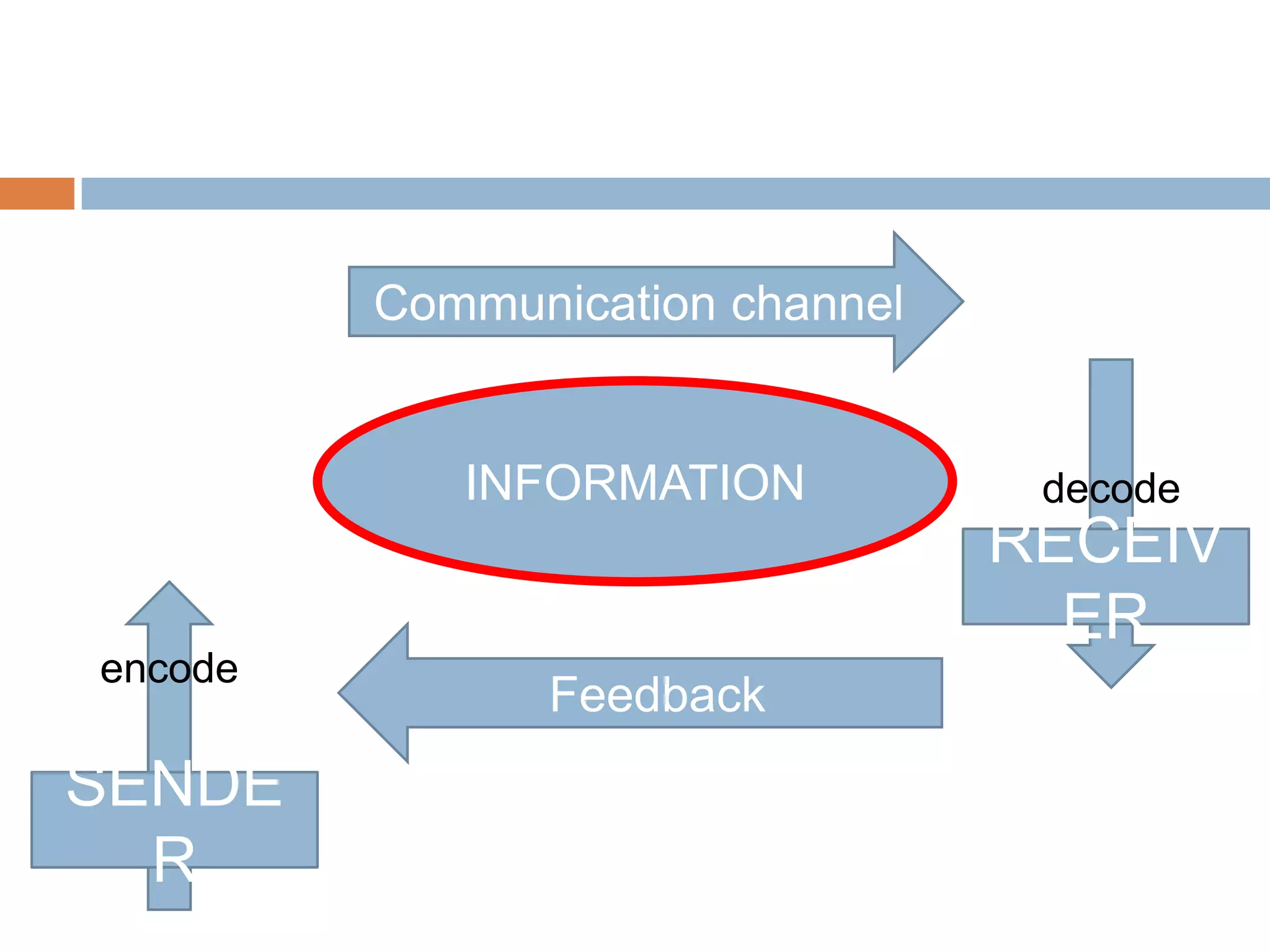
The Communication ProcessEffective Communication is The exchange of information so there is COMPLETE UNDERSTANDING by all participants
Communication channelINFORMATION decodeRECEIVERFeedbackencodeSENDER
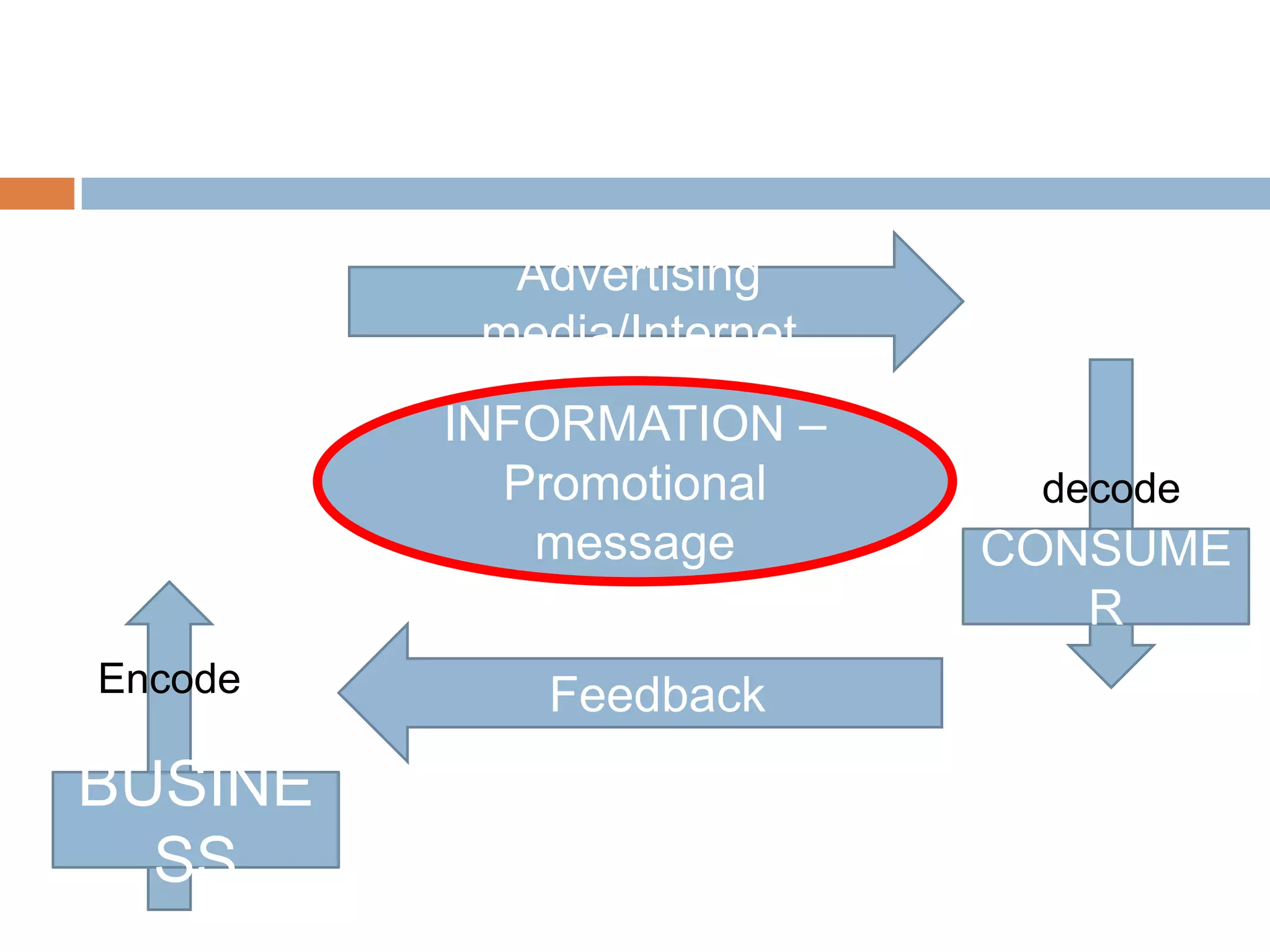
Advertising media/InternetINFORMATION –Promotional message decodeCONSUMERFeedbackEncode BUSINESS
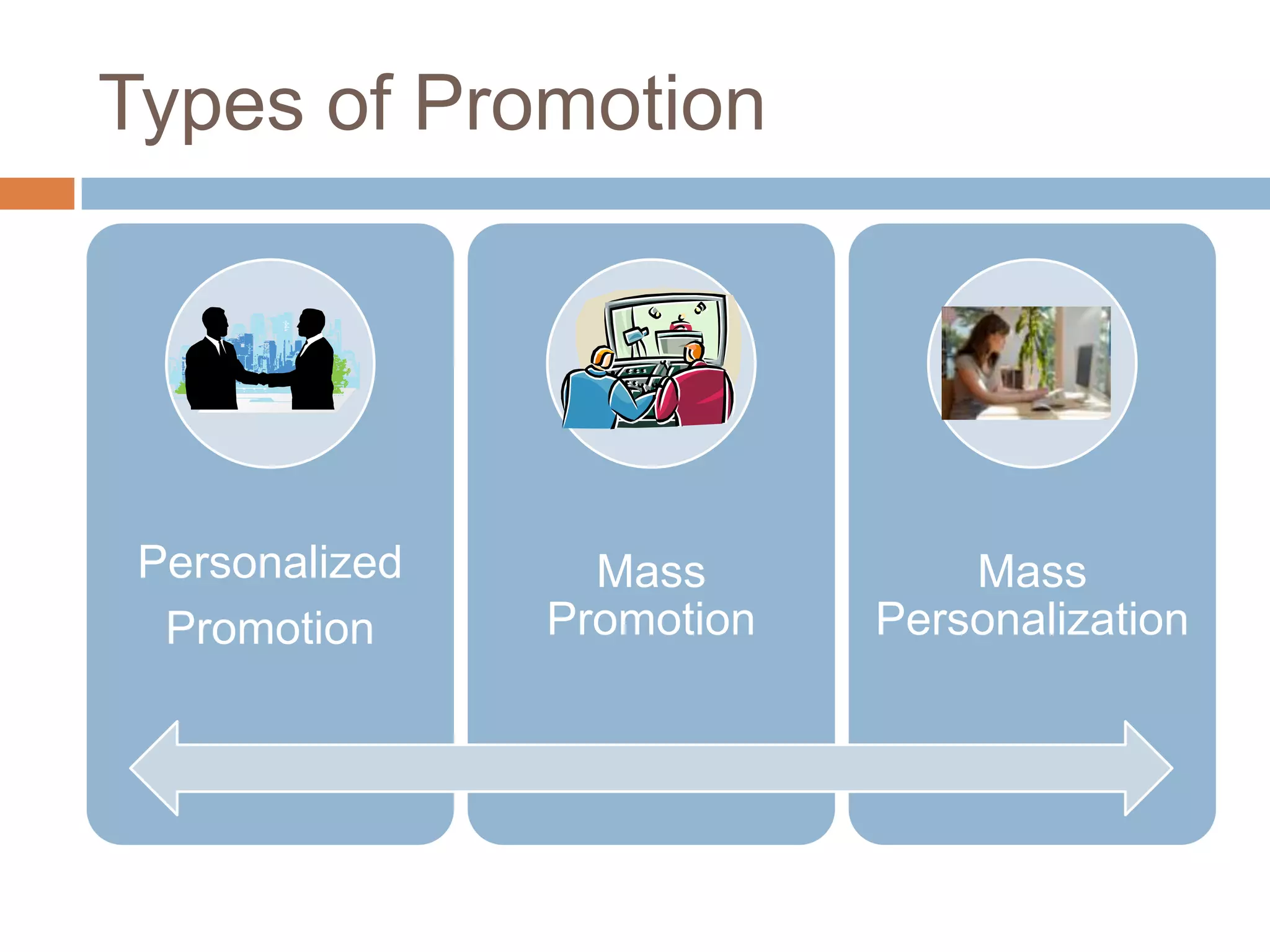
Types of Promotion
Intro To Business Chapter 10

Intro To Business Chapter 10

  • 1.
    Intro to BusinessChapter10 - MarketingLesson 10-2
  • 2.
    Create and ImproveProductsPlan Marketing Research1. Define the marketing problem2. Study the situation3. Develop a data collection procedure4. Gather and analyze information5. Propose a solutionSecondary research – analyzing existing information gathered for another purpose but used to solve a current problemPrimary research – Studies carried out to gather new information specifically directed at a current problem
  • 3.
    Types of ResearchStudiesSurveys – gather information from people using a carefully planned set of questionsFocus groups – a small number of consumers take part is a group discussionObservations – collect information by recording the actions of consumers rather than asking them questionsExperiments – Presents two controlled alternatives in order to determine which is preferred
  • 4.
    Product PlanningParts ofa productBasic product – simplest form of a product, not unique and usually available from several companiesProduct features – additions and improvements to the basic productOptions – offered choices of featuresBrand name – unique identification for a company’s productPackaging – provides protection and security for the productGuarantee/Warranty – If product breaks or does not meet customer expectations, company will repair, replace or provide refund.
  • 5.
    Product Planning ProceduresIdeaDevelopmentIdea ScreeningStrategy DevelopmentProduction and Financial PlanningLimited Production and Test MarketingFull-Scale Production
  • 6.
    ServicesServices are activitiesthat are consumed at the same time they are produced. They are:Intangible – no physical formInseparable – consumed at the same time they are producedPerishable – availability of service must match the demand for that service at a specific timeHeterogeneous – differences in the type and quality of service provided
  • 7.
    Intro to BusinessChapter10 - MarketingLesson 10-3
  • 8.
  • 9.
    AgeSeasonComplexityUniquenessConvenienceSupply & DemandPricingFactorsWhen products are first introduced into the marketProducts that are used during a particular time of the year.Products that are highly complex and technical productsWhen a product has few close competitors because it is different from others on the market.A product that is easily available.The quantity of a product a producer is willing to produce and that a customer is willing to purchase at given prices
  • 10.
    Price a ProductSellingprice = Product Costs + Operating Expenses + Profit
  • 11.
    Price of aProductConnect the term to its definitionThe amount of money available to the business after all costs and expenses have been paidCost to the manufacturer of producing the product or price paid by other businesses to buy the productPrice paid by the customerAll expenses of operating the business that are associated with the productSelling Price Product cost Operating Expenses Profit
  • 12.
    Markup – theamount added to the cost of the product to set the selling priceMarkdown – reduction from the original selling price
  • 13.
    Channels of DistributionDistributioninvolves determining the best methods and procedures to use so customers can find, obtain, and use a product or serviceDistribution – locations and methods used to make a product or service available to the target market.Channel of Distribution – the route a product follows and the businesses involved in moving a product from producer to final consumer
  • 14.
    Need for DistributionChannelsDifferences in QuantityAssortmentLocationTimingDistribution channels take large quantities and breaks them into quantities customers want to buy.
  • 15.
  • 16.
  • 17.
    Introduction to BusinessChapter10 - MarketingLesson 10-4
  • 18.
    PromotionAny form ofcommunication used to inform, persuade, or remind.NewspapersTelevisionRadio programMailingBuses/vehiclesBillboardsInternet adsIt is used to influence knowledge, beliefs, and actions of products, services, or ideas.
  • 19.
  • 20.
    The Communication ProcessEffectiveCommunication is The exchange of information so there is COMPLETE UNDERSTANDING by all participants
  • 21.
  • 22.
    Advertising media/InternetINFORMATION –Promotionalmessage decodeCONSUMERFeedbackEncode BUSINESS
  • 23.