Environmental Analysis
Dr. Gopal Thapa
Associate Professor
Tribhuvan University
Environmental Analysis
 Environmental analysis is the process of assessing
the emerging trends.
 Philip Kotler
 Three types of emerging trends
 Fad
 Trend
 Mega trend
9/15/2019 Copy right reserved 2
Environmental Analysis
 Environmental analysis involves identifying the
present and future opportunities and threats to and
from the firm’s principal constituents/
stakeholders along the dimensions pf the firm’s
economic, political, legal, technological and social
environments.
9/15/2019 Copy right reserved 3
Process of Environmental Analysis
 Scanning
 Monitoring
 Forecasting
 Assessment
9/15/2019 Copy right reserved 4
Environment Scanning
 Environmental scanning involves monitoring
changes and developments in the environment that
have potential impact on the business of an
organization
9/15/2019 Copy right reserved 5
Methods of Scanning
 Extrapolations method
 History analogy
 Intuitive reasoning
 Scenario building
 Cross impact matrix
 Network methods
 Model building
 Delphi technique
9/15/2019 Copy right reserved 6
Variables Considered for Scanning
 Changes in macro environment
 Changes in market
 Nature of competition
 Customer needs
 Product offerings
9/15/2019 Copy right reserved 7
Types of Scanning
 Concentrated
 Comprehensive
9/15/2019 Copy right reserved 8
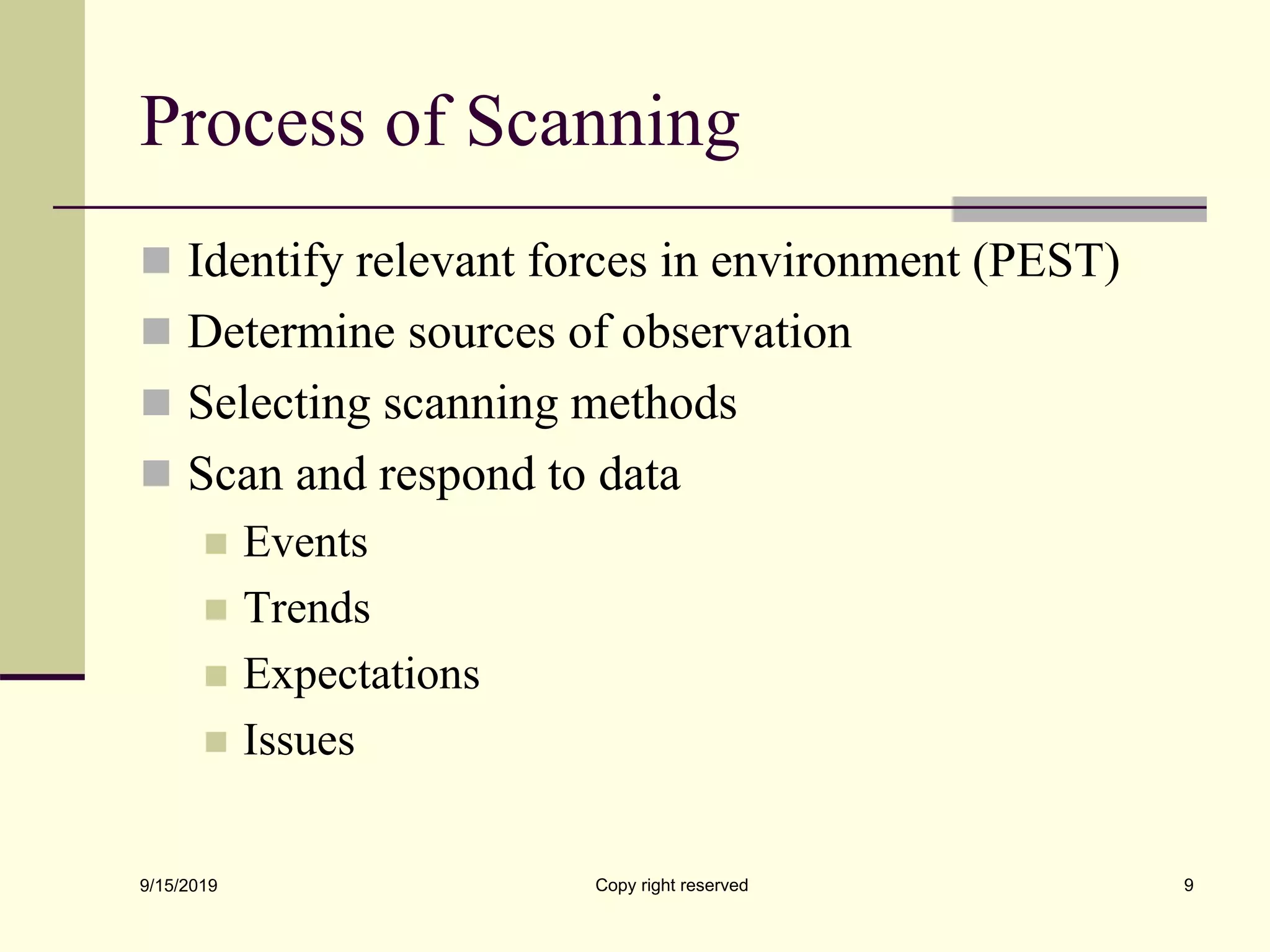
Process of Scanning
 Identify relevant forces in environment (PEST)
 Determine sources of observation
 Selecting scanning methods
 Scan and respond to data
 Events
 Trends
 Expectations
 Issues
9/15/2019 Copy right reserved 9
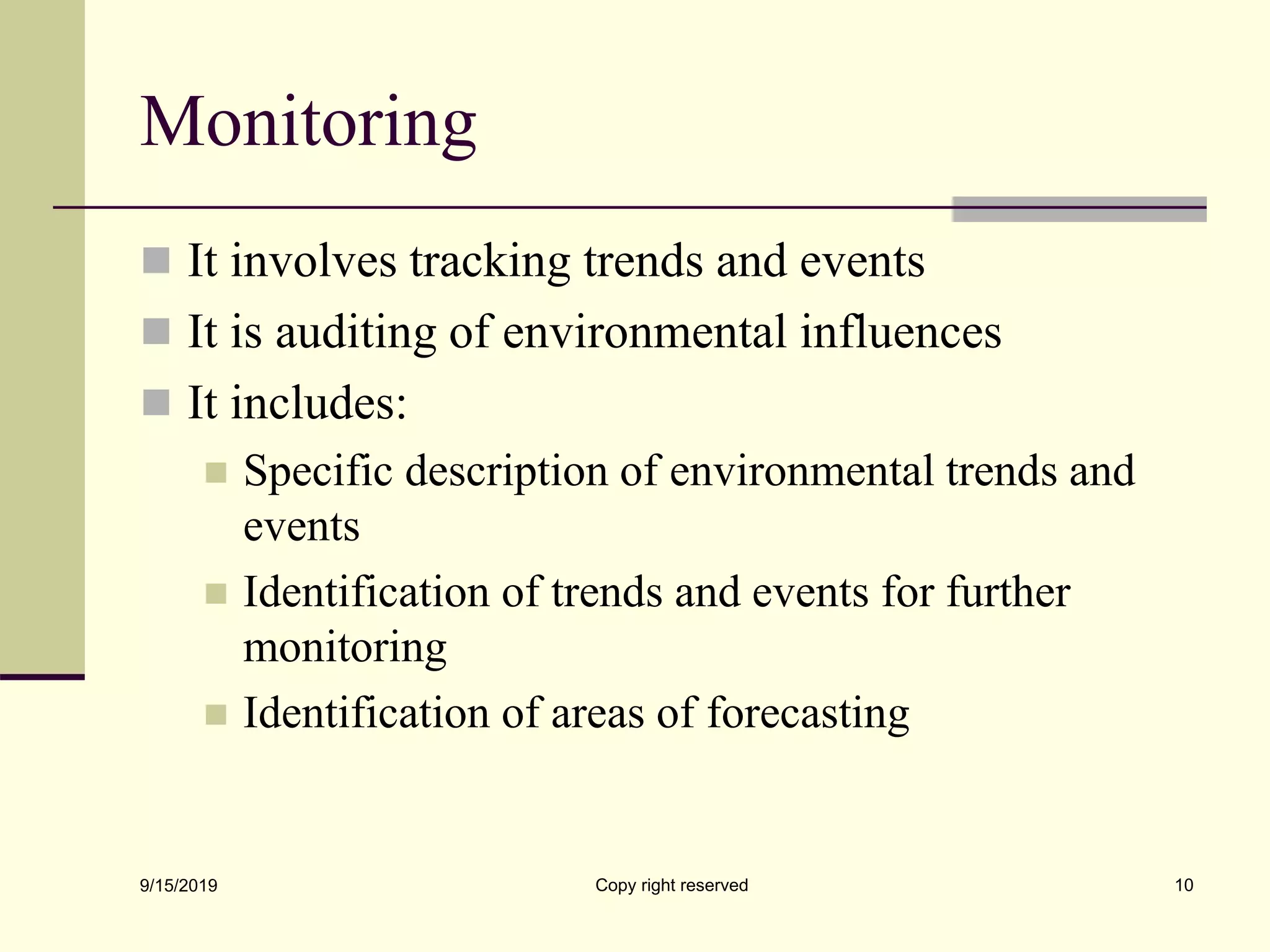
Monitoring
 It involves tracking trends and events
 It is auditing of environmental influences
 It includes:
 Specific description of environmental trends and
events
 Identification of trends and events for further
monitoring
 Identification of areas of forecasting
9/15/2019 Copy right reserved 10
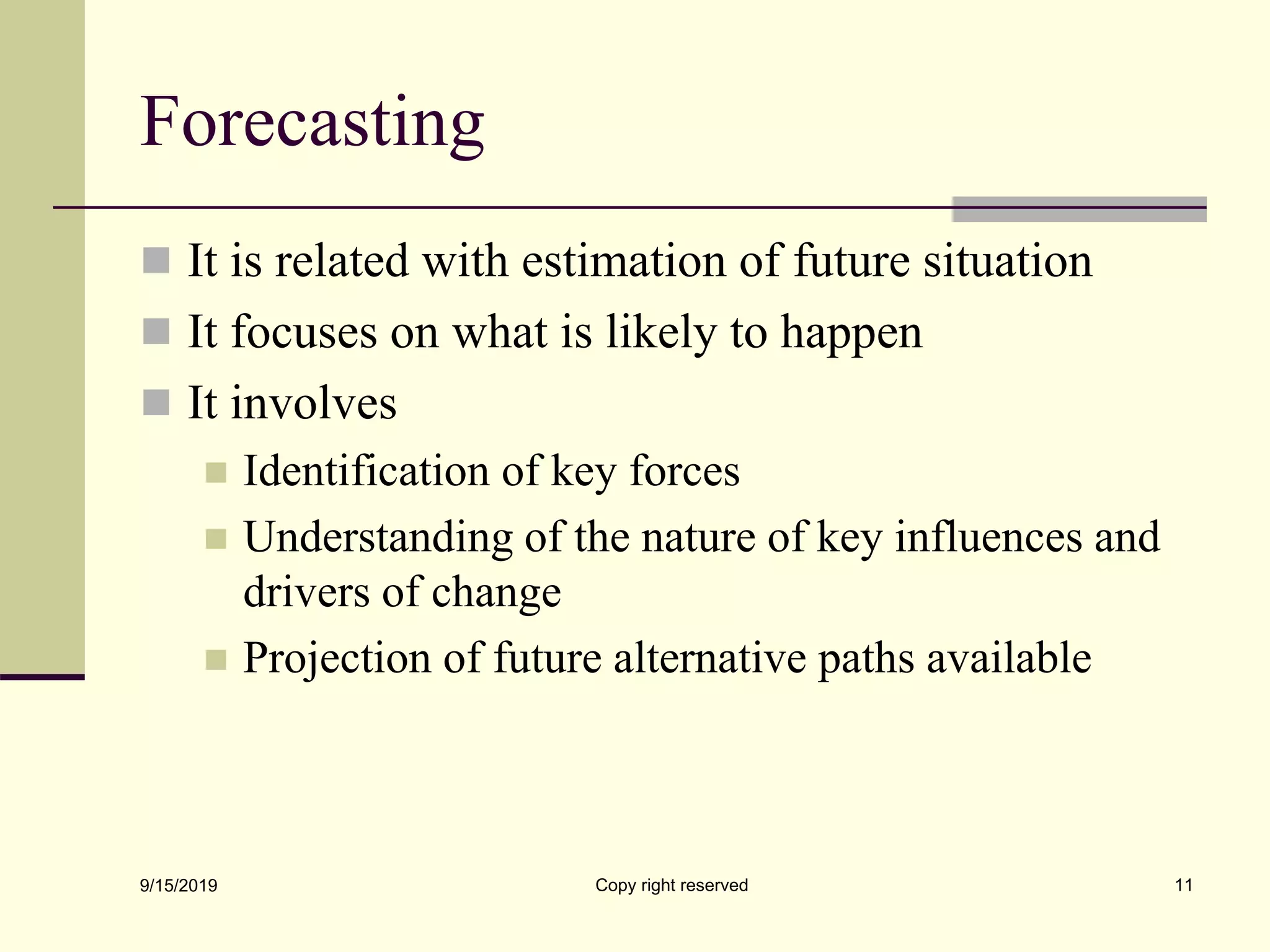
Forecasting
 It is related with estimation of future situation
 It focuses on what is likely to happen
 It involves
 Identification of key forces
 Understanding of the nature of key influences and
drivers of change
 Projection of future alternative paths available
9/15/2019 Copy right reserved 11
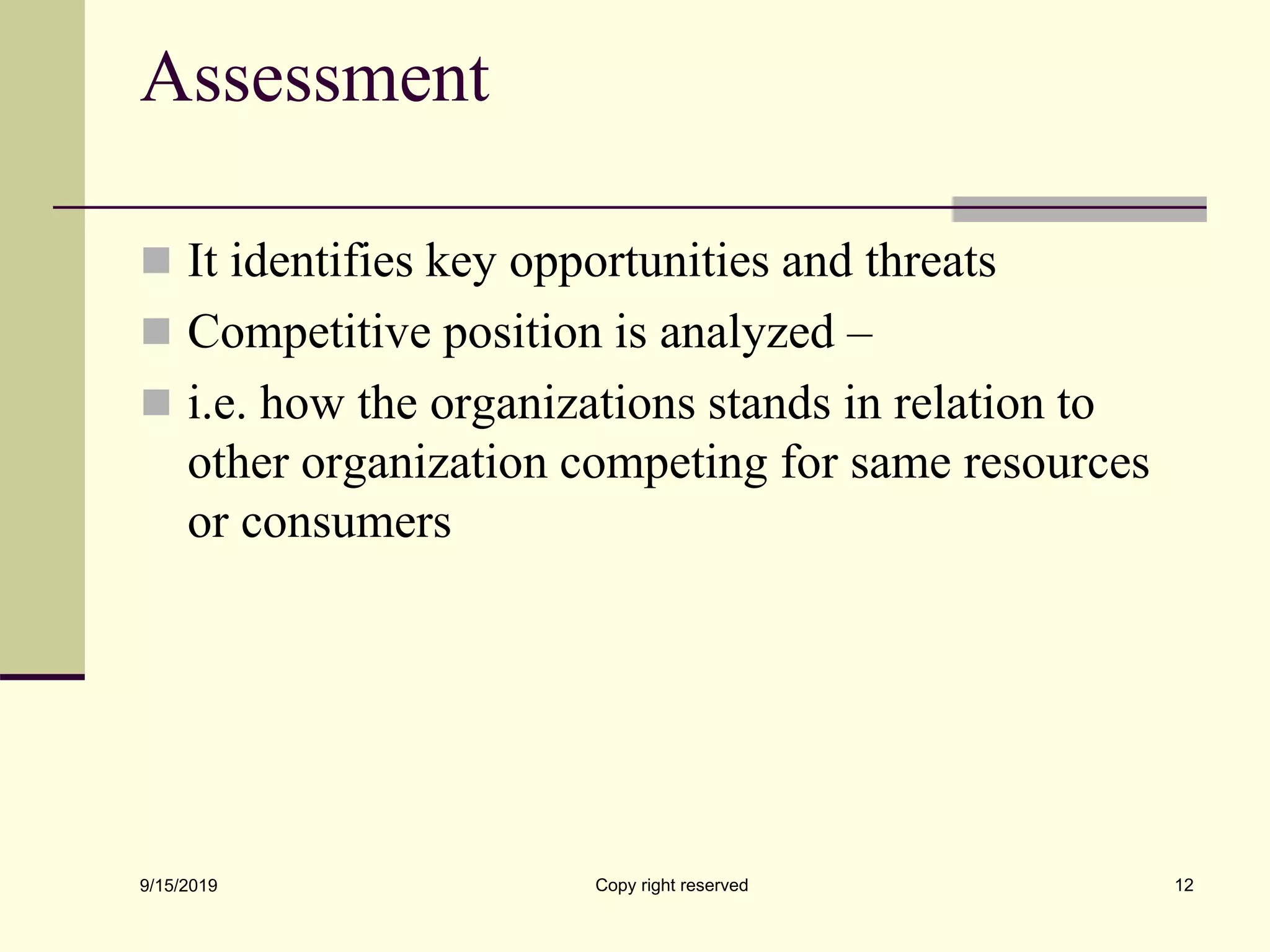
Assessment
 It identifies key opportunities and threats
 Competitive position is analyzed –
 i.e. how the organizations stands in relation to
other organization competing for same resources
or consumers
9/15/2019 Copy right reserved 12
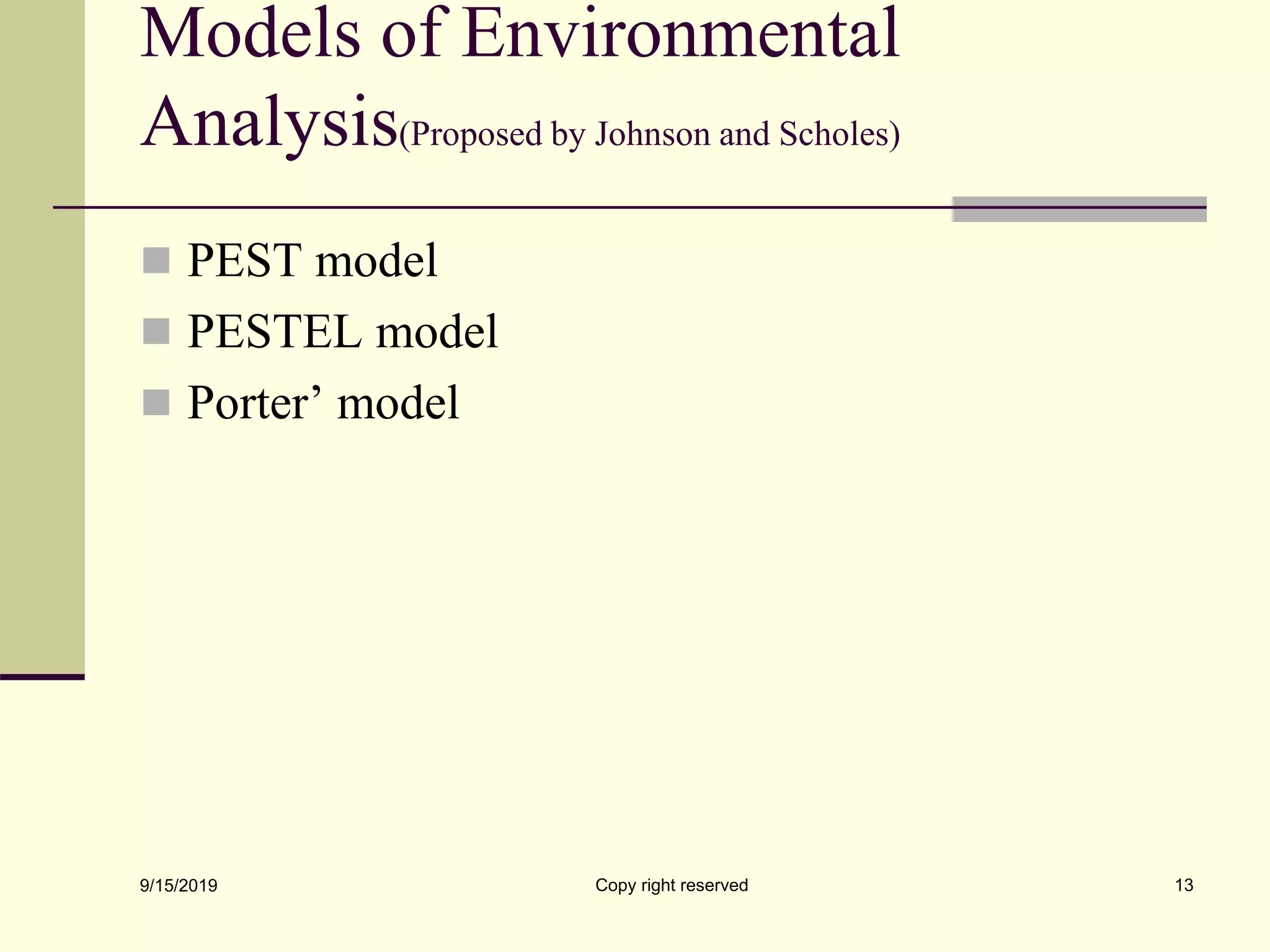
Models of Environmental
Analysis(Proposed by Johnson and Scholes)
 PEST model
 PESTEL model
 Porter’ model
9/15/2019 Copy right reserved 13
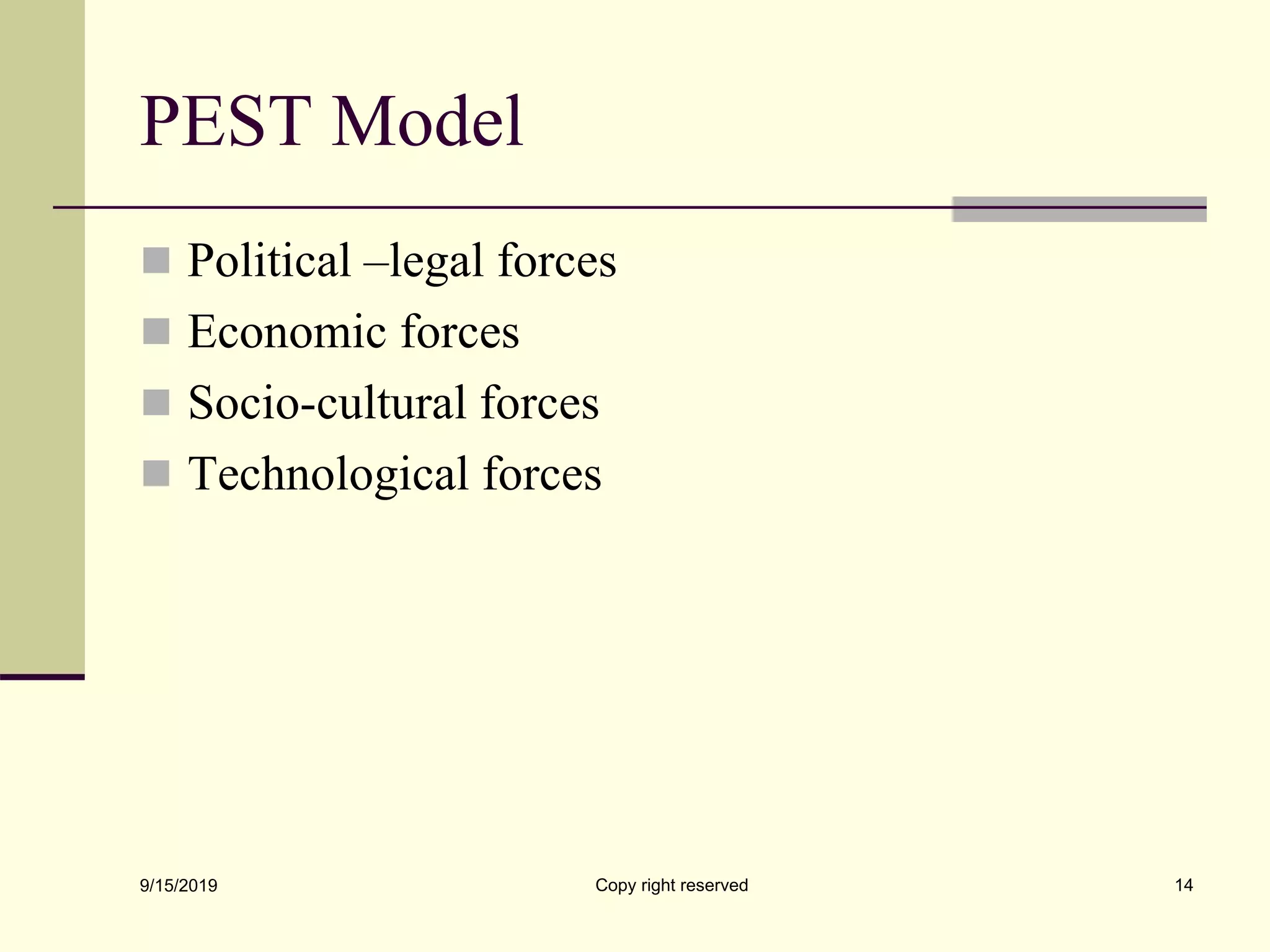
PEST Model
 Political –legal forces
 Economic forces
 Socio-cultural forces
 Technological forces
9/15/2019 Copy right reserved 14
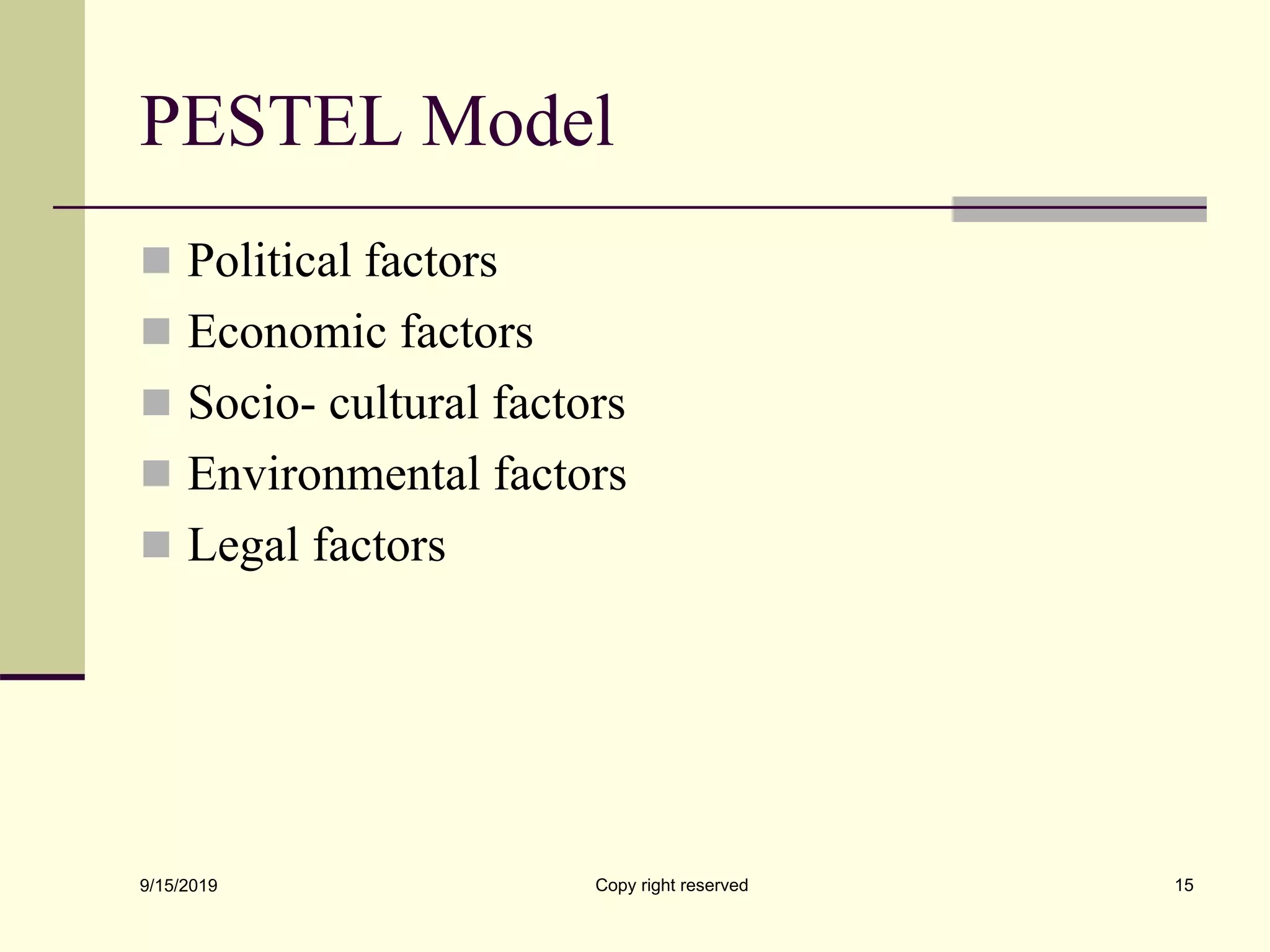
PESTEL Model
 Political factors
 Economic factors
 Socio- cultural factors
 Environmental factors
 Legal factors
9/15/2019 Copy right reserved 15
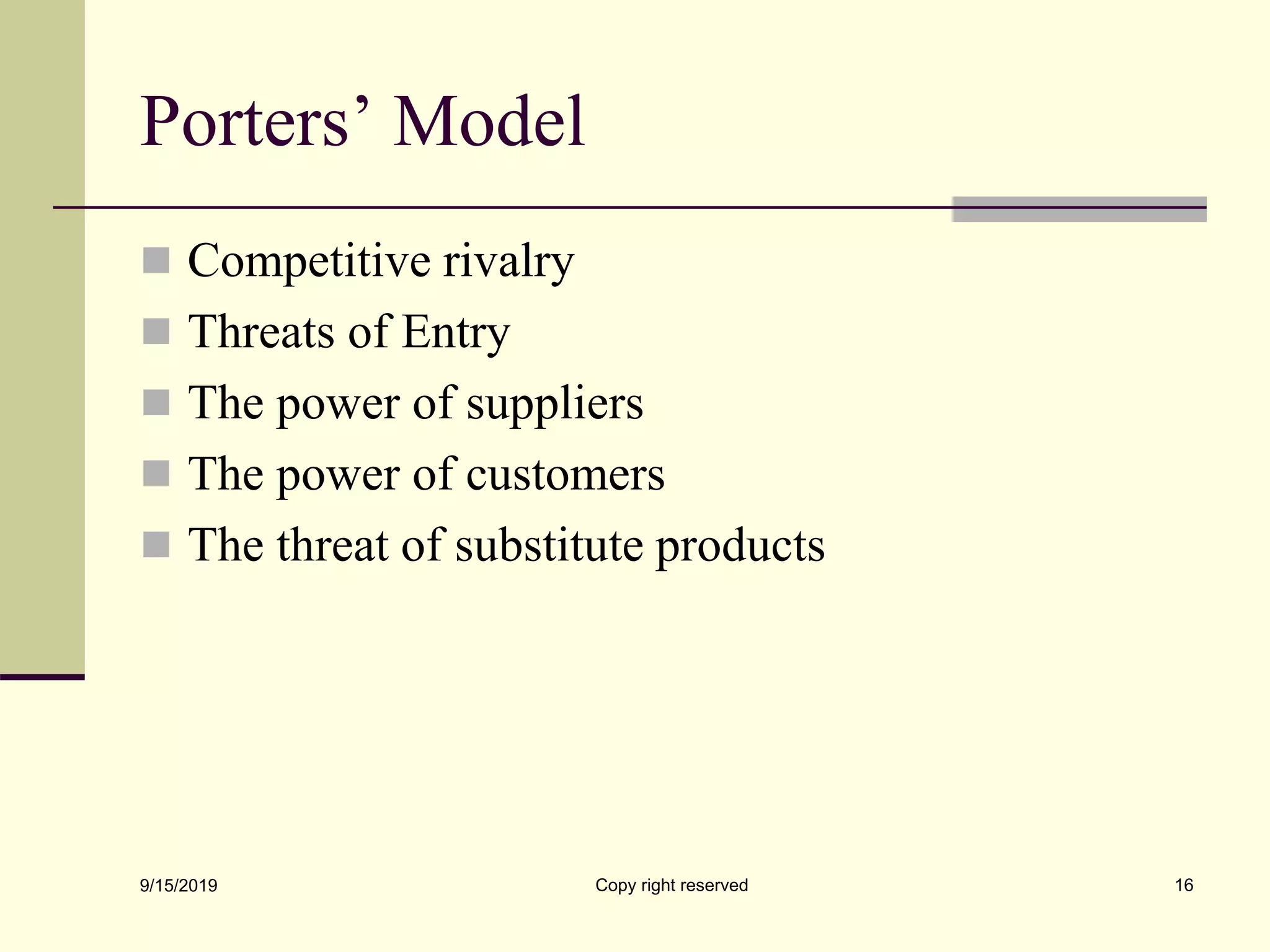
Porters’ Model
 Competitive rivalry
 Threats of Entry
 The power of suppliers
 The power of customers
 The threat of substitute products
9/15/2019 Copy right reserved 16
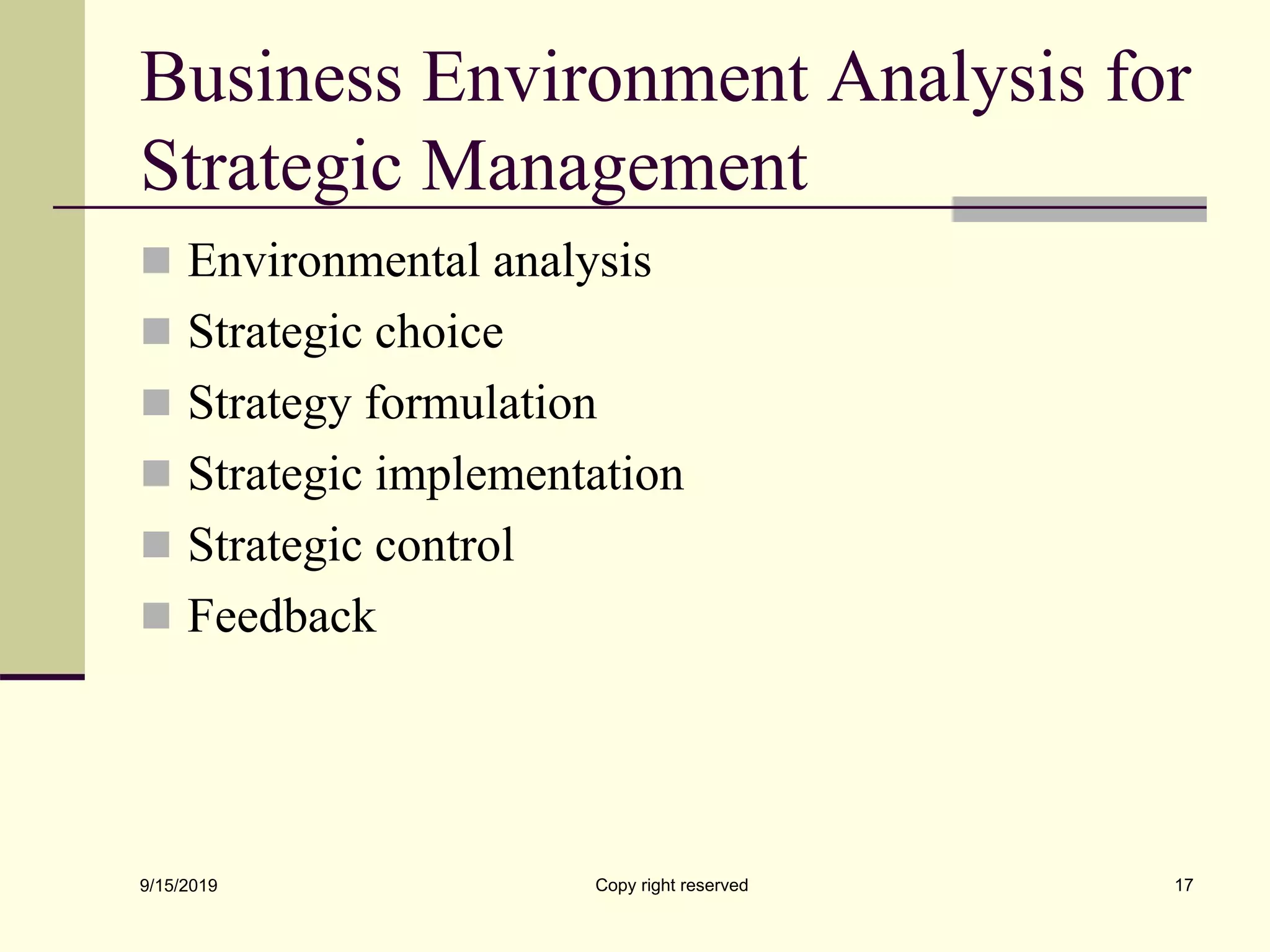
Business Environment Analysis for
Strategic Management
 Environmental analysis
 Strategic choice
 Strategy formulation
 Strategic implementation
 Strategic control
 Feedback
9/15/2019 Copy right reserved 17
Any Queries?

 Thank you
9/15/2019 Copy right reserved 18

Process of environmental analysis

  • 1.
    Environmental Analysis Dr. GopalThapa Associate Professor Tribhuvan University
  • 2.
    Environmental Analysis  Environmentalanalysis is the process of assessing the emerging trends.  Philip Kotler  Three types of emerging trends  Fad  Trend  Mega trend 9/15/2019 Copy right reserved 2
  • 3.
    Environmental Analysis  Environmentalanalysis involves identifying the present and future opportunities and threats to and from the firm’s principal constituents/ stakeholders along the dimensions pf the firm’s economic, political, legal, technological and social environments. 9/15/2019 Copy right reserved 3
  • 4.
    Process of EnvironmentalAnalysis  Scanning  Monitoring  Forecasting  Assessment 9/15/2019 Copy right reserved 4
  • 5.
    Environment Scanning  Environmentalscanning involves monitoring changes and developments in the environment that have potential impact on the business of an organization 9/15/2019 Copy right reserved 5
  • 6.
    Methods of Scanning Extrapolations method  History analogy  Intuitive reasoning  Scenario building  Cross impact matrix  Network methods  Model building  Delphi technique 9/15/2019 Copy right reserved 6
  • 7.
    Variables Considered forScanning  Changes in macro environment  Changes in market  Nature of competition  Customer needs  Product offerings 9/15/2019 Copy right reserved 7
  • 8.
    Types of Scanning Concentrated  Comprehensive 9/15/2019 Copy right reserved 8
  • 9.
    Process of Scanning Identify relevant forces in environment (PEST)  Determine sources of observation  Selecting scanning methods  Scan and respond to data  Events  Trends  Expectations  Issues 9/15/2019 Copy right reserved 9
  • 10.
    Monitoring  It involvestracking trends and events  It is auditing of environmental influences  It includes:  Specific description of environmental trends and events  Identification of trends and events for further monitoring  Identification of areas of forecasting 9/15/2019 Copy right reserved 10
  • 11.
    Forecasting  It isrelated with estimation of future situation  It focuses on what is likely to happen  It involves  Identification of key forces  Understanding of the nature of key influences and drivers of change  Projection of future alternative paths available 9/15/2019 Copy right reserved 11
  • 12.
    Assessment  It identifieskey opportunities and threats  Competitive position is analyzed –  i.e. how the organizations stands in relation to other organization competing for same resources or consumers 9/15/2019 Copy right reserved 12
  • 13.
    Models of Environmental Analysis(Proposedby Johnson and Scholes)  PEST model  PESTEL model  Porter’ model 9/15/2019 Copy right reserved 13
  • 14.
    PEST Model  Political–legal forces  Economic forces  Socio-cultural forces  Technological forces 9/15/2019 Copy right reserved 14
  • 15.
    PESTEL Model  Politicalfactors  Economic factors  Socio- cultural factors  Environmental factors  Legal factors 9/15/2019 Copy right reserved 15
  • 16.
    Porters’ Model  Competitiverivalry  Threats of Entry  The power of suppliers  The power of customers  The threat of substitute products 9/15/2019 Copy right reserved 16
  • 17.
    Business Environment Analysisfor Strategic Management  Environmental analysis  Strategic choice  Strategy formulation  Strategic implementation  Strategic control  Feedback 9/15/2019 Copy right reserved 17
  • 18.
    Any Queries?   Thankyou 9/15/2019 Copy right reserved 18