Intrinsic Elements of Fiction 
Group 2 
Popy Tria Meisela 
Ika Wahyu Ratnasari 
Rengganis Galuh Ratna
F i c t i o n 
A story that is made up by the author or not true. Author's 
use fiction when writing about imaginary people, places, or 
events in the form of short stories or novels. Fiction is fake, 
imagined, or fantasy. Fiction is not real or true information 
from real life.
Intrinsic Elements of Fiction 
1. Plot 
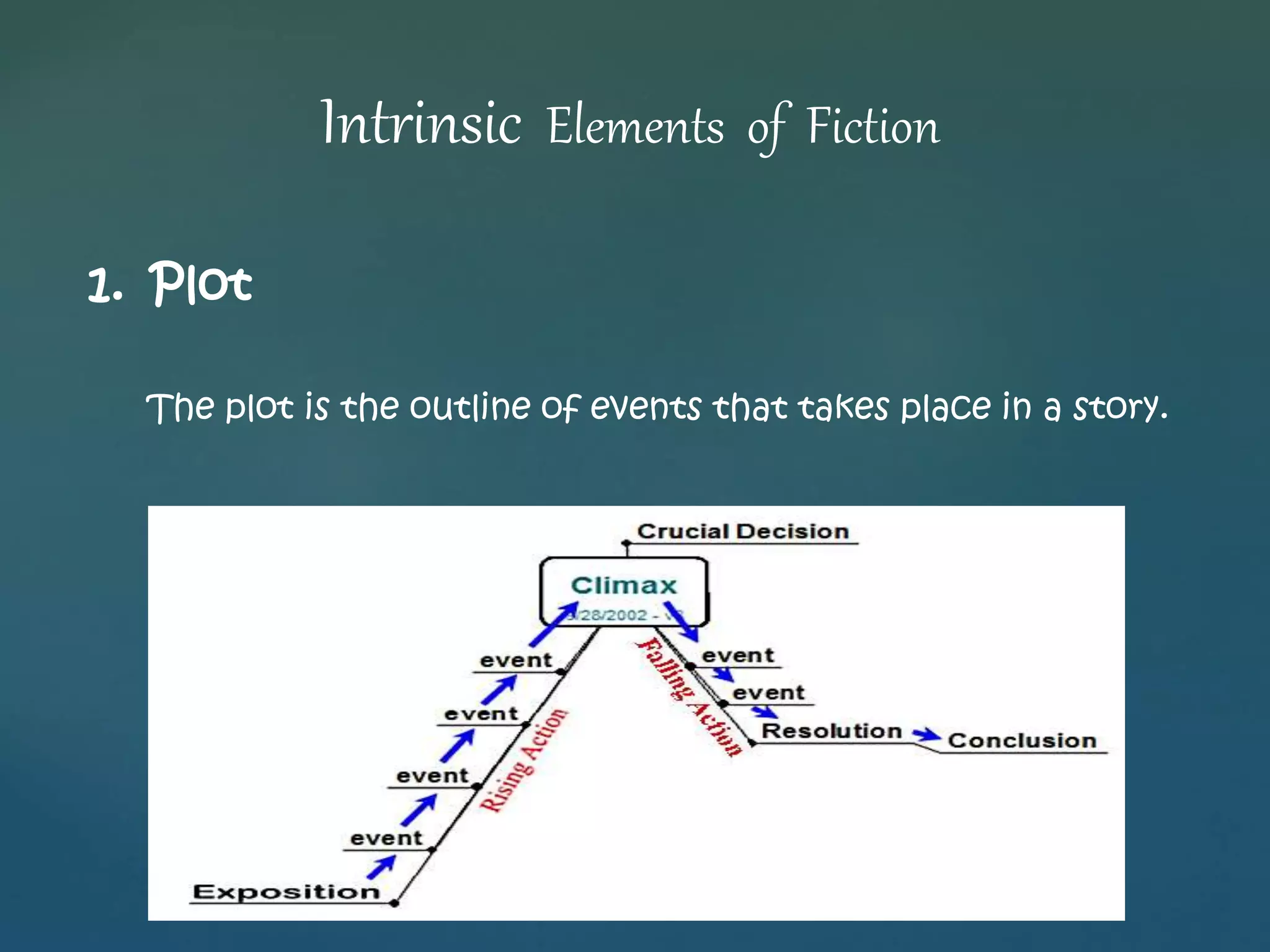
The plot is the outline of events that takes place in a story.
Intrinsic Elements of Fiction 
2. Character 
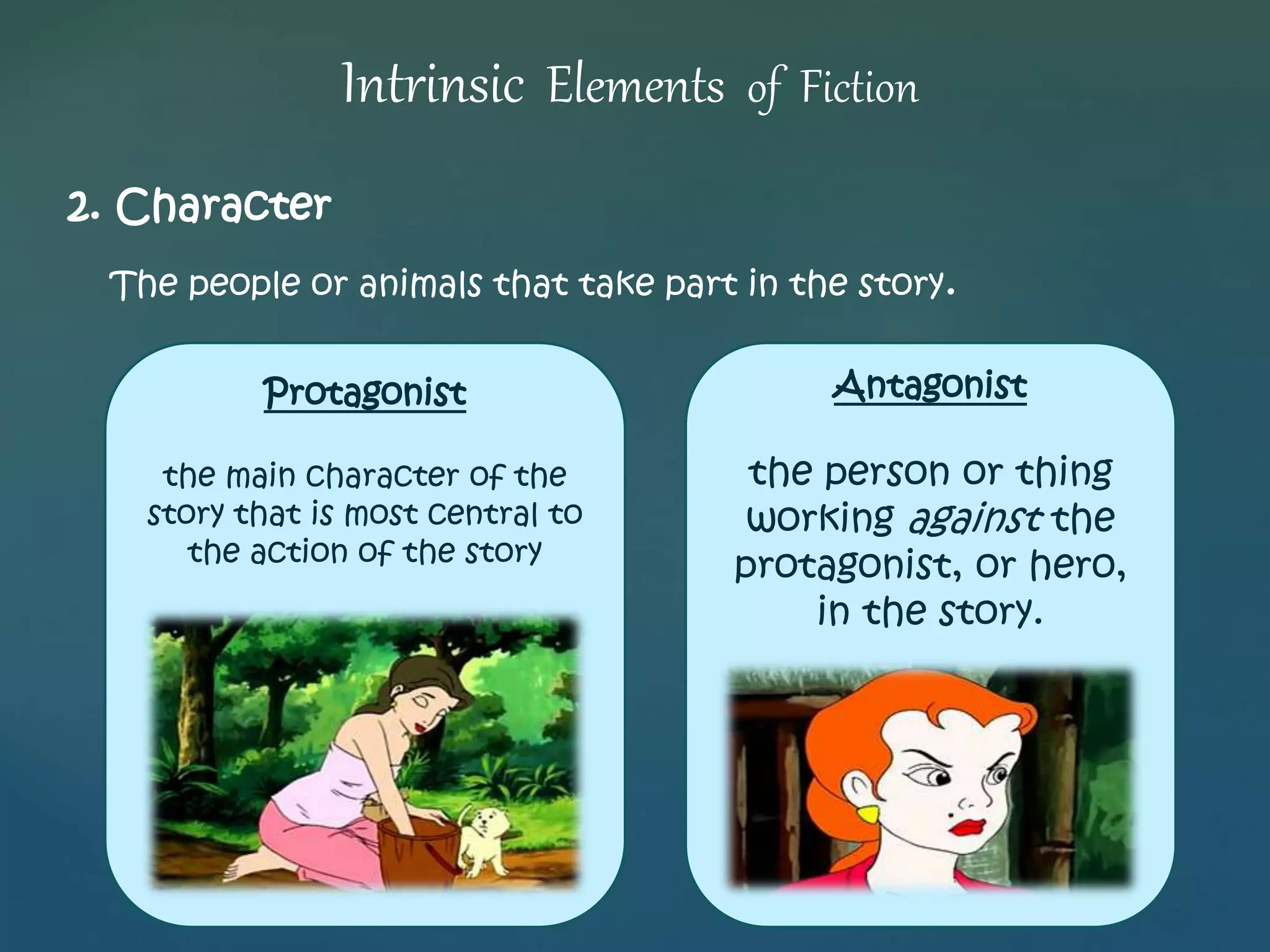
The people or animals that take part in the story. 
Antagonist 
the person or thing 
working against the 
protagonist, or hero, 
in the story. 
Protagonist 
the main character of the 
story that is most central to 
the action of the story
Intrinsic Elements of Fiction 
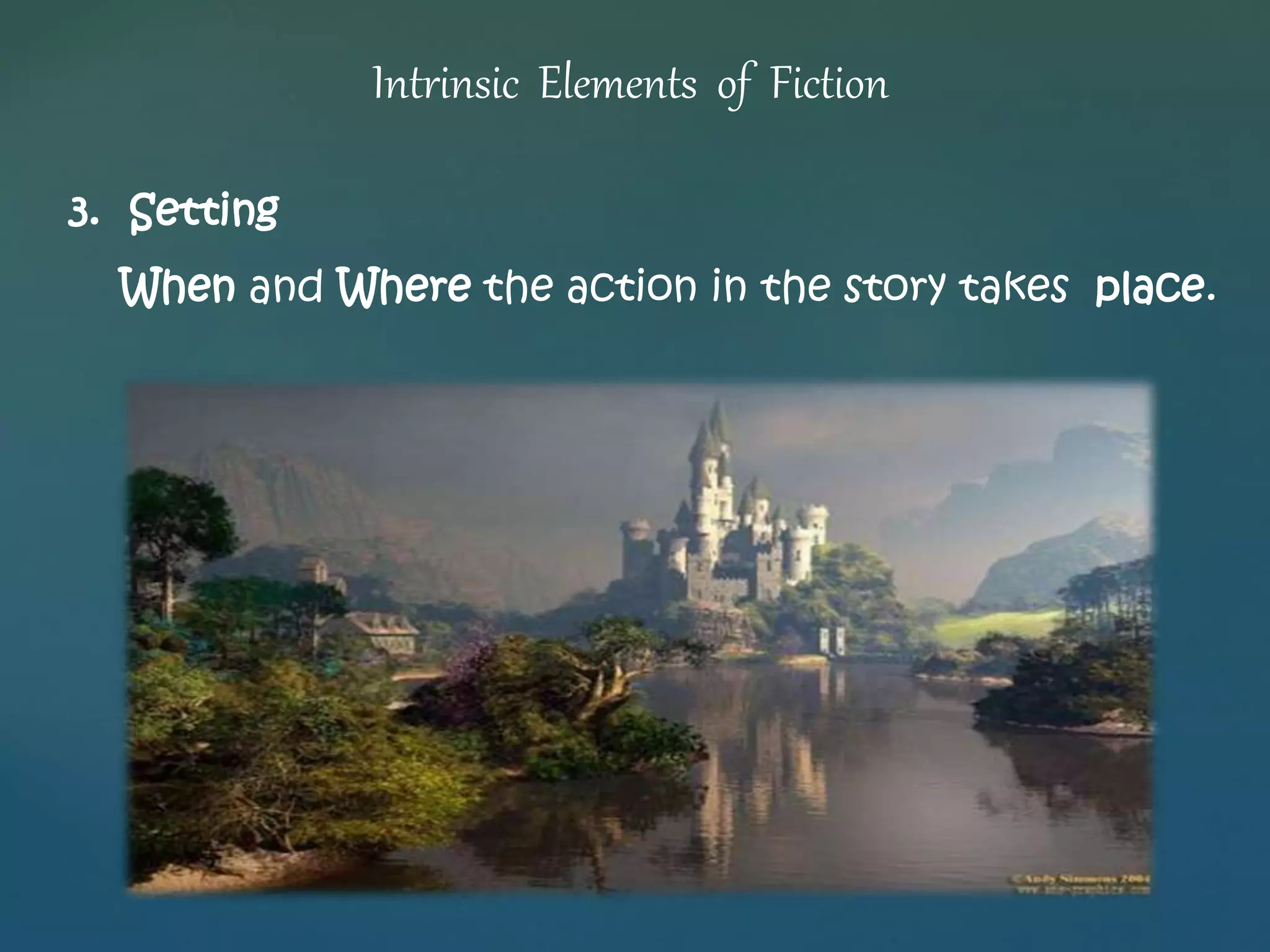
3. Setting 
When and Where the action in the story takes place.
Intrinsic Elements of Fiction 
4. Theme 
The theme of the story is the main idea the author wishes to 
share with the reader. 
5. Point of View 
the perspective or vantage point from which an author presents a 
story. 
& 1st person- the story is told by one of the characters in the story. The 
character uses the pronouns I and we. 
& 3rd person- the story is told by the narrator who stands 
outside of the story and observes the events as they 
unfold. The narrator uses the pronouns she, he, and 
they
Kinds of Fiction 
SHORT STORY 
 Brief, artistic from of prose which is centered on a major main 
incident. 
 A prose narrative of limited length which must have 
characerization, unity, cumulative interest, climax, and a rsulution. 
 In a less exclusive sense, fables, mythical tales, parables nd folk 
tales
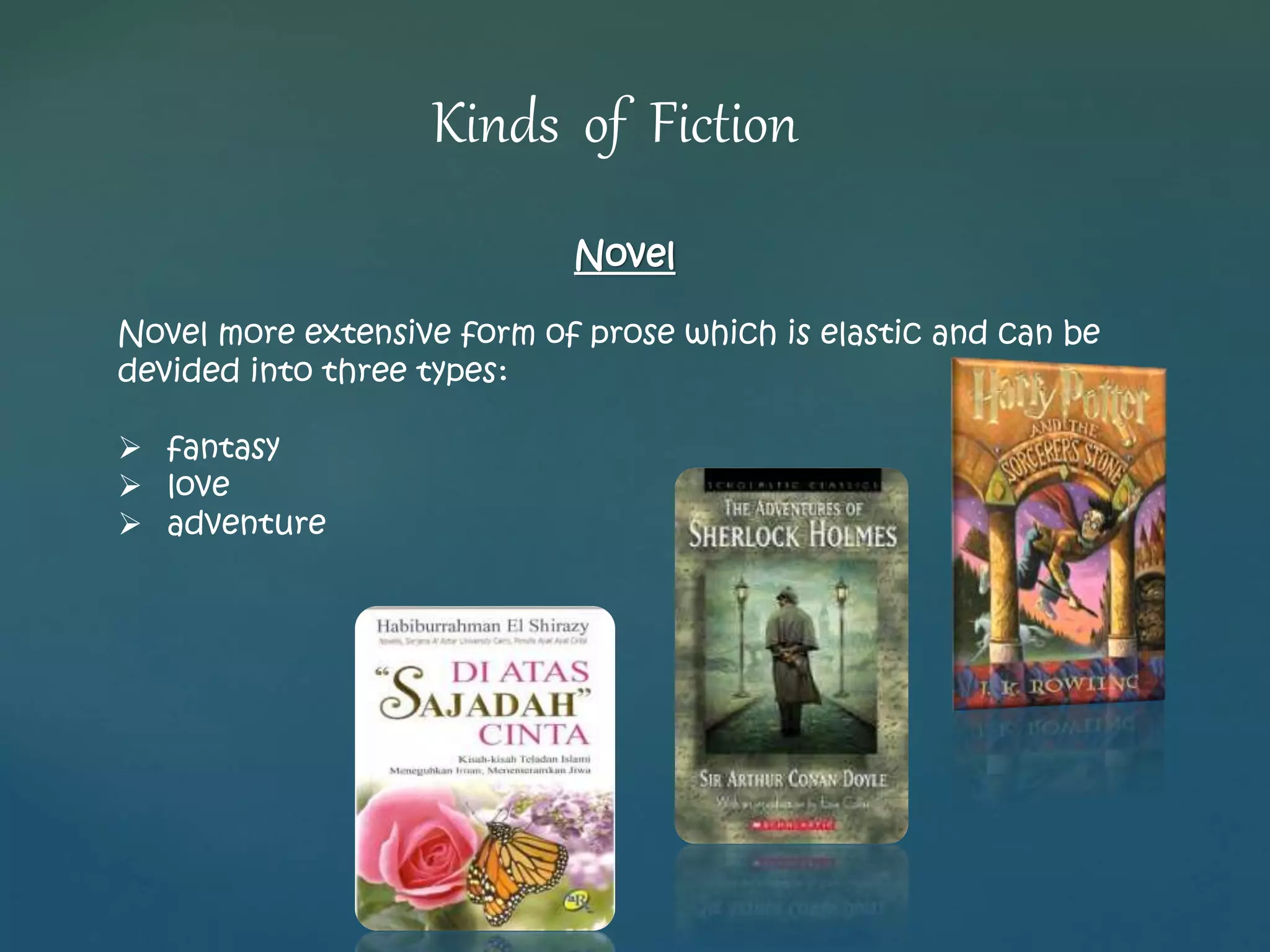
Novel 
Novel more extensive form of prose which is elastic and can be 
devided into three types: 
 fantasy 
 love 
 adventure 
Kinds of Fiction
Theory in Fiction 
The overarching idea in fiction theory is that the relationships 
between the imaginary worlds of fiction and the actual world in 
which we live are complicated, and that one ought not dismiss 
fiction as simply stories that are not “true.”
Fundamentals of fiction theory 
In order to understand fiction theory, one must pose 
questions about fundamental terms such as text, narrative, 
literature, fiction, etc. Literature may be understood as a 
text that is self-consciously artistic, rather than as a text 
that is used as a medium through which to convey 
information, for example a newspaper article.
Conclusion 
A story that is made up by the author or not true. 
Author's use fiction when writing about imaginary people, 
places, or events in the form of short stories or novels. 
There are five element of fiction : plot, theme, poin of view, 
characteristic, and setting.Kind of fiction are novel and 
short story. 
In order to understand fiction theory, one must pose 
questions about fundamental terms such as text, narrative, 
literature, fiction, etc
Refrence 
http://en.wikipedia.org/wiki/Fiction_theory 
www.slideshare.com
Thanks for your 
attention

Intrinsic elements of fiction

  • 1.
    Intrinsic Elements ofFiction Group 2 Popy Tria Meisela Ika Wahyu Ratnasari Rengganis Galuh Ratna
  • 2.
    F i ct i o n A story that is made up by the author or not true. Author's use fiction when writing about imaginary people, places, or events in the form of short stories or novels. Fiction is fake, imagined, or fantasy. Fiction is not real or true information from real life.
  • 3.
    Intrinsic Elements ofFiction 1. Plot The plot is the outline of events that takes place in a story.
  • 4.
    Intrinsic Elements ofFiction 2. Character The people or animals that take part in the story. Antagonist the person or thing working against the protagonist, or hero, in the story. Protagonist the main character of the story that is most central to the action of the story
  • 5.
    Intrinsic Elements ofFiction 3. Setting When and Where the action in the story takes place.
  • 6.
    Intrinsic Elements ofFiction 4. Theme The theme of the story is the main idea the author wishes to share with the reader. 5. Point of View the perspective or vantage point from which an author presents a story. & 1st person- the story is told by one of the characters in the story. The character uses the pronouns I and we. & 3rd person- the story is told by the narrator who stands outside of the story and observes the events as they unfold. The narrator uses the pronouns she, he, and they
  • 7.
    Kinds of Fiction SHORT STORY  Brief, artistic from of prose which is centered on a major main incident.  A prose narrative of limited length which must have characerization, unity, cumulative interest, climax, and a rsulution.  In a less exclusive sense, fables, mythical tales, parables nd folk tales
  • 8.
    Novel Novel moreextensive form of prose which is elastic and can be devided into three types:  fantasy  love  adventure Kinds of Fiction
  • 9.
    Theory in Fiction The overarching idea in fiction theory is that the relationships between the imaginary worlds of fiction and the actual world in which we live are complicated, and that one ought not dismiss fiction as simply stories that are not “true.”
  • 10.
    Fundamentals of fictiontheory In order to understand fiction theory, one must pose questions about fundamental terms such as text, narrative, literature, fiction, etc. Literature may be understood as a text that is self-consciously artistic, rather than as a text that is used as a medium through which to convey information, for example a newspaper article.
  • 11.
    Conclusion A storythat is made up by the author or not true. Author's use fiction when writing about imaginary people, places, or events in the form of short stories or novels. There are five element of fiction : plot, theme, poin of view, characteristic, and setting.Kind of fiction are novel and short story. In order to understand fiction theory, one must pose questions about fundamental terms such as text, narrative, literature, fiction, etc
  • 12.
  • 13.
    Thanks for your attention