Nordonia High 
School 
English 9 CP 
Presented by 
Mrs. Tolin 
Mrs. Smith
It is an 
necessary 
element for any 
type of story. 
Without a good 
plot line, you 
have nothing . 
. . 
The most basic 
arrangement of 
events 
PLOT IS THE 
LITERARY 
ELEMENT THAT 
DESCRIBES THE 
STRUCTURE OF 
THE STORY.
 CHRONOLOGICAL 
 FLASHBACK 
 IN MEDIA RES (in the middle)
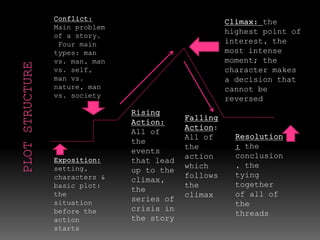
5 MAIN PARTS TO THE PLOT STRUCTURE
Conflict: 
Main problem 
of a story. 
Four main 
types: man 
vs. man, man 
vs. self, 
man vs. 
nature, man 
vs. society 
Exposition: 
setting, 
characters & 
basic plot: 
the 
situation 
before the 
action 
starts 
Rising 
Action: 
All of 
the 
events 
that lead 
up to the 
climax, 
the 
series of 
crisis in 
the story 
Climax: the 
highest point of 
interest, the 
most intense 
moment; the 
character makes 
a decision that 
cannot be 
reversed 
Falling 
Action: 
All of 
the 
action 
which 
follows 
the 
climax 
Resolution 
: the 
conclusion 
, the 
tying 
together 
of all of 
the 
threads
 Demonstrate a 
universal truth 
 Emphasize a 
character trait 
 Accentuate a mood 
or feeling 
 Recreate a scene 
 Teach a moral 
lesson 
 Entertain 
 Challenge the 
reader’s intellect 
 Answers the 
question “what’s 
the point of 
stories that aren’t
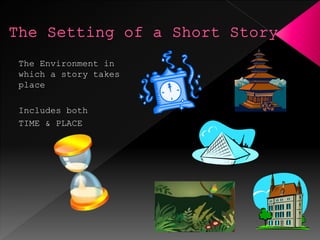
The Environment in 
which a story takes 
place 
Includes both 
TIME & PLACE
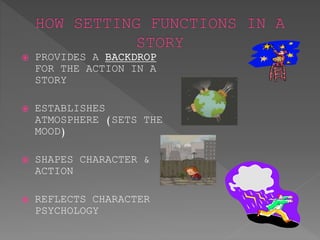
 PROVIDES A BACKDROP 
FOR THE ACTION IN A 
STORY 
 ESTABLISHES 
ATMOSPHERE (SETS THE 
MOOD) 
 SHAPES CHARACTER & 
ACTION 
 REFLECTS CHARACTER 
PSYCHOLOGY
Example: using 
real cities or 
street names; 
describing a place 
as realistically 
as possible 
Example: smell of 
cookies during 
winter break; 
swimming in cold 
lake water 
 DETAILS: BUILD 
DESCRIPTION WITH 
REALISTIC DETAILS TO 
MAKE IT BELIEVABLE 
 SENSE IMAGES: APPEAL 
TO SENSES, WHICH 
HELPS READER RELATE 
TO PERSONAL 
EXPERIENCES
 WHAT IS THE 
PHYSICAL BACKDROP? 
DOES IT CREATE 
ATMOSPHERE/ SHAPE 
CHARACTERS’ 
ACTIONS/REFLECT 
INNER THOUGHTS? 
 WHAT TECHNIQUES 
DID THE AUTHOR 
USE?
The central source 
of tension and 
drama that makes a 
story interesting 
to read and gives 
it purpose
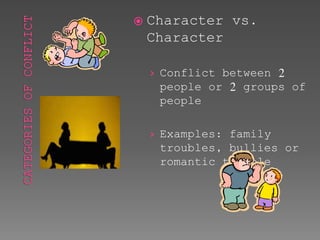
 Character vs. 
Character 
› Conflict between 2 
people or 2 groups of 
people 
› Examples: family 
troubles, bullies or 
romantic trouble
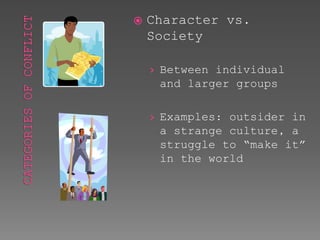
 Character vs. 
Society 
› Between individual 
and larger groups 
› Examples: outsider in 
a strange culture, a 
struggle to “make it” 
in the world
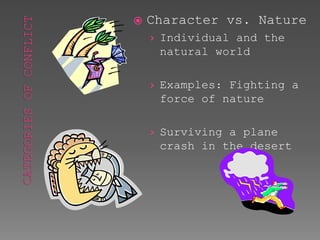
 Character vs. Nature 
› Individual and the 
natural world 
› Examples: Fighting a 
force of nature 
› Surviving a plane 
crash in the desert
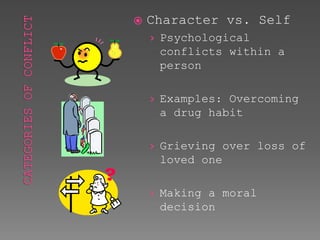
 Character vs. Self 
› Psychological 
conflicts within a 
person 
› Examples: Overcoming 
a drug habit 
› Grieving over loss of 
loved one 
› Making a moral 
decision
 Story Problem 
› Try to state the 
problem in one 
sentence 
 Elements of plot 
› Include both the 
conflict and the 
climax
 DIRECT: The author tells the 
readers details about the character 
directly 
› Even though she was the youngest, Sarah 
was the smartest of all three sisters 
 INDIRECT: The author shows the 
character in action and lets 
readers make their own 
interpretations 
› At report card time, Sarah received an 
A in all subjects, unlike her sisters.
 Character’s Name 
 Physical Appearance 
 How the character is 
dressed 
 Occupation 
 Home & Surroundings 
 Habit’s and Actions 
 What other characters 
say about him or her
 Defined by the qualities that make 
them think, act and feel in certain 
ways. 
› Values: What people, places or things are 
most important in the character’s life? 
What does he or she value most? 
› Feelings: What Emotions does the character 
feel most strongly? 
› Goals: What are the character’s greatest 
hopes? What are they working to 
accomplish? 
› Problems: What other characters or 
circumstances are keeping the character 
from achieving his goals?

Short Story Notes (Structure, Purpose, Setting, Plot, Conflict & Characterization)

  • 1.
    Nordonia High School English 9 CP Presented by Mrs. Tolin Mrs. Smith
  • 2.
    It is an necessary element for any type of story. Without a good plot line, you have nothing . . . The most basic arrangement of events PLOT IS THE LITERARY ELEMENT THAT DESCRIBES THE STRUCTURE OF THE STORY.
  • 3.
     CHRONOLOGICAL FLASHBACK  IN MEDIA RES (in the middle)
  • 4.
    5 MAIN PARTSTO THE PLOT STRUCTURE
  • 5.
    Conflict: Main problem of a story. Four main types: man vs. man, man vs. self, man vs. nature, man vs. society Exposition: setting, characters & basic plot: the situation before the action starts Rising Action: All of the events that lead up to the climax, the series of crisis in the story Climax: the highest point of interest, the most intense moment; the character makes a decision that cannot be reversed Falling Action: All of the action which follows the climax Resolution : the conclusion , the tying together of all of the threads
  • 6.
     Demonstrate a universal truth  Emphasize a character trait  Accentuate a mood or feeling  Recreate a scene  Teach a moral lesson  Entertain  Challenge the reader’s intellect  Answers the question “what’s the point of stories that aren’t
  • 7.
    The Environment in which a story takes place Includes both TIME & PLACE
  • 8.
     PROVIDES ABACKDROP FOR THE ACTION IN A STORY  ESTABLISHES ATMOSPHERE (SETS THE MOOD)  SHAPES CHARACTER & ACTION  REFLECTS CHARACTER PSYCHOLOGY
  • 9.
    Example: using realcities or street names; describing a place as realistically as possible Example: smell of cookies during winter break; swimming in cold lake water  DETAILS: BUILD DESCRIPTION WITH REALISTIC DETAILS TO MAKE IT BELIEVABLE  SENSE IMAGES: APPEAL TO SENSES, WHICH HELPS READER RELATE TO PERSONAL EXPERIENCES
  • 10.
     WHAT ISTHE PHYSICAL BACKDROP? DOES IT CREATE ATMOSPHERE/ SHAPE CHARACTERS’ ACTIONS/REFLECT INNER THOUGHTS?  WHAT TECHNIQUES DID THE AUTHOR USE?
  • 11.
    The central source of tension and drama that makes a story interesting to read and gives it purpose
  • 12.
     Character vs. Character › Conflict between 2 people or 2 groups of people › Examples: family troubles, bullies or romantic trouble
  • 13.
     Character vs. Society › Between individual and larger groups › Examples: outsider in a strange culture, a struggle to “make it” in the world
  • 14.
     Character vs.Nature › Individual and the natural world › Examples: Fighting a force of nature › Surviving a plane crash in the desert
  • 15.
     Character vs.Self › Psychological conflicts within a person › Examples: Overcoming a drug habit › Grieving over loss of loved one › Making a moral decision
  • 16.
     Story Problem › Try to state the problem in one sentence  Elements of plot › Include both the conflict and the climax
  • 18.
     DIRECT: Theauthor tells the readers details about the character directly › Even though she was the youngest, Sarah was the smartest of all three sisters  INDIRECT: The author shows the character in action and lets readers make their own interpretations › At report card time, Sarah received an A in all subjects, unlike her sisters.
  • 19.
     Character’s Name  Physical Appearance  How the character is dressed  Occupation  Home & Surroundings  Habit’s and Actions  What other characters say about him or her
  • 20.
     Defined bythe qualities that make them think, act and feel in certain ways. › Values: What people, places or things are most important in the character’s life? What does he or she value most? › Feelings: What Emotions does the character feel most strongly? › Goals: What are the character’s greatest hopes? What are they working to accomplish? › Problems: What other characters or circumstances are keeping the character from achieving his goals?